
Reviewed · TRUJILLO TOURS
Shore Excursion from Salaverry port
Ancient adobe cities reward a careful morning. I like the way this Salaverry shore excursion links the Moche temples with the Chimú ruins of Chan Chan, giving you two distinct cultures in one outing. I also like the small-group transport and the chance to hear local context from guides such as Alfredo and William. The main catch is that entrance fees, food, and drinks are not included in the $80 price.
This is an efficient choice for cruise passengers who want more than a quick look at Trujillo. The route covers Huaca de la Luna, Huaca del Sol, the Huacas de Moche Museum, Huaca Arcos Iris, and Chan Chan, but the schedule can run longer than the advertised five hours. One German passenger described a seven-hour day, so I would keep your shore plans flexible.
In This Review
- Key points to know before you book
- From Salaverry port to Trujillo’s ancient temples
- Huaca de la Luna and Huaca del Sol: two Moche centers
- The Huacas de Moche Museum adds the missing details
- Huaca Arcos Iris and the Chimú connection
- Chan Chan: the great adobe city of the Chimú
- What the $80 price covers, and what it does not
- Who will enjoy this shore excursion most
- Should you book the Trujillo archaeological route?
- FAQ
- Where does the tour meet?
- What time does the tour begin?
- How long does the excursion last?
- What sites are included?
- Is Chan Chan a UNESCO World Heritage Site?
- Are entrance fees included in the price?
- What languages are available?
- What should I bring?
- Can I cancel the booking?
Key points to know before you book
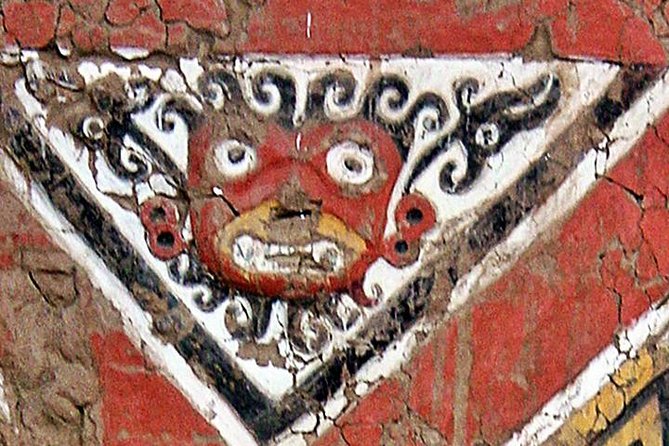
- The Moche temples are the morning’s strongest history lesson: Huaca de la Luna served as a religious center, while Huaca del Sol had an administrative role.
- Chan Chan gives you a different civilization: The huge adobe city was the capital of the Chimú empire and is listed as a UNESCO World Heritage Site.
- The guides receive the highest praise: Alfredo is friendly and clear in English, while William is especially well organized and careful with his explanations.
- Your port transfer begins with the ship’s shuttle: Take the cruise shuttle for about 10 minutes to Salaverry Plaza, then look for the JD ADVENTURE sign.
- The $80 price is not all-inclusive: Transport and guiding are covered, but entrance fees, food, and drinks are extra.
- Bring cash and keep your phone ready: The operator needs a working mobile number for WhatsApp updates and asks you to monitor email for departure changes.
From Salaverry port to Trujillo’s ancient temples
The day begins at 8:30 in the morning, when you leave Salaverry port for the archaeological sites around Trujillo. The port meeting point requires one extra step: you first take the cruise ship’s shuttle bus, which takes about 10 minutes to reach Salaverry Plaza.
Look for the JD ADVENTURE sign there. The company sends full meeting instructions two days before arrival, but you still need to provide your ship’s name, arrival time, departure time, and a valid mobile number. That information matters on a shore excursion, since the operator needs to know when your ship leaves and how to reach you if plans change.
The transport is described as small group, with an English and Spanish speaking guide. That setup is more useful than a large coach when you are visiting archaeological sites where the best explanation often comes from a quick comment at the right spot. William, one of the guides praised for the experience, reportedly kept his talks focused and timed his explanations well instead of speaking at length everywhere.
The trip is advertised as five hours. That is a tight but workable schedule for this route, though one especially positive account describes spending seven hours on the outing. I would not book an independent activity immediately after it. Ship excursions need a little breathing room, and archaeological sites are not always as quick to visit as a timetable suggests.
More shore excursions in Trujillo:
- Lima: Shore excursion from the Port of Callao for Cruises
★ 4.3 · 10 reviews
Huaca de la Luna and Huaca del Sol: two Moche centers
Your first major stop is the Huacas de Moche, better known as Huaca de la Luna, or Temple of the Moon, and Huaca del Sol, or Temple of the Sun. These enormous adobe structures were built by the Moche over many centuries.
The names can be confusing because both huacas are part of the same archaeological area, but they did different jobs. Huaca de la Luna functioned as a religious complex. Huaca del Sol was an administrative center, making the pair a useful introduction to how the Moche organized both ritual life and government.
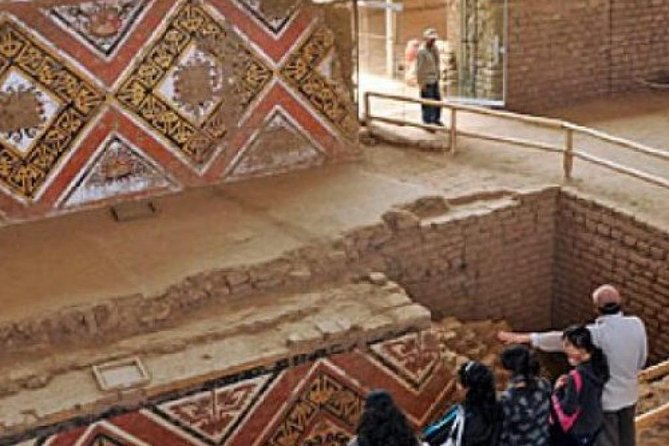
The temples were not completed in one burst of construction. The Moche built new platforms over older ones, and the bodies of dead rulers were sealed into the temple before another platform covered the previous structure. Over roughly 700 years, the result became a great stepped pyramid.
That detail changes how you see the ruins. You are not simply looking at a damaged building. You are looking at layers of time, with each new platform covering an earlier phase of Moche power. A guide can help you connect those layers to the people who built them, rather than leaving you to see only walls and mounds.
Huaca de la Luna is the more important stop for understanding the ceremonial side of the Moche world. Huaca del Sol is also visually impressive, but the tour description gives it a more administrative role. Since the visit is shared across several sites, you should expect an overview rather than a long archaeological study of every structure.
The setting is dry and exposed, so sensible clothing matters. Bring cash as requested, and remember that backpacks are not allowed. The no-backpack rule is easy to overlook, especially if you are used to carrying water, a camera bag, and extra layers on shore days.
The Huacas de Moche Museum adds the missing details
After seeing the adobe monuments, you visit the Huacas de Moche Museum. This is a valuable part of the itinerary because ruins alone rarely tell the whole story.
The museum contains ceramics, utensils, artifacts, and tombs. These objects give you a closer look at daily life and ceremonial practice, while the temple platforms show the scale of Moche construction. The combination works well: first you see the architecture, then you see the objects that help explain it.
I would pay close attention to the guide here. The strongest comments about this excursion focus on the quality of the explanations, not just the number of places visited. Alfredo is described as friendly, clear in English, and well informed about the sites. A good guide can help you understand why a ceramic vessel, burial, or household object matters instead of treating the museum as a quick indoor pause.
You should also allow for the fact that this is a compact shore excursion. The museum is included in the route, but the supplied information does not promise a fixed amount of time inside. If you prefer to study museum displays slowly, the five-hour plan may feel fast.
Huaca Arcos Iris and the Chimú connection
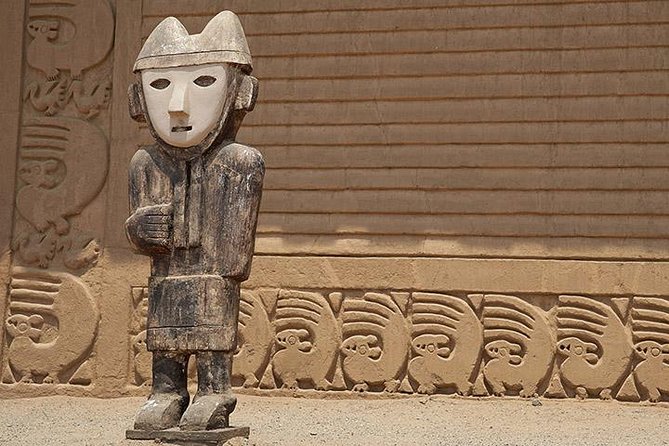
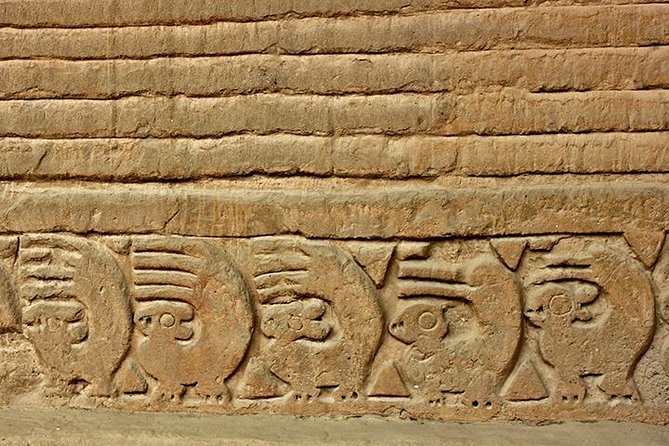
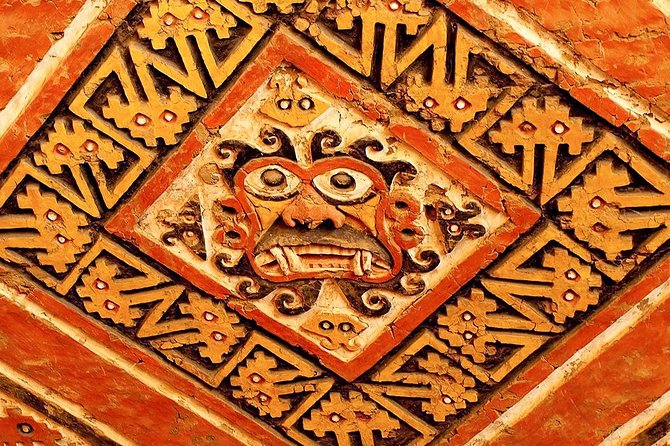
The next stop, Huaca Arcos Iris, is also called the Rainbow Temple or El Dragon. It was built by the Chimú around A.D. 1200, so it shifts the story forward from the Moche period to another major culture of northern Peru.
The temple has two platforms with carved adobe panels and niches. These niches were used to store ritual objects, and the carvings offer a different visual style from the Moche sites. The stop is smaller than Chan Chan, but it helps you see that the region’s archaeology is not one single chapter.
Local tradition identifies Huaca Arcos Iris as the home of Takaynamo, the mythical founder of Chan Chan. You should treat that as legend rather than documented biography, but it gives the site a useful connection to the Chimú capital visited later in the day.
This is one of the itinerary’s smart choices. Without Huaca Arcos Iris, the route would jump from the Moche temples straight to Chan Chan. Here, you get a bridge between the two cultures and a chance to see carved adobe decoration on a more focused scale.
More things to do in Trujillo:
- Full Day Trujillo Piramides Sol y Luna , Chan chan y Huanchaco
★ 5.0 · 93 reviews - Full Day Tour Huacas, Chan Chan & Huanchaco – Trujillo
★ 4.5 · 64 reviews - Piramids of Tucume Tour, Sican Museum and Lambayeque city tour
★ 5.0 · 30 reviews - Full Archaeological Chan Chan Tour
★ 5.0 · 30 reviews
Chan Chan: the great adobe city of the Chimú
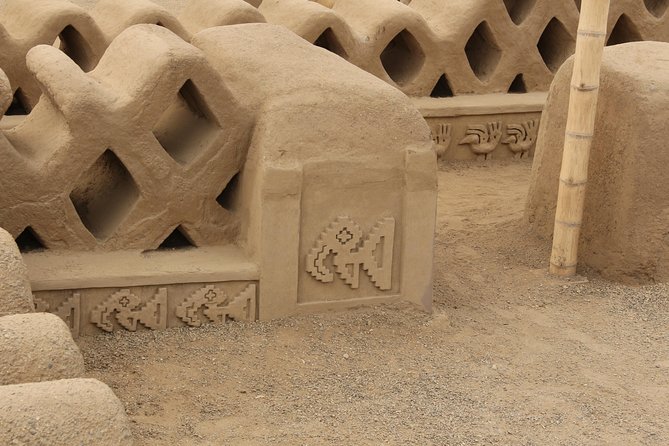
The final archaeological stop is Chan Chan, the former capital of the Chimú empire. It was declared a UNESCO World Heritage Site in 1986 and is described as the largest pre-Columbian adobe city in America.
Chan Chan was not simply a ceremonial mound. It was a full city with courtyards, terraces, palaces, and gardens. Estimates suggest that between 30,000 and 60,000 people lived there, a figure that helps you understand the size of the Chimú state.
The appeal of Chan Chan is its sense of urban planning. At Huaca de la Luna, the focus is on temple platforms and religious power. At Chan Chan, you see a city designed for administration, residence, ceremony, and public life. Courtyards and palace areas make the Chimú world feel more organized and urban.
Adobe is also the reason you need realistic expectations. Mud brick can create enormous structures, but it is vulnerable to rain and erosion. The site is impressive precisely because so much remains, yet some areas may look weathered or incomplete. A guide’s explanation helps you picture the original city without pretending that every wall is intact.
The visit is also the point where the schedule may feel most pressed. Chan Chan is large, and the tour includes several earlier stops. You will see the main features included in the route, but this is not designed for wandering through every corner of the archaeological complex.
One account of the excursion included a restaurant stop for delicious ceviche with an ocean view. That meal is not part of the stated inclusions, and food and drinks are officially extra, so do not assume it is guaranteed. Still, it is a useful possibility if the schedule and group decide to stop for lunch.
What the $80 price covers, and what it does not
At $80 per person, the tour offers reasonable value if you want a guide and port transport arranged in advance. You are paying for a connected route through several important sites, round-trip transport from Salaverry, and live guiding in English or Spanish.
That convenience matters on a cruise day. You do not need to work out separate transport to the Moche temples, Huaca Arcos Iris, and Chan Chan, then watch the clock on your own. The operator handles the route and returns you to Salaverry port so you can rejoin your ship.
The price does not include entrance fees. It also excludes food, drinks, and personal travel insurance. Add those costs before comparing this outing with a private taxi or a ship-organized tour.
The strongest value comes from the range of the day. You see Moche religious and administrative centers, museum collections, a Chimú temple, and the great Chimú capital. If you only want one archaeological site in depth, this may feel too broad. If you want the major highlights near Trujillo in one outing, the price makes more sense.
The booking terms are flexible: you can reserve now and pay later, and cancellation is free up to 24 hours before the activity for a full refund. Those terms help if your cruise schedule is still changing.
Who will enjoy this shore excursion most
I would choose this tour if you want a strong introduction to northern Peru’s archaeology without arranging several separate transfers. It suits cruise passengers who value context, prefer a planned route, and want to compare Moche and Chimú culture in one day.
It is also a good match for people who enjoy guides who keep a clear structure. The praise for William points to a guide who explains things at the right place and time, while Alfredo is described as friendly and effective in English. Guide quality can shape an archaeological visit, especially when many structures look like walls and earth from a distance.
You should think twice if you need a slow pace or have difficulty walking. The experience is not considered suitable for people with mobility impairments, pregnant women, people with altitude sickness, people with pre-existing medical conditions, or people over 95. The supplied information also says it is not suitable for people with altitude sickness, even though the listed route is around Trujillo.
Do not bring a backpack, pets, alcohol, or drugs. Bring cash, and keep your phone available for WhatsApp contact. You should also check email for any change to the departure time.
Should you book the Trujillo archaeological route?
I would book it if your main goal is to see the area’s major archaeological highlights from Salaverry with a guide who can explain the Moche and Chimú cultures. The combination of Huaca de la Luna, the museum, Huaca Arcos Iris, and Chan Chan gives you a much fuller picture than visiting only one site.
I would skip it only if you want a relaxed, single-site visit or if extra entrance fees and a possible longer day would strain your plans. For most cruise passengers interested in Peru’s ancient cultures, the practical transport, broad route, and highly praised guiding make this a solid choice. Keep your afternoon open, bring cash, and treat the five-hour timing as an estimate rather than a promise.
FAQ
Where does the tour meet?
You must first take the cruise ship shuttle bus from the port. The shuttle ride to Salaverry Plaza takes about 10 minutes, and you should look for the JD ADVENTURE sign there.
What time does the tour begin?
The tour begins at 8:30 in the morning. The operator asks you to keep checking your email for any departure-time updates.
How long does the excursion last?
The advertised duration is five hours. One account describes spending seven hours on the outing, so you should allow extra flexibility in your shore-day schedule.
What sites are included?
The route includes Huaca de la Luna, Huaca del Sol, the Huacas de Moche Museum, Huaca Arcos Iris, and Chan Chan.
Is Chan Chan a UNESCO World Heritage Site?
Yes. Chan Chan was declared a UNESCO World Heritage Site in 1986.
Are entrance fees included in the price?
No. Entrance fees are not included. Food, drinks, and personal travel insurance are also excluded.
What languages are available?
The live guide service is available in English and Spanish.
What should I bring?
You should bring cash and provide a valid mobile number for WhatsApp contact. Backpacks are not allowed.
Can I cancel the booking?
Yes. You can cancel up to 24 hours in advance for a full refund. You can also reserve now and pay later.
Just added in Trujillo
- Huaca Rajada Tomb of the Lord Of Sipan & Site Museum★ 5.0 · 5 reviews
- Full day Tombs of Sipán, Ventarrón and Pto. Eten★ 4.5 · 10 reviews
- Nature tour, Pómac Forest with picnic breakfast included.★ 5.0 · 5 reviews
- Piramids of Tucume Tour, Sican Museum and Lambayeque city tour★ 5.0 · 30 reviews
- Pyramids of the Sun and the Moon, Huanchaco and Chan Chan★ 4.1 · 9 reviews
- From Trujillo: Complete full day tour with museums★ 5.0 · 5 reviews
- From Trujillo: Temple of the Moon and Sun and Chan Chan★ 3.3 · 5 reviews
- Chiclayo: Chaparri Ecological Reserve Tour★ 4.8 · 4 reviews
Trujillo Tours, compared.
Full Day Trujillo Piramides Sol y Luna , Chan chan y Huanchaco
Read our review →
Full Day Tour Huacas, Chan Chan & Huanchaco – Trujillo
Read our review →
Piramids of Tucume Tour, Sican Museum and Lambayeque city tour
Read our review →
Private tour full day chan chan & huacas sun and moon in SUV
Read our review →
Full day Tombs of Sipán, Ventarrón and Pto. Eten
Read our review →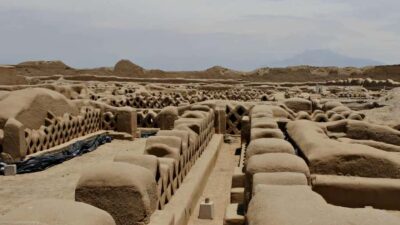
Pyramids of the Sun and the Moon, Huanchaco and Chan Chan
Read our review →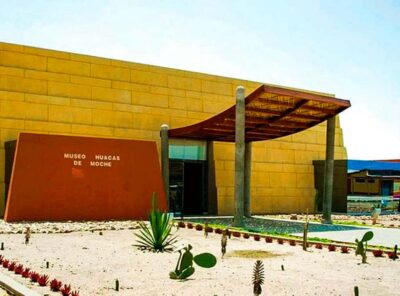
From Trujillo: Complete full day tour with museums
Read our review →Browse the lists this tour appears in