
Reviewed · INCA TRAIL AND SALKANTAY TREKS
4 Days of Tour and Adventure along the Inca Trail
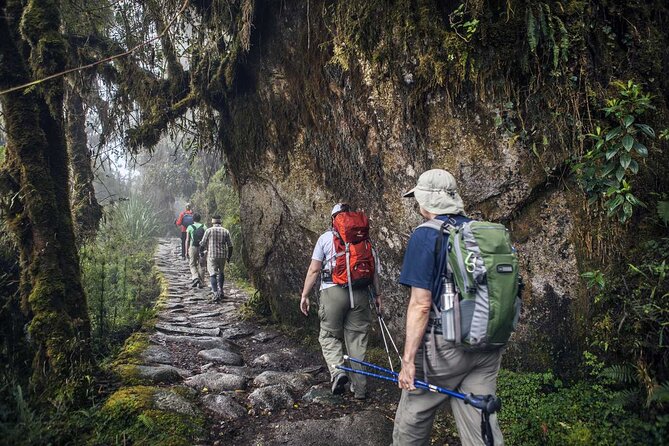
Machu Picchu is worth earning on foot. This four-day Inca Trail trip links high Andean passes, Inca ruins, cloud-forest scenery, and the Sun Gate before finishing at Machu Picchu. I like the small group size of up to 10 people and the fact that the main permits, meals, tents, guide, porter support, and return train are covered. I also like the steady change in scenery, from dry mountain valleys to orchids and subtropical forest.
The catch is the physical demand. Day 2 takes you over the 4,200-meter Dead Woman’s Pass, with about 15 kilometers of walking and nine hours on the trail. You need strong fitness, careful pacing, and some patience with early starts. The $900 price is fair for a four-day licensed trek with major transport and entry costs included, but optional gear and extras can push the final bill higher.
- 4,200-meter summit: Day 2 is the test, with a long climb to Warmihuañusca, known as Dead Woman’s Pass.
- Three different worlds: The route moves from Andean valleys to high mountain passes, then down into orchid-filled subtropical forest.
- Inca ruins along the way: Llactapata, Runkurakay, Sayacmarca, Phuyupatamarka, Wiñayhuayna, and Machu Picchu give the walk real historical weight.
- Sun Gate arrival: The final morning begins at 4:30 a.m. for the walk to Inti Punku and a possible sunrise view over Machu Picchu.
- Logistics included: Tents, mats, meals, group porter service, permits, a guide, the downhill bus, and the return train are part of the package.
- A few costs remain: Sleeping bags cost $25 to rent, walking poles cost $15, and a personal porter costs $40 per day for up to 12 kilograms.
In This Review
- Why This Inca Trail Route Is Worth Four Days
- Day 1: Kilometer 82 to Yuncachimpa
- Day 2: Dead Woman’s Pass at 4,200 Meters
- Day 3: Runkurakay, Sayacmarca, and Wiñayhuayna
- Day 4: Inti Punku and Machu Picchu
- What the $900 Price Covers
- Fitness, Altitude, and Camp Life
- Organization, Guides, and Group Size
- Who Should Book This Four-Day Trek?
- Should You Book It?
- FAQ
- What is included in the $900 tour price?
- How difficult is the Inca Trail on this itinerary?
- What should I bring for the first morning?
- Are sleeping bags and walking poles included?
- Can I climb Huayna Picchu or Machu Picchu Mountain?
- Where does the tour start and end?
Why This Inca Trail Route Is Worth Four Days
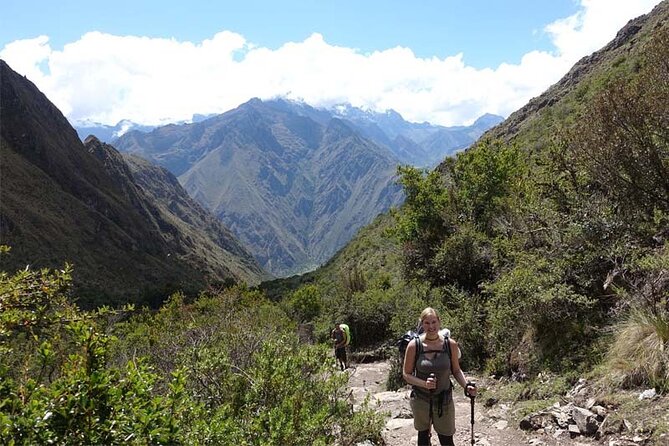
The Inca Trail is not just a long walk to a famous ruin. It is a carefully staged route through changing climates and old stone sites, with the hardest climb placed before the more archaeological third day.
You start near kilometer 82, the traditional trailhead, and finish at Machu Picchu through the Sun Gate. That approach gives you a sense of arrival that a direct bus-and-train visit cannot match. You have already crossed passes, slept in camps, and walked through several types of country before the citadel appears below.
The group limit matters. A maximum of 10 people is small enough to make guide communication easier, especially on steep sections or when the pace needs adjusting. The company has also received strong praise for organization and communication, with an overall rating of 4.7 out of 5 and 93 percent of customers recommending the experience.
Several names appear in the positive feedback. Percy is praised for being warm, informative, and professional. Fortunato is singled out as a dependable driver, while Katherine receives kind comments for her attentive service. Those details suggest a company that puts effort into keeping the wider trip organized, not just the walking itself.
Still, one serious warning deserves attention. A customer reported a cancellation by email at about 8:40 p.m. the night before a 5:00 a.m. start, leaving little time to arrange a replacement plan. The company apologized and said it was working with the booking platform to prevent a repeat. Because the permit system is strict and this experience is non-refundable, confirm your booking and departure details well before arriving in Cusco.
Day 1: Kilometer 82 to Yuncachimpa
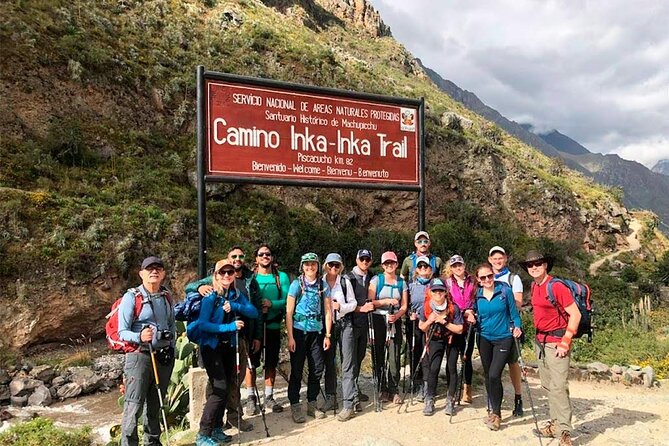
The first morning begins early, with pickup from a hotel in Cusco’s historic center at about 5:30 a.m. The meeting point is listed as Plaza Regocijo, and the first transfer goes to Ollantaytambo. Breakfast there is not included, so bring money or a snack for this stop.
After breakfast, you continue to kilometer 82, where the Inca Trail entry checkpoint begins. You must show your passport. If you booked a student rate, bring the required student identification as well. These documents are not minor details. Without the proper identification, entry can become a problem.
The first day covers about 11 kilometers in roughly seven hours. It is rated moderate, which is a useful description for a prepared hiker, but it is still a full day at altitude. You pass through Miskay and have lunch beside a small river, with a view toward the archaeological center of Llactapata.
From there, the route crosses the Cusichaca Valley toward Wayllabamba, at about 3,100 meters. The trail then continues to Yuncachimpa, at around 3,300 meters, where the first camp is set up.
This opening day gives you time to settle into the walking rhythm. You will be carrying at least a daypack, adjusting to the altitude, and learning how the group moves. I like that the route does not begin with the toughest climb. You get a gradual introduction before the major test on Day 2.
Your breakfast, lunch, and dinner are included for the first three days, but Day 1 breakfast is not. Pack water, a morning snack, and anything you prefer before the first formal meal. Tents and mats are supplied, though you need to arrange a sleeping bag or rent one for $25.
More hikes and treks in Cusco:
- Classic Inca Trail Trek 4D/3N to Machu Picchu (Group Service)
★ 5.0 · 8,653 reviews - Machu Picchu: 4-Day Inca Trail Trek with Panoramic Train Ride
★ 5.0 · 4,568 reviews - Salkantay Classic Trek 5 Days from Cusco
★ 5.0 · 4,062 reviews
Day 2: Dead Woman’s Pass at 4,200 Meters
Day 2 is the part you must respect. After breakfast, the trail climbs through the Llulluchapampa Valley for about three hours before the ascent becomes more demanding.
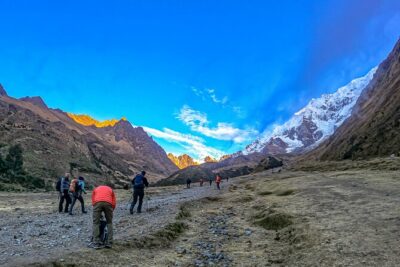
The high point is Warmihuañusca, or Dead Woman’s Pass, at 4,200 meters. From the pass, you can see surrounding mountains and snow-covered peaks. The view is the reward, but the climb is the real story. At this altitude, even fit hikers may need frequent breaks and a slow, steady pace.
The day covers about 15 kilometers and takes around nine hours. Its official rating is strong, with a note that reaching the pass is a challenge. That wording is accurate. The distance itself is manageable for many fit hikers, but the combination of steep climbing, altitude, and a long descent makes this the hardest day.
After the pass, you descend into the Pacaymayo Valley. The route then climbs again toward Runkurakay before continuing to Chaquicocha, around 3,650 meters, where you camp.
This up-and-down pattern is important to understand. Reaching Dead Woman’s Pass does not mean the day is finished. You still have a long descent and another pass before camp. I would treat this as a day for conservative pacing rather than speed. Walking poles are available for $15 and may be useful on both the ascent and the descent.
The group porter carries shared equipment, but that does not mean your personal bag is weightless. A personal porter can be hired for $40 per day and can carry up to 12 kilograms. If you dislike carrying a loaded pack over steep ground, this optional cost may be money well spent.
Day 3: Runkurakay, Sayacmarca, and Wiñayhuayna
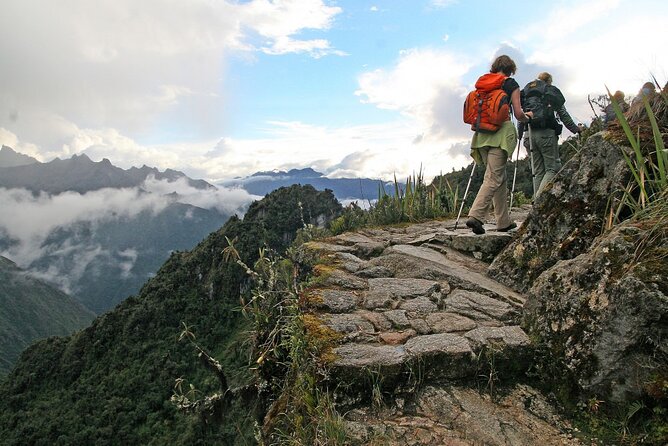
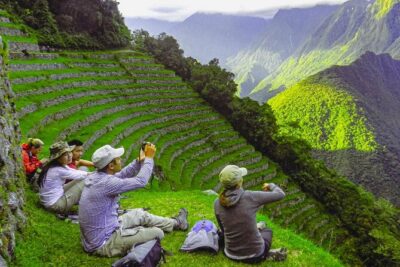
After the strain of Day 2, the third day is described as calmer. The route descends toward the subtropical zone, and the scenery begins to change. The Andes give way to more humid country, with orchids and a wider range of birdlife.
The ruins are the main reason this day feels special. You visit Runkurakay, Sayacmarca, and Phuyupatamarka, whose name is translated as City Above the Clouds. Phuyupatamarka sits at about 3,600 meters, while the route eventually drops to Wiñayhuayna at around 2,650 meters.
The walking distance is about 10 kilometers, taking roughly six hours. That leaves more time to look carefully at the stonework and listen to the guide. A rushed visit would miss much of the appeal here. The sites are not simply interruptions along the route. They explain how the trail worked as a network of roads, settlements, ceremonial places, and viewpoints.
Wiñayhuayna, translated as Forever Young, is the final camp. Its lower elevation should feel different from the cold high pass, though conditions can still vary. The schedule puts you close to Machu Picchu, but do not mistake this for a rest day. You still need to walk for six hours, manage your gear, and prepare for a 4:30 a.m. start.
The changing vegetation is one of the strongest features of the whole trip. Day 1 gives you valley scenery, Day 2 brings high mountain views, and Day 3 adds orchids, birds, and subtropical forest. This variety makes the four-day format more satisfying than a shorter approach.
Day 4: Inti Punku and Machu Picchu
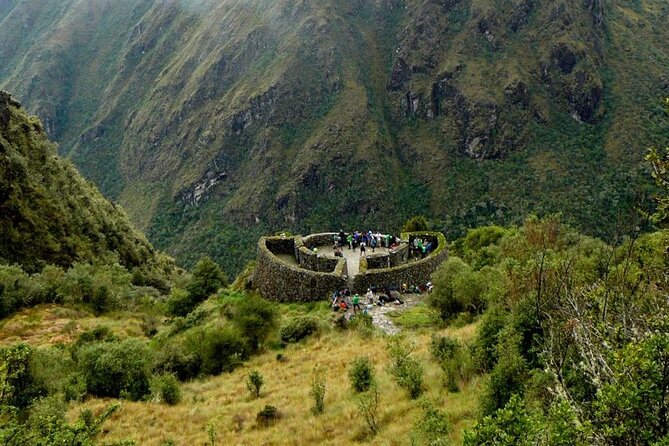
The final morning begins around 4:30 a.m. You walk to Inti Punku, the Sun Gate, where you may see sunrise over Machu Picchu if the weather cooperates.
That weather qualification matters. Sunrise is not guaranteed, and cloud or rain may block the view. Even so, reaching the Sun Gate after three days on the trail gives the citadel a powerful sense of place. You do not simply arrive at an entrance. You approach from above, along the same broad route that once brought people toward Machu Picchu.
At the citadel, you have time for a guided visit. The exact shape of that visit can depend on entry controls and the operating schedule, so listen closely to your guide and stay with the group instructions.
Huayna Picchu and Machu Picchu Mountain are optional. Each requires an advance reservation made along with the Inca Trail booking, and the listed extra cost is $35. Do not assume you can decide at the last minute. If you want a second climb after four days of hiking, reserve it early and consider whether your legs will still have much enthusiasm left.
After visiting the site, you take the bus downhill to Aguas Calientes, also called Machu Picchu Pueblo. Lunch and dinner on this final day are not included. You have time for lunch in town and may visit the thermal baths before boarding the train back toward Cusco.
The return journey takes about four hours. Round-trip transportation and the return train are included, as is the downhill bus from Machu Picchu. That removes a major source of stress at the end of a tiring trek, though you should still budget for food and any bath entry you choose.
More things to do in Cusco:
- Cusco: Rainbow Mountain and Red Valley Day Trip with Meals
★ 4.9 · 4,893 reviews - 4-Day Salkantay Trek with Sky Camp Stay
★ 5.0 · 3,346 reviews - Short Inca Trail to Machu Picchu 2D/1N
★ 5.0 · 3,007 reviews - Excursion to Rainbow Mountain Full Day Optional Red Valley
★ 5.0 · 2,996 reviews
What the $900 Price Covers
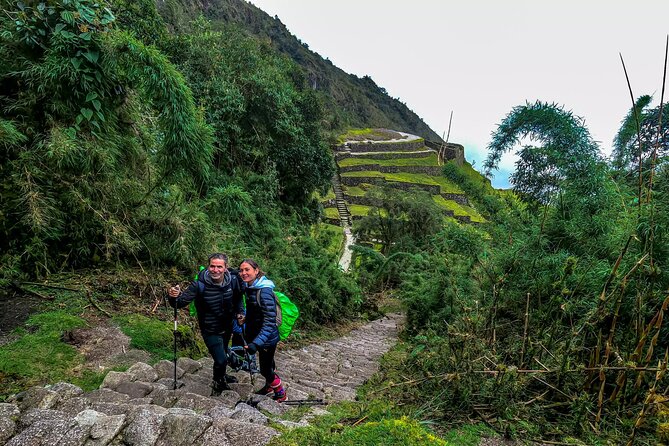
At $900 per person, this is not a bare-bones hike. The price includes the Inca Trail and Machu Picchu entry tickets, professional guidance, tents, mats, first-aid supplies, group porter support, three breakfasts, three lunches, three dinners, the Machu Picchu to Aguas Calientes bus, and the return train.
That package has real value. Inca Trail permits and Machu Picchu tickets are essential, and arranging them independently can be difficult because daily access is controlled. Including the train also means you do not have to solve the final transport problem yourself.
The price does not cover everything. Plan for:
- Breakfast on the first morning
- Lunch and dinner on the final day
- A $25 sleeping bag rental, if needed
- $15 walking poles, if desired
- $35 for Huayna Picchu or Machu Picchu Mountain
- $40 per day for a personal porter carrying up to 12 kilograms
- Insurance, tips, and personal expenses
The group porter service is included, but the details of personal luggage limits are not fully explained in the supplied information. Ask the operator exactly what you may bring, what the shared porter carries, and how your bag will be handled at camp.
Fitness, Altitude, and Camp Life
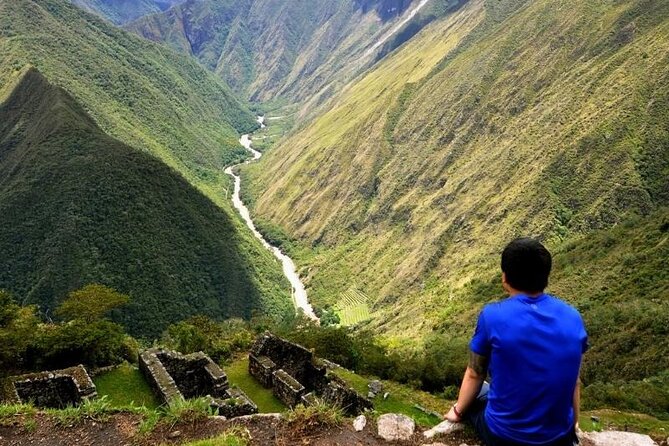
You should book this only if you have a strong level of physical fitness. The daily distances range from 10 to 15 kilometers, with walking times of six to nine hours. The altitude is the bigger concern for many people, especially on Day 2 at 4,200 meters.
The itinerary does not describe a formal acclimatization program in Cusco. Give yourself time in the region before the hike if your wider schedule allows, and speak with a medical professional about altitude concerns before the trip. The tour provider supplies first-aid materials, but that is not a substitute for personal preparation or insurance.
Camping is part of the experience, not a minor detail. Tents and mats are supplied, but you need a sleeping bag or rental. Early starts, cold nights, long walking days, and limited personal space are all part of the deal.
Walking poles are optional, but the price is modest compared with the help they can provide on steep descents. A personal porter is also worth considering if you want to keep your daypack light. Those extras are not signs of weakness. They are practical ways to protect your energy for the trail and the archaeological sites.
Organization, Guides, and Group Size
The strongest praise for this company centers on attention and coordination. Percy is described as friendly, passionate, and informative, while the wider team receives credit for checking in regularly and adjusting activities to suit customer needs.
That kind of communication matters on a four-day trek. Transport must connect with trail access, camps must be ready, meals must appear on schedule, and the final train must be coordinated with the visit to Machu Picchu. A group of no more than 10 also makes it easier for a guide to keep track of everyone.
The positive customer comments include repeated praise for punctuality, service, and organization. Trip Alpaca Adventure also handled larger multi-day arrangements for some customers, including transport and hotels, though this specific package focuses on the Inca Trail and Machu Picchu.
The cancellation complaint is the necessary counterweight. A late cancellation can damage an entire Peru itinerary because permits and hotels are often tied to fixed dates. The experience is non-refundable and cannot be changed for personal reasons, so confirm availability within the stated 48-hour confirmation period and keep written records of the confirmed start time.
Who Should Book This Four-Day Trek?
I would recommend it to a fit hiker who wants the traditional Inca Trail route, prefers a guided group, and values having permits, meals, camping equipment, and the return train arranged in one package.
It is also a good match for someone who wants more than a quick Machu Picchu visit. The ruins at Runkurakay, Sayacmarca, Phuyupatamarka, and Wiñayhuayna give the middle of the trip real purpose. The route feels like a journey, not merely a transfer to a famous site.
I would hesitate to recommend it to anyone uncomfortable with camping, steep climbs, high altitude, or long days on foot. It is not a gentle sightseeing holiday. It is a demanding trek with a rewarding destination.
Service animals are allowed, but the strong fitness requirement and remote trail conditions should be discussed with the operator before booking. The supplied information does not explain how service animals are accommodated during camping or at archaeological sites.
Should You Book It?
Book this four-day Inca Trail experience if you want a well-organized group trek and can honestly handle the physical demands. The $900 cost covers the expensive and complicated basics, and the route offers far more than a direct visit to Machu Picchu.
Before paying, confirm the permit, departure date, pickup point, luggage rules, and cancellation status. Bring your passport, arrange a sleeping bag, budget for final-day meals, and decide early about a personal porter or mountain add-on. If the operator confirms everything clearly, this can be a strong-value way to reach Machu Picchu on foot. If your fitness is uncertain or your Peru schedule cannot withstand a last-minute change, choose a less demanding plan with more flexibility.
FAQ
What is included in the $900 tour price?
The price includes hotel pickup in Cusco’s historic center, round-trip transportation, professional guidance, Inca Trail and Machu Picchu entry tickets, tents, mats, first-aid supplies, group porter service, three breakfasts, three lunches, three dinners, the downhill bus from Machu Picchu to Aguas Calientes, and the return train.
How difficult is the Inca Trail on this itinerary?
The first and third days are rated moderate. Day 2 is rated strong and includes the climb to Warmihuañusca, or Dead Woman’s Pass, at 4,200 meters. The walking distances range from about 10 to 15 kilometers per day.
What should I bring for the first morning?
Breakfast on Day 1 is not included, so bring money or food for the breakfast stop in Ollantaytambo. You must also bring your passport and, if applicable, your student identification for the Inca Trail entry checkpoint.
Are sleeping bags and walking poles included?
No. A sleeping bag can be rented for $25, and walking poles can be rented for $15. Tents and mats are included.
Can I climb Huayna Picchu or Machu Picchu Mountain?
Yes, either mountain may be available as an optional add-on. The listed cost is $35, and you must reserve it in advance along with the Inca Trail booking.
Where does the tour start and end?
Pickup is listed for Cusco’s historic center, with the meeting point at Plaza Regocijo. The activity ends back at the meeting point after the return journey.
Just added in Cusco
- Cusco Private Transportation for 2026★ 5.0 · 4 reviews
- Private Transfer from Airport to Hotel in the City of Cusco★ 4.0 · 5 reviews
- Best Cusco walking tour: dinner street food tasting★ 4.5 · 11 reviews
- Private Tour to Pisac Market and Pisac Ruins★ 5.0 · 4 reviews
- Machu Picchu Day Trip With Panoramic Train from Cusco★ 5.0 · 10 reviews
- Sacred Valley Private Tour from Cusco, Guide and Driver only★ 5.0 · 4 reviews
- Sacred Valley of the Incas Tour★ 5.0 · 12 reviews
- Private Tour of the Mountain of Colours by Quad★ 5.0 · 7 reviews
Inca Trail and Salkantay Treks, compared.
Classic Inca Trail Trek 4D/3N to Machu Picchu (Group Service)
Read our review →
Salkantay Trek 5D/4N with Glass Cabins, Domes and Hobbit House
Read our review →2-Day Inca Trail to Machu Picchu with Panoramic Train
Read our review →
Browse the lists this tour appears in