
Reviewed · MACHU PICCHU TOURS
Classic Inca Trail Trek 4D/3N to Machu Picchu (Group Service)
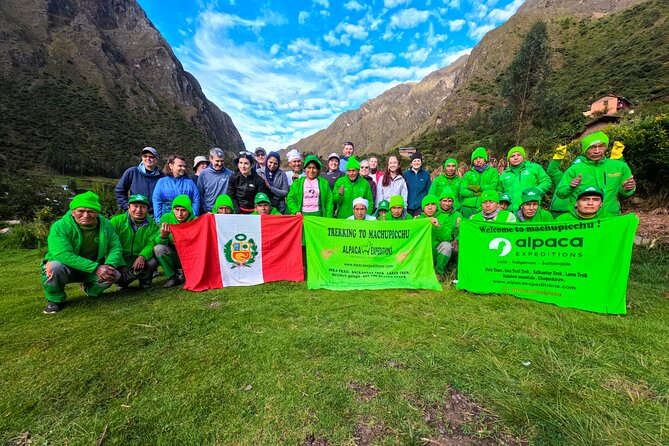
The hard way to Machu Picchu is the memorable way. This four-day trek follows the original Inca Trail from Km 82 to the Sun Gate, with expert local guides, hot meals, porters, and camping included. I especially like the small group of up to 14 people and the care built into the operation, including a guide at the back, first-aid supplies, oxygen, and a satellite phone. I also like the food program, since meals are cooked fresh along the route rather than relying on basic trail snacks. The main caution is simple: this is a serious high-altitude hike, not a gentle walk to Machu Picchu.
You leave Cusco at about 4:20 in the morning on day one, and the second day takes you over Dead Woman’s Pass at 4,215 meters. That means early starts, steep stone steps, and tired legs. Still, the rewards come steadily: ancient sites, mountain views, cloud-forest paths, and the powerful first sight of Machu Picchu from Intipunku, the Sun Gate.
The $795 price is fair for what is covered: entrance fees, four breakfasts, three lunches, three dinners, camping, drinking water, transfers, porters, and the return train. You should budget extra for a sleeping bag, trekking poles, an air mattress, travel insurance, and crew tips. Book well ahead, too. This trek is commonly reserved around 108 days before departure.
In This Review
- Key points to know before you book
- What the $795 price really covers
- Day one: from Cusco to the first Inca ruins
- Day two: Dead Woman’s Pass and the hardest climb
- Day three: cloud cities, terraces, and Wiñay Wayna
- Day four: walking through the Sun Gate to Machu Picchu
- Guides, porters, and the human side of the trek
- Fitness, altitude, and what kind of hiker fits best
- Group size, timing, and small practical details
- Should you book this Inca Trail trek?
- FAQ
- How long is the Classic Inca Trail trek?
- Where does the trek begin?
- How high is Dead Woman’s Pass?
- How difficult is the trek?
- What meals are included?
- Is camping equipment included?
- How much luggage can a personal porter carry?
- Is the train back to Cusco included?
- Are Huayna Picchu tickets included?
Key points to know before you book
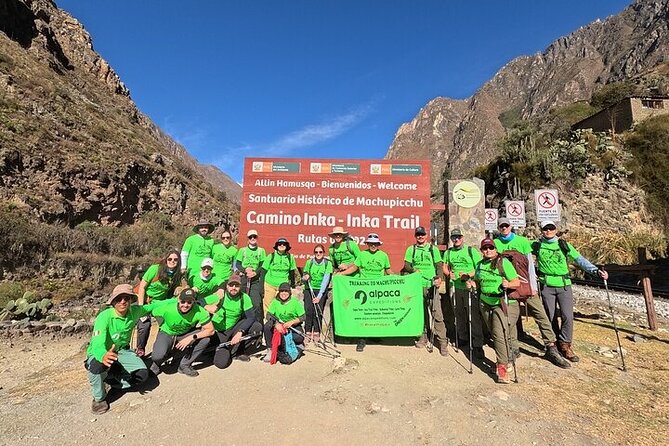
- Dead Woman’s Pass is the big test: The second day includes a four-hour climb to 4,215 meters, making fitness and pacing essential.
- You enter Machu Picchu through the Sun Gate: The approach gives you a gradual arrival and a different view from the usual day-trip entrance.
- The food is a major strength: Trekking chefs prepare hot meals at camp, with breakfast, lunch, dinner, and drinking water supplied.
- You carry only a daypack if you use the porter allowance: Each person may send up to 7 kilograms with a personal porter.
- Safety support is unusually clear: A guide stays behind the group, and the team carries a first-aid kit, oxygen tank, and satellite phone.
- The group stays fairly small: The maximum is 14 people, which helps keep the walking pace and guide attention manageable.
What the $795 price really covers
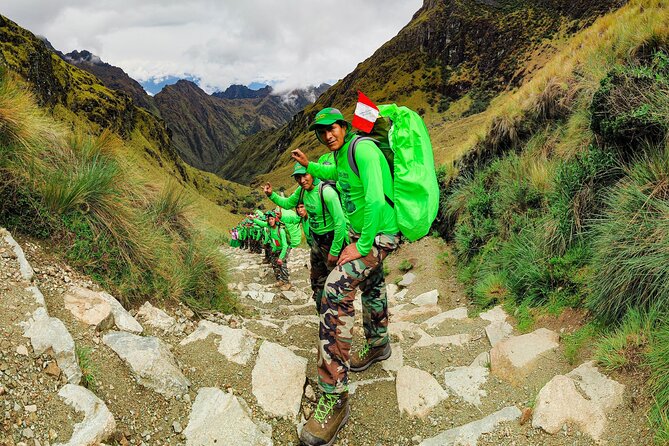
At $795 per person, this is not a bare-bones trek. The price includes the essential services that make a four-day high-altitude route possible: permits and entrance fees, transport from Cusco, camping, food, porters, water, and the train back from Aguas Calientes.
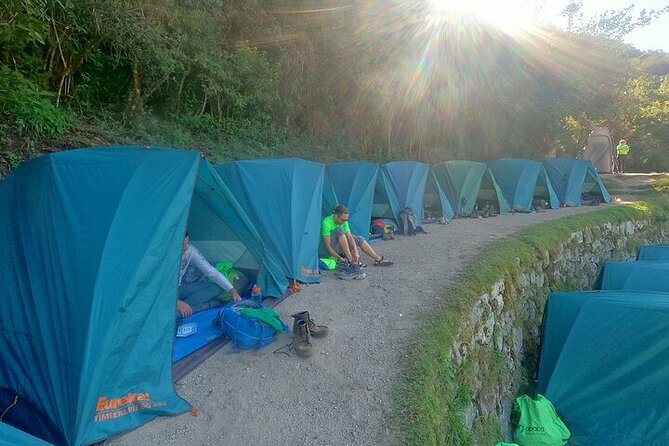
The camping setup is better than the phrase tent camping may suggest. You sleep in four-person Eureka tents used by only two people, giving you more room for your gear and a little breathing space after a long day. A portable chemical toilet is reserved for the group, which matters on a route where facilities are limited.
You also receive a personal porter allowance of up to 7 kilograms per person. That can make a real difference. You still carry a daypack with items you need during the day, but the porter service lets you leave heavier clothing and overnight gear out of your pack.
Sleeping bags, trekking poles, and air mattresses are not included, though they are available to rent. Travel insurance is also your responsibility. Crew tips are optional, but you should plan for them as part of the total cost if the guides, porters, and cooks provide the level of service this tour promises.
The practical value here is strong. You are paying for a supported expedition, not only a guide walking beside you. Meals, camp work, safety gear, and luggage support remove much of the logistical burden, allowing you to focus on the trail.
More Machu Picchu trips:
- Machu Picchu: 4-Day Inca Trail Trek with Panoramic Train Ride
★ 5.0 · 4,568 reviews - Short Inca Trail to Machu Picchu 2D/1N
★ 5.0 · 3,007 reviews - 2-Day Inca Trail to Machu Picchu with Panoramic Train
★ 5.0 · 1,876 reviews
Day one: from Cusco to the first Inca ruins
The day begins early, with hotel pickup in Cusco at about 4:20 a.m. You travel to the porters’ house in Ollantaytambo, where the trekking chef prepares breakfast. After another hour on the road, you reach Piscacucho, also called Km 82, the starting point of the classic route.
This early departure is tiring, but it serves a purpose. The group reaches the trailhead with the full day ahead, and the first walking hours introduce you to the rhythm of the expedition. Take time to arrange your pack, water, layers, and walking poles before setting off. A rushed start is rarely a smart start at altitude.
The first major stop is Llactapata, an Inca site that gives the route an immediate sense of purpose. You are not simply walking through mountain scenery. You are following an old stone route past the remains of the civilization that built the road system and ceremonial sites around Machu Picchu.
After about two more hours, you stop for lunch. The trekking crew sets up camp and cooks on location, so you receive a hot meal rather than a packed sandwich. That pattern continues throughout the trek and is one of the experience’s strongest features.
The first day lasts about seven hours. It is a useful introduction, but do not treat it as an easy warm-up. You are already dealing with an early wake-up, altitude, uneven stone paths, and a full expedition pack if you have not used the porter allowance.
Day two: Dead Woman’s Pass and the hardest climb
Day two is the physical heart of the trek. After breakfast, you climb for about four hours toward Warmi Wañusqa, better known as Dead Woman’s Pass. At 4,215 meters, it is the highest point on the classic Inca Trail.
The climb is steady and demanding. Your best strategy is to walk at a pace you can maintain, not the speed of the strongest person in the group. The guides are there to help set a sensible rhythm, and the promise that one guide remains behind the group is reassuring for anyone who needs to move slowly.
At the pass, you can look back across the route you have covered and ahead toward the descent to the Pacaymayu River. The view is the payoff, but the descent requires care. Stone steps can be hard on knees, especially after the climb, so trekking poles are worth considering.
After lunch and a rest, the route rises again toward Runccuracay Pass. You also visit the Runccuracay archaeological site and see two waterfalls from the trail. The second climb is shorter than the morning ascent, but your legs will already know they have worked hard.
The group then continues toward Chaquicocha, or Dry Lake, for the night’s camp. A happy hour from the trekking chef gives the evening a welcome lift before dinner. This is the longest day, about nine hours, and the one most likely to test your mindset.
You do not need to be a competitive hiker, but you do need moderate physical fitness and patience. The strongest practical advice from the experience is to take your time. Several people who found the hike tough still described the crew as a major reason they completed it. Guides named in the feedback include Rodrigo, Soledad, Liz Andro, Cipian, Jaime, Jan Carlo, Nilton, Isaac, Jose, Nancy, and Tino. Individual guide assignments can change, but the repeated praise for personal support is worth noting.
Day three: cloud cities, terraces, and Wiñay Wayna
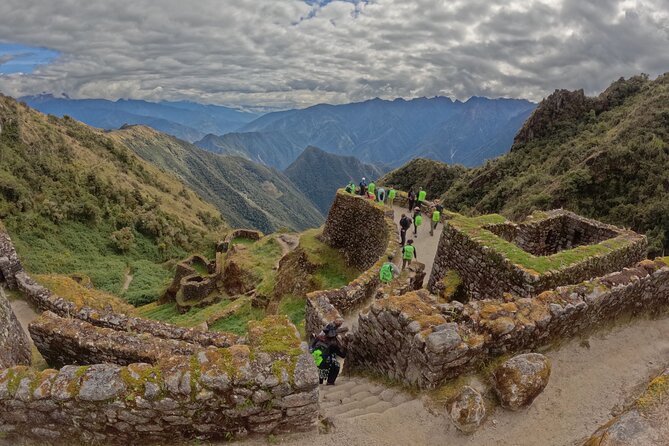
Day three is the easiest walking day, but it is not short on scenery or archaeology. You begin with views toward the snowy peak of Salkantay and the Vilcabamba Mountains, then climb to Phuyupatamarka at about 3,600 meters.
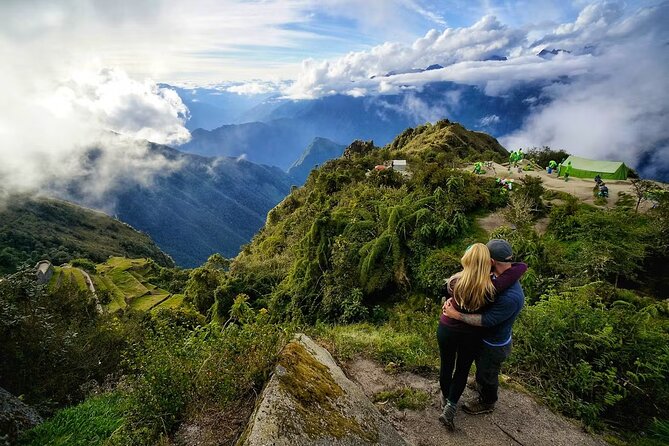
From Phuyupatamarka, you can look toward the Urubamba River and catch a distant glimpse of Machu Picchu. It is an important moment because the destination begins to feel close, while the route still has one more major site and a final camp ahead.
The path then descends for about three hours. Descending Inca steps can be more tiring than expected, so keep your knees soft and avoid racing downhill. Along the way, you visit Phuyupatamarka, often translated as Town in the Clouds, and Intipata, known for its agricultural terraces.
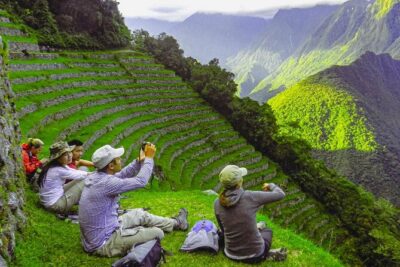
Lunch is served at the final campsite. After you eat and rest, you continue to Wiñay Wayna, one of the largest and most striking archaeological sites on the trail. Its terraces and stonework make it a fitting final site before Machu Picchu.
This day lasts about five hours, though the site visits and rest stops shape the pace. The shorter schedule is deliberate. You need enough energy for the early walk to the Sun Gate on day four.
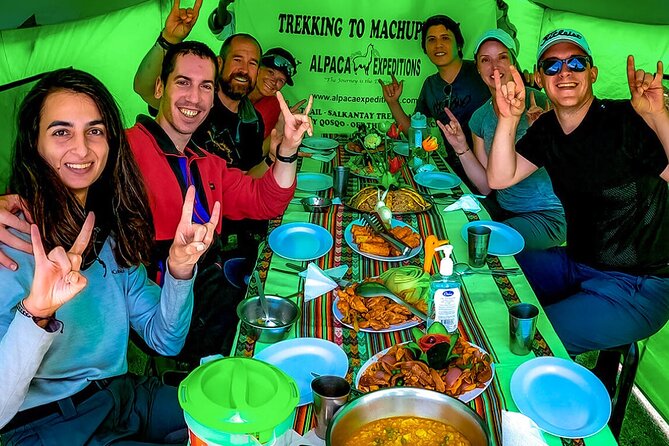
The campsites are part of the experience, not just places to sleep. You eat meals prepared by the expedition cooks, spend time with the group, and watch the mountains change as the route moves closer to Machu Picchu. The food receives unusually strong praise, with some hikers calling it among the best meals they had in Peru. That is a welcome surprise when you are eating in remote camps.
More hikes and treks in Cusco:
- Salkantay Classic Trek 5 Days from Cusco
★ 5.0 · 4,062 reviews - 4-Day Salkantay Trek with Sky Camp Stay
★ 5.0 · 3,346 reviews - Salkantay Trek 5D/4N with Glass Cabins, Domes and Hobbit House
★ 5.0 · 2,488 reviews - Rainbow Mountain Full Day Trek
★ 5.0 · 1,469 reviews
Day four: walking through the Sun Gate to Machu Picchu
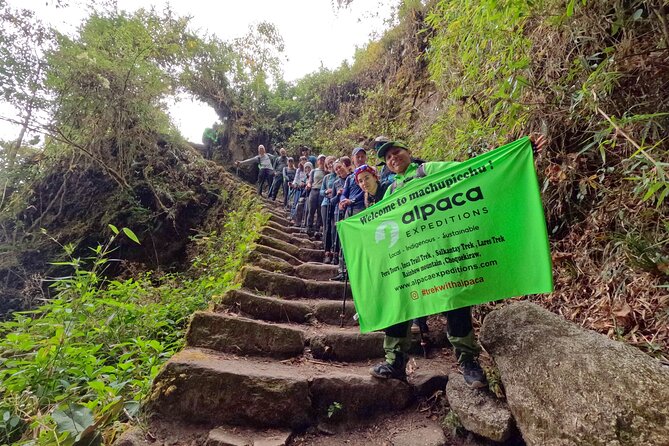
The final morning begins with breakfast and farewells to the porters, cooks, and support crew. You then walk for about two hours to Intipunku, the Sun Gate.
This entrance changes the emotional pace of the visit. Instead of arriving by bus and walking straight into the citadel, you approach Machu Picchu on foot, with the ruins appearing from a higher viewpoint. Intipunku offers a distinct angle for photographs and gives you time to take in the setting before entering the main archaeological area.
After reaching Machu Picchu, your guide leads a tour of the citadel for about two hours. The guide’s role matters here. The stone walls and terraces are impressive on their own, but a strong explanation helps connect the structures, mountains, paths, and ceremonial spaces.
If you have booked Huayna Picchu, an extra hike is possible after the guided tour. Those tickets cost $75 each and must be reserved in advance. They are not included, so check your plans and fitness before adding another climb after four days on the trail.
After the citadel visit, the guide waits for you in Aguas Calientes. Lunch follows, then you go to the station for the included tourist-class train back. The provided information does not specify the final arrival time, so do not schedule a tight onward connection without confirming the exact train details.
Guides, porters, and the human side of the trek
The strongest part of this experience is its staff. You receive local and indigenous guides who explain Inca culture and history during the route. The company also promises to email written lecture material after the trek, which is useful if you want to revisit the historical details once your legs have recovered.
The guide system is practical. At least one guide remains behind the group, so you are not expected to keep up with the fastest hikers or fear being abandoned at the rear. First-aid-trained guides carry an emergency kit, oxygen, and a satellite phone.
The porters and cooks shape the trip just as much as the guides. Porters prepare camps and move gear, while trekking chefs cook all meals at camp. The food safety plan includes clean preparation, separation of raw and cooked food, thorough cooking, safe temperatures, and safe water and ingredients.
The company also presents itself as a fully local, indigenous operation. Its stated community work includes jobs, training, education, healthcare, and reforestation projects. That gives the price a wider purpose, though you should still judge the operation by its treatment of staff and the quality of the service you receive.
Fitness, altitude, and what kind of hiker fits best
You need moderate physical fitness for this trek. The route includes steep climbs, long descents, high altitude, early mornings, and uneven stone paths. Day two is the clear challenge, but fatigue can build across all four days.
I would recommend this experience if you already enjoy long walks, can manage sustained uphill effort, and are willing to move at a steady pace. You do not need to be young or exceptionally fast. People in their 50s have completed the route, though the physical demand can feel greater when the rest of the group is younger.
Your attitude matters. The trail has hard sections, and you may find yourself counting steps on Dead Woman’s Pass. Break the climb into small targets, drink water, use your poles if helpful, and listen to the guides.
You should think twice if you dislike camping, have no recent walking practice, or want a relaxed visit to Machu Picchu. The shorter Machu Picchu visits by train are easier. This trek is for people who want the route itself, not simply the ruins at the end.
Group size, timing, and small practical details
The maximum group size is 14 people, and at least two people must book together. Solo hikers can join a group, as one solo participant did, but the minimum booking rule still applies.
A briefing takes place at the company office at 6 p.m. the evening before departure. Treat it as essential. This is when you can clarify pickup details, rental gear, porter arrangements, and any questions about the next morning.
The tour offers hotel pickup in Cusco and mobile tickets. Confirmation is provided at booking. The experience operates throughout the stated period, with office hours listed as Monday through Sunday, 8 a.m. to 7:30 p.m.
The trek requires good weather. If poor weather cancels the departure, you are offered another date or a full refund. The same applies if the minimum number is not reached. Otherwise, the booking is non-refundable and cannot be changed, so only reserve once your dates and fitness plans are firm.
Should you book this Inca Trail trek?
You should book this Alpaca Expeditions trek if you want the full Inca Trail experience, including ancient sites, mountain passes, camping, and a dramatic walk through the Sun Gate. The $795 cost represents good value because it covers the hard-to-arrange pieces: permits, transport, meals, porters, camps, safety equipment, and the return train.
I would choose it for a first classic Inca Trail trek because the operation offers strong support without turning the route into a luxury trip. The guides, cooks, and porters are the main reason this demanding walk feels achievable.
Skip it if you want a soft adventure or a flexible booking. Dead Woman’s Pass is real work, the mornings are early, and the cancellation terms are strict. But if you prepare your legs, pack sensibly, and accept the tough sections, you get something far more lasting than a quick visit to Machu Picchu: you get the road that leads there.
FAQ
How long is the Classic Inca Trail trek?
The trek lasts approximately four days and three nights.
Where does the trek begin?
The walking route begins at Piscacucho, also called Km 82, after transport from Cusco.
How high is Dead Woman’s Pass?
Dead Woman’s Pass, or Warmi Wañusqa, reaches 4,215 meters, or 13,829 feet.
How difficult is the trek?
The tour requires a moderate level of physical fitness. Day two is the hardest, with about nine hours of hiking and the climb over Dead Woman’s Pass.
What meals are included?
The tour includes four breakfasts, three lunches, and three dinners. Meals are cooked by trekking chefs along the route, and drinking water is provided.
Is camping equipment included?
Camping and tents are included. Four-person Eureka tents are used by only two people. Sleeping bags and air mattresses are not included but can be rented.
How much luggage can a personal porter carry?
Each person may use a personal porter for up to 7 kilograms.
Is the train back to Cusco included?
An Expeditions tourist-class train is included for the return from Aguas Calientes on the final day.
Are Huayna Picchu tickets included?
No. Huayna Picchu tickets cost $75 each and must be booked in advance.
Just added in Cusco
- Cusco Private Transportation for 2026★ 5.0 · 4 reviews
- Private Transfer from Airport to Hotel in the City of Cusco★ 4.0 · 5 reviews
- Best Cusco walking tour: dinner street food tasting★ 4.5 · 11 reviews
- Private Tour to Pisac Market and Pisac Ruins★ 5.0 · 4 reviews
- Machu Picchu Day Trip With Panoramic Train from Cusco★ 5.0 · 10 reviews
- Sacred Valley Private Tour from Cusco, Guide and Driver only★ 5.0 · 4 reviews
- Sacred Valley of the Incas Tour★ 5.0 · 12 reviews
- Private Tour of the Mountain of Colours by Quad★ 5.0 · 7 reviews
Machu Picchu Tours, compared.
2-Day Inca Trail to Machu Picchu with Panoramic Train
Read our review →
From Cusco: Full-Day Group Tour of Machu Picchu
Read our review →
2-Day Tour: Sacred Valley and Machu Picchu by Train
Read our review →
Machu Picchu: Full-Day Tour from Cusco with Optional Lunch
Read our review →
Machu Picchu Full Day from Cusco by Panoramic Train
Read our review →
Browse the lists this tour appears in