
Reviewed · COLCA CANYON AND AREQUIPA TOURS
Arequipa: The White City Origins – Sillar Route Half Day
White stone gives Arequipa its character. This four-hour morning tour takes you beyond the city center to the quarries that supplied the pale volcanic stone used in Arequipa’s churches, mansions, and public buildings. I like the chance to meet working stonecutters at Añashuayco Quarry, and I like that the tour continues to Culebrillas, where narrow walls hold Wari petroglyphs. The main drawback is simple: entrance fees, small payments to master cutters, food, and hotel drop-off are not included.
The price is $23 per person, which is fair if you want transportation, an English or Spanish guide, and both quarry areas in one short outing. Guide Andreas received special praise for explaining not only the Sillar Route but also Arequipa, its districts, and Peruvian culture. The tour is a good fit for a first visit, though someone interested only in one quarry may save money by taking a taxi.
In This Review
- Key points to know before you go
- Why Sillar matters to Arequipa
- Morning pickup from central Arequipa
- Añashuayco Quarry and the first look at sillar
- The Pink Sillar area in changing sunlight
- Meeting the artisans and seeing old tools
- Culebrillas Quarry and the Wari petroglyphs
- What the $23 price really includes
- Who will enjoy this half-day outing
- Practical advice for a smoother morning
- Should you book the Sillar Route?
- FAQ
- How long does the Sillar Route tour last?
- What time does the tour start?
- Is hotel pickup included?
- Is hotel drop-off included?
- What languages are available?
- What is the entrance fee?
- Are food and drinks included?
- Can I buy handicrafts?
- Is the tour suitable for children?
- What should I bring?
Key points to know before you go
- Añashuayco Quarry sits below Chachani Volcano, beside the Chili River, giving the first stop both cultural interest and dramatic natural scenery.
- Pink Sillar changes color in sunlight, caused by a mix of white volcanic stone, sand, and other rocks.
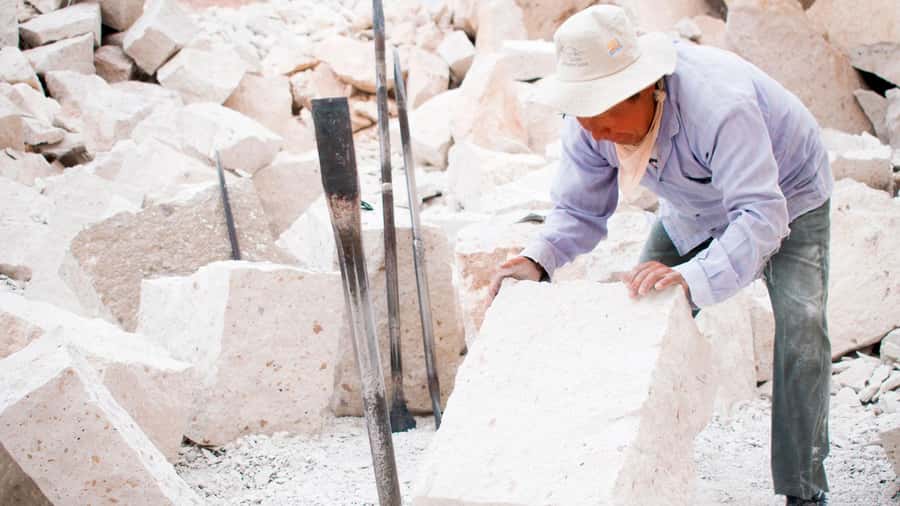
- Stonecutters still use ancestral tools, so you see how decorative panels, facades, and carvings are made.
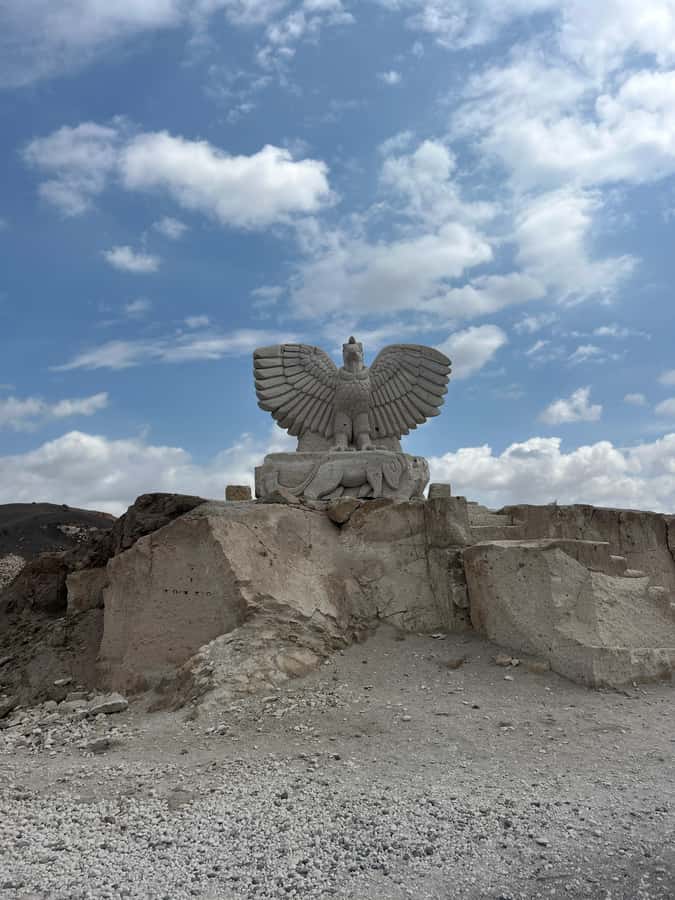
- Culebrillas Quarry adds archaeology, with Wari petroglyphs of birds, felines, and snakes on ravine walls reaching about 30 meters.
- The tour lasts four hours, with morning pickup from centrally located hotels in Arequipa’s historic center.
- Bring cash, since entrance tickets cost S/ 5 per person and payments to master cutters are separate.
Why Sillar matters to Arequipa
Arequipa is often called the White City because so many of its historic buildings use sillar, a pale volcanic stone formed from ash and rock. The material gives the city center a clean, bright look, especially in strong Andean sunlight.
That color is only part of the story. Sillar is also workable enough for detailed carving, which is why historic facades often include columns, floral patterns, religious figures, and other decoration. The stone helped shape the look of Arequipa, now recognized as a UNESCO World Cultural Heritage site.
I find this context useful because the quarry visit changes how you see the city afterward. A pale wall in central Arequipa is no longer just an attractive background for a photograph. You can connect it to the quarry, the cutting process, and the people who continue to work the stone.
The experience also gives you a look at a local craft rather than only another viewpoint or church interior. You are not simply told that sillar exists. You see where it comes from and how it becomes part of the city.
More Colca Canyon trips:
- 2 day 1 night trek / Colca Canyon
★ 5.0 · 1,069 reviews - From Arequipa: Colca Canyon Full-Day Guided Tour with Meals
★ 4.5 · 982 reviews - Tour to the Salinas Lagoon and National Reserve in Arequipa
★ 4.5 · 548 reviews
Morning pickup from central Arequipa
Transportation and pickup from centrally located hotels in the historic center are included. You should wait in the hotel lobby about 10 minutes before the scheduled pickup time.
That arrangement makes the outing easy to fit into a short stay. The tour lasts four hours, so you can still use part of the afternoon for Arequipa’s central churches, museums, markets, or restaurants. It also avoids the trouble of arranging transport to quarries outside the center.
The pickup area is limited. If your hotel is not in the historic center, you should confirm the meeting point before booking. Hotel drop-off is not included, so plan to return to your accommodation independently after the group comes back to central Arequipa.
The tour includes a professional guide in English or Spanish. This matters at the quarries, where the stonework and petroglyphs benefit from explanation. Without a guide, you could walk among pale walls and carvings without understanding how they connect to Arequipa’s buildings or the Wari culture.
Añashuayco Quarry and the first look at sillar
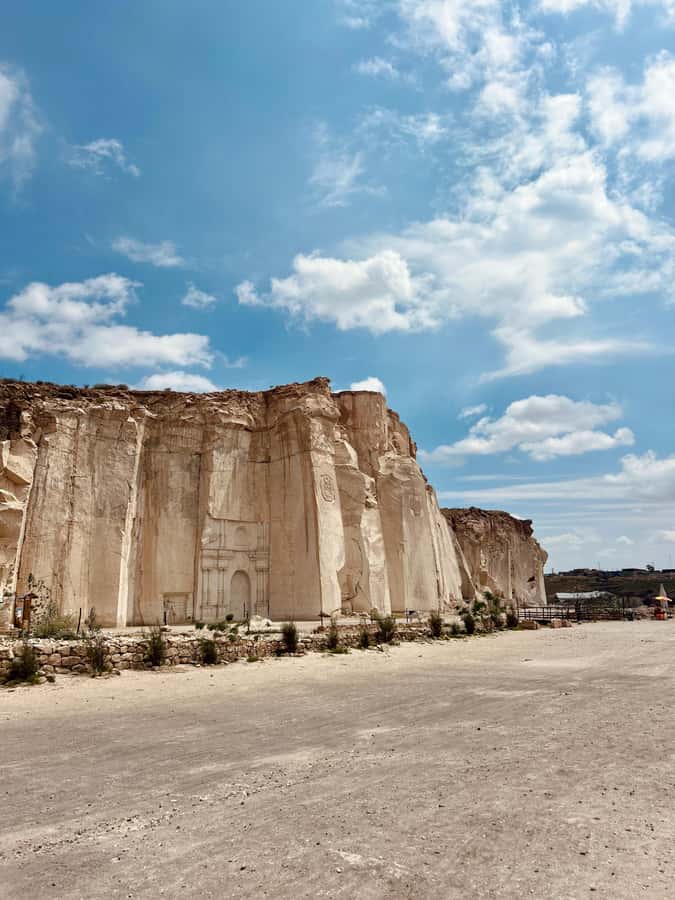
The route heads toward Cerro Colorado and then reaches the Añashuayco Quarries. The quarry lies at the foot of Chachani Volcano and next to the Chili River, so the setting is more than an industrial worksite.
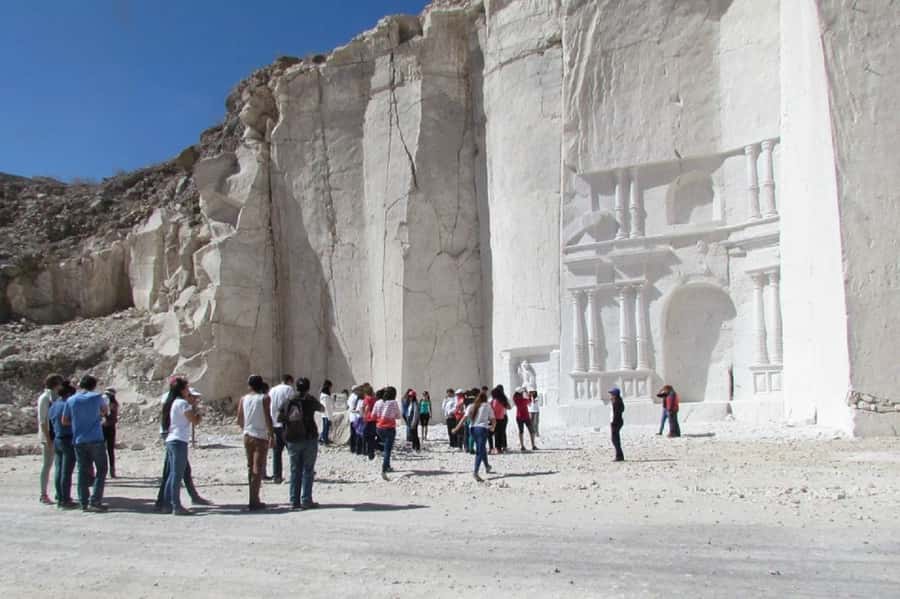
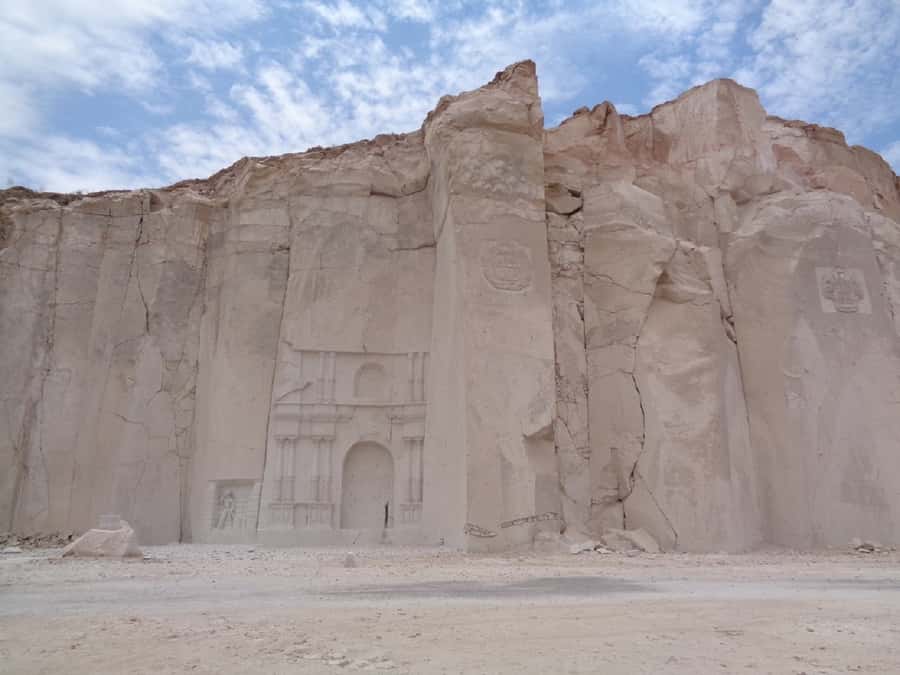
The first strong impression comes from the scale of the cut stone and the open surroundings. Here, the tour introduces you to master stonecutters and the areas where they work. You can see handcrafted examples that imitate or reproduce colonial facades, along with carved decorative pieces.
This is the part of the outing that best explains Arequipa’s architectural style. The stone is not only cut into blocks for walls. It can also be shaped into detailed designs, helping explain why the city’s historic buildings have such distinctive fronts.
You will also have an opportunity to watch sillar extraction. The information provided does not promise a single fixed demonstration or a particular working schedule, so the exact activity may depend on what is taking place when you arrive. Still, seeing the quarry itself gives you a direct sense of the material’s origin.
The Pink Sillar area in changing sunlight
One of Añashuayco’s more unusual features is the Pink Sillar area. The stone takes on an intense pink shade in sunlight because of the combination of sillar, sand, and rocks.
This is a small but worthwhile detail. Much of Arequipa’s famous stone is pale, so the pink section shows that the quarry material is not all one uniform color. The effect also depends on the light, making this a good place to pay attention rather than rush through for a quick photograph.
If photography matters to you, bring sunglasses and a hat, but do not forget sunscreen. The tour takes place outdoors, and the supplied information specifically recommends protection from the sun. Comfortable clothes will also make walking around the quarry easier.
The route is suitable for all ages, but the experience is still a walking outing over quarry ground. Children two and younger can join free if they sit on a parent’s lap. Adults should be ready for an outdoor setting rather than a polished museum visit.
More city tours in Arequipa:
- Arequipa: Walk through the Historic Center of the City
★ 4.9 · 87 reviews - Arequipa Walking Tour city center and drinks experience
★ 5.0 · 72 reviews - Arequipa Food Tour: Ancestral Cuisine & City Tour
★ 5.0 · 52 reviews - Arequipa, Historic and Colonial City and Santa Catalina Monastery
★ 4.5 · 42 reviews
Meeting the artisans and seeing old tools
The artisan workshops add a human side to the quarry. You can learn how sillar is shaped and see ancestral tools used in the process.
This stop is valuable because it connects the raw material to a finished object. You may see how a rough block becomes a carved piece, facade detail, or small handicraft. The exact objects on display can vary, but the central lesson remains clear: sillar work depends on patience, hand skills, and an established craft tradition.
You can buy handicrafts if you wish. The purchase is optional, and payments to the master cutters are not included in the tour price. Bring cash if you might want a carving or would like to pay the artisans directly.
I would treat the workshop as a chance to support the people doing the work, not as a compulsory shopping stop. You can look, ask questions, and decide for yourself. The tour gives you access to the craft area, but it does not include a purchase or a payment to the stonecutters.
Guide quality can shape this part of the morning. Andreas was praised for being precise, helpful, and clearly passionate about the subject. Fiorella was also singled out for her friendliness and good humor. Those details suggest that the guide can add useful local context, though the assigned guide may vary by departure.
Culebrillas Quarry and the Wari petroglyphs
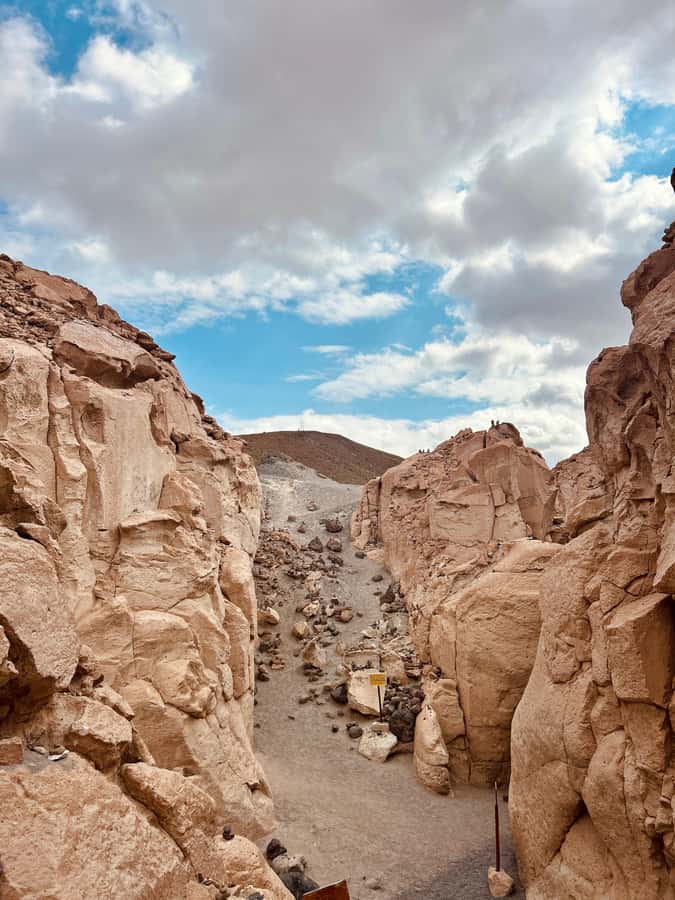
After Añashuayco, the tour continues to Culebrillas Quarry. Here, water and wind have shaped a narrow ravine with walls rising to about 30 meters.
The change in setting makes the second stop feel different from the first. Añashuayco focuses on active quarry work, stonecutting, and the modern craft tradition. Culebrillas combines geology with archaeology.
You walk through the narrow walls and look for petroglyphs showing animals such as birds, felines, and snakes. These drawings are linked to the Wari culture, an Andean civilization that flourished from the seventh to the thirteenth centuries AD.
The petroglyphs are the strongest reason to choose the full route instead of visiting only one quarry. They add an older layer to the morning and show that the area’s importance did not begin with colonial construction or modern tourism.
Keep your expectations sensible. This is not presented as a large archaeological complex with extensive facilities. The appeal lies in seeing the carvings in their ravine setting and understanding their connection to the Wari people. A guide is particularly useful here because the drawings may not be immediately obvious, and their meaning requires context.
The narrow ravine may also feel less straightforward to walk than a paved city street. The tour is described as suitable for all ages, but comfortable clothing and sensible preparation remain important. If you have walking concerns, ask the operator for current conditions before departure.
What the $23 price really includes
At $23 per person, the outing offers solid value for a four-hour trip outside the city center. You receive transportation, a live professional guide in English or Spanish, hotel pickup from central Arequipa, and visits to two quarry areas.
The value is strongest if you are short on time or do not want to arrange local transport. One four-hour outing covers the source of Arequipa’s building stone, working artisans, the Pink Sillar area, extraction methods, a ravine, and Wari petroglyphs.
The extra costs are modest but should be included in your budget. Entrance tickets cost S/ 5 per person in local currency. Food and drinks are not included, and you may also need cash for a payment to the master cutters or for optional handicrafts.
Hotel drop-off is another practical limitation. The tour returns to the city center, but you arrange the final trip to your hotel yourself. That is rarely a major problem if you stay centrally, but it is worth knowing before you plan a tight afternoon connection.
A taxi may be cheaper if you want only Añashuayco or only the Culebrillas area. The tour earns its price through the combination of transport and interpretation. I would choose the organized outing if you want both sites and cultural explanation. I would consider a taxi if you already know the area, speak Spanish, or prefer to set your own pace.
Who will enjoy this half-day outing
This tour suits you best if you want to understand Arequipa beyond its main plaza. It gives you the background behind the city’s famous white buildings and takes you to places that most short city walks do not cover.
It also works well for a first visit because the timing is compact. Four hours is long enough to reach the quarries and see both major areas, but short enough to leave room for other plans.
Families can consider it because the activity is suitable for all ages, and children two and younger are complimentary when seated on a parent’s lap. Parents should still prepare for outdoor walking, sun exposure, and quarry surfaces.
The tour is less suitable if you want a long, slow photography session or a private visit with no fixed schedule. The half-day format means you move through several parts of the route within a set window.
I would also think twice if your only goal is to buy stone souvenirs. The artisan workshops are part of the cultural experience, but the tour is not simply a shopping trip. Its real value comes from seeing the quarries and understanding how sillar connects to Arequipa.
Practical advice for a smoother morning
Wear comfortable clothes and shoes appropriate for walking around an outdoor quarry and ravine. Bring sunglasses, sunscreen, and a hat, since the tour takes place in exposed areas.
Carry your passport and cash. The passport is listed among the recommended items, while cash is useful for the S/ 5 entrance ticket, payments to master cutters, and optional handicrafts.
Do not expect food or drinks to be provided. The four-hour duration may pass quickly, but you should plan your morning accordingly.
English and Spanish guiding is available. If you have a strong preference, select the language carefully when arranging the tour or confirm it with the provider.
Free cancellation is available up to 24 hours before the activity for a full refund, and you can reserve now and pay later. Those terms help if your Arequipa schedule may change, though you should still check the booking conditions when reserving.
Should you book the Sillar Route?
I would book this tour if you want a short, guided explanation of Arequipa’s white stone and prefer to visit both quarry areas without arranging transport. The combination of Añashuayco’s stonecutters, Pink Sillar, and Culebrillas’ Wari petroglyphs gives the morning a good range of sights.
The experience is especially worthwhile for first-time visitors, families, and anyone with only a few days in Arequipa. Andreas and Fiorella were both praised for their helpful, warm guiding style, which is important on a route where explanation adds much of the value.
Skip it if you only want one quarry, need hotel drop-off included, or prefer complete freedom to linger. In that case, a taxi may be the simpler choice. For $23, though, this half-day route offers a practical look at the people, stone, and ancient markings behind Arequipa’s famous white city center.
FAQ
How long does the Sillar Route tour last?
The tour lasts four hours.
What time does the tour start?
It takes place in the morning. Exact starting times depend on availability when you book.
Is hotel pickup included?
Yes. Pickup is included from centrally located hotels in Arequipa’s historic center.
Is hotel drop-off included?
No. The tour returns to the city center, but hotel drop-off is not included.
What languages are available?
The live guide is available in English and Spanish.
What is the entrance fee?
The entrance ticket costs S/ 5 per person, paid in local currency.
Are food and drinks included?
No. Food and drinks are not included in the tour price.
Can I buy handicrafts?
Yes. You may purchase handicrafts at the artisan workshops, but purchases are optional.
Is the tour suitable for children?
Yes. The activity is suitable for all ages. Children two and younger are complimentary if they sit on a parent’s lap.
What should I bring?
Bring your passport, sunglasses, sunscreen, comfortable clothes, a hat, and cash.
Just added in Arequipa
- Sillar Route★ 5.0 · 4 reviews
- Salinas Lagoon + Mini Volcano DE Lojen★ 5.0 · 9 reviews
- 3-Day Colca Canyon trek with Professional Guide★ 5.0 · 40 reviews
- Full Day Tour To The Salt Lake Salinas in Arequipa★ 4.5 · 34 reviews
- Walking City tour including the Monastery of Santa Catalina★ 5.0 · 6 reviews
- Trekking, Waterfalls and Thermal Baths★ 4.5 · 47 reviews
- Downhill Tour – Mountain Bike in Arequipa★ 3.5 · 5 reviews
- 2 Days 1 Night trekking Through Colca Canyon, Private room★ 5.0 · 16 reviews
Colca Canyon and Arequipa Tours, compared.
From Arequipa: Colca Canyon Full-Day Guided Tour with Meals
Read our review →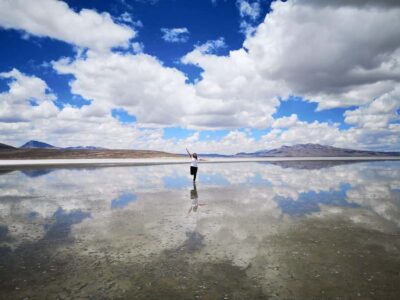
Tour to the Salinas Lagoon and National Reserve in Arequipa
Read our review →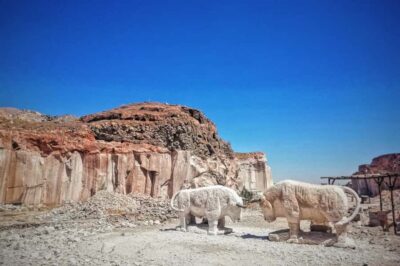
Rafting Arequipa – Chili River Canoeing – Cusipata Rafting Arequipa
Read our review →
Chili River White Water Rafting with Hotel Pickup
Read our review →
Browse the lists this tour appears in