
Reviewed · INCA TRAIL AND SALKANTAY TREKS
From Arequipa: Sillar Route Trek
Stone tells Arequipa’s story. This affordable half-day outing takes you from volcano viewpoints to the working Añashuayco quarries, where pale volcanic stone becomes the city’s churches, mansions, and streets. I like the mix of working stone masonry and the quiet walk through Culebrillas Canyon. I also like that the tour fits neatly into a morning or afternoon, leaving you time for Arequipa’s other sights.
The main drawback is that some stops can feel more staged than cultural, especially the modern stone sculptures and photo areas at Añashuayco. You should also expect a short walk over uneven ground, a separate entrance charge of 18 soles, and possible crowding at the canyon.
In This Review
- Key points to know before you go
- Why Arequipa Was Built from Sillar
- Starting at C. Álvarez Thomas 115
- The Volcanoes and Andenerías Viewpoint
- Entering the Añashuayco Quarry
- Meeting the Stonemasons
- Walking into Quebrada de Culebrillas
- Apachetas and the Return to Arequipa
- Is $12 Good Value?
- Morning or Afternoon?
- Who Will Enjoy This Tour?
- Should You Book the Sillar Route Trek?
- FAQ
- How long does the Sillar Route Trek last?
- What is included in the tour price?
- How much are the entrance fees?
- Where does the tour begin and end?
- Do I need to walk during the tour?
- Is the tour available in English?
Key points to know before you go
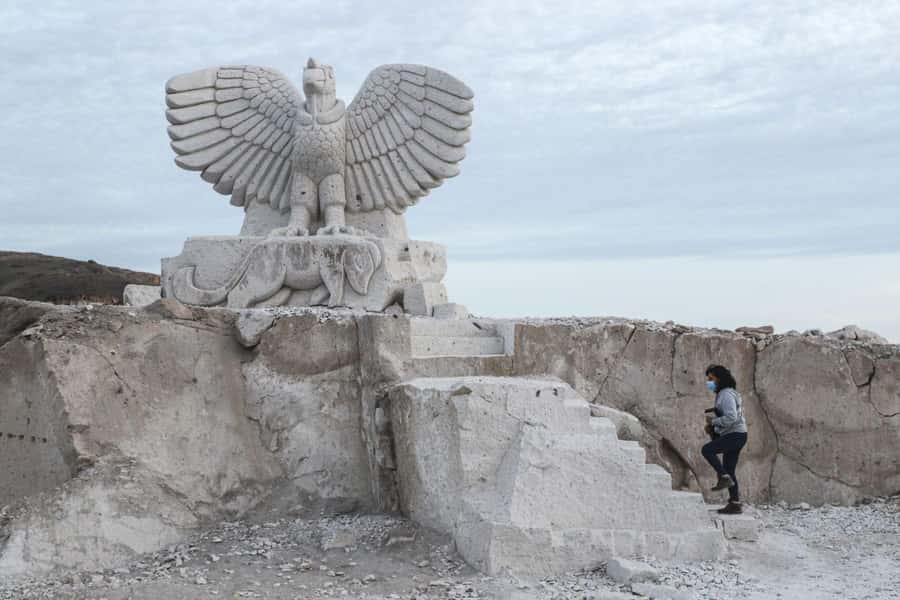
- Añashuayco is still a working quarry: You can see how local stonemasons cut and shape the white volcanic stone known as sillar.
- Culebrillas Canyon is the scenic high point: Its narrow walls rise 15 to 20 meters, with ancient Wari petroglyphs near the end of the walk.
- The tour costs $12, plus 18 soles: Transportation and a guide are included, but entrance fees are paid separately.
- The afternoon departure has better light: The 2:00 PM option can bring warm sunset color to the quarry and canyon.
- Walking shoes matter: The canyon route is short, but the ground is uneven and not ideal for anyone with serious walking problems.
- Guides make a big difference: Guides such as Alexandra, Julia, Mike, Jose, and Roni have been praised for clear English, useful explanations, and local recommendations.
Why Arequipa Was Built from Sillar
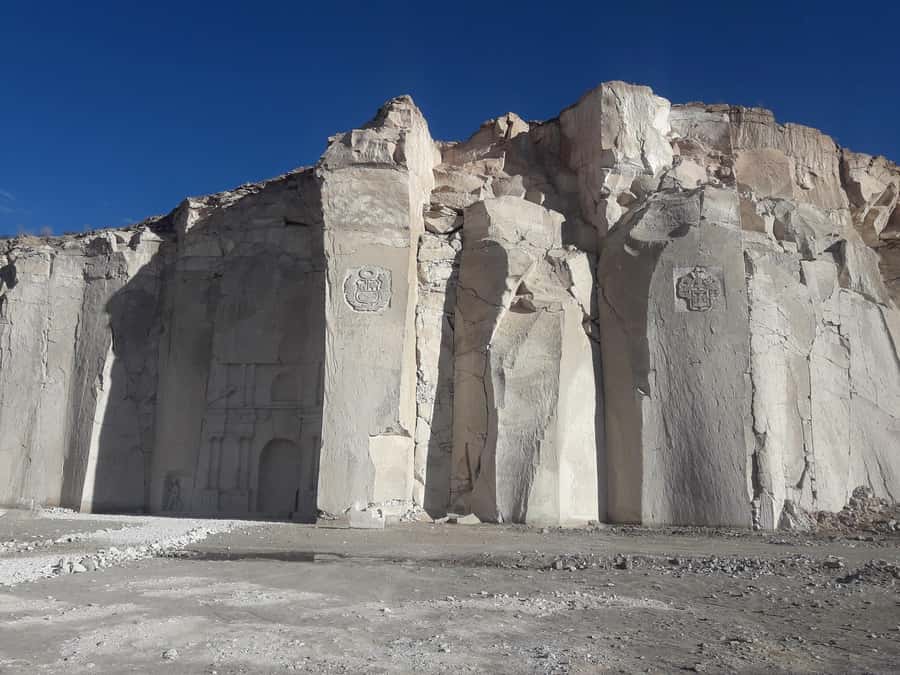
Arequipa is often called the White City, and sillar helps explain why. This pale volcanic stone came from ash and volcanic material deposited in the region, then hardened into the ignimbrite blocks used throughout the city.
The Sillar Route takes you beyond the polished façades of central Arequipa. Here, you see the source of that stone in the dry hills outside town. The quarries are not simply old ruins put on display. Añashuayco remains active, with stonemasons working the rock and shaping blocks by hand.
That living element gives the visit its value. You are not only looking at a church façade or a carved souvenir. You are seeing the material at its source, learning how it is extracted, and watching a craft that still supports local workers.
The guide usually explains how sillar is produced and how it has been used in Arequipa. The quality of this explanation can vary by guide, but the strongest guides add useful local details, including the origins of the volcanoes’ names, Arequipeño food, and the meaning of stacked stones called apachetas.
More hikes and treks in Arequipa:
- 2 day 1 night trek / Colca Canyon
★ 5.0 · 1,069 reviews - Colca Canyon Trek 3 Day 2 Night
★ 5.0 · 328 reviews - From Arequipa: 2-Day Colca Canyon Trekking Tour
★ 4.8 · 243 reviews
Starting at C. Álvarez Thomas 115
The meeting point is at the main office on C. Álvarez Thomas 115, near the central part of Arequipa. Your name is checked against the group list, followed by basic instructions before departure.
The morning schedule begins around 9:15 AM. The afternoon option begins at 2:00 PM. The entire outing lasts about four hours, though the exact return time can shift slightly with traffic, group size, and the order of the stops.
Transport is by van or tour vehicle. One group reported about 25 people, so you should not expect a private excursion. The vehicle has been described as comfortable and clean, though one report noted that it was not air-conditioned. Another mentioned an open-top bus, so the vehicle type may vary.
That matters in Arequipa’s strong sun. Bring sunscreen, a hat, and water. If your vehicle is open or the windows stay open, the dry air and dust can make eye protection useful too.
The Volcanoes and Andenerías Viewpoint
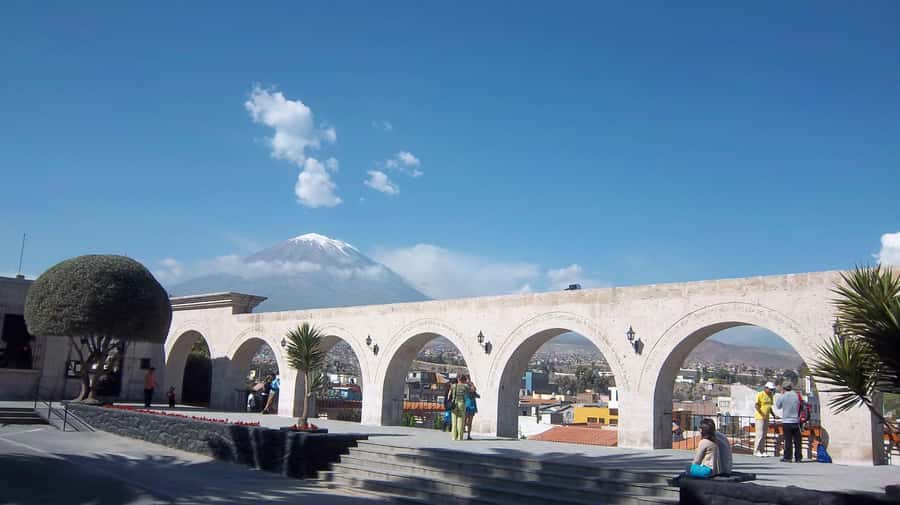
The route may include a viewpoint early in the outing or later, depending on the day’s arrangement. The Volcanoes and Andenerías Viewpoint gives you a broad look toward Arequipa’s volcanic surroundings and the Chilina Valley.
This is a short photo stop rather than a long walk. You will have time to look, listen to the guide, and take photographs, but do not expect a major hiking viewpoint. The attraction is the setting: volcanic peaks, dry hills, and the agricultural terraces known as andenerías.
Some people may find this stop unnecessary if they have already visited Arequipa’s Yanahuara viewpoint, especially since Yanahuara is easy to reach from town. Still, the route gives you a useful visual introduction to the countryside before you reach the quarries.
The timing can affect the mood. Morning light is clearer and brighter. On the afternoon departure, the late light can soften the pale stone and create warmer photographs, especially near sunset. The tradeoff is traffic on the return to Arequipa, which can make the final journey slower.
Entering the Añashuayco Quarry
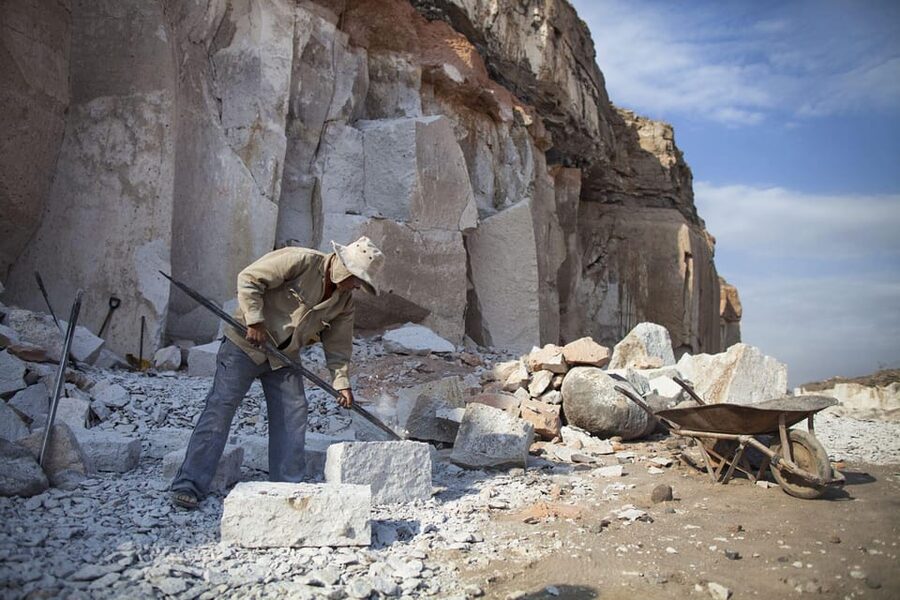
Añashuayco is roughly 45 minutes from the city, depending on traffic. As you approach, the pale quarry walls become the main attraction. Extraction has cut tall cliffs into the ignimbrite, creating an immense canyon-like space.
The first impression is striking but somewhat industrial. You are looking at a working extraction site, not a preserved archaeological monument. The walls show how much stone has been removed over time, while the dust, machinery, and carved blocks make the place feel like a workplace rather than a theme park.
The guide explains the origin and use of sillar, then gives you free time to explore and take photographs. Some people appreciate the chance to wander at their own pace. Others find 45 minutes a little loose at this stop, especially if the guide’s explanation is brief or if the group spends too much time waiting for photos.
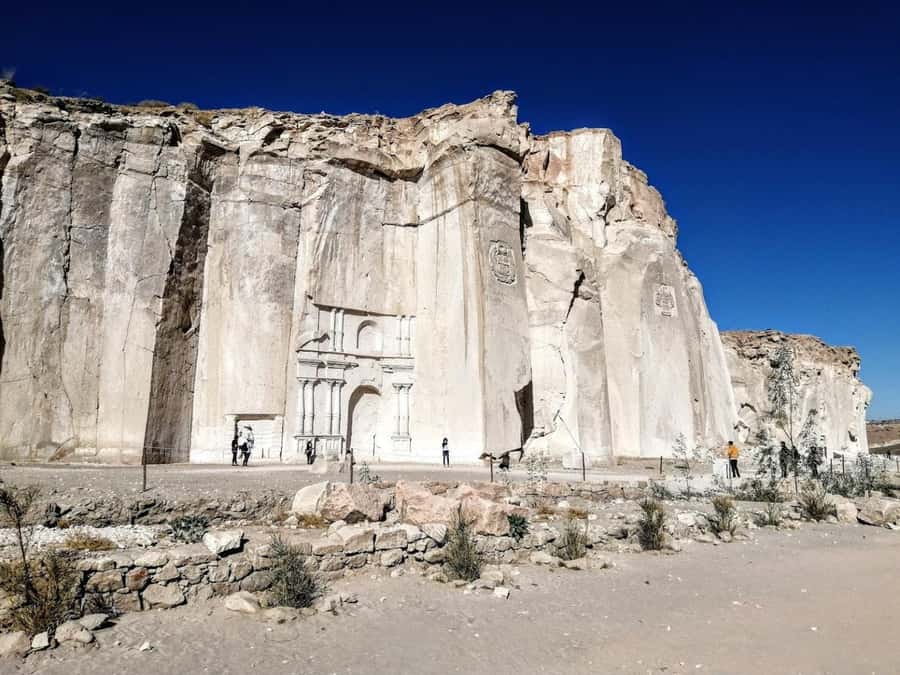
The most recognizable feature is the large carving of the Church of the Company of Jesus. Local stonemasons created this mega carving in the quarry, turning a plain wall of volcanic stone into a rough-scale architectural display.
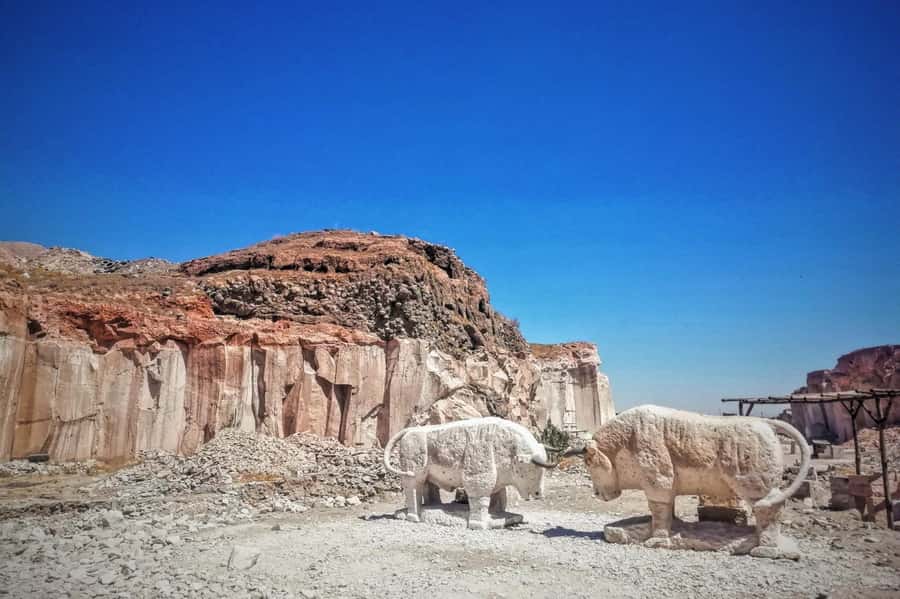
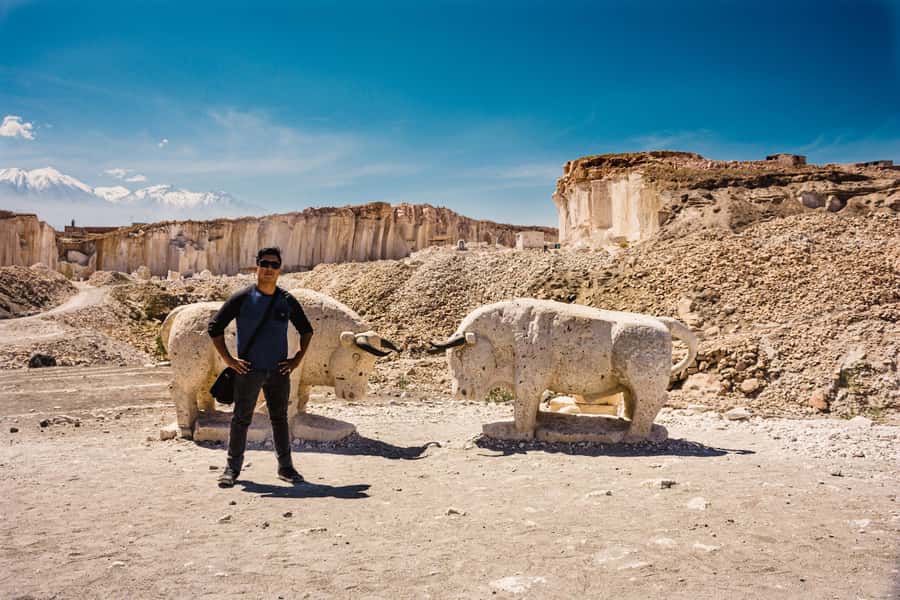
You will also see modern carved figures and stone animals designed for photographs. I would treat these as an extra, not the heart of the visit. If you are interested in masonry, focus on the working quarry, the tool marks, the blocks, and the guide’s explanation. If you enjoy playful photo stops, the sculptures add a lighter side to the visit.
More Colca Canyon trips:
- From Arequipa: Colca Canyon Full-Day Guided Tour with Meals
★ 4.5 · 982 reviews - Tour to the Salinas Lagoon and National Reserve in Arequipa
★ 4.5 · 548 reviews - Colca Full Day Tour
★ 4.5 · 429 reviews - Rafting Arequipa – Chili River Canoeing – Cusipata Rafting Arequipa
★ 5.0 · 332 reviews
Meeting the Stonemasons
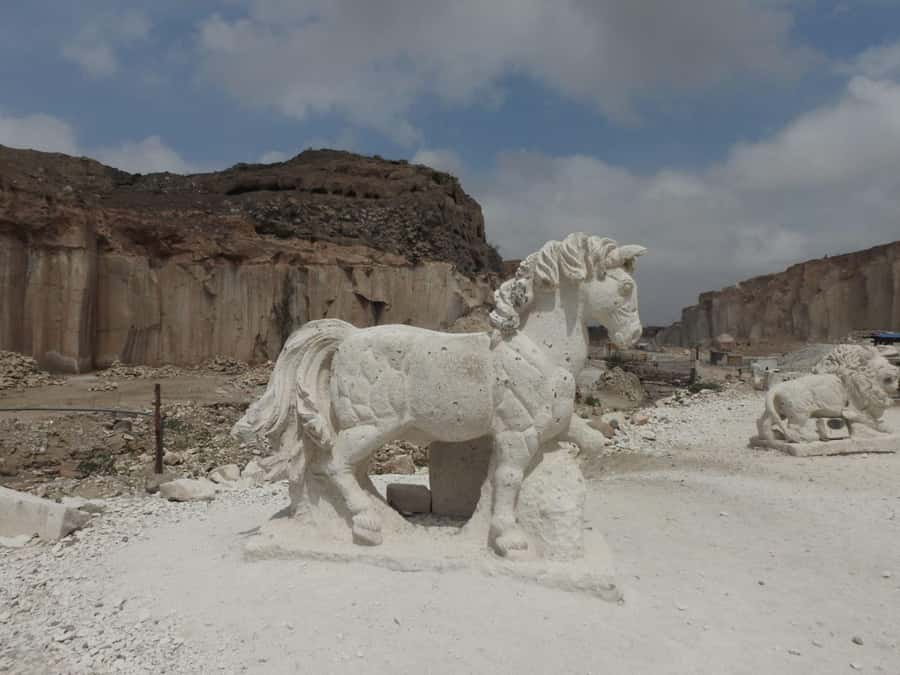
One of the most worthwhile parts of Añashuayco is the chance to meet a stonemason. The worker can explain the daily process and may demonstrate how a block is cut and shaped.
You may also get to try cutting a piece of sillar yourself. This is a small hands-on moment, but it helps you understand the labor behind Arequipa’s bright buildings. The stone may look soft and simple, yet shaping uniform blocks requires skill, patience, and physical effort.
This is where the tour is most connected to local life. The experience does not pretend that the quarry is an ancient site frozen in time. It shows you a craft that continues now, with the city’s identity still tied to the stone outside its center.
The guide’s language ability matters here. English and Spanish tours are available, and several guides have been praised for explaining the material in both languages. Alexandra, Julia, Mike, Jose, and Roni have all received strong personal praise for clear communication and friendly help. If you are the only English speaker in the group, the guide may need to switch between languages, but English-speaking participants have still been included successfully.
Walking into Quebrada de Culebrillas
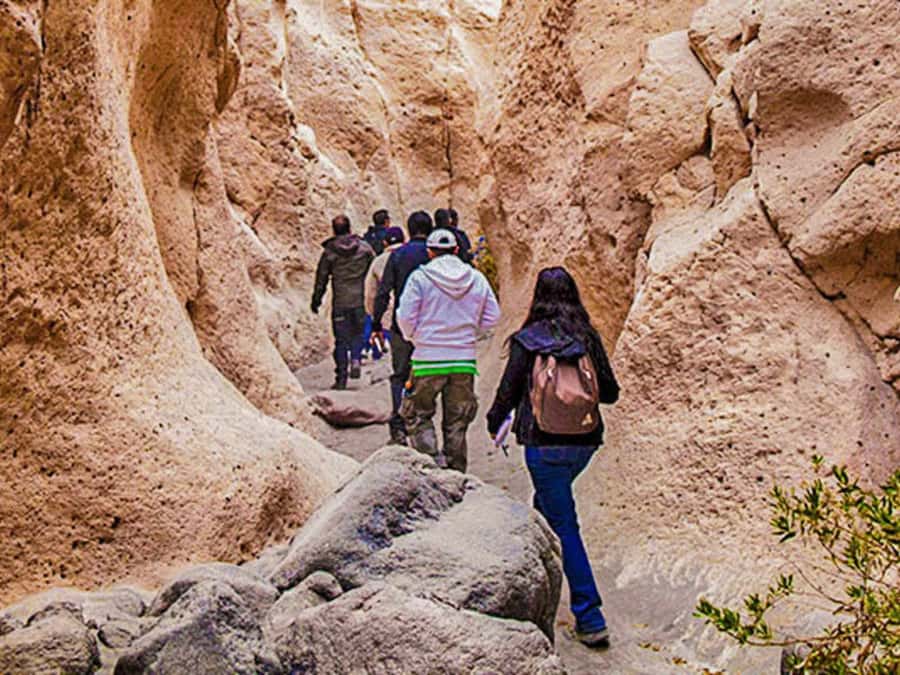
From Añashuayco, the vehicle continues for about 20 to 30 minutes to Quebrada de Culebrillas. This is the part I would prioritize if you have limited interest in posed photos or modern carvings.
The walk into the canyon takes about 20 to 25 minutes. Water formed the narrow passage, and the walls rise from roughly 15 meters to 20 meters as you move farther inside. The space feels cooler and more enclosed than the open quarry, with the pale rock closing around the path.
The walk is not described as strenuous, but it is not completely effortless either. You will cross uneven ground, and the path may be awkward for anyone with limited mobility. Wear closed shoes with a decent sole. Sandals and smooth city shoes are poor choices.
Near the end, you can see petroglyphs associated with the Wari culture and dated to more than a thousand years ago. These carvings give the canyon a human story that reaches far beyond the modern Sillar Route. They are not large monuments, so listen carefully to the guide and look closely.
Culebrillas can become crowded when several groups arrive together. A thoughtful guide may reverse the route and visit the canyon first to avoid the largest crowds. That approach can make a real difference, since the narrow passage is most enjoyable when you are not stopping behind a line of other groups.
Bring insect repellent. The canyon is dry, but several people have found repellent useful. Sunscreen and a hat are also important, since much of the route is exposed.
Apachetas and the Return to Arequipa
At the end of the canyon walk, you will see apachetas, small piles of stones placed one on top of another. They are linked with gratitude toward nature and are also viewed as symbols of good luck.
The moment is brief, but it adds a spiritual detail to what might otherwise be a simple geology and quarry outing. Your guide can explain why people build them and how they fit into local tradition. Do not add stones carelessly if the guide asks you not to. The point is to understand the practice, not simply copy it for a photograph.
The return journey takes about 40 minutes in the listed route, followed by the final arrival near Av. La Marina. Morning groups generally reach the city around 1:30 PM. Afternoon groups return later, and city traffic can be heavier.
You are not dropped exactly at the original office. The tour finishes near Av. La Marina, while the meeting point is on C. Álvarez Thomas. Check your onward plans before booking the afternoon departure, especially if you have a dinner reservation, bus connection, or other timed activity.
Is $12 Good Value?
At $12 per person, this is one of the easier Arequipa excursions to justify. Transportation and a guide are included, and you see three distinct settings in about four hours: a volcano viewpoint, an active sillar quarry, and a narrow canyon with ancient rock art.
The extra 18 soles entrance charge is reasonable, but you need to budget for it separately. Bring cash in Peruvian soles. There is no cash machine during the outing, and one participant arrived without enough small local currency. Buying anything along the way also requires cash.
The tour is best understood as organized transport plus guided context. You are not receiving a private, slow-paced cultural visit. A group of around 25 people may move at a set pace, and waiting for others to finish photographs can reduce your personal time at the quarry.
Still, the cost covers a useful range of sights that would be awkward to reach independently without arranging transport. You also avoid the hassle of negotiating separate rides between the quarry and canyon. For a half-day outside central Arequipa, the value is strong.
Morning or Afternoon?
Choose the morning if you want a straightforward schedule and an early return to town. The 9:15 AM departure lets you spend the afternoon visiting places such as Santa Catalina Monastery, the Plaza de Armas, or Arequipa’s museums.
Choose the 2:00 PM departure if photography matters most. Late light can make the pale quarry walls look warmer and more dramatic, and the sunset glow near the rocks has been a highlight for some participants.
The afternoon trip has two cautions. The route may feel more rushed if traffic builds on the way back, and you return later than the morning group. If you have evening plans, allow extra time.
The order of the stops can also change. Some guides begin with Culebrillas to avoid crowds, then continue to Añashuayco and the viewpoint. That flexibility can improve the experience, so ask about the day’s plan at the start.
Who Will Enjoy This Tour?
I would recommend this outing if you want a low-cost way to see the countryside beyond Arequipa without committing to a full-day trip. It suits anyone curious about volcanic stone, local building traditions, short walks, and unusual geological settings.
It is also a good choice for a first day in Arequipa. The guide may add useful orientation about the region, local food, volcano names, and customs such as apachetas. Several guides have also offered restaurant suggestions, which can be helpful when you have just arrived.
You should think twice if you dislike group transport, staged photo sculptures, or fixed stop times. The quarry may feel underwhelming if you expect a major archaeological site. The canyon is more natural and atmospheric, but its narrow path can be difficult if you have walking problems.
Wear closed shoes, use sunscreen, carry insect repellent, and bring 18 soles in cash. Those simple preparations will prevent most of the avoidable annoyances.
Should You Book the Sillar Route Trek?
Book it if you want an affordable half-day that combines local craft, volcanic scenery, a short canyon walk, and Wari petroglyphs. The strongest reasons to go are the working stonemasons at Añashuayco and the Culebrillas Canyon, not the modern stone statues.
I would choose the afternoon for softer light and the morning for easier scheduling. Ask whether the guide can visit Culebrillas before the larger groups, and keep your expectations realistic about the quarry: it is an active worksite with tourist additions, not a polished museum.
With transport, bilingual guiding, and three very different stops for $12 plus the entrance fee, this is a sensible Arequipa add-on. It offers the best value to curious, flexible visitors who do not mind sharing the road.
FAQ
How long does the Sillar Route Trek last?
The activity lasts about four hours. The morning departure begins around 9:15 AM and returns to Arequipa around 1:30 PM. A 2:00 PM departure is also available.
What is included in the tour price?
Transportation and a live guide are included. Guides are available in English and Spanish.
How much are the entrance fees?
Entrance tickets cost 18 soles in total and are not included in the advertised price.
Where does the tour begin and end?
The meeting point is the main office at C. Álvarez Thomas 115 in Arequipa. The tour finishes near Av. La Marina.
Do I need to walk during the tour?
Yes. The walk through Quebrada de Culebrillas takes about 20 to 25 minutes and follows uneven ground. Closed walking shoes are recommended.
Is the tour available in English?
Yes. The tour is offered in English and Spanish. The guide may speak both languages during the outing so everyone can follow the explanations.
Just added in Arequipa
- Sillar Route★ 5.0 · 4 reviews
- Salinas Lagoon + Mini Volcano DE Lojen★ 5.0 · 9 reviews
- 3-Day Colca Canyon trek with Professional Guide★ 5.0 · 40 reviews
- Full Day Tour To The Salt Lake Salinas in Arequipa★ 4.5 · 34 reviews
- Walking City tour including the Monastery of Santa Catalina★ 5.0 · 6 reviews
- Trekking, Waterfalls and Thermal Baths★ 4.5 · 47 reviews
- Downhill Tour – Mountain Bike in Arequipa★ 3.5 · 5 reviews
- 2 Days 1 Night trekking Through Colca Canyon, Private room★ 5.0 · 16 reviews
Inca Trail and Salkantay Treks, compared.
Classic Inca Trail Trek 4D/3N to Machu Picchu (Group Service)
Read our review →
Salkantay Trek 5D/4N with Glass Cabins, Domes and Hobbit House
Read our review →2-Day Inca Trail to Machu Picchu with Panoramic Train
Read our review →
Browse the lists this tour appears in