
Reviewed · COLCA CANYON AND AREQUIPA TOURS
Arequipa: Walking Tour and Santa Catalina Monastery
Arequipa’s white-stone center rewards slow walking. This three-hour tour links the old San Lázaro district, riverside colonial buildings, hidden courtyards, the Plaza de Armas, and Santa Catalina Monastery in one well-planned outing. I especially like the chance to see ordinary historic neighborhoods before reaching the city’s grandest sights, and I like that the tour is offered in both English and Spanish. The main drawback is that walking comes with uneven streets and stairs, so this is not suitable for wheelchair users.
The guides receive warm praise for clear, friendly explanations. Gisela was described as cordial and precise, while Milei was praised for her empathy, kindness, and ability to answer questions. Another guide, Sline, was noted for being friendly and explaining everything well. Check the booking option carefully, since hotel pickup and the monastery entrance fee may be optional rather than included in the base price.
In This Review
- Key things to know before you book
- Why this Arequipa walking tour works
- San Lázaro, where Arequipa’s story starts
- Barrio del Solar and the old river edge
- Tambo El Matadero, an unusual colonial stop
- Tambo La Cabezona and communal city life
- Plaza de Armas, Arequipa’s grand civic room
- Santa Catalina Monastery, a city inside the city
- Guides, language, and the feel of the experience
- Practical comfort and access
- Who should book this tour?
- Is the $35 price good value?
- Final verdict: book it if you want context with your sightseeing
- FAQ
- How long does the Arequipa tour last?
- What language is the guide?
- Does the tour include hotel pickup?
- Where do I meet the tour if my hotel is outside the historic center?
- Is the Santa Catalina entrance fee included?
- How much walking is involved?
- Is the tour suitable for wheelchair users?
- Is Santa Catalina Monastery open every day?
- Are young children charged?
Key things to know before you book
- San Lázaro begins the story: See one of Arequipa’s oldest districts, with narrow lanes, small plazas, and homes built from pale volcanic sillar.
- Colonial tambos add local texture: Tambo El Matadero and Tambo La Cabezona show how working buildings and lodging houses fit into the old city.
- The Plaza de Armas is a short, useful orientation stop: You’ll see the cathedral, arcades, and central fountain before entering the monastery.
- Santa Catalina takes about an hour: Its 20,000 square meters include cloisters, patios, lanes, a church, a bell tower, and the Patio del Silencio.
- The $35 price needs a close look: It can be good value if guiding, transport, and admission are included, but the exact package matters.
- Comfortable shoes are essential: Expect several walking sections, sun exposure, and historic surfaces that are not designed for easy rolling access.
Why this Arequipa walking tour works
Arequipa can look simple at first glance: a large square, a grand cathedral, and lots of pale stone. The pleasure comes when you notice how the city is built in layers. Pre-Inca and Inca occupation came before Spanish rule, and the first Spanish houses were built in the San Lázaro area. The tour gives you that wider picture instead of rushing straight to the best-known monument.
The route lasts three hours and combines short vehicle transfers with walking. That matters in Arequipa, where the sun can be strong and the high-altitude air may make a brisk walk feel harder than expected. You get a guided introduction without giving up an entire day.
The experience begins with hotel pickup if you choose that option and your hotel sits in the historic center. If your accommodation is outside that area, you need to meet at Calle Zela 301, next to the Hotel Mirador del Monasterio. The meeting time is confirmed after booking, so keep an eye on that detail.
The advertised price is $35 per person. This is potentially fair for a private-feeling introduction to the center, especially if your option includes transport, a professional guide, and the monastery entry. But do not assume every $35 booking includes the same extras. Some options exclude the entrance fee and hotel transfers.
If admission is not included, Santa Catalina costs 45 PEN for adults and 25 PEN for people aged 7 to 21. Children aged 4 and younger are complimentary. Add that cost before comparing this tour with a standard city walk.
More Walking Tours in Arequipa
- Walking tour in the Historic Center of Arequipa
★ 4.4 · 180 reviews - Arequipa: Walk through the Historic Center of the City
★ 4.9 · 87 reviews - Arequipa Walking Tour city center and drinks experience
★ 5.0 · 72 reviews
San Lázaro, where Arequipa’s story starts
The first major stop is Barrio de San Lázaro, about five blocks from the Plaza de Armas. A van transfer of roughly ten minutes is listed at the beginning, followed by a guided visit of about 20 minutes.
San Lázaro is a fine opening because it feels more intimate than the main square. Its small streets, white walls, little plazas, and sillar houses show the material that gives Arequipa its nickname as the White City. Sillar is volcanic stone, and here it is not just a decorative feature on a church. It forms the walls and houses of a living neighborhood.
The guide’s role matters most here. Without context, the lanes can look like a pleasant photo stop. With explanation, you begin to understand why this district matters. It was occupied by pre-Inca and Inca cultures, then became one of the first areas built up during the Spanish conquest and foundation of the city.
You should expect a short stop rather than a long neighborhood walk. The listed timing is about 20 minutes, so use it to look closely at doorways, walls, and the shape of the streets. The small scale is part of the charm, but anyone hoping for a long, unhurried photography session may find the schedule brisk.
Barrio del Solar and the old river edge
From San Lázaro, you walk for about 15 minutes to Barrio del Solar. The neighborhood sits near the Chili River and brings a different mood to the route. Here, traditional and colonial buildings line streets that once served the practical needs of the city.
The area is known for tambos. These were lodging centers where merchants could rest during the colonial period. That simple fact helps explain how commerce worked before modern hotels, buses, and paved highways. People, animals, goods, and money all passed through places like these.
The tour allows around 20 minutes for Barrio del Solar. The guide should help you read the buildings as more than pretty facades. Ask about what has survived, how the tambos were used, and how the neighborhood relates to the river. The supplied tour details do not promise a long visit inside every building, so treat this part as a guided look at the area rather than a full museum visit.
This is also one of the more authentic parts of the route. The Plaza de Armas is essential, but it is a formal civic space. Barrio del Solar gives you a closer look at the city’s working past and its smaller residential streets.
Tambo El Matadero, an unusual colonial stop
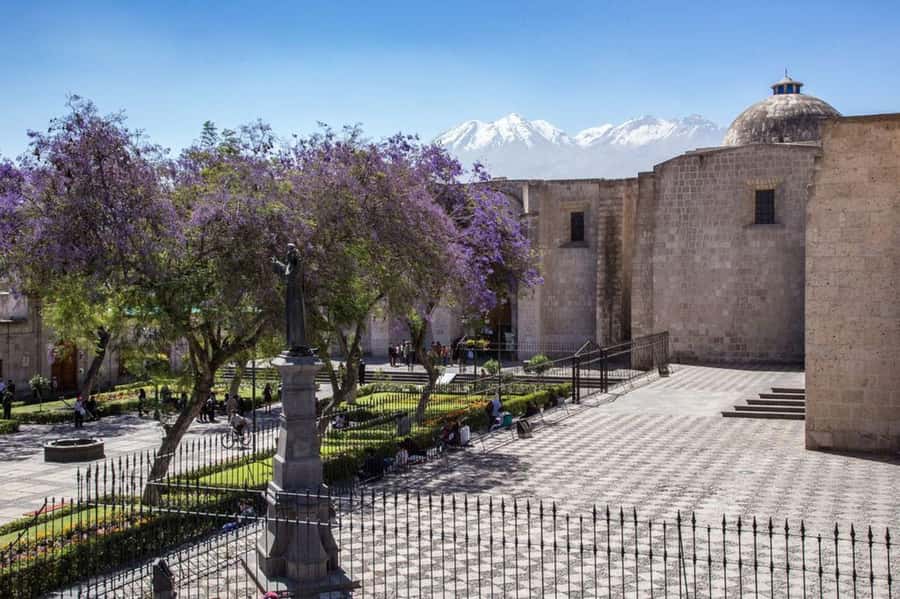
The next stop, Tambo El Matadero, has a name that tells you something about its former purpose. The seventeenth-century building was used for slaughtering animals. Today, about 30 families live there.
That contrast is the reason to pay attention. This is not a polished monument frozen in time. It is an old structure with present-day residents. A good guide can help you understand both sides without turning the visit into a theatrical performance.
The scheduled visit lasts about 20 minutes and includes sightseeing and photographs. You may find the stop more interesting if you focus on how the building has changed use over time. Look at the layout, the communal character, and the way a colonial structure remains part of daily life.
You should also keep your expectations practical. The experience does not promise extensive access to private homes or a long architectural lecture. It is a compact stop within a larger walking route. Still, it adds a human scale that grand churches and official squares cannot provide.
More Colca Canyon trips:
- 2 day 1 night trek / Colca Canyon
★ 5.0 · 1,069 reviews - From Arequipa: Colca Canyon Full-Day Guided Tour with Meals
★ 4.5 · 982 reviews - Tour to the Salinas Lagoon and National Reserve in Arequipa
★ 4.5 · 548 reviews - From Arequipa: Sillar Route Trek
★ 4.2 · 461 reviews
Tambo La Cabezona and communal city life
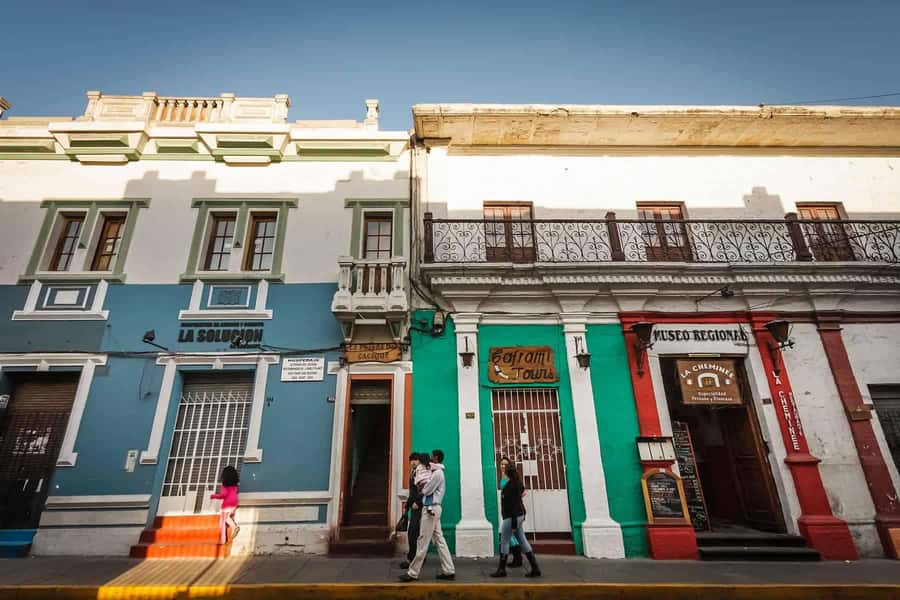
After another walk of about ten minutes, you reach Tambo La Cabezona. This colonial group of houses dates from the sixteenth century and has a communal entrance. One of the first mills in Arequipa once operated here.
The communal entrance is an important detail. It gives you a sense of how people shared space in the old city, with homes and work areas arranged around common access. The former mill also points to the practical systems that supported Arequipa’s growth.
This stop lasts about 20 minutes. It pairs well with El Matadero because the two tambos show different aspects of old urban life. One is linked to animal slaughter and present-day family homes. The other connects housing, shared space, and early industry.
I would pay attention to the guide here, since the facts are easy to miss if you only look for attractive walls. The architectural details are worthwhile, but the story of how the space functioned is the real reason to visit.
Plaza de Armas, Arequipa’s grand civic room
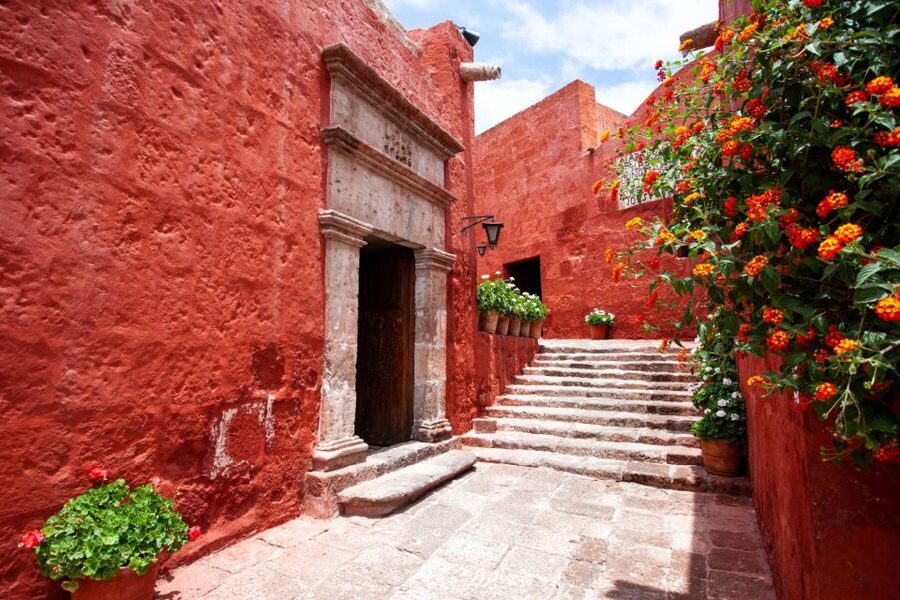
The walk then heads toward the Plaza de Armas, with about 15 minutes on foot from Tambo La Cabezona. The tour gives you approximately 30 minutes in the square, making it one of the longer outdoor stops before the monastery.
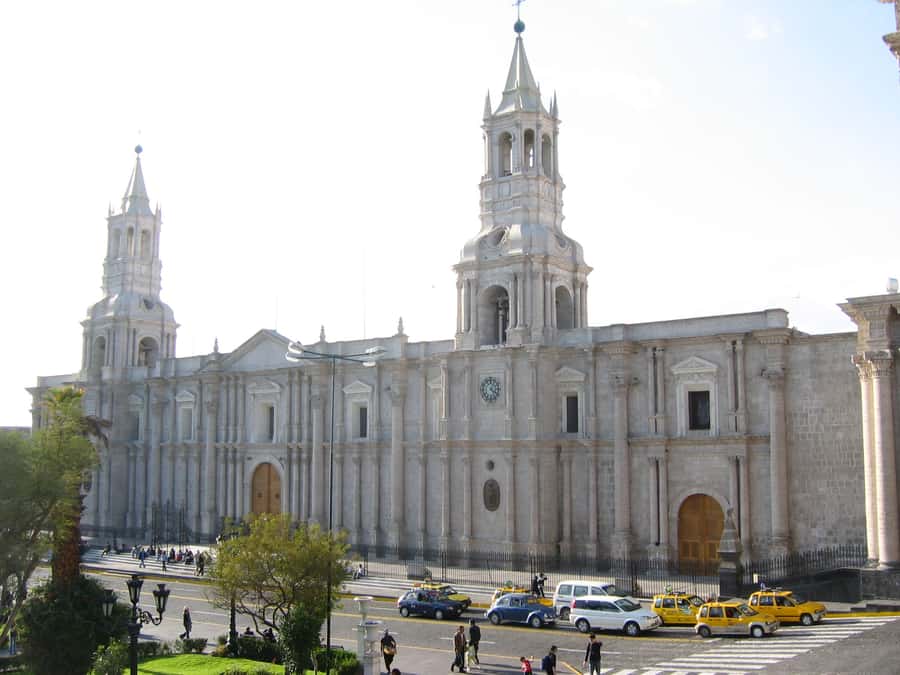
The Plaza de Armas is Arequipa’s main meeting point. The cathedral occupies one side, while elegant portals frame the other edges. A bronze fountain sits in the center. This is the place to step back and see how the smaller streets and neighborhoods fit into the city’s grand public center.
The stop is described as panoramic, so do not expect a full cathedral tour unless your guide specifically adds one. The value is orientation. You can take in the proportions of the square, the white stone facades, and the way local life gathers in this central space.
The 30-minute timing should allow photographs and a clear explanation of the square. It may feel short if you want to sit, people-watch, and study every portal. Still, the visit is long enough to establish Arequipa’s visual identity before you enter Santa Catalina.
Santa Catalina Monastery, a city inside the city
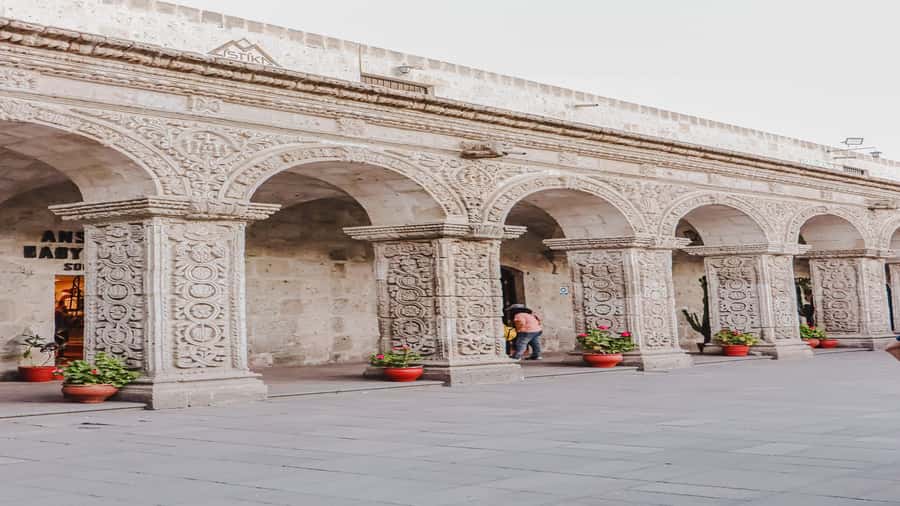
After only five minutes on foot, the tour reaches Santa Catalina Monastery. The visit lasts about one hour, but the complex covers roughly 20,000 square meters. That is a lot to see in a limited time, so keep moving and save detailed photography for the spaces that interest you most.
The monastery was founded in 1579. During the viceroyalty, Doña Maria de Guzman, a wealthy woman, donated her properties and began life as a cloistered nun. Many women who entered came from wealthy families. Cloistered nuns still live at the convent today.
That continuing religious life gives Santa Catalina a different character from a standard historic house. You are visiting a preserved architectural complex, but it is also connected to an active order. Some spaces are open for visitors and some areas remain private.
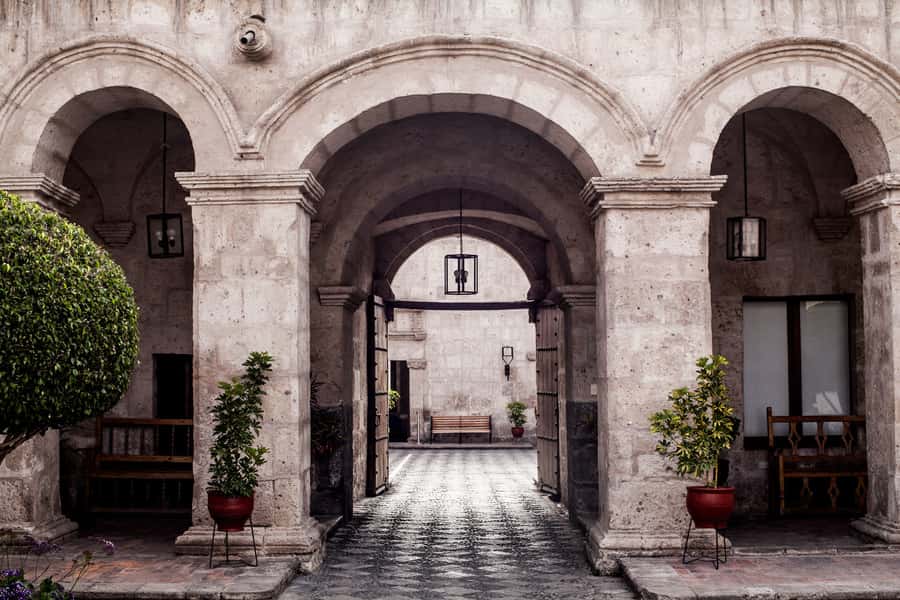
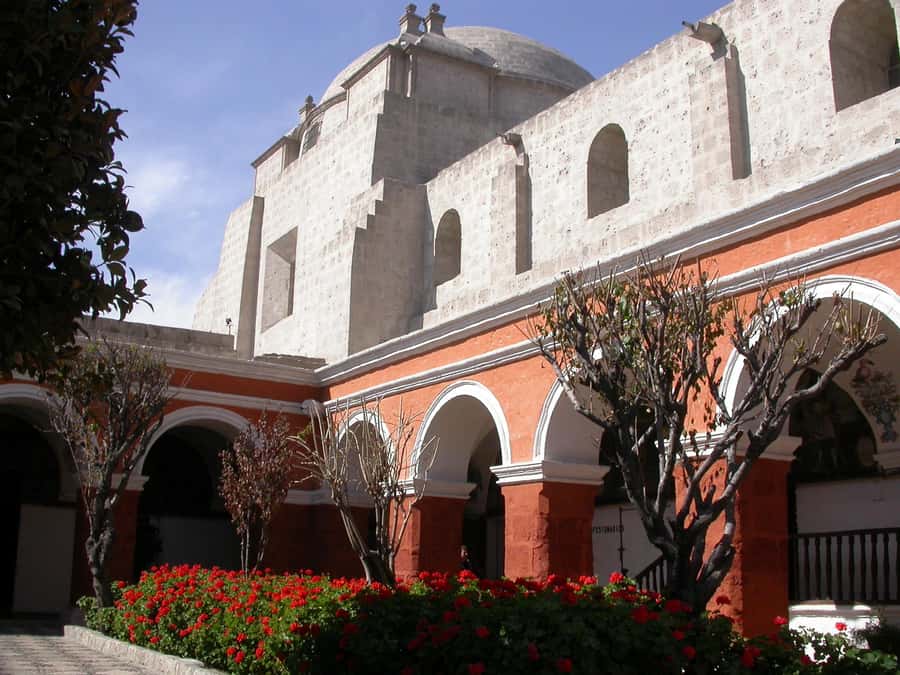
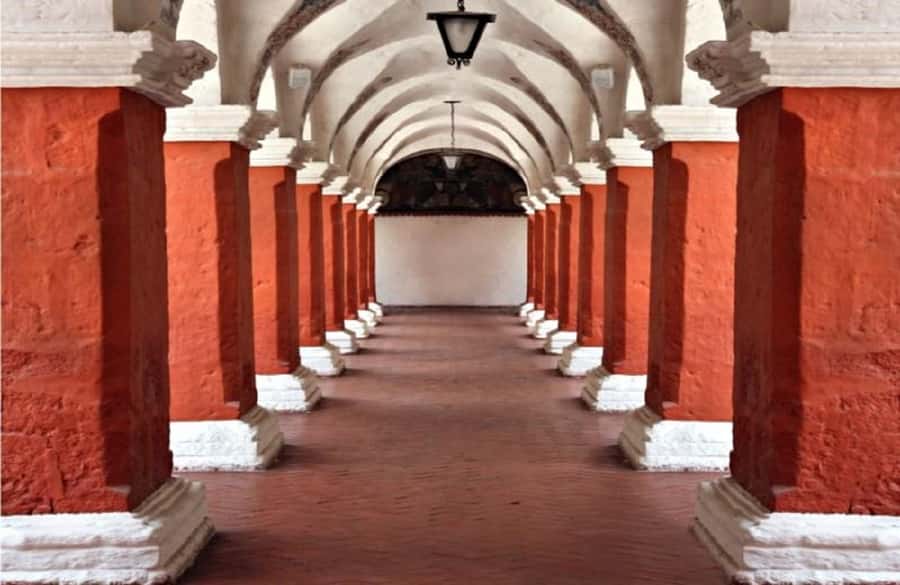
Inside, you can expect cloisters, patios, small squares, lanes, a church, and a bell tower. The streets are made of sillar in some sections, while other walls use natural red tones. The change from pale stone to red-painted passages gives the complex its strongest visual contrast.
The Patio del Silencio is one of the most meaningful stops. It was a place where the nuns met to pray and read the Bible in silence. The name fits the purpose, and you should give this space a moment rather than treating it as just another photo setting.
An hour is enough for a useful first look, especially with a local guide explaining what you are seeing. It is not enough to inspect every corner at a slow pace. If Santa Catalina is your main reason for coming to Arequipa, you may want additional independent time at another visit.
The monastery closes on December 25 and Good Friday. Check your date before booking, since this is the central indoor stop and there is no equal substitute on this route.
Guides, language, and the feel of the experience
The tour is available in Spanish and English with a professional guide. The strongest praise attached to the experience concerns the people leading it. Gisela was noted for precise explanations and a cordial manner. Milei was praised for empathy, kindness, and answering questions well. Sline was also described as friendly and clear.
Those comments point to the kind of tour this is best suited for. You get more than directions from one stop to the next. The guide can connect the buildings, explain unfamiliar terms, and answer questions about Arequipa’s past.
The actual guide assigned to your departure may differ, so do not book based on expecting one specific person. Still, the consistent pattern of positive comments about clarity and friendliness is encouraging.
The schedule is fairly structured. There are walks of 15, 10, 15, and 5 minutes between major stops, plus a short vehicle transfer at the start and end. That makes the route manageable for many people who can walk comfortably, but it is not a seated sightseeing tour.
Practical comfort and access
Bring sunglasses, sunscreen, a hat, comfortable clothes, and insect repellent. The list may look routine, but the sun protection is worth taking seriously during an outdoor walking tour. Wear shoes that can handle old streets and a full hour inside a large historic complex.
The tour is not suitable for wheelchair users. The route includes walking through historic neighborhoods, tambos, and monastery spaces, and the provided information does not indicate adapted access.
Pickup and drop-off are available only for hotels in the historic center when you choose that option. If your hotel has poor vehicle access, you may be left nearby rather than directly at the entrance. If you are staying outside the historic center, use the Calle Zela 301 meeting point.
The tour ends with a ten-minute van transfer and drop-off at the historic center, Calle Zela 301, or the Mirador del Monasterio area, depending on the arrangement.
Cancellation is flexible up to 24 hours before the start for a full refund, and you can reserve now and pay later. That is useful if your Arequipa plans depend on weather, altitude adjustment, or a changing Peru itinerary.
Who should book this tour?
I would choose this experience if you have limited time in Arequipa and want both the city center and Santa Catalina in one morning or afternoon. It is also a good first activity because the guide gives you basic historical and architectural bearings before you explore alone.
It suits people who enjoy old neighborhoods, religious architecture, and the practical side of urban history. You will get the most from it if you ask questions and look beyond the best-known facades.
Families can consider it, since children aged 4 and younger are free. Keep in mind that the walking and the monastery visit may be tiring for very young children, and the route is not suitable for wheelchair users.
The tour is less suitable if you want a slow, highly specialized architecture visit or long free time at Santa Catalina. The one-hour monastery visit is useful, but it moves at the pace of a broader city tour.
Is the $35 price good value?
The answer depends on what you select. At $35, the experience can offer solid value because it joins a guide-led city walk, local transport, and Santa Catalina in three hours. You avoid working out the route between distant points and gain context at places that are easy to pass without understanding.
The value drops if you must add both the monastery ticket and transport to the meeting point. Adult admission is 45 PEN, and pickup is limited to the historic center. Read the inclusions before paying, especially the wording around hotel service and entrance fees.
For a first look at Arequipa, I think the combination is sensible. You see the intimate streets of San Lázaro, working colonial spaces in Barrio del Solar, the formal Plaza de Armas, and the huge monastery complex. Few short tours offer that range.
Final verdict: book it if you want context with your sightseeing
Book this tour if you want a friendly guide, a compact route, and a proper visit to Santa Catalina rather than a quick photograph outside. The praised guides, especially Gisela, Milei, and Sline, suggest that clear explanations and a warm manner are major strengths.
Skip it if you dislike scheduled walking, need step-free access, or want to spend several hours exploring the monastery at your own pace. Before booking, confirm the guide language, hotel pickup, and entrance-fee option. For most first-time visitors with three hours to spare, this is a practical and worthwhile introduction to Arequipa.
FAQ
How long does the Arequipa tour last?
The tour lasts three hours, including the guided walks, Santa Catalina Monastery visit, and short van transfers.
What language is the guide?
The tour is available with a live guide in English or Spanish.
Does the tour include hotel pickup?
Hotel pickup is optional and is available only for hotels located within Arequipa’s historic center.
Where do I meet the tour if my hotel is outside the historic center?
You should meet at Calle Zela 301, next to the Convent of Santa Catalina and Hotel Mirador del Monasterio. The exact meeting time is confirmed after booking.
Is the Santa Catalina entrance fee included?
The entrance fee is included only with the applicable booking option. If you choose an option without admission, you pay locally. The listed prices are 45 PEN for adults and 25 PEN for people aged 7 to 21.
How much walking is involved?
The route includes several walks between San Lázaro, Barrio del Solar, the tambos, the Plaza de Armas, and Santa Catalina Monastery. Comfortable clothing and shoes are recommended.
Is the tour suitable for wheelchair users?
No. The experience is not suitable for wheelchair users.
Is Santa Catalina Monastery open every day?
The monastery closes on December 25 and Good Friday. The order of visits may also change.
Are young children charged?
Children aged 4 and younger are complimentary. The provided information lists the monastery admission price for people aged 7 to 21 and for adults.
Just added in Arequipa
- Sillar Route★ 5.0 · 4 reviews
- Salinas Lagoon + Mini Volcano DE Lojen★ 5.0 · 9 reviews
- 3-Day Colca Canyon trek with Professional Guide★ 5.0 · 40 reviews
- Full Day Tour To The Salt Lake Salinas in Arequipa★ 4.5 · 34 reviews
- Walking City tour including the Monastery of Santa Catalina★ 5.0 · 6 reviews
- Trekking, Waterfalls and Thermal Baths★ 4.5 · 47 reviews
- Downhill Tour – Mountain Bike in Arequipa★ 3.5 · 5 reviews
- 2 Days 1 Night trekking Through Colca Canyon, Private room★ 5.0 · 16 reviews
Colca Canyon and Arequipa Tours, compared.
From Arequipa: Colca Canyon Full-Day Guided Tour with Meals
Read our review →
Tour to the Salinas Lagoon and National Reserve in Arequipa
Read our review →
Rafting Arequipa – Chili River Canoeing – Cusipata Rafting Arequipa
Read our review →
Chili River White Water Rafting with Hotel Pickup
Read our review →
Browse the lists this tour appears in