
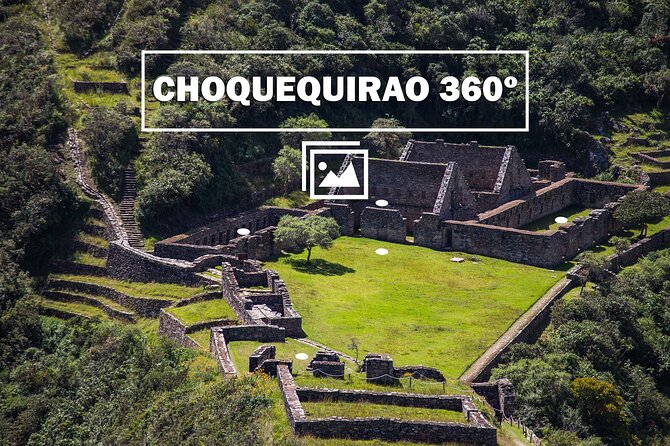
Reviewed · INCA TRAIL AND SALKANTAY TREKS
Choquequirao Trek 4 days and 3 nights
Cusco gets you to the trailhead, but the mountains set the terms. This four-day Choquequirao Trek takes you through the Apurimac Canyon to one of Peru’s great Inca sites, with far fewer people than you’ll find on the Inca Trail. I especially like the small-group format and the strong support team, including a guide, chef, and porter, because they make a demanding route feel manageable.
I also like the food program. Chefs such as Leandro, Balbino, Oscar, and Julio Cesar have earned praise for varied meals prepared far from a normal kitchen. The main consideration is simple: this is a physically demanding trek, with long climbs, early starts, and several changes in altitude.
In This Review
- The Choquequirao details that matter most
- Why Choquequirao feels different from the Inca Trail
- Day one: Capuliyoc to Santa Rosa
- Day two: Marampata and the approach to Choquequirao
- Day three: time at the Choquequirao citadel
- Day four: the final climb and Saywite
- Food, porters, and the human side of the trek
- Price and group size: is $698 a fair deal?
- Who should book this trek?
- Should you book the Choquequirao Trek?
- FAQ
- How long is the Choquequirao Trek?
- What time does the trek start?
- What is the price per person?
- What transportation is included?
- Are meals included?
- Can I request special meals?
- How much luggage can the porter carry?
- Are camping supplies included?
- What fitness level is required?
The Choquequirao details that matter most
- A 4:30 to 5:00 am departure from Cusco: You spend the first morning driving toward Capuliyoc before hiking begins.
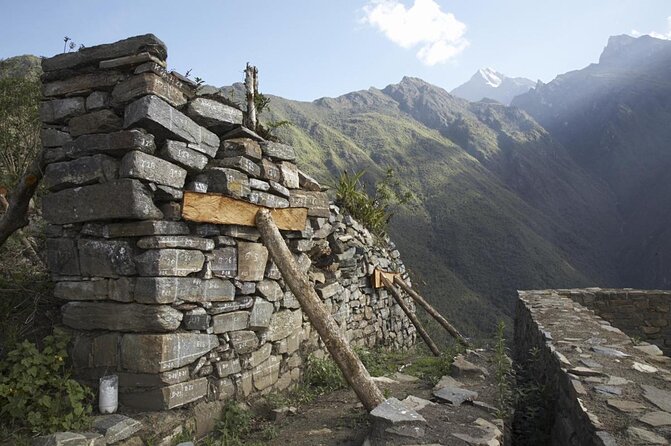
- The Apurimac Canyon is the visual star: Day one moves from high Andean terrain toward warmer cloud-forest vegetation.
- Choquequirao is reached without the crowds of Machu Picchu: The site is the main reward, and the route feels quiet.
- Meals are a major strength: Breakfast, lunch, and dinner are prepared by a dedicated chef, with vegetarian and other dietary options available if requested in advance.
- A personal porter carries up to 7 kilograms: You still need to carry a daypack, but your main gear does not all stay on your back.
- Saywite adds a final archaeological stop: The return is not only a long hike back to Capuliyoc, followed by transport to Cusco.
Why Choquequirao feels different from the Inca Trail
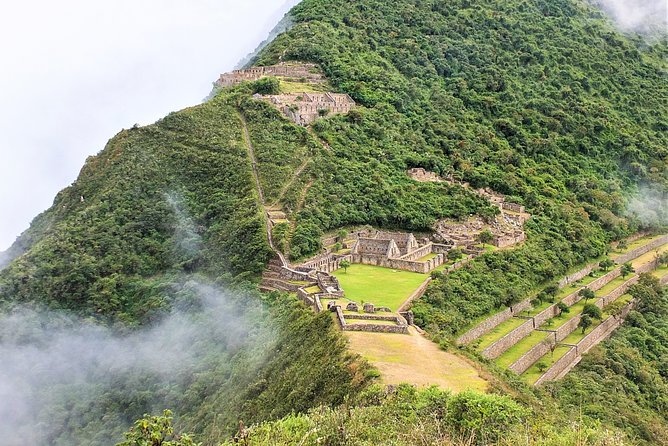
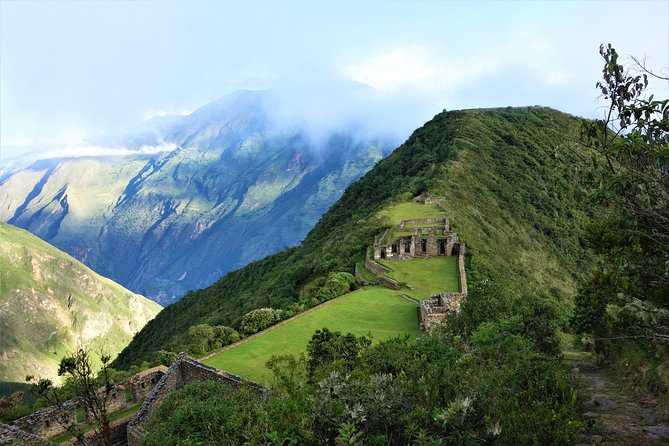
Choquequirao does not offer the same polished fame as Machu Picchu. That is exactly its appeal. The approach is hard, the route is less familiar to casual sightseers, and the citadel can feel remarkably quiet once you arrive.
The trek crosses a huge range of Peru’s mountain climate. You begin high near Capuliyoc, descend toward the Apurimac Canyon, pass into warmer and more heavily vegetated country, and then climb again toward Choquequirao. That constant change gives the route its character.
I would not choose this trip simply because it includes an Inca ruin. You should choose it because you want the walk itself: steep paths, broad canyon views, waterfalls in the distance, flowers, birds, and the satisfaction of reaching a site under your own power.
The support system adds real value. Your guide handles route leadership and interpretation, the chef prepares three meals a day, and the porter or mule handler moves camp equipment and your personal bag. The strongest praise has gone to the entire working team, not just the guide. Elias has been singled out for patience, humor, historical knowledge, and encouragement on steep sections. Sebastian has been praised for his positive attitude, while Gary, Sergio, Pepe, Renato, Abelardo, and others have also received warm personal praise.
More hikes and treks in Cusco:
- Classic Inca Trail Trek 4D/3N to Machu Picchu (Group Service)
★ 5.0 · 8,653 reviews - Machu Picchu: 4-Day Inca Trail Trek with Panoramic Train Ride
★ 5.0 · 4,568 reviews - Salkantay Classic Trek 5 Days from Cusco
★ 5.0 · 4,062 reviews
Day one: Capuliyoc to Santa Rosa
The day begins early, with pickup in Cusco between 4:30 and 5:00 am. Transportation takes you across the Andes to Capuliyoc, at about 2,911 meters, or 9,550 feet. The journey takes roughly four hours, and breakfast is served before you start walking.
The first hiking section is a long descent to Chiquiska. The published distance is 10.8 kilometers, or 6.7 miles, with about four hours of walking before lunch. This is not a gentle warm-up. Descending for several hours can be tough on knees and thighs, even though many people find downhill walking easier than climbing.
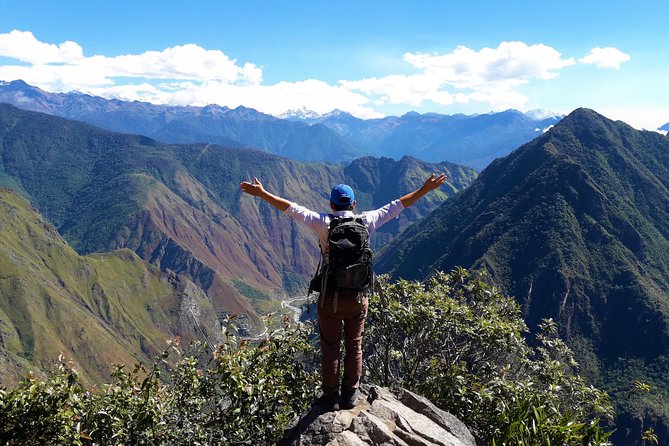
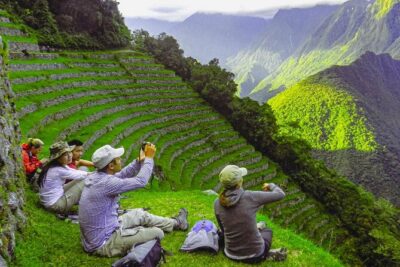
The reward is the first view into the Apurimac Canyon, one of Peru’s deepest. The scenery changes as you lose altitude, moving from highland views toward denser cloud-forest vegetation. It is a good reminder that the trek is not a simple walk from one ruin to another. The route itself is the show.
After lunch at Chiquiska, you continue downhill for around two more hours to Santa Rosa, where you camp at about 1,478 meters, or 4,849 feet. This lower elevation may feel warmer than Cusco, but the day has already put a lot of work into your legs.
I would treat day one as a serious opening stage. Keep your daypack light, use trekking poles if you need joint support, and do not burn all your energy on the descent. The next days require more climbing.
Day two: Marampata and the approach to Choquequirao
The day two information supplied for this trip repeats the day one description of the drive to Capuliyoc, the descent to Chiquiska, and the camp at Santa Rosa. That is clearly inconsistent with the stated route and should be confirmed with TreXperience during the pre-departure briefing.
The title for the day refers to Marampata and Choquequirao, suggesting that this is intended to be the approach toward the citadel. Marampata is the key point named in the schedule, and its importance is practical: it marks the high approach area before the archaeological site.
Because the published details are not fully aligned, I would ask three direct questions before setting out:
- What is the exact hiking distance and elevation gain on day two?
- Is the night spent near Marampata or at another camp?
- How much time is scheduled inside Choquequirao itself?
This is not a reason to reject the trek. It is a reason to get a clear briefing. Mountain itineraries can change with camp conditions and route planning, but you should know the daily plan before committing to four long days.
The main thing to expect is more uphill work after the canyon descent. Choquequirao is not reached by an easy road or a short walk. Your guide’s encouragement matters here, and the repeated praise for guides who paced the group, offered help, and kept spirits up is especially relevant.
Day three: time at the Choquequirao citadel
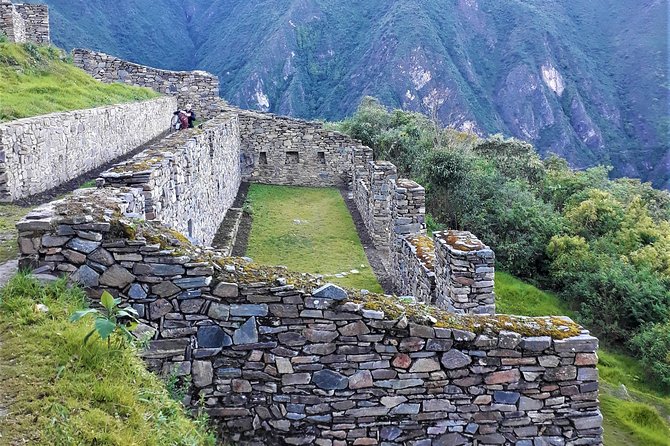
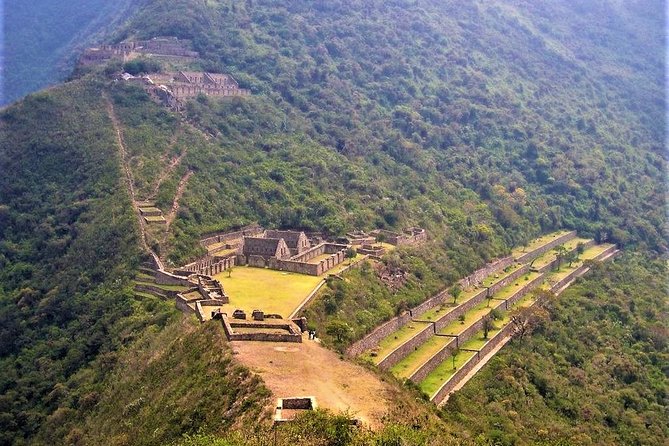
The third day is presented as the citadel day, beginning with sunrise views and breakfast at this memorable mountain setting. The archaeological site is the central reason to choose this trek, and the quiet is part of its value. You are not being moved through a packed queue or hurried between photo stops.
The schedule then describes about three hours downhill to Santa Rosa for lunch, followed by another two hours downhill and two hours uphill to the Chiquiska campsite. It gives a total hiking time of about eight hours. The listed distances and elevations do not fully agree with one another, so again, confirm the current route and camp details at the briefing.
That uncertainty aside, the structure of the day is clear enough: you have time around Choquequirao, followed by a demanding return across the same canyon region. The route includes downhill walking, a later climb, and a long total day. It is a day for steady pacing rather than speed.
The setting rewards attention. The schedule points to flowers, birds, waterfalls in the distance, and changing views across the canyon. You might find the natural details just as memorable as the stonework, especially after the exertion required to reach the site.
A guide adds value here by explaining what you are seeing. The strongest guide praise has focused on historical and archaeological interpretation, along with practical care on steep or tiring sections. You are paying for more than route-finding. You are also paying for someone who can give the ruins context and help you manage the day.
A completely different kind of day:
- Cusco: Rainbow Mountain and Red Valley Day Trip with Meals
★ 4.9 · 4,893 reviews - 4-Day Salkantay Trek with Sky Camp Stay
★ 5.0 · 3,346 reviews - Short Inca Trail to Machu Picchu 2D/1N
★ 5.0 · 3,007 reviews - Excursion to Rainbow Mountain Full Day Optional Red Valley
★ 5.0 · 2,996 reviews
Day four: the final climb and Saywite
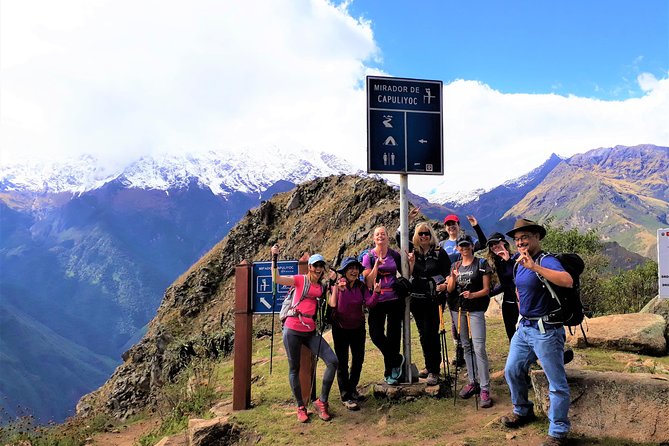
The last morning begins with breakfast and preparation for the final four-hour climb to Capuliyoc. The stated distance is 8 kilometers, with an approximate eight-hour day that also includes lunch, transport, and the Saywite visit.
This uphill finish is a useful reality check. You do not simply stroll out of Choquequirao and board a bus. The route asks for one more sustained climb before lunch at Capuliyoc and the farewell to the support team.
From there, private transportation takes you to Saywite, an archaeological site known here for its mysterious carved rock. You have time to explore before the expected hotel drop-off around 5:00 pm.
Saywite is a smart final stop. It breaks up the return journey and gives you one more archaeological sight after the main trek. Do not expect it to replace Choquequirao. Think of it as a compact closing chapter after a much larger mountain experience.
The exact day four figures also need clarification, since the published distance, hiking time, and elevation figures appear mismatched. The route’s broad outline is still useful: climb to Capuliyoc, eat lunch, visit Saywite, and return to Cusco.
Food, porters, and the human side of the trek
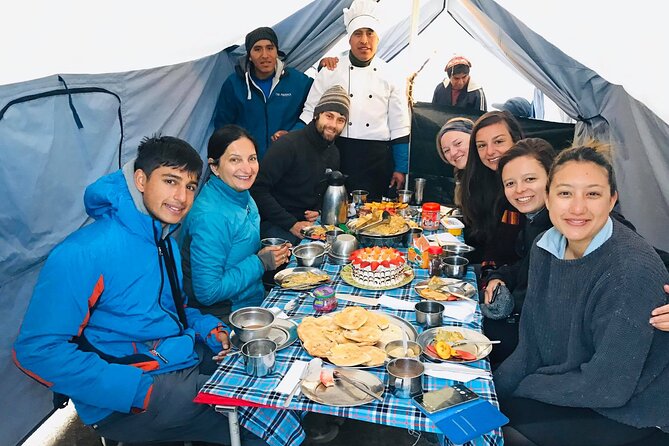
The food is one of the clearest strengths of this trip. Four breakfasts, four lunches, and three dinners are included, and the chef prepares meals in camp. The praise is unusually specific: people have noted that dishes were varied, cleanly prepared, nourishing, and never repetitive.
That matters on a route like this. You need dependable meals after long climbs, and good food can change the mood of an entire camp. Leandro has received special praise for serving varied Peruvian dishes, while Oscar, Balbino, Julio Cesar, and other cooks have been credited with producing meals that seem far beyond what you would expect on a mountain trek.
A vegetarian option is available, but you must request it when booking. The same applies to other dietary requirements. Do not wait until the first camp to explain what you cannot eat.
A personal porter can carry up to 7 kilograms of your personal belongings. This does not mean you can pack without limits. You should still bring a practical daypack with water, rain protection, sun protection, warm layers, and anything you need during the walking day.
The support team also includes porters or mule handlers. Boris has been praised for moving gear efficiently and cheerfully, while other porters have been recognized for making camp life more comfortable. Their work is a major part of the trek’s value, even though much of it happens out of sight.
Optional equipment includes a mattress, sleeping bag, and trekking poles. These are not included, so ask TreXperience what rental choices are available and what is recommended for the current conditions.
Price and group size: is $698 a fair deal?
At $698 per person, the price is not a bargain-basement backpacking rate, but it includes substantial support. Transportation from the beginning to the end, hotel pickup, the pre-departure briefing, professional English-speaking guides, camp meals, and a porter allowance are all included.
That package is valuable because arranging these elements separately would be difficult. You are not only buying access to Choquequirao. You are buying transport from Cusco, food preparation, camp support, route leadership, and help with your main bag.
The group-size information needs checking. The tour description highlights a limit of 12 people for a more personal experience, while the additional information lists a maximum of 16. Ask which limit applies to your departure date. Either size is still far smaller than a mass sightseeing group, but four extra people can affect pace and guide attention on a hard route.
The tour also offers pickup from your Cusco hotel or the airport, which is useful if you are arranging a tight arrival. The start time remains very early, so have your bag ready the night before.
Who should book this trek?
I would recommend it to you if you:
- Have a moderate level of physical fitness and are comfortable with long uphill and downhill sections.
- Want an Inca archaeological site with a quieter feel.
- Prefer a supported trek rather than carrying all camping equipment yourself.
- Value a guide who explains history and helps manage pace.
- Enjoy changing scenery, canyon views, flowers, birds, and waterfalls.
- Can handle early starts and basic camping conditions.
I would be cautious if you dislike steep trails, long walking days, or uncertain daily schedules. The word moderate in the description should not be mistaken for easy. Day one includes a major descent, the citadel approach requires climbing, and the final morning is another sustained uphill walk.
Children must be accompanied by an adult. A current passport is required on the day of travel, and passport name, number, expiry date, and country are required at booking.
Cancellation is flexible up to 24 hours before the start time for a full refund. Poor weather or failure to meet the minimum number of participants can lead to a rescheduled date, another experience, or a full refund.
Should you book the Choquequirao Trek?
Book it if solitude, scenery, and the walk itself matter more to you than comfort and easy access. The best parts are the huge Apurimac Canyon views, the quiet approach to Choquequirao, the strong food program, and the attentive guides and porters.
Before paying, confirm the day two plan, the current group-size limit, and the corrected distance and elevation figures for days three and four. If TreXperience gives you a clear briefing and you are ready for serious climbs, this $698 trek offers a well-supported route to one of Peru’s most rewarding archaeological sites.
FAQ
How long is the Choquequirao Trek?
The experience lasts four days and three nights, with approximately six to eight hours of hiking on the scheduled walking days.
What time does the trek start?
Pickup begins between 4:30 and 5:00 am from Cusco. The listed meeting start time is 4:30 am.
What is the price per person?
The price is $698 per person.
What transportation is included?
Transportation is included from the beginning to the end of the experience. Pickup is available from your Cusco hotel or the airport, and private transportation returns you to Cusco after the Saywite visit.
Are meals included?
Yes. The tour includes four breakfasts, four lunches, and three dinners prepared by a chef.
Can I request special meals?
Yes. Vegetarian meals are available, and you should provide any dietary requirements when booking.
How much luggage can the porter carry?
A personal porter can carry up to 7 kilograms of your personal belongings.
Are camping supplies included?
A mattress, sleeping bag, and trekking poles are optional and are not included in the stated package. TreXperience can provide guidance about these items.
What fitness level is required?
A moderate level of physical fitness is required. The trek includes long uphill and downhill sections, with some days lasting about eight hours.
Just added in Cusco
- Cusco Private Transportation for 2026★ 5.0 · 4 reviews
- Private Transfer from Airport to Hotel in the City of Cusco★ 4.0 · 5 reviews
- Best Cusco walking tour: dinner street food tasting★ 4.5 · 11 reviews
- Private Tour to Pisac Market and Pisac Ruins★ 5.0 · 4 reviews
- Machu Picchu Day Trip With Panoramic Train from Cusco★ 5.0 · 10 reviews
- Private Tour of the Mountain of Colours by Quad★ 5.0 · 7 reviews
- Sacred Valley Private Tour from Cusco, Guide and Driver only★ 5.0 · 4 reviews
- Sacred Valley of the Incas Tour★ 5.0 · 12 reviews
Inca Trail and Salkantay Treks, compared.
Classic Inca Trail Trek 4D/3N to Machu Picchu (Group Service)
Read our review →
Salkantay Trek 5D/4N with Glass Cabins, Domes and Hobbit House
Read our review →2-Day Inca Trail to Machu Picchu with Panoramic Train
Read our review →
Browse the lists this tour appears in