
Reviewed · PRIVATE DRIVERS
Cusco: Alpaca and Llama Farm Tour w/ Transfer & Weaving Demo
The Andes have more than ruins to show you. This easy Cusco outing combines close-up animal encounters with a useful look at traditional weaving, and I like that the farm sits only about 20 minutes from the historic center. I also like the calm pace, hotel transfers, and guides such as Marileth, Olga, Holger, and Marlith, who have been praised for clear explanations and friendly help with photos. The main catch is the final retail stop, where prices can be much higher than in Cusco shops.
You spend about two and a half hours away from city traffic, learning about alpacas, llamas, vicuñas, and huanacos. You may feed and pet some animals, then watch wool become textile through native dyeing and weaving methods. At $34, this is a fair-value introduction to Andean animals and crafts, though it is more of a cultural farm visit than a working rural ranch.
In This Review
- Key points to know before you go
- Why this short Cusco tour works so well
- The drive from central Cusco to the farm
- Meeting the camelids of the Andes
- What makes the animal visit worthwhile
- Inside the weaving demonstration
- The shop: browse carefully, buy thoughtfully
- Is $34 a fair price?
- Guides, pace, and the feel of the visit
- Who should book this farm tour?
- Booking details worth knowing
- Should you book the Cusco alpaca and llama farm tour?
- FAQ
- How long does the Cusco alpaca and llama farm tour last?
- How far is the farm from Cusco?
- Does the tour include hotel pickup and return transportation?
- Which animals can I see?
- Can I feed or pet the alpacas and llamas?
- Is there a weaving demonstration?
- Is the tour available in English?
- Can I cancel the booking?
Key points to know before you go
- Two alpaca varieties and several llama types are explained up close, with the chance to feed and pet some of the animals.
- Vicuñas and huanacos add important context, since they are wild relatives of the domesticated camelids.
- The weaving demonstration shows how wool is dyed, spun, and worked into textiles, along with ways to spot imitation baby alpaca fabric.
- A 20-minute transfer from central Cusco makes this a gentle first activity while you adjust to the altitude.
- Extra animal sightings may include condors, deer, and guinea pigs, depending on what is available during your visit.
- The shop is worth browsing but not blindly buying from, since prices can be well above those in Cusco.
Why this short Cusco tour works so well
Cusco can hit you hard. The altitude, steep streets, traffic, and constant stream of historic sights make a quiet half-day activity a smart choice, especially soon after arrival. This farm sits close enough to town for an easy outing, but the ride takes you away from the noise and gives you broad views over the city as the road climbs.
I see this as a gentle introduction to the region rather than a major excursion. You are not spending a full day on winding mountain roads or walking a demanding trail. Instead, you get a guided visit, animal contact, and a cultural demonstration in one compact package.
That makes the tour useful for families, first-time visitors, and anyone who wants something lighter than Machu Picchu, the Sacred Valley, or a long ruins circuit. It also works well on a free afternoon or on your first full day in Cusco.
The experience is offered in English or Spanish. Hotel pickup and return drop-off are included, which matters in Cusco because finding the farm on your own may be less convenient than the short distance suggests. Water is also included.
More things to do in Cusco:
- Classic Inca Trail Trek 4D/3N to Machu Picchu (Group Service)
★ 5.0 · 8,653 reviews - Cusco: Rainbow Mountain and Red Valley Day Trip with Meals
★ 4.9 · 4,893 reviews - Machu Picchu: 4-Day Inca Trail Trek with Panoramic Train Ride
★ 5.0 · 4,568 reviews
The drive from central Cusco to the farm
Pickup begins in Cusco, with a transfer to the farm near the city. The drive takes about 20 minutes from the historic center, although local traffic and road conditions can affect the timing.
The ride is part of the appeal. One account praised the views of Cusco from the uphill road, and that climb gives you a quick sense of how the city sits in the Andes. Your driver may also add local observations, as one particularly helpful driver did during a winding ride.
You should keep your expectations in check. This is a nearby attraction, not a remote highland village. The farm has a visitor-friendly setup, a guide-led program, and a shopping area, so the outing feels organized and commercial in places. That is not necessarily bad. It means you can learn about the animals and textiles without committing to a long rural journey.
The tour is listed as wheelchair accessible, but the supplied details do not explain the exact ground surfaces or whether every animal area is step-free. If access is important to you, confirm the conditions before booking.
Meeting the camelids of the Andes
The main lesson begins with the ancient South American camelids. Your guide explains how these animals were domesticated and how the Incas developed particular species for transport, wool, and other uses.
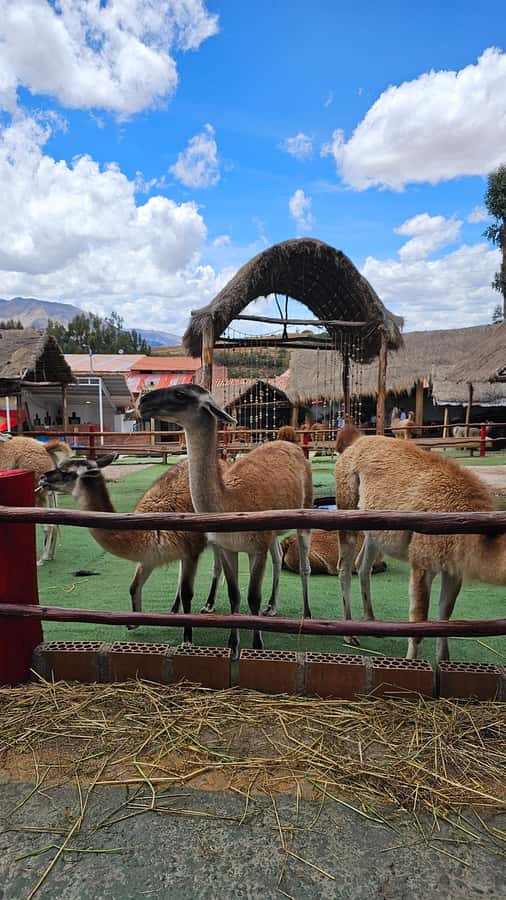
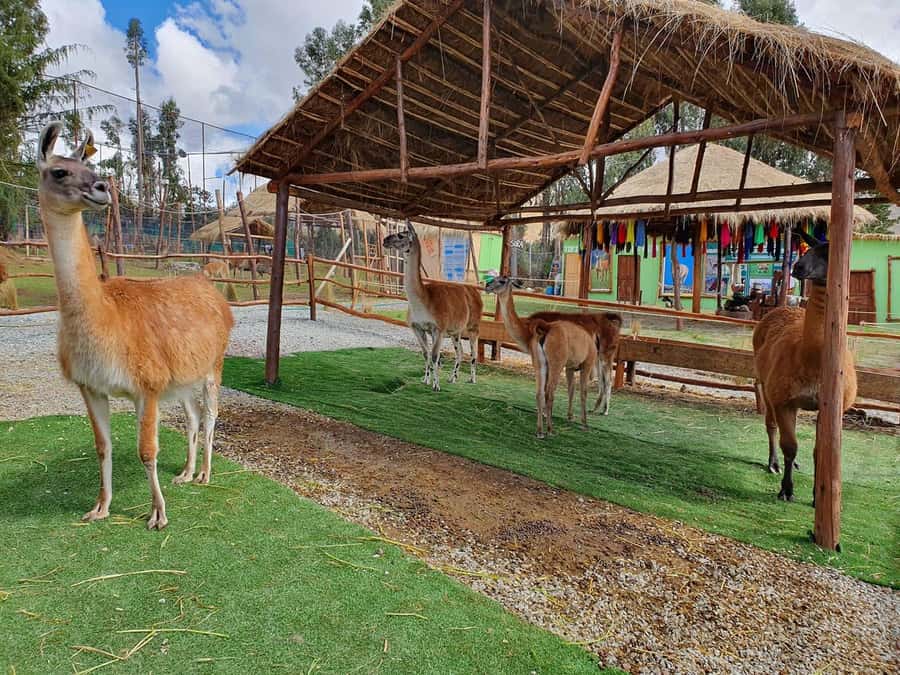
The animal lineup includes two varieties of alpaca and several llama types. A particularly useful part of the presentation is learning that alpacas and llamas are not simply the same animal in different sizes. Their wool, body shape, behavior, and traditional uses differ, and the guide helps you notice those distinctions.
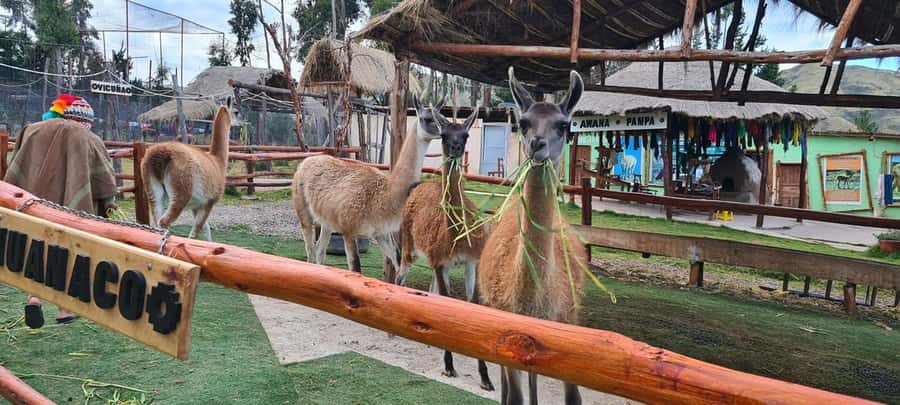
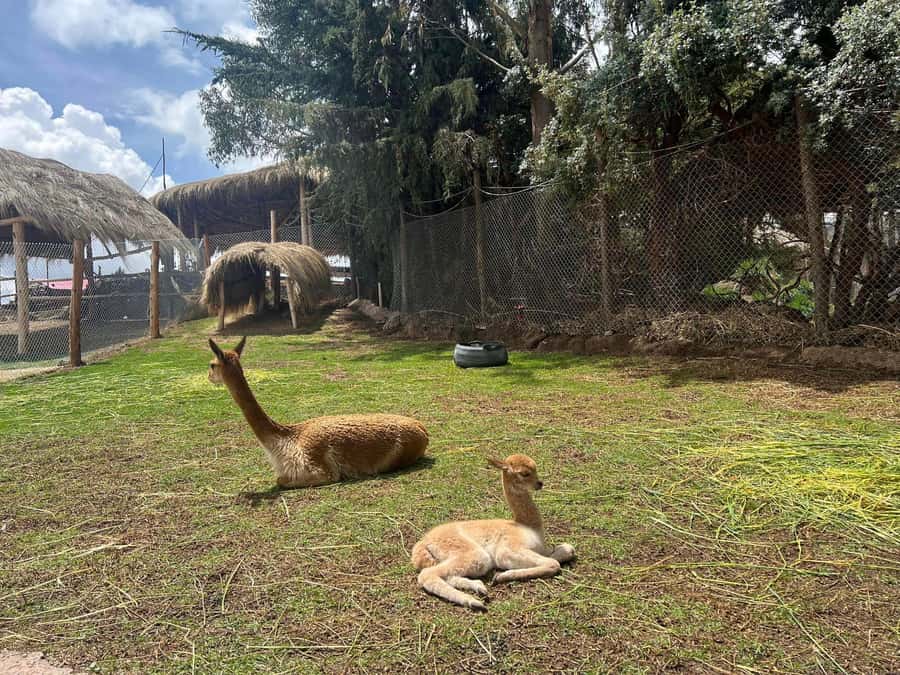
You also learn about the animals’ ancestors and relatives. Vicuñas are especially important. They are known as the gold of the Andes because of the value of their fine wool, and seeing them beside domesticated alpacas helps explain why Andean textiles command attention.
Huanacos add another piece to the story. They are less familiar to many visitors, so this comparison gives the visit more depth than a simple photo stop with fluffy animals. Instead of seeing only cute faces, you begin to understand the family connection among the species.
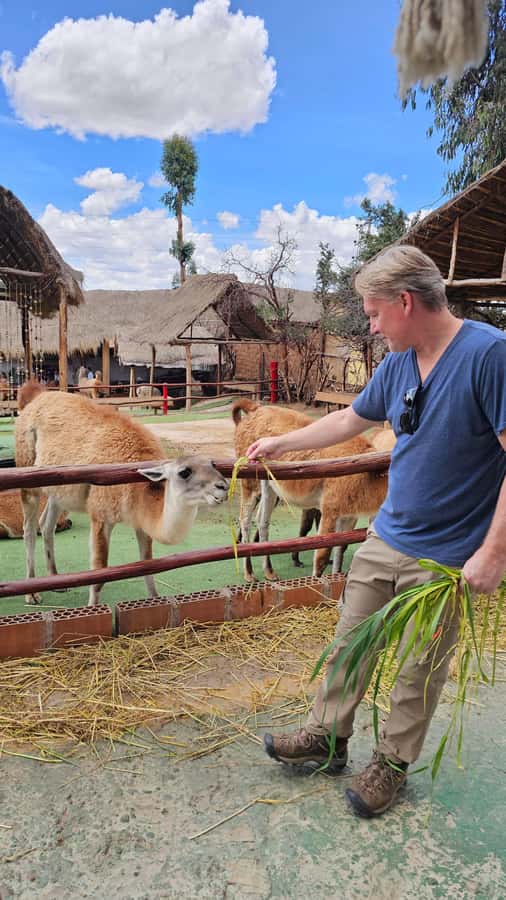
The animals are close enough for good photographs, and several people have been able to feed and pet llamas and alpacas by hand. Your guide may help with pictures, a small but welcome service when you are trying to frame yourself with an animal that has its own plans.
The animals are the stars, but give them room. Their behavior is part of the fun. Some may come forward eagerly, while others may ignore you completely. That unpredictability makes the encounter feel less like a staged photo booth.
What makes the animal visit worthwhile
I like the conservation element. Some of the animals are described as rescues, and that gives the visit a more responsible purpose than simply displaying livestock for tourists. The condition and behavior of the animals have been praised, with visitors noting that they appeared happy and well cared for.
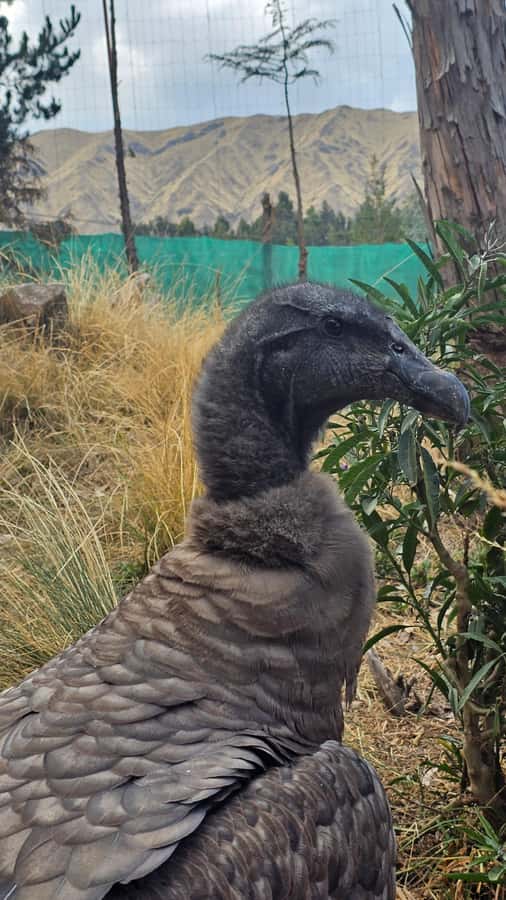
The visit may include more than camelids. Depending on the day and the areas open, you might see rescued condors, deer, and guinea pigs. These extra sightings are not the central promise of the activity, so treat them as a bonus rather than a guarantee.
The rescued condors can be especially meaningful because they connect the farm visit to Andean wildlife protection. Still, the supplied information does not specify how many birds are present or how long you spend with them. Your time is mainly devoted to llamas, alpacas, vicuñas, huanacos, and weaving.
One practical point: the animal portion is not a long free-roaming visit. It is guided and timed. One account found the experience a little rushed and shorter than expected, while most other accounts found the pace comfortable. If you want hours of unstructured time with animals, this will feel brief. If you want a tidy introduction that fits into a half-day, the length works well.
A completely different kind of day:
- Salkantay Classic Trek 5 Days from Cusco
★ 5.0 · 4,062 reviews - 4-Day Salkantay Trek with Sky Camp Stay
★ 5.0 · 3,346 reviews - Short Inca Trail to Machu Picchu 2D/1N
★ 5.0 · 3,007 reviews - Excursion to Rainbow Mountain Full Day Optional Red Valley
★ 5.0 · 2,996 reviews
Inside the weaving demonstration
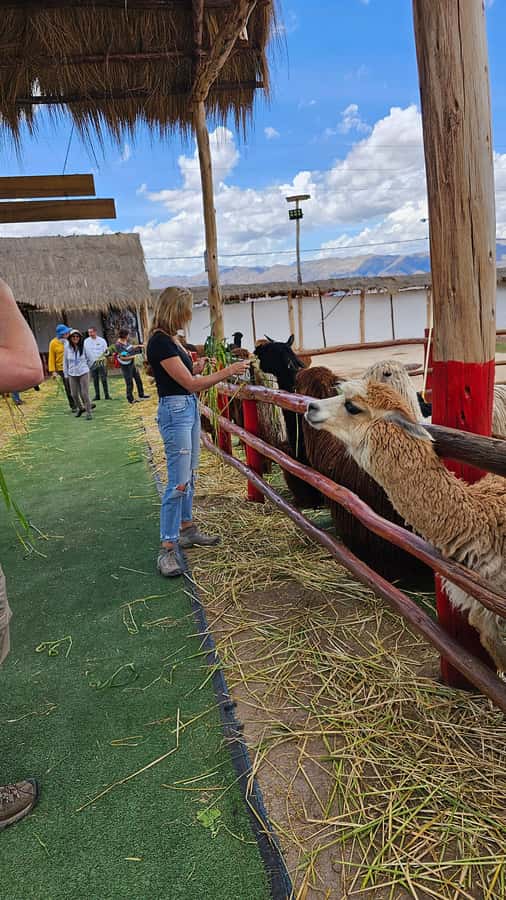
The weaving portion gives the tour its cultural value. You watch native artisans demonstrate traditional techniques used to turn animal wool into textiles. The presentation can include dyeing, preparation, and hand weaving, not just a quick display of finished scarves.
This is where the connection to Inca culture becomes clearer. Textiles were not ordinary decoration in the Andes. They carried practical, social, and ceremonial importance, and the techniques shown today reflect skills passed through generations.
You may also see older fabric examples or a small museum area. These additions help you connect modern products with earlier Andean textile traditions. The exact size and content of the collection are not specified, so think of it as a supporting part of the visit rather than a full museum tour.
A particularly useful lesson concerns baby alpaca. The term can be confusing because it does not always mean wool taken from a young animal. The demonstration explains how to recognize genuine material and avoid misleading labels. That advice can save you money later, especially if you plan to shop for clothing or yarn in Peru.
The textile display is also a good chance to ask questions. Guides have explained the differences among wools, answered questions about local culture, and shown how garments are made by hand. Olga, Holger, Marileth, and Marlith have received especially warm praise for being approachable and thorough.
The shop: browse carefully, buy thoughtfully
The retail outlet follows the weaving demonstration. It has attractive products and can be educational because you have just seen how the wool and patterns relate to the finished goods.
But this is the point where you need to use your own judgment. A price comparison given by one visitor found yarn sold for 60 soles at the farm shop that cost 15 soles in a Cusco shop. That is a large difference.
You may feel watched while browsing, though the available comments also indicate that there was no strong pressure to buy. The simplest approach is to enjoy the demonstration, inspect the labels, and compare prices before committing to a large purchase.
If you want a souvenir, the shop may be convenient. If you are shopping seriously for alpaca clothing or yarn, wait until you have looked around Cusco. Ask what the fiber content means, check whether the item is alpaca or a blend, and remember that an attractive setting does not automatically make the price fair.
The tour price does not include souvenirs. That is useful to know before you go, since the shop can make the outing cost more than the advertised $34 if you shop impulsively.
Is $34 a fair price?
For $34 per person, the value is strongest when you use all parts of the experience: hotel transfers, the guided farm visit, animal interaction, the weaving demonstration, and the cultural explanations.
A comparable self-arranged visit might appear cheaper at first, but you would need to organize transport, find the farm, and arrange your own explanation of the animals and textiles. Here, those pieces are bundled together, and the transfer removes a practical nuisance.
The tour is also good value for a short activity. You get about 150 minutes in total, including transportation, with around 80 minutes devoted to the guided farm visit. That is enough time for a clear introduction, though not enough for a slow, independent exploration of every corner.
I would not book this expecting a bargain shopping trip or a remote encounter with village life. I would book it for the combination of access and context. The guide turns a group of photogenic animals into a lesson about domestication, Inca society, conservation, and textile production.
The price looks especially reasonable if you are traveling with children or older family members who may not want a strenuous day. It is also a sensible choice if you have limited time in Cusco and want a small dose of Andean culture without giving up an entire day.
Guides, pace, and the feel of the visit
The strongest part of this tour is the guide service. Guides have been praised for being friendly, patient, funny, and willing to answer questions beyond the animal presentation.
Marileth and Marlith have been singled out for clear explanations and a warm manner. Holger has been praised for answering questions about Cusco, Inca culture, and Peru without turning the outing into a lecture. Olga has been noted for her grasp of both the animals and the local textile work.
A good guide matters here because the farm itself is only half the experience. Without interpretation, you might remember the llamas but miss the larger story of domestication, wool quality, conservation, and Andean identity.
The pace seems generally leisurely, but your experience can depend on the group and the guide. One person felt rushed, while many others found the timing just right. If you want more time for photos, tell your guide early. If you are traveling alone, group size may vary, and a quiet day could even result in a very small or private-feeling visit.
The activity is easy to combine with other Cusco plans because it lasts only 150 minutes. Still, leave some breathing room around the pickup and return. The listed duration includes transfers, and traffic can change the exact schedule.
Who should book this farm tour?
I would recommend it to:
- Families looking for an easy, hands-on cultural activity
- First-time visitors who want help telling alpacas, llamas, vicuñas, and huanacos apart
- People adjusting to Cusco’s altitude who prefer a lighter first outing
- Anyone interested in textiles, wool, dyeing, and handmade garments
- Visitors who want hotel pickup rather than arranging a taxi
- Photographers who enjoy close animal portraits
You may want something else if your priority is a remote rural experience, a long wildlife visit, or an in-depth textile workshop where you make your own item. This is a guided introduction, not a full-day working farm stay or a hands-on weaving class.
It is also not the best place to buy expensive textiles without comparison shopping. Enjoy the shop, but keep your wallet and your questions ready.
Booking details worth knowing
You can cancel up to 24 hours before the activity for a full refund, and the reserve-now, pay-later option gives you some flexibility while your Cusco plans settle.
The tour includes hotel pickup and drop-off in Cusco, a guide, the farm visit, the weaving demonstration, and water. It is offered in English and Spanish, has a separate entrance for the group, and is listed as wheelchair accessible.
Starting times vary, so check availability for your date. Since the tour begins in Cusco and the farm is nearby, it is easy to fit around meals, museum visits, or an afternoon in the historic center.
Should you book the Cusco alpaca and llama farm tour?
Book it if you want a short, friendly, well-explained introduction to Andean animals and textiles. The animal contact is memorable, the weaving demonstration adds real substance, and the transfer makes the outing simple.
Skip it if you dislike organized attractions with a retail stop or want a quieter, more remote encounter. For most visitors, though, $34 is a sensible price for a gentle Cusco activity, especially during your first days at altitude. Just enjoy the animals, listen closely to the weaving lesson, and treat the shop as optional.
FAQ
How long does the Cusco alpaca and llama farm tour last?
The activity lasts 150 minutes, or about two and a half hours. The guided visit at Manos de la Comunidad is listed as 80 minutes, with the remaining time covering transfers and other parts of the visit.
How far is the farm from Cusco?
The farm is about 20 minutes from Cusco’s historic center by transfer.
Does the tour include hotel pickup and return transportation?
Yes. Hotel pickup and drop-off in Cusco are included.
Which animals can I see?
You can see two varieties of alpacas, several types of llamas, vicuñas, and huanacos. Depending on the visit, you might also see condors, deer, and guinea pigs.
Can I feed or pet the alpacas and llamas?
The experience may allow you to feed and pet some of the llamas and alpacas. The guide can also help you take photos.
Is there a weaving demonstration?
Yes. The visit includes a demonstration of traditional weaving techniques, along with information about wool, dyeing, textiles, and identifying genuine baby alpaca fabric.
Is the tour available in English?
Yes. Live guiding is available in English and Spanish.
Can I cancel the booking?
You can cancel up to 24 hours in advance for a full refund. A reserve-now, pay-later option is also available.
Just added in Cusco
- Private Transfer from Airport to Hotel in the City of Cusco★ 4.0 · 5 reviews
- Best Cusco walking tour: dinner street food tasting★ 4.5 · 11 reviews
- Cusco Private Transportation for 2026★ 5.0 · 4 reviews
- Private Tour to Pisac Market and Pisac Ruins★ 5.0 · 4 reviews
- Machu Picchu Day Trip With Panoramic Train from Cusco★ 5.0 · 10 reviews
- Sacred Valley Private Tour from Cusco, Guide and Driver only★ 5.0 · 4 reviews
- Sacred Valley of the Incas Tour★ 5.0 · 12 reviews
- Private Tour of the Mountain of Colours by Quad★ 5.0 · 7 reviews
Private Drivers, compared.


QuickLlama: Door-to-door transfer from Lima Airport to Miraflores
Read our review →

Round Trip Transfer from and to the Airport in Lima: Miraflores/Barranco/Sani
Read our review →
Transfer from the Airport to Hotel/Airbnb Miraflores/San Isidro/Barranco
Read our review →Browse the lists this tour appears in