
Reviewed · PERU
From Cusco: Inka Suspension Bridge Qeswachaca – Qeswachaka
A rope bridge makes history feel alive. This full-day trip from Cusco combines the handwoven Qeswachaka Suspension Bridge with highland lakes, a small volcano, and the Colonial Inca Bridge of Checacupe. I like the rare chance to cross a living piece of Inca tradition, and I like the way the route adds quiet rural scenery beyond Cusco’s usual day trips. The main drawback is the long amount of time spent on the road, with some stops feeling more like fillers than major sights.
You should also prepare for a very early pickup, basic extra fees, and possible language gaps. English and Spanish guides are offered, and guide Roland has received praise for explaining the bridge, Inca building methods, local nature, climate, and Andean life with warmth. Still, the quality of the English commentary may vary.
In This Review
- Key points to know before booking
- Why Qeswachaka is worth the long ride
- The 4:30 AM start and the long road southwest
- Pomacanchi and the Andean lake stops
- Pabellones Volcano and the S/2 question
- Crossing the handmade bridge over the Apurimac
- Checacupe: a useful bridge comparison
- Breakfast, lunch, and the timing problem
- Guide quality and language expectations
- Is the $47 price good value?
- Who should book this day trip?
- Should you book the Qeswachaka tour?
- FAQ
- How long does the Qeswachaka tour from Cusco last?
- What is included in the tour price?
- Are entrance tickets included?
- Can I cancel the booking for a refund?
- Is the tour available in English?
- Is the tour suitable for wheelchair users?
Key points to know before booking
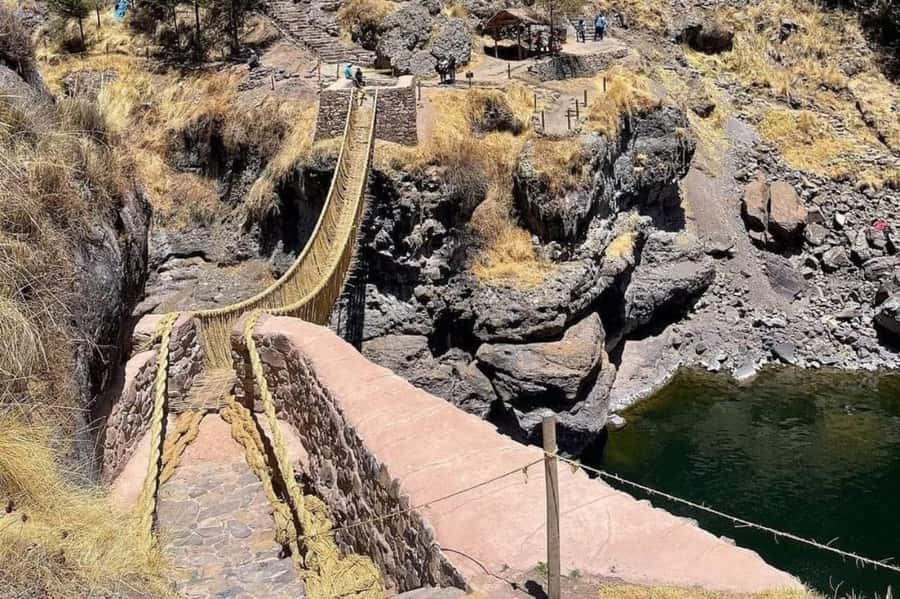
- Qeswachaka is rebuilt by hand each year: Four surrounding communities maintain the bridge with ichu, a tough Andean grass.
- The day begins before sunrise: Hotel pickup is scheduled between 4:30 and 5:10 AM, with a return around 5:00 PM.
- The bridge is high and flexible: Crossing it can feel exciting and a little wobbly, especially if you dislike heights.
- The lakes provide peaceful pauses: Pomacanchi, Acopia, Asnaqocha, and Pampamarca or Tungasuca add open views and quiet water stops.
- The advertised price is not the final cost: The $47 tour price excludes S/20 for the suspension bridge and S/2 for the mini-volcano.
- This is a road-heavy day: You get a memorable bridge visit, but the experience depends on how much you enjoy long mountain transfers.
Why Qeswachaka is worth the long ride
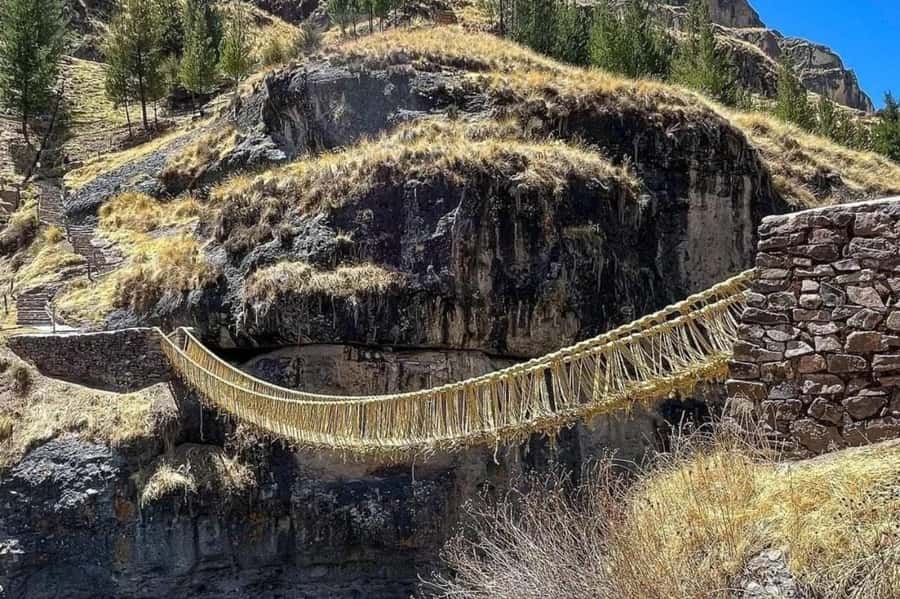
Qeswachaka is not simply an old bridge preserved behind a fence. It is a working tradition. Local residents from four surrounding communities renew and maintain the crossing every year using plant fibers known as ichu.
That living connection gives the visit its real value. You are not only looking at an Inca-era design. You are seeing a skill passed from one generation to the next, still used and cared for by local people. The bridge crosses the Apurimac River in the district of Quehue, and the setting gives you a broad view of the river and surrounding highland country.
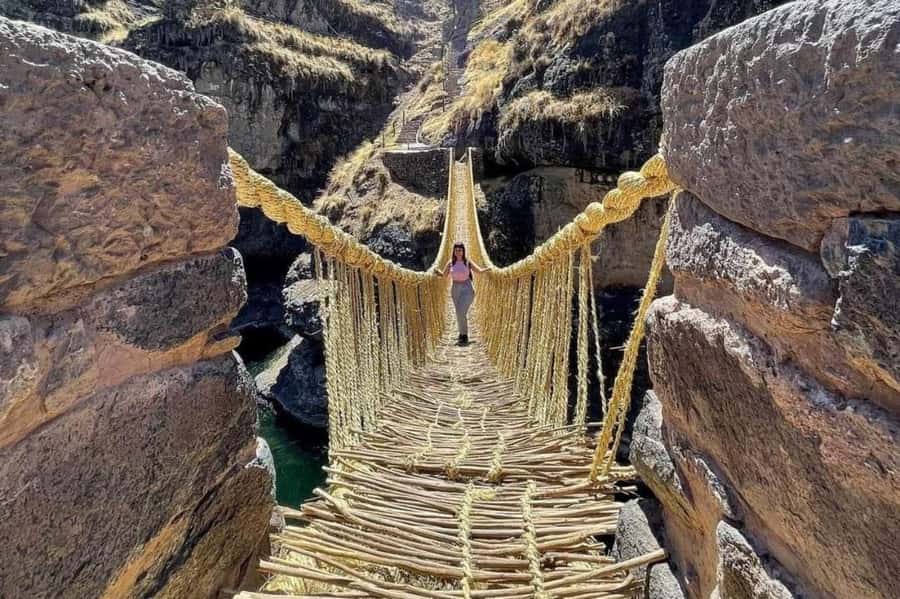
The bridge itself is made from woven grass. It hangs above the water and moves underfoot. One visitor described it as high and wiggly, but also said the crossing was well worth the nerves. That is a fair warning: this is not a smooth modern footbridge. It is part of the appeal.
A guided explanation makes the stop much better. A strong guide can explain how the fibers are prepared, how the structure is renewed, and why the bridge remains important. Roland, specifically, has been praised for discussing Qeswachaka, Inca techniques, Peru, Andean climate, lakes, plants, and animals. If your guide gives that level of context, the bridge becomes more than a photo stop.
Other trips worth a look in Peru:
- Classic Inca Trail Trek 4D/3N to Machu Picchu (Group Service)
★ 5.0 · 8,653 reviews - Premium Paracas & Huacachina Day Trip from Lima with Sunset Toast
★ 5.0 · 7,380 reviews - Cusco: Rainbow Mountain and Red Valley Day Trip with Meals
★ 4.9 · 4,893 reviews
The 4:30 AM start and the long road southwest
The day starts early, with hotel pickup scheduled between 4:30 and 5:10 AM. You should wait in the hotel lobby about 10 minutes before the stated time, but keep your clothes and breakfast plans ready earlier than that. One pickup arrived an hour ahead of the expected time, then returned at the arranged hour when the passenger was not ready.
That kind of timing issue is worth taking seriously. Pickup times can shift, so do not plan a late night before this excursion. The drive southwest from Cusco takes about two hours before the first major lake stop, and more driving follows throughout the day.
Transportation, hotel pickup, a bilingual guide, breakfast, lunch, a first aid kit, and oxygen are included. The oxygen is a useful precaution in the high Andes, though the tour does not promise a medical service. You should still carry water, warm layers, sun protection, and any personal medication you need.
The road time is both a strength and a weakness. It takes you away from the busy center of Cusco and into a quieter part of the region. At the same time, the full outing lasts about 12 hours, and several long stretches can make the day feel bus-heavy.
Pomacanchi and the Andean lake stops
Pomacanchi is the named photo stop in the schedule, with about 25 minutes set aside. The wider route also includes Acopia, Asnaqocha, and Pampamarca, or Tungasuca, Lakes. These bodies of water offer a calm change from the road and the main bridge visit.
Do not expect a long lakeside walk or a full nature program. The stop is brief, so your time is mainly for photographs, a quiet look at the water, and a chance to stretch. The value comes from the setting rather than a large number of planned activities.
The lake sequence can also feel uneven. Some people find these pauses lovely and peaceful. Others may feel that the lakes and small volcano add extra hours without enough substance, especially when the bridge is the main reason for booking.
I would treat the lakes as supporting scenery, not the central attraction. If you enjoy open highland views and simple rural stops, they help break up the drive. If you want a tightly focused archaeological tour, they may feel like padding.
Pabellones Volcano and the S/2 question
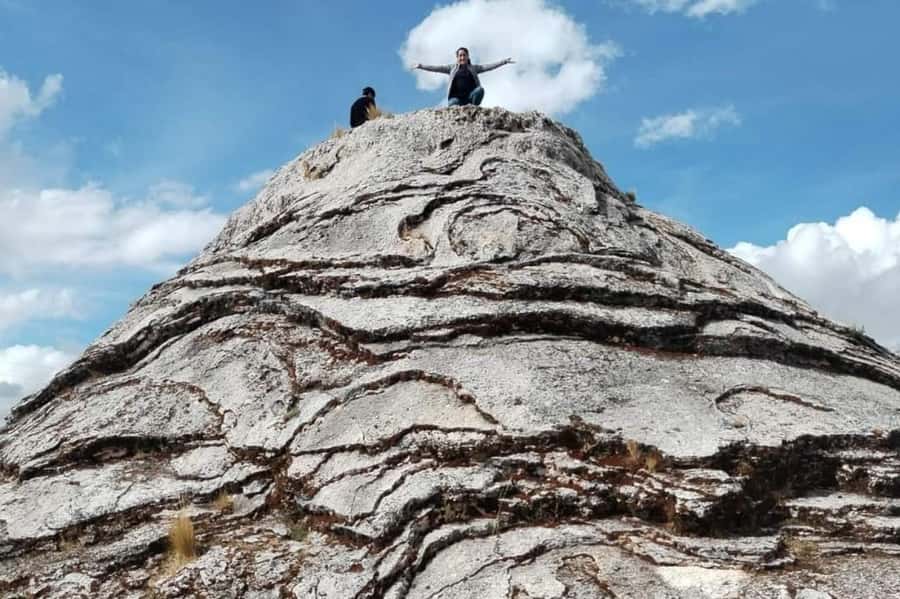
Near Yanaoca, the route stops at the small Pabellones Volcano. The visit is short, and the entry ticket costs S/2. That fee is not included in the advertised price.
This is an optional-feeling stop in practical terms, even though it appears in the planned route. The volcano is small, and the visit may not hold your attention for long. Some people find it a pleasant oddity and a chance to see another feature of the Andean terrain. Others consider it one of the weaker parts of the day.
You should decide how much you value variety. A route with lakes, a volcano, two bridges, and a river gives you plenty of visual change. But the extra stops also lengthen a day that already includes several hours in a vehicle.
A completely different kind of day:
- Machu Picchu: 4-Day Inca Trail Trek with Panoramic Train Ride
★ 5.0 · 4,568 reviews - Salkantay Classic Trek 5 Days from Cusco
★ 5.0 · 4,062 reviews - Full Day Tour From Lima: Paracas and Huacachina Oasis
★ 5.0 · 3,694 reviews - 4-Day Salkantay Trek with Sky Camp Stay
★ 5.0 · 3,346 reviews
Crossing the handmade bridge over the Apurimac
The main event arrives at the Apurimac River, where Qeswachaka crosses the water in the Quehue district. Expect a guided visit of about one hour, including time to reach the bridge, hear about its construction, and cross it.
The crossing is the part that justifies the trip. The bridge’s plant-fiber construction makes it feel very different from a stone or metal structure. It moves beneath you, and the height gives you a strong view of the river and surrounding country.
You should take the crossing at your own pace. If heights make you uneasy, the movement may be more intense than you expect. The attraction is not designed as a polished amusement ride. Its rough, handmade character is exactly why it matters.
The bridge also offers a useful lesson in how the Inca tradition continues in present-day Peru. The annual renewal by four nearby communities turns a historical structure into a community practice. That connection is far more interesting than simply seeing another old wall or stone road.
An optional small boat ride may also be offered near the bridge. It can provide another angle on the crossing and the river, but it costs extra and the level of guiding may be limited. I would regard it as a bonus, not a must-do. Ask clearly about the fee before agreeing.
Checacupe: a useful bridge comparison
On the return to Cusco, the group stops at the Colonial Inca Bridge of Checacupe. This is a smart addition because it gives you a direct comparison with Qeswachaka.
At Qeswachaka, you see a flexible rope bridge made from plant fibers and maintained through a local communal tradition. At Checacupe, you see a bridge with a different architectural character, allowing you to compare materials, structure, appearance, and purpose.
The stop works best after you have crossed Qeswachaka. You can look at the two bridges with a sharper eye instead of treating them as unrelated sights. The contrast also helps explain that Andean bridge building was not one single method.
Do not expect Checacupe to receive as much time or attention as Qeswachaka. The suspension bridge is the emotional center of the day, while Checacupe functions as a final historical comparison before the return drive.
Breakfast, lunch, and the timing problem
Breakfast and lunch are included, and the food can be a real strength. A varied buffet is served for both meals, with enough choice to make the long day easier. That matters when you leave Cusco before dawn and spend much of the day on the road.
The timing, however, deserves a clear warning. The meals can be separated by many hours. One account described roughly nine hours between breakfast and lunch, with long drives and sightseeing stops in between.
Bring a small snack even though meals are provided. The gap may be uncomfortable if you get hungry quickly, and you should not assume that every roadside stop will offer food. Also pay attention to bathroom opportunities. A serious weakness of the day can be the lack of regular restroom breaks or clear warnings before long stretches.
This is a place where a good guide makes a difference. A guide who tells you when to use the bathroom, where the next stop is, and how long the drive will last can prevent much of the frustration.
Guide quality and language expectations
The tour is offered in English and Spanish, but the actual quality of English can vary. One English-booked passenger received only Spanish commentary, while another found the guide’s English rusty but still got enough information to follow the day.
That does not make the tour unusable, but it does change its value. The bridge deserves explanation, and the right guide adds much more than directions and ticket collection. You should confirm the language at the start of the day and ask questions early if the commentary is difficult to follow.
Roland has been singled out for clear, generous explanations and a friendly, almost family-style approach. That suggests the human side of the tour can be excellent when the guide is a good match. Still, you should not book this solely for a guaranteed polished English lecture.
The transport crew also matters because you spend so much time with them. A careful driver and a guide who keeps the group informed can turn long transfers into a manageable part of the day.
Is the $47 price good value?
At $47 per person, the tour is reasonably priced for a 12-hour outing that includes hotel pickup, transport, a bilingual guide, breakfast, lunch, first aid supplies, and oxygen. The price becomes harder to judge once you add the S/20 suspension bridge ticket and S/2 mini-volcano ticket.
Personal spending is also extra, and the optional boat ride may involve another charge. Ask about all add-on costs before leaving Cusco, particularly if the boat trip is presented as part of the experience.
The value depends almost entirely on your priorities. If your main goal is to cross Qeswachaka and you are happy to spend a long day reaching it, the price is fair. If you mainly want lakes, a volcano, and quick scenic stops, the return may feel thin for the amount of road time.
You are paying for access to a remote cultural site, not for a dense schedule of major monuments. That distinction helps set the right expectation.
Who should book this day trip?
I would recommend it to you if you want an unusual Andean experience beyond Cusco’s most famous ruins. The handmade bridge, its yearly community renewal, and the chance to compare it with Checacupe give the day a clear cultural purpose.
It also suits you if you enjoy long scenic drives, simple stops, and a little physical excitement. The crossing is not suitable for everyone, particularly if you are uncomfortable with heights or unstable footing.
I would think twice if you dislike early mornings, long bus rides, uncertain timing, or scattered stops. You should also reconsider if you need guaranteed English commentary, frequent bathroom breaks, or a tightly managed schedule.
The tour is not suitable for wheelchair users. Anyone with mobility concerns should ask the provider for more detail before booking, since the bridge visit includes a walk and a crossing.
Free cancellation is available up to 24 hours before departure, and you can reserve now and pay later. Those policies help if your Cusco plans are still shifting, but they do not solve the basic question of whether you want a very long day for one outstanding attraction.
Should you book the Qeswachaka tour?
Book it if the bridge is the reason you are interested. Qeswachaka is unusual, active, and tied to a living local tradition. The annual hand renewal by four communities gives the visit meaning that a standard photo stop cannot match.
Do not book it expecting every stop to be equally strong. The lakes are pleasant, the Pabellones Volcano is modest, and the long transfers can test your patience. Bring a snack, dress for changing highland conditions, confirm the language, and keep extra soles ready for entrance fees.
For an authentic, one-day excursion with a memorable central experience, I would consider this a worthwhile choice. Just go in knowing that the bridge is the reward at the end of a very long road day.
FAQ
How long does the Qeswachaka tour from Cusco last?
The tour lasts about 12 hours. Pickup is scheduled between 4:30 and 5:10 AM, and the group returns to Cusco around 5:00 PM, finishing near Plaza Kusipata, about one block from the Plaza de Armas.
What is included in the tour price?
The price includes hotel pickup, transportation, a bilingual English and Spanish guide, breakfast, lunch, a first aid kit, and oxygen.
Are entrance tickets included?
No. The suspension bridge ticket costs S/20, and the mini-volcano ticket costs S/2. Personal expenses are also excluded.
Can I cancel the booking for a refund?
Yes. You can cancel up to 24 hours in advance for a full refund.
Is the tour available in English?
The tour is offered in English and Spanish. English quality may vary, so confirm the language with the guide at the start of the day.
Is the tour suitable for wheelchair users?
No. The experience is not suitable for wheelchair users.
Just added in Peru
- Cusco Private Transportation for 2026★ 5.0 · 4 reviews
- Private Transfer from Airport to Hotel in the City of Cusco★ 4.0 · 5 reviews
- Best Cusco walking tour: dinner street food tasting★ 4.5 · 11 reviews
- Private Tour to Pisac Market and Pisac Ruins★ 5.0 · 4 reviews
- Machu Picchu Day Trip With Panoramic Train from Cusco★ 5.0 · 10 reviews
- Sacred Valley Private Tour from Cusco, Guide and Driver only★ 5.0 · 4 reviews
- Sacred Valley of the Incas Tour★ 5.0 · 12 reviews
- Private Tour of the Mountain of Colours by Quad★ 5.0 · 7 reviews