
Reviewed · HORSES
Horseback Adventure through the Sacred Temples of Cusco
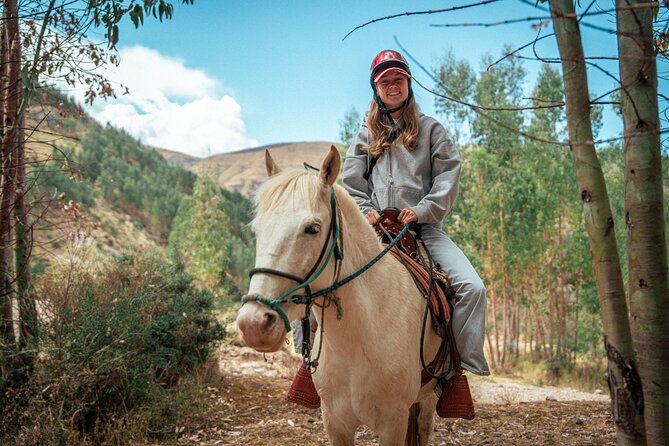
Cusco’s hills hide a quieter side. This three-to-four-hour horseback ride links four Inca sites above the city, pairing open countryside with short guided visits to Inkilltambo, Templo de la Luna, Kusilluchayoc, and Chuspiyoq. I especially like the careful horse matching and the chance to reach places that are awkward to visit by car. The $60 price also covers private roundtrip transport, helmets, bottled water, and site guides.
The other strong point is the human touch. Saturnino and his team adjust the pace to your comfort, from a calm walk to a jog or gallop when suitable. The main consideration is language: one past rider found that much of the explanation was in Spanish, so request balanced English and Spanish guiding when you book.
In This Review
- Why this ride deserves a place on your Cusco plans
- What the three to four hours are really like
- Inkilltambo: an agricultural center with a practical side
- Templo de la Luna and the idea of sacred duality
- Kusilluchayoc, where the monkeys are unmistakable
- Huayllarcocha and Chuspiyoq’s water connection
- Saturnino, horse care, and the personal feel
- What the $60 price includes
- Who should book this Cusco horseback ride
- Practical details before you saddle up
- Should you book it?
- FAQ
- How long does the horseback tour last?
- What archaeological sites are visited?
- Is transportation included?
- Where does the tour start?
- Are helmets provided?
- Is bottled water included?
- Can beginners join the ride?
- Can the riding pace include a gallop?
- Is the tour private?
Why this ride deserves a place on your Cusco plans
- Four lesser-known Inca sites: Visit agricultural terraces, sacred caves, animal carvings, and a water-centered ceremonial site in one outing.
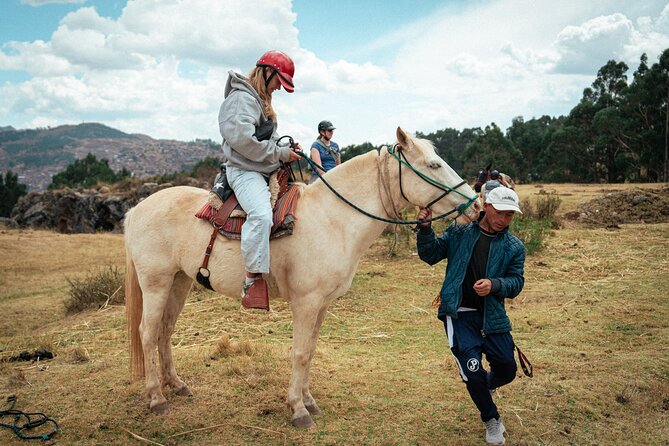
- Horses matched to your ability: Beginners are supported, while experienced riders may be able to jog or gallop.
- Only your group participates: Private transportation and a private tour make the pace more personal.
- Strong care for the horses: The team reportedly limits each horse to one tour per day so the animals are not overworked.
- Useful inclusions: Helmets, water, transportation from your Cusco accommodation, and a horse-handling guide are included.
- A good half-day value: At $60 per person, the package combines riding, archaeology, transport, and local interpretation.
What the three to four hours are really like
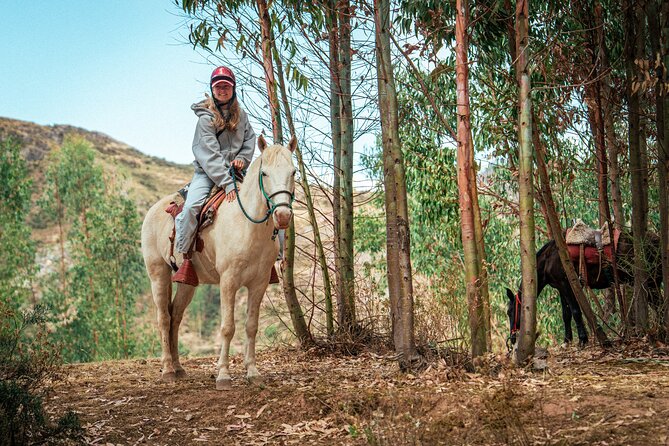
This is not a full day in the saddle. The route blends horseback riding with four short archaeological visits, each listed at about 20 minutes. That balance makes the outing approachable for a first-time rider who wants more than a simple countryside trot.
Private roundtrip transportation begins at Casa De La Gringa San Pedro Retreat Mountain House, in Urb Tambillo A7, Cusco. The activity returns to that same meeting point. Since the tour is private, only your group takes part, which gives the guide room to adjust the route’s speed and riding rhythm.
You receive a helmet, bottled water, and help from a guide who focuses on horse handling. A specialized guide is also provided at each archaeological site. That division matters: you can concentrate on staying comfortable in the saddle while still getting historical and cultural context at the stops.
The riding pace can be adapted to your comfort. You may stay at a walk, move into a jog, or gallop if the guide considers it suitable. I would not treat the faster pace as a promise. Your riding ability, the horse assigned to you, and conditions on the route all affect what is sensible.
Several riders with no previous horseback experience felt safe because Saturnino and his team paid close attention to each person. At the same time, experienced riders appreciated being allowed to gallop through the countryside. That range is one of the tour’s best features.
More horse riding in Cusco:
- Horseback Riding Mystic Tour Temple of the Moon & Chacan Mountain
★ 5.0 · 255 reviews - Horseback Riding Tour to the Devil’s Balcony from Cusco
★ 5.0 · 241 reviews - Horseback Riding & Ancestral Secrets: Moon Temple & Inka Sites
★ 5.0 · 175 reviews
Inkilltambo: an agricultural center with a practical side
The first stop is Inkilltambo, an Inca agricultural center where advanced cultivation methods were used. You get about 20 minutes here, with no admission ticket listed as an extra cost.
This stop gives the tour a useful starting point. Inca sites are often presented only as temples, rulers’ residences, or places of ceremony. Inkilltambo shows the working side of Inca society, where farming knowledge and food production supported life in the highlands.
Your guide can help you look past the stones and imagine the site as a place shaped by cultivation. The value here is not a long archaeological visit. It is the quick reminder that the Inca world depended on careful agriculture as much as on grand religious monuments.
The short time also keeps the route moving. If you want a detailed academic lecture at every site, 20 minutes may feel brief. If you prefer a clear introduction before getting back on the horse, it fits the pace well.
Templo de la Luna and the idea of sacred duality
Templo de la Luna, or Temple of the Moon, is described as a mystical place honoring the sacred duality of female and male energy. The stop lasts about 20 minutes, and admission is listed as free.
This is one of the more atmospheric points on the route. The visit is less about seeing a large, complete structure and more about understanding how the Incas connected natural forms, ritual, and opposing but complementary forces.
The guide’s interpretation matters here. Without context, a carved chamber or rock formation can look like just another ancient ruin. With an explanation of Andean beliefs, the site becomes easier to read as a sacred place tied to balance, fertility, nature, and spiritual power.
Keep your expectations realistic. This is a short stop in an outdoor setting, not a polished museum visit with extensive displays. You will get more from it if you listen closely and allow time for the guide to explain the meaning behind the site.
Kusilluchayoc, where the monkeys are unmistakable
Kusilluchayoc is also called the Temple of the Monkeys. Its stone carvings include monkeys, snakes, and toads, each linked to natural forces and spiritual ideas in the Andean worldview.
The monkey carving is especially easy to identify. Unlike animal forms that require a guide’s imagination or explanation, the monkey is openly shown in the stone. That directness gives this stop a playful quality without stripping away its ceremonial meaning.
You have about 20 minutes to look around. The guide can point out the different zoomorphic forms and explain how animals fitted into Andean ideas about nature. This is one of the easiest stops for families and first-time archaeology visitors to enjoy because the carvings provide an immediate visual hook.
The limitation is the same as at the other sites: the visit is brief. You are not spending hours examining every carved surface. Still, the combination of a recognizable monkey, snakes, and toads makes this a memorable part of the route.
More things to do in Cusco:
- Classic Inca Trail Trek 4D/3N to Machu Picchu (Group Service)
★ 5.0 · 8,653 reviews - Cusco: Rainbow Mountain and Red Valley Day Trip with Meals
★ 4.9 · 4,893 reviews - Machu Picchu: 4-Day Inca Trail Trek with Panoramic Train Ride
★ 5.0 · 4,568 reviews - Salkantay Classic Trek 5 Days from Cusco
★ 5.0 · 4,062 reviews
Huayllarcocha and Chuspiyoq’s water connection
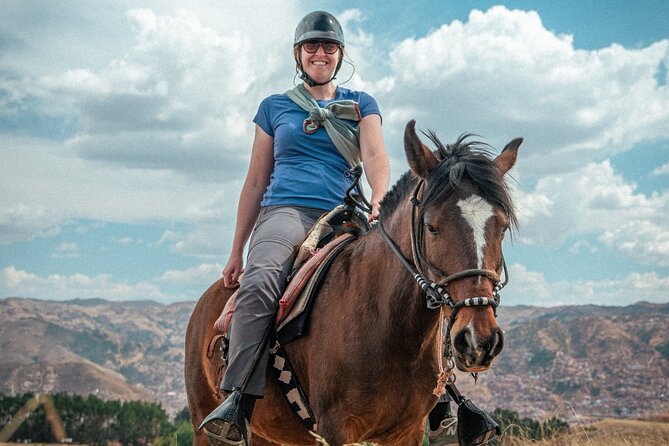
The fourth stop is described as Huayllarcocha, with Chuspiyoq identified as the archaeological site. It is a lesser-known Inca ceremonial place linked to water, purification, and the natural cycle that brings life and energy.
The setting is presented as quiet and green, offering a different mood from more familiar Cusco monuments. The site’s importance comes from its spiritual relationship with water. In the Andean worldview, water was not simply a useful resource. It was part of the sacred order of life.
This stop may appeal most to people who enjoy meaning and atmosphere as much as architecture. You are not only looking at old stonework. You are hearing about ritual cleansing, nature, and the respect given to water by the Incas.
The name can be confusing because the route information uses both Huayllarcocha and Chuspiyoq. I would confirm the exact stop names with the operator before departure, especially if you want to match the ride with your own notes or sightseeing plans.
Saturnino, horse care, and the personal feel
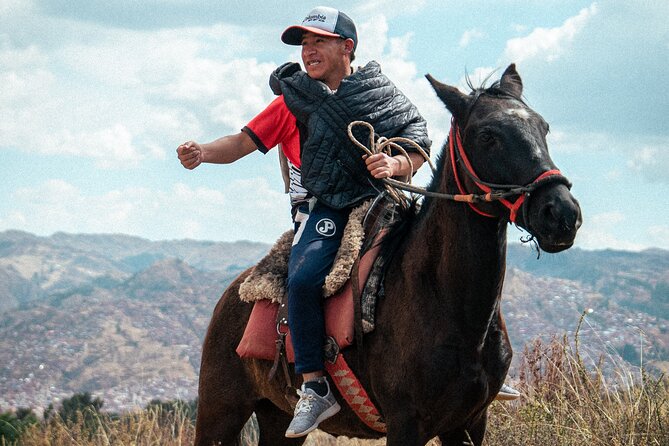
Saturnino is the guide most closely associated with this experience, and his role appears to go well beyond pointing out ruins. He helps match each horse to the rider’s ability, checks how people are doing in the saddle, and explains local history, religion, and plant life along the way.
That horse assignment is important. A beginner needs a calm, manageable animal and clear support. A confident rider may want a horse that can handle a livelier pace. Several riders specifically appreciated that the team matched horses to ability instead of handing out mounts at random.
The horses are described as well trained and well cared for. One particularly reassuring practice is limiting each horse to one tour per day, reducing the chance of overwork. For anyone concerned about animal welfare, this detail is worth asking about when you arrive.
Juan Carlos is also mentioned as part of the team, paying close attention to riders during the outing. Another guide name appears as Satuko in one account, but Saturnino is the name used most often. The provider has also acknowledged the need to balance English and Spanish explanations more carefully.
If English is important for you, say so before the ride begins. One couple found that a Spanish-heavy explanation left one person unable to follow much of the visit. The operator says English-speaking guides are available and aims to give explanations in both languages, but a clear request at booking is still sensible.
What the $60 price includes
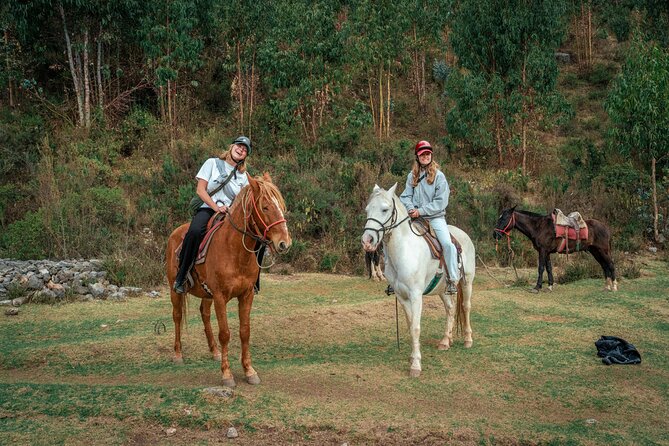
At $60 per person, this is a fair package for a private half-day outing. You are paying for more than the horse itself:
- Private roundtrip transportation from your Cusco accommodation
- A horse-handling guide throughout the route
- A specialized guide at each archaeological site
- A safety helmet
- A trained and responsibly cared-for horse
- Bottled water
- Visits to four archaeological places with no admission ticket listed as an extra charge
The value improves if you are traveling with people who want different levels of riding support. A private group lets the guide adapt the pace rather than forcing everyone into a fixed public-tour rhythm.
It is less compelling if you want a long, technical horseback expedition. The ride lasts only three to four hours, and about 20 minutes is allocated to each stop. Think of it as a combined cultural excursion and riding experience, not an all-day equestrian trip.
Bring snacks. Bottled water is supplied, but one rider specifically advised carrying food and strong sun protection. The high-altitude Cusco sun can feel intense even during a short morning outing, and you may not want to depend on finding refreshments along the route.
Who should book this Cusco horseback ride
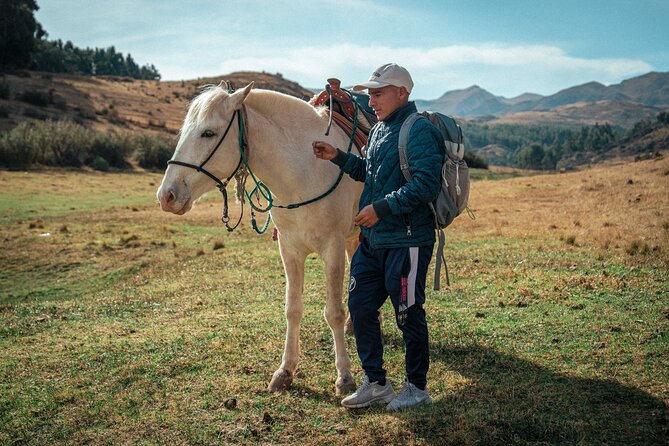
I would recommend it to first-time riders who want a gentle introduction with expert support. The team has experience helping beginners, and the pace can be adapted. You do not need to be an advanced rider to take part, although you should be comfortable following the guide’s instructions.
It also suits experienced riders who want a more unusual way to see the hills around Cusco. The chance to jog or gallop, when appropriate, adds a little freedom to what could otherwise be a standard sightseeing trip.
Families may like the private format, especially if one person is nervous or much less experienced than the others. Matching horses carefully and keeping the pace flexible can make the outing less stressful.
I would be cautious if you have heart or back problems, or if you are pregnant, since the activity is specifically not recommended in those cases. The tour is also a poor fit if you need a long, fully English-language lecture at every stop unless you confirm language arrangements in advance.
Practical details before you saddle up
Confirmation is provided when you book. The meeting point is Casa De La Gringa San Pedro Retreat Mountain House, Urb Tambillo A7, Cusco 08000, Peru, and the activity ends back there.
The location is near public transportation, but private roundtrip transport from your accommodation is included. That removes one common Cusco headache: figuring out how to reach a rural starting point on your own.
Wear clothing that lets you move easily and bring sunblock. Snacks are wise, even though bottled water is provided. You should also listen carefully during the safety briefing and follow the guide’s directions about pace, riding position, and when to stop.
Free cancellation is available up to 24 hours before the start time for a full refund. Changes or cancellations made less than 24 hours before departure are not accepted for a refund, and the cut-off follows local time.
Should you book it?
Book this ride if you want four distinct Inca sites, a personal guide, and a chance to see the countryside from horseback without committing to a full day in the saddle. The strongest reasons are the careful horse matching, good animal care, private transport, and the mix of riding with cultural explanation.
Think twice if you dislike outdoor riding, need guaranteed extended English commentary, or have a medical condition that makes horseback travel unsafe. For everyone else, $60 buys a well-balanced Cusco outing: active enough to feel like an adventure, but structured enough for beginners and curious sightseers.
FAQ
How long does the horseback tour last?
The experience lasts approximately three to four hours.
What archaeological sites are visited?
The route includes Inkilltambo, Templo de la Luna, Kusilluchayoc, also called the Temple of the Monkeys, and Huayllarcocha, associated with Chuspiyoq.
Is transportation included?
Yes. Private roundtrip transportation from your accommodation in Cusco is included, and the activity ends back at the meeting point.
Where does the tour start?
The stated meeting point is Casa De La Gringa San Pedro Retreat Mountain House, Urb Tambillo A7, Cusco 08000, Peru.
Are helmets provided?
Yes. Safety helmets are provided for all participants.
Is bottled water included?
Yes. Bottled water is included, though bringing snacks and sunblock is also advised.
Can beginners join the ride?
Most people can participate, and the guide offers personalized assistance. The pace can be adjusted to a rider’s comfort, but the experience is not recommended for people with heart or back problems or for those who are pregnant.
Can the riding pace include a gallop?
The route pace can be adapted to walking, jogging, or galloping according to the passenger’s comfort and the guide’s judgment.
Is the tour private?
Yes. Only your group participates in the activity.
Just added in Cusco
- Cusco Private Transportation for 2026★ 5.0 · 4 reviews
- Private Transfer from Airport to Hotel in the City of Cusco★ 4.0 · 5 reviews
- Best Cusco walking tour: dinner street food tasting★ 4.5 · 11 reviews
- Private Tour to Pisac Market and Pisac Ruins★ 5.0 · 4 reviews
- Machu Picchu Day Trip With Panoramic Train from Cusco★ 5.0 · 10 reviews
- Sacred Valley Private Tour from Cusco, Guide and Driver only★ 5.0 · 4 reviews
- Sacred Valley of the Incas Tour★ 5.0 · 12 reviews
- Private Tour of the Mountain of Colours by Quad★ 5.0 · 7 reviews
Horses, compared.
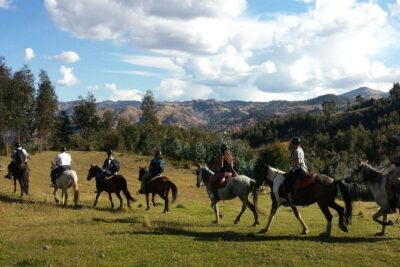
Horseback Riding Mystic Tour Temple of the Moon & Chacan Mountain
Read our review →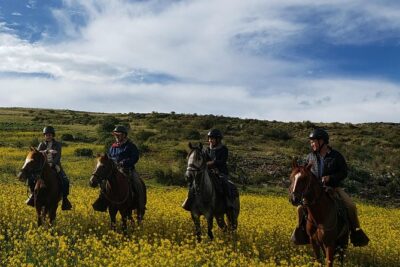
Horseback Riding Tour to the Devil’s Balcony from Cusco
Read our review →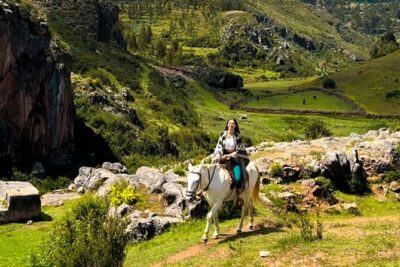
Horseback Riding & Ancestral Secrets: Moon Temple & Inka Sites
Read our review →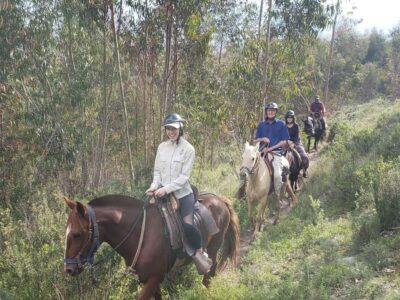
3-Hour Horse Riding Tour to the Temple of the Moon
Read our review →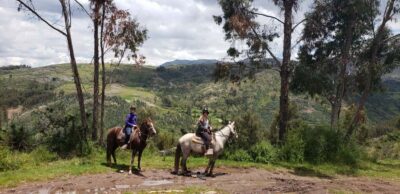
Horse Riding Chacan Mountain And Temple Of The Moon
Read our review →
Horseback Tour in cusco to Temple of the Moon & Hidden temples
Read our review →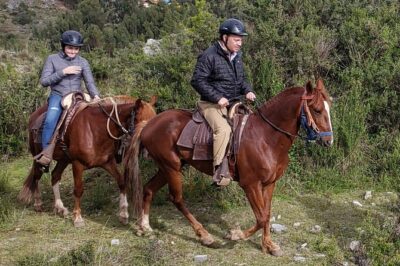
Horseback Riding Plus Tour to Sacsayhuaman, Quenqo, Puka Pucara and Tambomachay
Read our review →Browse the lists this tour appears in