
Reviewed · HORSES
Horseback Riding: 4 Archaeological Sites
Ride into Cusco’s ancient outskirts. This half-day outing pairs Peruvian Paso horses with four major Inca-era sites, giving you mountain views, quiet ranch tracks, and a useful introduction to the area beyond the city center. I especially like the gentle horses and the chance to see the ruins without spending a full day on a formal sightseeing circuit. The main caution is simple: the archaeological entrance ticket costs extra, and you should confirm this before setting out.
I also like the included hotel pickup and the compact schedule, which leaves most of your day free. Gabriel’s Ranch and its staff have earned praise for patient horse handling, kind assistance, and family-friendly care. Still, weather can change the ride, and rain may leave the trails muddy, so proper clothing matters.
In This Review
- Key points to know before you book
- Four ancient sites without giving up your whole day
- Puka Pukara, the first stop above Cusco
- Tambomachay and its carefully placed water channels
- Q’enqo, where stone and ritual shape the visit
- Sacsayhuaman, the grand finish
- The riding itself: quiet trails, ranch land, and mountain views
- How the staff handles beginners and children
- Transport, timing, and group size
- Is $80 a fair price?
- What to wear and bring
- What the guide adds to the ruins
- Who should book this ride?
- Should you book Horseback Riding: 4 Archaeological Sites?
- FAQ
- How long does the horseback riding tour last?
- What time does the tour start?
- Which archaeological sites are visited?
- Is hotel transportation included?
- Is the archaeological entrance ticket included?
- Can children join the horseback ride?
Key points to know before you book
- Four archaeological sites in about three and a half hours: You visit Puka Pukara, Tambomachay, Q’enqo, and Sacsayhuaman in one morning or afternoon outing.
- Peruvian Paso horses: These horses are supplied with protective equipment, and the staff can help less-confident riders get settled.
- Hotel pickup is included: Transport runs between your Cusco hotel, the ranch, and your hotel again.
- The entrance ticket is extra: Budget for the required tourist ticket, and confirm which sites your ticket covers before the tour.
- A small adventure with a possible group of 20: A larger group can help hold down the price, but the pace may feel less personal.
- Rain does not automatically cancel the ride: The tour operates in all weather, so bring suitable outdoor clothing.
Four ancient sites without giving up your whole day
The tour runs at approximately 9:00 am and 1:00 pm, with a total duration of about three to four hours. That timing makes it easy to fit around other Cusco plans, especially if you want to reserve the morning for a market or museum and the evening for dinner in town.
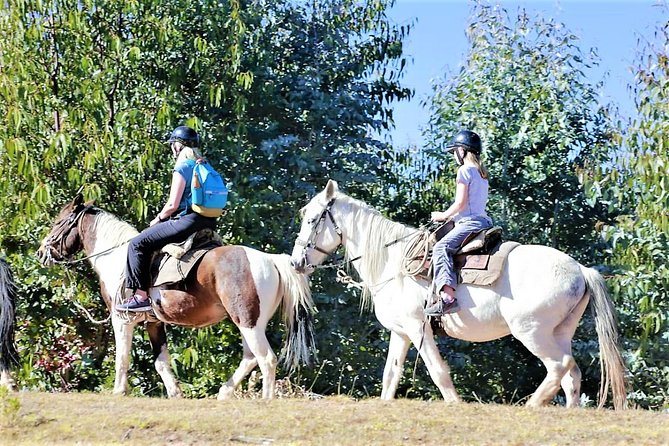
The route covers four important sites on the hills northeast of Cusco. You do not spend all four hours in the saddle. The ride takes place across ranch areas and open country between the stops, while your guide provides introductions at the archaeological sites.
That mix is the real appeal. A standard ruin tour gives you more formal site time, while this outing adds a relaxed outdoor ride. You get a taste of both, though anyone seeking long hours on horseback may find this more of a sightseeing tour with riding than a dedicated equestrian excursion.
More horse riding in Cusco:
- Horseback Riding Mystic Tour Temple of the Moon & Chacan Mountain
★ 5.0 · 255 reviews - Horseback Riding Tour to the Devil’s Balcony from Cusco
★ 5.0 · 241 reviews - Horseback Riding & Ancestral Secrets: Moon Temple & Inka Sites
★ 5.0 · 175 reviews
Puka Pukara, the first stop above Cusco
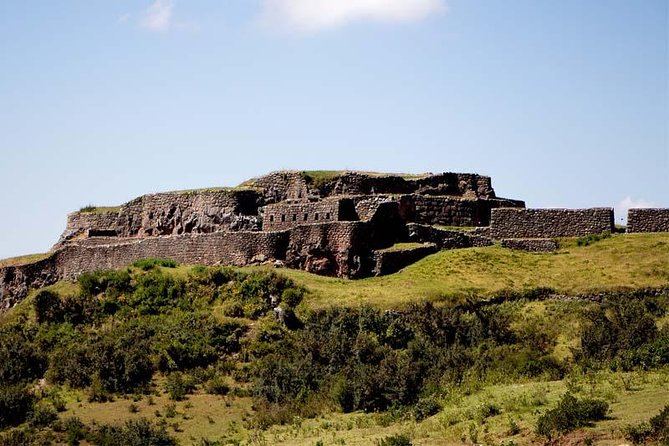
Puka Pukara is scheduled first. Its name is commonly translated as Red Fortress, and its position above the old routes around Cusco helps explain its importance. The site is made up of stone terraces, walls, and small rooms set against broad mountain views.
This is a good opening stop because it gets you out of the city’s close streets quickly. You can look across the surrounding hills and begin to understand how the Inca road system connected the highlands.
Do not expect a huge complex that takes hours to explore. Puka Pukara is more compact, and the value here comes from its setting and connection to the other sites. Your guide’s explanation helps turn a quick visit into something more meaningful. Good shoes are useful because the ground may be uneven, especially after rain.
Tambomachay and its carefully placed water channels
Tambomachay comes next. This smaller site is associated with flowing water, ritual use, and carefully built stone channels. The water still gives the place a calm character, and it provides a contrast to the heavier walls at Sacsayhuaman.
I like this stop for the change in mood. Instead of asking you to admire massive stones, it draws your attention to the Inca skill with water, slopes, and stonework. The site is not a long visit, but a clear explanation can make its purpose easier to understand.
The order of the stops also helps the day flow naturally. You begin with a wide view at Puka Pukara, pause at the water features of Tambomachay, then move toward the more enclosed and dramatic Q’enqo. The riding between sites keeps the outing from feeling like a series of van transfers.
Q’enqo, where stone and ritual shape the visit
Q’enqo is a more intimate archaeological complex, with carved rock, narrow passages, and ceremonial features. The site feels different from the open terraces and broad walls at the earlier stops. You may find the rock-cut details more interesting than the overall size of the complex.
Your guide’s introduction matters here. Q’enqo can be hard to understand if you simply walk around without context, since many features are built into the natural rock. An English and Spanish-speaking guide is included, so you can ask for explanations as you go.
This stop may feel a little tight when the group is large. The maximum group size is 20, and narrow areas are not ideal for a crowd. Still, the guide can give you enough background to appreciate the site without turning the visit into a long lecture.
More things to do in Cusco:
- Classic Inca Trail Trek 4D/3N to Machu Picchu (Group Service)
★ 5.0 · 8,653 reviews - Cusco: Rainbow Mountain and Red Valley Day Trip with Meals
★ 4.9 · 4,893 reviews - Machu Picchu: 4-Day Inca Trail Trek with Panoramic Train Ride
★ 5.0 · 4,568 reviews - Salkantay Classic Trek 5 Days from Cusco
★ 5.0 · 4,062 reviews
Sacsayhuaman, the grand finish
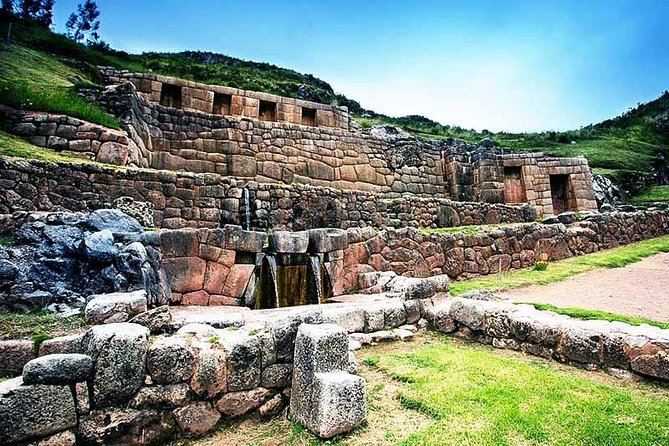
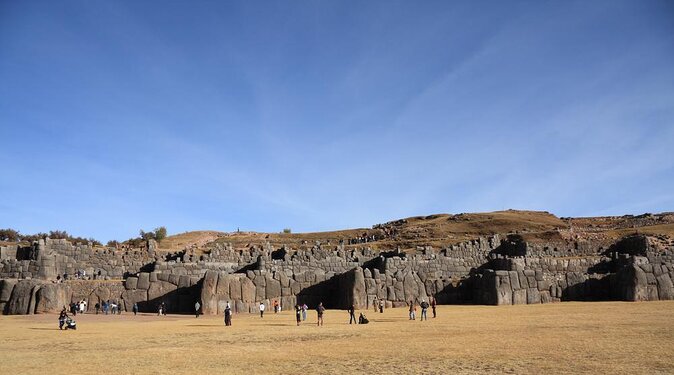
Sacsayhuaman is the most imposing stop and the one most likely to shape your opinion of the tour. Its huge fitted stones, long defensive walls, and high position above Cusco make it far more substantial than the other three sites.
The scale is hard to grasp from photographs. Some stones are enormous, and the precision of the joints remains the main reason this site is a highlight for so many people. You will want time to look closely rather than rushing through for a quick picture.
There is an important practical point here. The archaeological ticket is not included, and one rider had not been told in advance to purchase the additional ticket, which meant missing Sacsayhuaman at first. The guide later helped solve the problem by taking that person to the site on the way back to town, but you should not rely on a last-minute fix. Ask before the day begins exactly what ticket you need and how payment works.
If Sacsayhuaman is a priority, put this question near the top of your booking checklist. A horseback outing loses much of its value if you arrive at the best-known site without the required admission.
The riding itself: quiet trails, ranch land, and mountain views
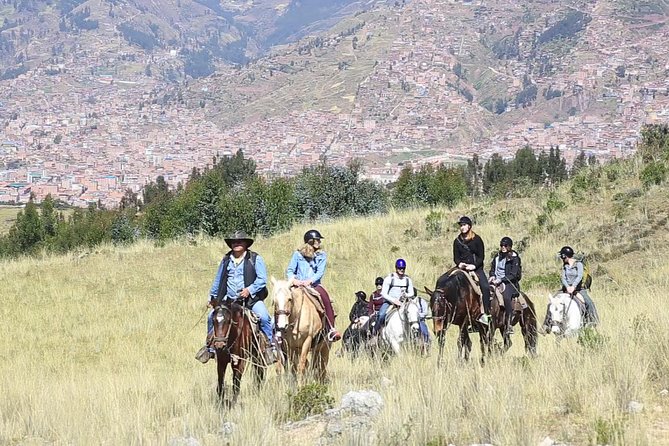
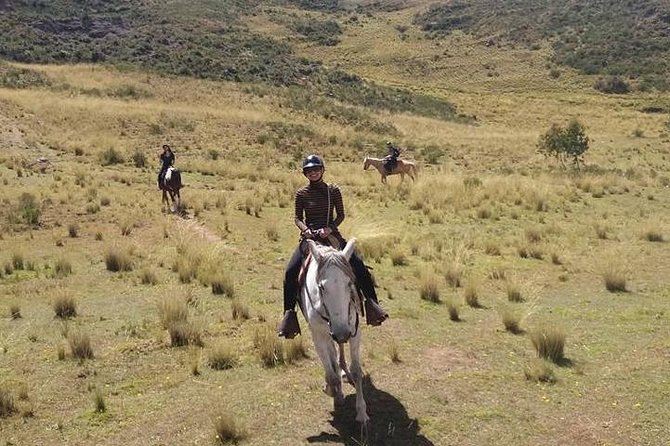
The ride takes place across ranches and open Andean ground between the archaeological stops. The setting gives you views and fresh air that you would miss on a direct vehicle route. It also creates a slower rhythm, with time to notice the hills rather than only ticking off sites.
The horses are Peruvian Paso horses, known for a smooth, distinctive gait. The supplied equipment includes protective gear, and the staff focuses on helping riders feel secure. One rider described a horse that was unsettled at the beginning, but the horse guide calmed it quickly and made the rest of the ride pleasant.
That detail is worth keeping in mind. Horses have individual temperaments, and the first few minutes may involve adjustment. A good staff member should watch the horse and rider closely, which is exactly what happened in that case.
The pace depends on your riding ability and the group. Beginners may spend much of the ride walking, while riders with more experience may be allowed to trot or canter when conditions and staff judgment permit. Do not book this expecting a fast, athletic ride for everyone. It is primarily a scenic outing connected to archaeological sightseeing.
The trails can become muddy in wet weather. The tour operates in all weather, and one family completed the ride in rain with raincoats and a positive attitude. The staff also loaned jackets to riders caught in cold, wet conditions. That kindness is useful, but I would still bring your own waterproof layer rather than count on spare clothing.
How the staff handles beginners and children
The tour is suitable for most participants, but children must be accompanied by an adult. One family brought children aged 10 and 12. Staff initially escorted the children, then allowed them to ride independently after they gained confidence.
That is the right approach for a family outing. Children get a chance to learn without being pushed too soon, while adults can enjoy the ride knowing that the staff is paying attention. Still, the supplied information does not set out a minimum age, weight limit, or riding qualification, so ask those questions if they affect your plans.
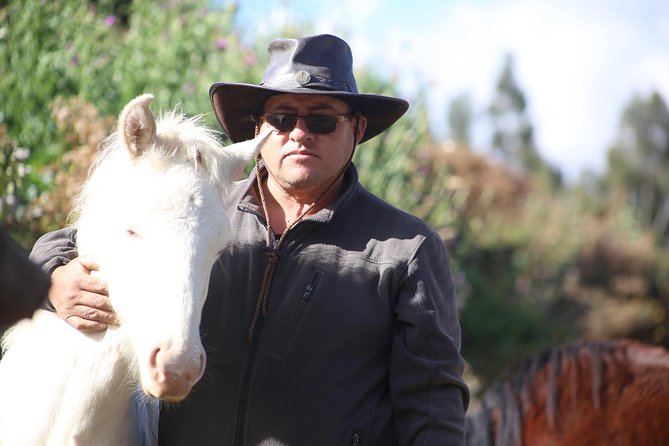
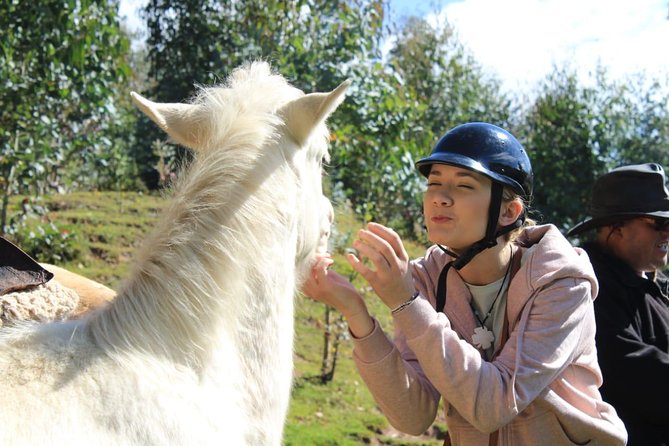
The staff at Gabriel’s Ranch also show care for the horses, not only the riders. That matters to me. A pleasant ride depends on calm, well-treated animals, and the available feedback repeatedly praises the horses as gentle and well trained.
Service animals are allowed, and the activity is near public transportation, though round-trip hotel transport is already included. Most people can participate, but you should speak with the provider before booking if you have mobility concerns or need special assistance.
Transport, timing, and group size
Hotel pickup keeps the morning or afternoon simple. The included transfer covers your hotel, the ranch, and the return journey, so you do not need to arrange separate transport to a riding center outside the main city area.
The advertised start times are 9:00 am and 1:00 pm. Allow some flexibility around pickup, since hotel collection and group coordination can affect the exact departure. The full outing lasts roughly three and a half hours, though the stated range is approximately three to four hours.
A maximum of 20 people keeps the cost lower than a private ride. It also means the outing may have mixed riding abilities. If one person needs extra help mounting, handling a nervous horse, or learning the basics, the group may move more slowly.
The staff may use more than one guide for the day. One rider had a horse guide for the riding portion and another guide who handled transport and gave explanations at the archaeological sites. That arrangement can work well because each person has a clear job, but ask how your group will be divided if you want one guide beside you throughout.
Is $80 a fair price?
At $80 per person, the tour offers solid value if you want several activities in one short outing. The price includes hotel transfers, a horse, protective equipment, a bilingual guide, and snacks. It also covers the staff time needed to coordinate riding and visits to four separate sites.
The cost looks less attractive if you want a long horseback trek with hours of continuous riding. This is a half-day combination tour, not an all-day trail ride. You are paying for the horses, the transport, the archaeological introductions, and the convenience of fitting everything into one block of time.
You must also add the tourist ticket and any drinks or other personal costs. Tips are not included, though they are recommended. The ticket issue is the biggest value warning, because an unexpected admission charge can affect your budget and, more importantly, your ability to enter Sacsayhuaman.
For families and first-time visitors, the package is easier to justify. You get outdoor time, ruins, views, snacks, and transport without spending an entire day away from Cusco. For experienced riders, the value depends on how much riding time you want.
What to wear and bring
Cusco’s highland weather can shift quickly, and the tour runs even when conditions are wet. Dress for movement and changing temperatures rather than for a polished sightseeing day.
Bring:
- A waterproof jacket or raincoat
- Warm layers
- Long trousers
- Closed shoes suitable for mud and uneven ground
- Sun protection
- Water or money to purchase drinks
- Any required archaeological ticket
Snacks are included, but drinks are not. A raincoat is especially important because the ride crosses open ground and ranch areas. If the day is cold, layers allow you to adjust more easily once you begin riding.
The tour supplies protective equipment, but you should still ask what is provided at pickup. If you have limited riding experience, arrive ready to follow instructions about mounting, reins, and pace.
What the guide adds to the ruins
The archaeological sites are not self-explanatory. Their stones, terraces, water channels, and carved rock features make more sense when someone points out how they fit into the wider area around Cusco.
The English and Spanish guide gives introductions at each stop. One rider praised the explanations as clear and detailed, while another highlighted the guide’s care and calm handling of the horses. That combination is important: you need someone who can explain the sites and keep the riding portion safe.
Because the stops are short, the talks are likely to be focused rather than extended academic lessons. That suits most people on a three-and-a-half-hour tour. If you want a specialist archaeological visit at each complex, choose a dedicated ruins tour instead and save horseback riding for another day.
Who should book this ride?
I would recommend it to families, couples, and first-time visitors who want a gentle introduction to both Cusco’s archaeological sites and horseback riding. It is especially useful if your schedule is tight and you want to keep the rest of the day open.
It also suits riders who enjoy views and a calm pace more than speed. The staff may allow experienced riders to trot or canter, but that depends on the rider, the horse, the trail, and the group.
I would think twice if you dislike muddy conditions, need a guaranteed private guide, or want a long uninterrupted ride. A group of up to 20 can feel less personal, and the four-site schedule leaves limited time at each ruin.
Book at least a day ahead if possible, and confirm the entrance ticket before departure. The tour is often reserved well in advance, with bookings averaging about 71 days ahead, so last-minute availability may be limited.
Should you book Horseback Riding: 4 Archaeological Sites?
Book it if you want a practical half-day mix of horses, views, and Inca sites rather than a pure riding expedition. The gentle horses, attentive staff, included transport, and flexible help for children are the strongest reasons to choose it.
The main drawback is the extra archaeological admission cost and the need to clarify ticket arrangements. Add wet-weather planning and the possibility of a larger group, and you have the full picture.
For an $80 outing, the combination is appealing. You get four stops, a scenic ride, bilingual guidance, snacks, and most of your day back. Just confirm the ticket, wear waterproof clothing, and tell the staff your riding level at the start.
FAQ
How long does the horseback riding tour last?
The tour lasts approximately three and a half hours, with the stated operating range being about three to four hours.
What time does the tour start?
There are morning and afternoon departures, listed at approximately 9:00 am and 1:00 pm.
Which archaeological sites are visited?
The route includes Puka Pukara, Tambomachay, Q’enqo, and Sacsayhuaman.
Is hotel transportation included?
Yes. Round-trip transfer between your Cusco hotel and the ranch is included.
Is the archaeological entrance ticket included?
No. The tourist ticket for the archaeological centers is not included in the tour price.
Can children join the horseback ride?
Yes. Children must be accompanied by an adult. Service animals are also allowed, and most people can participate.
Just added in Cusco
- Cusco Private Transportation for 2026★ 5.0 · 4 reviews
- Private Transfer from Airport to Hotel in the City of Cusco★ 4.0 · 5 reviews
- Best Cusco walking tour: dinner street food tasting★ 4.5 · 11 reviews
- Private Tour to Pisac Market and Pisac Ruins★ 5.0 · 4 reviews
- Machu Picchu Day Trip With Panoramic Train from Cusco★ 5.0 · 10 reviews
- Sacred Valley Private Tour from Cusco, Guide and Driver only★ 5.0 · 4 reviews
- Sacred Valley of the Incas Tour★ 5.0 · 12 reviews
- Private Tour of the Mountain of Colours by Quad★ 5.0 · 7 reviews
Horses, compared.
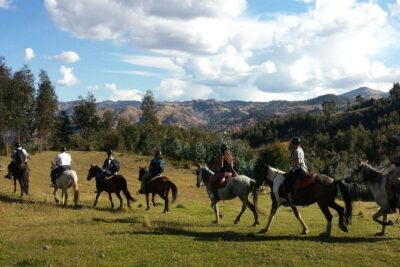
Horseback Riding Mystic Tour Temple of the Moon & Chacan Mountain
Read our review →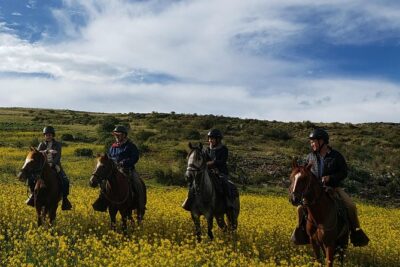
Horseback Riding Tour to the Devil’s Balcony from Cusco
Read our review →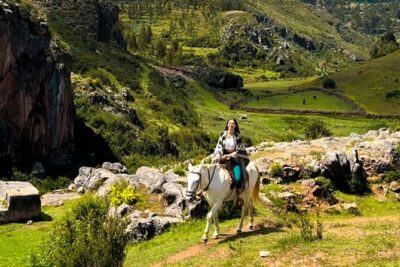
Horseback Riding & Ancestral Secrets: Moon Temple & Inka Sites
Read our review →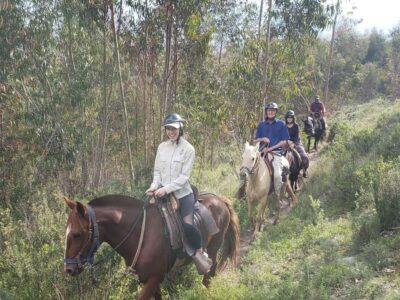
3-Hour Horse Riding Tour to the Temple of the Moon
Read our review →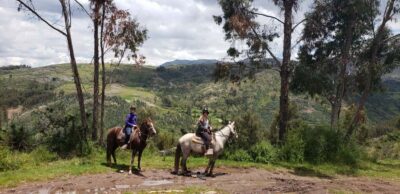
Horse Riding Chacan Mountain And Temple Of The Moon
Read our review →
Horseback Tour in cusco to Temple of the Moon & Hidden temples
Read our review →
Horseback Riding Plus Tour to Sacsayhuaman, Quenqo, Puka Pucara and Tambomachay
Read our review →Browse the lists this tour appears in