
Reviewed · INCA TRAIL AND SALKANTAY TREKS
Inca Trail and Machu Pichu 2 days and 1 Night
The short trail delivers a big reward. This two-day trip gives you the rare chance to walk original Inca paths before entering Machu Picchu through the Sun Gate, rather than simply arriving by train. I also like the small maximum group size of 20 and the personal guide service, especially since Manuel is praised for his archaeology knowledge, patient hiking support, and warm manner. The main drawback is the tight schedule: you need an early start, a solid level of fitness, and careful planning around meals because the itinerary says lunch on Day 2 is not included, even though lunch also appears in the inclusions.
You pay $595 per person for transport, train tickets, entrance fees, a bilingual guide, breakfast, dinner, and the two-day route. That is a substantial fare, but it covers the pieces that can make a Machu Picchu visit complicated to arrange. Just confirm the meal details and train schedule before booking, since this is a non-refundable experience once purchased.
In This Review
- Key points to know before booking
- Why the 2-day Inca Trail is different
- From Cusco to Km 104 through the Sacred Valley
- Chachabamba gives the trail a historical start
- Wiñay Wayna is the day’s great archaeological stop
- Entering through Inti Punku, the Sun Gate
- Aguas Calientes keeps Day 2 simple
- Lunch, souvenirs, and the return to Cusco
- What the $595 price really covers
- Guide service and group size
- Who should choose this tour?
- Practical details that can affect your decision
- Should you book the 2-day Inca Trail?
- FAQ
- How long is the Inca Trail portion?
- Is Machu Picchu admission included?
- Is transportation included?
- Is lunch included?
- What level of fitness is required?
- Where does the tour end?
Key points to know before booking
- The hike begins at Km 104: You walk the short Inca Trail through mountain scenery, waterfalls, orchids, and ancient stonework.
- Wiñay Wayna is a major reward: This dramatic Inca site appears along the trail before you reach Machu Picchu.
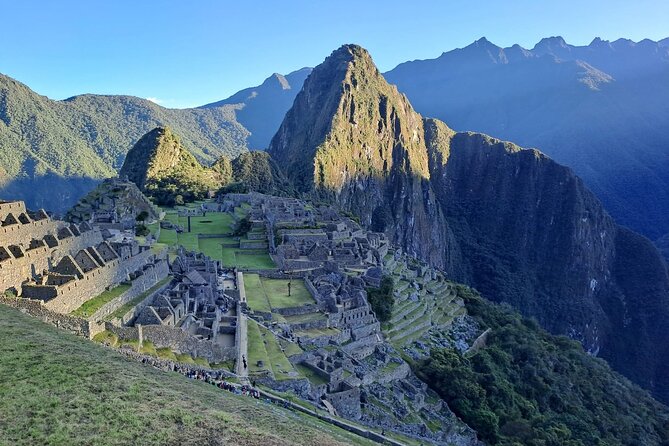
- You enter through the Sun Gate: The first view of Machu Picchu comes from Inti Punku after the hike, not from the usual bus approach.
- Manuel receives repeated praise: His archaeology background, Quechua vocabulary, kindness, and practical help are important strengths.
- The return is long: After visiting Machu Picchu, you take the bus to Aguas Calientes, train to Ollantaytambo, and bus to Cusco, arriving around 7:00 pm.
- The price covers major essentials: Transportation, train tickets, admission, guide service, breakfast, and dinner are included, but hiking gear is not.
Why the 2-day Inca Trail is different
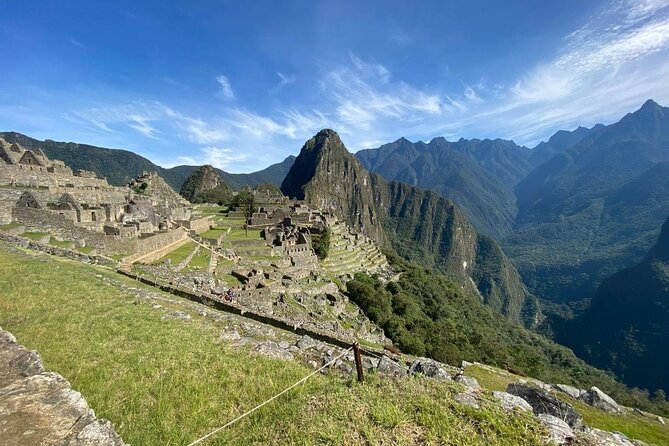
Many Machu Picchu trips take you directly to the citadel by bus and train. This one begins with a hike at Km 104, giving you a physical connection to the old approach routes and the mountains around the site.
The route is often called the short Inca Trail, but short does not mean effortless. The first day lasts about six hours and includes uneven stone paths, mountain sections, and a steady walk toward the Sun Gate. You need moderate physical fitness, comfortable walking shoes, and enough energy to enjoy the archaeological sites rather than simply push toward the finish.
I like the balance here. You get a genuine hiking experience without committing to the classic multi-day trail. You also sleep in Aguas Calientes, so there is no camping and no need to carry several days of supplies.
The trade-off is time. Two days gives you the essential route, but it leaves little room for delays or a slow pace. Early transport, ticket controls, the hike, and the return train all operate on a fixed schedule. This is a good choice if you want the trail experience but have limited time in Peru.
More hikes and treks in Cusco:
- Classic Inca Trail Trek 4D/3N to Machu Picchu (Group Service)
★ 5.0 · 8,653 reviews - Machu Picchu: 4-Day Inca Trail Trek with Panoramic Train Ride
★ 5.0 · 4,568 reviews - Salkantay Classic Trek 5 Days from Cusco
★ 5.0 · 4,062 reviews
From Cusco to Km 104 through the Sacred Valley
The day begins early with a bus and train journey through the Sacred Valley. The trail starts at Km 104, so transport is not just a transfer. It forms part of the experience, taking you away from Cusco and toward the mountain route leading to Machu Picchu.
The stated meeting point is the American Inca Trail office at Av. El Sol 616 in Cusco. Pickup is offered, and the driver is expected to meet you with a sign showing the lead traveler’s name. Confirm the exact pickup arrangement after booking, especially if you are staying somewhere other than the listed starting point.
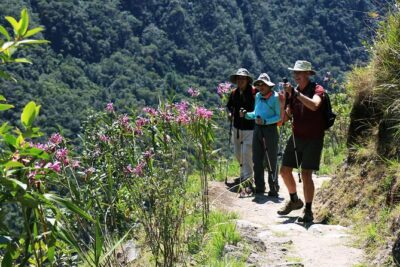
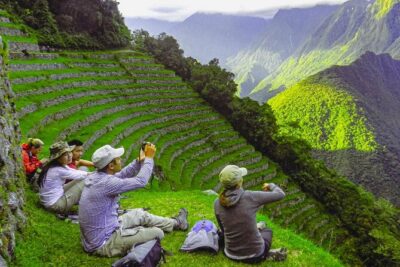
At Km 104, the walking begins. You follow original Inca stone paths through misty mountain country, with waterfalls and orchids along the way. The setting changes as you walk, and that variety helps the six-hour day feel like a journey rather than one long climb.
Your guide is particularly important here. The sites are easier to appreciate when someone explains what you are seeing, and Manuel has been praised for bringing archaeology and local culture into the walk. He also shares some Quechua vocabulary, a small detail that can make the route feel more connected to the people and place.
Chachabamba gives the trail a historical start
One of the first named archaeological stops is Chachabamba. It helps set the tone for the day because you are not walking through empty scenery. Ancient stonework appears alongside the natural setting, showing how closely Inca construction and mountain terrain were linked.
The value of a stop like this depends heavily on the guide. Without explanation, ruins can become a quick photo stop. With a guide who can discuss the site’s purpose, construction, and place within the wider route, you get a better sense of why the trail was built here.
The trail itself can be challenging. You should expect a moderate physical effort rather than a casual stroll. The supplied information does not give exact elevation gains or distances, so I would not plan this as a route for anyone who struggles with several hours of uneven walking.
Take the word early seriously. The day combines transport and hiking, and the first morning sets the pace for everything that follows. A light pack and suitable hiking gear will matter. Hiking gear is not included, so you need to bring or arrange your own equipment.
Wiñay Wayna is the day’s great archaeological stop
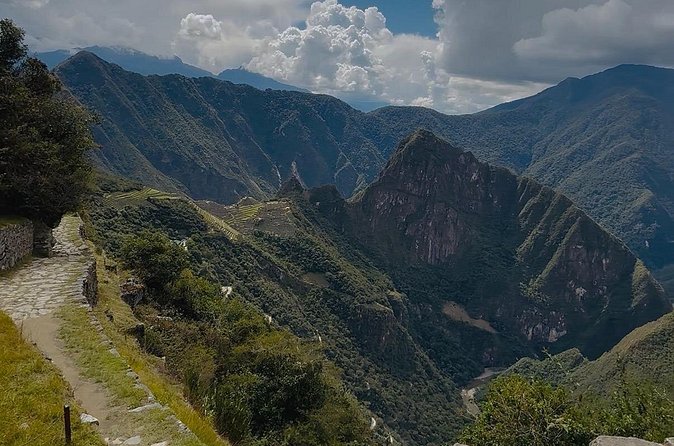
Wiñay Wayna is one of the strongest reasons to choose this route. The site is perched on the mountainside with broad views toward the Urubamba River, and it appears after you have already spent time walking through the surrounding terrain.
The setting gives the ruins extra force. You are not simply stepping off a vehicle and entering a fenced attraction. You reach Wiñay Wayna on foot, after following the old stone trail through waterfalls, orchids, and steep mountain scenery.
I would plan to pause here instead of rushing through. The tour lasts about six hours, and the information does not state how long the group spends at each site, but Wiñay Wayna deserves more than a quick photograph. Ask questions about the architecture and how the site relates to the trail. Manuel’s interest in archaeology should be useful for exactly this part of the day.
The route can also feel demanding at this point. If you are carrying too much or wearing poor shoes, the enjoyment drops quickly. Keep your pack sensible, and remember that the tour does not include hiking gear.
More things to do in Cusco:
- Cusco: Rainbow Mountain and Red Valley Day Trip with Meals
★ 4.9 · 4,893 reviews - 4-Day Salkantay Trek with Sky Camp Stay
★ 5.0 · 3,346 reviews - Short Inca Trail to Machu Picchu 2D/1N
★ 5.0 · 3,007 reviews - Excursion to Rainbow Mountain Full Day Optional Red Valley
★ 5.0 · 2,996 reviews
Entering through Inti Punku, the Sun Gate
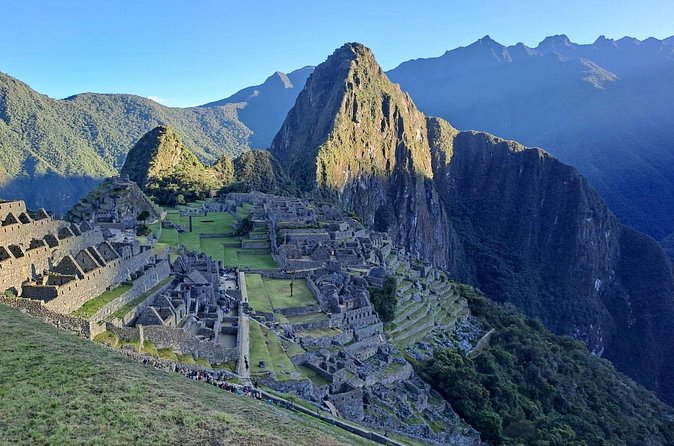
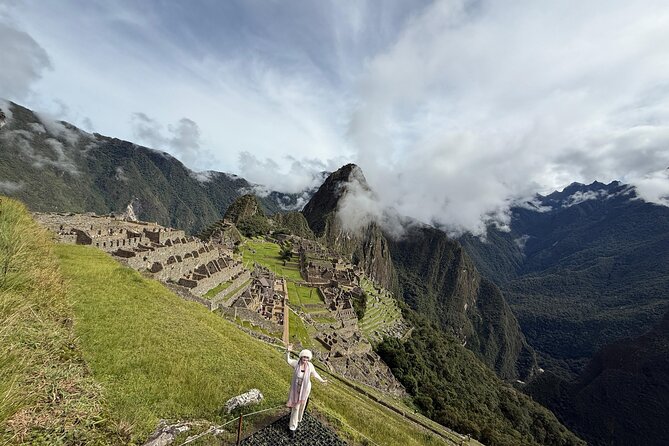
The emotional high point comes near the end of the hike. After the trail and the archaeological sites, you pass through Inti Punku, the Sun Gate, and get your first view of Machu Picchu.
This approach changes the experience. Instead of seeing the citadel first from a bus or train arrival, you reach it after effort, with the route behind you and the mountains opening around you. The afternoon light is described as especially striking, though conditions can change.
You should keep your expectations practical. Weather and visibility are never guaranteed, and the tour does not promise a particular view. Still, the arrival itself is meaningful because the walking gives the sight a sense of arrival and achievement.
You then continue to Aguas Calientes for the night. The town is the practical base for the next morning’s visit. Dinner is included, and breakfast is provided the following day, which makes the overnight stop easier to manage.
Aguas Calientes keeps Day 2 simple
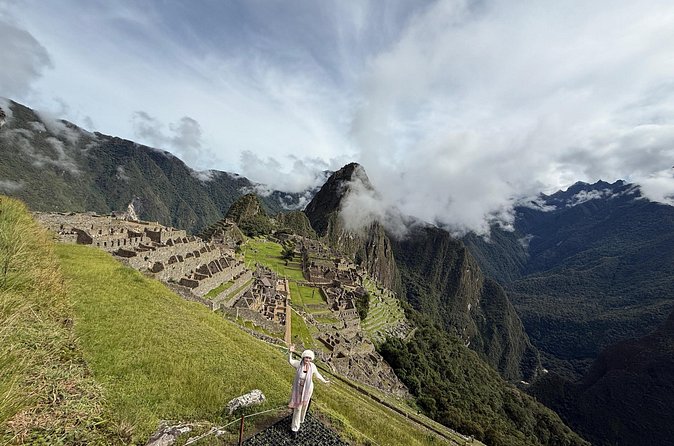
Aguas Calientes is where the hiking portion ends and the main Machu Picchu visit begins. The schedule calls for an early start, followed by a short bus ride from town to the entrance.
That early departure is sensible. Machu Picchu is the central attraction, and you want enough time inside for the guided visit without feeling rushed. The supplied schedule allows about three hours for the Machu Picchu stop, including the guided tour.
Your guide explains the citadel’s history, architecture, and importance. This is where a good guide can turn a collection of terraces and stone buildings into a place with meaning. Manuel is repeatedly praised for his calm, friendly approach and his ability to answer questions about Inca culture and history.
The tour is guided, but you should not expect unlimited independent time inside the site. The itinerary specifies a guided visit and then a return by bus to Aguas Calientes. If your main goal is hours of solitary photography or extended wandering, this compact trip may feel too structured.
Admission to Machu Picchu is included in the overall package. The Day 2 description labels the individual stop’s admission as free, but the inclusions clearly list Machu Picchu admission tickets. Read that as included in the tour price, not as an indication that general admission costs nothing.
Lunch, souvenirs, and the return to Cusco
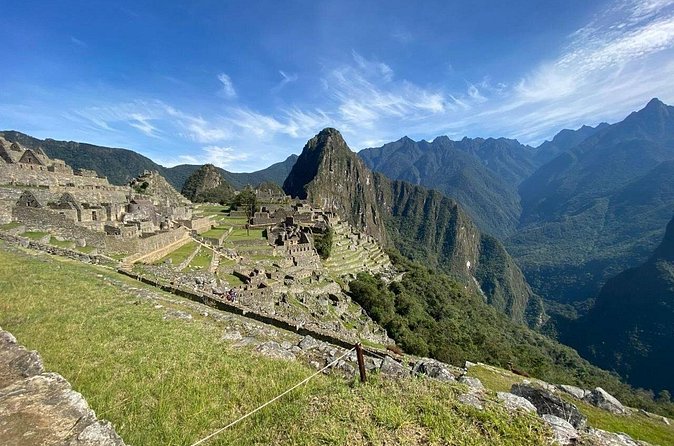
After the guided visit, you return to Aguas Calientes by bus. You have free time for lunch and souvenirs before the train journey begins.
There is an important detail to clarify here. Lunch appears in the overall list of included items, but the Day 2 description says lunch is not included. I would ask the operator which version applies before paying. Budget for lunch anyway, since you may need to cover it yourself.
The return journey uses a train to Ollantaytambo, followed by a bus to Cusco. The train is listed as either Voyager or Expedition, depending on availability. Your arrival back in Cusco is expected around 7:00 pm, with the tour ending at Plaza Regocijo, one block from the main Plaza de Armas.
This is a full final day. You should avoid booking a late evening flight or an important appointment in Cusco. Delays can happen on any combined bus and train schedule, and the tour does not promise an early arrival.
What the $595 price really covers
At $595 per person, this is not a budget walk. The value comes from the number of costly and time-sensitive parts bundled together.
The price includes:
- Transportation for the route
- Train tickets in Voyager or Expedition class
- Inca Trail admission
- Machu Picchu admission
- Bilingual guide service
- Breakfast
- Dinner
- Lunch, according to the general inclusions, though this conflicts with the Day 2 description
You are paying for access as well as transport. The Inca Trail and Machu Picchu both require controlled admissions, and train arrangements can be difficult to coordinate independently. A guide also matters because the value of Chachabamba, Wiñay Wayna, Inti Punku, and Machu Picchu is much greater when you understand their role.
The price is easier to justify if you have only two days and want one company handling the route. It is less attractive if you already have transport, tickets, or accommodation arranged. Compare the package with the cost of arranging each part separately, but remember to include the value of having a guide and coordinated transfers.
The hotel in Aguas Calientes is part of the overnight plan, but the provided details do not name the property or specify its room category. Ask for that information if accommodation standards matter to you.
Guide service and group size
The tour has a maximum of 20 people. That is not a private trip, but it is more manageable than a large coach group. A group of this size can still spread out on a hiking route, so keep the guide’s meeting instructions clear and stay aware of the pace.
Manuel is the guide name most associated with this experience. His strengths are practical as well as academic. He is praised for helping with everything, adjusting to individual needs, answering detailed archaeology questions, and treating the group with care.
That matters on a trail. A guide who only delivers facts is less useful than one who also notices when someone needs help or a slower pace. The information provided does not promise a private guide or a guaranteed guide named Manuel, so treat his participation as something to confirm rather than assume.
The bilingual format is English and Spanish support, with the tour offered in English. The guide’s use of some Quechua vocabulary adds a local cultural note, but the main tour communication is in English.
Who should choose this tour?
I would recommend this trip to you if you want three things at once: a real section of the Inca Trail, a guided visit to Machu Picchu, and a short schedule that avoids several nights of camping.
It suits people with moderate fitness who are comfortable walking for about six hours on uneven mountain paths. It is also a strong fit for anyone interested in archaeology, especially if you enjoy asking questions about construction, religion, local culture, and the purpose of the sites.
Families may appreciate the compact format, but each person should be ready for the physical effort. The family experience described was positive, yet the route remains a hike rather than a simple sightseeing transfer.
I would hesitate to recommend it if you want a relaxed holiday with late mornings, long free periods, or a flexible return to Cusco. The schedule is tightly packed, the first morning starts early, and the second day runs until the evening.
Practical details that can affect your decision
Booking confirmation is expected within 48 hours, subject to availability. Since the experience cannot be refunded or changed after booking, confirm your dates, names, fitness level, pickup point, and meal arrangements before paying.
The listed operating period runs from October 15, 2025, through December 6, 2026, with office hours Monday through Friday from 9:00 am to 5:00 pm. The meeting point is the American Inca Trail office on Av. El Sol, and the stated end point is Plaza Regocijo in central Cusco.
Bring appropriate hiking gear because it is not included. The supplied information does not specify a packing list, so you should ask the operator what they recommend for the trail and the conditions expected on your date.
Should you book the 2-day Inca Trail?
Book it if reaching Machu Picchu on foot matters to you, but you do not have time for the longer trail. The route through Km 104, Chachabamba, Wiñay Wayna, and Inti Punku gives you far more than a standard train-and-bus visit, while the overnight in Aguas Calientes keeps the trip practical.
The strongest reasons to choose it are the trail access, the Sun Gate arrival, the included train and entry tickets, and the caring guide style associated with Manuel. The main cautions are the physical demand, fixed timing, non-refundable booking terms, and unclear lunch inclusion.
Before booking, confirm the guide, hotel, lunch, pickup time, and train class. If those details suit you, this is a well-focused way to experience both the route and the citadel in only two days.
FAQ
How long is the Inca Trail portion?
The first day includes about six hours of hiking, beginning at Km 104 and ending after you pass through the Sun Gate toward Machu Picchu.
Is Machu Picchu admission included?
Yes. The inclusions list both Inca Trail admission and Machu Picchu admission tickets.
Is transportation included?
Yes. Transportation is included, along with train tickets in Voyager or Expedition class. The return includes a train to Ollantaytambo and a bus to Cusco.
Is lunch included?
The general inclusions list lunch, but the Day 2 schedule says lunch is not included and gives you free time to buy it in Aguas Calientes. Confirm this detail with the operator before booking.
What level of fitness is required?
A moderate level of physical fitness is recommended. The first day involves about six hours of hiking on mountain trails and original Inca stone paths.
Where does the tour end?
The tour ends at Plaza Regocijo in Cusco, about one block from the city’s main Plaza de Armas. Arrival is expected around 7:00 pm on Day 2.
Just added in Cusco
- Cusco Private Transportation for 2026★ 5.0 · 4 reviews
- Private Transfer from Airport to Hotel in the City of Cusco★ 4.0 · 5 reviews
- Best Cusco walking tour: dinner street food tasting★ 4.5 · 11 reviews
- Private Tour to Pisac Market and Pisac Ruins★ 5.0 · 4 reviews
- Machu Picchu Day Trip With Panoramic Train from Cusco★ 5.0 · 10 reviews
- Sacred Valley Private Tour from Cusco, Guide and Driver only★ 5.0 · 4 reviews
- Sacred Valley of the Incas Tour★ 5.0 · 12 reviews
- Private Tour of the Mountain of Colours by Quad★ 5.0 · 7 reviews
Inca Trail and Salkantay Treks, compared.
Classic Inca Trail Trek 4D/3N to Machu Picchu (Group Service)
Read our review →
Salkantay Trek 5D/4N with Glass Cabins, Domes and Hobbit House
Read our review →2-Day Inca Trail to Machu Picchu with Panoramic Train
Read our review →
Browse the lists this tour appears in