
Reviewed · AMAZON JUNGLE TOURS
Manu National Park 4-Day Eco Tour from Cusco
The jungle begins before the jungle does. This four-day trip gives you a rare look at Peru’s changing ecological zones, from Cusco’s highlands through cloud forest and down toward lowland rainforest. I like the long overland approach because you see the scenery change step by step, not just arrive by plane in a single setting. I also like the Machuhuasi Lagoon raft ride, where you may spot birds, alligators, and capybaras from the water.
The main trade-off is time on the road. The first day includes about four hours of travel from Cusco, and the return trip on Day 4 takes about six hours. Still, the package includes transport, a private boat, lodging, meals, boots, and a bilingual guide, making the $449 price reasonable for an active, small-group escape into one of Peru’s great wild areas.
In This Review
- Key points to know before booking
- Why the Cusco to Manu route matters
- Day 1: Four hours from Cusco into cloud forest
- The guide makes the forest readable
- Day 2: Six hours of forest time, then Machuhuasi Lagoon
- Day 3: Smaller creatures and careful observation
- Day 4: A long road back to Cusco
- The ecolodge and meals make the price easier to justify
- What wildlife can you realistically expect?
- Is four days long enough?
- Who should book this Manu tour?
- Should you book it?
- FAQ
- How much does the Manu National Park Eco Tour cost?
- How long is the tour?
- Where does the tour start and finish?
- Is transportation included?
- Is a guide included?
- What meals are included?
- What is included for jungle walking?
- Can I cancel for a full refund?
Key points to know before booking
- You cross several ecological zones: The route from Cusco to Manu passes through cloud forest and toward lowland rainforest, giving you more than one type of jungle experience.
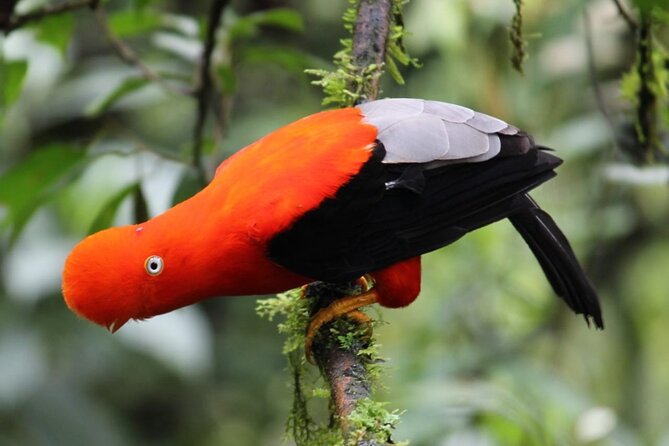
- Wildlife watching is the main event: Look for monkeys, the Andean cock of the rock, quetzals, birds, reptiles, butterflies, frogs, and perhaps larger animals such as tapirs.
- Machuhuasi Lagoon adds a water-based outing: Wooden rafts provide a quieter way to search for birds, alligators, and capybaras.
- The package covers the costly basics: Transport, boat travel, rubber boots, an ecolodge, meals, guide services, binoculars, telescope use, and entrance fees are included.
- Comfort is better than bare-bones camping: The ecolodge has private bathrooms, towels, mosquito nets, and outdoor seating.
- It suits active visitors who can handle long days: Most people can take part, but the program combines extended road travel with several jungle walks.
Why the Cusco to Manu route matters

Manu is not a quick city excursion. It is a large protected area known for its mix of ecological zones, and this trip lets you watch that change as you leave Cusco. The road takes you toward the beginning of Manu National Park, passing through cloud forest before reaching the warmer forest farther below.
That gradual change is one of the strongest parts of the tour. You are not simply checking off a park entrance and spending four days in one lodge. You get a sense of how altitude, moisture, and vegetation shift along the route. The cloud forest is especially important because it supports orchids, colorful birds, and monkeys in a setting that feels very different from the Amazon lowlands.
The journey also helps explain why the wildlife is so varied. A bird that lives in the cool, misty forest may not share the same habitat as a capybara near a lagoon. Your guide, carrying binoculars and a telescope, can help you notice these differences instead of reducing the forest to a blur of green.
More Amazon jungle trips:
- 4-Day Inca Jungle Trail to Machu Picchu Hiking and Biking Tour
★ 5.0 · 438 reviews - 4-Day Adventure Tour: Inca Jungle Trail to Machu Picchu
★ 5.0 · 426 reviews - 4-Day Inca Jungle Tour: Machu Picchu Biking, Rafting, and Zipline
★ 5.0 · 241 reviews
Day 1: Four hours from Cusco into cloud forest
Pickup begins at the designated Cusco meeting point, Expediciones Manu Vilca at C. Garcilaso 260. From there, expect the first major stretch of the trip to take about four hours before reaching the beginning of Manu National Park.
This is not lost time. The road itself is part of the experience, with changing ecological levels along the way. You move from the Cusco area toward the cloud forest, where orchids and birdlife become the focus. The Andean cock of the rock is a major prize, and the route may also produce sightings of quetzals, monkeys, and other forest animals.
The first walks are built around searching rather than marching from one attraction to another. That is the right approach for a wild park. Monkeys may be high in the trees, birds may call before they appear, and small creatures can vanish quickly. Bring patience and let the guide set the pace.
The first day includes one roughly four-hour park segment and another activity period of about three hours. That is a full start, especially after the road trip. You should be ready for a long day with little idle time. Rubber boots are supplied for walking, which matters if the paths are wet or muddy.
The cloud forest is also where the tour earns much of its sense of place. It is not just a transfer zone between Cusco and the rainforest. Mist, orchids, birds, and steep changes in vegetation give you a real introduction to Manu’s variety. If your main interest is photography, this is a good day to keep your camera ready during both the drive and the walks.
The guide makes the forest readable
A jungle walk can be frustrating without help. Leaves, calls, movement, and distant shapes all compete for your attention. This trip includes a bilingual guide from the first day through the last, with guide staff described as accredited by Peru’s tourism authority and trained in biology or tourism.
That background is useful in practical ways. You can ask what a plant is used for, how to distinguish one bird from another, or why a particular animal belongs in one ecological zone and not another. The guiding is not limited to naming animals. It also covers medicinal plants, birds, and the smaller life along the trail.
Guide names connected with the operation include Jose and Miguel. Jose is described as kind, fun, and strong on local information. Miguel has led a four-day jungle trip in a small group, with sightings that included birds, a tapir, lizards, butterflies, and frogs. Guide assignments can change, so treat those names as examples rather than a promise that one specific person will lead your departure.
The telescope and binoculars are a real benefit. In forest conditions, animals are often distant or partly hidden. A telescope can turn a dark shape in a tree into a bird you can identify, while binoculars make monkey watching more rewarding. You will still need luck and patience, but the equipment improves your odds.
Day 2: Six hours of forest time, then Machuhuasi Lagoon
Day 2 gives you the longest block of guided exploration, about six hours. The focus is the forest itself, with explanations of plants, animals, and the many details you could easily miss on your own.
This is the day to settle into the rhythm of Manu. The schedule is not built around a single famous monument. It is built around looking, listening, and walking with enough time for the guide to stop when something appears. That can be more rewarding than a rushed wildlife checklist, although you should not expect guaranteed sightings.
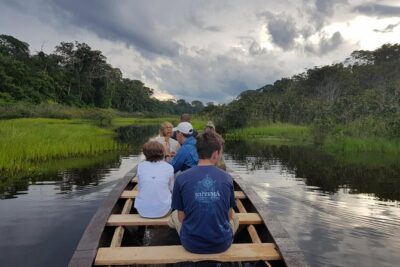
The second activity takes you to Machuhuasi Lagoon for about two hours. Here you ride on wooden rafts and search for birds, alligators, and capybaras. The water gives you a different viewing angle, and the slower pace can be a welcome change after a long walk.
The lagoon stop is one of the tour’s most distinctive details. Many jungle programs rely almost entirely on trails, but this outing adds quiet time on the water. You should still think of it as wildlife watching, not a theme-park ride. Animals may remain hidden, and your guide’s telescope or binoculars may be especially useful.
The rest of the day returns to walks inside the forest. That combination gives Day 2 a good balance: extended land exploration, a focused lagoon outing, then more time among the trees. It is also a demanding schedule, so this is not the ideal trip for someone seeking a leisurely lodge holiday.
More things to do in Cusco:
- Classic Inca Trail Trek 4D/3N to Machu Picchu (Group Service)
★ 5.0 · 8,653 reviews - Cusco: Rainbow Mountain and Red Valley Day Trip with Meals
★ 4.9 · 4,893 reviews - Machu Picchu: 4-Day Inca Trail Trek with Panoramic Train Ride
★ 5.0 · 4,568 reviews - Salkantay Classic Trek 5 Days from Cusco
★ 5.0 · 4,062 reviews
Day 3: Smaller creatures and careful observation
Day 3 is shorter in the listed walking block, at about three hours, but it keeps the attention on the forest’s living details. Guides explain animals, birds, and medicinal plants encountered along the way.
This is where you may appreciate having a guide with biology or tourism training. Large animals attract attention, but frogs, butterflies, lizards, and plants often tell you just as much about the habitat. One standout set of possible sightings has included a tapir, lizard, butterflies, and frogs, along with many birds.
Do not measure the day only by how many animals you see. Manu is not a zoo, and the exact sightings depend on conditions, timing, and chance. A good guide can make a quiet walk worthwhile by explaining the plants and sounds around you, even when a monkey or large mammal stays out of view.
The shorter listed walking period may also give you more breathing room after the first two busy days. The information supplied does not set out every meal or activity hour by hour, so the exact shape of Day 3 may depend on local conditions and the guide’s judgment.
Day 4: A long road back to Cusco
The final day is mainly the return journey. Your guide travels back with you, and the tour ends at the same Cusco meeting point where pickup began. The listed return time is about six hours, so plan for another substantial day in the vehicle.
This is worth considering when arranging your Cusco plans. I would not schedule an important evening flight or a tight connection immediately afterward. The tour ends back at the meeting point, but road conditions and the long route mean you should leave a safety margin.
The return drive can also serve as a final review of the ecological changes you saw on the way in. The trip is strongest when you treat the transport as part of the park experience, not as a minor inconvenience between activities.
The ecolodge and meals make the price easier to justify
At $449 per person, the tour is not a budget day trip. It is a four-day package in a remote area, and the inclusions explain much of the cost. You receive bus transport, a private boat with life vests, rubber boots, a bilingual guide, binoculars, a telescope, entry fees, lodging, and most meals.
The ecolodge offers private bathrooms, towels, mosquito nets, and outdoor seating. That is a meaningful step up from basic camping. You can expect a comfortable place to wash, sleep, and sit outside, while still staying close to the forest.
Food is another strong point. The package includes three dinners, four lunches, and three breakfasts. The first day’s breakfast is not included, so eat before pickup or plan to buy something separately. Alcoholic drinks are also extra.
The meals have been praised for being plentiful, varied, healthy, and well cooked. Miguel’s trips have included especially good food, prepared at the lodge. That matters more than it might sound: after long road sections and jungle walks, a proper meal can make the difference between enjoying the next outing and merely getting through it.
The private bathroom and supplied towels reduce the amount of equipment you need to carry. The mosquito nets and rubber boots are practical rather than flashy, but they are exactly the sort of details that make a remote forest stay more comfortable.
What wildlife can you realistically expect?
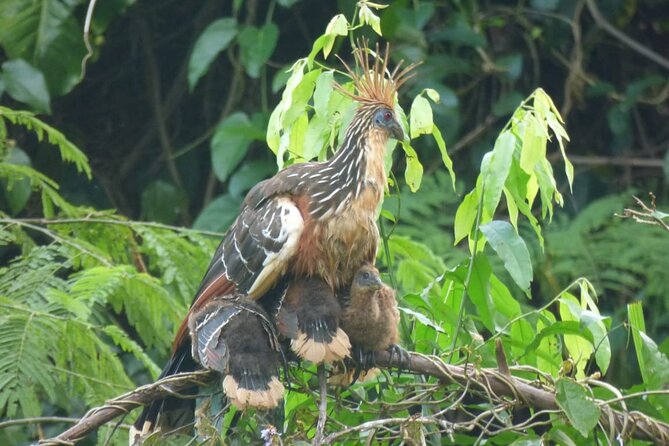
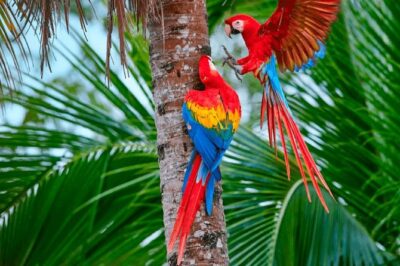
The program centers on wildlife, but no responsible jungle tour can promise a fixed list. You may see monkeys on forest walks, birds in the cloud forest, the Andean cock of the rock, quetzals, alligators, capybaras, lizards, frogs, butterflies, and perhaps a tapir.
The cock of the rock is one of the most memorable targets because it is closely linked with Peru’s cloud forest. Quetzals add another special bird sighting. At Machuhuasi Lagoon, the focus shifts toward water and shoreline animals, with capybaras and alligators among the possibilities.
A local rescue center has also been part of at least one trip, with sloths, monkeys, and macaws seen there. That stop is not clearly listed as a fixed part of every departure, so do not book solely for it. If it is included on your route, it adds a chance to see animals that can be difficult to spot in the wild, along with a different perspective on regional wildlife.
The best way to approach Manu is to value variety over certainty. Seeing a monkey troop is exciting, but so is learning which plant is medicinal or watching a small frog that you would never have noticed without a guide.
Is four days long enough?
Four days gives you a useful first taste of Manu, but it is still an introduction. You get cloud forest, multiple walks, a lagoon outing, and a return journey. That is enough for a broad sample of the area and a fair chance at varied wildlife.
It is not enough to explore every part of the park or guarantee rare sightings. The long road access also means your actual time in the forest is balanced against transport. I see this as a good fit for you if you want a manageable first trip from Cusco rather than a longer expedition.
The private tour format means only your group participates. That can make the pace more personal and may help when stopping to watch birds or discuss plants. The group size is not stated, so do not assume that every departure is limited to just two or three people.
Who should book this Manu tour?
I would recommend it to you if you enjoy wildlife, walking, long scenic drives, and practical comfort. It suits people who want an active nature trip but do not want to sleep in tents or arrange transport, guides, equipment, meals, and park fees separately.
It also works well for anyone who wants more than a single Amazon setting. The cloud forest, lower forest, lagoon, and changing ecological zones give you a fuller picture of the region.
I would hesitate if you dislike long road journeys, need a predictable timetable, or want luxury facilities. The ecolodge sounds comfortable and spacious, but this is still a remote jungle trip with extended travel and outdoor walks.
Most people can participate, and service animals are allowed. Confirmation is provided when booking. Cancellation is free if you cancel at least 24 hours before the local start time. A minimum number of participants is required, and if that minimum is not met, you will be offered another date or experience, or a full refund.
Should you book it?
Book this tour if you want a well-supported first look at Manu and value the chance to move from cloud forest to rainforest in one journey. The strongest reasons are the range of habitats, the wildlife-focused walks, the Machuhuasi Lagoon rafts, and the useful equipment and meals included in the price.
I would choose it over a cheaper bare-bones option if private bathrooms, boots, transport, and a trained bilingual guide matter to you. Just reserve enough energy for the road, keep your wildlife expectations realistic, and leave plenty of time after Day 4 before your next fixed plan.
FAQ
How much does the Manu National Park Eco Tour cost?
The tour costs $449 per person.
How long is the tour?
The experience lasts approximately four days.
Where does the tour start and finish?
It starts at Expediciones Manu Vilca, C. Garcilaso 260, Cusco 08002, Peru, and ends back at the same meeting point.
Is transportation included?
Yes. Tour bus transport and a private boat with life vests are included.
Is a guide included?
Yes. A bilingual guide accompanies you from the first day through the last. The guides are described as accredited by Mincetur, with guides who have biology or tourism training.
What meals are included?
The package includes three breakfasts, four lunches, and three dinners. Breakfast on the first day and alcoholic drinks are not included.
What is included for jungle walking?
Rubber boots are provided for walking. The ecolodge also supplies towels and mosquito nets, and rooms have private bathrooms.
Can I cancel for a full refund?
Yes. You can cancel at least 24 hours before the experience start time for a full refund. Changes or cancellations made less than 24 hours before the start are not accepted for a refund.
Just added in Cusco
- Cusco Private Transportation for 2026★ 5.0 · 4 reviews
- Private Transfer from Airport to Hotel in the City of Cusco★ 4.0 · 5 reviews
- Best Cusco walking tour: dinner street food tasting★ 4.5 · 11 reviews
- Private Tour to Pisac Market and Pisac Ruins★ 5.0 · 4 reviews
- Machu Picchu Day Trip With Panoramic Train from Cusco★ 5.0 · 10 reviews
- Sacred Valley Private Tour from Cusco, Guide and Driver only★ 5.0 · 4 reviews
- Sacred Valley of the Incas Tour★ 5.0 · 12 reviews
- Private Tour of the Mountain of Colours by Quad★ 5.0 · 7 reviews
Amazon Jungle Tours, compared.
4-Day Inca Jungle Trail to Machu Picchu Hiking and Biking Tour
Read our review →
4-Day Adventure Tour: Inca Jungle Trail to Machu Picchu
Read our review →
Tambopata Peruvian Amazon Jungle for Three Days/Two Nights
Read our review →
4-Day Inca Jungle Tour: Machu Picchu Biking, Rafting, and Zipline
Read our review →
Inca Jungle Multi-Day Tour to Machu Picchu 4 DAYS
Read our review →Browse the lists this tour appears in