
Reviewed · COLCA CANYON AND AREQUIPA TOURS
Private Arequipa Countryside Tour,
Start with Arequipa’s everyday life. This half-day outing pairs a local market, volcano views, the Ruta del Sillar quarry, and traditional food with private transport and a guide who can shape the day around your interests. I especially like the market visit for its fruit and medicinal plants, and I like that the tour reaches the sillar quarry before or away from the busiest periods. The main consideration is that lunch is not included, so your final food stop costs extra.
The tour runs about five hours, beginning with an 8 a.m. pickup from a hotel in Arequipa’s central area and ending around 2 p.m. It costs $65.34 per person, which is fair if you value door-to-door transport and personal guiding, though a budget-minded couple may find it cheaper to arrange individual visits.
In This Review
- Key Points Before You Book
- Why This Five-Hour Route Works
- Mercado Central: Start with Potatoes, Fruit, and Plant Remedies
- Mirador de Sachaca: Arequipa Framed by Three Volcanoes
- Ruta del Sillar: The Stone Behind the White City
- Mirador Carmen Alto: Inca Terraces and a Sweet Finish
- Cuy Chactao, Rocoto Relleno, and Chupe de Camarones
- Guide Quality and the Value of a Private Vehicle
- Who Should Book This Arequipa Tour?
- Should You Book the Private Arequipa Countryside Tour?
- FAQ
- What time does the tour begin?
- How long does the experience last?
- Is the tour private?
- What is included in the price?
- Is lunch included?
- What food can I try?
- Can most people participate?
- Can I cancel for a full refund?
Key Points Before You Book
- A real local-market start: See Andean grains, native potatoes, vegetables, fruit, and medicinal plants at Mercado Central.
- Three volcanoes from Sachaca: The 360-degree view includes Misti, Chachani, and Pichu Pichu.
- Sillar beyond the postcard: At Ruta del Sillar, you see how the pale volcanic stone is worked and used in Arequipa.
- Food is part of the lesson: You can taste fruit, desserts, and possibly cuy chactao, rocoto relleno, shrimp soup, and chicha de jora.
- A private half-day format: Your group travels alone, with hotel transfers and a guide rather than a fixed large-group schedule.
- Strong guest satisfaction: The experience is rated 4.9 out of 5, with 95 percent recommending it.
Why This Five-Hour Route Works
Arequipa is easy to admire from its handsome central streets, but this tour shows how the city connects to its food, stone, farms, volcanoes, and newer outer districts. You begin with commerce, move into wide views, then see the raw material behind the white city before ending with Andean and Arequipeño dishes.
I like the order. The early market stop gives you cultural context before the more familiar viewpoints and quarry visit. You are not simply ticking off sights. You see where ingredients come from, how the city was built, and how people have adapted to life around the volcanoes.
The private format matters here. With only your own group, you can ask more questions, spend longer at a stop that interests you, or keep moving if you have already had enough photographs. The guide also serves as driver or works closely with a careful driver, depending on the arrangement.
The timing is useful if you have only one free morning in Arequipa. Pickup is at 8 a.m., and the return is planned for about 2 p.m., leaving the rest of your day open. Still, this is not a quiet countryside picnic. It is a sightseeing circuit by vehicle, with short visits and food tasting along the way.
More Colca Canyon trips:
- 2 day 1 night trek / Colca Canyon
★ 5.0 · 1,069 reviews - From Arequipa: Colca Canyon Full-Day Guided Tour with Meals
★ 4.5 · 982 reviews - Tour to the Salinas Lagoon and National Reserve in Arequipa
★ 4.5 · 548 reviews
Mercado Central: Start with Potatoes, Fruit, and Plant Remedies

Your first stop is Arequipa’s central local market. It is a practical beginning because you see ingredients that shape daily cooking instead of encountering Peruvian cuisine only on a restaurant plate.
The market contains Andean grains, native potatoes, vegetables, and many kinds of local fruit. The guide explains what you are seeing and gives you the chance to taste selected fruits and other local products. This is a good place to ask about flavors, cooking methods, and the difference between ingredients that may look unfamiliar.
The medicinal plants add another layer. You learn about local remedies and traditional uses, an aspect of Peruvian culture that can easily be missed on a standard city walk. One highly praised part of the experience is the explanation of these practices, so allow yourself time to listen rather than treating the market as a quick photo stop.
You should expect a working market, not a polished attraction. That is part of its value, but it also means the visit may feel busy and informal. The market has no admission charge, and your guide makes the difference by explaining what you are seeing and helping connect the products to local life.
I would wear comfortable shoes and arrive ready to taste. The tour includes sampling, but it does not promise a full breakfast or lunch, so do not rely on the market to replace a meal.
Mirador de Sachaca: Arequipa Framed by Three Volcanoes
After the market, you drive to Mirador de Sachaca. The viewpoint offers a 360-degree view over Arequipa, with Misti, Chachani, and Pichu Pichu surrounding the city.
This stop gives you the basic geography of the area. The volcanoes are not just distant scenery. They help explain Arequipa’s visual identity and the setting in which its farms, valleys, and urban districts developed. Your guide also discusses local history and the economy, making the viewpoint more useful than a quick stop for photographs.
The best reason to visit with a private guide is the explanation. A city spread below you can be hard to read on your own. The guide helps identify the volcanoes and points out how Arequipa sits within its surrounding terrain.
There is no admission fee. The tradeoff is that the view depends on weather and visibility. The experience requires good weather, so poor conditions can lead to a date change or a full refund. If clouds hide the peaks, this stop will not have the same impact, and you should keep your expectations flexible.
Ruta del Sillar: The Stone Behind the White City
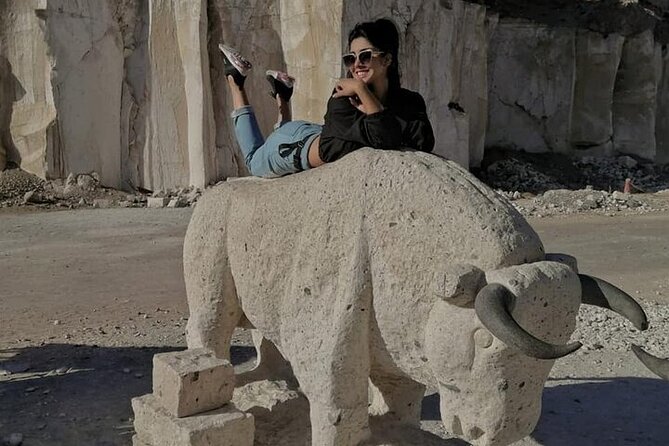
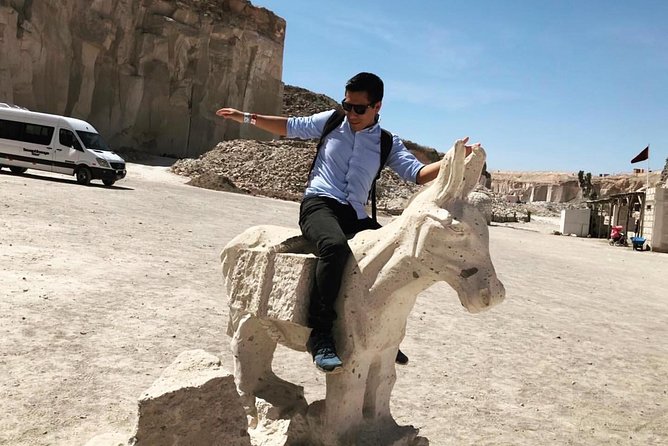
The Ruta del Sillar is the tour’s main cultural and industrial stop. You enter a quarry canyon where workers process sillar, the pale volcanic stone used in much of Arequipa’s colonial construction.
Arequipa is often called the White City because of this material. Seeing the quarry gives that nickname a physical meaning. Instead of only admiring carved facades downtown, you see the source of the stone and learn about the work behind it.
The city’s historic construction is tied to sillar, and Arequipa’s colonial center is recognized as a cultural heritage site. At the quarry, your guide explains the process of working the volcanic material and why it became so important to the city.
The stop also has a strong visual side. The canyon provides a change from the city and the viewpoint, with carved rock surfaces and a setting that shows the scale of the quarry work. One useful tip from the guide experience is to aim for a quieter visit when possible. A guide called Taco was praised for taking a group around the Ruta del Sillar when no other groups were present, which made photography easier and the explanations more personal.
You should ask about the condition of the walking surfaces before setting out. The provided details do not specify the amount of walking or the terrain, although most people can participate. If you have mobility concerns, raise them when booking rather than assuming every part of the quarry will be easy.
The tour also passes an outside local cemetery. This may sound like a small addition, but it adds social context. You learn about local customs and the lives of migrants who moved from the highlands into urban Arequipa in search of new opportunities. That makes the route more than a geology lesson. It shows how the city grew and how different communities shaped its outer districts.
More things to do in Arequipa:
- From Arequipa: Sillar Route Trek
★ 4.2 · 461 reviews - Colca Full Day Tour
★ 4.5 · 429 reviews - Rafting Arequipa – Chili River Canoeing – Cusipata Rafting Arequipa
★ 5.0 · 332 reviews - Arequipa: Chili River White Water Rafting with Hotel Pickup
★ 4.8 · 329 reviews
Mirador Carmen Alto: Inca Terraces and a Sweet Finish
At Mirador Carmen Alto, you look toward the Chilina Valley and see terraces from Inca and pre-Inca times. These agricultural steps are a reminder that the valley was being organized and farmed long before the colonial city appeared.
This is another stop where a guide adds meaning. Without context, terraces can look like old stone lines on a hillside. With an explanation, you can connect them to farming, water, settlement, and the long history of the valley.
The viewpoint is also the setting for tasting queso helado, Arequipa’s famous traditional dessert. Despite its name, this is a frozen dessert rather than a piece of cheese. The stop gives the tour a pleasant food-based ending before the optional meal.
The exact amount of time at Carmen Alto is not specified, and the route includes several stops within a five-hour period. If you want long, unhurried visits at every viewpoint, this may feel brisk. If you prefer a compact route that covers several sides of Arequipa, the pace should suit you.
Cuy Chactao, Rocoto Relleno, and Chupe de Camarones
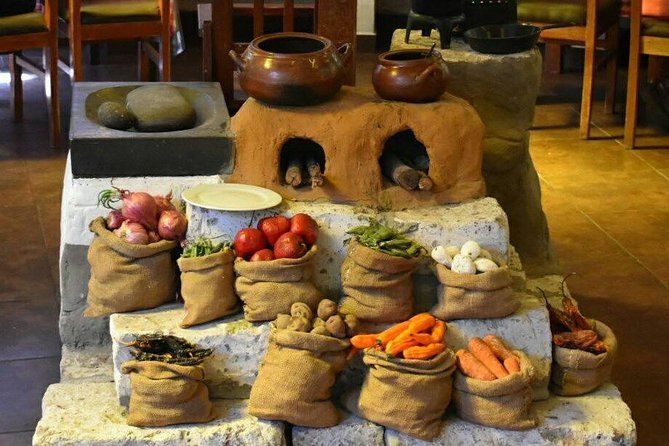
The final food stop is at a typical restaurant where the food is cooked over a natural bonfire using local organic products. Lunch is not included, but this is your chance to turn the outing into a full taste of Arequipeño cooking.
Possible dishes include:
- Cuy chactao: Fried guinea pig, a classic Andean preparation.
- Chupe de camarones: A traditional shrimp soup.
- Rocoto relleno: A red chili pepper stuffed with meat and vegetables.
- Chicha de jora: A traditional fermented corn drink.
You do not have to order every dish. If cuy is new to you, the guide can help explain what to expect, but the decision is yours. The same applies to rocoto relleno, which may be hot depending on preparation. The food stop is best approached as a chance to try something specific to the region rather than as a guaranteed included meal.
Budget extra for lunch and drinks. Since the tour price covers private transport, guiding, and fees but not food, your final cost depends on what you choose. That clear separation is useful, though you should not compare the $65.34 price with an all-inclusive excursion without accounting for the meal.
The route returns you to your hotel at about 2 p.m. in the central area. That makes it convenient for an afternoon visit to another Arequipa attraction, a later meal, or simply a rest after an early start.
Guide Quality and the Value of a Private Vehicle
The strongest part of this experience is the guiding. Rolando is described as passionate about Arequipa and eager to teach visitors about his city. Taco is praised for strong English and enthusiasm, while another guide and driver is described as attentive, informative, and careful on the road.
Those details matter because this route depends on explanation. The market, quarry, cemetery, terraces, and volcano viewpoints are much easier to understand when someone connects them. You are paying for more than transport between scenic points.
Private transportation also reduces friction. You are collected from a central hotel, travel with your own group, and return to the same general area. You do not need to work out separate transport to the market, Sachaca, the quarry, and Carmen Alto.
The price is strongest for solo visitors, couples, families, or small groups who want a guide’s full attention. For a larger private group, the per-person cost may feel especially reasonable. For one person on a strict budget, public transport and independent visits could cost less, but they would not provide the same explanations or coordinated route.
Who Should Book This Arequipa Tour?
I would choose this tour if you want to understand Arequipa through ordinary life and local traditions, not just grand buildings. The market and food stops are especially useful if you enjoy tasting unfamiliar ingredients and asking questions about how people use them.
It also suits you if you have limited time. In five hours, you cover the city’s market, a major viewpoint, the sillar quarry, a cemetery and migrant district, old terraces, and regional food.
Families and mixed-interest groups may like the private setup because it avoids forcing everyone into a large fixed group. Most people can participate, and the route is near public transportation, although hotel pickup makes that unnecessary for those staying in the central area.
I would think twice if you dislike food sampling, have no interest in local history, or want a slow rural day with long walks. The route is packed with stops, and lunch costs extra. Weather can also affect the viewpoints and quarry visit.
Booking is flexible up to 24 hours before the start time, when you can cancel for a full refund. Changes or cancellations inside that 24-hour window are not accepted for a refund. The experience can also be moved or refunded if poor weather forces cancellation.
Should You Book the Private Arequipa Countryside Tour?
Book it if you want a well-paced introduction to Arequipa’s food, stone, volcanoes, farming terraces, and outer districts in one morning. The 4.9 rating and 95 percent recommendation fit the tour’s strongest qualities: caring guides, careful driving, personal attention, and stops that go beyond the standard route.
My practical advice is to reserve early, since the tour is commonly booked about 76 days ahead. Confirm your central hotel pickup, budget for lunch, and ask which guide will lead your group. If you value context and convenience, the $65.34 price is good value. If you want the lowest possible cost, plan the stops yourself.
FAQ
What time does the tour begin?
Pickup begins at 8:00 a.m. from a hotel located in the central area of Arequipa.
How long does the experience last?
The tour lasts approximately five hours and returns to the hotel at about 2:00 p.m.
Is the tour private?
Yes. Only your own group participates in the private tour or activity.
What is included in the price?
The price includes private transportation, a tour guide, and all fees and taxes.
Is lunch included?
No. Food is not included, so you must pay separately for lunch and any dishes or drinks you order.
What food can I try?
The route offers opportunities to taste local fruit, queso helado, fried guinea pig called cuy chactao, shrimp soup, rocoto relleno, and chicha de jora.
Can most people participate?
Yes. The experience information says most people can participate. If you have a specific mobility concern, ask the provider before booking because walking conditions at the quarry are not described.
Can I cancel for a full refund?
Yes, if you cancel at least 24 hours before the experience start time. Cancellations or changes made less than 24 hours before the start time are not refunded or accepted. Poor weather may result in a different date or a full refund.
Just added in Arequipa
- Sillar Route★ 5.0 · 4 reviews
- Salinas Lagoon + Mini Volcano DE Lojen★ 5.0 · 9 reviews
- 3-Day Colca Canyon trek with Professional Guide★ 5.0 · 40 reviews
- Full Day Tour To The Salt Lake Salinas in Arequipa★ 4.5 · 34 reviews
- Walking City tour including the Monastery of Santa Catalina★ 5.0 · 6 reviews
- Trekking, Waterfalls and Thermal Baths★ 4.5 · 47 reviews
- Downhill Tour – Mountain Bike in Arequipa★ 3.5 · 5 reviews
- 2 Days 1 Night trekking Through Colca Canyon, Private room★ 5.0 · 16 reviews
Colca Canyon and Arequipa Tours, compared.
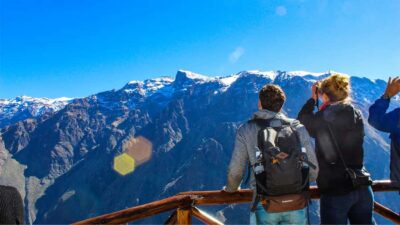
From Arequipa: Colca Canyon Full-Day Guided Tour with Meals
Read our review →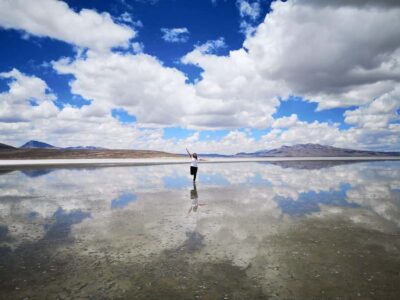
Tour to the Salinas Lagoon and National Reserve in Arequipa
Read our review →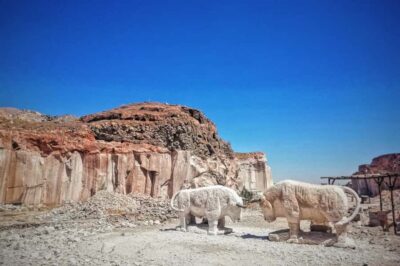
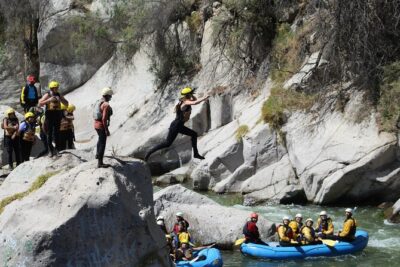
Rafting Arequipa – Chili River Canoeing – Cusipata Rafting Arequipa
Read our review →
Chili River White Water Rafting with Hotel Pickup
Read our review →
Browse the lists this tour appears in