Reviewed · CUSCO TOURS
Qarañahui Cave and Qeswachaka Bridge from Cusco
Two rare Andean encounters await. This 12-hour trip from Cusco pairs the handwoven Qeswachaka Bridge with a guided exploration of Qarañahui Cave, giving you two very different sides of southern Peru. I like the small group size, capped at eight, and the fact that lunch, entrance fees, equipment, and transport are included. The main drawback is the long road day: you leave at 5:30 a.m. and spend about four hours reaching the bridge.
I also like the human touch. Guides such as Juan Carlos and Kevin have been praised for their care, stories, and good humor, while driver Milton has been noted for handling the rough roads carefully. You should bring extra socks and a water-resistant daypack, since the cave can get wet and the outing may take several hours.
In This Review
- Five details that shape the day
- Why pair a rope bridge with a cave?
- The 5:30 a.m. departure from Cusco
- Crossing the Qeswachaka Bridge
- Walking toward Qarañahui Cave
- Inside Qarañahui Cave for several hours
- What the guides and driver add
- Lunch, equipment, and the $149 price
- Group size, weather, and what to pack
- Who should book this Cusco day trip?
- Cancellation and practical booking notes
- Should you book the Qarañahui and Qeswachaka trip?
- FAQ
- What time does the tour start?
- How long does the experience last?
- Where does the tour start?
- Is transportation included?
- Is lunch included?
- Are entrance fees included?
- Is the tour offered in English?
- What is the maximum group size?
- Is there a minimum age?
- What should I bring for the cave?
- Does the tour operate in bad weather?
- Is travel insurance included?
- Can I cancel for a full refund?
Five details that shape the day
- The bridge is still renewed by hand: Qeswachaka is the last used Inca rope bridge, rebuilt each year during a traditional bridge festival.
- The drive is part of the experience: You cross the high country near Pomacanchis Lake, at about 3,600 meters.
- The cave is active and wet: Qarañahui includes stalactites, stalagmites, an underground river, and sections where water may stop your progress.
- The group stays small: With two to eight people, you get more attention than on a large coach excursion.
- The start is very early: Pickup begins at 5:30 a.m., followed by roughly four hours on the road.
- The price covers the main extras: At $149 per person, lunch, entry fees, private transport, hotel or port transfers, a guide, and cave gear are included.
Why pair a rope bridge with a cave?
This is not a standard Cusco day trip built around one famous archaeological site. The appeal is variety. In the morning, you see a working piece of Andean engineering suspended above the Apurimac River. Later, you trade open mountain views for a dark, wet cave reached on foot.
I like that neither stop feels polished for mass tourism. Qeswachaka remains a practical grass-fiber bridge, not a reconstructed display behind glass. Qarañahui is presented as an active adventure, with helmets and other equipment supplied for several hours underground.
The two stops also demand different kinds of attention. At the bridge, you listen to the guide explain its construction and the annual renewal ceremony. In the cave, you watch your footing, follow safety instructions, and look for natural formations in the rock. It makes for a full day, but not a repetitive one.
More things to do in Cusco:
- Classic Inca Trail Trek 4D/3N to Machu Picchu (Group Service)
★ 5.0 · 8,653 reviews - Cusco: Rainbow Mountain and Red Valley Day Trip with Meals
★ 4.9 · 4,893 reviews - Machu Picchu: 4-Day Inca Trail Trek with Panoramic Train Ride
★ 5.0 · 4,568 reviews
The 5:30 a.m. departure from Cusco
The day begins early, with pickup from your hotel or port in a private vehicle. The start time is 5:30 a.m., so this tour works best if you are willing to sacrifice a morning lie-in for a less common outing.
The drive to Qeswachaka takes about four hours. That is a serious stretch of road time, and you should think of it as part of the cost of reaching a remote attraction. The route crosses the area around Pomacanchis Lake, at roughly 3,600 meters, so the high elevation is worth keeping in mind.
I would not book this as a casual add-on after a late night in Cusco. The schedule is long, the departure is early, and the return comes in the afternoon after the cave visit. Still, private transport is a useful advantage. Your group is not tied to a large bus schedule, and the driver can help with bags and roadside needs.
The ride also gives the outing a stronger sense of place. You are not simply being moved between two attractions. You are heading away from the usual Cusco circuit and into a part of the region where a traditional grass bridge is still in use.
Crossing the Qeswachaka Bridge
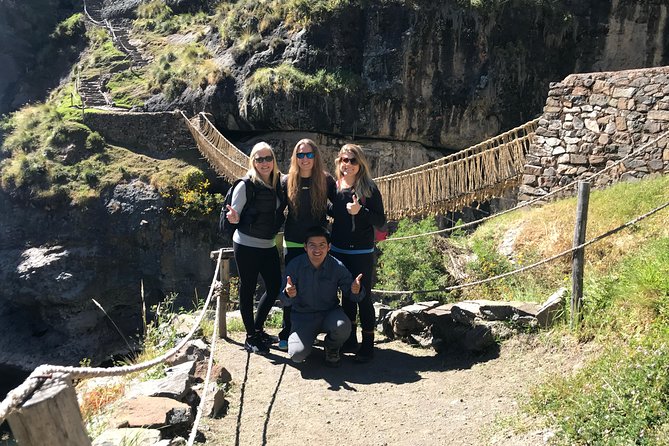
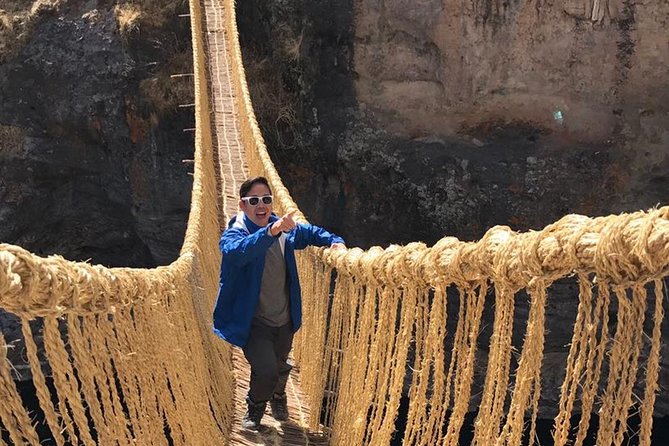
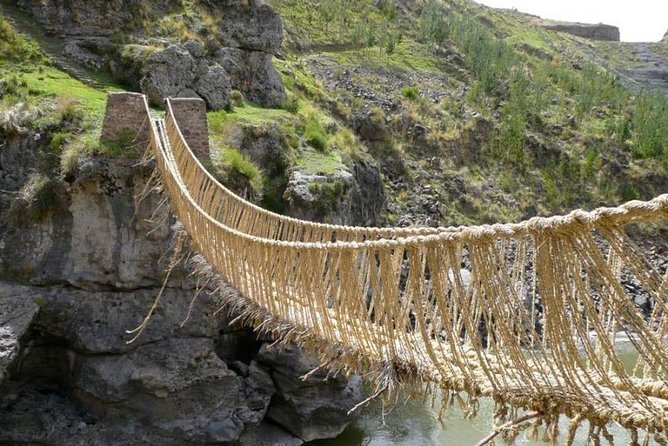
Qeswachaka is the first main stop, with about two hours allocated to the bridge area. It crosses the Apurimac River and is described as the last used Inca bridge of its kind.
The bridge is made from grass fibers and renewed each year during an annual construction festival. That detail changes how you see it. This is not only an old structure preserved for photographs. Its survival depends on continued community work and the passing on of a building tradition.
Your guide explains the stories connected with the bridge before you cross or explore the area. Juan Carlos, one of the guides associated with this experience, has been praised for making the history easy to follow and for taking photographs during the day. You may also take part in a traditional ceremony before heading down toward the cave.
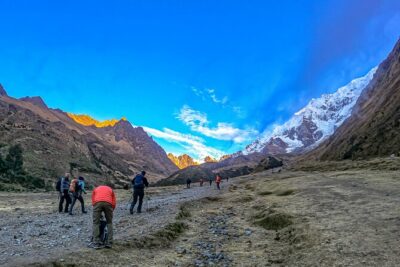
The setting adds plenty to the stop. The bridge sits above the Apurimac River, with broad mountain views around it. I would give yourself time to look outward, not just down at the woven surface. The scene is one of the strongest reasons to accept the long drive from Cusco.
There is a practical point here: a rope bridge is not the same as a stone path or a museum walkway. The experience may feel exposed, and the guide’s instructions matter. The supplied information does not give a bridge height or a specific crossing rule, so ask your guide what to do before stepping onto it.
Walking toward Qarañahui Cave
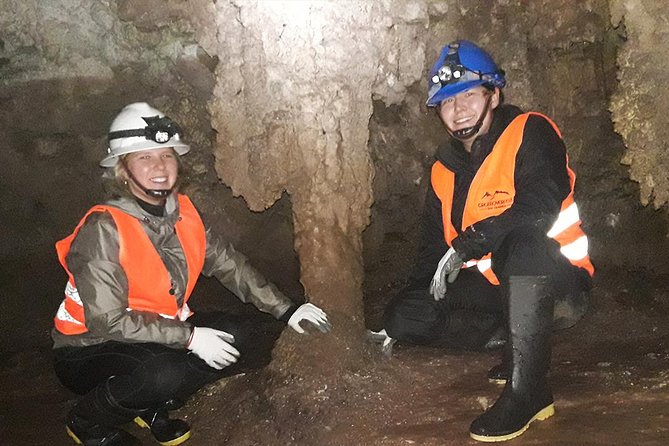
After the bridge, the vehicle continues toward Qarañahui Cave. The approach includes several viewpoint stops, then about a 10-minute walk to the cave entrance.
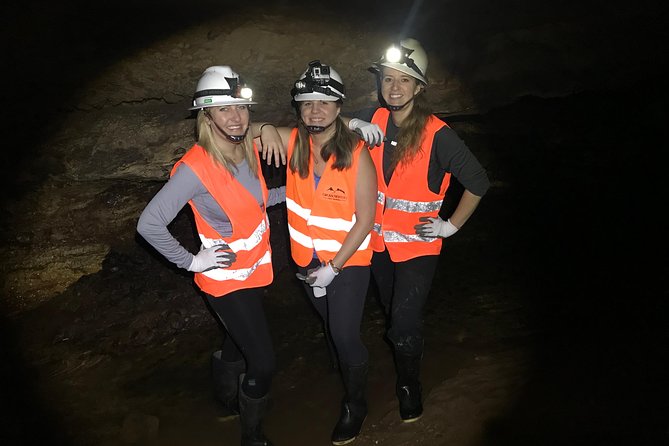
That short walk is useful because it gives you a chance to shift from sightseeing mode to adventure mode. Once you reach the entrance, the guide provides the equipment needed for the cave. The exact equipment list is not specified, but you should expect the supplied gear to support the cave exploration and follow the guide’s instructions closely.
The transition is one of the tour’s best features. You begin with open views and a cultural explanation at the bridge, then move into a much more physical activity. It is also where the small group matters most. A group of no more than eight allows the guide to check that everyone is comfortable before entering and to keep the pace manageable.
The cave can be wet. One person specifically advises bringing an extra pair of socks and a small water-sealed backpack. That is sensible advice, not an optional packing flourish. Keep phones, cameras, and spare clothing protected, and wear clothes you do not mind getting dirty or damp.
A completely different kind of day:
- Salkantay Classic Trek 5 Days from Cusco
★ 5.0 · 4,062 reviews - 4-Day Salkantay Trek with Sky Camp Stay
★ 5.0 · 3,346 reviews - Short Inca Trail to Machu Picchu 2D/1N
★ 5.0 · 3,007 reviews - Excursion to Rainbow Mountain Full Day Optional Red Valley
★ 5.0 · 2,996 reviews
Inside Qarañahui Cave for several hours
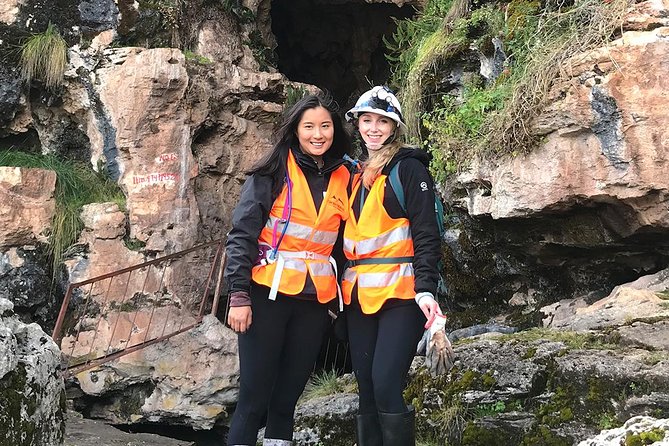
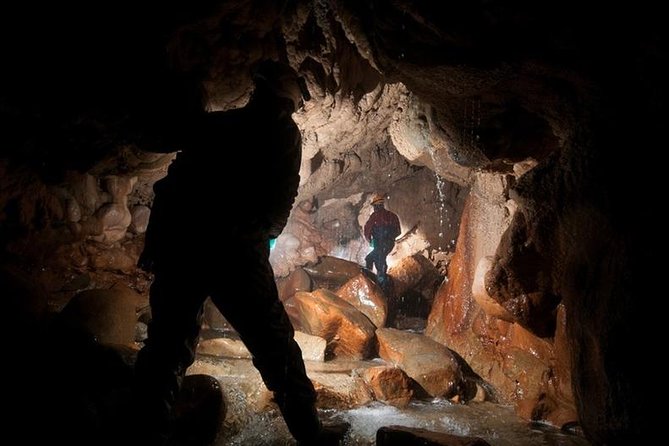
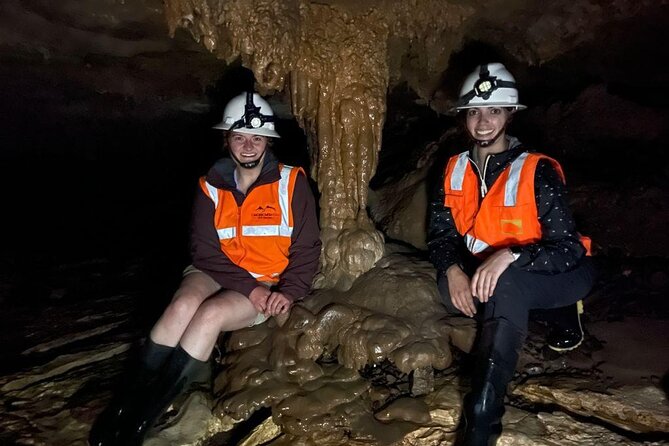
The cave portion lasts for several hours, according to the supplied schedule. Inside, you search for stalagmites and stalactites while following the cave route as far as conditions allow.
The distinction between the two formations is simple: stalactites hang from the ceiling, while stalagmites rise from the floor. You may find both, but the experience is not presented as a quick viewing stop. The group goes farther into the cave and may encounter an underground river.
Water can limit how far you go. One account describes reaching the point where the water made further progress impossible. That is important because you should not book this expecting a fixed underground route with a guaranteed endpoint. The cave is part nature outing, part physical challenge, and conditions influence the experience.
Safety receives repeated praise. Juan Carlos has been described as checking comfort levels, providing the required equipment, and putting safety first. That is exactly what you want in a cave, especially one where water affects the route. The guide should remain your main source of direction, and you should speak up if you feel uncomfortable.
This activity is for adults only. The minimum age is 18, and most people can take part, but the cave still calls for basic confidence on foot. The operator does not present it as requiring specialist caving skills, yet you should be ready for a wet, active outing rather than a simple underground walk.
What the guides and driver add
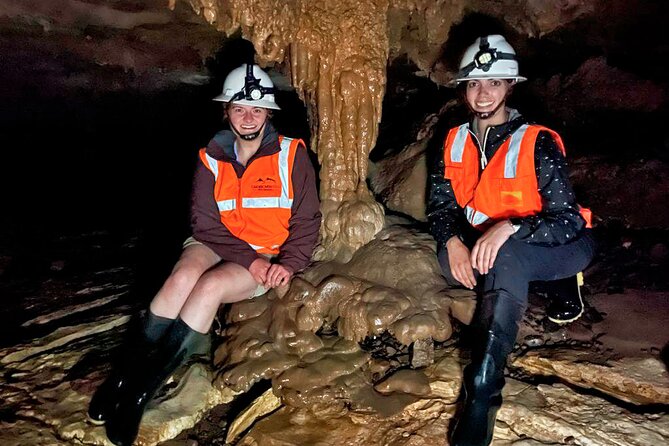
The people running the day appear to be a major part of its appeal. Juan Carlos is praised for being friendly, helpful, careful, and good at explaining the bridge. Kevin is also described as prompt, courteous, warm, and well-informed about the region.
The exact guide assigned to your booking may vary, so treat those names as examples rather than a promise. Still, the repeated emphasis on personal care is useful. A good guide matters here because the day combines cultural context, a bridge crossing, a ceremony, and cave safety.
The driver matters too. The journey takes about four hours each way to the first stop, followed by more driving after the cave. Milton has been praised for helping with bags and handling the difficult roads safely. That is the kind of behind-the-scenes work you notice more on a remote day trip than on a short city transfer.
There is also a small act of kindness in the trip’s story: Kevin handed bags of food to villagers living high up with limited access to town. It is not advertised as the main attraction, and it should not be treated as a guaranteed part of every departure, but it gives you a sense of how the route connects with rural communities.
Lunch, equipment, and the $149 price
The price is $149 per person. That is not a budget day trip, but the package includes private vehicle transport, hotel or port pickup and drop-off, lunch, entrance fees, a professional English-speaking guide, and cave equipment.
I consider that reasonable if you value a small group and want the logistics handled for you. The remote location means transport takes up much of the day, and the private vehicle avoids the feel of a large scheduled excursion. Lunch is included, along with the main admission costs, so you have fewer surprise expenses.
Drinks are not included. Bring money or supplies for your own beverages, and remember the cave may leave you wet or thirsty. Travel insurance is also not included, which is worth arranging separately if you want cover for an active excursion.
A vegetarian lunch is available if you request it when booking. Because the day is long, make that request early rather than hoping it can be arranged at pickup.
Group size, weather, and what to pack
The tour requires at least two people per booking and accepts no more than eight. That makes it a good choice for couples, friends, and small private groups who want more room for questions and a less crowded vehicle.
The tour operates in all weather conditions, so dress for changeable conditions rather than relying on a perfect forecast. The supplied information does not specify a clothing list, but the cave advice is clear enough to guide your packing:
- Bring an extra pair of socks.
- Use a small water-sealed backpack for valuables.
- Dress in clothes suitable for wet or dirty conditions.
- Carry a drink, since beverages are not included.
- Follow the guide’s equipment and safety instructions inside the cave.
The high-altitude section near Pomacanchis Lake also deserves attention. At about 3,600 meters, you may notice the elevation, especially during the long drive and short walk. The tour says most people can participate, but that does not remove the need to judge your own comfort.
Who should book this Cusco day trip?
I would recommend it to you if you want something outside the usual Cusco and Sacred Valley route. It suits adults who enjoy unusual cultural sites, open mountain views, small groups, and active excursions that are not perfectly polished.
It is especially good for people curious about living Andean traditions. The annual rebuilding of Qeswachaka gives the bridge real purpose, while the cave adds a physical element that a standard heritage visit lacks.
I would hesitate if you dislike long drives, early starts, wet conditions, or uncertain cave progress. The cave may be the day’s highlight, but the water can prevent you from going as far as hoped. Also, the 12-hour schedule leaves little room for a relaxed pace.
The experience is not aimed at children, since the minimum age is 18. It may work for older adults who are comfortable with the walking and cave conditions, but the supplied details do not provide a more specific mobility assessment. If you have concerns, ask the operator before booking.
Cancellation and practical booking notes
You can cancel for a full refund up to 24 hours before the experience begins. Cancellations made less than 24 hours before the 5:30 a.m. start are not refunded, and changes within that period are not accepted.
Confirmation is provided at booking. Pickup is offered from your hotel or port, and the tour is conducted in English. Since the minimum booking is two people, a solo booking may not be accepted unless another person joins, so check availability before making firm plans.
Should you book the Qarañahui and Qeswachaka trip?
Book it if you want a full, unusual day built around two experiences that feel connected to the region: one maintained by community tradition and one shaped by natural conditions.
The strongest reasons to go are the small group, the caring guide service, the last working Inca rope bridge, and the chance to explore a cave that few standard Cusco tours include. The strongest reasons to think twice are the 5:30 a.m. start, four-hour drive to the bridge, wet cave conditions, and the possibility that water limits the underground route.
At $149, I see good value for an adult who wants private transport, lunch, entry fees, equipment, and a guide in one package. Pack extra socks, protect your electronics, and accept that the road and cave are part of the adventure. If that sounds like your kind of day, this is a strong choice.
FAQ
What time does the tour start?
Pickup begins at 5:30 a.m.
How long does the experience last?
The tour lasts approximately 12 hours.
Where does the tour start?
Pickup is offered from your hotel or port in Cusco.
Is transportation included?
Yes. Round-trip transport by private vehicle is included.
Is lunch included?
Yes. Lunch is included, and a vegetarian option is available if requested at booking.
Are entrance fees included?
Yes. Entrance fees for Qarañahui Cave and the Qeswachaka Bridge visit are included.
Is the tour offered in English?
Yes. The experience is offered in English and includes a professional guide.
What is the maximum group size?
The group is limited to eight people.
Is there a minimum age?
Yes. The minimum age is 18.
What should I bring for the cave?
Bring an extra pair of socks and a small water-sealed backpack. Drinks are not included, so you should also bring or purchase your own beverage.
Does the tour operate in bad weather?
Yes. It operates in all weather conditions, so dress appropriately.
Is travel insurance included?
No. Travel insurance is not included.
Can I cancel for a full refund?
Yes. You can receive a full refund if you cancel at least 24 hours before the experience starts.
Just added in Cusco
- Cusco Private Transportation for 2026★ 5.0 · 4 reviews
- Private Transfer from Airport to Hotel in the City of Cusco★ 4.0 · 5 reviews
- Best Cusco walking tour: dinner street food tasting★ 4.5 · 11 reviews
- Private Tour to Pisac Market and Pisac Ruins★ 5.0 · 4 reviews
- Machu Picchu Day Trip With Panoramic Train from Cusco★ 5.0 · 10 reviews
- Sacred Valley Private Tour from Cusco, Guide and Driver only★ 5.0 · 4 reviews
- Sacred Valley of the Incas Tour★ 5.0 · 12 reviews
- Private Tour of the Mountain of Colours by Quad★ 5.0 · 7 reviews
Cusco Tours, compared.
Classic Inca Trail Trek 4D/3N to Machu Picchu (Group Service)
Read our review →
Rainbow Mountain and Red Valley Day Trip with Meals
Read our review →
Excursion to Rainbow Mountain Full Day Optional Red Valley
Read our review →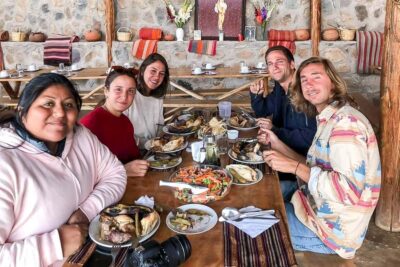
Humantay Lake Tour with Breakfast and Buffet Lunch
Read our review →