
Reviewed · AREQUIPA TOURS
Sillar Route and Culebrillas Petroglyphs
White stone tells Arequipa’s story. This four-hour outing takes you from the city’s famous Yanahuara viewpoint to the volcanic quarries that supplied much of its colonial architecture, then into a narrow canyon marked with ancient petroglyphs. I like the mix of city views, working stone sites, and a short outdoor walk. I also like the price: at about $19 per person, it is one of the cheaper ways to see several sights beyond central Arequipa.
The main caution is that this is not a polished museum visit. The quarry can be hot, dusty, and lightly explained, while Culebrillas involves uneven ground and a short climb. Timing, transport comfort, English explanations, and the exact amount of time at each stop can vary, so you should arrive ready for a basic group excursion rather than a luxury tour.
In This Review
- The essentials at a glance
- Why Arequipa is built from white volcanic stone
- Yanahuara and the three volcanoes
- Inside the Añashuayco sillar quarries
- Walking through the Culebrillas canyon
- Transport, timing, and group size
- The bilingual guide factor
- What the $19 price really buys you
- Who should book this outing?
- Final call: book it for the quarry and canyon
- FAQ
- How long does the Sillar Route and Culebrillas tour last?
- What stops are included?
- Is admission included?
- Is there much walking?
- Is the tour suitable for older adults?
- Should I bring protection from dust or insects?
- How many people can join the tour?
- Can I cancel for a full refund?
The essentials at a glance
- Yanahuara gives you three volcanoes in one view: Look for Misti, Chachani, and Pichu Pichu beyond Arequipa’s white buildings.
- Sillar is the stone of Arequipa: The quarry visit connects the city’s grand colonial buildings with the people who still cut and shape the volcanic rock.
- Culebrillas is the best walking stop: Its winding canyon offers a more natural setting, with petroglyphs on the rock walls and apachetas near the end.
- Expect dust and rough footing: A face mask, water, sturdy shoes, and protection from insects are sensible additions.
- Guiding can make or break the outing: Guides such as Mike, Tony, Alexandra, Christina, Sandra, and others have received praise, but some English-speaking visitors found explanations too fast or too brief.
- The group can reach 18 people: A smaller group may feel comfortable, but a full minibus can make narrow paths and photo stops feel crowded.
Why Arequipa is built from white volcanic stone
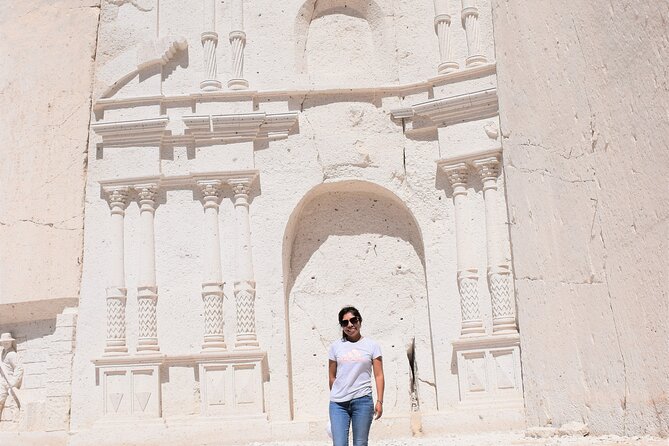
Arequipa is often called the White City because so many of its historic buildings use sillar, a pale volcanic stone. That name can sound like a simple color description, but the stone gives the city a particular look: bright walls, sharp shadows, carved facades, and an almost luminous quality under the highland sun.
Sillar is not ordinary building rock. It formed from volcanic material and became central to local construction. The route gives you a useful connection that you may miss while admiring churches and mansions downtown: the stone did not simply appear in Arequipa’s walls. It was extracted, shaped, transported, and carved by hand.
That is the real value of this experience. The quarry is not just a photo stop. It helps you understand the labor behind the city’s architecture. The local builders demonstrate techniques and explain how the stone is used, though the amount of explanation may depend heavily on the guide and the language of the tour.
More things to do in Arequipa:
- 2 day 1 night trek / Colca Canyon
★ 5.0 · 1,069 reviews - From Arequipa: Colca Canyon Full-Day Guided Tour with Meals
★ 4.5 · 982 reviews - Tour to the Salinas Lagoon and National Reserve in Arequipa
★ 4.5 · 548 reviews
Yanahuara and the three volcanoes
The outing begins with pickup at your hotel, followed by a short transfer to Yanahuara. This traditional area is known for its ashlar arches, which frame views back toward Arequipa and its surrounding peaks.
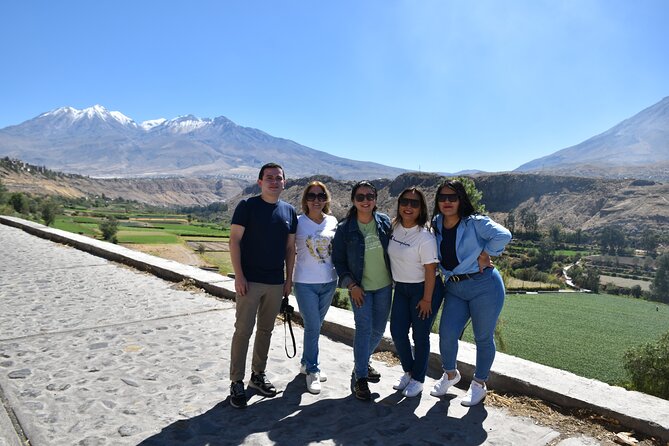
You have about 20 minutes here. That is enough for photographs and a quick orientation, but not enough for a slow neighborhood visit. I would use the time to look beyond the arches and identify the three major snow-capped mountains: Misti, Chachani, and Pichu Pichu.
Misti is the most recognizable, with its classic volcanic cone. Chachani and Pichu Pichu complete the mountain backdrop, giving you a quick sense of the dramatic setting around Arequipa. Visibility is never guaranteed, and haze can reduce the view later in the day. One particularly useful point from the tour experience is that a delayed departure or long stop elsewhere may push this viewpoint into evening haze, so punctuality matters.
Yanahuara can feel brief, especially if you hoped to explore the town itself. Some descriptions of the stop may also create expectations of a church visit, but access to the church has not always been possible. Treat this as a viewpoint and architectural introduction, not as a full Yanahuara tour.
Inside the Añashuayco sillar quarries
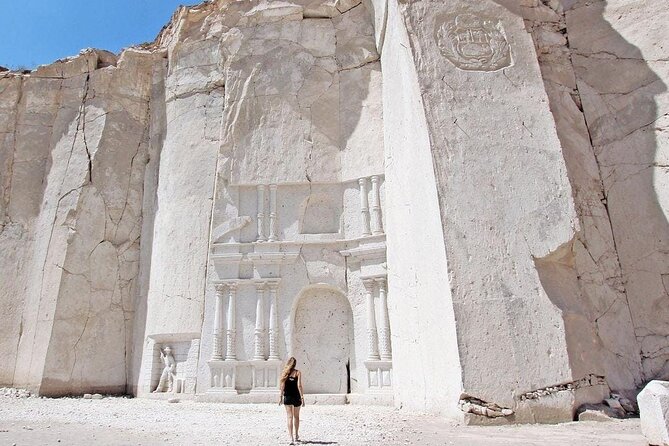
The main quarry visit lasts about an hour and includes admission to Añashuayco, listed at S/5. This is where the outing becomes more distinctive. You see broad cuts in the volcanic stone and examples of local stonework, including sculptures and decorative pieces.
The quarry is active as a craft site, not simply an abandoned excavation. Local workers explain how the stone is extracted and shaped. That practical demonstration is worth your attention because it puts human hands into the story of Arequipa’s architecture.
The setting is also physically demanding in small ways. Dust hangs in the air, sunlight can be strong, and the ground is not always smooth. Bring a face covering if dust bothers you. One person found the quarry uncomfortable without one, while another described the route itself as moderately challenging, especially for older people.
Do not expect a formal interpretive center with long displays and carefully arranged exhibits. Some guides provide a strong account of the stone and its use. Others may give a short explanation and then leave you with free time to walk around. If learning the craft process is your main reason for booking, stay close to the guide at the start and ask direct questions.
The sculpture areas also require a little care when budgeting. The basic tour includes the Añashuayco entrance, but some of the more impressive viewing sections or photo areas may involve small extra payments. Past visitors have described paying around S/3 for certain sides or sections. The exact arrangement can vary, so ask before wandering off if a particular sculpture area is included.
Walking through the Culebrillas canyon
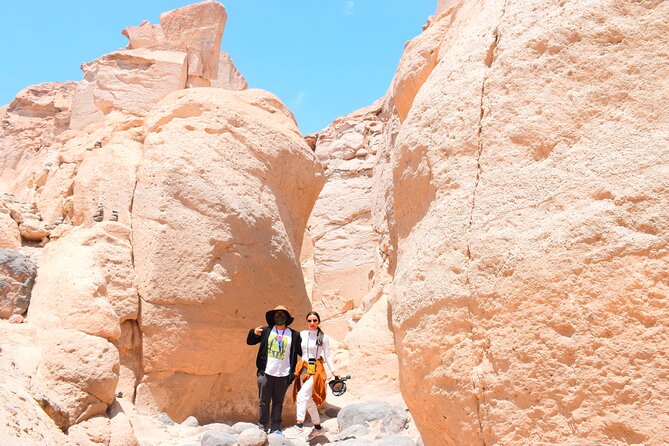
After the quarry, the vehicle continues for about 15 minutes to Quebrada de Culebrillas. This is the most memorable part for many people, and I can see why. Instead of looking across a wide quarry, you walk through a narrow, winding ravine shaped by an ancient river.
The walk takes about 20 minutes, with roughly five minutes of uphill movement near the end. The path is uneven and somewhat rugged. It is not described as a demanding mountain hike, but you need shoes with a good grip and enough balance for rough ground.
The canyon walls curve around you in a series of tight bends. That makes the walk feel more engaging than a simple roadside stop. You are moving through the rock rather than only looking at it from a distance.
Petroglyphs appear on the canyon walls. They are real and interesting, but they are not always easy to see. Bright midday sunlight can make the markings hard to pick out against the dark volcanic surface. You may also need some imagination to identify the animals or shapes represented.
This is one place where a good guide matters. The markings can be easy to miss without pointing, context, or a patient explanation. If you want photographs, make that clear early. Some groups move through quickly, and the narrow route can become crowded when people stop in both directions.
Near the end, you see apachetas, small mounds of stones linked with local spiritual tradition. They add a cultural layer to the walk, though the stop is brief. The combination of canyon, old rock markings, and apachetas gives Culebrillas more depth than a standard scenic walk.
The route has also been associated with mosquitoes or sand flies in the advice given before departure. One important distinction is that the insects encountered may be sand flies rather than mosquitoes, and spray may not be the most useful protection. You might find insect protection helpful, especially if you are sensitive to bites. At the same time, conditions vary, and some departures have had few or no insects.
A completely different kind of day:
- From Arequipa: Sillar Route Trek
★ 4.2 · 461 reviews - Colca Full Day Tour
★ 4.5 · 429 reviews - Rafting Arequipa – Chili River Canoeing – Cusipata Rafting Arequipa
★ 5.0 · 332 reviews - Arequipa: Chili River White Water Rafting with Hotel Pickup
★ 4.8 · 329 reviews
Transport, timing, and group size
The tour uses shared transport and can include up to 18 people. Several people have praised comfortable, air-conditioned vans and careful drivers. Others have described a full vehicle, poor air conditioning, dusty roads, or driving that felt too fast. That mixed experience means you should set your expectations at the level of a budget minibus tour.
Road conditions on the quarry route can be dusty and rough. If the windows stay closed and the air conditioning fails, the ride may feel unpleasant. On the positive side, some vehicles have had seatbelts and safety equipment such as break-glass hammers. Check that you have a working seatbelt before the vehicle leaves, particularly if you are seated near the front.
Pickup is normally arranged from your hotel, and advance confirmation is provided. Still, communication has not always been perfect. There have been cases of a delayed pickup, a mix-up involving another couple, or a late start caused by traffic and a city event. Contact the operator promptly if the vehicle does not arrive, and keep your phone available for messages.
A late start can affect the whole outing. One delayed group received less time at Yanahuara and the quarry, while another reached the final viewpoint too late for the clearest mountain views. Since the advertised sequence is compact, even a 30 to 45 minute delay matters.
The return journey takes about 40 minutes to reach the city center. Do not assume the vehicle will return you to your hotel door. The stated arrangement may be a central tourist stop, and this has caused confusion for some people. Confirm the drop-off point before departure, especially if you have a restaurant reservation, another tour, or luggage waiting at your accommodation.
The bilingual guide factor
This experience works best when the guide gives equal attention to Spanish and English. Several guides have received warm praise for being friendly, patient, and clear in both languages. Mike was singled out for informative commentary, while Alexandra, Christina, and Sandra also helped English-speaking participants feel included.
But bilingual guiding can slow the pace or create an uneven experience. In some departures, the Spanish explanation was longer, followed by a shorter English version. Other people found the English too fast or difficult to understand, particularly when the guide spoke loudly through a poor microphone.
You can improve your experience by standing close during explanations and asking the guide to slow down if needed. This is especially important at Culebrillas, where the petroglyphs need pointing out. At the quarry, ask how sillar is cut, where it is used in Arequipa, and which sculpture areas are included in your admission.
The guide’s personality also matters. The strongest departures have felt warm, well paced, and entertaining. The weaker ones have felt like a drive between stops with long periods of unsupervised free time. The tour’s basic format leaves room for both outcomes.
What the $19 price really buys you
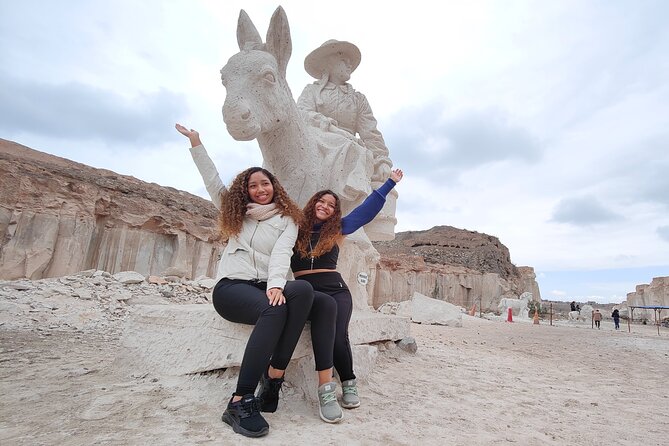
At around $19, this is a strong-value half-day outing if you want transport, a guide, and admission to the two main sites without arranging separate taxis. The price covers the certified guide, shared transport, the Añashuayco entrance of S/5, and the Culebrillas entrance of S/5.
You are paying for access and convenience more than polish. The tour brings together three different experiences in a short period: a city viewpoint, a working quarry, and a canyon walk. Doing that independently may take more planning, and the low price makes the outing easy to add to a longer Arequipa visit.
The value drops if you expect a detailed cultural tour with generous photo time. Some departures have felt rushed, particularly at Culebrillas. Extra charges for certain sculpture sections can also be irritating when promotional photographs show areas that are not part of the basic route.
I would call it excellent value for a flexible visitor who wants to see more than central Arequipa. I would be more cautious if you have only one free day and want a slow, deeply explained experience. In that case, the variable guiding and transport conditions could matter more than the low price.
Who should book this outing?
I would recommend it to you if you enjoy unusual stops, modest walks, and local craft. It suits solo visitors, couples, families with mobile older children, and anyone with a free morning or afternoon in Arequipa.
You should be comfortable with dust, bright sun, a shared vehicle, and a short uneven hike. The canyon is not a good match for older adults who struggle on rough ground, and it may not suit anyone with a strong dust allergy.
Bring:
- Water
- Sturdy shoes with good grip
- Sun protection
- A face mask or cloth for quarry dust
- Insect protection if you are sensitive to bites
- A little extra cash for possible sculpture-area charges
- Your phone, kept available for pickup messages
The best photographs usually require patience. Give yourself time to look closely at the stone walls, and do not assume the petroglyphs will be obvious at first glance.
Final call: book it for the quarry and canyon
Book this tour if you want a cheap, efficient introduction to the material culture and volcanic setting of Arequipa. Culebrillas is the highlight, with the sillar quarry close behind. The route shows you how the city’s white architecture connects to local stonework, then gives you a short walk through a striking canyon.
Skip it if you need guaranteed hotel drop-off, polished transport, long explanations in English, or plenty of time at every photo stop. Before booking, confirm the pickup time, return location, language arrangements, and which sculpture areas are included. With realistic expectations and the right footwear, this is a worthwhile half-day addition to Arequipa.
FAQ
How long does the Sillar Route and Culebrillas tour last?
The experience lasts approximately four hours, including the visits and return to the city center.
What stops are included?
The route includes Yanahuara, the Añashuayco sillar quarries, and Quebrada de Culebrillas with its petroglyphs and apachetas.
Is admission included?
Yes. The listed package includes admission to Añashuayco at S/5 and Culebrillas at S/5.
Is there much walking?
There is a walk of about 20 minutes in Culebrillas, followed by an uphill section of about five minutes. The ground is uneven and somewhat rugged.
Is the tour suitable for older adults?
It is not recommended for older adults because the Culebrillas canyon walk is uneven and moderately rugged.
Should I bring protection from dust or insects?
Yes. A face mask is useful at the quarry because conditions can be dusty. Insect protection may also help, although insect levels can vary.
How many people can join the tour?
The group can have a maximum of 18 people.
Can I cancel for a full refund?
You can cancel at least 24 hours before the start time for a full refund. Cancellations or changes made less than 24 hours before departure are not refundable.
Just added in Arequipa
- Sillar Route★ 5.0 · 4 reviews
- Salinas Lagoon + Mini Volcano DE Lojen★ 5.0 · 9 reviews
- 3-Day Colca Canyon trek with Professional Guide★ 5.0 · 40 reviews
- Full Day Tour To The Salt Lake Salinas in Arequipa★ 4.5 · 34 reviews
- Walking City tour including the Monastery of Santa Catalina★ 5.0 · 6 reviews
- Trekking, Waterfalls and Thermal Baths★ 4.5 · 47 reviews
- Downhill Tour – Mountain Bike in Arequipa★ 3.5 · 5 reviews
- 2 Days 1 Night trekking Through Colca Canyon, Private room★ 5.0 · 16 reviews
Arequipa Tours, compared.
From Arequipa: Colca Canyon Full-Day Guided Tour with Meals
Read our review →
Tour to the Salinas Lagoon and National Reserve in Arequipa
Read our review →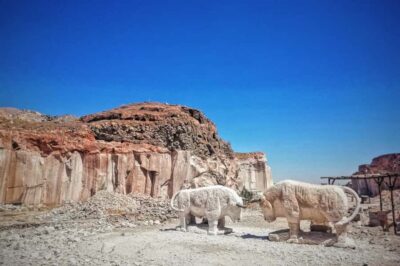
Rafting Arequipa – Chili River Canoeing – Cusipata Rafting Arequipa
Read our review →
Chili River White Water Rafting with Hotel Pickup
Read our review →
Browse the lists this tour appears in