
Reviewed · PUNO TOURS
Sillustani: Chullpas de Sillustani Afternoon Half-Day Tour
Ancient towers meet wide-open water. This six-hour outing from Puno takes you to the Sillustani funerary towers, where circular stone structures rise above the shore of Lake Umayo and reveal the skill of the Collao, Kolla, Tiahuanaco, and Inca cultures. I like the calm setting and the chance to see a major pre-Inca site without giving up a full day in Puno. I also like that entrance fees, transport, hotel pickup, and a live English or Spanish guide are included.
The main consideration is weather. Much of the visit takes place outdoors, and intense rain can make the walk less pleasant and reduce your time near the archaeological site. The tour is also not suitable for wheelchair users, and pickup for hotels outside central Puno may require a meeting point.
In This Review
- Key points to know before booking
- Why Sillustani is worth leaving Puno
- The 34-kilometer ride from Puno
- Walking among the circular funerary towers
- Lake Umayo and the island of vicuñas
- The site museum and cultural context
- A practical look at the guide and group experience
- Rain, comfort, and the limits of the visit
- Is $45 a fair price?
- Who will enjoy this afternoon tour?
- Should you book Sillustani from Puno?
- FAQ
- How much does the Sillustani afternoon tour cost?
- How long does the tour last?
- Where does the tour begin?
- What happens if my hotel is outside central Puno?
- Which languages are available for the guide?
- Is transportation included?
- Are entrance fees included?
- Is food included?
- What should I bring?
- Can I bring luggage or a large bag?
- Is the tour suitable for wheelchair users?
- Can I cancel the booking?
Key points to know before booking
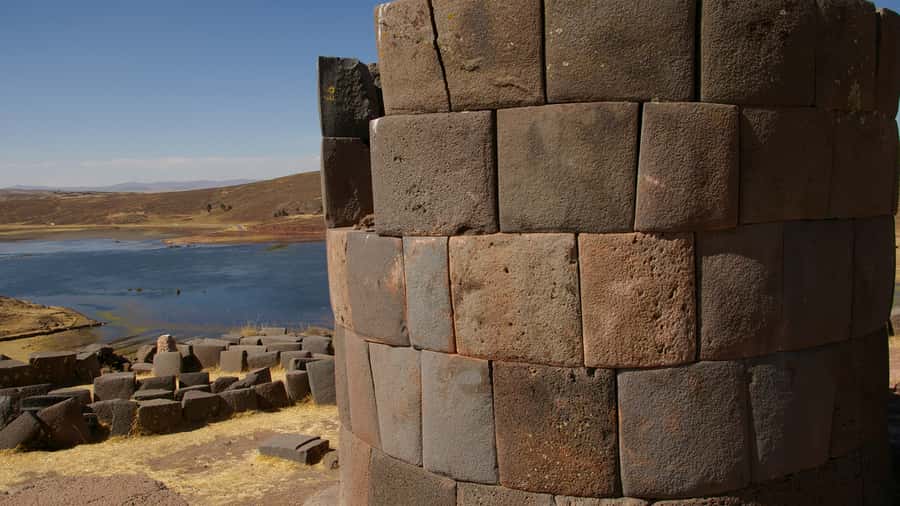
- The Chullpa del Lagarto is Sillustani’s best-known tower: Its square stones were fitted with great precision, though the tower was damaged by huaqueros searching for treasure in the early 19th century.
- Lake Umayo adds a peaceful setting: The lagoon reflects Puno’s blue sky and white clouds, and an island within it protects local vicuñas.
- The afternoon schedule is efficient: Pickup is listed around 2:00 PM, with a return to Puno around 5:00 PM, although the advertised duration is six hours, so confirm the exact start time.
- The guide adds cultural context: The tour can cover differences and similarities between Quechua and Aymara languages and communities, not just the stone towers.
- The price is reasonable for an included half-day outing: At $45 per person, you receive transport, admission, hotel pickup in Puno, and a professional guide.
- Rain can change the experience: Bring suitable clothing and shoes, and understand that the visit is exposed to the elements.
Why Sillustani is worth leaving Puno
Sillustani is more than a collection of old stone towers. It is a ceremonial and funerary center linked to the ancient peoples of the Collao region, on the high plateau around Lake Titicaca. The site gives you a chance to think about how earlier societies honored their dead, organized sacred places, and moved enormous stones into careful shapes.
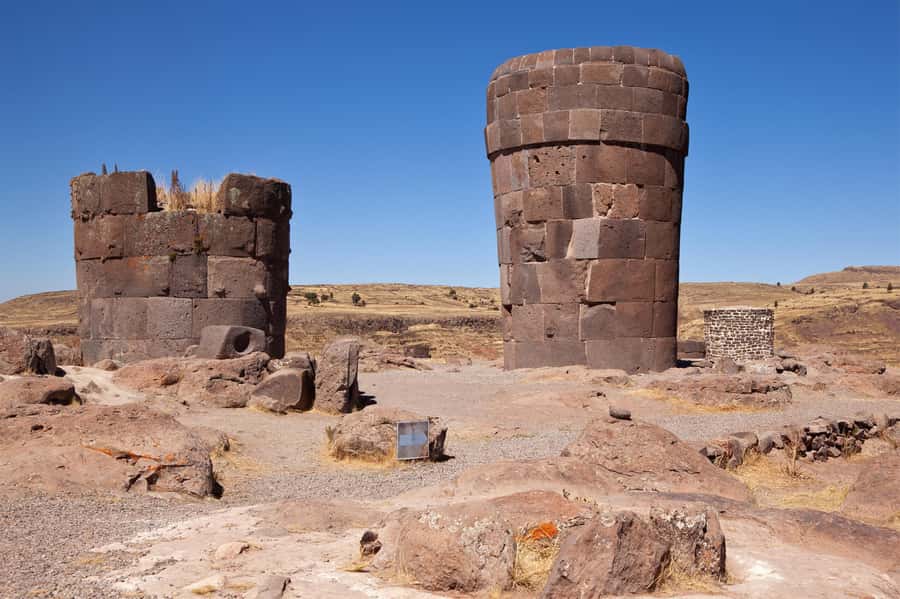
The chullpas were built to hold the remains of important authorities. Their circular form is easy to recognize, but the details reward a closer look. Some towers reach about 12 meters high. Many have a narrower base and a wider upper section, an unusual profile that makes them look slightly top-heavy.
That shape is one reason the architecture feels distinctive. You are not simply seeing rectangular Inca walls. The towers reflect older building traditions connected to the Kolla and Tiahuanaco cultures, later followed by Inca construction at the site. A guide can help you sort out those layers, especially if you are not already familiar with the cultures of Peru’s southern highlands.
I like this setting for another reason: Sillustani is close enough to Puno to fit neatly into an afternoon, but it feels removed from the city. The open surroundings and water make the visit quiet and reflective. You get archaeology, mountain scenery, and a view of local culture without committing to a long expedition.
More things to do in Puno:
- From Cusco: Vinicunca Rainbow Mountain ATV Tour with Meals
★ 4.6 · 1,060 reviews - From Puno: Uros, Amantaní & Taquile Islands 2-Day Tour
★ 4.5 · 452 reviews - Tour to Uros and Taquile Islands in a Fast Boat
★ 5.0 · 419 reviews
The 34-kilometer ride from Puno
The tour begins with pickup from your hotel in Puno, listed at around 2:00 PM. Sillustani sits about 34 kilometers from the city, so the drive is a practical part of the experience rather than a major travel burden.
Transport is included, which matters at this price. You do not need to arrange a separate taxi, negotiate a fare, or find your way to the archaeological complex. If your hotel is outside Puno’s city center, the operator provides a meeting point instead of door-to-door pickup, so check that detail before booking.
The schedule needs a little clarification. The outing is described as lasting six hours, while the planned visit begins around 2:00 PM and returns to Puno around 5:00 PM. That suggests a shorter active sightseeing period, or the stated duration may include transport and schedule flexibility. Check the available departure time and full timing for your date.
An afternoon departure can work well for visitors who spend the morning around Puno or need a less demanding introduction to the high-altitude area. It also leaves your evening open. The tradeoff is that you have less flexibility if bad weather arrives during the visit.
Walking among the circular funerary towers
The main visit at Sillustani takes about one hour. That is enough time to see the key structures, hear the main explanation, and take photographs, but it is not an unlimited archaeological study session.
Your guide will introduce the chullpas as funerary towers for principal authorities of the ancient settlers of Collao. The towers are not all identical, and their condition varies. Some show careful stonework, while others bear damage from age, weather, and treasure hunting.
The architecture is the star of the visit. Look closely at the way the stones meet, especially around the better-preserved structures. The workmanship helps explain why Sillustani is valued as an engineering site as well as a ceremonial center.
The Chullpa del Lagarto is the most famous tower in the complex and the tallest one. It dates from the Inca period and was built with square stones that fit together with remarkable accuracy. Its name refers to a lizard design associated with the structure.
The tower was damaged at the beginning of the 19th century by huaqueros, people who searched archaeological sites for valuable objects. That detail adds a sobering layer to the visit. Sillustani is not an untouched time capsule. Parts of its past were disturbed by people looking for treasure, and the damage remains visible in the story of the site.
You will want comfortable shoes because the visit involves walking outdoors around the archaeological complex. Wear comfortable clothing as well. Large bags and luggage are not allowed, so this is not a good stop for anyone carrying substantial baggage between hotels.
Lake Umayo and the island of vicuñas
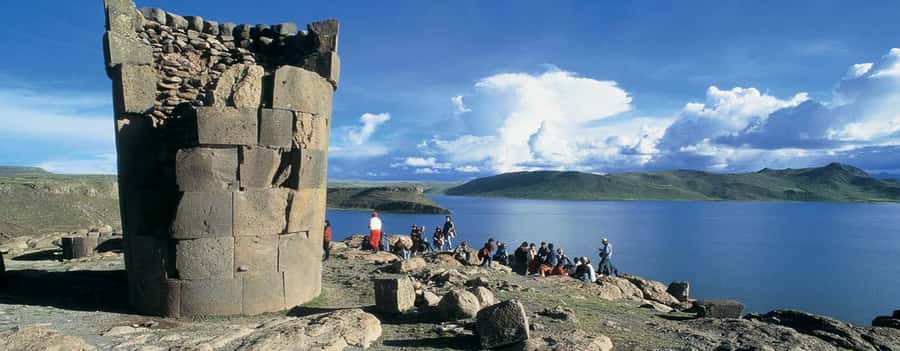
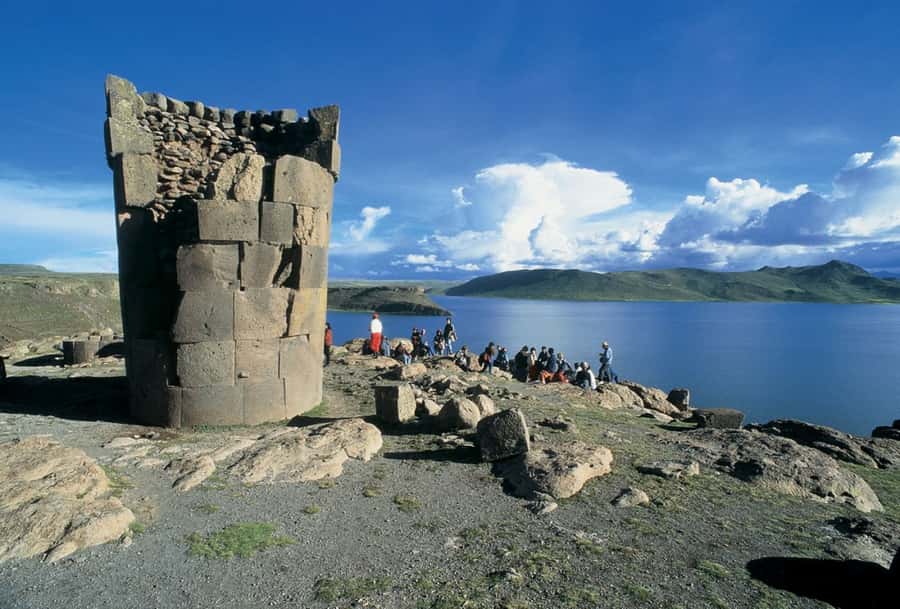
Lake Umayo provides the setting that makes Sillustani feel special. The water reflects the blue sky and white clouds of Puno, creating a broad, open view beside the stone towers.
This is a place where you should pause after the guide’s explanation. The lagoon is not just a backdrop for photographs. It helps explain why the site was placed here and gives the visit a strong sense of space. The quiet water and high-altitude surroundings contrast with the tighter streets and busy movement of Puno.
An island in Lake Umayo serves as a reserve for local vicuñas. The tour information does not promise a close wildlife encounter, so you should treat the island as part of the view rather than a guaranteed animal sighting. Still, its presence adds a useful connection between archaeology and the living environment around the lake.
The scenery is one of the most praised parts of the outing. You get open views in several directions, and the combination of water, sky, and stone towers makes this an easy place to appreciate Peru’s high plateau. Bring a camera, but leave time to simply look around.
A completely different kind of day:
- From Puno: Floating Islands of the Uros Half-Day Tour
★ 4.4 · 394 reviews - Uros and Taquile Islands on New and Comfortable SpeedBoat
★ 4.5 · 254 reviews - Lake Titicaca (Day Trip) Uros & Taquile Islands
★ 4.5 · 245 reviews - Lake Titicaca 2-Day Tour to Uros, Amantani and Taquile
★ 4.4 · 199 reviews
The site museum and cultural context
A short distance from the archaeological complex is a site museum. It preserves pieces from the Kolla, Tiahuanaco, and Inca cultures, giving you a smaller indoor display to pair with the outdoor ruins.
The museum can help you place Sillustani in a wider cultural timeline. The towers are easier to understand when you can connect them with objects and traditions from the societies that used or influenced the area.
Guide quality matters here. One especially strong account describes a guide who stayed focused, explained the important points clearly, encouraged questions, and allowed free time for photographs or shopping for local goods. That is the right balance for a site like Sillustani. You need enough explanation to understand what you are seeing, but you also need a few quiet minutes to look closely and take in the setting.
The cultural discussion may also include differences and similarities between Quechua and Aymara languages and ethnic groups still living in the Puno area. That is a valuable addition because it connects ancient sites with present-day communities. You are not left with the impression that these cultures ended when the stone towers were built.
A practical look at the guide and group experience
The guide is listed as professional and available in English or Spanish. For an archaeological site with several cultural periods, language access makes a real difference. You want clear explanations of which structures are associated with earlier groups and which reflect Inca work.
The strongest description of the guiding style points to a person who was relaxed, good-humored, and still in control of the schedule. That combination is useful. A guide who welcomes questions can make the visit feel less like a rushed lecture, while someone who manages time well ensures you see the key parts of the complex.
You should have some time for photographs and possibly for shopping local goods. The exact amount depends on the group and conditions, so do not expect a long independent visit. The planned archaeological portion is about one hour.
The tour has a top rating based on six reviews, which is a small sample. I would treat that as encouraging rather than conclusive. The praise focuses on punctual departure, clear information, good answers to questions, and a well-managed visit. Those are precisely the practical qualities that matter on a short excursion.
Rain, comfort, and the limits of the visit
Weather deserves serious attention. One account describes very intense rain that partly spoiled the visit and raised concerns about how close the group could get to the site. In poor conditions, the operator’s approach to access and rescheduling may affect your experience.
Because the visit is outdoors, pack for changing highland weather. Comfortable shoes and comfortable clothing are specifically recommended, but you should think beyond basic comfort. A rain layer would be sensible if the forecast looks unsettled. The provided information does not list rain gear, meals, or any weather guarantee as included.
The tour is not suitable for wheelchair users. The outdoor archaeological setting, walking requirements, and uneven access make this an important limitation. Large bags and luggage are also not permitted, so carry only what you need for the afternoon.
No meal is included. Since the outing returns to Puno around 5:00 PM according to the schedule, plan to eat before or after the tour. Accommodation in Puno is not included either, which is expected for a local excursion but worth noting if you are comparing total trip costs.
Is $45 a fair price?
At $45 per person, this tour offers solid value if you want a simple, organized visit to Sillustani. Transport, admission, hotel pickup in Puno, and a professional guide are all included. Those inclusions reduce the small costs and planning tasks that can add up when arranging the trip yourself.
The value is strongest for you if you want cultural explanation rather than only a ride to the ruins. A guide can point out the differences between the site’s cultural periods, explain the funerary purpose of the towers, and connect the archaeological remains with Quechua and Aymara communities today.
The value is less clear if you want a long, unhurried archaeological visit. The Sillustani portion lasts about one hour, and the outing follows a fixed schedule. Independent visitors may prefer more time, but they would need to arrange transport and entrance separately.
The reserve-now-and-pay-later option also helps if your Puno plans are still shifting. Free cancellation is available up to 24 hours before the tour for a full refund. Those terms make the $45 commitment easier to manage, though you should still check the final conditions when booking.
Who will enjoy this afternoon tour?
I would recommend this outing to you if you have limited time in Puno and want to see something beyond the city. It suits people interested in pre-Inca and Inca architecture, funerary traditions, local languages, and high-altitude scenery.
It is also a good choice if you prefer a guide who can keep the visit moving while leaving room for questions and photographs. Families with older children may appreciate the manageable length, though the information provided does not specify a minimum age or family program.
You should think twice if you dislike outdoor visits in uncertain weather, need wheelchair access, or are carrying luggage. You may also prefer another plan if your main goal is the Uros floating islands. Lake Titicaca and the Uros islands are part of the wider Puno area, but this itinerary focuses on Sillustani and Lake Umayo, not a visit to the Uros islands.
Should you book Sillustani from Puno?
Book it if you want a well-priced, guided introduction to one of the region’s most striking archaeological sites. The precise stonework, peaceful Lake Umayo views, and strong guide-led cultural context give this short outing real substance.
I would book on a clear or stable-weather afternoon and confirm the exact duration and pickup time before paying. If rain looks heavy, ask about the operator’s policy for difficult conditions. With that small bit of planning, Sillustani makes a worthwhile addition to a Puno stay and offers a quieter, more thoughtful alternative to a standard lake excursion.
FAQ
How much does the Sillustani afternoon tour cost?
The tour costs $45 per person.
How long does the tour last?
The activity is listed as lasting six hours, but the schedule describes pickup around 2:00 PM, about one hour at Sillustani, and arrival back in Puno around 5:00 PM. Check the available starting time and final schedule for your date.
Where does the tour begin?
Pickup is included from hotels in Puno.
What happens if my hotel is outside central Puno?
For hotels outside Puno city center, a meeting point will be offered instead of standard hotel pickup.
Which languages are available for the guide?
The live guide is available in English and Spanish.
Is transportation included?
Yes. Transport to and from Sillustani is included.
Are entrance fees included?
Yes. All entrance fees are included in the tour price.
Is food included?
No. Meals are not included.
What should I bring?
Bring comfortable shoes and comfortable clothing. Since the visit is outdoors, you may also want to prepare for the weather.
Can I bring luggage or a large bag?
No. Luggage and large bags are not allowed.
Is the tour suitable for wheelchair users?
No. The tour is not suitable for wheelchair users.
Can I cancel the booking?
You can cancel up to 24 hours in advance for a full refund. You can also reserve now and pay later, subject to the booking conditions.
Just added in Puno
- Sun island and Copacabana | From Puno or La Paz / Day Trip★ 4.1 · 5 reviews
- Puno: History and Culture Walking Tour★ 4.1 · 13 reviews
- Puno: Uros and Taquile Islands Full-Day Tour with Lunch★ 4.5 · 17 reviews
- Puno: Lake Titicaca, Uros, and Taquile Full-Day Tour★ 4.5 · 4 reviews
- Puno: 3-hour trip to the floating Uros Islands★ 4.5 · 9 reviews
- Puno: 2 Day Visit to Uros, Amantani and Taquile★ 4.5 · 13 reviews
- Puno: Lake Titicaca Day Tour★ 4.5 · 17 reviews
- Lake Titicaca, Uros and Taquile Full-Day Tour★ 4.3 · 69 reviews
Puno Tours, compared.

From Cusco: Vinicunca Rainbow Mountain ATV Tour with Meals
Read our review →
From Puno: Uros, Amantaní & Taquile Islands 2-Day Tour
Read our review →
Tour to Uros and Taquile Islands in a Fast Boat
Read our review →
From Puno: Floating Islands of the Uros Half-Day Tour
Read our review →
Uros and Taquile Islands on New and Comfortable SpeedBoat
Read our review →
Lake Titicaca (Day Trip) Uros & Taquile Islands
Read our review →
Lake Titicaca 2-Day Tour to Uros, Amantani and Taquile
Read our review →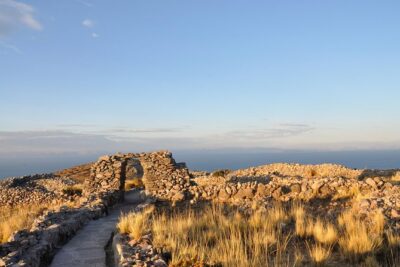
Browse the lists this tour appears in