
Reviewed · LAKE TITICACA AND THE UROS ISLANDS
Puno: History and Culture Walking Tour
Puno reveals itself best on foot. This two-hour walk brings together Lake Titicaca views, colonial architecture, Andean culture, and a small museum visit for $20 per person. I like the clear route from Huajsapata Lookout to the cathedral and Carlos Dreyer Museum, and I like that the group is limited to 10 people, giving you a better chance to ask questions.
The main consideration is the extra 20 soles for museum admission, which is not included in the tour price. You should also be comfortable walking around Puno and carrying only a small bag, since large luggage is not allowed.
In This Review
- Five useful things to know before you go
- Why this short Puno walk is worth your time
- Starting at Plaza de Armas and climbing to Huajsapata Lookout
- Seeing Puno Cathedral’s Spanish and Andean character
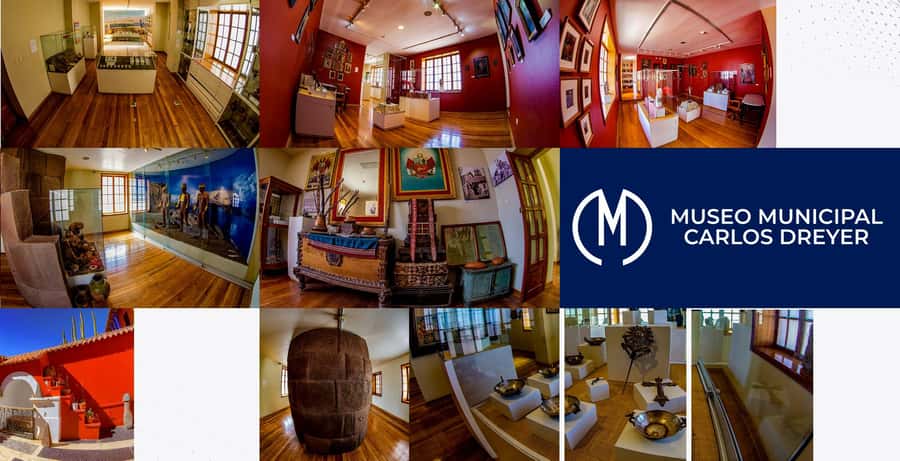
- Carlos Dreyer Museum and its pre-Columbian collection
- What the $20 price gives you
- A compact route with useful flexibility
- How the guide affects the experience
- Who should book this Puno walking tour?
- Should you book the Puno History and Culture Walking Tour?
- FAQ
- How long is the Puno History and Culture Walking Tour?
- Where does the tour begin?
- Where does the tour end?
- What languages does the guide speak?
- How many people are in the group?
- Is museum admission included in the price?
- What should I bring?
- Can I bring luggage?
Five useful things to know before you go
- Huajsapata Lookout begins the walk: You get an early view over Puno and Lake Titicaca before moving into the historic center.
- Manco Capac adds an Inca connection: The lookout includes a monument to the figure traditionally linked with the founding of the Incan Empire.
- The cathedral mixes Spanish and Andean styles: Its design helps explain Puno’s blended cultural identity.
- Carlos Dreyer Museum costs extra: Plan on paying 20 soles per person for entry.
- Samuel has earned strong praise: One review specifically credits Samuel with making the tour especially enjoyable, while another notes the guide knew Puno well and answered questions clearly.
- The tour returns to Plaza de Armas: You begin and finish at the main square, making this easy to fit around other plans in central Puno.
Why this short Puno walk is worth your time
Puno can feel like a city you pass through on the way to Lake Titicaca. That would be a mistake. The city has its own story, shaped by Spanish colonial rule, Andean traditions, and its role as a regional center beside the lake.
This walking tour gives you a useful first look without taking up half a day. In two hours, you see several of the city’s main sights and get a guide’s explanation of what you are looking at. That matters in Puno, where a stone church or public monument can carry several layers of meaning that are easy to miss on your own.
I see the tour as a good orientation walk. It does not attempt to cover every corner of the city. Instead, it links a high viewpoint, the main cathedral, and a museum with pre-Columbian objects. You finish with a clearer sense of how Puno’s geography and culture fit together.
The bilingual format is also useful. You can join with a Spanish or English-speaking guide, and the small group limit of 10 participants should make the walk more personal than a large city tour. The guide who led one reported tour, Samuel, received especially warm praise for making the experience enjoyable. Another strong point was the guide’s ability to answer questions about Puno.
More Lake Titicaca trips:
- From Puno: Uros, Amantaní & Taquile Islands 2-Day Tour
★ 4.5 · 452 reviews - Tour to Uros and Taquile Islands in a Fast Boat
★ 5.0 · 419 reviews - From Puno: Floating Islands of the Uros Half-Day Tour
★ 4.4 · 394 reviews
Starting at Plaza de Armas and climbing to Huajsapata Lookout
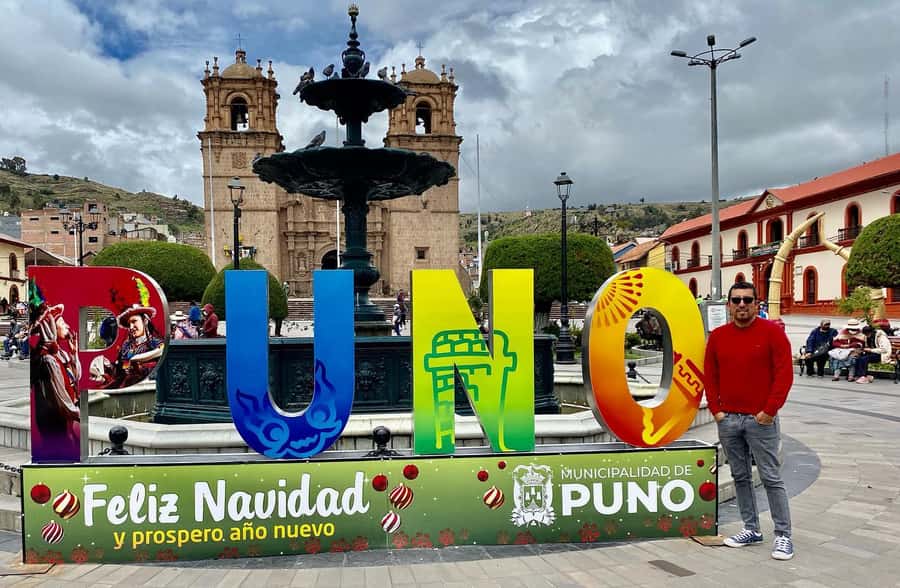
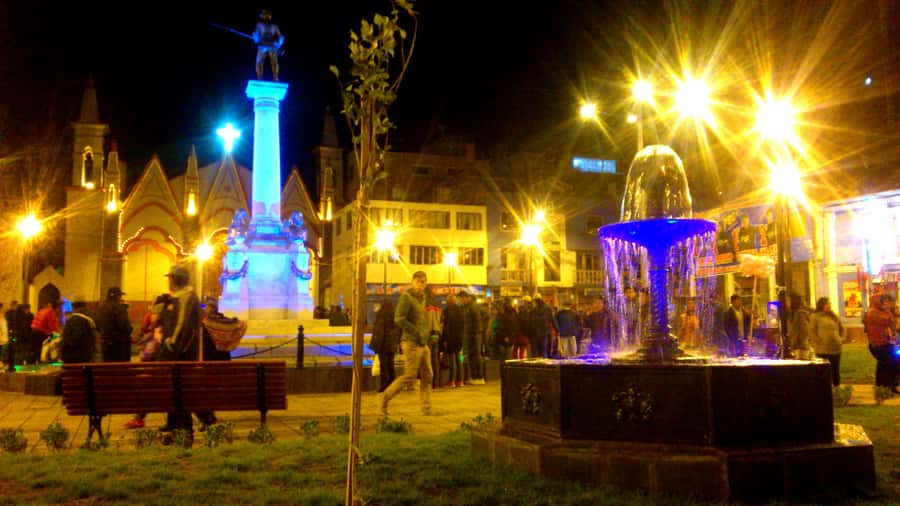
You meet at Plaza de Armas, Puno’s central square. This is a practical meeting point because the tour begins and ends there, so you do not need to arrange transport to a distant neighborhood.
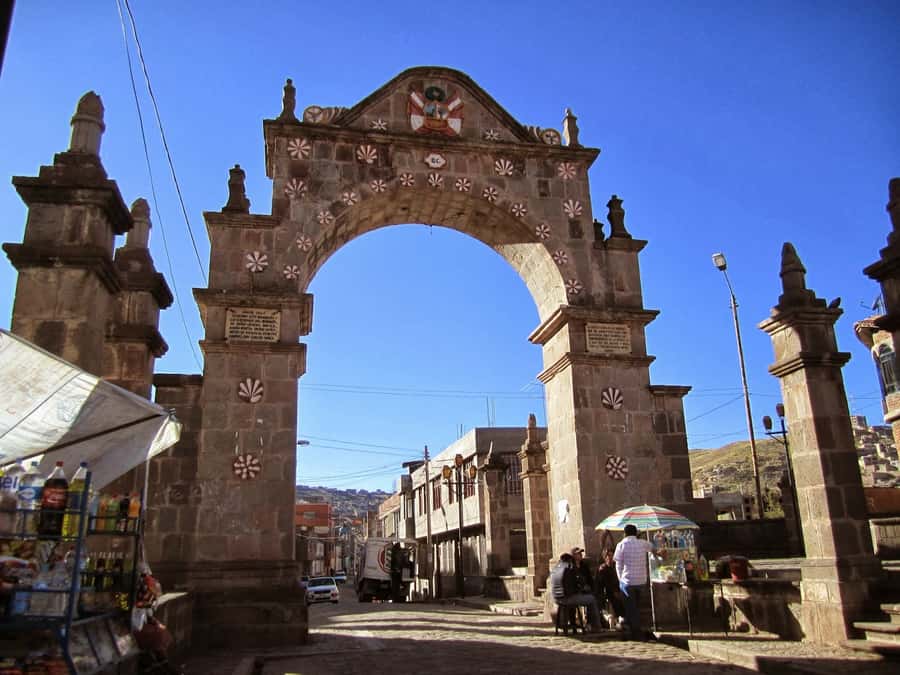
The first major stop is Huajsapata Lookout. From here, you can take in wide views of Puno and Lake Titicaca. The outlook gives you an immediate sense of the city’s setting, with the lake forming the main visual focus beyond the urban streets.
I like this as the opening stop because it gives the rest of the walk some context. After seeing Puno from above, you can better understand the city as a place connected to the lake rather than simply a collection of streets and buildings.
The lookout also has a monument dedicated to Manco Capac, traditionally described as the founder of the Incan Empire. Your guide can connect the monument to the wider story of Andean origins and identity. It is a small detail, but it gives the viewpoint more meaning than a simple photo stop.
The practical point is that this is a walking tour, and Huajsapata Lookout is reached on foot from the central area. The tour details do not provide a full description of the route or terrain, so you should expect ordinary city walking and come prepared for a two-hour outing without bulky luggage.
Seeing Puno Cathedral’s Spanish and Andean character
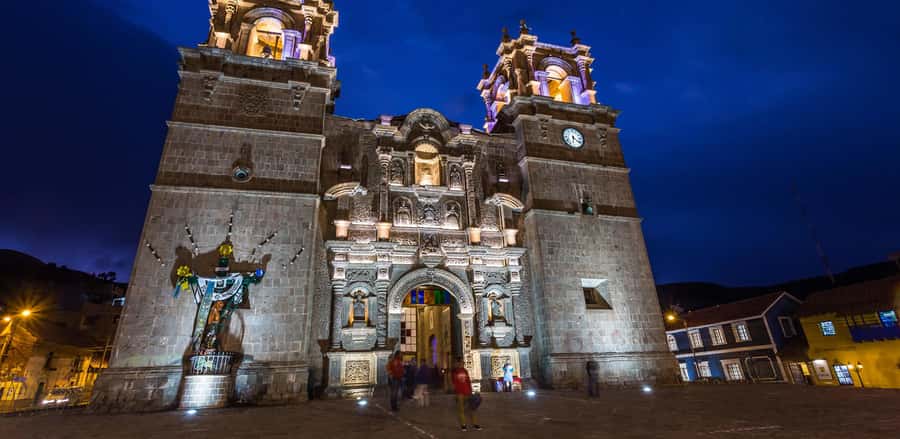
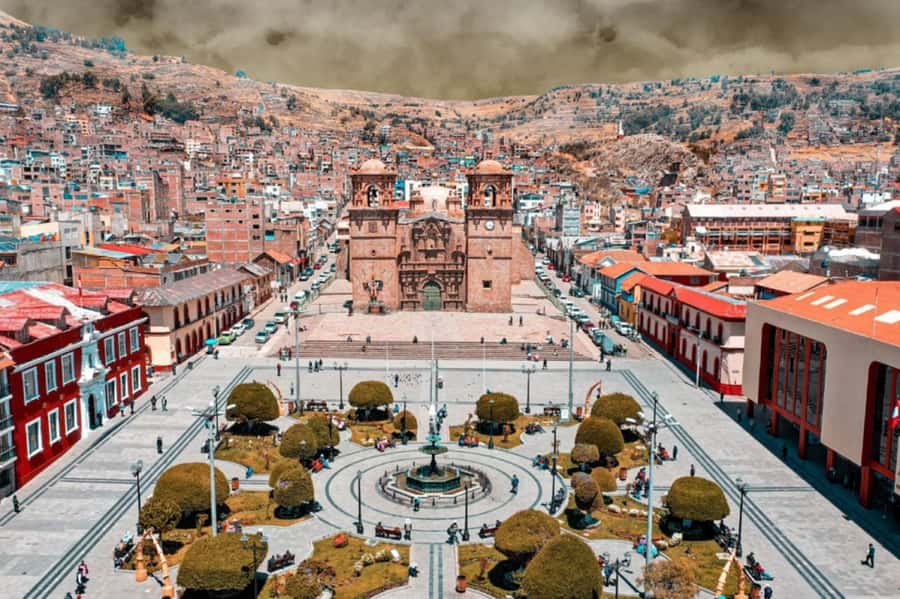
From the lookout, the walk continues to the 18th-century Cathedral of Puno. This is one of the most important architectural stops, not simply because it is old, but because its design reflects the meeting of European and Andean traditions.
The cathedral includes Baroque Spanish features alongside indigenous Andean elements. Your guide’s explanation can help you notice how those styles appear together rather than treating the building as only a Spanish colonial church.
That combination is central to understanding Puno. The city’s culture cannot be reduced to one influence. The cathedral gives you a visible example of how European forms and local artistic traditions were brought together in colonial Peru.
I would allow yourself a little time here to look closely at the stonework and overall design. A quick photograph will not tell you much. The value comes from hearing how the building fits into Puno’s past and how its appearance reflects the city’s mestizo character.
This is also where a guide can add the most value. You may recognize the church as a major landmark, but you are less likely to understand its artistic mix without someone pointing out the Andean details. The tour’s positive feedback about clear explanations and good answers to questions is especially relevant at this stop.
Carlos Dreyer Museum and its pre-Columbian collection
The final major stop is the Carlos Dreyer Museum. The museum adds objects and detail to the broad historical story introduced at the lookout and cathedral.
Inside, you can see pre-Columbian jewelry, ceramics, and textiles. These items give you a closer look at the material culture of the region. Jewelry shows the skill and design choices of earlier societies. Ceramics offer clues about craft and daily life. Textiles provide another way to understand local artistic traditions.
The museum also covers the founding of Puno. That makes it a useful follow-up to the monument at Huajsapata Lookout. The walk begins with a large view and a founding figure, then moves toward a more focused presentation of the city’s past.
Museum admission is not included. You pay 20 soles per person at the museum, in addition to the $20 tour price. That extra fee is not large compared with many organized sightseeing experiences, but you should include it when working out the total cost.
The museum is likely to appeal most if you enjoy objects and historical explanation, not just viewpoints and photographs. If you are mainly interested in scenery, the lookout and cathedral may be the highlights for you. If you want a stronger cultural element, the museum makes the walk more worthwhile.
The available information does not specify how long the group remains inside the museum, so do not expect a detailed room-by-room account in advance. The guide accompanies you and provides context, but the tour remains a compact city walk rather than a full museum study.
More History Tours in Puno:
- Discover Lima: Love Park, Historic Center, and its Catacombs.
★ 5.0 · 696 reviews - Street Food, Market & Old Eateries Tour in Lima’s Historic Center
★ 5.0 · 656 reviews - Lima’s Vibrant Heritage: Exploring the City’s Landmarks Half-day
★ 4.5 · 581 reviews - A Journey Through Time: Lima’s Historic Center & Catacombs Tour
★ 5.0 · 293 reviews
What the $20 price gives you

At $20 per person, the price is reasonable for a two-hour guided walk in a historic city, especially with a bilingual guide and a group capped at 10 people. You are paying for a structured route, local explanation, and the convenience of seeing several key sights in one outing.
The value depends on how much guidance you want. If you are happy to walk around Puno with a guidebook or map, you could see the outside of many central sights independently. The paid tour earns its keep through explanation, particularly at the cathedral and museum, where context changes what you notice.
The museum fee needs to be added to the budget. At 20 soles per person, it is a modest extra cost, but the published tour price does not cover it. You should also bring your passport or ID card, as this is listed among the required items.
The group size is an important part of the value. Ten people is small enough for questions to be practical, and the positive comments about guides answering questions suggest that this is more than a scripted walk. You should still remember that the quality of a live tour can depend on the guide assigned that day. Samuel received particularly strong praise, but his availability is not guaranteed.
A compact route with useful flexibility
The tour lasts two hours, with starting times based on availability. That makes it easy to place on a Puno schedule, especially if you want an introduction before visiting other parts of the region.
Because the walk starts and ends at Plaza de Armas, you can plan the rest of your day from the same central area. There is no included transport, and none is needed for the stated route.
The tour is not suited to children under 5. It also does not allow luggage or large bags. If you are arriving with suitcases, arrange somewhere to leave them before meeting the group. A small day bag is the sensible choice.
Bring your passport or ID card. The tour details do not state that you need special equipment, but comfortable walking clothing is a practical choice for any two-hour city outing.
Free cancellation is available up to 24 hours before the tour for a full refund. You can also reserve now and pay later, which helps if your Puno schedule depends on weather or other timed activities.
How the guide affects the experience
A walking tour of this kind rises or falls with the guide. The route itself is straightforward, but the stories connecting the places make the difference.
The strongest praise is directed at the guide’s ability to explain Puno and respond to questions. One person singled out Samuel for doing an outstanding job and making the tour enjoyable. Another said the guide covered the important sights and knew the city well.
That tells me you should use the question time. Ask about the cathedral’s Andean details, the story behind Manco Capac, or the objects in the Carlos Dreyer Museum. A small group of no more than 10 makes those exchanges more realistic than on a large bus tour.
The overall score is 4.1 out of 5 from 13 ratings. That is a solid result, though not a guarantee of a perfect experience for every group. One very short rating offered little detail, so I would focus more on the specific praise about the guides and route than on the number alone.
Who should book this Puno walking tour?
I would recommend it to you if you want a short introduction to Puno before visiting Lake Titicaca or exploring the city on your own. The lookout, cathedral, and museum give you three different ways to understand the place: geography, architecture, and historical objects.
It also suits you if you prefer small groups and want to speak with a bilingual guide. The 10-person limit is helpful for anyone who has questions or wants more than a memorized list of dates.
This is less suitable if you dislike walking, want extensive museum time, or need to carry large bags. It may also feel too brief if you are looking for a full-day cultural program. The two-hour length is its strength and its limit.
For many people, the best use of this tour is near the beginning of a Puno stay. You get your bearings at the lookout, see the central cathedral, and learn enough background to make later visits more meaningful.
Should you book the Puno History and Culture Walking Tour?
Book it if you want a reasonably priced, compact introduction to Puno with a real cultural focus. I especially like the route’s balance: Lake Titicaca views at Huajsapata Lookout, the blended design of Puno Cathedral, and pre-Columbian jewelry, ceramics, and textiles at the Carlos Dreyer Museum.
Budget an additional 20 soles for museum entry, bring identification, and leave large luggage behind. If you have two hours available and value clear local explanation, this is a sensible way to meet Puno before going farther into the region.
FAQ
How long is the Puno History and Culture Walking Tour?
The tour lasts two hours.
Where does the tour begin?
You meet at Plaza de Armas, also called Plaza Mayor de Puno.
Where does the tour end?
The activity ends back at the meeting point in Plaza de Armas.
What languages does the guide speak?
The tour is available with a Spanish and English-speaking guide.
How many people are in the group?
The group is limited to 10 participants.
Is museum admission included in the price?
No. Admission to the Carlos Dreyer Museum costs 20 soles per person and is paid separately.
What should I bring?
You should bring your passport or ID card.
Can I bring luggage?
Large bags and luggage are not allowed.
More Walking Tours in Puno
- Lima Half-Day City Walking Tour (Small Groups)
★ 5.0 · 1,508 reviews - Cusco: Walking Tour with an Experienced Local Guides
★ 4.8 · 636 reviews - Food & Art: Lima Colors and Flavors Walking Tour
★ 5.0 · 218 reviews - Cusco: Historic Walking Tour with Pisco Sour and Local Music
★ 5.0 · 190 reviews
Just added in Puno
- Sun island and Copacabana | From Puno or La Paz / Day Trip★ 4.1 · 5 reviews
- Puno: Uros and Taquile Islands Full-Day Tour with Lunch★ 4.5 · 17 reviews
- Puno: Lake Titicaca, Uros, and Taquile Full-Day Tour★ 4.5 · 4 reviews
- Puno: 3-hour trip to the floating Uros Islands★ 4.5 · 9 reviews
- Puno: 2 Day Visit to Uros, Amantani and Taquile★ 4.5 · 13 reviews
- Puno: Lake Titicaca Day Tour★ 4.5 · 17 reviews
- Lake Titicaca, Uros and Taquile Full-Day Tour★ 4.3 · 69 reviews
- Lake Titicaca, Peru: Guided Tour to the Uros and Amantani Islands with Lunch★ 5.0 · 4 reviews
Lake Titicaca and the Uros Islands, compared.
From Puno: Uros, Amantaní & Taquile Islands 2-Day Tour
Read our review →
Tour to Uros and Taquile Islands in a Fast Boat
Read our review →
From Puno: Floating Islands of the Uros Half-Day Tour
Read our review →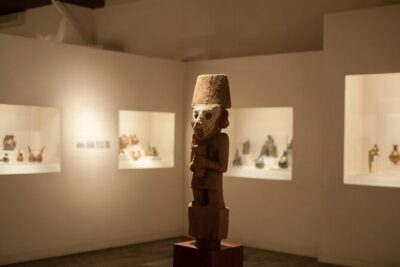
10-Day Discover Peru: Lima, Arequipa, Puno, Cusco & Machu Picchu
Read our review →
Uros and Taquile Islands on New and Comfortable SpeedBoat
Read our review →
Lake Titicaca (Day Trip) Uros & Taquile Islands
Read our review →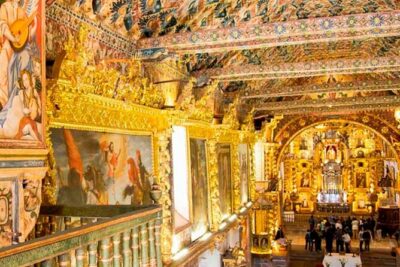
Lake Titicaca 2-Day Tour to Uros, Amantani and Taquile
Read our review →Browse the lists this tour appears in