
Reviewed · WALKING TOURS IN CUSCO
Cusco: Walking Tour with an Experienced Local Guides
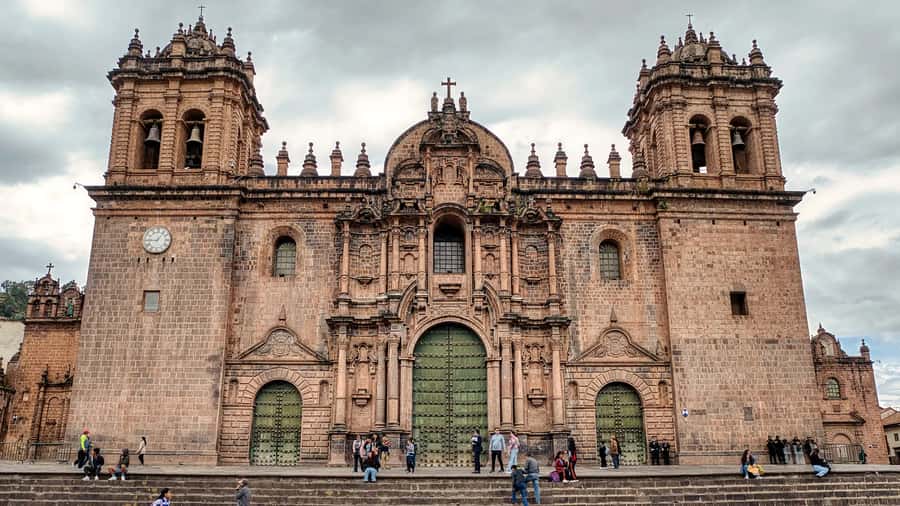
Cusco tells its story one stone at a time. This two-hour walk is a smart introduction to the former Inca capital, linking major sights with smaller streets you could easily miss. I especially like the focus on Inca masonry and city design, and the way guides such as Isaias, Joshua, Joel, and Luis add local advice about food, drinks, and getting used to the altitude. The main drawback is the uphill finish to San Blas, which can feel demanding soon after arriving in Cusco.
At about $10 per person, this is strong value for a short city orientation. The route covers a lot, but it is not a detailed museum tour, and some stops are brief. You should bring water, sun protection, and comfortable shoes, then leave room in your schedule to return to the places that catch your interest.
In This Review
- Key points to know before you go
- Why this two-hour walk works so well in Cusco
- Finding the purple umbrella in central Cusco
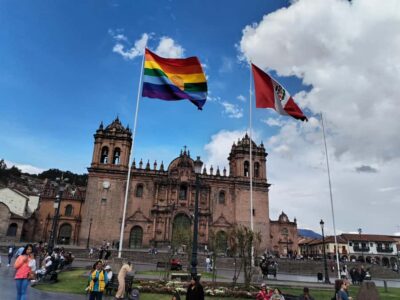
- Cusco’s Main Square begins the story
- The Twelve-Angled Stone and Cusco’s precise masonry
- Inca Roca Street reveals unusual carved details
- Kusicancha Palace and the Inca city plan
- Qorikancha, the Sun Temple, brings the route’s history into focus
- Loreto Street is a surviving Inca route
- San Blas adds artists, workshops, and a climb
- The San Blas viewpoint is a useful finish
- What the $10 price really gets you
- Prepare for sun, altitude, and city streets
- Who should book this Cusco walking tour?
- Should you book it?
- FAQ
- How long does the Cusco walking tour last?
- How much does the tour cost?
- What languages are available?
- Where is the meeting point?
- Where does the tour finish?
- Is the tour guided?
- Can I book a private group?
- Is food included?
- What should I bring?
- Is the tour suitable for wheelchair users?
Key points to know before you go
- Nine useful Cusco stops in two hours: The route connects the Main Square, Loreto Street, Qorikancha, the Twelve-Angled Stone, San Blas, and a city viewpoint.
- The guides are the main strength: Isaias, Joshua, Joel, Isa, and Luis are praised for clear English, local stories, humor, and practical recommendations.
- A good first-day activity: You get a quick map of central Cusco and advice that can help shape the rest of your visit.
- Look closely at the stonework: Inca walls, carved figures, palace layouts, and the famous twelve-angled stone give the walk a clear theme.
- The end is uphill: The final approach to San Blas and its viewpoint includes a steep section, so pace yourself at altitude.
- Bring cash for the tip: The tour is described as a free walking tour with discretionary tips appreciated, while the advertised price is about $10 per person.
Why this two-hour walk works so well in Cusco
Cusco can be confusing at first. Streets change character quickly, colonial buildings sit on Inca foundations, and the city rises sharply from the center toward San Blas. A short walk with a local guide gives you the basic layout before you spend time on larger outings to nearby ruins or Machu Picchu.
I like the route because it does not simply march from one famous plaza to another. It uses walls, street plans, churches, workshops, and viewpoints to explain how Cusco changed from an Inca capital into a Spanish colonial city and then into the modern regional center you see today.
The guides also seem to make the difference. Isaias is repeatedly praised for his English, clear explanations, humor, and willingness to answer questions beyond the prepared route. Joshua is described as energetic and good with a group, while Joel gets credit for making the two hours feel quick and entertaining. Luis is noted for checking that people were coping with the high altitude.
That personal touch matters here. You are not only collecting names and dates. You are learning how to look at the city, where to eat later, and which streets deserve a second walk.
More Walking Tours in Cusco
- Cusco: Historic Walking Tour with Pisco Sour and Local Music
★ 5.0 · 190 reviews - Curious Monkey Cusco- Eat the Streets, Walking Food Tour
★ 5.0 · 160 reviews - Cusco Highlights Walking Tour: History, Culture, Traditions
★ 4.9 · 72 reviews
Finding the purple umbrella in central Cusco
The meeting point is the Free Tour Cusco Peru location at coordinates -13.5174197, -71.9786609. Look for a guide carrying a purple umbrella and wearing a purple polo shirt marked Free Tour Cusco.
That visual marker is useful in the Main Square, where people, guides, taxis, and tour groups gather. Arrive with enough time to locate the meeting point without rushing. The scheduled experience lasts two hours, and one person reported a slightly late start, so a little patience may be useful if the group is still forming.
The tour is offered in English and Spanish, with a certified professional guide and ongoing assistance. A private group can also be requested. The route is on foot, so you will need to manage uneven streets and the climb toward San Blas. The activity is not suitable for wheelchair users.
Cusco’s Main Square begins the story
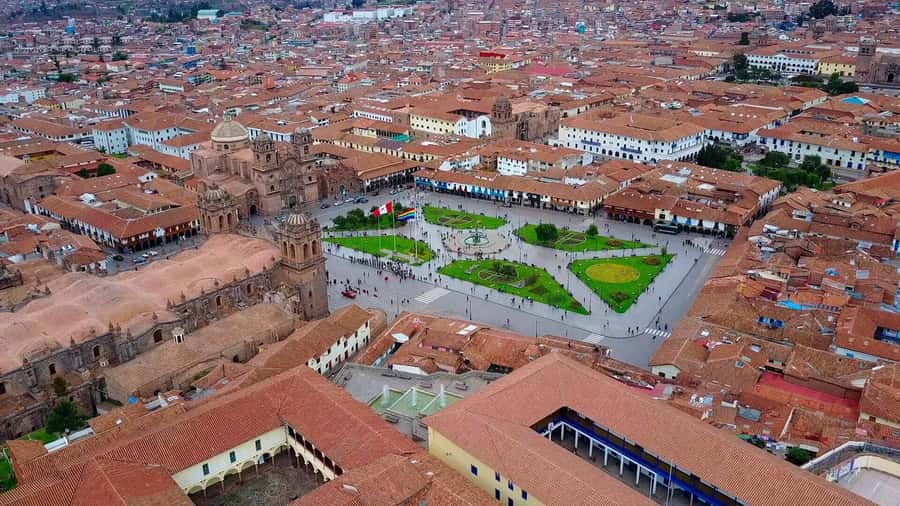
The Main Square is a natural place to start because it has been important since the Inca period. Today, two attractive sixteenth-century churches frame the space, but the square also carries the memory of the sacred center that came before the colonial city.
Your guide uses this opening stop to explain the broad story of Cusco. You can expect a photo stop, a guided explanation, and some free time. The exact order and length of individual stops may vary, but this first section gives you the context needed for the rest of the walk.
Do not treat the square as just a place for photographs. Listen for the explanation of how Spanish buildings were placed over earlier Inca foundations. That theme appears again and again, and it is one of the most useful ideas to carry through the tour.
The square can be busy, and groups may need to stand to one side while the guide speaks. A guide who speaks clearly and loudly is especially helpful here. One visitor specifically praised a guide for making sure everyone could hear, which is not a small detail in a crowded public space.
The Twelve-Angled Stone and Cusco’s precise masonry
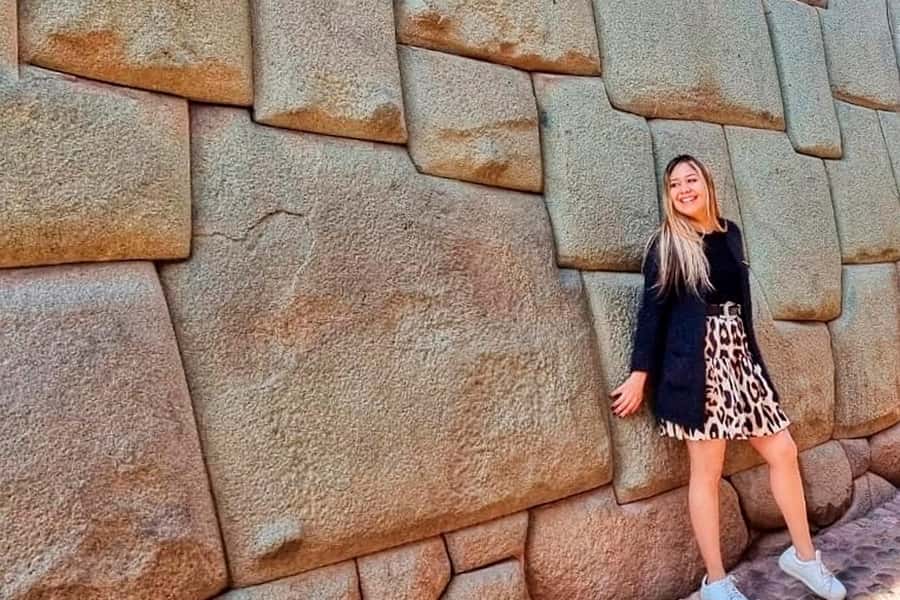
The Twelve-Angled Stone is one of the quickest stops, listed at about ten minutes. It is famous for the careful fit of the surrounding Inca stones and for its symbolic link to Cusco’s twelve Inca neighborhoods.
This is a stop where you should slow your eyes down, even if the schedule moves quickly. The point is not only the number of angles. It is the precision of the wall around it, where stones meet without the broad mortar joints common in many later buildings.
The guide can help you see why the stone became such a recognizable symbol of Cusco. You may also hear about the practical and cultural meaning of Inca construction, rather than receiving only a quick photo opportunity.
The street is narrow, so you may be standing close to other people. Keep your camera ready, but pay attention to the explanation before moving on. You can return independently later if you want more time for photographs.
A completely different kind of day:
- Classic Inca Trail Trek 4D/3N to Machu Picchu (Group Service)
★ 5.0 · 8,653 reviews - Cusco: Rainbow Mountain and Red Valley Day Trip with Meals
★ 4.9 · 4,893 reviews - Machu Picchu: 4-Day Inca Trail Trek with Panoramic Train Ride
★ 5.0 · 4,568 reviews - Salkantay Classic Trek 5 Days from Cusco
★ 5.0 · 4,062 reviews
Inca Roca Street reveals unusual carved details
Inca Roca Street adds another look at Cusco’s stonework. Its architecture includes serpent and puma figures, making this a particularly good stop for anyone interested in the symbols used in Inca design.
The puma matters because Cusco is often described as a city planned in the shape of a puma. The tour’s image of the puma city becomes easier to understand when you see how streets, walls, and important buildings are connected.
This is also the sort of place you might walk past without recognizing its importance. That is one of the route’s practical strengths. You do not need to know every street before you arrive, but a local guide can point out the details that make an ordinary-looking lane significant.
Expect a short guided visit and a photo opportunity. It is not a long archaeological stop, so think of it as a visual lesson in how to read Cusco’s old center.
Kusicancha Palace and the Inca city plan
Kusicancha Palace helps explain how the Inca organized important buildings and residences. The site is associated with a classic Inca grid layout and central courtyards, giving you a clearer sense of planned space within the city.
This stop is valuable because it shifts the focus from individual stones to urban design. You begin to see Cusco as an organized capital, not simply a collection of impressive walls.
The guide’s explanation can also connect the palace area with the broader transformation of the city. Cusco’s old center contains layers, and the walk makes those layers easier to separate: Inca planning, Spanish construction, and later Cusqueño traditions.
You should expect a guided visit and some free time. Because the overall route covers many stops, this section is more of an orientation than a full archaeological study. If you want detailed information about every palace, you will need a longer specialist tour.
Qorikancha, the Sun Temple, brings the route’s history into focus
Qorikancha, also written Coricancha, was the revered Sun Temple and one of the most important buildings of the Inca Empire. It is one of the headline stops, with roughly fifteen minutes set aside for a visit, explanation, and free time.
The value here is the contrast between the building’s former Inca role and the colonial structure that followed. Your guide can explain why this site mattered so much and how it fits into Cusco’s religious and political life.
The stop is especially useful before or after a visit to the larger archaeological sites outside the city. Once you understand Qorikancha as a central place of Inca power, the wider network of temples, roads, and settlements makes more sense.
Do not expect a long indoor visit to every part of the complex. The walking tour provides an introduction and points out what to notice. You may want to return later if you prefer a slower look.
Loreto Street is a surviving Inca route
Intiquiqllu Street, commonly called Loreto Street, is presented as the last Inca street. It includes the historic Amrucancha and Aqllawasi buildings, making it one of the strongest stops for seeing how old Inca routes survive within the modern city.
This is where the tour’s title of walking among stories feels most accurate. You are moving through a functioning city, not a sealed archaeological park. Cars, shops, churches, and daily life share space with walls that date from the Inca period.
The guide can point out the shape and construction of the street, then explain the buildings connected to it. The scheduled visit lasts about fifteen minutes, with a photo stop and guided talk.
Loreto Street also shows why a walking tour is more useful than a sightseeing bus for central Cusco. You can stop beside the masonry, look up at the walls, and move through the narrow passage at street level.
San Blas adds artists, workshops, and a climb
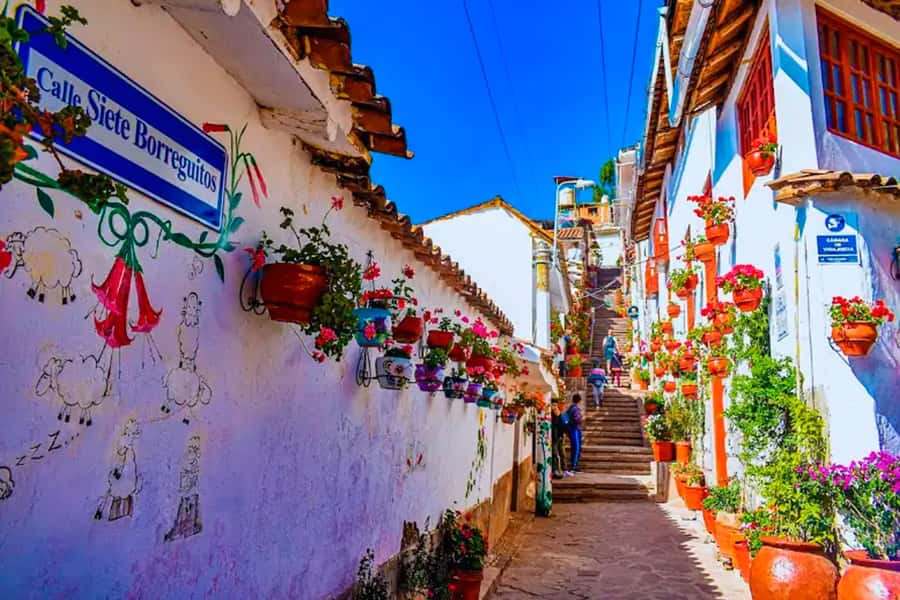
The route finishes in San Blas Square, the artisan district known for charming sixteenth- and seventeenth-century streets. The neighborhood has a different feel from the Main Square, with narrower lanes, workshops, and a stronger connection to local craft traditions.
The Olave Family House is a notable stop. It is the workshop of a Cusqueño artisan family known for intricate balcony carvings and imagery connected with Cusco. This gives the neighborhood more depth than a simple shopping stop. You can see how local artistic traditions continue within an old part of the city.
The uphill walk becomes more noticeable here. One person specifically noted a steep climb near the end, while also saying the viewpoint made the effort worthwhile. At Cusco’s altitude, even a modest hill can feel serious, especially on your first day.
Take short pauses if needed. Luis and other guides have been praised for paying attention to how people are handling the altitude. Still, you should be honest about your energy level and carry water.
The San Blas viewpoint is a useful finish
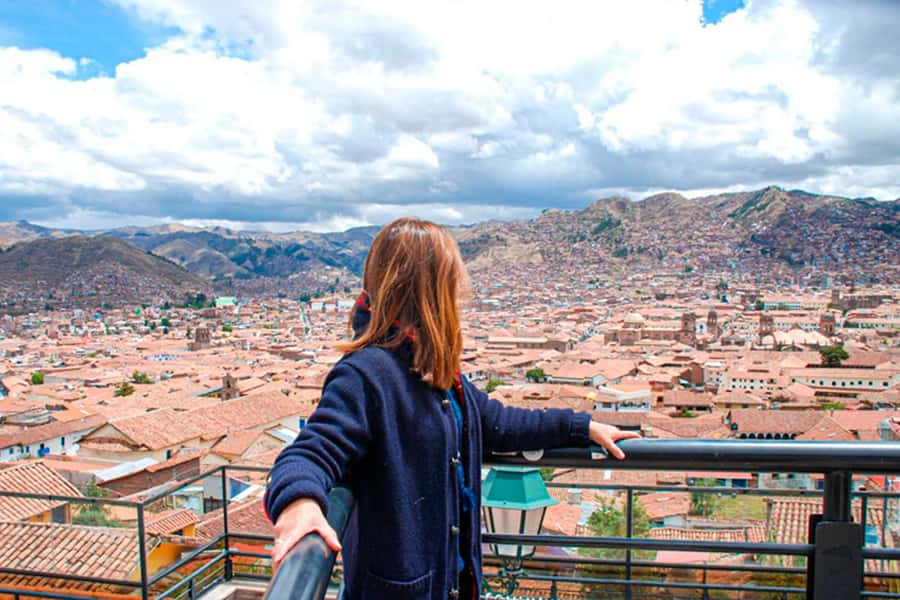
The final viewpoint offers broad views over Cusco. Ending above the center gives you a practical picture of the city’s shape, from the older core to the hills beyond.
I like this finish because it turns the earlier talk about the puma-shaped city and central Inca planning into something you can consider from above. It also gives you a good place to take photographs and decide which parts of the center you want to revisit.
Several people describe the final panorama as a highlight. Some also mention a drink, small snack, or a pisco sour lesson near the end. The activity information does not guarantee food or drinks, so treat these extras as guide-dependent rather than part of the fixed package.
The tour ends at Plazoleta de San Blas, not back at the original meeting point. That is convenient if you plan to eat, shop, or continue exploring San Blas. If you need to return to the Main Square, ask your guide for directions. One guide even offered to walk people back, though that should not be assumed.
What the $10 price really gets you
At $10 per person, the tour offers a lot of orientation for little money. You receive two hours with a certified English- or Spanish-speaking guide, a route through several central sights, and advice that can save you time during the rest of your stay.
The wording around payment deserves attention. It is promoted as a free tour with discretionary tips appreciated, while the listed price is $10. Confirm the current payment arrangement when booking so you know if the amount is a set booking price or an expected tip.
The value is strongest if you are new to Cusco and want a quick introduction before visiting museums, churches, or major ruins in greater detail. It is less suitable if you want long stops, interior access everywhere, or a specialist archaeological lecture.
The guide’s restaurant and bar recommendations add value, especially because many people use the walk on their first day. Advice from Joel, Isaias, and others about places to eat and drink can be as useful as the formal sightseeing.
Prepare for sun, altitude, and city streets
Wear comfortable shoes and practical clothes. Bring water, sunscreen, sunglasses, a sun hat, a camera, cash, and a small daypack.
A passport or identity card is also listed among the things to bring. Pets, weapons, sharp objects, smoking in the vehicle, alcohol, drugs, fireworks, explosives, and nudity are not allowed. Since the tour is on foot, a vehicle is not part of the experience.
The route is only two hours, but altitude changes the calculation. You may feel fine on flat streets and then notice the climb toward San Blas. Walk steadily, listen to your body, and do not feel pressured to keep the fastest pace.
Free cancellation up to 24 hours before the start and reserve-now, pay-later booking make planning easier. Starting times vary, so check availability for the date you want.
Who should book this Cusco walking tour?
I would choose this tour if you have just arrived in Cusco, want a short orientation, or prefer local stories to a formal lecture. It also suits people with limited time who want to see the historic center, Qorikancha, Loreto Street, San Blas, and a viewpoint in one outing.
It is a good match for curious first-time visitors, solo participants, couples, and families who can manage a two-hour walk. The guides are repeatedly praised for friendly delivery, clear English, humor, and patience with questions.
I would think twice if you use a wheelchair, dislike hills, or want an unhurried visit inside every major site. The route is compact but busy, and some stops receive only ten or fifteen minutes.
Should you book it?
Yes, if you want a lively first look at Cusco for about $10. The strongest reasons are the route’s variety, the attention to Inca architecture, the practical city advice, and guides such as Isaias, Joshua, Joel, and Luis, who are often praised for making the walk both clear and fun.
Book it early in your stay, bring water, and expect the uphill finish. Use the tour as a starting map, then return to Qorikancha, Loreto Street, San Blas, or any other stop that deserves more time.
FAQ
How long does the Cusco walking tour last?
The tour lasts two hours.
How much does the tour cost?
The listed price is $10 per person. The experience is also described as a free walking tour where discretionary tips are appreciated, so confirm the current payment arrangement when booking.
What languages are available?
The tour is available in English and Spanish.
Where is the meeting point?
Meet at Free Tour Cusco Peru at coordinates -13.5174197, -71.9786609. Look for the purple umbrella and purple polo shirt marked Free Tour Cusco.
Where does the tour finish?
The walk finishes at Plazoleta de San Blas.
Is the tour guided?
Yes. A certified professional guide leads the tour, and live guides are available in English and Spanish.
Can I book a private group?
Yes. A private group option is available.
Is food included?
Food is listed as not included. Some individual tours may offer a small snack or drink, but this is not guaranteed by the activity information.
What should I bring?
Bring a passport or identity card, comfortable shoes, sunglasses, a sun hat, a camera, sunscreen, water, comfortable clothes, cash, and a daypack.
Is the tour suitable for wheelchair users?
No. The activity is listed as unsuitable for wheelchair users.
Just added in Cusco
- Cusco Private Transportation for 2026★ 5.0 · 4 reviews
- Private Transfer from Airport to Hotel in the City of Cusco★ 4.0 · 5 reviews
- Best Cusco walking tour: dinner street food tasting★ 4.5 · 11 reviews
- Private Tour to Pisac Market and Pisac Ruins★ 5.0 · 4 reviews
- Machu Picchu Day Trip With Panoramic Train from Cusco★ 5.0 · 10 reviews
- Sacred Valley Private Tour from Cusco, Guide and Driver only★ 5.0 · 4 reviews
- Sacred Valley of the Incas Tour★ 5.0 · 12 reviews
- Private Tour of the Mountain of Colours by Quad★ 5.0 · 7 reviews
Walking Tours in Cusco, compared.
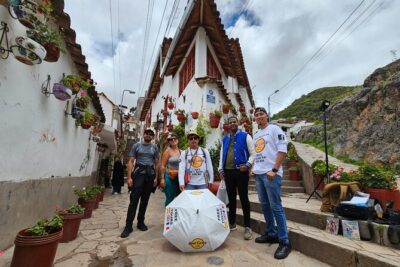
Historic Walking Tour with Pisco Sour and Local Music
Read our review →
Curious Monkey Cusco- Eat the Streets, Walking Food Tour
Read our review →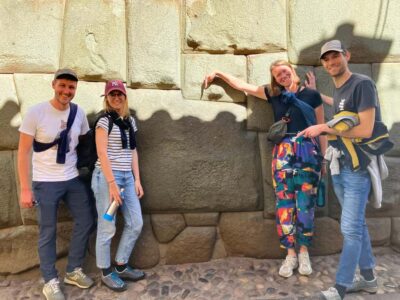
Cusco Highlights Walking Tour: History, Culture, Traditions
Read our review →
Historic Walking Tour with Pisco Sour and Music Show
Read our review →
Historic Walking Tour & Scenic Views with local drink
Read our review →
Curious Monkey Cusco- Market and Streets, Walking Food Tour
Read our review →Browse the lists this tour appears in