Reviewed · PERU FOOD TOURS AND COOKING CLASSES
Cusco: Historic Walking Tour with Pisco Sour and Music Show
Cusco tells its story in stone. This two-hour walk links the city’s grandest landmarks with San Blas, a luthier’s workshop, Andean music, and a drink at the end. I like the small groups, capped at 10, and the clear route through the Plaza de Armas, Qoricancha, and the old Inca streets. I also like that guides such as Erick, Nilo, Niki, and a professional anthropologist have been praised for making the history lively and easy to follow.
The main caution is that the music stop is not guaranteed to operate every day. One recent group found the venue closed, though the guide suggested another dance show afterward. The $10 price also needs a close look: this is effectively a paid version of a free walking tour, with the expected guide tip built into the booking cost, and a further tip may still be requested.
In This Review
- Key details to know before you go
- Starting in the Plaza de Armas
- The Cathedral and Company of Jesus
- Qoricancha and the Sun Temple
- Inca stonework, angled blocks, and the Andean Trilogy
- San Blas and the uphill side of Cusco
- A luthier’s workshop and Andean music
- The Temple of Manco Capac
- Finishing with Pisco Sour or Chicha Morada
- Is $10 good value for Cusco?
- Who should book this walk?
- Should you book it?
- FAQ
- Where does the Cusco walking tour meet?
- How long does the tour last?
- Which languages are available?
- Is a drink included?
- Are museum tickets included?
- Is the tour suitable for wheelchair users?
Key details to know before you go
- The route begins at Cusco’s Inca Fountain: Meet beside the fountain in the Plaza de Armas, where your guide carries a white umbrella.
- You cover major sights in two hours: The walk includes the Cathedral, Company of Jesus, Qoricancha, San Blas, Inca stonework, and the Temple of Manco Capac.
- The group stays small: A maximum of 10 people can make this feel almost private, especially if the English group is not full.
- You get a drink at the finish: Choose a Pisco Sour or Chicha Morada, a non-alcoholic purple-corn drink.
- The music stop can change: The luthier visit and Andean show are planned parts of the route, but the performance venue may occasionally be closed.
- You need to handle uneven streets: This is not suitable for wheelchair users or people with mobility impairments.
Starting in the Plaza de Armas
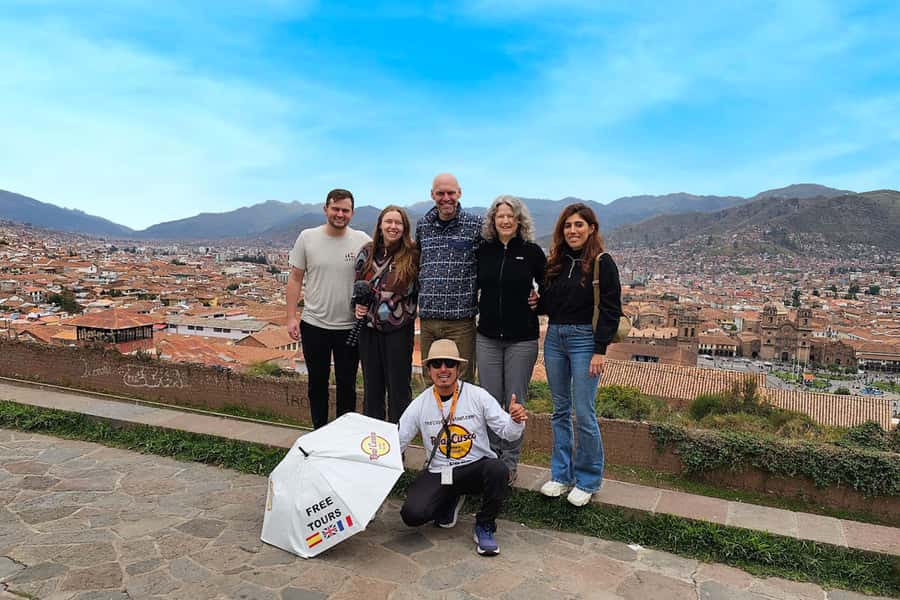
The tour starts beside the Inca Fountain in the Plaza de Armas, at approximately -13.516772, -71.9787231. Look for the guide with a white umbrella. That simple marker matters in a busy central square, where several walking groups may gather at the same time.
This is a useful place to begin because Cusco’s main square brings together several layers of the city in one view. Colonial arcades frame the plaza, while Inca foundations and stonework remain beneath and beside later buildings. Your guide uses the first part of the walk to explain how Cusco changed from the center of the Inca world into a major Spanish colonial city.
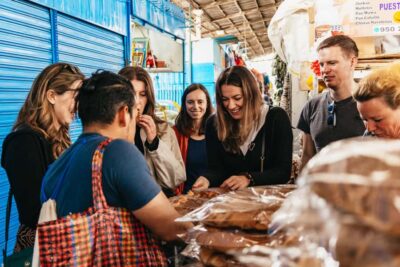
The tour is offered in English or Spanish. The group limit is 10 people, although one English-language departure had only three participants and felt almost like a private walk. That smaller setting is a real advantage if you want to ask questions about Inca society, Spanish colonization, local customs, or places to visit later.
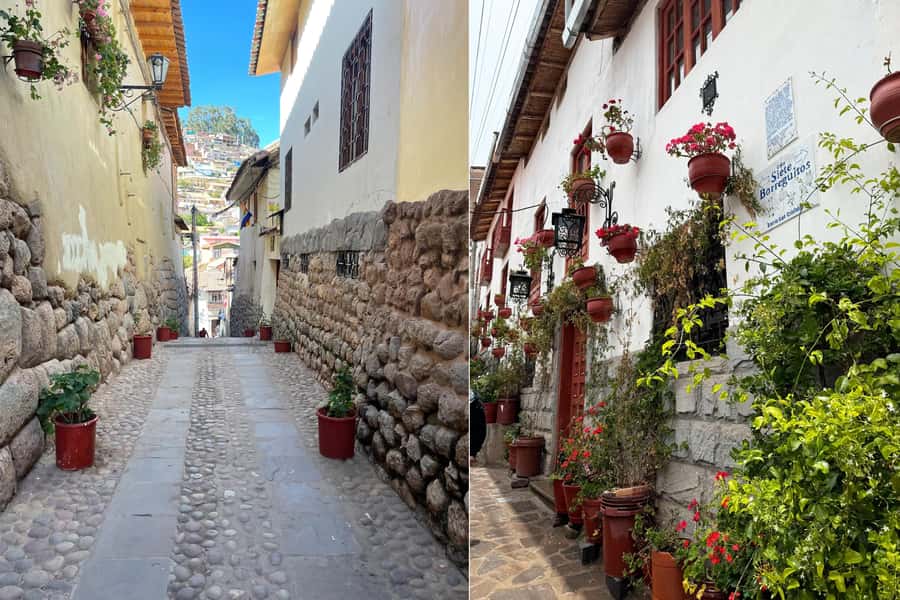
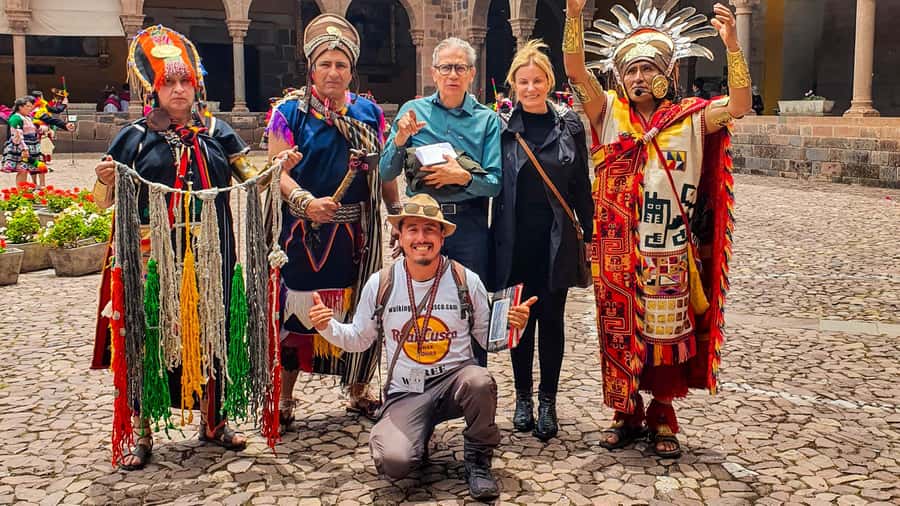
Guides have been one of the strongest parts of this experience. Erick has been praised for his humor, practical advice, and clear explanations. Nilo kept a group in good spirits while explaining the city, and Niki was noted for her communication skills. One guide was a professional anthropologist, which added extra depth to the discussion of Cusco and the Incas.
More Food Tours and Cooking Classes in Cusco
- Peruvian Cooking Class Cocktails and Market Tour in Cusco
★ 5.0 · 1,712 reviews - Cusco: Peruvian Cooking Class, Cocktails & Local Market Tour
★ 4.9 · 512 reviews - Hands-on Peruvian Cooking Class & San Pedro Market Visit in Cusco
★ 5.0 · 421 reviews
The Cathedral and Company of Jesus
From the square, you visit Cusco Cathedral and the Company of Jesus. These buildings help you read the city rather than simply photograph it.
The Cathedral is the dominant colonial structure on the plaza. Your guide explains its role and points out how the Spanish religious center was placed at the heart of the former Inca capital. The Company of Jesus adds another important piece to the story, showing the scale and confidence of colonial religious architecture.
The tour does not include museum entry. If you want to go inside any museum or attraction that charges admission, you pay separately. That keeps the basic $10 cost low, but you should not expect a full interior visit at every major stop.
I like this arrangement for a first look at Cusco. You get a clear orientation without spending the whole day indoors. If the Cathedral or another site is high on your list, return later with time to explore it properly.
Qoricancha and the Sun Temple
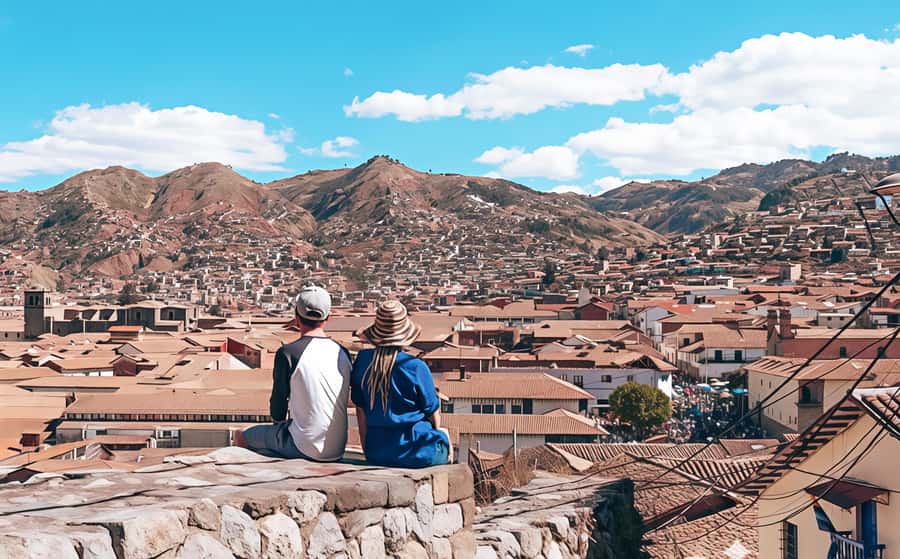
The walk continues to Qoricancha, often called the Sun Temple. This is one of the most important stops because it shows how Spanish buildings were placed over Inca foundations.
Qoricancha was a major religious center in the Inca capital. The guide connects the site to the wider belief system of the empire and explains why it remains central to understanding Cusco. Even from the outside, the contrast between Inca stone construction and later colonial design is striking.
This part of the tour is especially useful if you are new to Andean history. A good guide can explain the difference between admiring a finely fitted wall and understanding why that wall mattered. The strongest guide feedback centers on this kind of storytelling, with history tied to places you can see directly.
The timing is also practical. At two hours, the visit gives you context without trying to cover every corner of Cusco. You will still need separate time for major museums and archaeological sites, but you leave with a better sense of how the city fits together.
Inca stonework, angled blocks, and the Andean Trilogy
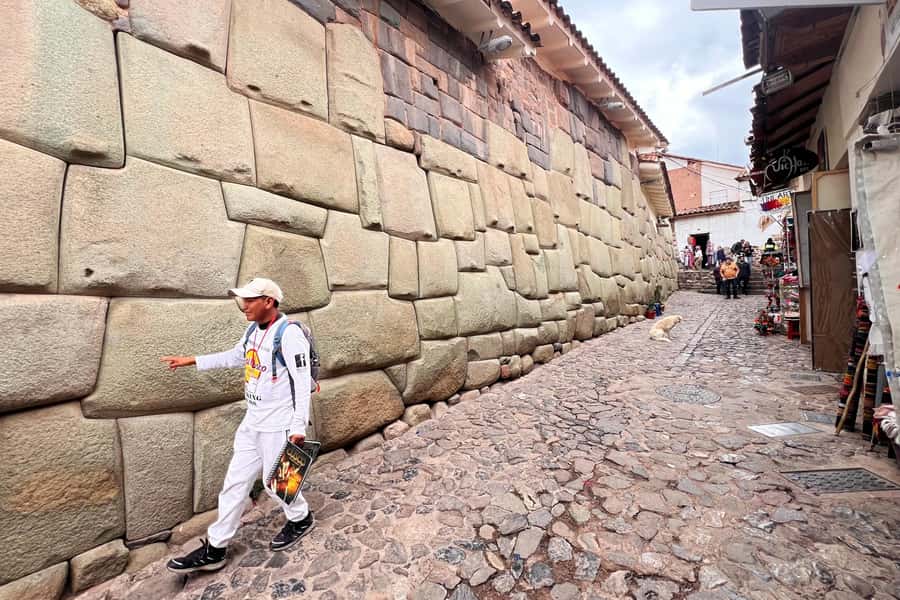
One of the most memorable portions of the walk focuses on the famous 12 and 13 angled stones. These stones are a fine example of Inca masonry, where blocks were cut and fitted with great precision. The guide explains what makes the construction special and points out details that are easy to miss when you walk past on your own.
You also learn about the Andean Trilogy: the condor, puma, and snake. These shapes are connected to different levels of the Andean world and appear in carved stone and local symbolism. The tour points out their forms in an Inca wall, turning an ordinary street into a lesson in Andean thought.
This is where the tour earns its keep. You could find the 12-angled stone independently, but a guide gives you the context and helps you notice the surrounding details. I would not expect a formal archaeological lecture, but the walk provides a useful introduction in plain language.
The route also includes what is described as the city’s most beautiful balcony. The exact appeal is visual rather than museum-like, so have your camera ready, but listen to the explanation too. Cusco’s best details are often tucked into working streets, not displayed behind glass.
More History Tours in Cusco
- Cusco: Historic Walking Tour with Pisco Sour and Local Music
★ 5.0 · 190 reviews - Cusco: Historical Guided City Tour with 4 Inca Ruins
★ 4.5 · 99 reviews - Cusco Highlights Walking Tour: History, Culture, Traditions
★ 4.9 · 72 reviews - Pisco Sour Secrets: Hands-On Mixology in Historic Cusco
★ 4.5 · 50 reviews
San Blas and the uphill side of Cusco
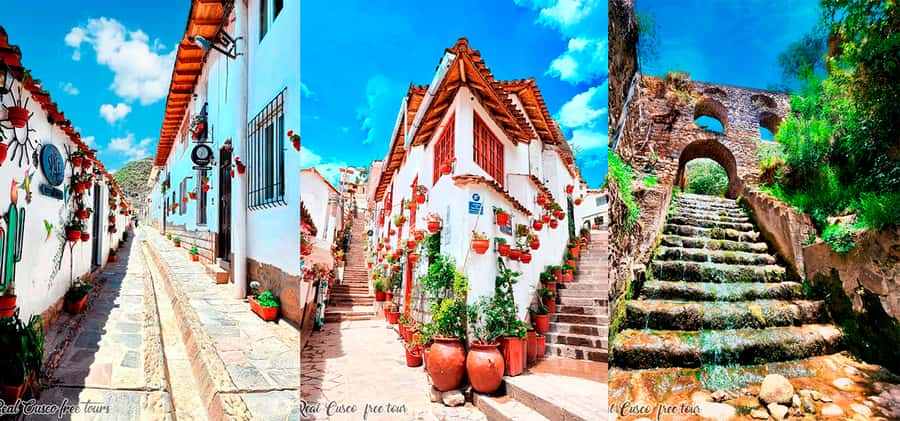
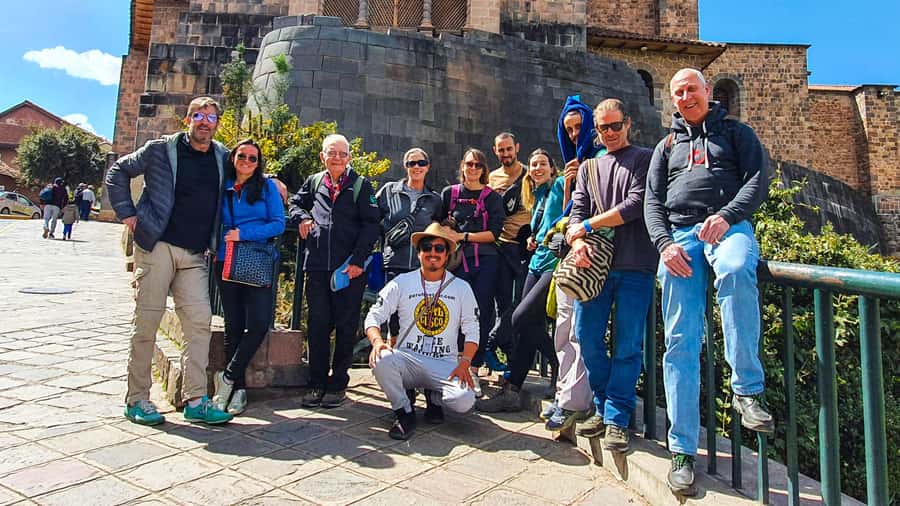
The group then heads toward San Blas, one of Cusco’s most atmospheric neighborhoods. Its narrow streets, old walls, small workshops, and views give the walk a different feel from the formal Plaza de Armas.
San Blas is also where you should expect some uphill walking and uneven paving. The tour is not suitable for wheelchair users or people with mobility impairments, and this section helps explain why. Anyone who finds steep streets difficult should think carefully before booking.
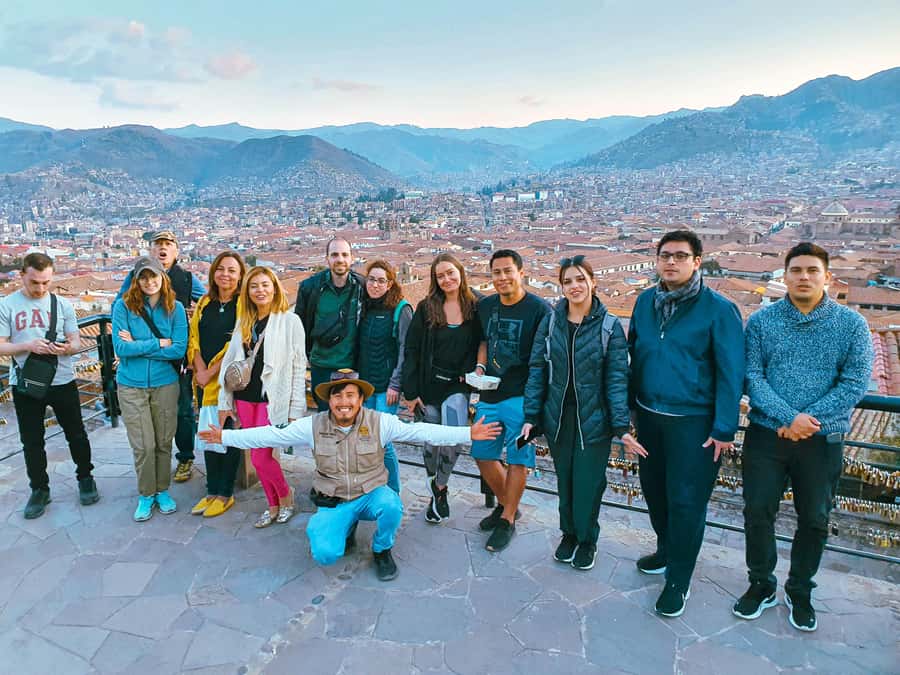
The neighborhood is worth seeing early in your stay because it gives you a quick sense of how Cusco works beyond the main square. You get local streets, craft traditions, and lookout points in a compact area. One guide-led group enjoyed sunset views here, and the route is designed to include scenic viewpoints, though the exact light will depend on your starting time.
The stop at 7 Borreguitos Street adds a particularly photogenic moment. It is known as one of the prettiest streets in the city, so expect a short pause for pictures rather than a long formal visit. It is the sort of stop that works best when you also take a moment to notice the street itself instead of treating it only as a photo backdrop.
A luthier’s workshop and Andean music
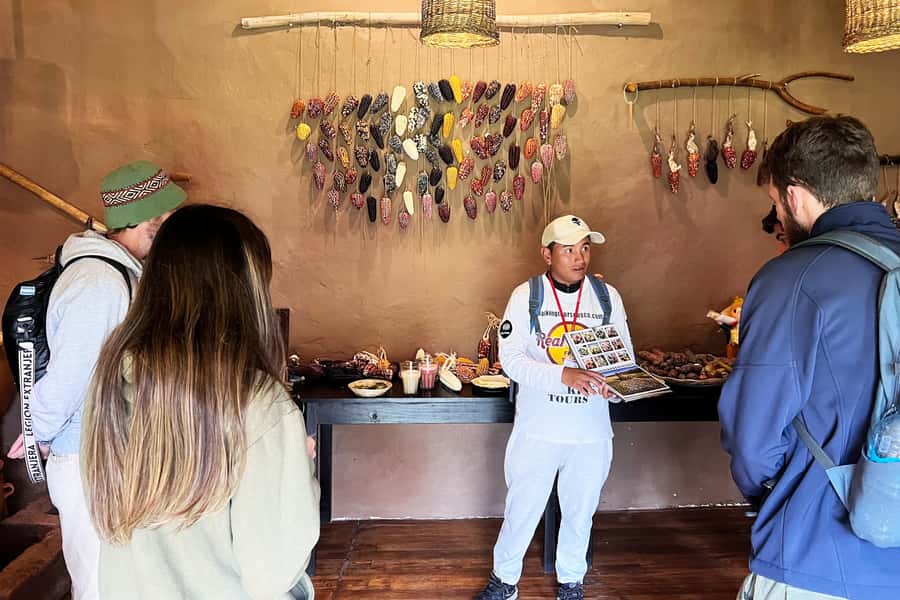
The visit to a luthier’s workshop gives the tour a welcome change of pace. A luthier makes and repairs musical instruments, and the stop connects the city’s living craft traditions with the Andean music that follows.
This is a valuable part of the experience because it takes you beyond stone walls and colonial facades. You see a working skill linked to local music, rather than only hearing about Peru’s past in general terms.
The planned Andean music show is a pleasant idea, but keep your expectations flexible. A venue was closed during one tour, which was disappointing for a group that chose this experience partly for the performance. The guide recommended a local dance show afterward, and that became a successful alternative.
In other words, the music portion can be a bonus rather than the main reason to book. The luthier visit, the explanation of instruments, and the chance to hear Andean music add character, but the performance depends on the venue being open.
The Temple of Manco Capac
The route includes the Temple of the First Inca Ruler, identified as Manco Capac. This stop adds a figure to the historical story you have been following through the city.
Manco Capac is traditionally regarded as the first Inca ruler and an important founder figure. The temple visit gives the guide a chance to connect origin stories, royal power, and Cusco’s identity as the center of the Inca world.
As with the other stops, the value comes from the explanation. A quick view of a temple or wall can be hard to place without context. The guide helps connect this site to the broader story of Cusco, while keeping the pace moving.
The route is not designed as a specialist archaeological tour. It is better suited to someone who wants a readable introduction to the city, with enough detail to make later visits to museums or major ruins more rewarding.
Finishing with Pisco Sour or Chicha Morada
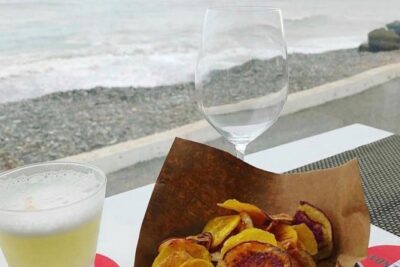
The tour ends with a choice of Pisco Sour or Chicha Morada. The Pisco Sour is Peru’s best-known national cocktail, while Chicha Morada is a non-alcoholic Peruvian drink made from purple corn.
This final stop gives the walk a social finish. Instead of ending abruptly on a street corner, you have a chance to sit down, raise a glass, and ask the guide last questions. One group particularly liked the small restaurant used for the toast.
Do not treat the drink as a full tasting session. The included beverage is a simple closing refreshment, not a meal or a broad sampling of Peruvian drinks. If you want food, plan that separately.
Chicha Morada makes the ending work for people who do not drink alcohol. That is a small but useful detail, especially for families with older children or anyone avoiding alcohol at high altitude.
Is $10 good value for Cusco?
At first glance, $10 for two hours, a bilingual guide, a luthier visit, an Andean music stop, and a drink looks like a strong deal. The small group limit improves the value, particularly if you get one of the very small English-language departures.
The pricing needs a little care. The experience functions much like a free walking tour that expects a tip, but the booking fee effectively covers that expected gratuity in advance. One participant felt the wording was misleading because people could also join a free version in the main square and tip at the end.
I would compare the cost with the time and certainty you want. Booking gives you a reserved place, a stated two-hour route, a small-group cap, and a drink included. Joining an informal free walk may cost less at the start, but it may not offer the same booking structure or planned finish.
Also remember that museum and attraction entry is not included. The tour is best value as a city introduction, not as a substitute for paid visits to Cusco’s major interiors.
Who should book this walk?
I would recommend it most strongly for people arriving in Cusco who want to get their bearings quickly. Several guides have been praised for offering practical tips as well as history, which is useful during your first day or two.
It also suits you if you enjoy walking, want a small group, and prefer a guide who can explain Inca and colonial history without turning the outing into a long academic lecture. The mix of famous sights, stonework, San Blas streets, music, and a drink gives the two hours good variety.
You may want another option if you have limited mobility, use a wheelchair, or dislike hills and uneven streets. You should also choose a different tour if a guaranteed music performance is essential. The show can be affected by the venue’s opening status.
French-language departures require at least four customers. English and Spanish are the regular language options, so check the language and departure time before you reserve.
Should you book it?
Book this tour if you want a compact, friendly introduction to Cusco, especially at the start of your stay. The strongest reasons are the small groups, lively guides such as Erick and Nilo, the close look at Inca stonework, and the easy route from the Plaza de Armas into San Blas.
Go in knowing that the music show may not happen, museum entry costs extra, and the $10 fee is essentially a prearranged tip for a free-walking-tour style experience. If those points do not bother you, the walk offers solid value and a useful first layer of understanding before you explore Cusco on your own.
FAQ
Where does the Cusco walking tour meet?
Meet next to the Inca Fountain in Cusco’s Plaza de Armas. The guide will be holding a white umbrella. The meeting point coordinates are -13.516772, -71.9787231.
How long does the tour last?
The walking tour lasts two hours. Starting times vary, so you should check availability for the date you want.
Which languages are available?
The tour is offered in English and Spanish. A French guided tour requires at least four customers to proceed.
Is a drink included?
Yes. You can choose between a Pisco Sour and Chicha Morada, a non-alcoholic Peruvian drink.
Are museum tickets included?
No. Entry to museums is not included, though you may visit them separately if you choose.
Is the tour suitable for wheelchair users?
No. The tour is not suitable for wheelchair users or people with mobility impairments. It is also not suitable for babies under one year, people over 95, or people with hearing impairments.
More Walking Tours in Cusco
- Cusco: Walking Tour with an Experienced Local Guides
★ 4.8 · 636 reviews - Curious Monkey Cusco- Eat the Streets, Walking Food Tour
★ 5.0 · 160 reviews - Cusco Food Walking Tour & Central Market
★ 5.0 · 48 reviews - Cusco: Historic Walking Tour & Scenic Views with local drink
★ 5.0 · 45 reviews
Just added in Cusco
- Cusco Private Transportation for 2026★ 5.0 · 4 reviews
- Private Transfer from Airport to Hotel in the City of Cusco★ 4.0 · 5 reviews
- Best Cusco walking tour: dinner street food tasting★ 4.5 · 11 reviews
- Private Tour to Pisac Market and Pisac Ruins★ 5.0 · 4 reviews
- Machu Picchu Day Trip With Panoramic Train from Cusco★ 5.0 · 10 reviews
- Sacred Valley Private Tour from Cusco, Guide and Driver only★ 5.0 · 4 reviews
- Sacred Valley of the Incas Tour★ 5.0 · 12 reviews
- Private Tour of the Mountain of Colours by Quad★ 5.0 · 7 reviews
Peru Food Tours and Cooking Classes, compared.

Peruvian Cooking Class Cocktails and Market Tour in Cusco
Read our review →

Peruvian Cooking Class, Local Market Tour & Exotic Fruit Tasting
Read our review →
3 Day Tour From Lima: Paracas, Huacachina Oasis & Pisco Vineyard
Read our review →