
Reviewed · HISTORY TOURS IN CUSCO
Cusco: Historical Guided City Tour with 4 Inca Ruins
Cusco’s best ruins sit beyond the old center. This six-hour tour links Qoricancha, Sacsayhuaman, Qenqo, Puca Pukara, and Tambomachay, giving you a useful first look at the Inca world without arranging several separate visits. I like the strong mix of major ruins and an accredited guide, and I like that the route works well if you have only half a day. The main catch is the extra admission cost, since the $23 tour price does not cover the required tickets.
The guides have earned especially warm praise for clear English and lively explanations. Luis, Alfredo, Romulo, and Hyame are among the guides singled out for patient answers, historical detail, and switching comfortably between English and Spanish. You should also expect a fairly busy schedule, with long periods at several sites and a finish near the Plaza de Armas rather than at your hotel.
In This Review
- Key points at a glance
- Why this half-day route works in Cusco
- Qoricancha: start with the Inca religious center
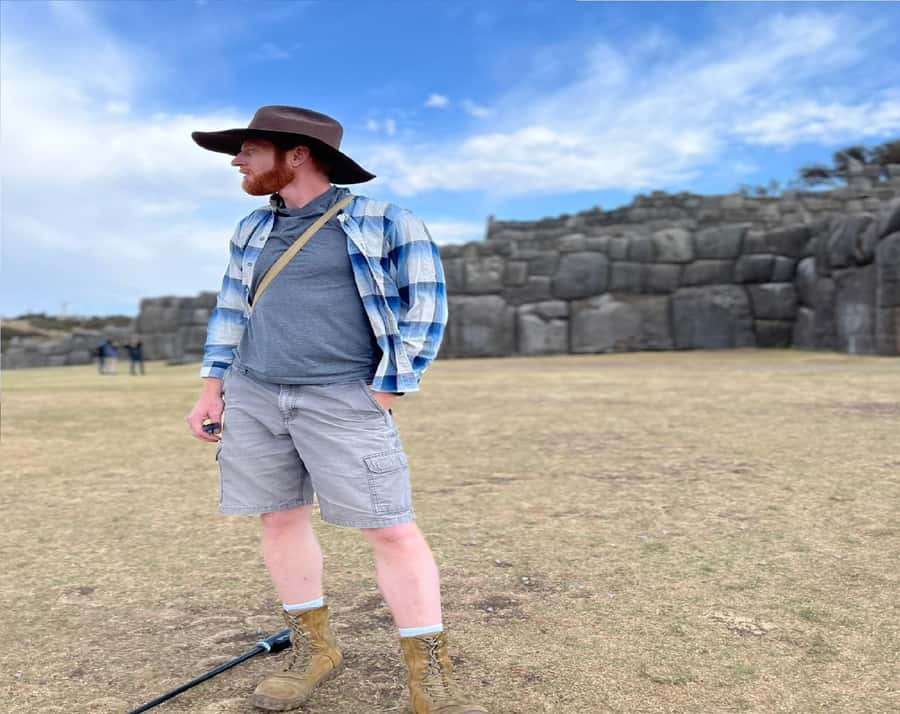
- Sacsayhuaman: giant stones above Cusco
- Qenqo: ceremony, stone, and unanswered questions
- Puca Pukara: a watchpoint with broad views
- Tambomachay: the water temple
- The Cathedral option and what changes by departure
- What the $23 price really covers
- Guide quality makes or breaks the day
- Who should book this Cusco city tour?
- Should you book it?
- FAQ
- How long does the Cusco city tour last?
- Which sites are included?
- Is hotel pickup included?
- Where does the tour finish?
- Are entrance fees included in the $23 price?
- Is the Cusco Tourist Card required?
- What languages are available?
- Can I cancel the booking?
Key points at a glance
- Four Inca sites in one morning: Sacsayhuaman, Qenqo, Puca Pukara, and Tambomachay form a practical circuit above Cusco.
- Qoricancha adds an essential city-center stop: The former Temple of the Sun helps explain the religious importance of Cusco before you head to the outer ruins.
- Strong guide reputation: Luis, Alfredo, Romulo, and Hyame have been praised for clear English, useful comparisons between fact and myth, and patient answers.
- Three timing choices: You can choose a morning departure, a morning hotel pickup option, or an afternoon route that may include the Cathedral.
- The price is only part of the budget: Admission to the archaeological sites, Qoricancha, and possibly the Cathedral is extra.
- A good first day in Cusco: The route gives you orientation, views, and useful background while limiting the amount of walking between distant sites.
Why this half-day route works in Cusco
Cusco is easy to explore on foot in the center, but its best Inca ruins are spread across the hills outside the main square. Sacsayhuaman is close enough to reach by taxi or uphill walk, while Qenqo, Puca Pukara, and Tambomachay form a farther circuit. A shared tourist vehicle saves you the trouble of arranging four separate rides.
The tour lasts about six hours. The morning options begin around 8:35 to 9:00 am, depending on your hotel and selected arrangement, and finish near the Plaza de Armas at about 2:30 pm. The afternoon option begins around noon and ends between 6:00 and 6:30 pm.
I would choose the morning route if you want time for lunch and another activity afterward. The afternoon departure may suit you if you arrive late or prefer a slower start, but check the exact plan carefully because the afternoon version includes the Cathedral in its description, while the morning choices differ in how that visit is handled.
Hotel pickup is available from many properties close to the main square. You need to wait in the hotel lobby, and the vehicle may leave you near Calle Plateros or the Plaza de Armas at the end. That is useful for lunch or continued sightseeing, but it is not a door-to-door return.
More History Tours in Cusco
- Cusco: Historic Walking Tour with Pisco Sour and Local Music
★ 5.0 · 190 reviews - Cusco Highlights Walking Tour: History, Culture, Traditions
★ 4.9 · 72 reviews - Cusco: Historic Walking Tour with Pisco Sour and Music Show
★ 4.6 · 65 reviews
Qoricancha: start with the Inca religious center
The tour begins at Qoricancha, also written Koricancha or Coricancha, usually at about 8:55 am for the first morning option. This was the most important Inca religious building in Cusco and is also known as the Temple of the Sun.
This is a smart first stop. Before seeing the huge stones at Sacsayhuaman, you get an introduction to the spiritual and political role of Cusco. The guide can place the later ruins in context, rather than treating each site as an isolated pile of old stone.
You should allow about an hour here. Admission costs 15 soles and is not included in the tour price. The tour description includes a guided visit for the first two options, so confirm your chosen departure if Qoricancha is a priority.
The building is in the city center, close to several listed pickup hotels. That makes the start convenient, but it also means the group may first gather at a meeting point rather than begin with a private hotel departure. Ask for the exact meeting instructions when booking.
Sacsayhuaman: giant stones above Cusco
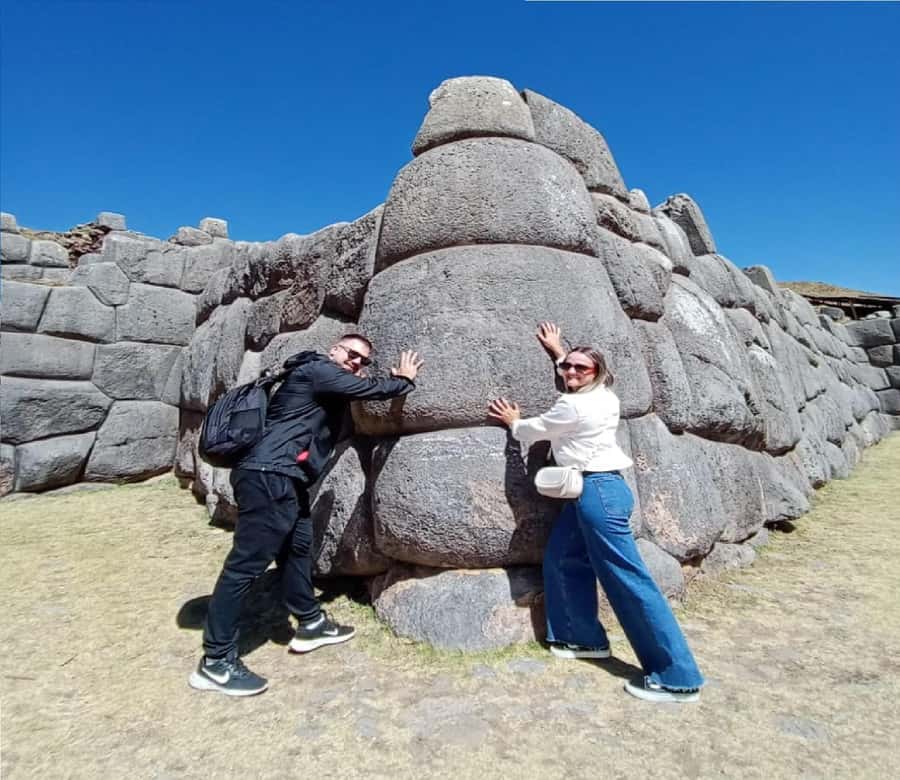
From Qoricancha, the vehicle takes you to Sacsayhuaman, the largest and most dramatic stop on the route. The name is often translated as puma head, fitting Cusco’s traditional puma-shaped layout.
The site is famous for enormous fitted stones. Some blocks are described as weighing more than 100 tons, while the walls include stones several meters high. You do not need to be an archaeology specialist to appreciate the scale. The sheer size makes this the tour’s visual high point.
The guided visit is listed at about 1.5 hours. That gives the guide time to explain the construction, defensive role, and stories connected with the site while you pause for photographs. It also means you should wear shoes with good grip and bring water. Cusco’s altitude can make even modest walking feel harder than expected, especially during your first days in the city.
Sacsayhuaman is not simply a fortress in the modern European sense. The tour description presents it as an Inca military fortress, and the guide may also explain its ceremonial importance and place in the wider city. Pay attention to how the ruins relate to the hills around Cusco. The views help you understand why this high position mattered.
The drawback is that this is a popular stop. A group visit can feel less flexible than hiring a private guide, particularly if you want to linger over one wall or take many photographs. Still, for $23 before admission fees, the shared format keeps the cost reasonable.
Qenqo: ceremony, stone, and unanswered questions
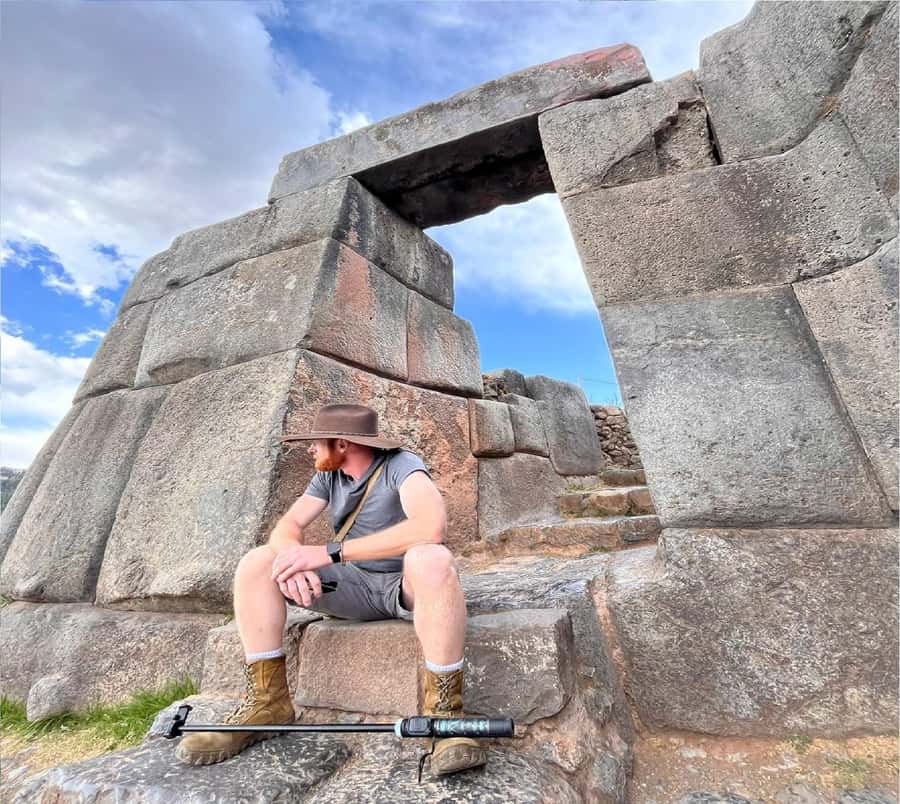
Qenqo follows Sacsayhuaman. The site is described as a ceremonial center and an ancient place of mummification, with traditions connecting it to sacrifices to the Sun God.
Here, a guide adds real value because the ruins are less immediately readable than Sacsayhuaman. Carved rock, channels, chambers, and ceremonial spaces can look confusing without explanation. A good guide can separate established evidence from later stories, a quality that Jackie from Canada specifically appreciated in the guide’s explanations.
The scheduled visit is listed at about 1.5 hours, which is generous for a compact site. You may spend part of the time moving through the archaeological complex and part listening to the interpretation. The information supplied for the tour also mentions the Qenqo eucalyptus forest, where the group may stop for photographs.
That forest break changes the rhythm of the day. After two archaeological sites, you get a chance to take pictures and look out across the highland setting. Do not expect a long nature walk. It is presented as a photo stop connected with the tour.
Qenqo may be the most rewarding place for questions. Ask your guide what is known, what is disputed, and which stories belong to later tradition. The best guides on this route have been praised for comparing fact with myth instead of presenting every tale as certain.
A completely different kind of day:
- Classic Inca Trail Trek 4D/3N to Machu Picchu (Group Service)
★ 5.0 · 8,653 reviews - Cusco: Rainbow Mountain and Red Valley Day Trip with Meals
★ 4.9 · 4,893 reviews - Machu Picchu: 4-Day Inca Trail Trek with Panoramic Train Ride
★ 5.0 · 4,568 reviews - Salkantay Classic Trek 5 Days from Cusco
★ 5.0 · 4,062 reviews
Puca Pukara: a watchpoint with broad views
Puca Pukara is often called the Red Fortress because of the color of its stone. The site sits above Cusco and is described as an Inca surveillance center, used to control access to the imperial city.
Compared with Sacsayhuaman, Puca Pukara is smaller and less imposing. Its value comes from position. You can see why a lookout was useful here, and the high setting provides a wide view of the Andean surroundings.
The visit is listed at 1.5 hours, though the actual time spent moving through the ruins may depend on the group and the guide. Bring sunscreen and a hat if you have one. The tour specifically recommends sunscreen, water, rain gear, and cash, and that is sensible advice for Cusco, where conditions can change quickly.
Puca Pukara is a good place to slow down and ask how the Inca road network connected different centers. Do not expect a large museum or a long sequence of intact rooms. This is an outdoor ruin and a viewpoint, so its appeal depends heavily on the guide’s explanation and the weather.
Tambomachay: the water temple
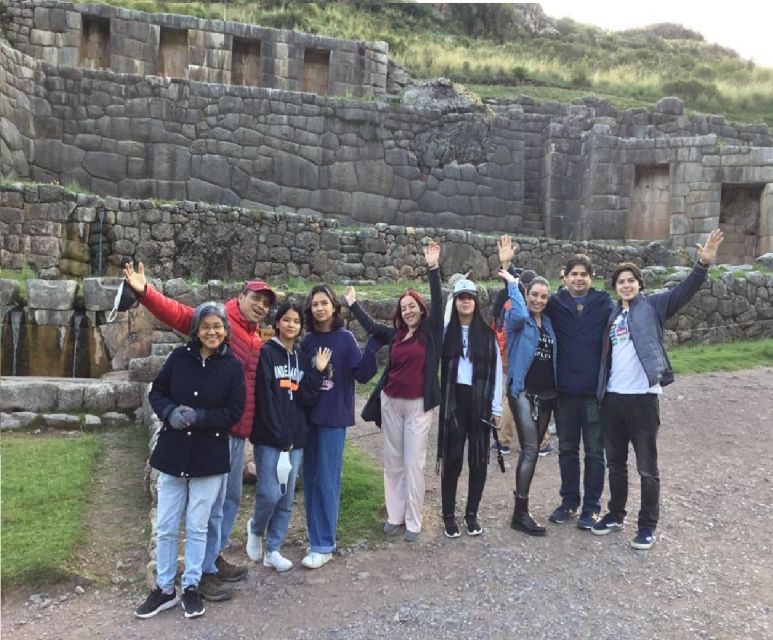
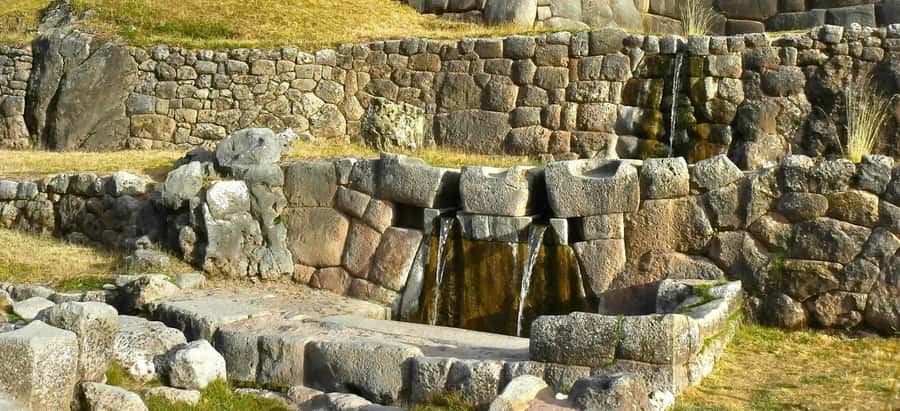
The final ruin is Tambomachay, commonly known as the Temple of Water. Its best-known feature is a set of water fountains or channels distributed through the site.
This stop offers a calmer finish than Sacsayhuaman. The flowing water gives the ruins a different mood, and the guide can explain why water mattered in Inca ritual and daily life. The site is called mysterious in the tour description, but you should expect interpretation rather than a single firm answer to every question.
Tambomachay is also a reminder that the Inca sites were not all built for war. The route moves from military power at Sacsayhuaman to ceremony at Qenqo, surveillance at Puca Pukara, and water at Tambomachay. That range is one of the tour’s real strengths.
The listed visit time is again 1.5 hours. You may find the overall schedule feels full, especially if the group takes many photographs or traffic slows between stops. That is the tradeoff for seeing so much in one outing.
The Cathedral option and what changes by departure
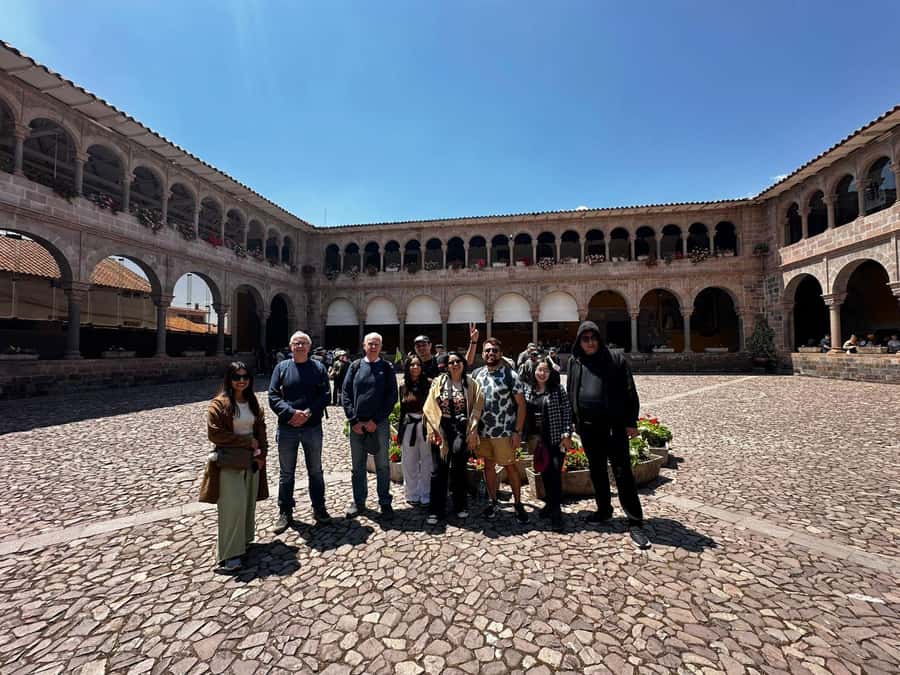
The tour information describes a Cathedral visit in the second and third options. At the Cathedral of Cusco, you can see paintings from the Cusco School, an important local artistic tradition.
Admission is 50 soles and is not included. Availability must be requested, so do not assume that every departure automatically enters the building. If the Cathedral matters to you, confirm this before paying and ask whether the visit is included in the time plan.
The afternoon route meets at the Cathedral entrance between 11:50 am and noon. It then continues to Qoricancha and the four outer ruins, ending near the main square around 6:00 to 6:30 pm. This option may be useful if you want the Cathedral first, but it leaves less of the evening for dinner or another booking.
The first morning option specifically begins with Qoricancha and then visits the outer ruins. The second morning option describes hotel pickup between 8:35 and 9:00 am and includes the Cathedral in its outline. Since the supplied schedules differ, use the exact departure details shown at booking rather than relying only on the general tour title.
What the $23 price really covers
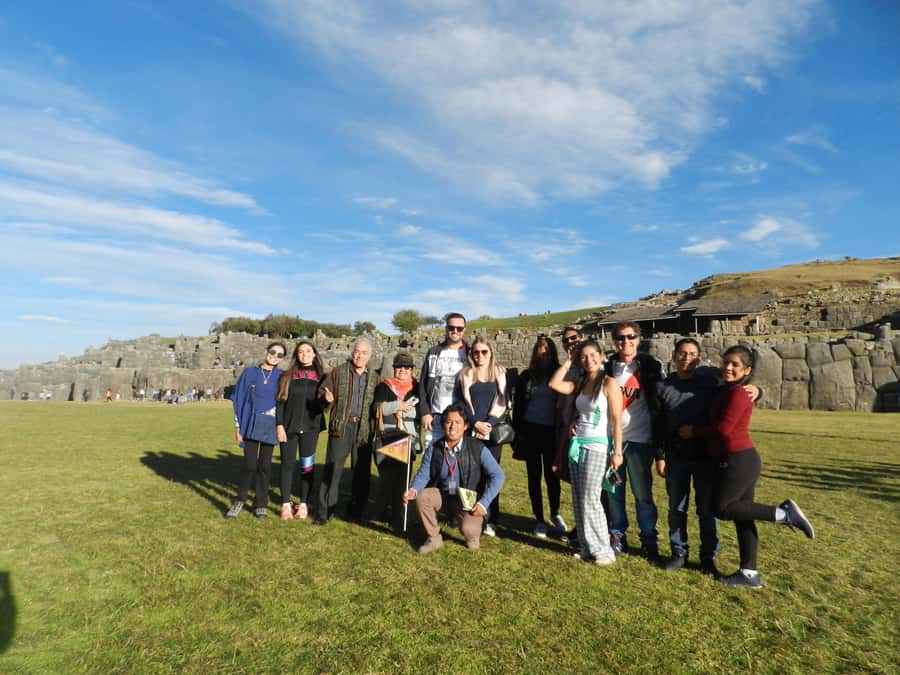
At $23 per person, this is a low-cost way to organize transport and guiding for a six-hour route. The price includes tourist transportation, an accredited professional guide, and permanent advice. Hotel pickup is included for the stated morning options when your hotel is close to the main square.
The admission fees change the calculation:
- Qoricancha: 15 soles
- Cathedral of Cusco: 50 soles, if you enter
- Archaeological sites: 70 soles through the Cusco Tourist Card
The archaeological admission requires the Cusco Tourist Card, which is available only in person and requires your passport. Children under nine can receive the card free, with a passport required. The tour information says you can buy the archaeological admission at Sacsayhuaman, but you should still carry the necessary identification and cash.
Once you add entrance fees, the outing costs more than the headline price. It can still be good value because transport to four separate sites and a bilingual guide would be awkward to arrange independently. If you already have the required tourist ticket, the value improves further.
The tour does not include meals, drinks, or other unlisted costs. Carry cash, water, and rain protection. Alcoholic drinks are not allowed in the vehicle, and bicycles, drugs, and explosive substances are prohibited.
Guide quality makes or breaks the day
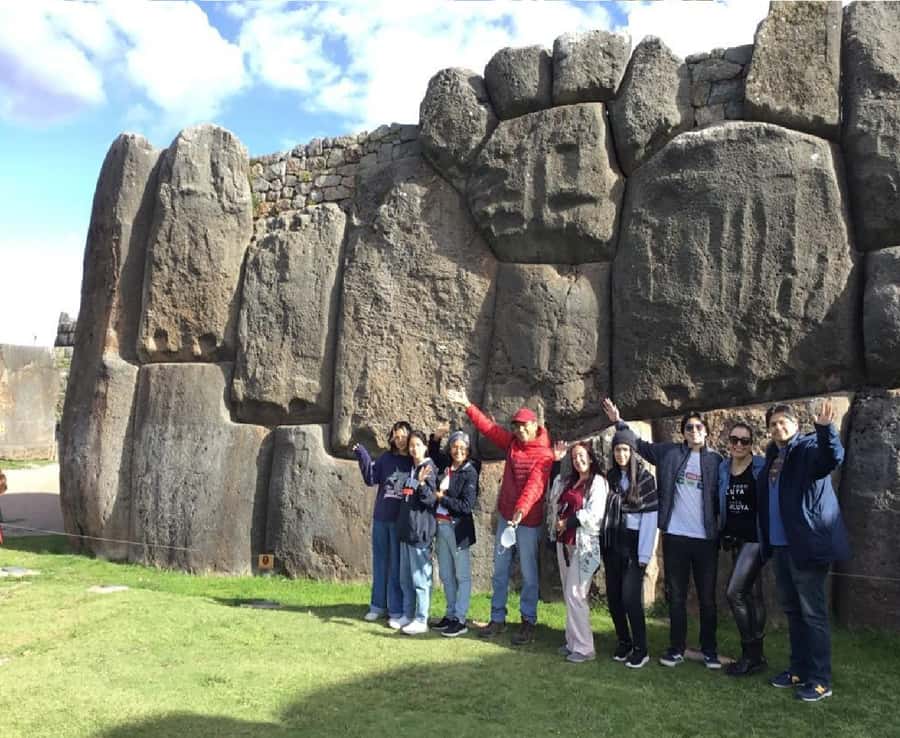
The strongest part of this experience is the guiding. Several named guides received praise for clear English and strong explanations. Luis was appreciated for making sure people understood the material and had time for questions. Alfredo was noted for moving comfortably between English and Spanish. Hyame was especially useful for a short visit before a Machu Picchu trek, helping connect several hard-to-reach sites in a limited window.
Margaret from the United States valued the added pictures used to support explanations of history, culture, and archaeology. That is worth noting because ruins such as Qenqo and Tambomachay can be difficult to interpret from the stones alone.
The guide is also useful for altitude management, even though the tour is not presented as an altitude program. Christopher found the route helpful when adjusting to Cusco before a trek. The vehicle reduces uphill walking between sites, but you still need to walk around each complex.
English and Spanish guiding is available. The exact guide depends on the departure, so no particular person can be guaranteed. Still, the consistent praise for explanation and language ability is a good sign.
Who should book this Cusco city tour?
I would recommend it to you if you have one free day in Cusco, want to see the main ruins quickly, or prefer not to arrange taxis and tickets on your own. It is also useful before a Machu Picchu trek because it gives you a basic grasp of Inca architecture and Cusco’s surrounding sites.
It suits first-time visitors who want structure. The guide handles the route, the vehicle connects distant stops, and the finish near the Plaza de Armas leaves you in a useful part of town.
I would be more cautious if you prefer long, quiet visits or detailed archaeological study. The six-hour schedule covers a lot of ground, and a shared vehicle may limit your freedom. You also need to budget for admission fees, which nearly doubles the apparent cost if you enter every listed attraction.
People over 95 are specifically excluded, and the tour is not a good fit if you need a fully private, door-to-door experience. Comfortable shoes, water, sunscreen, a camera, rain gear, identification, and cash belong in your day bag.
Should you book it?
Book this tour if you want efficient coverage and a strong English or Spanish guide at a modest starting price. The combination of Sacsayhuaman’s huge stones, Qenqo’s ceremonial puzzles, Puca Pukara’s lookout position, and Tambomachay’s water channels gives you a useful picture of Inca Cusco in one outing.
Before booking, check three things: the exact departure time, whether your hotel qualifies for pickup, and which admissions you must buy. If you confirm those details and accept the extra ticket costs, this is a sensible first tour in Cusco, especially when your time is short.
FAQ
How long does the Cusco city tour last?
The tour lasts about six hours. Morning departures finish around 2:30 pm, while the afternoon option ends between 6:00 and 6:30 pm.
Which sites are included?
The route visits Qoricancha, Sacsayhuaman, Qenqo, Puca Pukara, and Tambomachay. Some options also include the Cathedral of Cusco and the Qenqo eucalyptus forest.
Is hotel pickup included?
Hotel pickup is available for the stated morning options from hotels close to Cusco’s main square. You should wait in your hotel lobby and confirm that your property is within the pickup area.
Where does the tour finish?
The vehicle drops you near the Plaza de Armas of Cusco, with Calle Plateros listed as a drop-off location. It does not promise a return directly to your hotel.
Are entrance fees included in the $23 price?
No. Qoricancha costs 15 soles, the Cathedral costs 50 soles if you enter, and admission to the archaeological zones costs 70 soles through the Cusco Tourist Card.
Is the Cusco Tourist Card required?
Access to the Inca archaeological sites requires the Cusco Tourist Card. It is available only in person, and you must show your passport. Children under nine can receive it free with a passport.
What languages are available?
The tour offers live guiding in English and Spanish. The guide is an accredited professional, but the specific guide depends on the departure.
Can I cancel the booking?
You can cancel up to 24 hours in advance for a full refund. The reserve now and pay later option allows you to hold a place without paying immediately.
More City Tours in Cusco
- Cusco: Half-Day City Tour with Sacsayhuaman and Q’enco
★ 4.6 · 1,129 reviews - City Tour Cusco Qoricancha Sacsayhuaman y Tambomachay
★ 4.7 · 617 reviews - Cusco City Tour Four Ruins in Half-Day
★ 5.0 · 530 reviews - Cusco: Sightseeing Tour of the City on an Open-Top Bus
★ 4.0 · 481 reviews
Just added in Cusco
- Cusco Private Transportation for 2026★ 5.0 · 4 reviews
- Private Transfer from Airport to Hotel in the City of Cusco★ 4.0 · 5 reviews
- Best Cusco walking tour: dinner street food tasting★ 4.5 · 11 reviews
- Private Tour to Pisac Market and Pisac Ruins★ 5.0 · 4 reviews
- Machu Picchu Day Trip With Panoramic Train from Cusco★ 5.0 · 10 reviews
- Sacred Valley Private Tour from Cusco, Guide and Driver only★ 5.0 · 4 reviews
- Sacred Valley of the Incas Tour★ 5.0 · 12 reviews
- Private Tour of the Mountain of Colours by Quad★ 5.0 · 7 reviews
History Tours in Cusco, compared.
Historic Walking Tour with Pisco Sour and Local Music
Read our review →
Cusco Highlights Walking Tour: History, Culture, Traditions
Read our review →
Historic Walking Tour with Pisco Sour and Music Show
Read our review →
Pisco Sour Secrets: Hands-On Mixology in Historic Cusco
Read our review →
Historic Walking Tour & Scenic Views with local drink
Read our review →
Historic/music Cusco FreeWalkingTour “free drink” Group Tour
Read our review →Browse the lists this tour appears in