
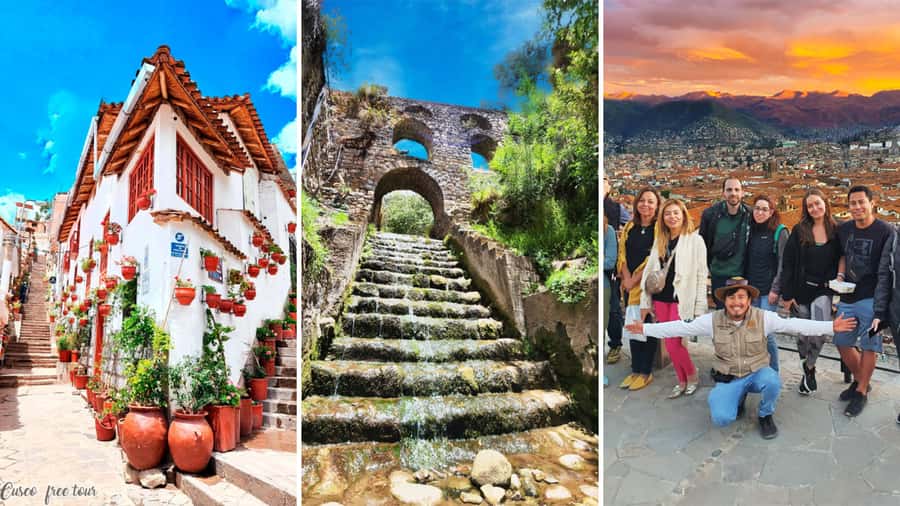
Reviewed · HISTORY TOURS IN CUSCO
Historic/music Cusco FreeWalkingTour “free drink” Group Tour
Cusco reveals itself one stone at a time. This two-hour walking tour links the city’s grandest sights with quieter corners, local music, and a complimentary Pisco Sour. I like the route because it covers the Main Square, Qoricancha, and San Blas without requiring transport, and I like the visit to a local luthier, where Andean instruments are played rather than merely displayed.
The small group, usually about 10 people, should make it easier to hear the guide and ask questions. The main consideration is the price: although the booking cost is listed as $2, a gratuity of about 30 soles or $10 is required for the guide service. One past participant also had trouble hearing when the loudspeaker worked poorly, so audio quality may matter on the day.
In This Review
- Key points at a glance
- Why this Cusco walk is worth two hours
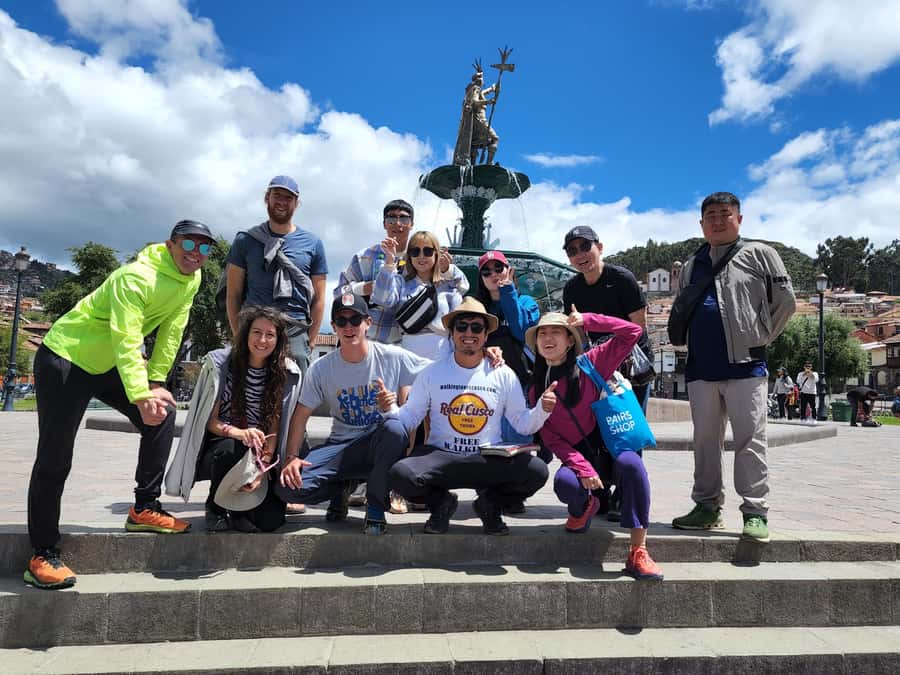
- Meeting at the Inca Fountain on Plaza de Armas
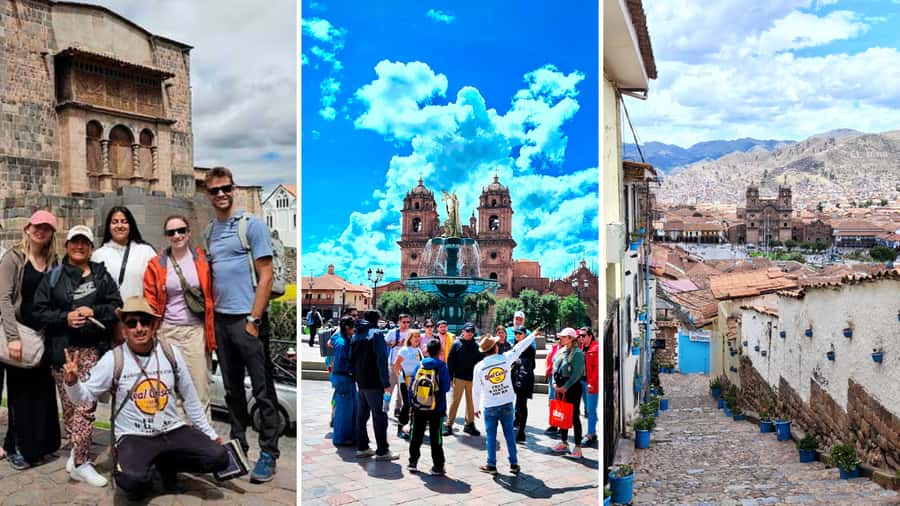
- The Cathedral and Company of Jesus
- Qoricancha, the former Sun Temple
- The famous 12 and 13 angled stones
- Reading the Andean Trilogy in stone
- San Blas and the climb to 7 Borreguitos Street
- The luthier visit and Andean music
- Manco Capac and the final drink
- What the $2 price really means
- Who will enjoy this walk most
- Practical advice before you go
- Should you book the Historic Music Cusco Free Walking Tour?
- FAQ
- Where does the tour meet?
- How long does the walking tour last?
- How much does the tour cost?
- Is a drink included?
- Is water included?
- Which languages are available?
- Which landmarks are included?
- Is the tour suitable for wheelchair users?
- Can I cancel the booking?
Key points at a glance
- Start at the Inca Fountain: Meet at the Inca Fountain on Cusco’s Plaza de Armas, at coordinates -13.5167681, -71.9787795.
- See major Inca and colonial sights: The route includes the Cathedral, Company of Jesus, Qoricancha, the 12 and 13 angled stones, and the Andean Trilogy.
- Hear live Andean instruments: A local luthier visit adds music and craftsmanship to the usual city walk.
- Climb toward San Blas: Expect picturesque streets and broad views over Cusco, including 7 Borreguitos Street.
- Choose a Peruvian drink: Finish with either a Pisco Sour or non-alcoholic Chicha Morada.
- Budget for the required tip: The $2 booking price does not tell the whole cost. Plan on roughly $10, or 30 soles, for the guide.
Why this Cusco walk is worth two hours
Cusco can feel confusing at first. Colonial churches sit on Inca foundations, narrow lanes rise toward San Blas, and important details are easy to miss when you explore alone. This tour gives you a useful first look at the historic center while keeping the pace on foot.
I see the route as an orientation walk rather than a full museum tour. You move between landmarks, hear the stories behind them, and get a few local touches that a standard plaza stroll might skip. The guide speaks English or Spanish and provides historical and cultural commentary throughout.
The group size of about 10 is a good middle ground. It is large enough to have some energy, but small enough that the tour should not feel like a parade. You will still need to stay close to the guide in busy streets and listen carefully near traffic or crowded public areas.
The activity has a 4.9 rating from 11 verified bookings, with especially strong praise for the explanations, local music, and range of stops. One participant called it a useful way to begin time in Cusco, which makes sense: you get a quick map of the city’s central sights before deciding where to return on your own.
More History Tours in Cusco
- Cusco: Historic Walking Tour with Pisco Sour and Local Music
★ 5.0 · 190 reviews - Cusco: Historical Guided City Tour with 4 Inca Ruins
★ 4.5 · 99 reviews - Cusco Highlights Walking Tour: History, Culture, Traditions
★ 4.9 · 72 reviews
Meeting at the Inca Fountain on Plaza de Armas
Your starting point is the Inca Fountain on Cusco’s main square. The plaza is one of the easiest places to recognize in the historic center, but the fountain itself gives you a precise meeting location.
The square brings together two very different architectural traditions. The Cathedral occupies one side, while the Company of Jesus adds another grand church facade nearby. The guide uses these buildings to explain Cusco’s colonial period and the way Spanish religious architecture was placed in the former Inca capital.
This opening section is useful because it gives the city a visual framework. Instead of seeing the churches as isolated monuments, you begin to understand how Cusco’s central square developed and why it remains the city’s main reference point.
Bring water before you arrive. Water is not included, and the walking route includes uphill streets later in the tour. Comfortable shoes also make sense, although the activity does not promise a completely level or accessible route.
The Cathedral and Company of Jesus
The first major sights are the Cathedral and the Company of Jesus. Even without entering every building, the exteriors offer plenty to discuss, from the scale of the churches to their place in Cusco’s colonial center.
I like this part of the tour because it places the Inca remains that come later into context. Cusco is not simply an Inca city with a few Spanish buildings added on top. Its present character comes from the collision and overlap of both periods.
A guide can point out details you might walk past while taking photographs. The commentary is one of the strongest reasons to book this walk. Several participants praised the clear historical explanations, and Erick was singled out for mixing a lot of information with humor.
Keep in mind that a walking tour is not the same as a dedicated church visit. If you want a long interior inspection of the Cathedral or Company of Jesus, you may need to return separately and check admission arrangements on your own.
Qoricancha, the former Sun Temple
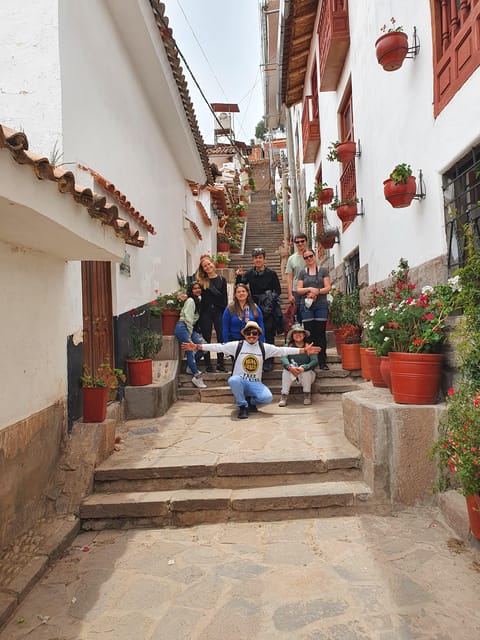
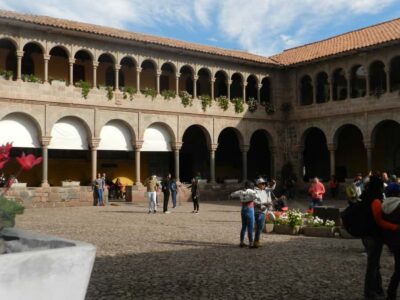
The route continues to Qoricancha, one of Cusco’s most important sites. The temple was dedicated to the Sun during the Inca period and later became associated with Spanish religious construction. That layered story makes it one of the best places in Cusco to see how the city’s past survives in its walls.
The tour promises historical explanation rather than a silent photo stop. You should expect the guide to describe why Qoricancha mattered and how its setting fits into the wider city.
I value this stop because it gives meaning to the finely cut stonework found elsewhere along the route. Cusco’s stone walls can look impressive but abstract if you do not know what you are seeing. A good explanation turns the masonry into evidence of engineering, power, religion, and changing rule.
The available information does not state whether the tour includes an interior admission ticket, so you should not assume that every part of Qoricancha is included in the $2 booking price. Treat the stop as a guided exterior or city visit unless the guide confirms otherwise.
A completely different kind of day:
- Classic Inca Trail Trek 4D/3N to Machu Picchu (Group Service)
★ 5.0 · 8,653 reviews - Cusco: Rainbow Mountain and Red Valley Day Trip with Meals
★ 4.9 · 4,893 reviews - Machu Picchu: 4-Day Inca Trail Trek with Panoramic Train Ride
★ 5.0 · 4,568 reviews - Salkantay Classic Trek 5 Days from Cusco
★ 5.0 · 4,062 reviews
The famous 12 and 13 angled stones
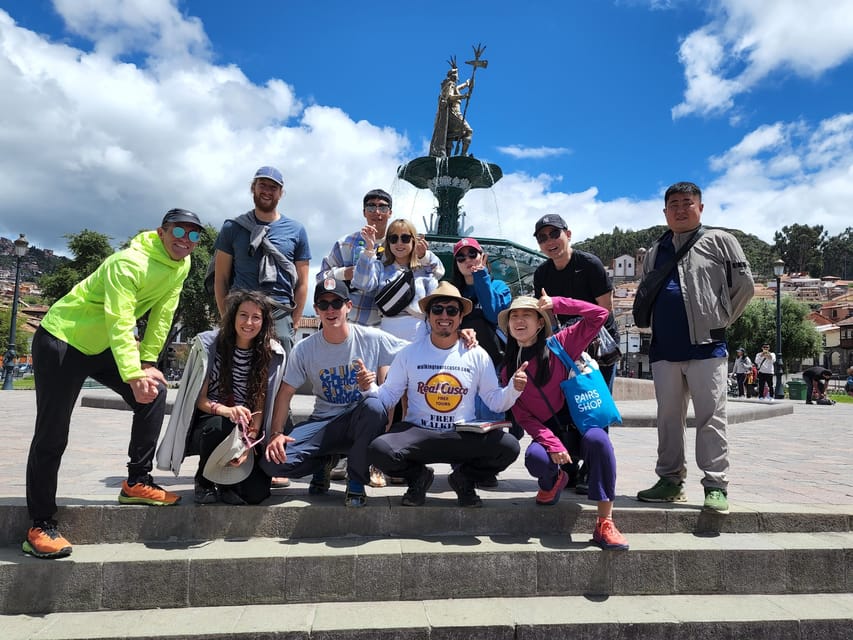
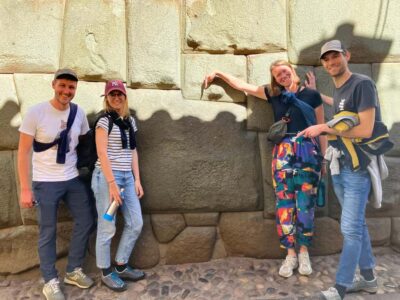
One of the most memorable details on the walk is the 12 and 13 angled stones. These stones are celebrated for the precision of their joints and the way they fit into the surrounding Inca wall.
The point is not just counting the angles. The stones show how Inca builders created tight, stable walls without relying on the modern cement joints you see in much later construction. Your guide can help you spot the shapes and understand why these details matter.
This is a good example of the tour’s value. You could pass the wall, take a photograph, and move on. With an explanation, you look more closely and begin noticing the craft in the stonework.
The route also includes Cusco’s most beautiful balcony, according to the experience description. The exact building is not identified, so I would treat this as a viewing stop rather than expect a private balcony visit. It should still add a pleasant architectural detail to the walk.
Reading the Andean Trilogy in stone
Another stop focuses on the Andean Trilogy: the condor, puma, and snake carved into an ancient Inca wall. These animals represent important ideas in Andean culture and are often presented as symbols connected with different parts of existence.
The condor is linked with the upper world, the puma with the present earthly world, and the snake with the world below. The tour uses this carving to connect architecture with belief, rather than treating the wall as a purely technical achievement.
I like this kind of interpretation because it gives you something to remember after the tour. Dates and names can blur together, but the three animals create a simple visual key for understanding Andean symbolism.
This is also a reminder to listen closely. Streets in the historic center can be noisy, and one participant reported that the loudspeaker was not always working well. If you have trouble hearing, move nearer to the guide and ask for a repeat. The group size should help, but the sound equipment may not always cooperate.
San Blas and the climb to 7 Borreguitos Street
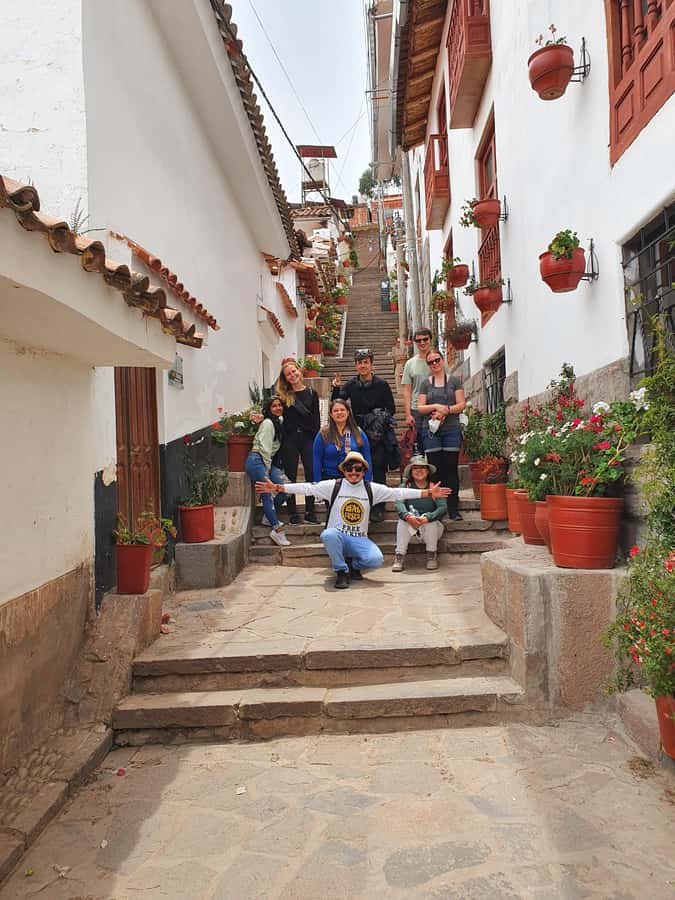
The route then heads into San Blas, the artistic district on the hillside above the center. The neighborhood is known for its narrow streets, craft traditions, and views over Cusco.
This part changes the mood of the tour. The Main Square and Qoricancha show the city’s major monuments. San Blas gives you smaller streets and a more local artistic feel. The walk is also more physically demanding because the neighborhood rises above the central plaza.
You will want sensible footwear and a little patience on the uphill sections. The tour lasts about two hours, but the time includes several stops, explanations, and the climb through San Blas. It is not designed as a fast sightseeing checklist.
7 Borreguitos Street is presented as one of Cusco’s most picturesque lanes. It is a natural place to pause for photographs, with the kind of steep, stone-lined setting that makes San Blas feel distinct from the formal center.
The description does not give a precise amount of free time for photos. If you have a particular picture in mind, ask the guide how long the group will stop. A group walk keeps everyone moving, so you may not have unlimited time at each location.
The luthier visit and Andean music
The most unusual stop is a visit to a local luthier. A luthier makes and repairs stringed instruments, and this visit adds a hands-on craft element to the tour.
You should expect to see instruments made locally and hear an Andean musical performance. Previous participants especially appreciated the authentic instruments and the chance to hear them played. One person described the music as a delightful treat, while another enjoyed seeing beautiful instruments used for Inca music.
This is more valuable than a quick souvenir-shop stop. You are not simply being shown a product. You get a glimpse of the work behind the instruments and hear how they function in performance.
The panoramic views from this part of San Blas are another draw. Cusco spreads below the hillside, and the higher position offers a different view from the enclosed streets around the plaza. The information does not promise a specific viewpoint or weather conditions, so the quality of the panorama will depend on the day.
Manco Capac and the final drink
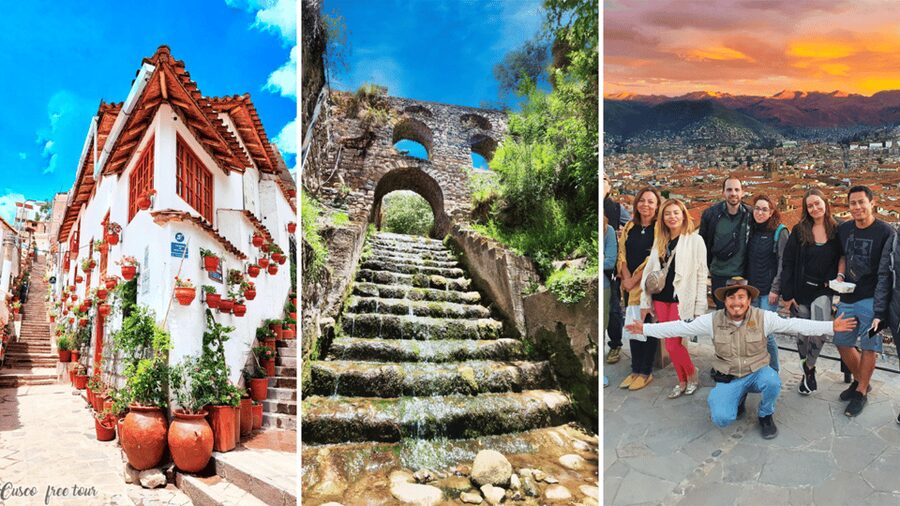
The walk ends at the Temple of the First Inca Ruler, Manco Capac. This final stop gives the route a clear historical close, returning attention to the early Inca story after the colonial churches, walls, and artistic district.
The tour then offers a choice of Pisco Sour or Chicha Morada. Pisco Sour is Peru’s best-known national cocktail, while Chicha Morada is a popular non-alcoholic drink made from purple corn.
The complimentary drink is a pleasant finish, but it should not be the main reason you book. The drink is small compared with the historical walk, and the guide gratuity remains required. If you do not drink alcohol, choose Chicha Morada rather than assuming there will be another option.
I also recommend carrying your own water. Personal expenses and water are not included, so the included tasting should not be confused with a full refreshment service.
What the $2 price really means
At first glance, $2 sounds almost free. The booking price is low, but the required guide gratuity of around 30 soles or $10 changes the calculation. You should budget for both amounts, making the practical cost closer to $12 per person, depending on the exchange rate.
That is still reasonable for a two-hour guided walk with English or Spanish commentary, local music, artisan contact, major landmarks, and a drink. The value comes from the guide’s interpretation and the route, not from the low headline price alone.
The gratuity wording is important. It is not presented as an optional thank-you for exceptional service. It is required as part of the guide service. If you prefer tours with one clearly stated all-in price, this arrangement may feel less straightforward.
The booking also allows cancellation up to 24 hours before the start for a full refund, and you can reserve now and pay later. Starting times depend on availability. Those terms are useful if your Cusco schedule may change, but they do not remove the need to plan around the two-hour duration.
Who will enjoy this walk most
I would recommend this tour to someone visiting Cusco for the first time who wants a quick orientation on foot. It suits you especially well if you enjoy history, architecture, local music, and short cultural encounters more than a long museum lecture.
It is also a good match if you want to see places you might skip while wandering alone. The route connects famous landmarks with the luthier visit, the Andean Trilogy, San Blas, and 7 Borreguitos Street.
You should think twice if you use a wheelchair. The tour is not suitable for wheelchair users, and the San Blas portion includes hillside streets. It is also listed as unsuitable for people over 95.
This is not the right choice if you want a private tour, a slow photographic walk, or extensive interior visits. The group is small, but it is still a group, and the guide must keep the route moving.
Practical advice before you go
Meet at the Inca Fountain on Plaza de Armas, not simply somewhere in the square. Arrive ready to identify the guide and keep the exact coordinates handy: -13.5167681, -71.9787795.
Wear shoes that handle stone streets and uphill walking. Carry water, since it is excluded, and keep some soles available for the required gratuity. If you are sensitive to alcohol, choose Chicha Morada at the end.
English and Spanish are available. If hearing every word matters to you, stay close to the guide, especially during street-side explanations. The small group should help, but one past participant found the loudspeaker unreliable.
Finally, give yourself room to return to places that catch your interest. Two hours is enough for an introduction, not enough for a full study of Qoricancha, the churches, San Blas, and every wall along the way.
Should you book the Historic Music Cusco Free Walking Tour?
Book it if you want an affordable, active introduction to Cusco with strong historical commentary and a few experiences beyond the standard monuments. The luthier visit, live Andean instruments, San Blas views, and final Pisco Sour make it more distinctive than a basic city orientation.
I would be comfortable recommending it to first-time visitors, culture-minded couples, solo visitors who want a small group, and anyone who likes learning while walking. Just treat the $2 as a booking fee rather than the total price, carry water, and budget the required 30-sol or $10 gratuity.
Skip it if you need step-free access, dislike uphill streets, or want a tour with no extra payment expectation. For most mobile visitors who want to get their bearings and hear the stories behind Cusco’s stones, it offers solid value in two hours.
FAQ
Where does the tour meet?
The meeting point is the Inca Fountain on Cusco Main Square, also called Plaza de Armas. The coordinates are -13.5167681, -71.9787795.
How long does the walking tour last?
The tour lasts two hours.
How much does the tour cost?
The listed price is $2 per person. A gratuity of around 30 soles or $10 for the guide service is required, so you should budget for both amounts.
Is a drink included?
Yes. The tour includes a choice of a Pisco Sour or Chicha Morada at the end.
Is water included?
No. Water is not included, so you should bring your own or plan to buy it separately.
Which languages are available?
The live guide is available in English and Spanish.
Which landmarks are included?
The route includes Cusco Main Square, the Cathedral, the Company of Jesus, Qoricancha, the 12 and 13 angled stones, the Andean Trilogy, San Blas, 7 Borreguitos Street, and the Temple of Manco Capac.
Is the tour suitable for wheelchair users?
No. The activity is not suitable for wheelchair users.
Can I cancel the booking?
You can cancel up to 24 hours in advance for a full refund. You can also reserve now and pay later.
Just added in Cusco
- Cusco Private Transportation for 2026★ 5.0 · 4 reviews
- Private Transfer from Airport to Hotel in the City of Cusco★ 4.0 · 5 reviews
- Best Cusco walking tour: dinner street food tasting★ 4.5 · 11 reviews
- Private Tour to Pisac Market and Pisac Ruins★ 5.0 · 4 reviews
- Machu Picchu Day Trip With Panoramic Train from Cusco★ 5.0 · 10 reviews
- Private Tour of the Mountain of Colours by Quad★ 5.0 · 7 reviews
- Sacred Valley Private Tour from Cusco, Guide and Driver only★ 5.0 · 4 reviews
- Sacred Valley of the Incas Tour★ 5.0 · 12 reviews
History Tours in Cusco, compared.
Historic Walking Tour with Pisco Sour and Local Music
Read our review →
Cusco Highlights Walking Tour: History, Culture, Traditions
Read our review →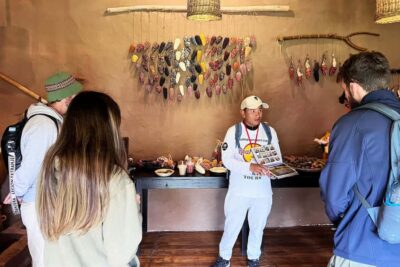
Historic Walking Tour with Pisco Sour and Music Show
Read our review →
Pisco Sour Secrets: Hands-On Mixology in Historic Cusco
Read our review →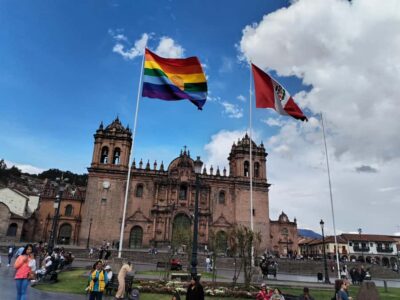
Historic Walking Tour & Scenic Views with local drink
Read our review →
Browse the lists this tour appears in