
Reviewed · CUSCO CITY TOURS
Cusco City Tour Four Ruins in Half-Day
Cusco’s greatest hits fit into one busy afternoon. This five-hour outing links Qorikancha, Sacsayhuaman, Q’enqo, Puka Pukara, Tambomachay, and an alpaca sanctuary, giving you a useful first look at the Inca sites around town. I especially like the small-group limit of 15 people and the chance to hear the story behind each place rather than simply walk among the stones. Hotel pickup and return within central Cusco also remove a fair bit of fuss.
The price is $40 per person, with round-trip transport and an English or Spanish guide included. You must add an $18 archaeological entry fee, so the real cost is about $58 per person before any optional purchases. The main caution is pace: there is uphill walking and some sites sit higher than Cusco, so you may want time to adjust to the altitude before booking this as your first activity.
In This Review
- Key points to know before booking
- Why this half-day route works in Cusco
- Qorikancha: the Inca temple beneath Cusco
- Sacsayhuaman and the art of moving stone
- Q’enqo: a ceremonial space cut from rock
- Puka Pukara, the red fortress above the road
- Tambomachay and the Inca respect for water
- The alpaca sanctuary and the commercial question
- Guides, drivers, and the value of a small group
- Altitude, walking, and the right time to go
- Is $40 plus admission a fair price?
- Who should book this Cusco outing?
- FAQ
- How long is the Cusco City Tour Four Ruins?
- What sites are included?
- Is hotel pickup included?
- Where does the tour start?
- How much does the tour cost?
- Is the archaeological entry fee included?
- Is transportation included?
- What languages are available?
- How large is the group?
- Should you book it?
Key points to know before booking
- Six stops in about five hours: You visit five historic or archaeological sites, then finish at an alpaca and llama farm.
- Qorikancha provides the best city-center context: The temple’s surviving Inca foundations sit beneath and beside later colonial construction.
- Sacsayhuaman brings the biggest stones: The three broad platforms offer fine views over Cusco and the surrounding mountains.
- Guides earn repeated praise: José, Jesse, Tito, and other guides are described as friendly, clear, patient, and strong on Inca history.
- The alpaca stop is useful for families: You can see llamas and alpacas up close and learn how baby alpaca and vicuña fibers differ.
- Budget for the entry fee: The archaeological ticket is not included and costs $18 per person.
Why this half-day route works in Cusco
Cusco can feel scattered at first. The central streets, temples, hills, and ruins do not line up in a simple walking route, and several major sites sit above the city. This excursion solves that problem with a driver and a guide who connect the places into one story.
You begin at Triunfo in central Cusco, though hotel pickup and return are included for addresses in the city center. Confirm the exact pickup arrangement when you book, since the listed meeting point and the hotel service are both part of the operating details.
The route lasts about five hours. That is enough time to see the main features of each site, but not enough for a slow archaeological study. I would treat it as an orientation tour: you get the broad picture, learn what each place was used for, and decide which sites deserve a longer visit later.
The group can hold up to 15 people, although some departures have been much smaller. One booking even ran with a single person, while another group had eight people and three children. A small group makes it easier to hear explanations, ask questions, and keep the visit moving without feeling like you are being herded through the ruins.
More Cusco city tours:
- Cusco: Half-Day City Tour with Sacsayhuaman and Q’enco
★ 4.6 · 1,129 reviews - City Tour Cusco Qoricancha Sacsayhuaman y Tambomachay
★ 4.7 · 617 reviews - Open Bus Cusco City Tour
★ 4.5 · 219 reviews
Qorikancha: the Inca temple beneath Cusco
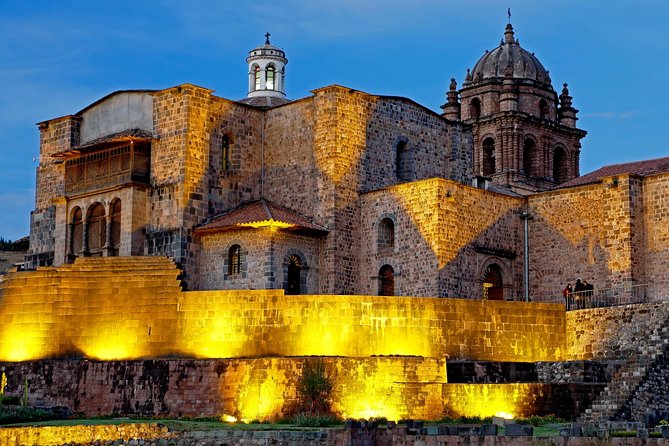
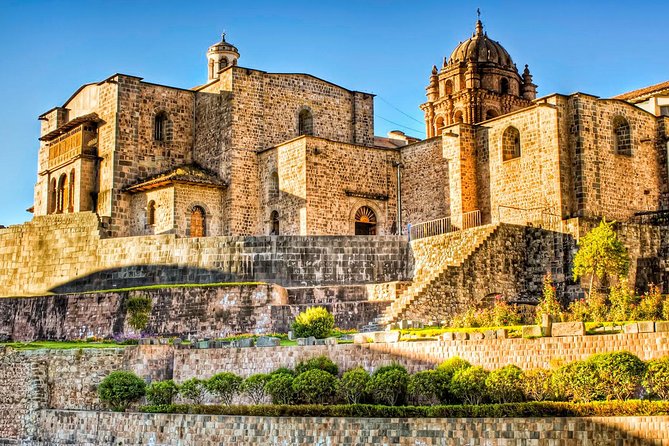
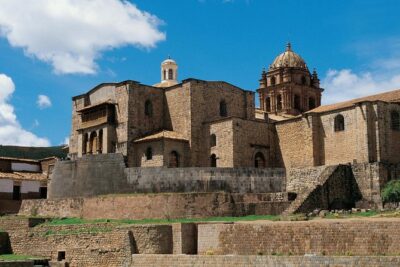
Qorikancha, also written Coricancha, is the most important stop for understanding Cusco itself. The temple was dedicated to the sun and once formed the religious center of the Inca capital.
Inside, you see smaller temple spaces connected with the sun, moon, and stars. The original Inca stone foundations are the key sight. Their close-fitting blocks show the precision of Inca masonry, while the later colonial structure helps you see how Spanish construction was placed over the older temple.
Allow about 40 minutes here. The gardens and fountains outside make a pleasant contrast with the tight stonework indoors. This is also a good place to ask your guide how the Inca religious system connected the heavens, the earth, and water, since those themes appear again at the other stops.
Admission is not included. The stated archaeological entry fee for the tour is $18 per person, and you should have payment ready as instructed by the operator. The supplied details also indicate that entry fees are handled separately, so do not assume the $40 tour price covers the ruins.
Sacsayhuaman and the art of moving stone
Sacsayhuaman is the visual knockout. Its enormous carved blocks form three overlapping platforms above Cusco, with mountain views beyond. Even if you have already seen excellent Inca masonry at Qorikancha, the scale here changes the conversation.
Your guide can point out how tightly the stones were cut and fitted. The point is not only that the blocks are large. Their shapes and joints were made to work together, producing walls that have remained impressive for centuries.
You get about 45 minutes at the site. That is enough to walk among the major walls and take in the views, but you will want comfortable shoes and a steady pace. Several people who enjoyed the tour also noted that there is a good deal of uphill walking, and Sacsayhuaman is one of the places where the altitude becomes hard to ignore.
The site also has a living connection with Andean tradition. During Inti Raymi, the Festival of the Sun, local people make offerings to Pachamama, or Mother Earth, using sacred coca leaves. That detail helps keep Sacsayhuaman from becoming just a photo stop. It is an archaeological site, but it remains tied to ceremony and local identity.
Q’enqo: a ceremonial space cut from rock
Q’enqo is smaller and more mysterious than Sacsayhuaman. This complex was a ceremonial center carved directly from the rock, with zigzag channels on top and small trapezoidal niches inside.
You spend about 30 minutes here. The attraction is not a giant wall or a sweeping plaza. It is the way the natural rock was shaped for ritual use. Your guide’s explanation matters at Q’enqo because the site can be difficult to read on your own. Without context, you may see a weathered rock with grooves and recesses. With context, you begin to understand how the Incas worked with natural stone rather than treating it as something separate from architecture.
This is a good stop for questions. Several guides, especially José and Tito, received praise for explaining the sites clearly, adding humor, and answering questions without rushing the group. Guide quality can vary by departure, but the operator allows English or Spanish guiding.
More city tours in Cusco:
- Cusco: Sightseeing Tour of the City on an Open-Top Bus
★ 4.0 · 481 reviews - Cusco: City Tour | Half-Day Tour to 4 Archaeological Sites
★ 4.6 · 206 reviews - City Tour in Cusco & visit Museum South American Camelid Private.
★ 5.0 · 147 reviews - Cusco City Sightseeing, San Pedro Market, Cathedral and Qorikancha Temple
★ 4.5 · 139 reviews
Puka Pukara, the red fortress above the road
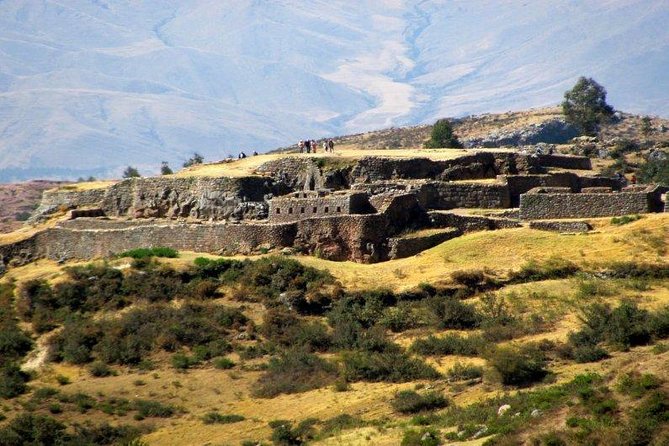
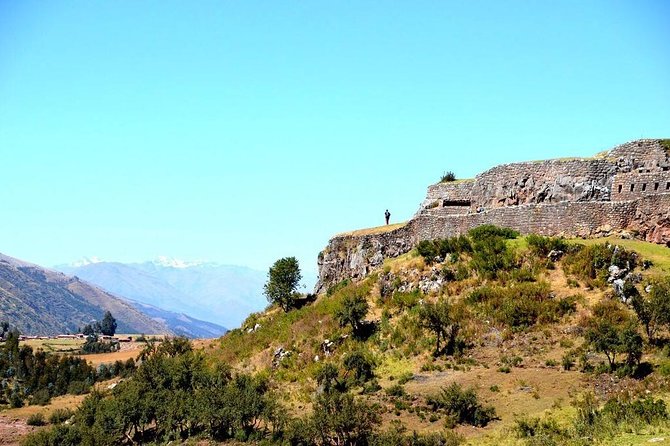
Puka Pukara takes about 20 minutes, making it the briefest archaeological stop. Its name refers to the reddish color of the fortress, linked here to the iron in the rock.
The site served as a military control center for the Incas. From its position, you get a broad view over the ruins and the surrounding mountains. The visit is more about location and function than a long walk through a large complex.
Because the stop is short, pay attention to the guide’s explanation before wandering off for photographs. Puka Pukara works best as part of the route’s larger pattern: the Inca road system needed places for control, rest, ceremony, storage, and water. The next stop shows another side of that network.
Tambomachay and the Inca respect for water
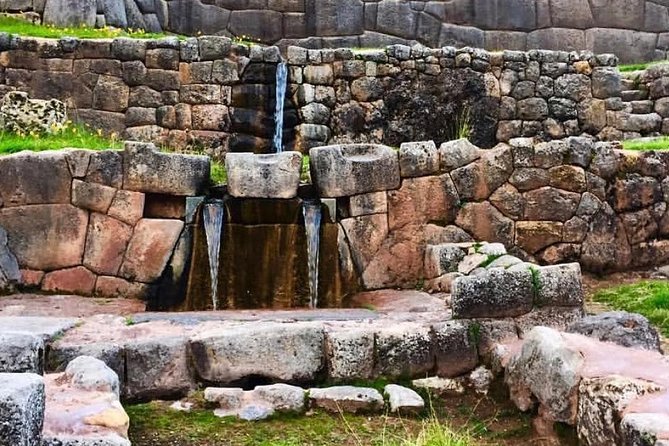
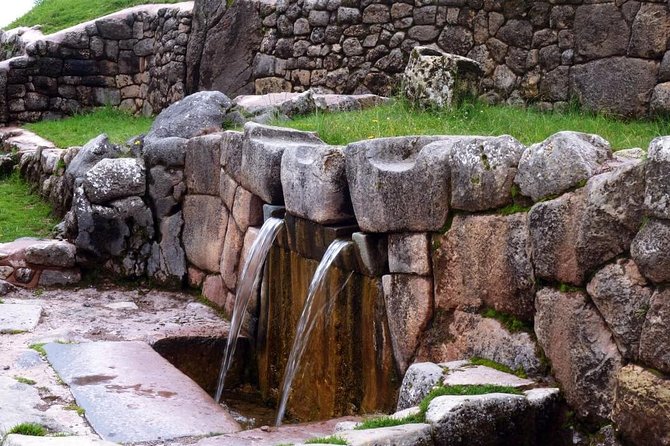
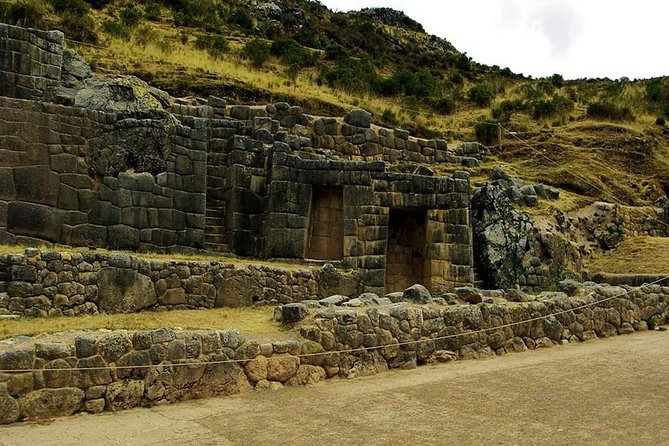
Tambomachay is devoted to water. Aqueducts and fountains carry spring water through the site, which served as a place of worship and adoration.
You have about 35 minutes here. It is a quieter stop than Sacsayhuaman, with flowing water and carefully built channels rather than giant defensive walls. Look closely at the stonework around the fountains. The engineering is practical, but the site’s purpose was also spiritual.
Tambomachay helps round out the tour. Qorikancha introduces Inca religion, Sacsayhuaman shows monumental construction, Q’enqo presents ceremonial rock carving, and Puka Pukara explains military control. Tambomachay adds the sacred role of water.
The alpaca sanctuary and the commercial question
The final visit is Manos de la Comunidad in Wallarcocha, an alpaca and llama sanctuary. You spend about 30 minutes seeing the animals and learning how to identify baby alpaca fiber and vicuña wool. Vicuña is presented as the finest wool in the world, and the explanation gives you useful background before you encounter Andean textiles elsewhere in Peru.
This is the most family-friendly part of the outing. Children can feed the llamas and alpacas, and some visitors have been allowed to hold a baby alpaca. The animals are not shy when food is available, so keep your hands steady and follow the staff’s instructions.
There is also a practical point to understand. The sanctuary is connected with souvenirs and textile sales, and one unhappy participant felt the stop made the archaeological visits seem rushed. The operator’s response was that purchases are optional. That is the right way to approach it: enjoy the animals and the fiber demonstration, but do not feel obliged to buy anything.
If you want only ruins and no commercial stop, this tour may not be your ideal match. If you are traveling with children, or you want an introduction to alpaca and vicuña wool, the stop adds variety after several stone sites.
Guides, drivers, and the value of a small group
The strongest part of this experience is the guiding. José is repeatedly described as friendly, patient, and well informed about Inca history. Jesse receives similar praise for being easy to talk to and making the route fun. Tito is noted for his enthusiasm, wit, and care with people still adjusting to the altitude.
That matters because these sites are not self-explanatory. A guide can show you the construction details at Sacsayhuaman, explain the ceremonial role of Q’enqo, and connect Tambomachay’s fountains with Inca beliefs about water. One guide also used pictures to make the wider story of the Inca empire easier to follow.
The drivers are praised as well. Richard and Christian are both described as polite and careful, with smooth transport between the sites. You do not have to work out local driving or arrange separate taxis, which is a real benefit when the route includes several places outside central Cusco.
The tour is not designed for complete solitude. A maximum of 15 people is still a group, and the time at each stop is fixed. But smaller departures have happened, and that can turn the outing into something close to a private tour without the private-tour price.
Altitude, walking, and the right time to go
Cusco sits high, and some stops are higher still. The tour can work well early in your visit because it offers a relatively easy way to see the nearby sites without a full day in the Sacred Valley. But easy does not mean flat.
Expect uphill sections and walking across archaeological ground. One person who booked the tour on the second day in Cusco found the altitude extremely difficult, while another appreciated the guide’s care with people who were still acclimating. I would avoid scheduling this immediately after arrival if you know altitude affects you.
The route can also suit an afternoon arrival because an afternoon start is available according to one account. Still, your energy may be limited after a flight. If possible, give yourself at least some adjustment time, drink water, and choose a pace that lets you listen without pushing too hard.
Bad weather can cancel the activity. In that case, the operator offers another date or a full refund. You can also cancel for a full refund up to 24 hours before the start time, but late cancellations and changes are not accepted.
Is $40 plus admission a fair price?
The advertised price is $40 per person. Add the separate $18 entry fee, and the practical total is about $58. For that amount, you receive hotel pickup and drop-off in central Cusco, round-trip transport, and an English or Spanish guide.
I consider that fair value if you want to see all five archaeological stops in one compact outing. Doing the route independently would mean arranging transport between scattered sites, managing timing, and finding your own explanations. The guide and driver are the main reasons the price makes sense.
The value is less clear if you want long, quiet visits at every ruin. The schedule gives you 20 minutes at Puka Pukara, 30 at Q’enqo, 35 at Tambomachay, 40 at Qorikancha, and 45 at Sacsayhuaman, followed by 30 minutes at the sanctuary. That is a lot of ground in half a day.
The tour’s current score is 4.9 out of 5 from 530 ratings, with 96 percent recommending it. Those numbers fit the pattern of strong guide service, careful drivers, small groups, and a well-organized route, while the main caution remains the brisk pace and the alpaca stop.
Who should book this Cusco outing?
I would choose this tour if you want a practical first look at Cusco’s nearby Inca sites, especially before Machu Picchu. It gives you useful vocabulary and context, so later ruins are easier to understand.
Families should consider it because the route includes animals, transport, and enough variety to hold children’s interest. Couples and solo visitors also benefit from the small group, particularly when the departure is not full.
I would hesitate if you have serious trouble with altitude, want a slow photographic visit, or dislike any stop connected with shopping. In that case, ask about the exact timing and sanctuary visit before paying.
FAQ
How long is the Cusco City Tour Four Ruins?
The tour lasts approximately five hours.
What sites are included?
The route includes Qorikancha, Sacsayhuaman, Q’enqo, Puka Pukara, Tambomachay, and Manos de la Comunidad alpaca sanctuary.
Is hotel pickup included?
Yes. Hotel pickup and drop-off are included for hotels in Cusco City Center.
Where does the tour start?
The listed meeting point is Triunfo, Cusco 08002, Peru. The activity ends back at the meeting point, while central hotels also have pickup and drop-off service.
How much does the tour cost?
The listed price is $40 per person.
Is the archaeological entry fee included?
No. An additional entry ticket costs $18 per person.
Is transportation included?
Yes. Round-trip transportation is included.
What languages are available?
The tour offers an English or Spanish guide.
How large is the group?
The maximum group size is 15 people. Some departures may be smaller, depending on bookings.
Should you book it?
Book this tour if you want to cover Cusco’s major nearby ruins without arranging several taxis or spending a full day on the road. The guides, especially José, Jesse, and Tito, are a major reason to choose it, and the careful drivers add comfort on the hillside route.
Go in with the right expectations: it is a brisk overview, not a slow archaeological study. Add the $18 entry fee to your budget, allow time to adjust to the altitude, and treat the alpaca sanctuary’s shopping as optional. With those points clear, this is a strong-value introduction to Cusco, and a sensible way to connect the city with the Inca world beyond its central streets.
Just added in Cusco
- Cusco Private Transportation for 2026★ 5.0 · 4 reviews
- Private Transfer from Airport to Hotel in the City of Cusco★ 4.0 · 5 reviews
- Best Cusco walking tour: dinner street food tasting★ 4.5 · 11 reviews
- Private Tour to Pisac Market and Pisac Ruins★ 5.0 · 4 reviews
- Machu Picchu Day Trip With Panoramic Train from Cusco★ 5.0 · 10 reviews
- Sacred Valley of the Incas Tour★ 5.0 · 12 reviews
- Private Tour of the Mountain of Colours by Quad★ 5.0 · 7 reviews
- Sacred Valley Private Tour from Cusco, Guide and Driver only★ 5.0 · 4 reviews
Cusco City Tours, compared.
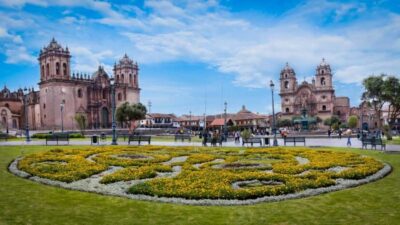
Half-Day City Tour with Sacsayhuaman and Q’enco
Read our review →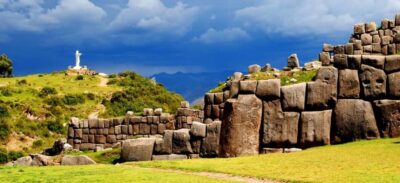
City Tour Cusco Qoricancha Sacsayhuaman y Tambomachay
Read our review →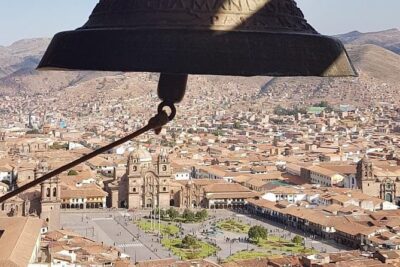
Cusco City Sightseeing, San Pedro Market, Cathedral and Qorikancha Temple
Read our review →
Cusco City Sightseeing and Sacsayhuaman Archeological Park Tour
Read our review →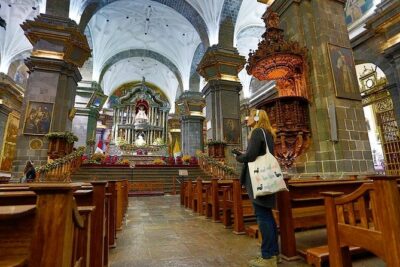
Cusco 4-Hour Private Tour Including Sacsayhuaman and Qenqo
Read our review →
Browse the lists this tour appears in