
Reviewed · CITY TOURS
Cusco: City Tour | Half-Day Tour to 4 Archaeological Sites
Cusco rewards a good first look. I like the way this $29 half-day tour combines the city’s Inca and colonial landmarks with four major sites in the hills above town. I also like the bilingual guiding, hotel pickup in Cusco’s historic center, and the useful mix of walking and transport. The main caution is that entry fees are extra, and bilingual explanations can stretch the schedule.
You will see a lot in four hours: Qoricancha, Sacsayhuamán, Qenqo, Puca Pucara, and Tambomachay. Guides such as Luis, Maribel, Joel, and Fabrisio have earned praise for clear explanations and warm attention, but you should allow some flexibility. A few departures have run well beyond the advertised time, while one included an unplanned textile-market stop.
In This Review
- What makes this Cusco tour worth considering
- Why this four-hour route works for a first day
- Qoricancha, where Inca gold met a Dominican church
- Sacsayhuamán and its massive zigzag walls
- Qenqo, a ceremonial site of stone passages
- Puca Pucara, a small fortress with a practical role
- Tambomachay and the sound of running water
- Bilingual guiding: helpful, but not always quick
- What the $29 price really covers
- Timing, weather, and what to bring
- Who should book this tour?
- Final verdict: a strong first look, with two clear cautions
- FAQ
- How long does the Cusco City Tour last?
- What archaeological sites are included?
- Is hotel pickup included?
- Is transport included?
- Is the tour available in English?
- Are entrance tickets included?
- Can I use a Tourist Ticket purchased for another tour?
- Is the Cathedral of Cusco part of the standard tour?
- Can I cancel the booking?
What makes this Cusco tour worth considering
- Five major archaeological stops: Qoricancha plus Sacsayhuamán, Qenqo, Puca Pucara, and Tambomachay create a useful introduction to Cusco’s sacred, military, and ceremonial sites.
- Strong local guiding: Luis is often singled out for his history knowledge and friendly manner, while Maribel, Joel, Yenny, Jessica, Leo, and Fabrisio have also been praised for lively explanations.
- Hotel pickup in central Cusco: Pickup is included from hotels in Cusco Centro Histórico, which saves you from finding the meeting point in the busy city center.
- A bilingual format: The guide speaks English and Spanish, making this practical for mixed-language groups, though explanations may take longer.
- Extra costs need planning: Qoricancha costs 20 soles, and the Cusco Tourist Ticket costs 70 to 120 soles depending on the ticket type. Payment for site entry is cash only according to one direct account.
- Afternoon departures have appeal: A 2 pm start can finish with an evening view over Cusco, followed by dinner in town.
Why this four-hour route works for a first day
Cusco can feel like several places at once. Spanish colonial churches and arcaded squares occupy the old Inca capital, while enormous stone walls and water shrines sit just outside the center. This tour gives you both sides without asking you to organize taxis, tickets, and directions on your own.
I see it as a getting-your-bearings tour rather than a final word on Inca civilization. You will not have enough time for long, quiet exploration at every stop. You will, however, see the main sites in one outing and get a useful framework for the rest of your stay.
The advertised duration is four hours. That is usually enough for a brisk circuit, but timing has not been perfectly consistent. Some departures have finished around five and a half hours, and one slower start left less time at Sacsayhuamán. If you have dinner plans, a train connection, or a flight, do not schedule them tightly after the tour.
The route begins with pickup from your hotel in Cusco’s historic center. Transport then connects the city center with the hilltop and roadside archaeological sites. One direct account praised the balance of walking and driving, while another found the early pickup process slow and disorganized. Once the group got moving, that same experience went much better.
More city tours in Cusco:
- Cusco: Half-Day City Tour with Sacsayhuaman and Q’enco
★ 4.6 · 1,129 reviews - City Tour Cusco Qoricancha Sacsayhuaman y Tambomachay
★ 4.7 · 617 reviews - Cusco City Tour Four Ruins in Half-Day
★ 5.0 · 530 reviews
Qoricancha, where Inca gold met a Dominican church
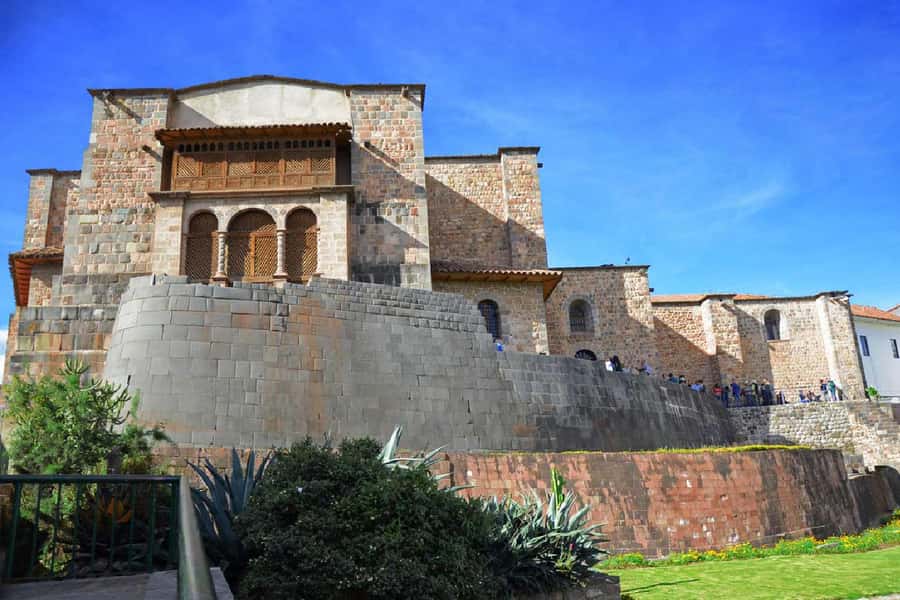
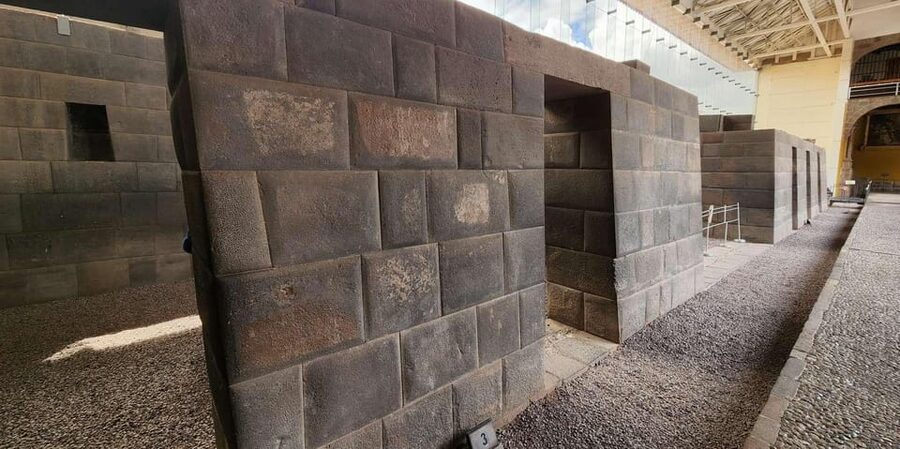
Qoricancha is the city-center portion of the tour and the clearest example of Cusco’s layered past. The name means Temple of the Sun, and in Inca times this was the most important religious center in the empire.
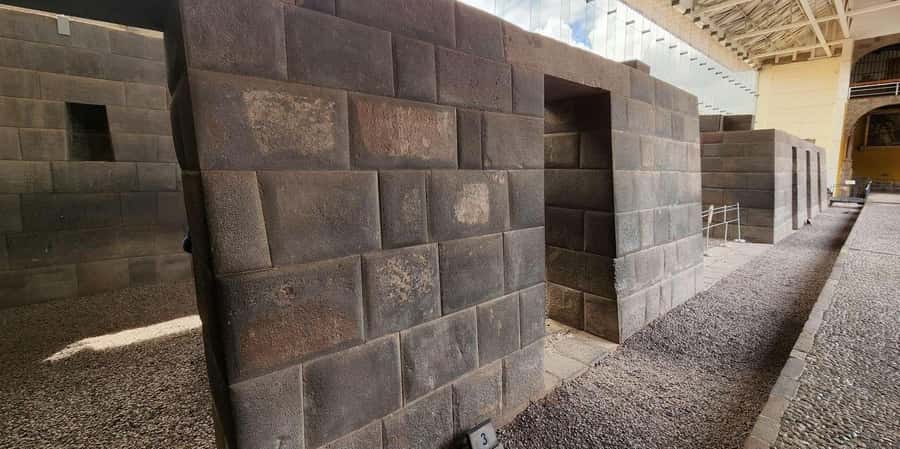
The building is especially useful for understanding Inca construction. Carefully cut stones fit together with remarkable precision, and the guide explains the temples that once occupied the complex. Inside, you can also see paintings from the Cusquenian School, a colonial art tradition that grew from the meeting of Andean and Spanish cultures.
The Temple of Santo Domingo now occupies the site. That contrast gives the visit its force. You are not looking at an isolated ruin, but at a place where one religious system was built over another.
Qoricancha entry is not included. The supplied cost is 20 soles, and you should carry cash. The general Cusco Tourist Ticket is separate, priced between 70 and 120 soles depending on the version. Several people found it sensible to buy the broader ticket in advance because it covers this tour’s outer sites and can also be used at other museums and places in the Sacred Valley.
One important detail: the Cathedral of Cusco is listed as an optional visit, not a standard part of the route. The Plaza de Armas may serve as the beginning point or general orientation, but you should not assume the cathedral or a full plaza visit is included. One person specifically wished the plaza had received more attention.
Sacsayhuamán and its massive zigzag walls
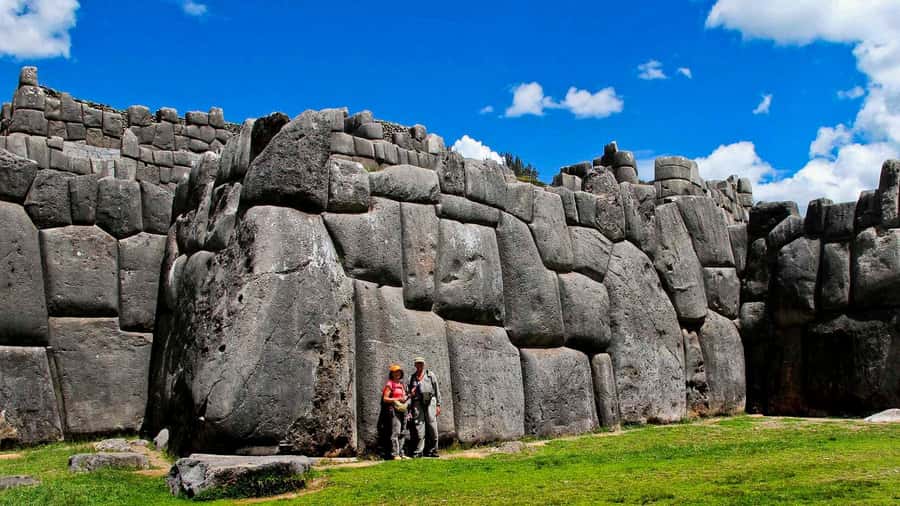
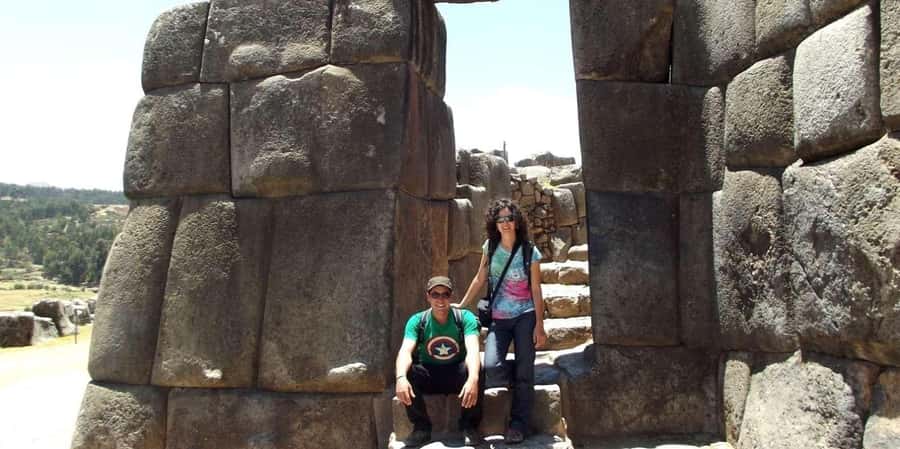
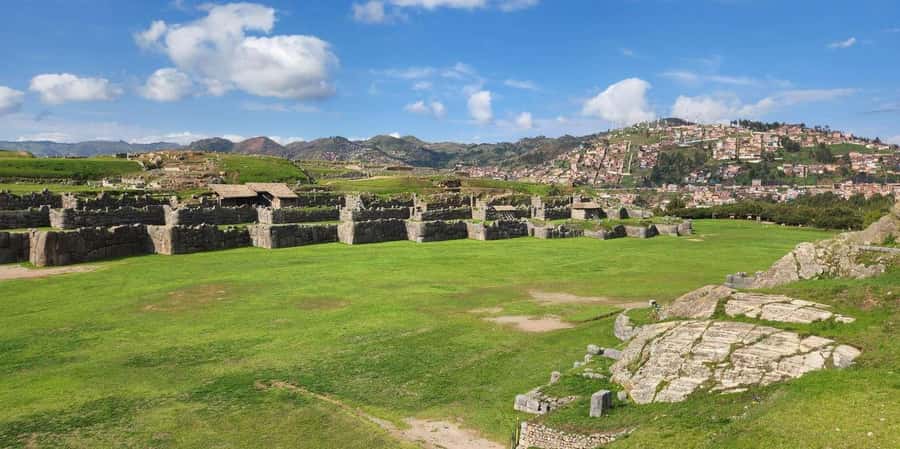
From Qoricancha, the tour heads toward Sacsayhuamán, the most dramatic stop of the day. Huge stones form long zigzagging walls, with blocks described as reaching about 9 meters high and weighing more than 350 tons.
You do not need to know every theory about the site to appreciate the scale. The stonework forces practical questions: how were these blocks cut, moved, and fitted so tightly? Your guide will place the complex in its role as a ceremonial fortress and explain its connection to Inti Raymi, the Festival of the Sun held each June 24.
This is also the stop most vulnerable to schedule problems. It is popular, and the route can lose time through hotel pickups, traffic, bilingual explanations, or an added shopping stop. One person arrived with only about 30 minutes before closing after visiting a textile market that was not expected. That is not a small issue at Sacsayhuamán, where you need time to walk among the walls and take in the views.
If the group is running late, listen for a clear plan from the guide. The site deserves more than a quick photo from the entrance. At the same time, the visit is still valuable even when brief because the stone blocks communicate their scale immediately.
Qenqo, a ceremonial site of stone passages
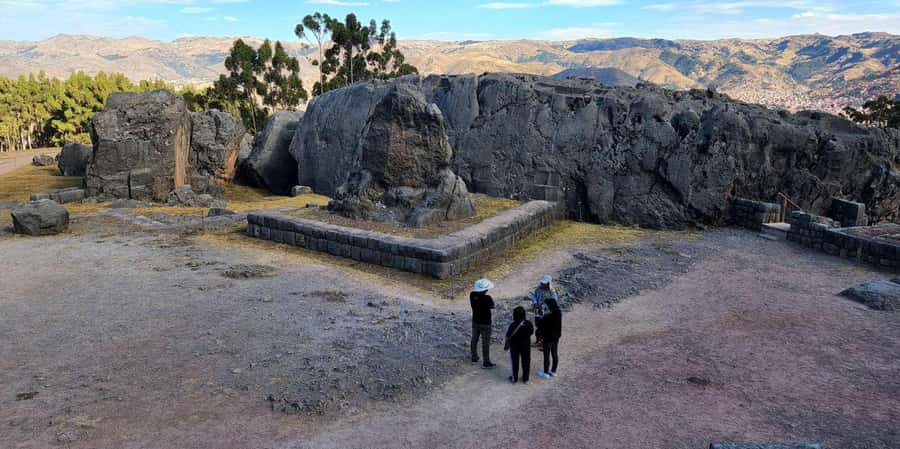
Qenqo is smaller and more enigmatic than Sacsayhuamán. Its rocky outcrops, carved surfaces, narrow paths, and amphitheater-like setting suggest a ceremonial and religious role in Inca times.
The route here feels more intimate. Instead of broad terraces, you encounter stone shaped into channels, steps, and passages. The guide discusses ceremonies and sacrifices associated with the site, but this is a place where interpretation matters. Some explanations about Inca ritual life are theories rather than proven facts, so you should welcome a guide who separates evidence from speculation.
One useful criticism of the guiding style was that some ideas were presented too firmly. The strongest guides on this route appear to be the ones who explain what is known, then signal when scholars are interpreting incomplete evidence. That approach makes Qenqo more interesting, not less.
Watch your footing on the rocky paths. The supplied information does not promise an accessible or step-free route, and the visit includes walking around uneven archaeological ground. Comfortable shoes are a sensible choice.
More things to do in Cusco:
- Classic Inca Trail Trek 4D/3N to Machu Picchu (Group Service)
★ 5.0 · 8,653 reviews - Cusco: Rainbow Mountain and Red Valley Day Trip with Meals
★ 4.9 · 4,893 reviews - Machu Picchu: 4-Day Inca Trail Trek with Panoramic Train Ride
★ 5.0 · 4,568 reviews - Salkantay Classic Trek 5 Days from Cusco
★ 5.0 · 4,062 reviews
Puca Pucara, a small fortress with a practical role
Puca Pucara was an Inca surveillance post and an entry-control point for the capital. Its terraces, walls, and stone steps are less imposing than Sacsayhuamán, but the site helps explain how Cusco’s approaches were monitored.
I like this stop because it adds a military layer to the day. Qoricancha shows spiritual power, Qenqo points to ritual, and Puca Pucara explains control and movement. You begin to see that the sites around Cusco were not random monuments scattered on the hills.
The visit is generally shorter than the major stops. That works well in a four-hour itinerary, but it also means the group may move on quickly. Your guide’s explanation matters here because the remaining walls do not always tell the whole story at a glance.
Tambomachay and the sound of running water
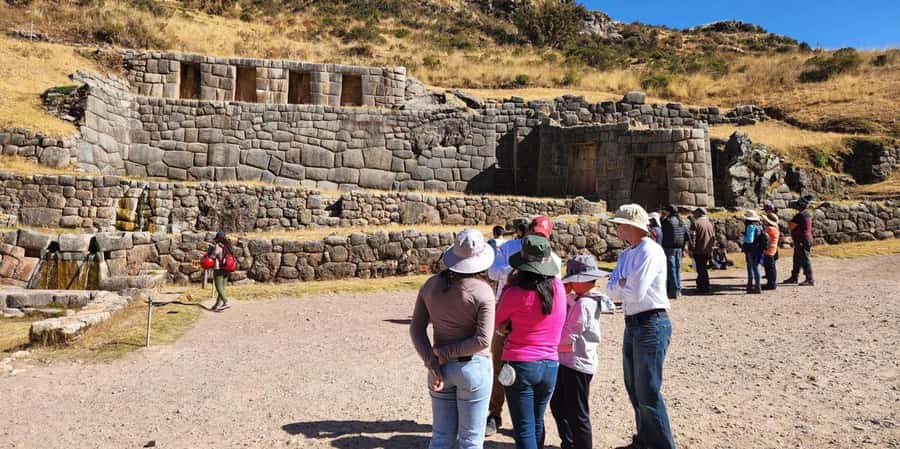
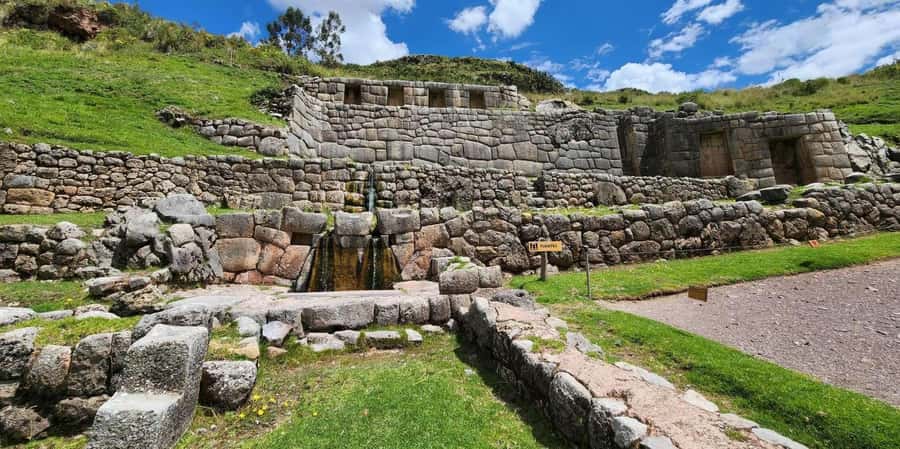
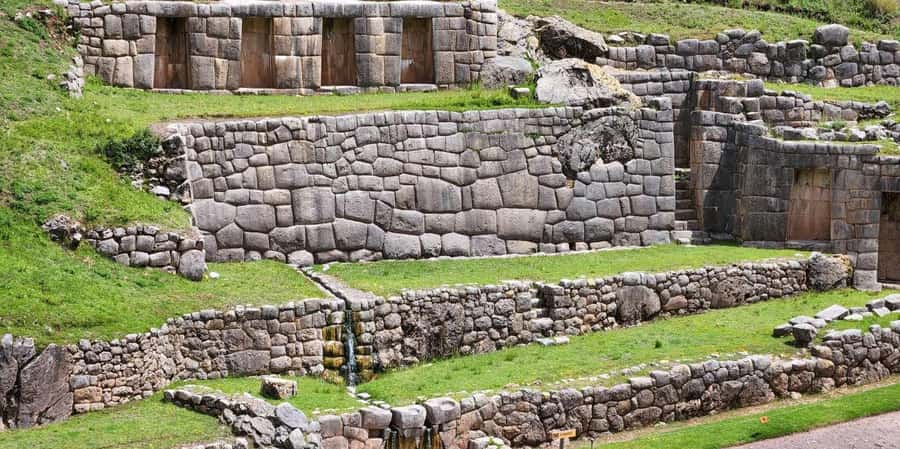
Tambomachay is the final archaeological stop and one of the most pleasing. Stone channels, fountains, terraces, and carefully directed water reflect the Inca respect for water and the rituals connected with it.
The site is associated with the worship of water and is sometimes called the place of eternal youth. The fountains give the visit a quieter mood after the heavy walls of Sacsayhuamán and the narrow passages of Qenqo.
Do not treat Tambomachay as a quick add-on. One person specifically advised saving attention for the final stop, especially because the views over Cusco can be excellent. With a 2 pm departure, the route may end in evening light, giving you a natural place to pause before returning to the city for dinner and drinks.
The order and exact amount of time can change. Rain has caused at least one guide to rearrange the plan, waiting for conditions to improve so the group could explore more comfortably. That kind of adjustment is useful, though it can also affect the advertised finish time.
Bilingual guiding: helpful, but not always quick
The tour is conducted in English and Spanish. This is a real benefit if you are traveling with Spanish-speaking companions or want access to a local guide without booking a private outing.
Several guides have handled mixed groups well. Luis was praised for making sure the only English-speaking participant felt included. Other direct accounts credit Maribel, Joel, Yenny, Jessica, Leo, America, and Fabrisio with clear explanations, patience, and good organization.
Still, bilingual guiding has a built-in cost: every explanation is delivered twice. One person felt the format did not work well, and another said questions asked in Spanish were not always repeated in English. If you understand both languages, you may enjoy the extra context. If you speak only English, you should ask politely when a point has been missed.
The guide’s personality makes a large difference. Luis is described as friendly, approachable, and entertaining, while Joel was praised for answering questions throughout the visit. One guide was even described as the author of a substantial book about the Incas and the region. These details suggest that guide quality is a major reason the tour receives such strong overall marks.
At the same time, one direct account asked for less sales pressure and fewer side-selling moments. Another objected to an unplanned textile-market visit that took time away from the ruins. If shopping is added, you are entitled to ask how long the stop will last and how it affects the archaeological sites.
What the $29 price really covers
At $29 per person, this is inexpensive for a guided half-day outing with hotel pickup and transport. The fee includes:
- Pickup from a hotel in Cusco Centro Histórico
- Tourist transport
- A live bilingual guide in English and Spanish
The headline price is not the final cost. Qoricancha requires 20 soles, and the Cusco Tourist Ticket costs 70 to 120 soles. Entry fees are not included, and cash may be needed. If you plan to visit additional museums or Sacred Valley sites, the broader ticket may offer better value than buying separate admissions.
That makes the tour a good deal for someone who wants a guided introduction and is already planning several paid sites. It is less of a bargain if you expected every entrance to be covered or if you want long, unhurried visits.
The low price also reflects the group-tour format. You are buying efficient coverage, not a private guide who can stop whenever you wish. The value comes from getting to five important places without arranging separate transport.
Timing, weather, and what to bring
The tour lasts about four hours on paper, but keep extra time available. Pickup delays, traffic, rain, bilingual commentary, and an added stop can push the return later. A reviewer reported a five-and-a-half-hour outing, while another felt the itinerary was a little rushed.
A 2 pm departure has a particular advantage. You may finish with an evening view over Cusco and return in time for dinner. The tradeoff is that late light, cooler temperatures, and site closing times can reduce your time at the final locations.
Bring layers. One direct account found the end of the tour cold and suggested buying hot tea from vendors along the route. Rain is also possible, and it has not stopped every departure, but it can change the order of the visit.
I would also bring:
- Cash for Qoricancha and other required entries
- Comfortable shoes for rocky paths and stone steps
- A light waterproof layer
- Water and a warm layer for the later stops
- Space in your schedule after the tour
The tour includes walking, but transport handles the longer connections. That makes it easier than visiting all five places independently in a single afternoon.
Who should book this tour?
I would recommend it to first-time visitors who want a broad introduction to Cusco’s major archaeological sites. It suits you especially well if you have limited time, prefer a guide to explain the stones and rituals, or do not want to negotiate separate transport.
It is also a good first activity for learning how the city and surrounding sites fit together. Several people used it as an early orientation and then explored more of Cusco with better context.
You may want another option if you dislike group schedules, need guaranteed punctuality, or want long stretches of quiet time at each ruin. A private tour would give you more control, though the $29 price of this outing would be difficult to match.
If you book, confirm the pickup time, ask exactly which entrances you need to pay for, and clarify that the route will focus on the archaeological sites. Buying the Cusco Tourist Ticket before departure can save time at the entrance and may provide better value for a longer Peru itinerary.
Final verdict: a strong first look, with two clear cautions
I would book this tour if I wanted to see the main Cusco ruins in half a day without spending heavily. The guides are the main strength, the route covers five meaningful sites, and the combination of Inca engineering, ritual spaces, military posts, and water temples gives you a useful picture of the old capital.
Go in knowing two things: the listed price excludes entrance fees, and the four-hour schedule may slip. If you can accept those limits, this is a practical, well-priced introduction, especially with a guide such as Luis or Maribel leading the group. If you need a strict finish time or dislike shopping detours, ask questions before paying or choose a private arrangement.
FAQ
How long does the Cusco City Tour last?
The stated duration is four hours. Some departures may take longer because of pickup delays, weather, bilingual guiding, or changes to the schedule.
What archaeological sites are included?
The route includes Qoricancha, Sacsayhuamán, Qenqo, Puca Pucara, and Tambomachay.
Is hotel pickup included?
Yes. Pickup is included from hotels in Cusco Centro Histórico.
Is transport included?
Yes. Tourist transport is included in the tour price.
Is the tour available in English?
Yes. The live guide speaks English and Spanish, and the tour is conducted bilingually.
Are entrance tickets included?
No. Qoricancha costs 20 soles, and the Cusco Tourist Ticket costs between 70 and 120 soles. The Cathedral of Cusco is an optional visit and is not included as a standard entrance.
Can I use a Tourist Ticket purchased for another tour?
Yes. You can show a Tourist Ticket you have already purchased for another tour, as long as it covers the required sites.
Is the Cathedral of Cusco part of the standard tour?
The Cathedral is listed as an optional visit, so you should not assume it is included in the standard route.
Can I cancel the booking?
You can cancel up to 24 hours in advance for a full refund. The booking also allows you to reserve now and pay later.
Just added in Cusco
- Best Cusco walking tour: dinner street food tasting★ 4.5 · 11 reviews
- Cusco Private Transportation for 2026★ 5.0 · 4 reviews
- Private Transfer from Airport to Hotel in the City of Cusco★ 4.0 · 5 reviews
- Private Tour to Pisac Market and Pisac Ruins★ 5.0 · 4 reviews
- Machu Picchu Day Trip With Panoramic Train from Cusco★ 5.0 · 10 reviews
- Sacred Valley Private Tour from Cusco, Guide and Driver only★ 5.0 · 4 reviews
- Sacred Valley of the Incas Tour★ 5.0 · 12 reviews
- Private Tour of the Mountain of Colours by Quad★ 5.0 · 7 reviews
City Tours, compared.
Lima Half-Day City Walking Tour (Small Groups)
Read our review →
Half-Day City Tour with Sacsayhuaman and Q’enco
Read our review →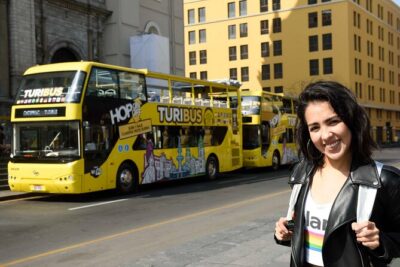
City Tour Panoramic Bus Departure From Larcomar
Read our review →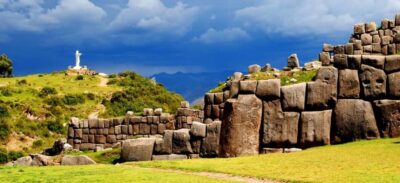
City Tour Cusco Qoricancha Sacsayhuaman y Tambomachay
Read our review →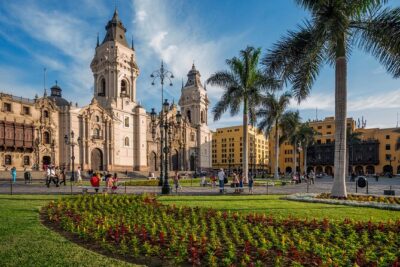
Lima’s Vibrant Heritage: Exploring the City’s Landmarks Half-day
Read our review →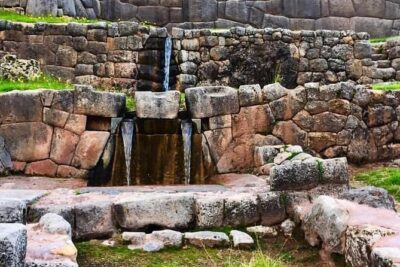
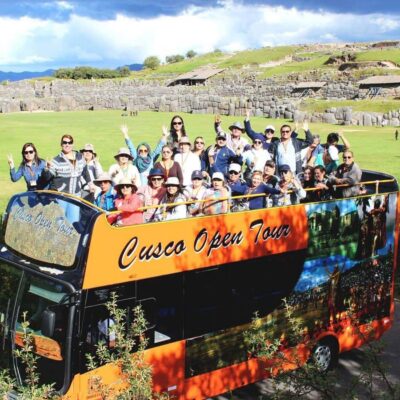
Sightseeing Tour of the City on an Open-Top Bus
Read our review →
Lima City, Central Market & Catacombs Tour (Pick-up & Drop Off)
Read our review →Browse the lists this tour appears in