
Reviewed · CUSCO CITY TOURS
Cusco City Sightseeing, San Pedro Market, Cathedral and Qorikancha Temple
Cusco rewards a good first look. This 3.5-hour afternoon tour ties together the city’s best-known sights, from San Pedro Market and the San Blas artisans’ quarter to the Cathedral and Qorikancha, the Inca Temple of the Sun. I like the efficient route and the chance to hear the city’s story from a bilingual guide rather than simply ticking off buildings. I also like that the group is capped at 15 people, which should make questions and short walking stops easier.
The main caution is timing. Several people found the tour informative but shorter or faster than expected, while one booking suffered a serious pickup delay. Cusco’s altitude adds another concern, so I would not make this your first activity immediately after landing unless you already know how your body reacts.
In This Review
- Key points to know before booking
- What this afternoon in Cusco is really designed to do
- San Cristóbal Plaza gives you the big picture
- San Pedro Market shows Cusco at work
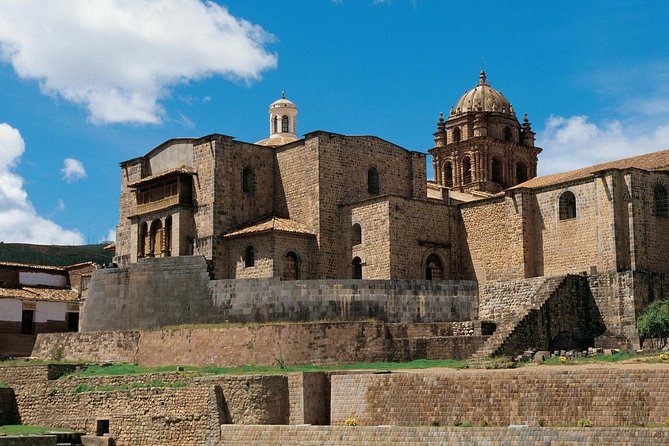
- Qorikancha reveals two Cuscos in one building
- San Blas brings craft and church art
- Hatun Rumiyoc and the Twelve-Angled Stone
- Cusco Cathedral closes the historical sequence
- The guide can make or break the afternoon
- Small groups, vehicles, and the risk of lost time
- Duration deserves a close look
- Altitude changes how you experience Cusco
- Is $59 a fair price?
- Who should book this Cusco city tour?
- FAQ
- How long does the Cusco city sightseeing tour last?
- What time does the tour start?
- What attractions are included?
- Are entrance tickets included?
- Is hotel pickup included?
- Is the tour offered in English?
- How many people can join the tour?
- Can I cancel for a full refund?
- Should you book it?
Key points to know before booking
- The Temple of Qorikancha is the historical centerpiece: Its surviving Inca stonework and Spanish church setting show two very different eras in one place.
- San Pedro Market gives you a look at daily Cusco: Potatoes, Peruvian corn, cheeses, bread, produce, handicrafts, and local aromas fill this working market.
- The Twelve-Angled Stone is a quick but memorable stop: It shows the precision of Inca masonry on Hatun Rumiyoc Street.
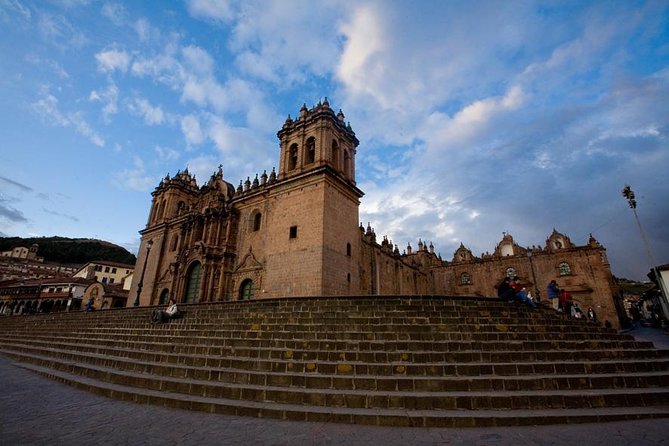
- The Cathedral adds colonial art and woodwork: Its location on Plaza de Armas makes it a natural finish to the route.
- Transport saves effort, but can cost time: Hotel pickup and a driver are useful, though shared pickups have caused delays for some bookings.
- The tour works best as a first-day orientation: You get viewpoints, streets, churches, a market, and major historical sites in one afternoon.
What this afternoon in Cusco is really designed to do
At $59 per person, this is not simply a walking tour with a guide pointing at buildings. The price includes live Spanish and English guiding, admission to Cusco Cathedral and Qorikancha, plus pickup and drop-off from select hotels.
The value is strongest if you want someone else to arrange the sequence. You will move between a few sites by vehicle and walk through the central streets, avoiding the need to find each entrance or work out local transport. A guide also gives the stones, paintings, market goods, and religious buildings a shared story.
I would not book it expecting a long, slow examination of every church and courtyard in central Cusco. The experience is an overview. The strongest parts are the guide’s historical explanations, the Temple of Qorikancha, the Cathedral, and the market. If you prefer to spend 45 minutes lingering over one site, this schedule may feel brisk.
The tour is usually booked well ahead, around 63 days in advance on average. That does not mean you must reserve that early for every date, but it does suggest that popular travel periods can fill up.
More Cusco city tours:
- Cusco: Half-Day City Tour with Sacsayhuaman and Q’enco
★ 4.6 · 1,129 reviews - City Tour Cusco Qoricancha Sacsayhuaman y Tambomachay
★ 4.7 · 617 reviews - Cusco City Tour Four Ruins in Half-Day
★ 5.0 · 530 reviews
San Cristóbal Plaza gives you the big picture
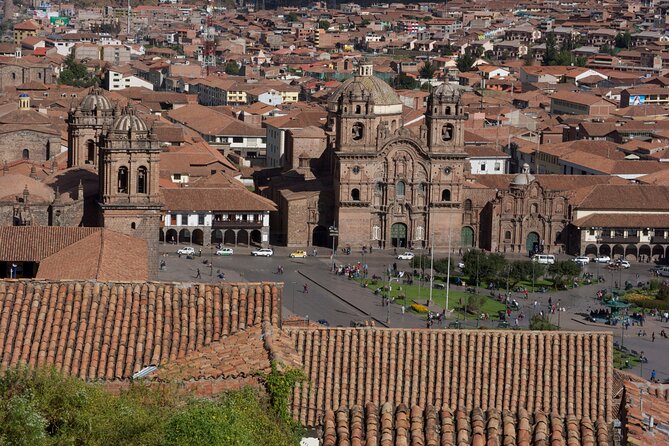
The tour begins around San Cristóbal Plaza, where you get broad views over Cusco. This is a smart opening stop because the city makes more sense from above. You can see how the historic center sits within the surrounding hills and why Cusco feels both compact and dramatic.
You should have time for photographs and an introduction to the city. The viewpoint does not require a long visit, but it helps orient you before the streets become a close-up parade of stone walls and church facades.
This is also where the altitude may first make itself known. Cusco sits high, and even a gentle pace can feel demanding during your first day. I would bring water, walk steadily, and tell the guide if you need a pause. One couple completed the tour while dealing with altitude sickness and later wished they had allowed a day to adjust first.
San Pedro Market shows Cusco at work
San Pedro Market is the most everyday stop on the route. It is not presented as a polished attraction. It is a central market where you can see groceries, potatoes, Peruvian corn, cheeses, bread from Oropesa, handicrafts, and other goods used or sold by local people.
I like this stop because it connects Cusco’s grand monuments with ordinary life. Qorikancha tells you about Inca power. The Cathedral tells you about Spanish colonial rule. San Pedro shows you what the city eats, sells, and handles each day.
Your guide can explain the food and products as you walk. You may also have time to browse or shop. Keep a few Peruvian soles handy, not only for small purchases but also for public bathrooms, which can cost 1 or 2 soles. That practical detail matters more than it sounds when you are moving around the city for several hours.
The drawback is that markets can feel rushed when they are one part of a short shared tour. If you want to compare foods, shop for ingredients, or eat a full meal, you will need to return on your own. Here, the point is a compact look at the market’s sights, smells, and routines.
Qorikancha reveals two Cuscos in one building
Qorikancha, also known as the Temple of the Sun, is the stop I would prioritize. The original Inca complex was called Intikancha or Intiwasi and was dedicated to Inti, the sun god. Much of the Inca structure was damaged after the Spanish conquest, and its stonework became part of the foundation for Santo Domingo church and convent.
That layering is what makes the visit so useful. You are not looking at an isolated ruin. You are seeing Inca construction pressed into a Spanish religious building. The contrast helps explain how Cusco changed after the conquest without erasing every trace of its earlier form.
The surviving masonry is the visual lesson. Inca builders fitted stones with extraordinary precision, and the walls still make the later construction look comparatively heavy. Guides often spend much of their best historical explanation here, and that is reflected in the strongest impressions of the tour.
Allowances for time vary in practice. The planned visit is part of the roughly 3.5-hour city route, but one account described about 30 minutes inside Qorikancha. That may be enough for an introduction, but not for a slow, detailed examination of every room. If this temple is your main reason for booking, ask at the start how much time is planned there.
More markets in Cusco:
- Peruvian Cooking Class Cocktails and Market Tour in Cusco
★ 5.0 · 1,712 reviews - Cusco: Peruvian Cooking Class, Cocktails & Local Market Tour
★ 4.9 · 512 reviews - Hands-on Peruvian Cooking Class & San Pedro Market Visit in Cusco
★ 5.0 · 421 reviews - Pisac Indian Market and Ollantaytambo Fortress with Lunch
★ 4.5 · 395 reviews
San Blas brings craft and church art
The route continues through San Blas, Cusco’s artisans’ quarter. The stop includes the church, noted for its carved woodwork, and a chance to see a different side of the city from the formal Plaza de Armas.
San Blas works well in a city introduction because it connects art with neighborhood character. The quarter is associated here with local crafts, while the church offers a more concentrated look at colonial wood carving. You will not be spending a full museum day, but the stop adds texture to the route.
The walking pace is important. Cusco’s streets can be steep or uneven, and altitude can turn a short climb into a real effort. The tour is described as relaxed, and several people appreciated that pace. Still, relaxed does not mean entirely flat or effortless. Comfortable shoes are a sensible choice.
Hatun Rumiyoc and the Twelve-Angled Stone
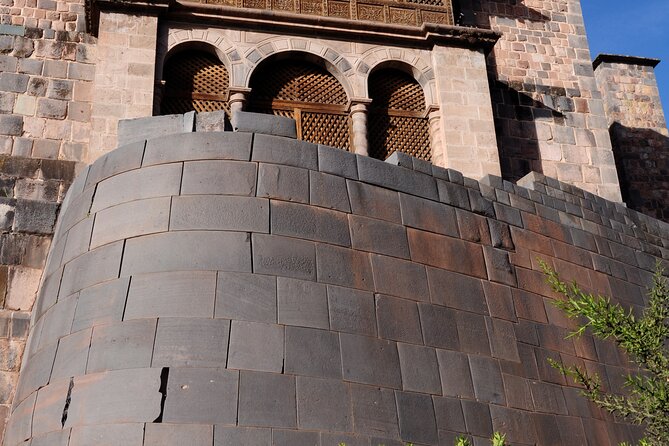
Hatun Rumiyoc Street is one of the quickest stops, yet it gives you a clear example of Inca engineering. The famous Twelve-Angled Stone is fitted into a wall with such accuracy that its many sides meet neighboring stones tightly.
It is easy to treat this as a quick photo opportunity. I think it is more useful when your guide explains what you are seeing. The stone becomes evidence of a building method, not just another famous object in a crowded street.
The nearby Inca Roca Palace is now the Archbishop’s Palace. This is another example of Cusco’s layered past, where Spanish colonial institutions occupy or incorporate earlier Inca structures. The route lets you see that shift while walking toward the main square.
Expect this section to be brief. The stone is in a public street, and the stop does not function like a museum visit with a long indoor viewing period. If you want quiet photographs, timing and crowd levels will matter, and no schedule can guarantee an empty street.
Cusco Cathedral closes the historical sequence
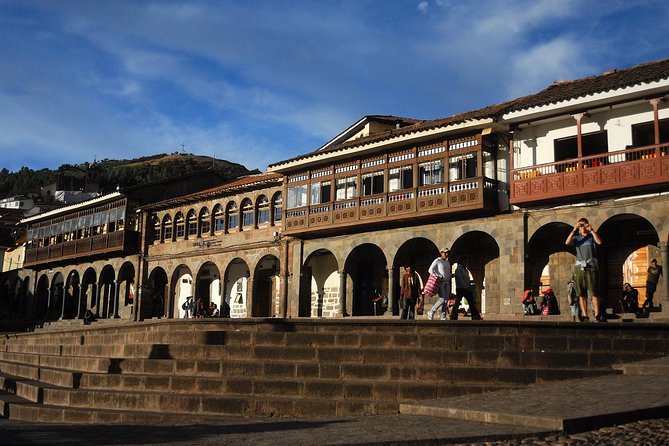
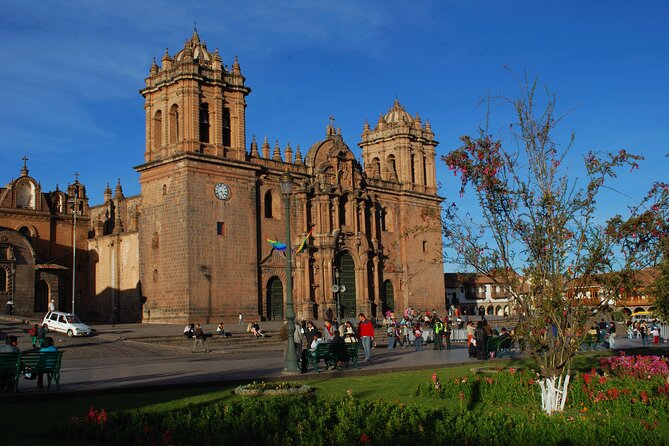
Cusco Cathedral occupies the north side of Plaza de Armas and was built between 1560 and 1654. Admission is included, which is important because the Cathedral is one of the two paid sites covered by the tour.
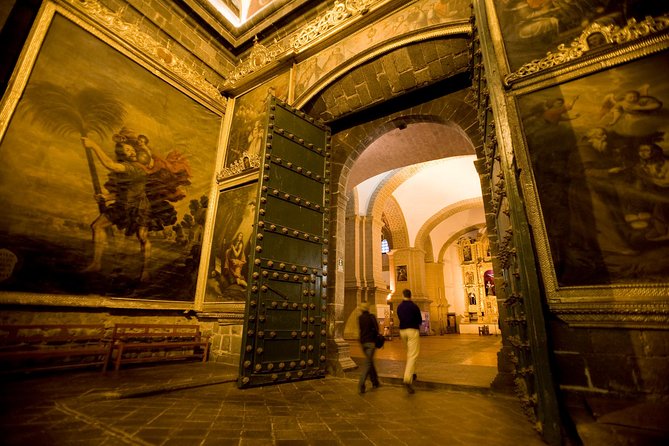
Inside, you can see colonial paintings and carved woodwork. The building is the mother church of the Roman Catholic Archdiocese of Cusco, but the visit also gives you a chance to consider how European religious art was established in the former Inca capital.
The Cathedral is a strong final stop because Plaza de Armas puts you right in the center of Cusco. After the visit, you can continue exploring, find a restaurant, shop, or simply sit and watch the square. Some people found the Cathedral visit too quick, while others valued it as part of the broader historical picture.
That difference comes down to expectations. If you want a guided introduction to the building’s art and role in the city, the stop should help. If you want a detailed study of every chapel and painting, you may want to return independently.
The guide can make or break the afternoon
The most praised part of this experience is the guiding. Guides named in individual feedback include Henry, José Marie, Gabriel, Manuel, Marcelo, and Robin. Their strengths were described in practical terms: clear explanations of Cusco’s past, answers to questions, cultural context, and a friendly manner.
One solo visitor especially valued Gabriel’s help with photographs and his attention to an independent participant. Another person praised Marcelo’s command of Peruvian history, while Robin was singled out for keeping the group engaged. These details matter because a city tour depends less on the number of stops than on how well the guide connects them.
The service is bilingual in Spanish and English. That is useful, but you should be aware that a mixed group can affect the amount of English explanation. One English-speaking participant found that most of the commentary was delivered in Spanish, followed by short English translations. Another English-speaking couple had a very positive experience with the guide’s explanations.
If you are particular about language balance, confirm how the tour will be handled when you meet the guide. A bilingual tour does not always mean equal minutes in each language.
Small groups, vehicles, and the risk of lost time
The maximum group size is 15 people. That is small enough for a more personal feel than a large coach tour, though the actual group may be smaller. One booking had only one participant, and other outings included small mixed-language groups.
Hotel pickup and drop-off are included from select hotels. Some hotels sit in areas where vehicles are not allowed, so you may need to meet the driver or guide at an accessible point. The tour is also near public transportation, which gives you a backup if you are staying outside the pickup area.
The vehicle is useful because it links several points efficiently. One person appreciated the comfort and speed even though the sights can also be visited on foot. But shared transport can create problems. A serious complaint described an extended wait, an attempted pickup at another hotel, and a shortened tour. The company refunded that booking, but the lost afternoon was still a real inconvenience.
Other accounts report prompt pickup, careful driving, and smooth organization. My advice is simple: keep the afternoon flexible, confirm the pickup details, and contact the operator quickly if the vehicle is late. Do not schedule a nonrefundable dinner immediately after the stated finish unless you have a generous buffer.
Duration deserves a close look
The published duration is approximately 3 hours and 30 minutes, starting at 2:00 pm. That makes the tour a convenient afternoon introduction, especially if you want to see key sights without giving up the entire day.
Actual timing appears to depend on traffic, pickup stops, group needs, and the guide. Some people completed the experience in roughly the expected period. Others felt it ended after about 2.5 hours or that the guide hurried to finish. One person had an abbreviated outing after a pickup failure.
The listed stop times also should not be read as four separate, full-length visits. They describe the route, but the total tour is much shorter than adding every number together. Think of this as a guided circuit with short visits, not a half-day museum program.
Altitude changes how you experience Cusco
Cusco’s elevation is not a small footnote. A few people enjoyed the leisurely pace, while one couple felt sick for the entire outing. Their practical advice was to allow a day to acclimatize, drink tea or soup, and ask a local pharmacy about altitude sickness medicine.
You should treat that advice as preparation, not medical instruction. If you arrive in Cusco the same day, a gentle sightseeing tour may still feel like too much. Several people did find the outing ideal soon after arrival, but your own response to altitude is impossible to predict from a booking page.
I would schedule this after some rest if possible. Carry water, take the walking sections slowly, and speak up early rather than trying to keep pace silently.
Is $59 a fair price?
For $59, you are paying for organization as much as admission. Cathedral and Qorikancha tickets are included, along with a bilingual guide, transport, and hotel pickup and drop-off where access allows.
The price makes sense if you value structure and have limited time in Cusco. A private taxi between sights, separate entrance fees, and a guide arranged on your own could easily make a self-planned afternoon less simple, even if the individual sights are close together.
The value is weaker if you are comfortable walking, reading about the sites yourself, and returning later for longer visits. San Pedro Market, Hatun Rumiyoc Street, Plaza de Armas, and the exterior views can be reached without a tour. The fee earns its keep through the guide’s explanations and the convenience of arranging the full circuit.
Free cancellation is available if you cancel at least 24 hours before the local start time. Changes or cancellations inside that window are not refunded, so keep that deadline in mind.
Who should book this Cusco city tour?
I would choose this experience if you want a guided first look at Cusco, prefer a small group, and want the major cultural stops arranged in one afternoon. It is particularly useful for solo visitors, couples, and anyone who wants historical context without planning every transfer.
It also suits you if the Temple of Qorikancha, the Cathedral, and San Pedro Market are all on your list. The route gives each a place in the same story, from Inca power to Spanish colonial rule to present-day market life.
I would hesitate if you need a slow museum visit, exact timing, or a fully English-only experience. I would also avoid placing it directly after a long flight if altitude has affected you before. The tour’s best quality is its range, and its main weakness is that range can make each individual stop feel short.
FAQ
How long does the Cusco city sightseeing tour last?
The advertised duration is approximately 3 hours and 30 minutes. Some experiences have been shorter, depending on traffic, pickups, and the pace of the group.
What time does the tour start?
The stated start time is 2:00 pm.
What attractions are included?
The route includes San Cristóbal Plaza, San Pedro Market, Qorikancha Temple, the San Blas artisans’ quarter, Hatun Rumiyoc Street, the Twelve-Angled Stone, the former Inca Roca Palace, Plaza de Armas, and Cusco Cathedral.
Are entrance tickets included?
Admission to Cusco Cathedral and Qorikancha Temple is included. San Cristóbal Plaza, San Pedro Market, and the Centro Histórico stop do not list an admission charge.
Is hotel pickup included?
Hotel pickup and drop-off are included from select hotels. Some hotels are in areas where vehicles are not allowed, so a nearby meeting point may be required.
Is the tour offered in English?
Yes. The tour is provided with live bilingual Spanish and English service. The amount of commentary in each language can depend on the group.
How many people can join the tour?
The maximum group size is 15 people.
Can I cancel for a full refund?
Yes, if you cancel at least 24 hours before the experience begins. Cancellations or changes made less than 24 hours before the start time are not refunded.
Should you book it?
Book this tour if you want an efficient introduction to Cusco and value a guide who can explain why the city’s Inca and colonial layers sit side by side. The strongest plan is to take it after you have had time to adjust to the altitude, keep your evening open, and treat the afternoon as an overview rather than a detailed study of every site.
The $59 price is fair for the included entries, transport, and guiding, especially on a first visit. Just confirm pickup details, expect a mixed-language group, and allow extra time in case traffic or shared pickups slow the route. For many people, Qorikancha, San Pedro Market, and the Cathedral will give you exactly the grounding you need before exploring Cusco on your own.
More City Tours in Cusco
- Cusco: Sightseeing Tour of the City on an Open-Top Bus
★ 4.0 · 481 reviews - Open Bus Cusco City Tour
★ 4.5 · 219 reviews - Cusco: City Tour | Half-Day Tour to 4 Archaeological Sites
★ 4.6 · 206 reviews - City Tour in Cusco & visit Museum South American Camelid Private.
★ 5.0 · 147 reviews
Just added in Cusco
- Private Transfer from Airport to Hotel in the City of Cusco★ 4.0 · 5 reviews
- Best Cusco walking tour: dinner street food tasting★ 4.5 · 11 reviews
- Cusco Private Transportation for 2026★ 5.0 · 4 reviews
- Private Tour to Pisac Market and Pisac Ruins★ 5.0 · 4 reviews
- Machu Picchu Day Trip With Panoramic Train from Cusco★ 5.0 · 10 reviews
- Sacred Valley Private Tour from Cusco, Guide and Driver only★ 5.0 · 4 reviews
- Sacred Valley of the Incas Tour★ 5.0 · 12 reviews
- Private Tour of the Mountain of Colours by Quad★ 5.0 · 7 reviews
Cusco City Tours, compared.
Half-Day City Tour with Sacsayhuaman and Q’enco
Read our review →
City Tour Cusco Qoricancha Sacsayhuaman y Tambomachay
Read our review →
Cusco City Sightseeing and Sacsayhuaman Archeological Park Tour
Read our review →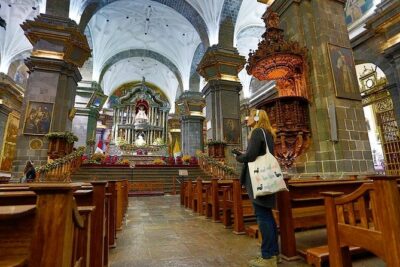
Cusco 4-Hour Private Tour Including Sacsayhuaman and Qenqo
Read our review →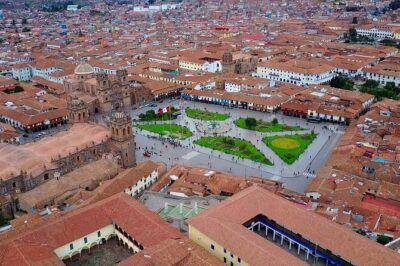
Browse the lists this tour appears in