
Reviewed · PERU FOOD TOURS AND COOKING CLASSES
Peruvian Cooking Class Cocktails and Market Tour in Cusco
Taste Cusco with your hands. This four-hour experience starts at San Pedro Market, then moves to a cooking studio where you prepare ceviche, causa limeña, quinoa tamal, two pisco cocktails, and picarones. I like the market-to-kitchen format, and I like that you eat a full meal rather than a token sample. The main consideration is time: four hours can feel long if you prefer a quick demonstration.
The class has earned an excellent reputation, with chefs and guides including Jorge, Eric, Jesus, and Isaac receiving warm praise for their clear teaching and good humor. I also like the small maximum of 12 people. Just remember that the cooking is organized as a group activity, so you may not personally handle every step or use an individual burner.
In This Review
- Key points to know before booking
- From San Pedro Plaza into Cusco’s food culture
- What the market teaches you about Peruvian ingredients
- Three Peruvian dishes, prepared in one kitchen
- Ceviche, causa, and quinoa tamal: why the menu works
- Pisco cocktails with local fruit
- How the chefs shape the experience
- Is four hours too long?
- What the $57 price includes
- Who should book this Cusco food experience?
- Should you book it?
- FAQ
- Where does the Peruvian cooking class begin?
- How long does the experience last?
- What food will I prepare?
- Are the cocktails included?
- What else is included in the price?
- Can vegetarian diets, allergies, or food restrictions be accommodated?
- What is the cancellation policy?
Key points to know before booking
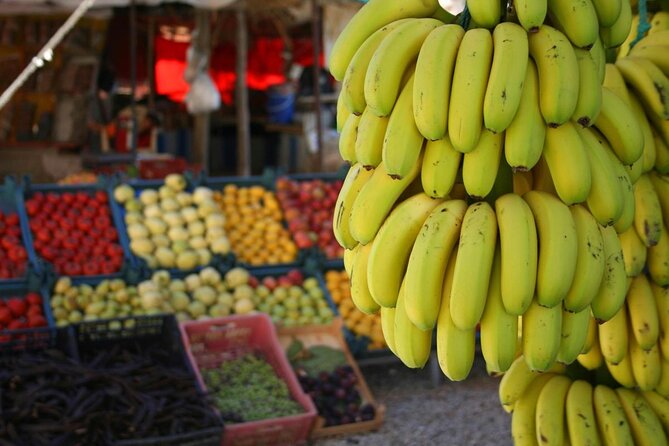
- San Pedro Market comes first: You spend about an hour learning about potatoes, fruits, spices, and other local ingredients before cooking.
- Three dishes and a dessert: The menu includes ceviche, causa limeña, quinoa tamal, and traditional picarones.
- Two cocktails are part of the meal: You prepare drinks built around Peruvian pisco and native fruits.
- Small-group teaching: The class is capped at 12 people, which helps the chef explain each stage and adjust some dishes.
- Recipes go home with you: You can recreate the food and cocktails for family and friends after your visit.
- Plan to arrive hungry: Several portions are prepared and eaten, making this a substantial meal as well as a lesson.
From San Pedro Plaza into Cusco’s food culture
The meeting point is at Plazoleta San Pedro, at C. Sta. Clara 497. This matters because the activity does not begin at the cooking studio. You meet at the market first, so check the address carefully and allow enough time to find the entrance.
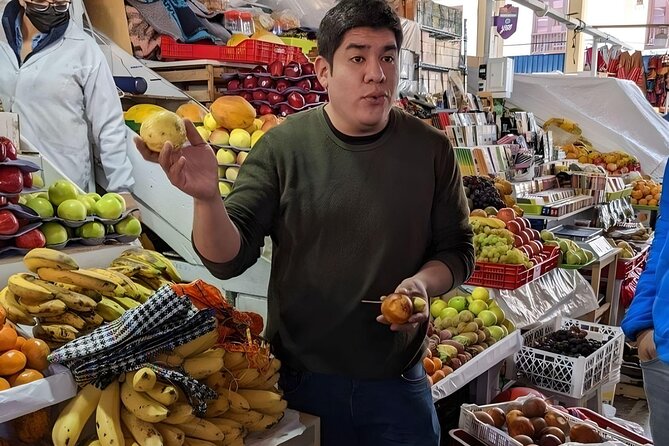
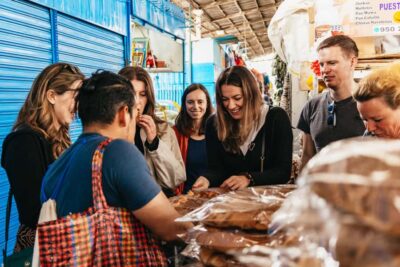
San Pedro Market is a useful place to begin learning about Peruvian food. It is not simply a row of ingredients selected for tourists. It is a working central market where you can see the range of produce used in everyday cooking, including Peru’s many potato varieties. The market visit gives the dishes that follow some context.
A guide such as Isaac or Jorge may explain why certain ingredients are selected for the class and how they fit the recipes. The group also has opportunities to taste local foods and fruits. That tasting is valuable because some produce can be hard to identify from a written recipe alone.
You should expect roughly an hour in the market. The pace is described as informative and fairly fast, with the guide moving between vendors and ingredients before taking the group to the kitchen. The market can be a lot to take in, especially if you are tired from travel, but it gives you a practical introduction to Cusco’s food traditions.
One useful bonus is that you can return to the market later with a better idea of what to buy. Several people have found the vendor recommendations helpful enough to revisit the stalls on their own. The market portion is not just a short photo stop. It is the foundation for the cooking class.
More Food Tours and Cooking Classes in Cusco
- Cusco: Peruvian Cooking Class, Cocktails & Local Market Tour
★ 4.9 · 512 reviews - Hands-on Peruvian Cooking Class & San Pedro Market Visit in Cusco
★ 5.0 · 421 reviews - Bean to Bar Chocolate Workshop in ChocoMuseo Cusco
★ 5.0 · 410 reviews
What the market teaches you about Peruvian ingredients
Potatoes receive plenty of attention, and rightly so. Peru is known for having thousands of potato varieties, with one participant recalling a lesson about more than 3,000 types. You are unlikely to memorize them all in one visit, but seeing the range helps explain why potatoes appear in so many Peruvian dishes.
The market also introduces you to native fruits and the ingredients used in the cocktails. This is where the drinks become more than a pisco lesson. You get a sense of how Peru’s local produce shapes both savory food and refreshments.
The guide selects ingredients for the later recipes, so you can connect the market stop with what happens at the cooking studio. That connection is one of the strongest parts of the experience. You are not learning about food in one place and cooking unrelated dishes somewhere else.
The drawback is that a market tour depends partly on your comfort with crowds, noise, and a busy food environment. The information is useful, but the hour may feel long if your main interest is cooking rather than shopping. If you want a short market visit followed by a quick demonstration, this is not that kind of activity.
Three Peruvian dishes, prepared in one kitchen
After the market, the class continues at a cooking studio in central Cusco. The space has been described as clean, well organized, and welcoming. Assistants help keep ingredients and timing under control while the chef explains the recipes.
The menu covers three recognizable Peruvian preparations:
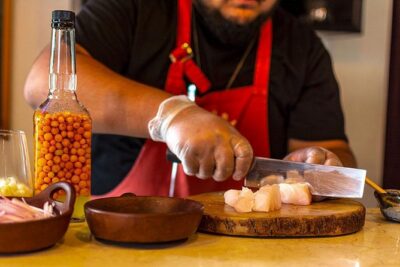
- Ceviche: This gives you a lesson in one of Peru’s best-known dishes, with the class showing how the ingredients come together.
- Causa limeña: This potato-based dish connects directly to the market visit and Peru’s long potato tradition.
- Quinoa tamal: This brings quinoa into the meal in a form that is different from the grain dishes many people already know.
- Picarones: The class ends with this traditional dessert, giving you something sweet after the savory courses and drinks.
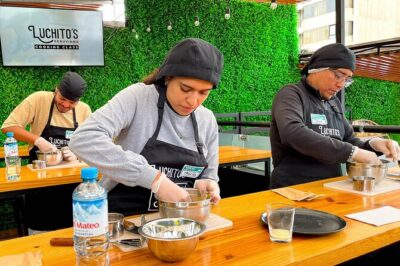
The class is hands-on, but you should understand the format. You will take part in preparing the recipes, yet the whole group may work from shared bowls and stations. One participant felt the setup was more like a guided school kitchen than a fully independent cooking lesson, with ingredients passed around rather than each person cooking every item from scratch.
That is an important distinction. If you want your own burner, knife work, and complete control of each dish, you may find the class less personal than expected. If you prefer a well-paced group lesson where the chef keeps the meal moving, the arrangement works better.
The staff also helps with preparation and timing. This means you can focus on learning and eating instead of waiting for every stage to finish. It also explains why the group can complete three dishes, two cocktails, and dessert within about three hours at the studio.
Ceviche, causa, and quinoa tamal: why the menu works
The menu is well chosen for a first introduction to Peruvian cooking. Ceviche is immediately recognizable, but it also shows how local ingredients and seasoning create a distinctly Peruvian result.
Causa limeña gives the class a different texture and flavor profile. Since potatoes are such an important part of the market tour, this dish helps tie the earlier lesson to the plate in front of you. It is also a practical recipe to remember at home because it does not feel like a restaurant-only preparation.
The quinoa tamal adds another local ingredient and gives the meal more range. You are not making three versions of the same dish. The menu moves through seafood, potatoes, grains, and dessert, so the meal feels varied.
Picarones provide a traditional finish. The dessert is included in the meal, though the listed highlights focus mostly on the three savory courses and cocktails. You should not assume dessert is an optional extra. It is part of the planned food.
Portions are generous enough that you should arrive hungry. The experience is not built around tiny tasting bites. You prepare and eat enough food that many people leave full, so avoid scheduling another major meal immediately afterward.
A completely different kind of day:
- Classic Inca Trail Trek 4D/3N to Machu Picchu (Group Service)
★ 5.0 · 8,653 reviews - Cusco: Rainbow Mountain and Red Valley Day Trip with Meals
★ 4.9 · 4,893 reviews - Machu Picchu: 4-Day Inca Trail Trek with Panoramic Train Ride
★ 5.0 · 4,568 reviews - Salkantay Classic Trek 5 Days from Cusco
★ 5.0 · 4,062 reviews
Pisco cocktails with local fruit
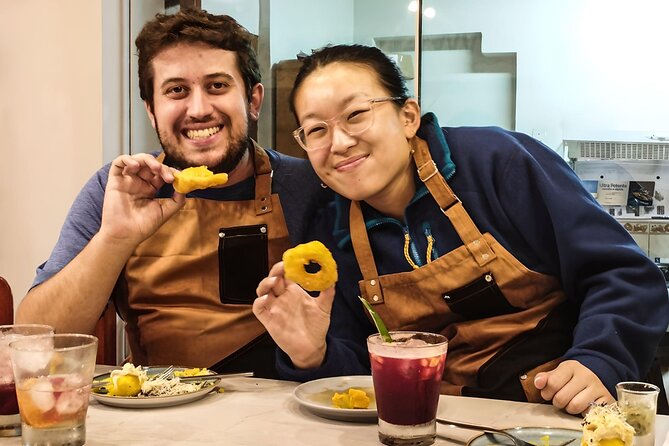
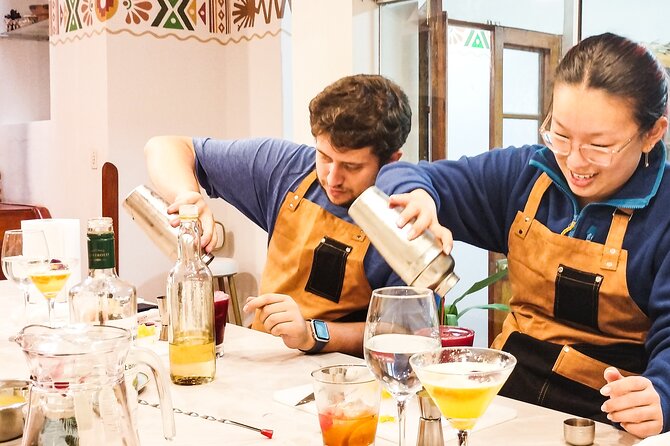
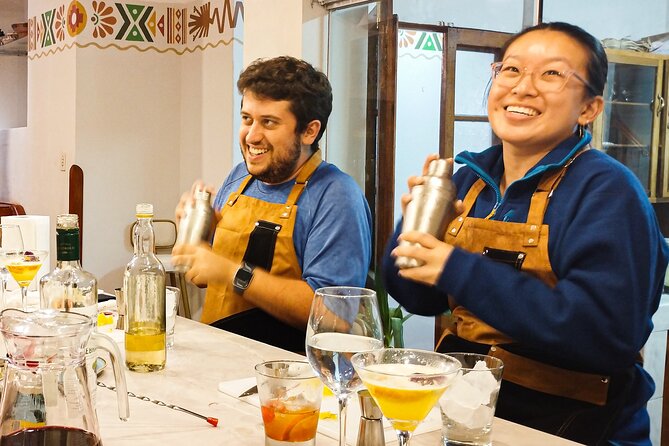
The drink portion is a major reason to choose this class instead of a standard cooking lesson. You prepare two cocktails using pisco and native fruits, with pisco sours receiving particular attention in the teaching.
The focus is not only on drinking the finished cocktails. The chef walks you through the steps so you can repeat them at home. That makes the drink lesson useful even if you are more interested in food than mixology.
The cocktails also add a social rhythm to the class. Cooking with a small group can be a friendly way to meet people from different countries, especially during the shared preparation and final meal. The atmosphere has been described as relaxed and cheerful, with chefs such as Jorge, Eric, and Jesus bringing their own style to the class.
Keep the alcohol in mind when planning your day. Two cocktails are included, and the activity lasts about four hours. You will also be eating a substantial meal. If you are sensitive to alcohol at Cusco’s altitude, take the pace seriously and use the included bottled water.
How the chefs shape the experience
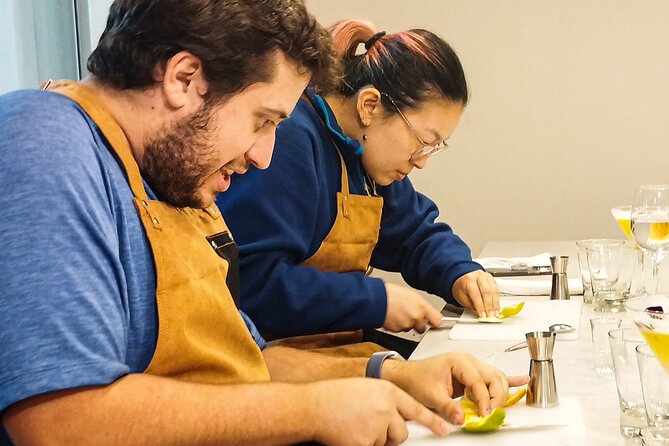
The class is presented by Peruvian Cusco Flavors, and several instructors may lead the session. Jorge is repeatedly praised for clear explanations, warmth, and attention to comfort. Eric is described as lively and well informed about food and local culture. Jesus is noted for adding his own chef’s touch, while Isaac has been praised for his market explanations.
That variation can be a positive feature. The personalities may differ, but the core format remains the same: market visit, guided preparation, cocktails, meal, and recipes.
The assistants deserve attention too. Their work keeps ingredients ready and the cooking stations in order. This behind-the-scenes organization is easy to overlook, but it helps the class stay on schedule.
You may also receive adjustments for allergies, vegetarian preferences, or other food restrictions. One participant who did not enjoy fish was offered an alternative. Still, you should state your needs when booking rather than wait until the class begins. The activity specifically says vegetarian options, allergies, and food restrictions can be accommodated, but the exact replacement dish is not specified.
Is four hours too long?
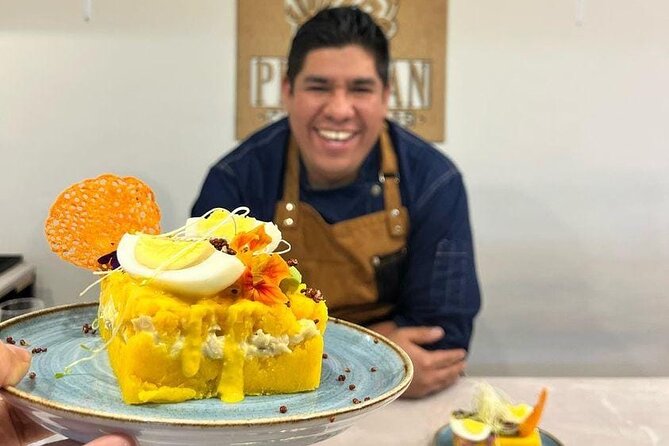
For most people who enjoy food, the four-hour length gives the experience room to breathe. About one hour is spent at San Pedro Market, followed by roughly three hours in the cooking studio. That allows time for explanations, preparation, cocktails, eating, and dessert without turning the class into a rushed checklist.
The same length can feel tiring if you want a compact activity. One participant found the combined market and cooking session longer than expected and was ready to leave before the end. The class is especially full because it includes three dishes, two drinks, and dessert.
I would schedule it on an evening when you do not have another major plan. It can work well on your first day in Cusco because it introduces local food while giving you a structured activity during your first period at altitude. But the alcohol and the four-hour schedule mean you should keep the rest of the day easy.
The activity ends back at the meeting point. You do not need to arrange a separate return transfer, though you should confirm your onward plans around that location.
What the $57 price includes
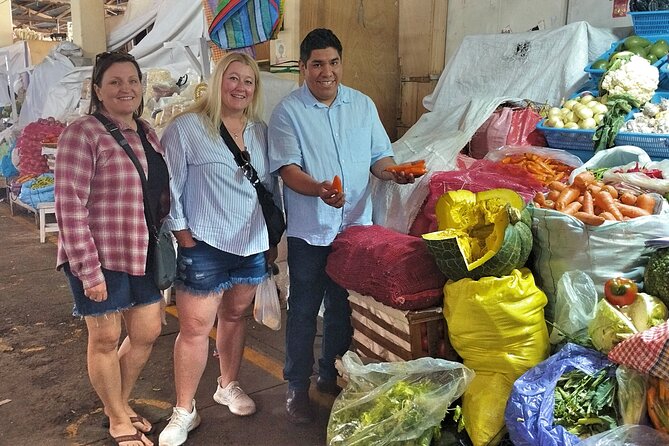
At $57 per person, this is a fair value for a four-hour experience if you plan to eat the meal and use the recipes later. The price includes the market visit, cooking instruction, three dishes, one dessert, two class cocktails, equipment, and bottled water.
Compare it with the cost of a restaurant meal in Cusco, then add the value of a chef-led lesson and a market introduction. You are paying for more than the food on the plate. You are also getting an explanation of ingredients, practical preparation, drinks, and recipes to take home.
The value is strongest for couples, families, solo participants, and friends who enjoy shared activities. A family of five can join, and the small group limit helps keep the class from becoming a large demonstration.
The value is weaker if you are seeking professional kitchen training. The shared stations and occasional hands-off preparation mean you may not personally cook every component. In that case, part of the cost goes toward the social format and finished meal rather than individual technical practice.
The experience is booked an average of 32 days ahead, which suggests you should not leave it until the last minute if your Cusco dates are fixed. Confirmation is provided at booking, and free cancellation is available up to 24 hours before the start time. Cancellations or changes made later are not refunded or accepted.
Who should book this Cusco food experience?
I would recommend it to you if you want a friendly introduction to Peruvian food without spending a full day on a formal culinary course. It suits people who enjoy eating, learning a few useful techniques, and meeting others around a table.
It is especially good for:
- Families wanting an activity that appeals to adults and older children
- Couples looking for an evening built around food and drinks
- Solo visitors who want a social setting
- Cooks who want recipes for ceviche, causa limeña, quinoa tamal, and pisco cocktails
- Anyone curious about San Pedro Market but unsure how to read its ingredients
I would think twice if you dislike group cooking, cannot comfortably spend four hours on your feet or on a stool, or want a private lesson. One comment specifically suggested that the stools could use an upgrade. Seating comfort is a small issue, but it may matter during a long class.
You should also be comfortable with the possibility that the chef demonstrates some steps while participants assist with others. The experience offers hands-on participation, but it is not the same as giving every person a full kitchen setup.
Should you book it?
Yes, if you want one activity that combines a market walk, a substantial meal, Peruvian drinks, and a useful cultural lesson. The strongest feature is the link between San Pedro Market and the cooking studio. You see the ingredients, learn why they matter, then use them in dishes you eat soon afterward.
At $57, the combination is good value, especially because cocktails, dessert, equipment, water, and recipes are included. Book it well ahead if your schedule is tight, arrive ready to eat, and tell the provider about dietary needs in advance.
Skip it if you want a short demonstration or a private, fully individual cooking lesson. For everyone else, this is a practical and enjoyable way to get acquainted with Cusco through its food.
FAQ
Where does the Peruvian cooking class begin?
The activity begins at Plazoleta San Pedro, C. Sta. Clara 497, Cusco 08002, at the San Pedro Market.
How long does the experience last?
The experience lasts approximately four hours. About one hour is spent at the market, followed by about three hours at the cooking studio.
What food will I prepare?
You will prepare ceviche, causa limeña, and quinoa tamal. Traditional picarones are also served as dessert.
Are the cocktails included?
Yes. The class includes two cocktails made with pisco and local or native fruits.
What else is included in the price?
The price includes the three dishes, one dessert, class cocktails, all necessary cooking equipment, and bottled water.
Can vegetarian diets, allergies, or food restrictions be accommodated?
Yes. Vegetarian options, allergies, and other food restrictions are listed as available. Tell the provider about your needs when booking.
What is the cancellation policy?
You can cancel up to 24 hours before the experience begins for a full refund. Cancellations or changes made less than 24 hours before the start time are not accepted or refunded.
More Markets in Cusco
- Pisac Indian Market and Ollantaytambo Fortress with Lunch
★ 4.5 · 395 reviews - Local Market and Peruvian Cooking Class with Pisco Sour in Cusco
★ 5.0 · 384 reviews - Traditional Peruvian Cooking Class and Market Tour in Cusco
★ 5.0 · 375 reviews - Cooking class and market tour with a local chef
★ 5.0 · 186 reviews
Just added in Cusco
- Cusco Private Transportation for 2026★ 5.0 · 4 reviews
- Private Transfer from Airport to Hotel in the City of Cusco★ 4.0 · 5 reviews
- Best Cusco walking tour: dinner street food tasting★ 4.5 · 11 reviews
- Private Tour to Pisac Market and Pisac Ruins★ 5.0 · 4 reviews
- Machu Picchu Day Trip With Panoramic Train from Cusco★ 5.0 · 10 reviews
- Sacred Valley Private Tour from Cusco, Guide and Driver only★ 5.0 · 4 reviews
- Sacred Valley of the Incas Tour★ 5.0 · 12 reviews
- Private Tour of the Mountain of Colours by Quad★ 5.0 · 7 reviews
Peru Food Tours and Cooking Classes, compared.
Peruvian Cooking Class, Local Market Tour & Exotic Fruit Tasting
Read our review →
3 Day Tour From Lima: Paracas, Huacachina Oasis & Pisco Vineyard
Read our review →
Peruvian Cooking Class, Cocktails & Local Market Tour
Read our review →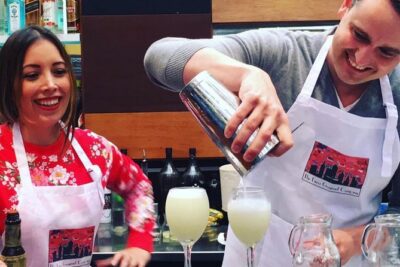
Browse the lists this tour appears in