
Reviewed · PERU FOOD TOURS AND COOKING CLASSES
Cooking class and market tour with a local chef
Cusco tastes better when you cook it. This four-hour market tour and cooking class pairs a walk through San Pedro Market with hands-on lessons in Peruvian food, led by a Cusco-born chef. I especially like the chance to taste local fruits, cheeses, and other ingredients before cooking, and the flexible menu lets you choose between lomo saltado or ceviche, with vegetarian and allergy-friendly adjustments available. The main drawback is that transportation is not included, and some people may find $57 a little high for a cooking class with only one cocktail.
The class is taught in English or Spanish, and the small-group format can sometimes turn into a private lesson, as happened to some morning participants. Chef Ronal receives repeated praise for his friendly teaching, clear cutting tips, and ability to explain food as part of Cusco’s culture rather than as a list of recipes.
In This Review
- Key points at a glance
- Starting at San Juan de Dios Street
- San Pedro Market before the cooking begins
- A working kitchen, not just a demonstration
- The shared starter: rocoto relleno and causa rellena
- Choosing between lomo saltado and ceviche
- Pisco sour, passion fruit sour, or no alcohol
- What makes the chef important
- Is $57 a fair price?
- Practical details before you book
- Should you book this Cusco cooking class?
- FAQ
- Where does the cooking class meet?
- How long does the experience last?
- What languages are available?
- What dishes can I prepare?
- What drink is included?
- Is transportation included?
- Can I cancel or pay later?
Key points at a glance
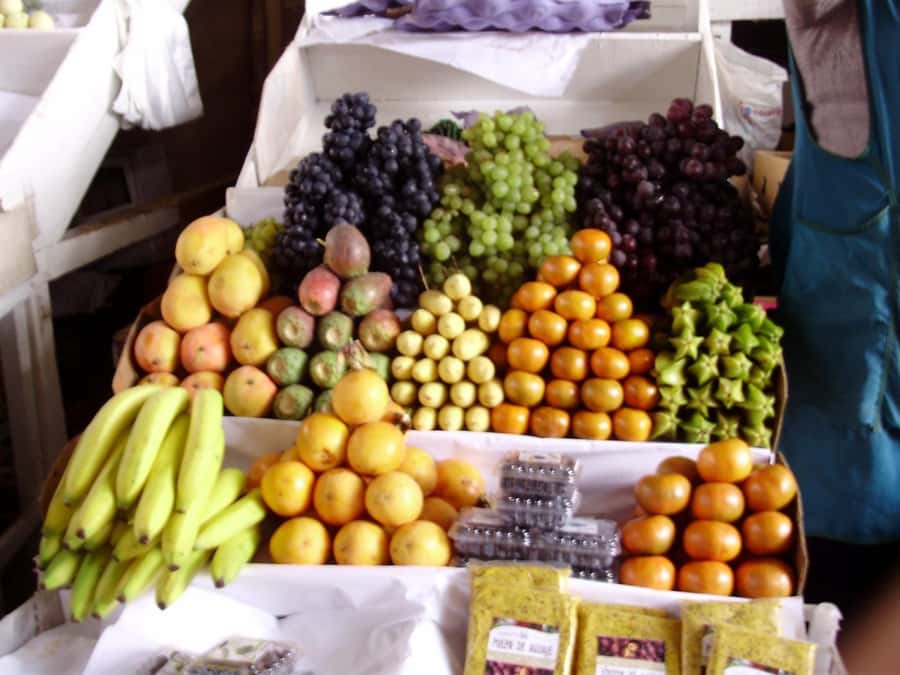
- San Pedro Market comes first: You sample Peruvian fruits, cheese, bread, herbs, vegetables, and other local products before cooking.
- Chef Ronal leads the class: He is a Cusco native and professional chef who explains ingredients, techniques, and local food customs.
- You choose the main dish: Prepare either lomo saltado or ceviche, with vegetarian versions and other adjustments available.
- The starter is rocoto relleno and causa rellena: The class includes a stuffed pepper and a potato-based dish, with the menu adapted when needed.
- One pisco-based drink is included: Choose pisco sour, passion fruit sour, or a nonalcoholic fruit and honey drink.
- The price includes nearly everything for the meal: Ingredients, equipment, apron, water, the class, a cocktail, starter, and main course are included for $57.
Starting at San Juan de Dios Street
The class meets at 264 San Juan de Dios Street, in front of the Aranwa boutique Hotel. Look for the glass and wooden door across the street. It has no advertising, so the address matters more than a bright sign.
You need to make your own way there because transportation is not included. If you are staying near central Cusco, check your walking route in advance and allow a little extra time for the city’s slopes and altitude. A taxi may be the simplest choice if you are carrying a camera, dealing with altitude, or attending the evening session.
The activity lasts four hours. Starting times vary, so check availability when booking. Free cancellation is available up to 24 hours before the class, and you can reserve now and pay later, useful if your Cusco plans are still shifting.
More Food Tours and Cooking Classes in Cusco
- Peruvian Cooking Class Cocktails and Market Tour in Cusco
★ 5.0 · 1,712 reviews - Cusco: Peruvian Cooking Class, Cocktails & Local Market Tour
★ 4.9 · 512 reviews - Hands-on Peruvian Cooking Class & San Pedro Market Visit in Cusco
★ 5.0 · 421 reviews
San Pedro Market before the cooking begins
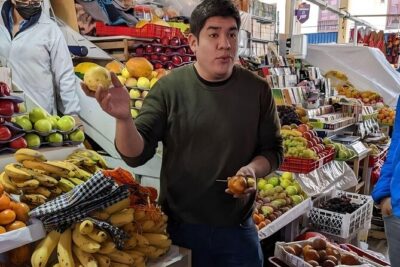
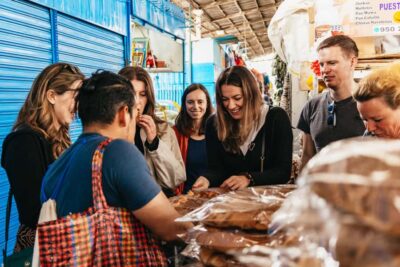
The market visit is the heart of the experience. Instead of starting with a recipe card in a kitchen, you first see the ingredients in the setting where locals buy and sell them.
Chef Ronal guides you through the market and explains Peruvian produce, cheeses, meats, herbs, fruits, and market customs. The tasting is part of the fun. You may try fresh local fruits, cheese, and bread, with the selection depending on what is available that day.
This is especially useful in Cusco, where unfamiliar ingredients can otherwise appear on a plate without much explanation. The market gives you a better sense of what you are eating and why potatoes, ají peppers, corn, fruit, and herbs matter so much in Peruvian cooking. One useful food fact shared during the class is that Peru has thousands of potato varieties, a detail that makes the country’s famous potato dishes easier to appreciate.
The timing can change the feel of the visit. One morning group found the market less crowded and especially easy to explore, with a wide range of fruits, vegetables, meats, cheeses, and herbs on display. An afternoon visit may have a livelier feel, but a morning booking could suit you better if you prefer more room to stop and ask questions.
The market is not simply a backdrop for photographs. You spend time tasting and learning, then use that knowledge in the kitchen. That connection gives the class more purpose than a standard cooking demonstration.
A working kitchen, not just a demonstration
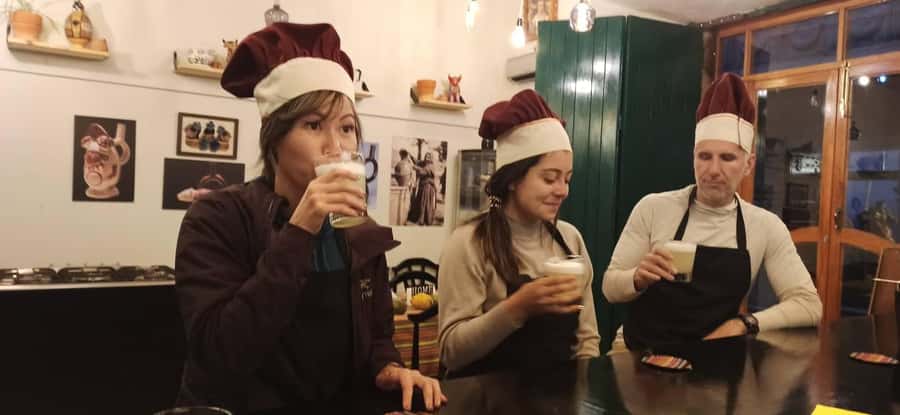
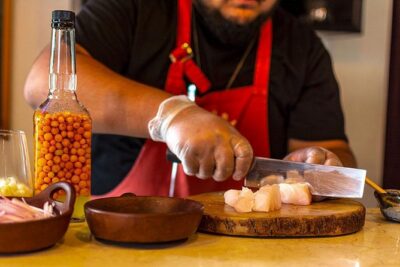
Back at the workshop, you put on an apron and use the provided kitchen and bar equipment. The class is hands-on, but you are not left to guess your way through the recipes.
Chef Ronal demonstrates the techniques and helps participants with practical basics such as cutting ingredients. That makes the class suitable for beginners, while more experienced cooks can still pick up useful ideas about seasoning, preparation, and Peruvian ingredients.
The cooking setup is described as clean and well organized. Equipment and utensils are supplied, so you do not need to bring anything beyond comfortable clothing and a willingness to handle a kitchen knife. The atmosphere is relaxed rather than formal, and solo participants can usually chat with the rest of the group while preparing the meal.
The group size is not specified, and it can vary. Some sessions have been small enough to feel like private lessons, especially on quieter mornings or holidays. A larger group may mean more social energy but less individual attention at certain moments. If personalized instruction matters most, a morning slot may be worth considering, though no particular group size is guaranteed.
The shared starter: rocoto relleno and causa rellena
Everyone receives the same starter selection, built around two Peruvian dishes.
Rocoto relleno is a traditional stuffed chili. The filling combines meat, onions, peas, carrots, peanuts, and raisins, then the pepper is covered with local cheese and baked. It brings together heat, sweetness, savory filling, and a rich baked finish.
The other starter is causa rellena, a potato cake mixed with yellow chili sauce. It is filled with avocado, fish tartare, mayonnaise, and spices. This gives you a different look at Peruvian potato cookery, with a cooler, softer texture than the baked rocoto.
Because the starter is the same for everyone, tell the chef about allergies, intolerances, religious restrictions, or food preferences before cooking begins. The class states that it can adapt to different diets, and several participants received vegetarian, dairy-free, gluten-free, or allergy-conscious adjustments.
The menu includes meat and fish, and the activity notes that meat from animals eaten by local people may be shown. If that could bother you, ask for clarification before booking or at the start of the class. This is a food education experience, not a vegetarian-only workshop.
A completely different kind of day:
- Classic Inca Trail Trek 4D/3N to Machu Picchu (Group Service)
★ 5.0 · 8,653 reviews - Cusco: Rainbow Mountain and Red Valley Day Trip with Meals
★ 4.9 · 4,893 reviews - Machu Picchu: 4-Day Inca Trail Trek with Panoramic Train Ride
★ 5.0 · 4,568 reviews - Salkantay Classic Trek 5 Days from Cusco
★ 5.0 · 4,062 reviews
Choosing between lomo saltado and ceviche
Before the class begins, you choose your main dish. That choice gives the meal a personal touch and lets you focus on the style of cooking you most want to learn.
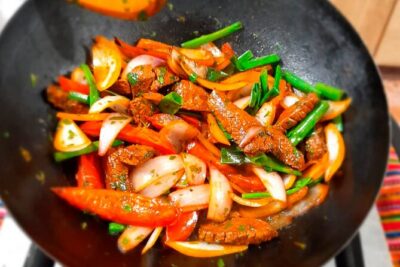
Lomo saltado combines beef tenderloin with rice, onions, tomatoes, soy sauce, oyster sauce, vinegar, and native potato fries. It is a good choice if you want to learn a hot, savory dish with a Peruvian-Chinese influence. The contrast between stir-fried beef, tangy sauce, rice, and potatoes makes it one of the more approachable Peruvian dishes to recreate at home.
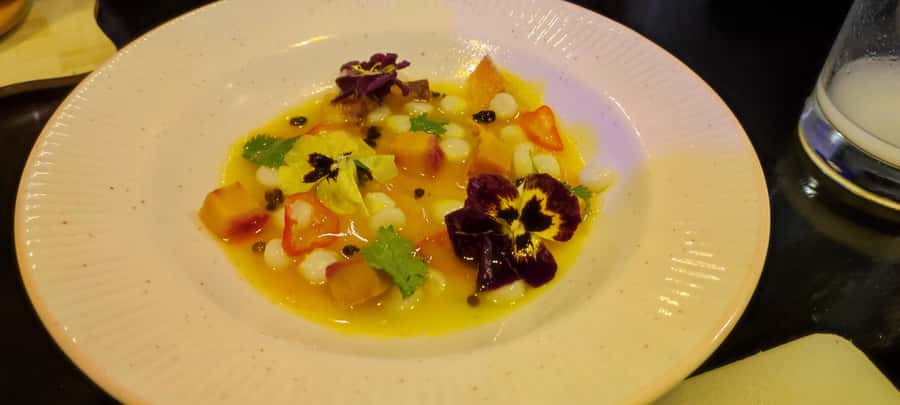
Ceviche uses trout, mango, avocado, lime juice, onions, celery, ginger, corn, and sweet potato. This version is not just fish and lime. The fruit, herbs, vegetables, and traditional accompaniments create a broader set of flavors and textures.
The class may provide vegetarian alternatives. A published example included veggie ceviche and a vegetarian version of saltado, showing that the adaptation can go beyond simply removing meat. Still, explain your needs clearly when making your selection. The class can accommodate diets, but the menu needs to be adjusted before preparation starts.
Ceviche is likely the better pick if you want seafood and fresh, sharp flavors. Lomo saltado suits you if you prefer a cooked main dish and a heartier meal. If you are unsure, ask Chef Ronal to explain the preparation and ingredients before choosing.
Pisco sour, passion fruit sour, or no alcohol
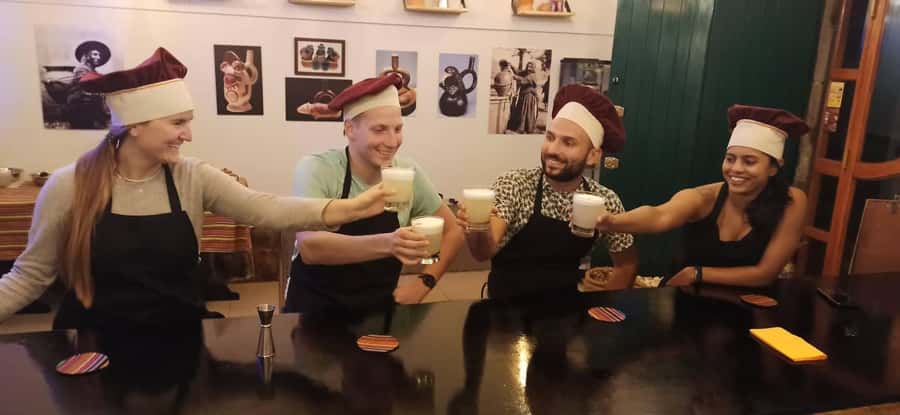
The included drink is made with pisco, Peru’s grape-based national spirit. You can choose a classic pisco sour, made with lime, syrup, and egg white, or a passion fruit sour using fresh passion fruit juice.
The pisco sour is more than a bar stop at the end of the day. Making it yourself adds a simple cocktail lesson to the cooking class, and it gives you another familiar Peruvian recipe to try at home. The passion fruit version offers a fruitier alternative.
A nonalcoholic drink made with Peruvian fruits and honey is available. This is important for anyone avoiding alcohol, and it gives children and other non-drinkers something more thoughtful than plain water.
One practical note: only one cocktail is included. One participant felt the price would have seemed sweeter with a second pisco sour. That is a fair point if you are comparing this with a full meal and drinks at a restaurant. The class is priced mainly for the instruction, market visit, ingredients, equipment, and cultural context, not for alcohol consumption.
Water is included. Natural remedies for altitude discomfort and digestive teas may also be offered if needed, but you should not treat these as a substitute for medical care.
What makes the chef important
The chef is not simply there to keep the class moving. Chef Ronal’s role adds local context to the food.
He was born in Cusco and explains both the cooking and the place behind it. The strongest part of his teaching is the mix of practical help and conversation. He demonstrates techniques clearly, tastes the food as it develops, answers questions, and shares suggestions you can use at home.
That approach helps beginners. You can learn how to cut ingredients safely, follow the order of preparation, and understand why a dish needs a particular sauce or garnish. More experienced cooks may appreciate the local ingredient advice and the chance to compare methods.
The class can also be social. Solo participants have found it easy to meet other people while chopping, stirring, and eating together. Families can enjoy it too. A family with children aged 11 and 13 had a good experience, although the formal restrictions exclude very young children. Children under six are listed as unsuitable, along with babies and toddlers, so check the current age rules carefully if you are planning a family activity.
Recipe instructions are sent by email after the class, according to one participant. That adds real value because you can make the food again after returning home rather than leaving with only a full stomach and a few blurred photographs.
Is $57 a fair price?
At $57 per person, this is not the cheapest meal in Cusco. You can eat local food for less, and a market walk on its own costs nothing beyond what you choose to buy.
The value comes from combining several things in one four-hour session:
- A guided visit to San Pedro Market
- Fruit, cheese, and other tastings
- A professional cooking lesson
- Fresh ingredients
- Kitchen and bar equipment
- An apron and water
- A starter and main course
- One cocktail or nonalcoholic drink
- Guidance for dietary restrictions
- Recipe information for cooking at home
For me, the price makes the most sense if you care about food, want an active cultural activity, or are looking for a meal you can recreate later. It is less compelling if you only want to eat Peruvian dishes or if you expect several alcoholic drinks.
The class also works well early in your Cusco stay. One participant booked it near the start of a visit to allow time to adjust to the altitude, while others appreciated the advice about altitude sickness and local herbs. Keep in mind that people currently suffering from altitude sickness are listed as unsuitable for the activity. If you feel unwell, do not force yourself through a four-hour cooking session.
Practical details before you book
Wear comfortable clothes and shoes. You will walk through a market, stand in a kitchen, handle ingredients, and use a knife.
Tell the provider about dietary restrictions before the class begins. The menu can be adapted, but early notice gives the chef a better chance to prepare suitable alternatives.
English and Spanish instruction is available. The meeting point is indoors at the workshop, but the unmarked glass and wooden door can be easy to miss. Keep the exact address, 264 San Juan de Dios Street, ready on your phone.
Strollers and baby carriages are not allowed. Alcohol and drugs are also prohibited apart from the pisco drink prepared as part of the class. The published restrictions include children under six, babies, people with altitude sickness, people over 70, and people above listed weight limits of 135, 140, or 150 kilograms. The duplicate weight limits are unclear, so ask the provider if this affects you.
Should you book this Cusco cooking class?
You should book it if you want to understand Peruvian food by seeing the ingredients, handling them, and eating the finished dishes. The market visit gives the class a local foundation, while Chef Ronal’s teaching keeps it practical and friendly.
I would especially recommend it to solo visitors, couples, families with older children, first-time cooks, and anyone with food allergies who wants a flexible menu. Book an early session if you prefer a quieter market and want to use the activity as a gentle introduction to Cusco’s food culture.
Skip it if you dislike markets, cannot comfortably stand and cook for several hours, or want a cheap meal with multiple drinks. At $57, the cost is justified by the instruction and full experience rather than by the food alone. For most food-focused visitors, that is a fair trade: you leave with a meal, new recipes, a better understanding of Cusco’s ingredients, and a few cooking skills you can use long after Peru.
FAQ
Where does the cooking class meet?
The meeting point is at 264 San Juan de Dios Street in Cusco, in front of the Aranwa boutique Hotel. Look for a glass and wooden door across the street without advertising.
How long does the experience last?
The market tour and cooking class last four hours.
What languages are available?
The class is offered in English and Spanish.
What dishes can I prepare?
The starter includes rocoto relleno and causa rellena. For the main course, you choose between lomo saltado and ceviche. Vegetarian adaptations are available.
What drink is included?
You can choose a classic pisco sour, a passion fruit sour, or a nonalcoholic drink made with Peruvian fruit and honey.
Is transportation included?
No. You must arrange your own transportation to and from the meeting point.
Can I cancel or pay later?
You can cancel up to 24 hours in advance for a full refund. The booking option also allows you to reserve now and pay later.
More Markets in Cusco
- Pisac Indian Market and Ollantaytambo Fortress with Lunch
★ 4.5 · 395 reviews - Local Market and Peruvian Cooking Class with Pisco Sour in Cusco
★ 5.0 · 384 reviews - Traditional Peruvian Cooking Class and Market Tour in Cusco
★ 5.0 · 375 reviews - Cusco City Sightseeing, San Pedro Market, Cathedral and Qorikancha Temple
★ 4.5 · 139 reviews
Just added in Cusco
- Cusco Private Transportation for 2026★ 5.0 · 4 reviews
- Private Transfer from Airport to Hotel in the City of Cusco★ 4.0 · 5 reviews
- Best Cusco walking tour: dinner street food tasting★ 4.5 · 11 reviews
- Private Tour to Pisac Market and Pisac Ruins★ 5.0 · 4 reviews
- Machu Picchu Day Trip With Panoramic Train from Cusco★ 5.0 · 10 reviews
- Sacred Valley Private Tour from Cusco, Guide and Driver only★ 5.0 · 4 reviews
- Sacred Valley of the Incas Tour★ 5.0 · 12 reviews
- Private Tour of the Mountain of Colours by Quad★ 5.0 · 7 reviews
Peru Food Tours and Cooking Classes, compared.
Peruvian Cooking Class Cocktails and Market Tour in Cusco
Read our review →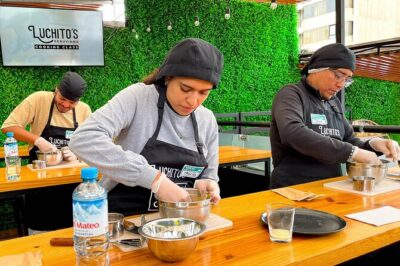
Peruvian Cooking Class, Local Market Tour & Exotic Fruit Tasting
Read our review →
3 Day Tour From Lima: Paracas, Huacachina Oasis & Pisco Vineyard
Read our review →
Peruvian Cooking Class, Cocktails & Local Market Tour
Read our review →Browse the lists this tour appears in