Reviewed · SKIP THE LINE
Skip the Line: Planetarium Cusco Admission Ticket
The southern sky tells a different story. Planetarium Cusco pairs a guided astronomy show with Inca star lore, a few telescope views, and round-trip transport from Plaza Regocijo, making it an easy evening addition to a Cusco itinerary. I especially like the clear focus on Inca astronomy and the small-group feel, with a maximum of 22 people. The main consideration is weather: clouds can limit outdoor viewing, and the indoor projector may bother anyone prone to motion sickness.
This is a two-hour outing rather than a full-night adventure. You meet at 5:30 pm, ride to the planetarium, take part in a presentation in Spanish or English, look through telescopes if conditions allow, and return to central Cusco around 8 pm. At $25 per person, the price is reasonable if you value a guide and transport, but less compelling if you only want a quick look at stars through a telescope.
In This Review
- Key points to know before booking
- Why Planetarium Cusco works well in a busy itinerary
- Meeting at Plaza Regocijo at 5:30 pm
- The ride from central Cusco to the planetarium
- Inside the planetarium: a guided look at southern skies
- The telescopes and outdoor star viewing
- The Inca astronomy presentation
- Is $25 a fair price?
- Who should book this evening?
- Practical details that matter
- Should you book Planetarium Cusco?
- FAQ
- Where does the Planetarium Cusco experience begin?
- What time is pickup?
- How long does the experience last?
- Is hotel pickup included?
- Is transport to the planetarium included?
- Is the guided show available in English?
- What is the minimum age?
- Do I need identification?
- What happens if I need to cancel?
Key points to know before booking
- Inca astronomy is the heart of the show: You learn how the Incas understood constellations and connected the sky with nature, time, and daily life.
- The evening has three main parts: An indoor virtual sky presentation, outdoor telescope viewing, and a final presentation about Inca astronomy.
- Clouds can change the experience: The guides continue with stories and explanations, but outdoor viewing may be limited on cloudy nights.
- The meeting point is central: Pickup is at Plaza Regocijo, next to the fountain, one block from Cusco’s main square.
- English and Spanish groups are available: The group may be divided at the planetarium based on language and attendance.
- Bring identification and warm clothing: A current passport or ID is required, and the evening can feel cold outdoors.
Why Planetarium Cusco works well in a busy itinerary
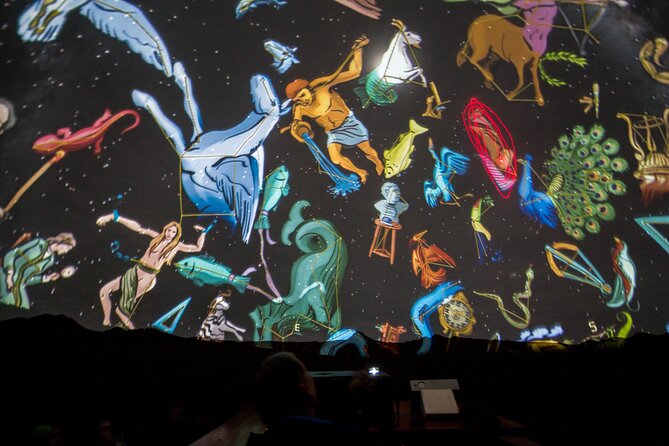
Cusco has no shortage of churches, ruins, markets, and walking tours. After several days of stonework and steep streets, a quiet evening looking upward gives you a different way to understand the region.
The planetarium is especially useful because it connects astronomy with Peru’s past. You are not simply shown generic planets and constellations. The presentation explains how the Incas interpreted the southern sky and how celestial patterns shaped their understanding of the world.
I like the compact schedule. Pickup begins at 5:30 pm, and the return to the city center is planned for about 8 pm. That leaves most of the day open for Sacsayhuaman, the Sacred Valley, a market visit, or a long Cusco lunch. It also avoids the commitment of a late-night excursion outside town.
The experience suits families particularly well. The minimum age is seven, and children must be accompanied by an adult. The astronomy is presented in a way that can hold a child’s attention, especially when the guides add stories and practical explanations instead of delivering a dry science lecture.
Older children and teenagers may get the most from it. A family account describes two children, ages 12 and 17, staying engaged throughout the program and continuing to talk about it afterward. That is a useful sign for parents who worry that an evening astronomy show might lose younger minds after ten minutes.
More things to do in Cusco:
- Classic Inca Trail Trek 4D/3N to Machu Picchu (Group Service)
★ 5.0 · 8,653 reviews - Cusco: Rainbow Mountain and Red Valley Day Trip with Meals
★ 4.9 · 4,893 reviews - Machu Picchu: 4-Day Inca Trail Trek with Panoramic Train Ride
★ 5.0 · 4,568 reviews
Meeting at Plaza Regocijo at 5:30 pm
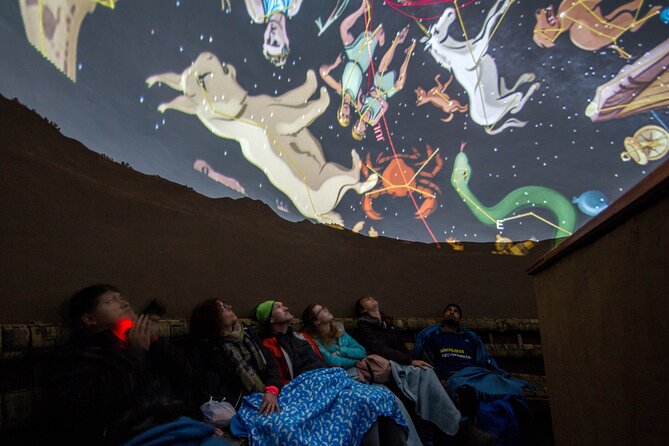
The meeting point is Plaza Regocijo, identified as F2M9+5X2 in Cusco. It is next to the water fountain and about one block from the city’s main square, Plaza de Armas.
You are not collected from your hotel. That is one of the few clear inconveniences. If you are staying in central Cusco, the meeting point should be manageable, but remember that Cusco’s streets can be confusing and some hotels sit on steep lanes. Give yourself enough time to find the fountain without rushing.
The pickup staff wear blue and gray jackets and carry the company logo. They also have a list of confirmed participants, which should make the meeting process fairly simple. Look for the staff rather than waiting for a large, obvious sign or a bus marked with the planetarium name.
The included ride is valuable here. The planetarium is outside the central sightseeing area, and arranging a taxi both ways would add cost and another small task to your evening. The transport takes you from the plaza to the site, then returns you to the center at the end.
If you need help finding your hotel after returning, the staff can provide directions. That is useful in Cusco, where a hotel address is sometimes less helpful than a nearby plaza or landmark.
The ride from central Cusco to the planetarium
The transfer is not the main attraction, but it makes the program easier to fit into a trip. You do not need to negotiate a taxi, explain the destination, or worry about finding your way back after an evening outside the center.
The group size can reach 22 people. That is small enough to feel more personal than a large coach excursion, though it is not a private tour. At the planetarium, the group may be split into Spanish and English sections depending on attendance.
The language split matters. Astronomy depends on explanation, and the Inca material is more interesting when you can follow the names, stories, and meanings clearly. Select your preferred language when booking and pay attention to the guide’s instructions at the meeting point.
The ride also gives you a useful transition from central Cusco to the quieter setting of the planetarium. Do not expect a long sightseeing transfer or a city tour along the way. The point is simply to get you there and back with less hassle.
Inside the planetarium: a guided look at southern skies
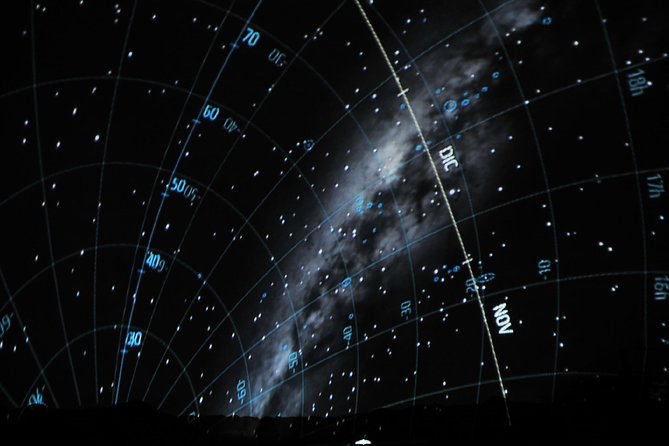
The indoor portion uses a virtual night-sky projector. This is where you can learn about the stars and constellations visible from the Southern Hemisphere, along with the way the Inca world interpreted them.
For many people, this is the strongest educational part of the evening. Cusco’s location makes the southern sky especially important, yet visitors from the Northern Hemisphere may not recognize many of its patterns. A guide can point out what you are seeing instead of leaving you to guess at a scattering of stars.
The show also adds context about nature and Peruvian culture. The material is not limited to planet names and basic astronomy. It explains how the sky affected Inca thought and how constellations were used to understand the future and the natural world.
The guides receive particularly strong praise for being warm, enthusiastic, and entertaining. That matters because the subject could easily become a string of facts. Here, the family-run nature of the operation appears to shape the tone. The presentation feels personal rather than like a standard museum audio track.
There is one physical concern to note. One account describes mild motion sickness during the virtual projector segment. If you are sensitive to moving images, sit where you feel comfortable and step outside if needed. The program has more than one part, so leaving the projection briefly does not mean losing the whole evening.
A few more options to weigh up in Cusco
- Cochahuasi Animal Sanctuary® Admission Ticket
★ 4.5 · 74 reviews - Machu Picchu Ticket, Bus & Private Guide – Language Options
★ 5.0 · 34 reviews - Cusco Tourist Ticket and Sacred Valley Site Pass
★ 4.2 · 28 reviews - Machu Picchu Day Trip from Cusco Guided Tour & Tickets
★ 4.0 · 16 reviews
The telescopes and outdoor star viewing
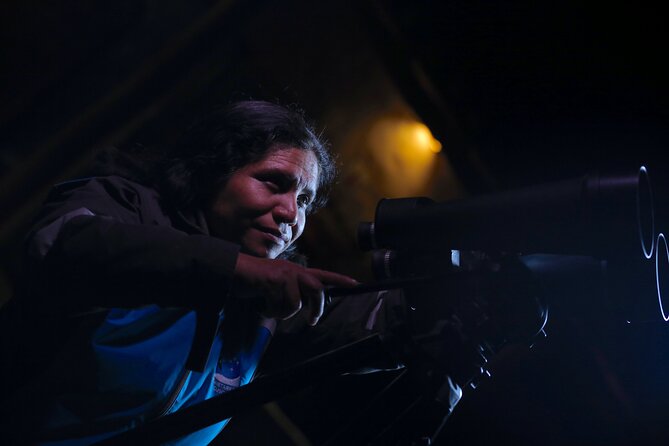
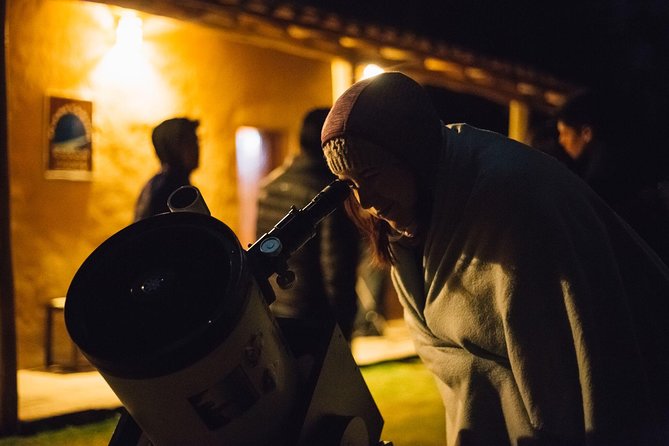
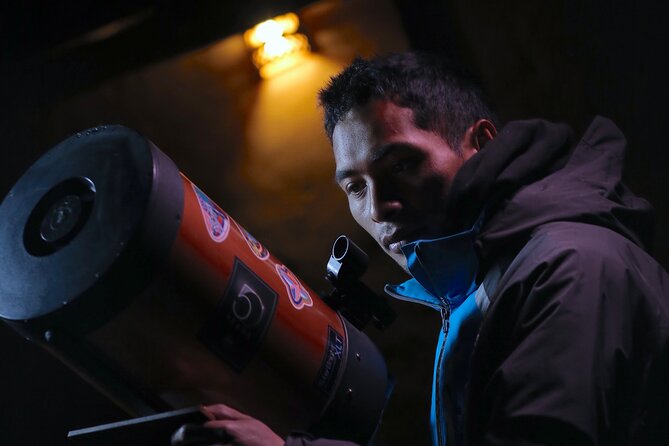
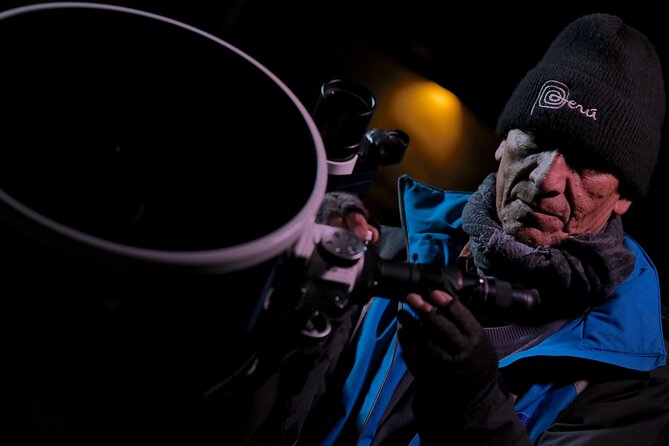
After the indoor show, the experience moves outdoors for telescope viewing. This is the part many people anticipate most, and it can be memorable when the sky cooperates.
You may see planets, star clusters, or constellations through the telescopes. You also have a chance to look up without equipment. The night sky at the planetarium can reveal stars and, faintly, the Milky Way.
The outdoor portion is weather dependent. Clouds have limited views on some evenings, but the guides continue explaining the sky and telling stories while waiting for openings. That flexibility is important. A cloudy night does not necessarily ruin the program, but it can reduce the number of objects you see through the telescopes.
I would set your expectations carefully. This is not a major observatory with a long row of huge instruments and guaranteed views of every planet. The telescopes are described as small, and the viewing can involve waiting for clouds to move. The reward is a more personal experience, with guides helping you understand each sight instead of simply pointing a machine at the sky.
Bring warm clothing. Even if Cusco feels mild during the afternoon, standing outdoors after sunset can be chilly. A jacket is a sensible choice, and you will enjoy the telescope portion more if you are not focused on staying warm.
The Inca astronomy presentation
The final section returns to the cultural side of the evening. You learn how the Incas viewed the stars and what celestial patterns meant within their society.
This is what gives Planetarium Cusco a stronger sense of place. You could study planets in many cities, but the connection between the sky, the Andes, and Inca belief belongs specifically to Peru. The presentation helps turn astronomy from an abstract subject into part of the region’s cultural story.
The emphasis is on southern constellations and Inca interpretations. You may also hear about Peru’s natural world and pre-colonial history as part of the explanation. The tone is intended to be accessible, with enough material for adults but a relaxed style for families.
The final presentation also helps balance the weather risk. If clouds reduce the outdoor telescope time, you still receive a substantial guided program indoors. Conversely, if the sky is clear, the cultural explanation gives extra meaning to what you have just seen outside.
Is $25 a fair price?
At $25 per person, the value depends on what you want from an evening in Cusco. The ticket includes round-trip transport from Plaza Regocijo, a guided show, a professional guide, and admission to the planetarium. Food and drinks are not included, but the two-hour schedule does not center on a meal.
I consider the price fair for visitors who want a guided introduction to astronomy and Inca culture without arranging transport. The included ride is a real benefit, particularly for anyone who does not want to organize a taxi to an unfamiliar destination.
The value is also stronger for families. One ticket gives children and adults the same shared activity, and the subject can appeal across age groups. A family that enjoys science, space, or cultural history is likely to get more from the outing than one looking only for a dramatic stargazing session.
The value is weaker if your only goal is outdoor telescope viewing. Clouds may interfere, and the telescopes are small. You are paying for the full program, including the indoor projection and cultural presentation, not for a guaranteed clear sky.
The experience is booked an average of 24 days ahead, so advance planning is sensible. That does not guarantee every date will sell out, but it suggests that you should not leave it until the last afternoon of your Cusco stay.
Who should book this evening?
I would recommend it to families with children aged seven and older, couples who want a calm cultural activity, and solo visitors interested in astronomy or Andean history. It also works well for anyone who has already seen Cusco’s main sights and wants something different after dark.
It is a good choice if you appreciate guides who explain rather than simply point. The family-run atmosphere, humor, and enthusiasm appear to be a major part of the appeal.
You may want to skip it if you dislike scheduled group activities, feel uncomfortable with projected motion, or would be frustrated by cloudy weather. The experience is not designed as a private, flexible stargazing session.
Plan it for a night when you can return to your hotel afterward without another fixed booking. The end time is around 8 pm, but transport and group movement can make a tight dinner reservation inconvenient.
Practical details that matter
Confirmation is provided at booking. You need a current valid passport or ID on the show date, so do not leave that document locked in your hotel safe if your hotel is far from the meeting point.
Children must be accompanied by an adult, and the minimum age is seven. Most people can participate, and the group maximum is 22.
Free cancellation is available when you cancel at least 24 hours before the scheduled start time. Cancellations made less than 24 hours in advance are not refunded, and changes within that period are not accepted. The cutoff follows local Cusco time.
The program runs Monday through Saturday, from 5:30 pm to 8 pm. There is no Sunday schedule in the supplied operating information, so check the date carefully before paying.
Should you book Planetarium Cusco?
Book it if you want Inca culture and astronomy together, value included transport, and can accept that clouds may affect the outdoor viewing. The best parts are the enthusiastic guides, the southern-sky focus, and the chance to connect telescope viewing with the way the Incas understood the heavens.
I would especially recommend it for families and curious first-time visitors to Cusco. It is short, reasonably priced, and easy to fit around daytime sightseeing.
Skip it if you expect a large observatory, guaranteed planets, or a private night under perfectly clear skies. But if you see the planetarium as a guided cultural evening with astronomy at its center, the $25 price makes good sense.
FAQ
Where does the Planetarium Cusco experience begin?
It begins at Plaza Regocijo in Cusco, next to the water fountain and about one block from the main square.
What time is pickup?
Round-trip transport leaves Plaza Regocijo at 5:30 pm.
How long does the experience last?
The experience lasts approximately two hours, with the return to the city center planned around 8 pm.
Is hotel pickup included?
No. Hotel pickup and drop-off are not included. You must reach Plaza Regocijo for the departure.
Is transport to the planetarium included?
Yes. Round-trip transfer from Plaza Regocijo is included.
Is the guided show available in English?
Yes. The show is offered in English or Spanish. Groups may be divided by language at the planetarium.
What is the minimum age?
The minimum age is seven. Children must be accompanied by an adult.
Do I need identification?
Yes. You must bring a current valid passport or ID on the show date.
What happens if I need to cancel?
You can cancel for a full refund if you do so at least 24 hours before the experience starts. Cancellations or changes made less than 24 hours before the start time are not accepted for a refund.
Just added in Cusco
- Cusco Private Transportation for 2026★ 5.0 · 4 reviews
- Private Transfer from Airport to Hotel in the City of Cusco★ 4.0 · 5 reviews
- Best Cusco walking tour: dinner street food tasting★ 4.5 · 11 reviews
- Private Tour to Pisac Market and Pisac Ruins★ 5.0 · 4 reviews
- Machu Picchu Day Trip With Panoramic Train from Cusco★ 5.0 · 10 reviews
- Sacred Valley Private Tour from Cusco, Guide and Driver only★ 5.0 · 4 reviews
- Sacred Valley of the Incas Tour★ 5.0 · 12 reviews
- Private Tour of the Mountain of Colours by Quad★ 5.0 · 7 reviews
Skip the Line, compared.