
Reviewed · COLCA CANYON AND AREQUIPA TOURS
Turist Bus Colca Canyon (Chivay) To Puno
The Andes turn a transfer into a sightseeing day. This Chivay to Puno bus ride gives you four stops for volcano views, high-altitude wildlife, mountain lakes, and local drinks instead of keeping you inside a bus for six straight hours. I like the route’s useful mix of transport and sightseeing, and I like having a bilingual guide to explain what you are seeing. The main caution is that the journey can run longer than planned, and onboard snacks, water, and Wi-Fi may not always be delivered as expected.
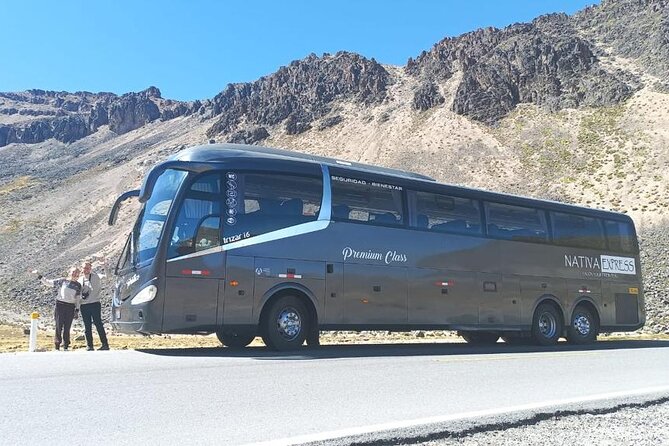
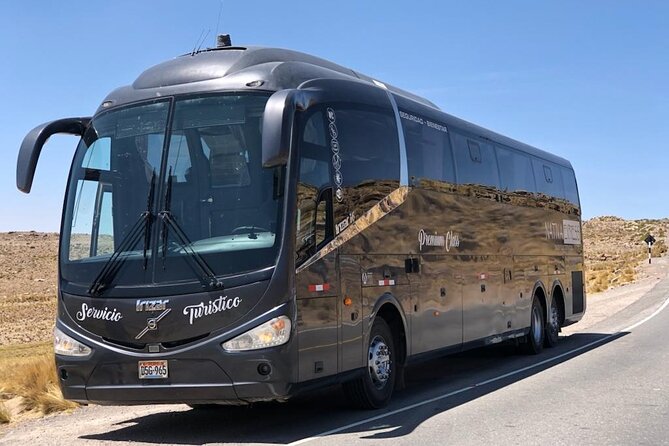
You meet beside the church on Chivay’s main plaza between 12:30 and 1:10 p.m., then leave at about 1:15. The bus is air-conditioned, has charging points, reading lights, and possibly a chemical toilet depending on the vehicle. I would still bring your own water, snacks, and entertainment for the ride.
In This Review
- Key points at a glance
- Why this six-and-a-half-hour ride is worth considering
- Meeting beside Chivay’s main church
- Abra Patapampa and the Mirador de los Andes
- Tocrapampa and the highland camelids
- Patahuasi in the Aguada Blanca Reserve
- Lagunillas and the best photo stop
- What the bus adds to a long Andean transfer
- Arrival in Puno between 7:00 and 7:30 p.m.
- How the schedule feels in practice
- Who should book this Chivay to Puno transfer?
- Should you book it?
- FAQ
- Where does the bus depart from in Chivay?
- What time should I arrive at the meeting point?
- How long does the trip from Chivay to Puno take?
- How many sightseeing stops are included?
- What places do you visit on the route?
- Is a guide included?
- Are drinks and snacks included?
- Is Wi-Fi available on the bus?
- Does the bus have a restroom?
- Can the bus take me to my hotel in Puno?
Key points at a glance
- Four Andean sightseeing stops: See volcanic peaks, stone offerings, camelids, mountain lakes, and high-altitude birds.
- A practical Chivay to Puno connection: The bus leaves in the afternoon and usually reaches Puno between 7:00 and 7:30 p.m.
- Abra Patapampa reaches the high Andes: The Mirador de los Andes offers views toward Ampato, Sabancaya, Hualca Hualca, Mismi, and the Chila range.
- Patahuasi combines nature and comfort: You can use the restrooms, buy crafts, and try hot herbal drinks such as muña and chachacoma.
- Hotel drop-off may be possible in central Puno: This is useful after a long ride, but the stated option applies to hotels in the Historic Center.
- A well-liked guided service: The experience has a 4.8 rating from 83 reviews and is recommended by 95 percent of customers.
Why this six-and-a-half-hour ride is worth considering
The road from Chivay to Puno is not merely a way to get from one city to another. It crosses open highland scenery with volcanoes, grassland, wildlife, and small lakes. If you booked a standard transfer, you could spend the whole afternoon watching the road slide past. Here, four planned stops break up the trip and give you a reason to get off the bus.
I especially like the timing. You do not need an early morning departure, so you can have a calm start in Chivay. The bus leaves around 1:15 p.m. and reaches Puno in the evening, usually between 7:00 and 7:30. That makes this a useful bridge between two major stops in southern Peru.
The price is about $41.03 per person. For a six-and-a-half-hour route with a bilingual guide, air conditioning, sightseeing breaks, and possible central hotel drop-off, that is a fair price. You are paying more than a bare public bus fare, but you are also getting a structured sightseeing ride rather than a simple point-to-point service.
The biggest value depends on your plans. If you already have a private car or a full Colca Canyon excursion ending in Puno, this may duplicate part of your transport. If you need to travel between Chivay and Puno and want to see the high Andes along the way, the added stops make the fare easier to justify.
More Colca Canyon trips:
- 2-Day Tour Colca Canyon in Arequipa with end in Puno
★ 4.6 · 248 reviews - From Arequipa: 1-Day Guided Tour to Colca Canyon with Meals
★ 4.1 · 144 reviews - From Puno to Arequipa: 2 Days/1 Night Colca Canyon Tour
★ 3.6 · 83 reviews
Meeting beside Chivay’s main church
The meeting point is the operator’s office beside the church on Chivay’s main plaza. You should be there during the stated check-in window, from 12:30 to 1:10 p.m. Departure is scheduled for roughly 1:15 p.m.
That location is practical because the main plaza is easy to identify. Still, leave yourself enough time to find the office and confirm the vehicle. The experience allows up to 40 people, so this is not a tiny private outing. A group of that size can make boarding and stop times feel more organized than spontaneous.
The guide provides service in Spanish and English. That matters on a route where the scenery is impressive but easy to misunderstand. A bilingual guide can explain the volcano names, the meaning of the stone towers, and the difference between llamas, alpacas, and vicuñas.
Abra Patapampa and the Mirador de los Andes
The first major stop is Abra Patapampa, also called the Mirador de los Andes. The stop lasts about eight minutes, so you need to get off promptly and keep an eye on the group.
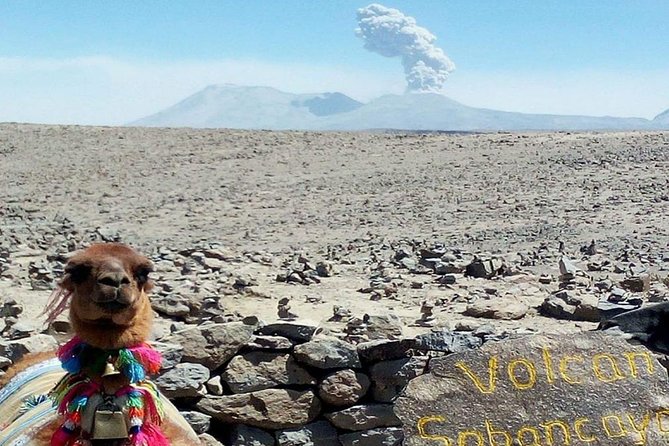
This is the place for wide mountain views. You may see Ampato, Sabancaya, Hualca Hualca, Mismi, and the Chila mountain range. Mismi has special importance because it is identified here as the source of the Amazon River. That detail gives the viewpoint more meaning than a simple photo stop.
You can also see apachetas, small stone towers traditionally left by people as offerings during mountain journeys. They are easy to miss if you focus only on the volcanoes, so listen for the guide’s explanation and look around the viewpoint.
At this altitude, the stop may feel physically demanding, particularly if you have only recently arrived in the Andes. The short duration helps keep the schedule moving, but it also means you should not wander far from the bus. Bring a jacket, even if Chivay felt mild. The high mountain air can feel much colder than the town.
Tocrapampa and the highland camelids
Tocrapampa is described as a technical stop with a wildlife focus. You pause to look for South American camelids grazing in their natural setting, especially llamas and alpacas. With luck, you may spot vicuñas as well.
Vicuñas are valued for their exceptionally fine and expensive fiber. They are not simply another version of a llama. Seeing them in open highland habitat gives you a better sense of why they matter to Andean communities and the textile trade.
This stop depends on timing and luck. Animals are not posed for photographs, and there is no promise that every species will appear close to the road. That is part of the point. You are looking across open country, not visiting a small enclosure with guaranteed sightings.
The information provided does not give a fixed length for the Tocrapampa stop. I would treat it as a short roadside pause rather than a long walk. Have your camera ready, but do not let the search for one perfect animal spoil the wider view.
More Lake Titicaca trips:
- From Arequipa: Fullday Tour Colca Canyon + Transfer To Puno
★ 4.4 · 17 reviews - From Arequipa: One Day Trip to Colca Canyon Ending in Puno
★ 4.0 · 14 reviews - From Arequipa: Tour Colca Canyon 2 Days with End in Puno
★ 4.2 · 12 reviews - Arequipa: 2-day Colca Canyon Trekking, Ending in Puno
★ 4.8 · 8 reviews
Patahuasi in the Aguada Blanca Reserve
Patahuasi, in the Pampa Cañahuas area, is located within the Aguada Blanca National Reserve and behind Chachani Volcano. This is the most useful stop for a break because it combines scenery, facilities, drinks, and shopping.
You may see vicuñas, llamas, and alpacas here, with a chance of spotting foxes or guanacos in the distance. Again, the wildlife is not guaranteed. The reserve setting gives you a better chance to see animals in open habitat, but you still need patience and a little luck.
Patahuasi is also where you can try hot herbal drinks made with plants such as muña and chachacoma. These drinks are a familiar part of high-altitude travel in the Andes. They offer warmth and a local taste without requiring a full meal stop.
Restrooms are available, and you can buy crafts and souvenirs. That makes Patahuasi especially helpful after several hours on the road. The stop lasts about 15 minutes, so plan your time. Use the restroom first, then get your drink or browse the crafts. Trying to do everything at once can make the stop feel rushed.
I would carry small spending money if you want a hot drink or souvenir, since these extras are not included in the price. The bus provides a more comfortable setting than a basic coach, but Patahuasi is still the place to handle practical needs before the final stretch.
Lagunillas and the best photo stop
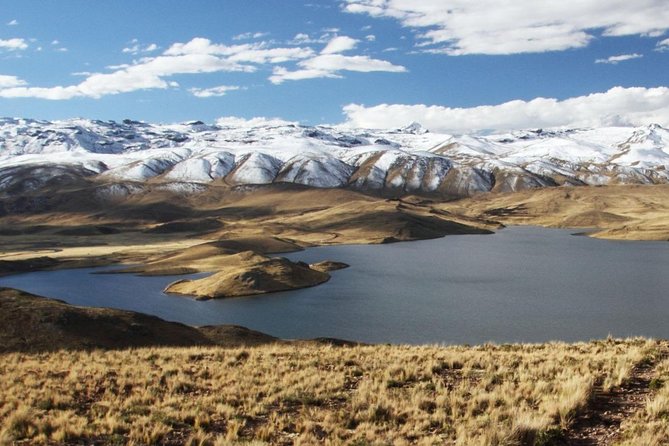
The third numbered stop is Lagunillas, a viewpoint over a group of small lakes. The water can reflect the sky like a series of mirrors, creating one of the most memorable views on the route.
The lakes are also habitat for Andean flamingos and other birds, depending on the season. You may see birds on the water or around the shore, but the conditions are variable. Bring binoculars if you already have them, though the stop is still worthwhile without special equipment.
This pause lasts about 15 minutes. It is long enough for photographs and a quick look around, but not for a hike around the lakes. The viewpoint is the attraction, so stay near the designated area and return to the bus on time.
I like this stop because it changes the rhythm of the trip. The earlier stops focus on peaks, stone offerings, and grazing animals. Lagunillas gives you water, reflections, and birdlife, so the route does not feel like four versions of the same mountain viewpoint.
What the bus adds to a long Andean transfer
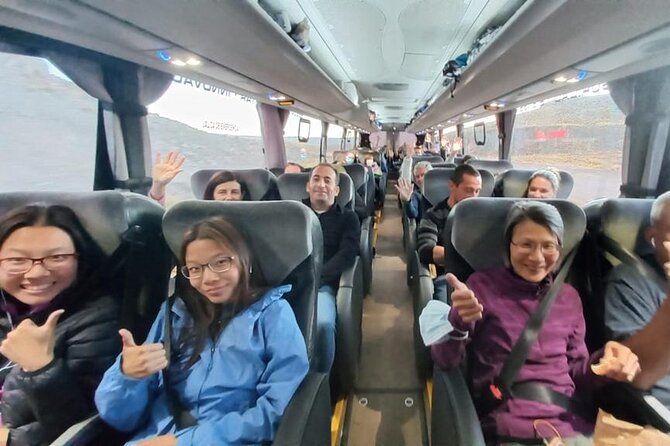
The bus has air conditioning, heating or cooling, individual reading lights, and charging points for phones, tablets, and laptops. These features matter more than they may sound. Six hours on a mountain road is much easier when you can charge your phone, read during the quiet stretches, and adjust your clothing as the temperature changes.
Wi-Fi is included in the service details, but I would not plan an important work session around it. One passenger reported that Wi-Fi was never offered, along with the promised bottled water and snacks. That does not prove the service will fail on every departure, but it is a useful warning.
Bring a full bottle of water and a few snacks from Chivay. You can buy refreshments at a stop, but relying on that means paying whatever is available and possibly spending your whole break in line. The promised onboard coffee and snacks should be viewed as a bonus, not your only food plan.
A toilet is listed as a chemical toilet, depending on the type of vehicle. Because the wording is conditional, ask at boarding if this matters to you. Patahuasi has restrooms, but you should not assume the bus toilet will always be available.
The ride is generally comfortable, and the guide service receives strong praise. One particularly useful part of the guide’s role is helping people sort out onward arrangements and accommodation questions. That kind of help can be valuable when you arrive in Puno after dark and still need to reach your hotel.
Arrival in Puno between 7:00 and 7:30 p.m.
The bus usually reaches Puno around 7:00 to 7:30 p.m. The exact arrival can shift. One reported journey took about seven and a half hours because of road construction, which was not the operator’s fault.
You should plan your Puno evening with some flexibility. Do not book a tightly timed dinner reservation, train, or separate activity immediately after the scheduled arrival. Mountain roads, construction, weather, and traffic can all affect the final time.
If your hotel is in Puno’s Historic Center, the service may be able to take you to the hotel. That is a major convenience after a long day, especially if you have luggage. The information does not promise door-to-door delivery for every address, so confirm your hotel location and drop-off arrangement before departure.
If you are staying outside the Historic Center, you may need to arrange your own onward transport. Keep your booking details and hotel address accessible rather than buried inside your luggage.
How the schedule feels in practice
The scheduled ride lasts about six hours and 30 minutes, but the sightseeing stops make the time more pleasant than a nonstop transfer. You leave Chivay after lunch, stop several times through the high Andes, and arrive in Puno during the evening.
The short stops are a strength for people who want an overview. You get to see several different types of scenery without committing to a long hike. They are also a limitation if you want quiet time at each place. Eight minutes at Abra Patapampa is enough for a quick look and photos, not a slow exploration.
A group of up to 40 people means you need to respect the timetable. Return to the bus promptly, especially at the shorter stops. The guide can keep the day moving, but no guide can wait indefinitely for one person taking an extra photograph.
This format suits you if you prefer a guided transfer with a clear plan. It is less suitable if you want to stop wherever you wish, spend an hour watching birds, or choose your own lunch location.
Who should book this Chivay to Puno transfer?
I would recommend it to you if you are already in Chivay and need to reach Puno while still seeing something of the Andes. It works well for solo visitors, couples, and families who value a guide and organized transport over complete freedom.
It also suits you if this is your first time at high altitude and you want explanations along the road. The bilingual guide can add context to the volcanoes, wildlife, and local traditions that you might otherwise pass without understanding.
You may want another option if you need dependable Wi-Fi for work, require guaranteed snacks and water, or have a strict arrival deadline. The bus itself is designed for comfort, but the route is exposed to road conditions and the included amenities have not been perfectly consistent.
The experience has a maximum group size of 40, so it is neither an intimate private tour nor a huge coach outing. Most people can participate, and the activity is near public transportation at the Chivay starting point.
Free cancellation is available if you cancel at least 24 hours before the start time. Changes or cancellations inside that window are not accepted for a refund. Poor weather can also cause a cancellation, in which case you are offered another date or a full refund.
Should you book it?
Book this ride if you want a scenic, guided connection between Chivay and Puno and like the idea of turning transport into a half-day outing. The four stops are varied, the price is reasonable for the route, and central Puno hotel drop-off may save you a tiring final transfer.
I would book with realistic expectations. Pack your own water and snacks, do not count on Wi-Fi for essential work, and leave room in your evening schedule in case construction or road conditions cause delays. With those small precautions, this is a useful and enjoyable way to cross the high Andes without wasting a travel day.
FAQ
Where does the bus depart from in Chivay?
Departure is from the operator’s office beside the church on Chivay’s main plaza.
What time should I arrive at the meeting point?
The stated meeting window is from 12:30 to 1:10 p.m. The bus leaves at approximately 1:15 p.m.
How long does the trip from Chivay to Puno take?
The scheduled duration is about six hours and 30 minutes. Arrival is usually expected between 7:00 and 7:30 p.m., though road construction or other delays can make the trip longer.
How many sightseeing stops are included?
Four stops are included during the journey.
What places do you visit on the route?
The route includes Abra Patapampa, Tocrapampa, Patahuasi, and Laguna Lagunillas before arrival in Puno.
Is a guide included?
Yes. A professional bilingual guide providing service in Spanish and English is included.
Are drinks and snacks included?
A bottle of water, snacks, and coffee are described as included. However, one passenger reported that these items were not offered, so bringing your own water and snacks is sensible.
Is Wi-Fi available on the bus?
Free Wi-Fi is included in the service details. One passenger reported that it was not offered during the ride, so you should not depend on it for important work.
Does the bus have a restroom?
A chemical toilet is included according to the type of vehicle. Restrooms are also available at the Patahuasi stop.
Can the bus take me to my hotel in Puno?
If your hotel is located in Puno’s Historic Center, the service may be able to take you directly to the hotel. The experience ends in a different location from the Chivay departure point.
Just added in Chivay
- Tour Fullday Colca Canyon with Breakfast and Typical Lunch★ 4.3 · 35 reviews
- Offer Price: Colca Canyon One Day in Arequipa with Breakfast★ 4.5 · 4 reviews
- Full Day Trip to Colca Canyon from Arequipa ending in Puno★ 4.5 · 4 reviews
- Full day excursion to Colca Canyon★ 4.2 · 6 reviews
- From Puno: 2-Day Tour to Colca Canyon ending in Arequipa★ 4.1 · 4 reviews
- FROM CABANACONDE: VISIT TO THE CRUZ DEL CONDOR VIEWPOINT, DURATION 2 HOURS★ 5.0 · 5 reviews
- From Arequipa Trek : 2-Days of Hiking in the Colca Canyon★ 4.5 · 35 reviews
- From Arequipa: Tour Colca Canyon 2 Days with End in Puno★ 4.2 · 12 reviews
Colca Canyon and Arequipa Tours, compared.
From Arequipa: Colca Canyon Full-Day Guided Tour with Meals
Read our review →
Tour to the Salinas Lagoon and National Reserve in Arequipa
Read our review →
Rafting Arequipa – Chili River Canoeing – Cusipata Rafting Arequipa
Read our review →
Chili River White Water Rafting with Hotel Pickup
Read our review →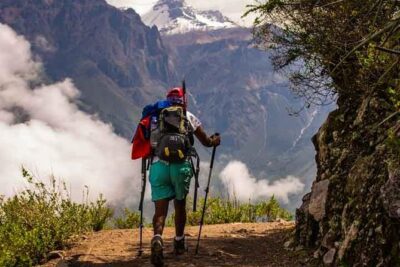
Browse the lists this tour appears in