
Reviewed · MACHU PICCHU TOURS
4-Day Classic Inca Trail to Machu Picchu
The hard way to Machu Picchu is the memorable way. This four-day trek follows the famous Inca Trail from Km 82 through high mountain passes, cloud forest, and ancient ruins before reaching Machu Picchu through the Sun Gate. I like the small-group approach, with the advertised group size capped at eight for a more personal pace, and I like that meals, camping equipment, porters, trains, and transfers are handled for you. The main catch is physical: this is a serious high-altitude hike, not a scenic stroll.
I also appreciate the attention given to the guiding team. Guides such as Paul Cano, Edwin, and Freddy have been praised for bringing Inca history, mythology, plants, and mountain culture to life, while cooks Fabian and Herminio have earned special praise for producing unusually good meals in camp. The early starts, steep climbs, limited water during the first four hours, and non-refundable $850 price require careful planning.
In This Review
- Key points before you book
- What the $850 price really covers
- Day one: Km 82 to Wayllabamba
- Day two: Dead Woman’s Pass at 4,215 meters
- Day three: Ruins, cloud forest, and Wiñayhuayna
- Day four: Entering through the Sun Gate
- Guides, cooks, and porters make the difference
- Group size and the real feel of the route
- Fitness, altitude, and what to pack
- Who should choose this trek?
- Should you book the Classic Inca Trail?
- FAQ
- How long is the Classic Inca Trail tour?
- What time does the tour start?
- Where does the hike begin?
- What is the highest point of the trek?
- Is water included?
- Are meals included?
- Is camping equipment provided?
- Is a sleeping bag included?
- Can I hire a personal porter?
- Is entry to Huayna Picchu included?
Key points before you book
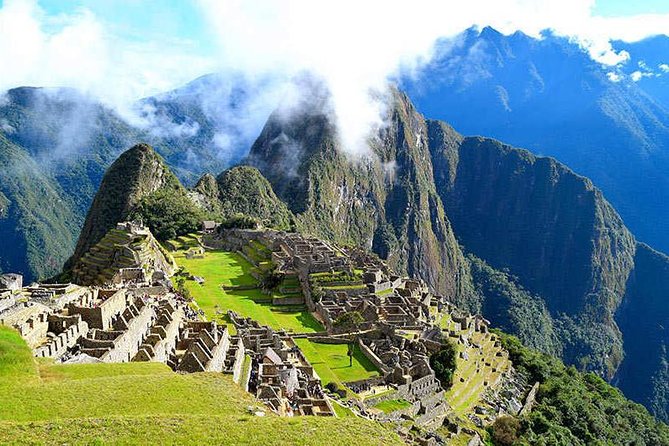
- Reach Machu Picchu through Inti Punku: You enter the citadel from the Sun Gate, the same dramatic approach that makes the Classic Inca Trail special.
- Prepare for Dead Woman’s Pass: Day two reaches 4,215 meters, or 13,828 feet, with a steep climb and an equally demanding descent to Pacaymayo.
- Expect more than a hike: Patallacta, Runkurakay, Sayacmarca, Phuyupatamarca, and Wiñayhuayna give the route archaeological depth before Machu Picchu.
- Small groups add comfort: The tour highlights a maximum of eight people, though the additional information also allows up to 15, so confirm your actual group size.
- Camp support is a major value: Porters carry cooking and camping equipment, a chef prepares three meals daily, and an inflatable mattress is supplied.
- Book far ahead: Permits are limited, and this experience is booked an average of 204 days ahead. Five months in advance is strongly recommended.
What the $850 price really covers
At $850 per person, this is not a cheap way to reach Machu Picchu. It can still be a fair price because the fee covers much more than a guide and a trail permit.
Your package includes hotel pickup, private transport to Km 82, a professional English-speaking guide, camping equipment, porters for the shared gear, a chef, three breakfasts, three lunches, three afternoon snacks, and three dinners. It also includes water after the first four hours of hiking, the bus from Machu Picchu to Aguas Calientes, the return train, and the bus and private van connection back to Cusco.
That collection of services matters on a four-day mountain route. You do not need to arrange separate camps, find food along the trail, or puzzle out the return transport after visiting Machu Picchu. Oxygen and a first-aid kit are also carried by the team.
You still need to budget for a sleeping bag, unless you bring your own or hire one from the operator. A personal porter costs $80 and is optional. The included porters carry cooking and camping equipment, but you should expect to carry your own daypack and the inflatable sleeping mattress unless you hire personal help.
The price does not include breakfast on day one, lunch and dinner on day four, travel insurance, or entry to Huayna Picchu Mountain. The information also mentions an extra ticket for re-entry to Machu Picchu, so confirm exactly which citadel entry and guided visit are included before you pay. Permit and ticket details can be strict on this route.
More Machu Picchu trips:
- Classic Inca Trail Trek 4D/3N to Machu Picchu (Group Service)
★ 5.0 · 8,653 reviews - Machu Picchu: 4-Day Inca Trail Trek with Panoramic Train Ride
★ 5.0 · 4,568 reviews - Short Inca Trail to Machu Picchu 2D/1N
★ 5.0 · 3,007 reviews
Day one: Km 82 to Wayllabamba
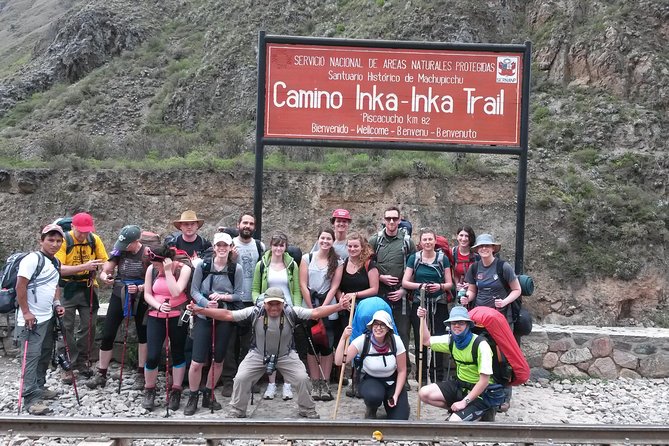
Your day begins at about 5:30 a.m. with hotel pickup in Cusco. A private bus heads toward the Sacred Valley, passing Chinchero, Urubamba, and Ollantaytambo before reaching Km 82 after roughly two and a half hours.
That drive is part of the experience, not just a transfer. It gives you a first look at the highland setting and brings you to the official starting point of the Classic Inca Trail. From Km 82, the walking begins with an ascent toward Wilka Rakay.
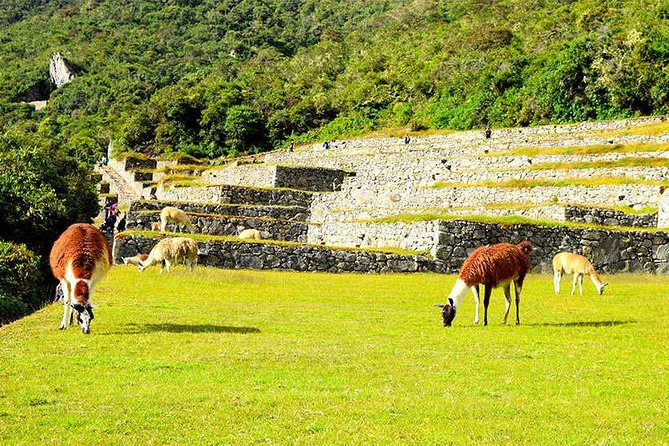
The first major reward is the view of Patallacta and the Kusichaca Valley. Ancient stonework appears beside a route framed by Andean plants and mountain scenery. This opening day helps you settle into the rhythm of walking, but it is still an eight-hour day, so do not treat it as a warm-up.
The camp at Wayllabamba sits at 3,000 meters, or 9,842 feet. Your crew sets up camp while you rest, and dinner is prepared in the dining tent with tables and chairs. Breakfast on day one is not included, so arrange that before pickup.
I like this first day because it introduces the trail’s mix of scenery and archaeology without immediately sending you to its highest point. The drawback is the early start combined with the long transfer and a full day on foot. Keep your first day flexible and carry water, since water is not supplied for the first four hours of hiking.
Day two: Dead Woman’s Pass at 4,215 meters
Day two is the physical test. After breakfast, you walk for about an hour toward Tres Piedras, or the Three Stones, then continue into cloud forest. The vegetation becomes thicker as the trail rises toward Dead Woman’s Pass.
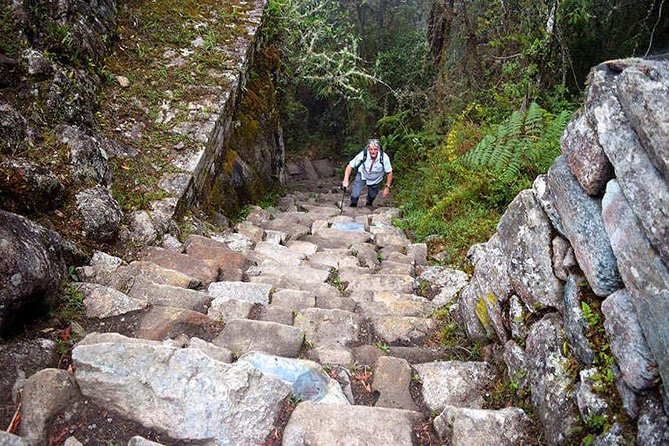
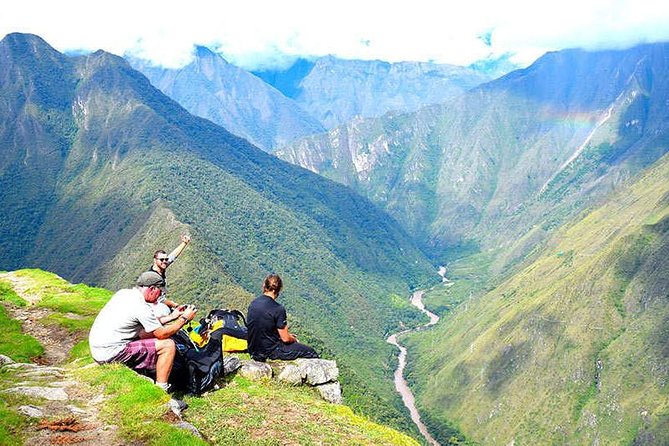
At 4,215 meters, Dead Woman’s Pass is the highest point of the trek. The climb is demanding, and altitude can make even a familiar walking pace feel slow. The reward is a broad view across the rough Andean peaks and high grasslands.
Once you cross the pass, the work is not finished. The trail drops steeply to Pacaymayo, where camp sits at 3,600 meters, or 11,811 feet. That descent can be hard on knees and legs, especially after the climb.
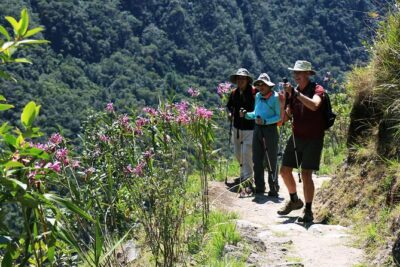
This is the day when your physical condition matters most. The operator asks for moderate fitness, but I would read that as a minimum rather than a promise of ease. You should be comfortable walking for about eight hours, handling steep uphill and downhill sections, and carrying your own personal items at altitude.
The support team becomes especially valuable here. A good guide can set a sensible pace, offer encouragement, and help you decide when to rest. Freddy has been praised for calm support during difficult stretches, while Paul Cano has been especially admired for his explanations of Inca beliefs and the natural world.
Day three: Ruins, cloud forest, and Wiñayhuayna
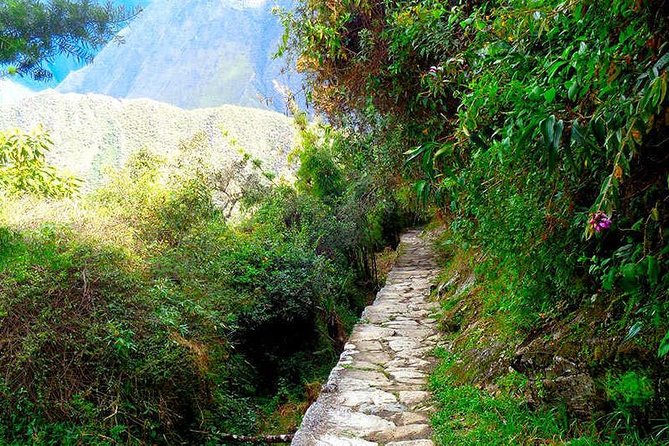
Day three packs several of the trail’s finest ruins into one long day. A 45-minute climb takes you to Runkurakay, an Inca resting site, followed by another 45-minute ascent to Runkurakay Pass at 4,000 meters.
From there, you descend to Sayacmarca. Its stone buildings cling to a steep mountainside, making the site memorable even before your guide explains its purpose and design. This is where an informed English-speaking guide adds real value. Without context, you see beautiful stone walls. With context, the placement and construction begin to make sense.
The route continues along a well-preserved Inca path to Chaquicocha, where lunch is served. The dining tent, camp kitchen, and porter system are not glamorous, but they make a major difference after hours of walking.
After lunch, the path enters high Andean cloud forest. The plants and wildlife change again, and the trail follows a narrow ridge toward Phuyupatamarca Pass. From here, you can see mountains, parts of the Sacred Valley, and, weather permitting, views toward Machu Picchu.
The final descent leads to ceremonial sites, terraces, and Wiñayhuayna, the last camp before the citadel. Wiñayhuayna is one of the route’s key moments because it gives you a powerful sense of approaching Machu Picchu through a chain of Inca sites rather than arriving by ordinary transport.
This is also another eight-hour day. The route includes climbs, descents, narrow sections, and high-altitude walking. You may be tired by the time you reach camp, so the quality of the food and camp organization matters. Fabian has been praised for producing varied meals without repeating dishes, and Herminio has received similar praise for thoughtful cooking in difficult conditions.
More hikes and treks in Cusco:
- Salkantay Classic Trek 5 Days from Cusco
★ 5.0 · 4,062 reviews - 4-Day Salkantay Trek with Sky Camp Stay
★ 5.0 · 3,346 reviews - Salkantay Trek 5D/4N with Glass Cabins, Domes and Hobbit House
★ 5.0 · 2,488 reviews - 2-Day Inca Trail to Machu Picchu with Panoramic Train
★ 5.0 · 1,876 reviews
Day four: Entering through the Sun Gate
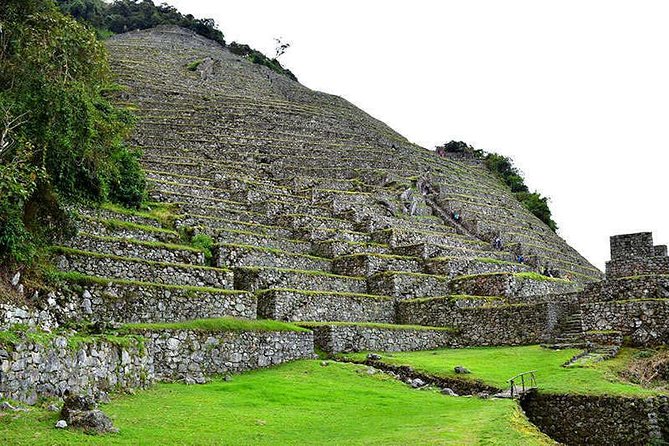
The final morning starts early. From Wiñayhuayna, the path to Inti Punku, or the Sun Gate, takes about an hour and is described as relatively easy compared with the earlier climbs.
Inti Punku is the emotional payoff of the route. If the weather cooperates, you see the first view of Machu Picchu from above, with the Andes behind it. Sunrise is possible, but mountain weather controls the result. Treat the sunrise as a bonus, not a guarantee.
A 45-minute descent brings you to the upper terraces, where you can take the classic photographs. Your guide can then lead a detailed visit through the temples, ceremonial areas, terraces, and storage buildings. The supplied information also describes an optional re-entry ticket at extra cost, so ask the operator to clarify whether your planned citadel tour is included in your reservation.
You can also hike Huayna Picchu or Machu Picchu Mountain if you reserve the proper ticket in advance. These are separate additions, not casual add-ons you should assume will be available on the day.
After the Machu Picchu visit, you return to Aguas Calientes for a break and lunch at your own expense. The train runs to Ollantaytambo, followed by a private van back to Cusco. Lunch and dinner on day four are not included, so keep money and time for that final stretch.
Guides, cooks, and porters make the difference
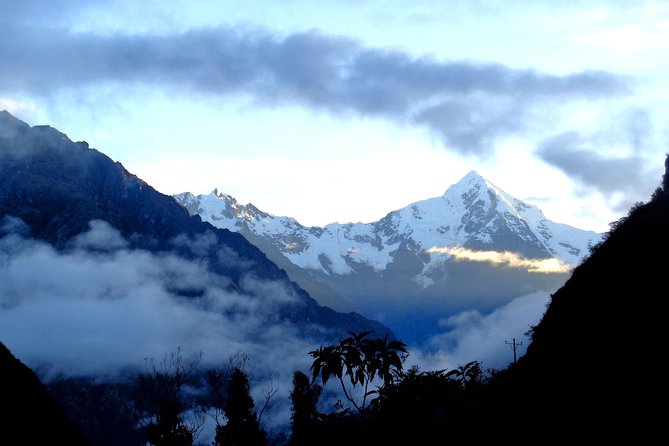
The ruins are the headline, but the staff shape the quality of the four days. Paul Cano has been praised for detailed talks about Inca history, mythology, science, plants, wildlife, and mountain culture. Edwin has been described as friendly, experienced, and clear in English. Freddy has been appreciated for his calm manner and steady encouragement when the trail became exhausting.
Those details matter because the Inca Trail is not only a physical route. You spend long hours passing engineered paths, terraces, ceremonial places, and mountain settlements. A guide who can explain what you are seeing turns a hard walk into a more meaningful one.
The cooking is another strong point. Fabian and Herminio have been praised for restaurant-quality food prepared in camp, with varied menus and care given to presentation and flavor. That sounds like a small luxury, but a hot meal after a steep pass can change your whole evening.
Porters carry the shared camping and kitchen gear, set up the practical side of camp, and help keep the trip moving. You should pack respectfully and lightly. The $80 personal porter option is worth considering if you do not want to carry your own heavier belongings, but ask exactly what weight and items that fee covers.
Vegetarian meals and ordinary special dietary requests can be arranged without an extra charge if you provide the information in advance. Life-threatening food allergies are not accepted, and any allergy should be written on your voucher and repeated to both the guide and cook.
Group size and the real feel of the route
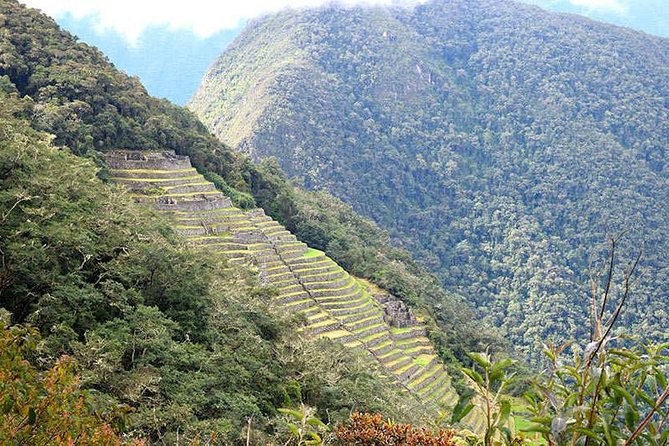
The experience is promoted around a maximum of eight people, which is appealing on a narrow trail and during guided visits. Smaller groups make it easier to hear explanations, keep a shared pace, and speak directly with your guide.
There is a conflicting capacity note allowing up to 15 participants, with an assistant guide required for groups of nine or more. I would contact Inkayni Peru Tours before booking and ask for the maximum size of your specific departure. Do not assume every date has eight people or fewer.
The trail itself is regulated by Peru. Since 2000, only 500 people are permitted to start each morning, including hikers, guides, porters, and cooks. This limit helps control the route and campsites, but it also explains why permits sell out well ahead of time.
An average booking lead time of 204 days is a useful warning. Five months ahead is strongly recommended, and popular dates may require even more planning.
Fitness, altitude, and what to pack
You need moderate physical fitness, but the numbers tell the clearer story: about eight hours of walking on the first three days, a high point of 4,215 meters, and steep descents after major climbs.
Bring walking boots, a waterproof jacket or rain poncho, warm clothing, gloves, a hat, comfortable trousers, sunscreen of at least factor 35, insect repellent, toiletries, hand sanitizer, personal medication, and a torch with spare batteries. Weather can change quickly in the mountains, so layers are more useful than one bulky outfit.
You need to bring your own water for the first four hours of the trek. After that, water is included. A sleeping bag is not included, though you can hire one from the operator.
Your passport is required. If you want a student discount, bring your ISIC card. You also need to provide your full name, nationality, passport number, and date of birth for each person when booking.
Who should choose this trek?
I would choose this experience if you want Machu Picchu to be the finish line of a genuine multi-day walk rather than a quick sightseeing stop. It suits hikers who value archaeology, mountain scenery, good guiding, and the camaraderie of a supported camp trip.
It is less suitable if you want a relaxed holiday, dislike early mornings, or are not ready for steep climbs at altitude. The route is fixed by permits, the schedule is long, and cancellation is non-refundable for any reason.
The 4.9 rating from 308 submitted ratings and a 98 percent recommendation are strong signals, especially alongside repeated praise for the guides, food, porters, and organization. They do not remove the physical challenge, but they suggest that the support package is one of the tour’s best reasons to pay the $850.
Should you book the Classic Inca Trail?
Book it if you want the historic approach to Machu Picchu, are willing to train for four long days, and can reserve far ahead. The combination of the Sun Gate arrival, high passes, major ruins, capable guides, camp cooks, and return transport gives you a well-supported way to experience one of Peru’s great walks.
Before paying, confirm your group size, the exact Machu Picchu entry and re-entry arrangements, sleeping bag cost, personal porter terms, and the date of your Huayna Picchu or Machu Picchu Mountain ticket if desired. If those details work for you, Inkayni Peru Tours offers strong value for an organized Classic Inca Trail package. If the altitude and long walking days sound intimidating, choose a shorter route to Machu Picchu instead.
FAQ
How long is the Classic Inca Trail tour?
The tour lasts approximately four days. The first three hiking days are listed at about eight hours each, while day four is listed at about six hours.
What time does the tour start?
Hotel pickup begins at approximately 5:30 a.m.
Where does the hike begin?
The hike begins at Km 82, the official starting point of the Classic Inca Trail, reached by bus from Cusco through the Sacred Valley.
What is the highest point of the trek?
The highest point is Dead Woman’s Pass, also called Abra de Warmihuañusca, at 4,215 meters or 13,828 feet.
Is water included?
Water is included after the first four hours of the trek. You must bring your own water for those first four hours.
Are meals included?
Three breakfasts, three lunches, three afternoon snacks, and three dinners are included. Breakfast on day one, lunch on day four, and dinner on day four are not included.
Is camping equipment provided?
Yes. The package includes a four-person tent for every two trekkers, an inflatable sleeping mattress, a dining tent with tables and chairs, a chef, and porters for cooking and camping equipment.
Is a sleeping bag included?
No. You must bring or hire a sleeping bag from the tour operator.
Can I hire a personal porter?
Yes. A personal porter costs $80. The included porters carry cooking and camping equipment, while you need to carry the inflatable mattress unless you hire personal porter support.
Is entry to Huayna Picchu included?
No. Entry to Huayna Picchu Mountain is not included. If you want to hike Huayna Picchu or Machu Picchu Mountain, you must reserve the required ticket in advance.
Just added in Cusco
- Cusco Private Transportation for 2026★ 5.0 · 4 reviews
- Private Transfer from Airport to Hotel in the City of Cusco★ 4.0 · 5 reviews
- Best Cusco walking tour: dinner street food tasting★ 4.5 · 11 reviews
- Private Tour to Pisac Market and Pisac Ruins★ 5.0 · 4 reviews
- Machu Picchu Day Trip With Panoramic Train from Cusco★ 5.0 · 10 reviews
- Sacred Valley Private Tour from Cusco, Guide and Driver only★ 5.0 · 4 reviews
- Sacred Valley of the Incas Tour★ 5.0 · 12 reviews
- Private Tour of the Mountain of Colours by Quad★ 5.0 · 7 reviews
Machu Picchu Tours, compared.
Classic Inca Trail Trek 4D/3N to Machu Picchu (Group Service)
Read our review →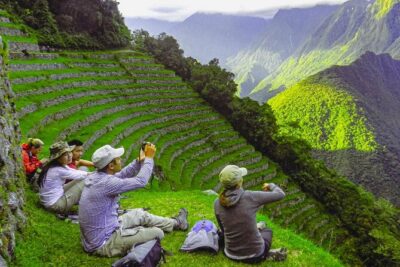
2-Day Inca Trail to Machu Picchu with Panoramic Train
Read our review →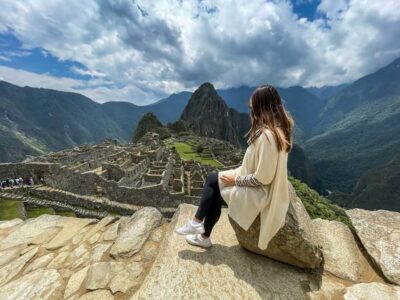
From Cusco: Full-Day Group Tour of Machu Picchu
Read our review →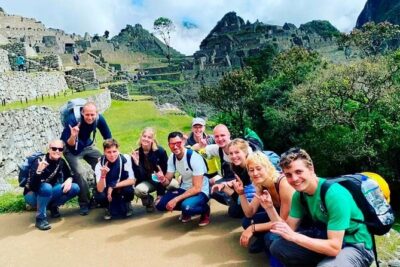
2-Day Tour: Sacred Valley and Machu Picchu by Train
Read our review →
Machu Picchu: Full-Day Tour from Cusco with Optional Lunch
Read our review →
Machu Picchu Full Day from Cusco by Panoramic Train
Read our review →Browse the lists this tour appears in