
Reviewed · MACHU PICCHU TOURS
4 Day – Inca Trail to Machu Picchu – Group Service
The Inca Trail saves its best moment for dawn. This four-day trek combines ancient ruins and high mountain scenery with a guided arrival at Machu Picchu through the Sun Gate. I like that meals, camps, porters, trail transport, and a 7-kilogram personal allowance are included, keeping the package practical at $949. The main concern is the demanding altitude and uneven pre-trek communication, so you need to arrive prepared.
This is a proper mountain trek, not a gentle sightseeing walk. Day two covers 16 kilometers and climbs to 4,200 meters, while the final morning begins before 4 a.m. You also need to budget for a sleeping bag, walking sticks, foam mattress, extra meals, insurance, and tips.
The reward is unusually complete. You walk from Kilometer 82 to Machu Picchu, pass Patallacta and Wiñay Wayna, watch sunrise from Inti Punku, and then receive a two-hour guided visit inside the citadel. The group size is capped at 16, with an assistant guide for groups of nine or more.
In This Review
- Key points before you book
- What the $949 package really gives you
- Day one: Kilometer 82 to Ayapata, 12 kilometers
- Day two: Dead Woman’s Pass at 4,200 meters
- Day three: Phuyupatamarca, Intipata, and Wiñay Wayna
- Day four: Sunrise at the Sun Gate
- Food, camps, porters, and the human side of the trek
- Guides, group size, and communication
- What to pack and what not to assume
- Who should book this Inca Trail trip?
- Should you book it?
- FAQ
- How long is the Inca Trail tour?
- What is the price?
- What time does pickup begin?
- Is breakfast on the first morning included?
- What meals are included?
- Is a guide included?
- How large can the group be?
- Is a sleeping bag included?
- Is Huayna Picchu included?
- Does the tour include the return train?
Key points before you book
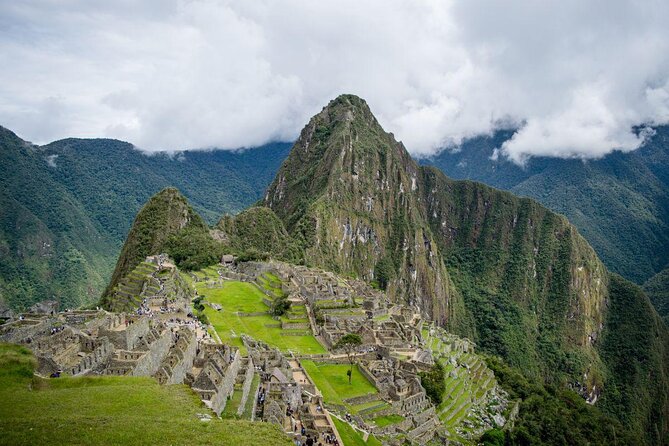
- Sunrise entry through Inti Punku: You reach the Sun Gate before sunrise, weather permitting, for your first broad view of Machu Picchu.
- The hardest day reaches 4,200 meters: Day two includes Dead Woman’s Pass, a long descent, and another steep climb to Runkuraqay.
- Three nights in changing mountain zones: Camps range from cool Ayapata and Runkuraqay to milder Wiñay Wayna.
- Food and porter support are major strengths: The team carries cooking and camping gear, while cooks prepare three breakfasts, lunches, and dinners.
- A small group keeps the trek personal: The maximum is 16 people, and larger groups receive an assistant guide.
- You must pay attention to extras: A sleeping bag, foam mattress, walking sticks, travel insurance, tips, and Huayna Picchu entry are not included.
What the $949 package really gives you
At $949 per person, this is not simply a trail permit with a guide. The price includes hotel pickup in Cusco, transport to Kilometer 82, a bilingual guide, three breakfasts, three lunches, three dinners, boiled water from the first lunch through the final breakfast, camping equipment carried by porters, first aid support, and transport after Machu Picchu.
You also receive a train ticket from Aguas Calientes toward Cusco, with the published details naming Poroy as the rail endpoint. The day-four instructions also describe the train going to Ollantaytambo, followed by a bus to Cusco. Since those details do not match perfectly, confirm your actual train endpoint at the briefing.
That package can represent good value if you want one company handling the moving parts. Permits, camps, meals, porters, trains, and guides all matter on this route. Arranging each item separately would take more time and would not necessarily cost less.
Still, $949 is not your final trip budget. The package excludes the first morning’s breakfast and water, although breakfast is available at a stop in Ollantaytambo. You also pay extra for a single tent, sleeping bag, foam mattress, walking sticks, a personal porter for your duffle bag, Huayna Picchu entry, tips, and travel insurance.
The 7-kilogram personal porter allowance needs careful reading. The details list 7 kilograms of personal porter service, but they also say a personal porter for your duffle is not included. Ask exactly what bag is carried, what you must carry yourself, and where your remaining luggage will be stored.
More Machu Picchu trips:
- Classic Inca Trail Trek 4D/3N to Machu Picchu (Group Service)
★ 5.0 · 8,653 reviews - Machu Picchu: 4-Day Inca Trail Trek with Panoramic Train Ride
★ 5.0 · 4,568 reviews - Short Inca Trail to Machu Picchu 2D/1N
★ 5.0 · 3,007 reviews
Day one: Kilometer 82 to Ayapata, 12 kilometers
Your morning starts early, with pickup from your Cusco hotel around 4:00 to 4:30 a.m. The exact time is confirmed at the briefing. The bus heads toward Ollantaytambo, where you can stop for breakfast around 6:30 or 7:00 a.m. Breakfast is not included, so bring money and do not assume the first meal is part of the package.
The trail begins at Piskacucho, better known as Kilometer 82, at about 2,720 meters. Before walking, you organize your gear, use the restrooms, apply sunscreen and insect repellent, and show your passport and trail entrance documents at the first control point. If you booked a student rate, you also need your student card.
Day one is described as the easiest walking day, though 12 kilometers still requires steady effort. You cross the Vilcanota River and follow the river route through relatively gentle Inca terrain. This is your chance to settle into your boots, walking rhythm, and group pace before the hard climbing begins.
The sights arrive early. Huillca Raccay is an Inca fortress above the route, while Patallacta spreads across the valley as a large archaeological site. You also get views toward the Urubamba mountain range and the snow-covered peak of Veronica, known locally as W’akay Willca.
The first campsite is Ayapata, about an hour and a half beyond Wayllabamba. It sits in a temperate green valley at roughly 3,000 meters. Night temperatures can fall to about 5°C, so a warm sleeping bag is not a luxury here.
This first evening also reveals how much the porter and cooking team affect the trip. Past groups have praised porter teams led by people such as Carmelo and chefs including Gregorio, Felix, and Wilfredo. The consistent theme is simple: tents are ready, hot drinks appear, and filling food makes the next day possible.
Day two: Dead Woman’s Pass at 4,200 meters
Day two is the physical test. You wake around 5:00 or 5:30 a.m., eat breakfast, and begin the long uphill push toward Abra de Warrmihuañusca, usually called Dead Woman’s Pass.
The route climbs from the temperate valley toward 4,200 meters, or 13,779 feet. The distance is about 16 kilometers, and the walking time is estimated at eight to nine hours. The numbers do not tell the whole story. The steep ascent, thin air, and long descent afterward make this a day where patience matters more than speed.
You may see hummingbirds and other birds along the climb. Polylepis, or Q’ueuña trees, grow in the cloud forest around 3,650 meters, adding a distinctive high-altitude touch to the route.
Reaching the pass feels like a genuine achievement. Stop, breathe, drink, and enjoy the view before descending toward Pacaymayu at about 3,550 meters. Lunch comes there, giving you a useful break before the second climb.
After lunch, you climb again for roughly two hours toward Runkuraqay Pass, close to 4,000 meters. This second ascent can surprise you because your legs have already worked hard. You reach the campsite around 5 p.m., with nighttime temperatures near 4°C.
This is where a good guide earns the fee. Guides named Victor, Henry Jorge, Luis, Mijail, Edwardo, and Leevo have been praised for encouragement, trail knowledge, humor, and patience with slower walkers. One guide, Leevo, even played the flute during the trek. You should expect your guide to manage the pace and explain the sites, but you remain responsible for deciding whether your body is coping well.
Do not treat the altitude casually. The tour requires a strong fitness level and sets a minimum age of 18. Spending several days in Cusco before the trek is sensible, particularly because Cusco itself sits high. That adjustment time is not included in the four-day tour.
Day three: Phuyupatamarca, Intipata, and Wiñay Wayna
Day three is shorter, covering about 10 kilometers in four to five hours. After breakfast around 6 a.m., you climb gently toward Phuyupatamarca, the Town in the Clouds, at approximately 3,680 meters.
This is one of the most rewarding sections because the route balances walking with major archaeological sites. From the high point, you look across mountains and canyons before continuing through cloud forest.
The descent includes roughly 3,000 stone steps. That detail matters. Your lungs may appreciate the lower altitude, but your knees may not. Use your walking poles if you bring them, and do not race downhill simply because the route trends lower.
Intipata is an agricultural Inca site built into the slopes. Afterward, the trail continues to Wiñay Wayna at about 2,680 meters. You arrive around lunchtime, which makes this the most relaxed camp arrival of the trek.
Wiñay Wayna, meaning Forever Young, is close to the campsite and deserves your attention. You do not need to save every ounce of energy for the next morning. This is one of the most impressive sites on the route, and seeing it with your guide adds context that a quick walk past the terraces would miss.
The night is warmer here, around 12°C. That small change can feel wonderful after the cold camps at Ayapata and Runkuraqay. It also gives you a more comfortable final night before the early start.
More hikes and treks in Cusco:
- Salkantay Classic Trek 5 Days from Cusco
★ 5.0 · 4,062 reviews - 4-Day Salkantay Trek with Sky Camp Stay
★ 5.0 · 3,346 reviews - Salkantay Trek 5D/4N with Glass Cabins, Domes and Hobbit House
★ 5.0 · 2,488 reviews - 2-Day Inca Trail to Machu Picchu with Panoramic Train
★ 5.0 · 1,876 reviews
Day four: Sunrise at the Sun Gate
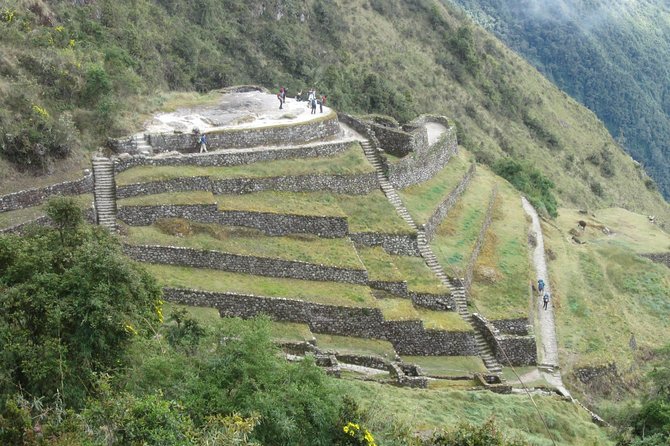
The last morning begins very early. Breakfast is scheduled around 3:30 to 4:00 a.m., and you leave camp at about 5:30 a.m. The goal is Inti Punku, the Sun Gate, before sunrise.
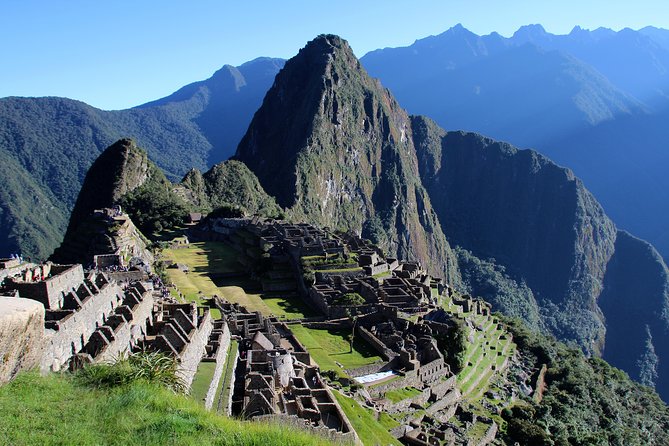
The final walking distance is about 5 kilometers and takes roughly two hours. The trail’s last section builds suspense without needing much help from a tour brochure. At Inti Punku, you get your first dramatic view of Machu Picchu, with the citadel below and the morning light moving across the mountains.
Sunrise depends on clouds and timing, so treat it as a strong possibility rather than a guarantee. The early departure still makes sense because the Sun Gate is the historic arrival point for the trail, not simply a photo stop.
From there, you walk down toward the classic viewpoint for the postcard image, then enter Machu Picchu itself. Your guide provides a walking tour lasting about two hours. Afterward, you can explore on your own within the access rules in effect for your visit.
The itinerary says you travel by bus or on foot to Aguas Calientes, where you meet your guide for lunch and receive your train tickets. A bus is the easier choice after four days on foot, though the option to walk is noted.
If you can afford an extra night in Aguas Calientes, it is worth considering. The added night gives you more time around Machu Picchu and lets you visit the town’s thermal springs, which can be especially welcome after the trail. That extra night is optional and not part of the listed price.
Food, camps, porters, and the human side of the trek
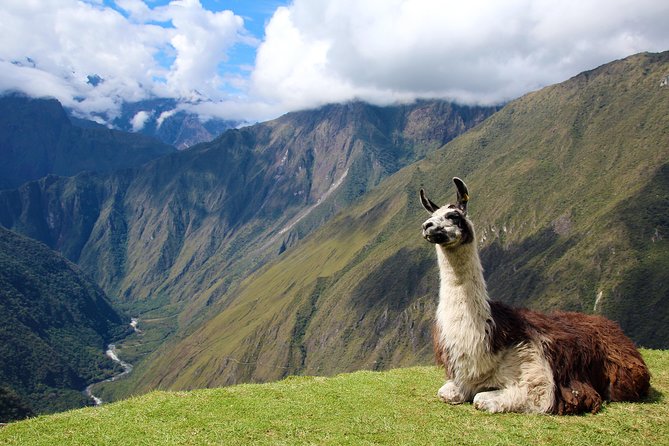
The practical support is one of the strongest reasons to choose this package. Porters carry cooking and camping equipment, while the cook prepares three meals each day from lunch on day one through breakfast on day four.
Food quality can make or break a demanding trek. Cooks such as Gregorio, Felix, and Wilfredo have been singled out for fresh, generous meals, multi-course lunches and dinners, and even a cake on the final night. You should not expect restaurant dining, but the meals are intended to replace the energy you burn on the trail.
Boiled water is provided from the first lunch through the final breakfast. You remain responsible for water on the first morning, so bring enough for the bus ride and trail start.
The porters are central to the experience. They carry heavy communal equipment and prepare camp before you arrive. Past groups have praised teams led by Carmelo and the Huacawasi porter group for their strength, warmth, and cheerful support.
That service deserves respect. Pack lightly, follow the 7-kilogram allowance carefully, and bring cash for tips. Gratitude is not included, and tipping is an important part of recognizing the staff who make camp life possible.
Guides, group size, and communication
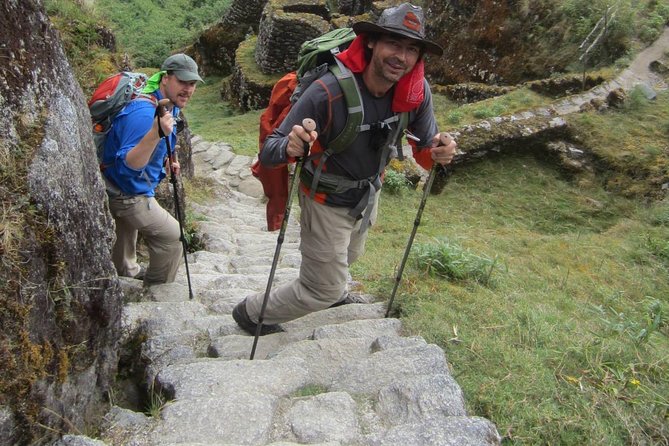
The tour uses a professional bilingual guide, with an assistant guide for groups of nine or more. The maximum is 16 people, while at least two people are required per booking.
A group of 16 is still manageable on a narrow mountain trail, though it will not feel as intimate as a private trip. A smaller group can make it easier to walk at your own pace and ask questions. One seven-person private booking described that modest upgrade as worthwhile, particularly for a slower hiker.
The guides are often the difference between a hard trek and a meaningful one. Luis was praised for thoughtfulness and company, Victor for calm encouragement, Henry Jorge for trail knowledge and patience, Mijail for support and regional insight, and Leevo for warmth and music. Guide assignments can change, but the pattern tells you what to look for: clear pacing, safety awareness, and enthusiasm for the Inca sites.
Communication deserves more caution. Confirm the time and location of the pre-trek briefing, when your duffle will arrive, how extra luggage storage works, what breakfast arrangements are planned, and how equipment damage is handled. One past experience included late notice about the briefing, an unannounced duffle delivery, confusion over luggage storage, and a dispute about a damaged walking pole.
Those are avoidable headaches before an otherwise well-organized trek. Get important arrangements in writing before you leave Cusco.
What to pack and what not to assume
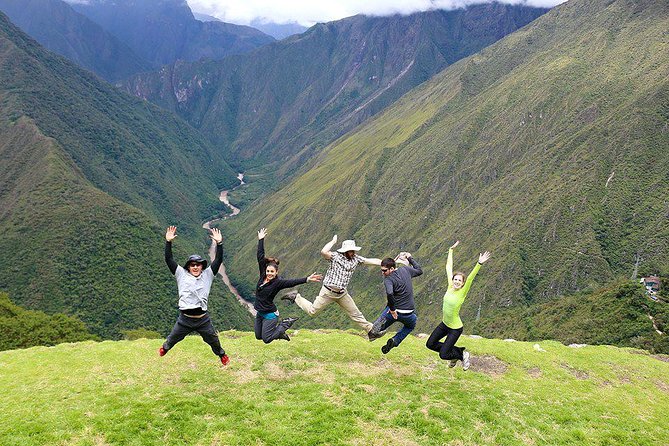
You carry your personal belongings, sleeping bag, and any rented equipment unless the porter arrangement specifically covers them. The package does not include a foam mattress, walking sticks, or sleeping bag.
Your packing list should account for both cold and mild nights. Ayapata and Runkuraqay can be near 5°C and 4°C, while Wiñay Wayna is closer to 12°C. Sunscreen and insect repellent are specifically useful at the trailhead, and sturdy footwear is essential for steep climbs and thousands of stone steps.
A first-aid kit is provided, but travel insurance is not. The operator strongly recommends insurance for the trip, and that is sensible for a four-day route at high altitude.
Huayna Picchu entry is also excluded. Do not assume your Machu Picchu ticket includes that mountain.
Who should book this Inca Trail trip?
I would choose this trek if you want the full classic route, prefer a guided experience, and value having meals, camping support, and transport arranged together. It suits fit adults who can handle long walking days, cold camps, steep steps, and a pre-dawn finish.
I would hesitate if you dislike early starts, have limited mountain fitness, or want a flexible schedule. Day two is demanding, and day four starts while most people are still asleep.
The $949 price is fair for the level of support, but only if you count the extras before booking. Add rental equipment, tips, insurance, first-morning food, and perhaps an Aguas Calientes night. Also remember that the booking is non-refundable and cannot be changed after purchase.
Should you book it?
Book this four-day Inca Trail trip if walking into Machu Picchu through the Sun Gate matters more to you than convenience. The route gives you Patallacta, Dead Woman’s Pass, Phuyupatamarca, Intipata, Wiñay Wayna, and a guided Machu Picchu visit in one carefully supported trek.
I would book after confirming the rail endpoint, luggage plan, rental charges, briefing time, and personal porter details. If those points are clear and you are ready for the altitude, this is a strong-value way to experience Peru’s most famous trail with a small team, capable guides, generous food, and porter support that lets you focus on the walk.
FAQ
How long is the Inca Trail tour?
The tour lasts approximately four days and follows the trail from Piskacucho at Kilometer 82 to Machu Picchu.
What is the price?
The listed price is $949 per person.
What time does pickup begin?
Pickup from your Cusco hotel is scheduled around 4:00 to 4:30 a.m. on the first day. The final time is confirmed at the briefing.
Is breakfast on the first morning included?
No. The group stops in Ollantaytambo around 6:30 to 7:00 a.m., but breakfast is not included. Water on the first morning is also not included.
What meals are included?
The package includes three breakfasts, three lunches, and three dinners.
Is a guide included?
Yes. A professional bilingual guide is included. An assistant guide is added for groups of nine or more.
How large can the group be?
The maximum group size is 16 people. A minimum of two people per booking is required.
Is a sleeping bag included?
No. Sleeping bags, foam mattresses, and walking sticks are not included and require an additional rental charge if available.
Is Huayna Picchu included?
No. Entry to Huayna Picchu is not included in the tour price.
Does the tour include the return train?
Yes. Train transport from Aguas Calientes toward Cusco is included. The supplied details refer to both Poroy and Ollantaytambo as the rail endpoint, so confirm your exact route at the briefing.
Just added in Cusco
- Cusco Private Transportation for 2026★ 5.0 · 4 reviews
- Private Transfer from Airport to Hotel in the City of Cusco★ 4.0 · 5 reviews
- Best Cusco walking tour: dinner street food tasting★ 4.5 · 11 reviews
- Private Tour to Pisac Market and Pisac Ruins★ 5.0 · 4 reviews
- Machu Picchu Day Trip With Panoramic Train from Cusco★ 5.0 · 10 reviews
- Sacred Valley Private Tour from Cusco, Guide and Driver only★ 5.0 · 4 reviews
- Sacred Valley of the Incas Tour★ 5.0 · 12 reviews
- Private Tour of the Mountain of Colours by Quad★ 5.0 · 7 reviews
Machu Picchu Tours, compared.
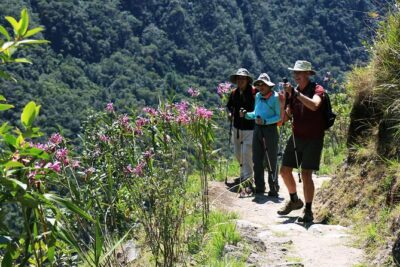
Classic Inca Trail Trek 4D/3N to Machu Picchu (Group Service)
Read our review →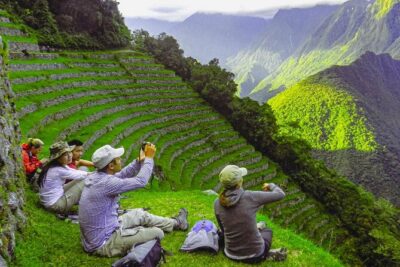
2-Day Inca Trail to Machu Picchu with Panoramic Train
Read our review →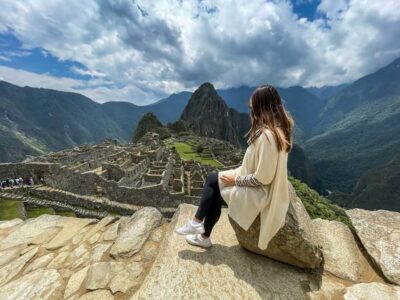
From Cusco: Full-Day Group Tour of Machu Picchu
Read our review →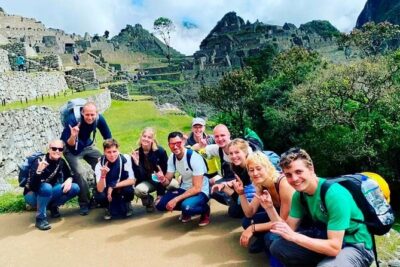
2-Day Tour: Sacred Valley and Machu Picchu by Train
Read our review →
Machu Picchu: Full-Day Tour from Cusco with Optional Lunch
Read our review →
Machu Picchu Full Day from Cusco by Panoramic Train
Read our review →Browse the lists this tour appears in