
Reviewed · COLCA CANYON AND AREQUIPA TOURS
Arequipa Tasting Tour
Arequipa tastes better on foot. This low-cost walking tour links the city’s grand plazas, Jesuit buildings, and San Camilo Market with local bites and a pisco tasting. I like the small group limit of eight and the way the market turns a history walk into a hands-on food experience. The main drawback is timing: the tasting comes near the end, so the tour feels more like a long city walk with food than a nonstop tasting outing.
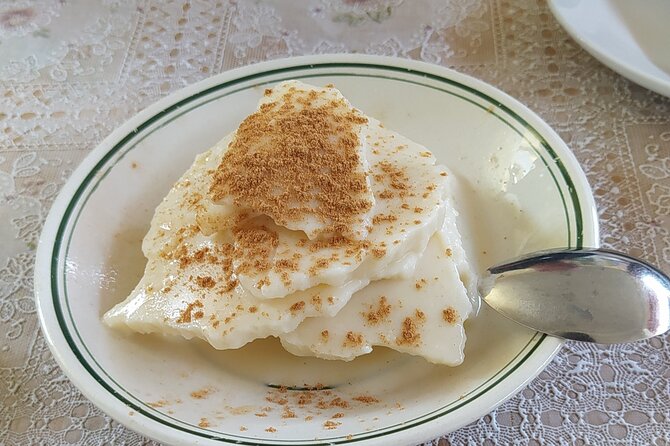
Guide Jose has earned praise for answering questions and taking time with small groups, while Daniel and Jorge have also led warm, informative outings. I especially like the stop for queso helado, Arequipa’s traditional frozen dessert, and the chance to try local fruit in the market. If you want a quick snack crawl, though, the 3-hour-30-minute route may feel too heavy on architecture and city history.
In This Review
- Key points to know before booking
- A $13 introduction to Arequipa’s center
- Campo Redondo and Arequipa’s first colonial chapter
- San Francisco Plaza, Santa Catalina, and Fundo el Fierro
- Plaza de Armas and the city shaped by earthquakes
- The Company of Jesus and its baroque details
- San Camilo Market, the best part for food lovers
- The Jesuit cloisters and the final tasting
- What the guides add to the experience
- How demanding is the walk?
- Who will get the most from this tour?
- Booking, timing, and cancellation details
- Should you book the Arequipa Tasting Tour?
- FAQ
- How much does the Arequipa Tasting Tour cost?
- How long does the tour last?
- Where does the tour begin?
- Where does the tour finish?
- What food and drinks are included?
- Is lunch included?
- Are bottled water and soft drinks included?
- How many people can join the tour?
Key points to know before booking
- The market is the food heart of the walk: San Camilo Market brings you close to regional fruit, tubers, meats, and everyday food shopping in Arequipa.
- The tasting arrives at the end: Pisco, local fruit, and a traditional dessert are included, but lunch, bottled water, and soft drinks are not.
- You get a useful city orientation: The route covers Plaza de Armas, San Francisco Plaza, the Company of Jesus, and other central sights.
- Small groups make a difference: A maximum of eight people gives the guide room to answer questions and adjust the pace.
- Expect a moderate walking effort: The route lasts about three and a half hours and moves through several central areas.
- It is a strong value at $13: You receive a guided historic walk plus food and drink samples, with no separate entrance fees listed for the stops.
A $13 introduction to Arequipa’s center
At $13 per person, this tour is priced more like a city orientation than a full culinary excursion. That is good news if you want a first look at Arequipa without spending much. You get a guide, a small group, a market visit, a traditional dessert, local fruit, and pisco.
I would not book it expecting a meal. Lunch is not included, and the tour provider recommends eating beforehand if you choose the afternoon departure. Bottled water and soda are also extra, so carry water with you.
The listed duration is approximately three hours and thirty minutes. The sightseeing stops add up to about two hours and fifteen minutes, leaving time for walking between locations, explanations, sampling, and the final tasting. That makes the schedule plausible, but it also explains why the experience can feel long if you mainly want food.
The walk begins at Plaza de Armas and finishes at Centro Artesanal Fundo el Fierro on C. Zela 202, where the pisco tasting takes place. Both points are central, and the tour does not rely on a bus or van between stops.
More Colca Canyon trips:
- 2 day 1 night trek / Colca Canyon
★ 5.0 · 1,069 reviews - From Arequipa: Colca Canyon Full-Day Guided Tour with Meals
★ 4.5 · 982 reviews - Tour to the Salinas Lagoon and National Reserve in Arequipa
★ 4.5 · 548 reviews
Campo Redondo and Arequipa’s first colonial chapter
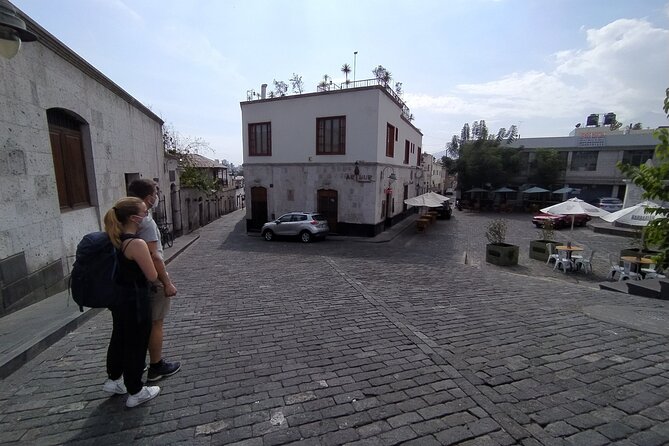
The opening stop is Plaza Campo Redondo, a traditional Arequipa neighborhood connected with the first settlement of the Spanish conquerors in the area. The visit lasts about ten minutes and costs nothing to enter.
This is a brief start, but it gives the guide a useful place to explain how the city began. Rather than launching straight into the polished central square, the tour starts with an older neighborhood and then works toward Arequipa’s major civic and religious buildings.
You should treat this as an orientation stop, not a long independent visit. The value comes from the explanation and the connection between the neighborhood and the city’s early colonial development.
San Francisco Plaza, Santa Catalina, and Fundo el Fierro
The route then passes by Santa Catalina Convent and the street bearing its name before reaching San Francisco Plaza. The stop lasts about twenty minutes and includes views of the imposing Church of San Francisco and Fundo el Fierro, an artisan center.
This section gives you several recognizable Arequipa sights in a compact stretch. It also helps you understand how religious buildings, streets, and craft spaces fit together in the historic center.
The tour does not list entrance tickets for Santa Catalina or other paid museum visits, so do not assume you will receive a full interior visit to every landmark along the way. If Santa Catalina is high on your list, plan a separate visit. The guided pass-by is useful for getting your bearings and noting places to return to later.
Fundo el Fierro matters twice in the experience. You see it during the walk, then finish nearby for the pisco tasting. That gives the route a clear ending rather than leaving you in a random part of town.
Plaza de Armas and the city shaped by earthquakes
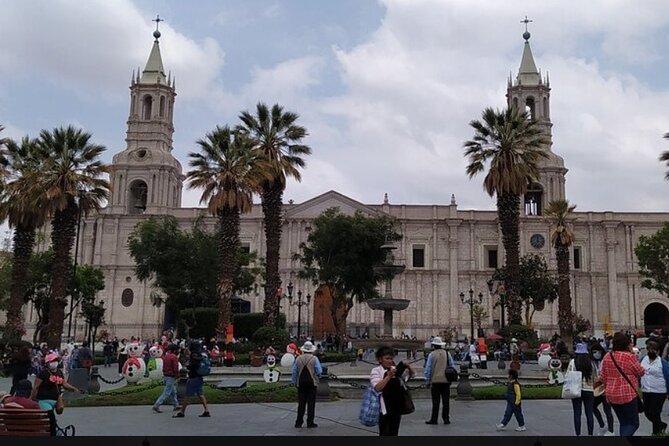
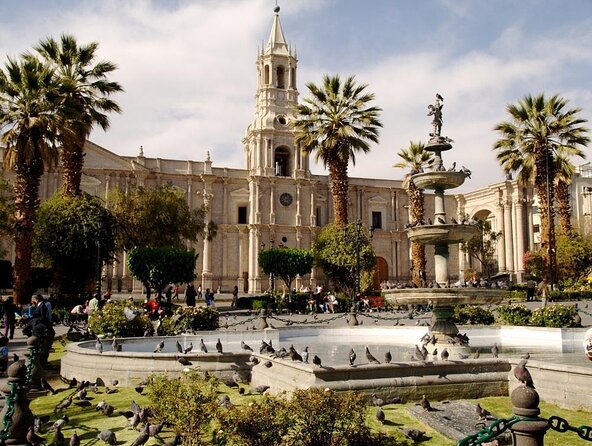
At Plaza de Armas, the guide spends around twenty-five minutes discussing Arequipa’s founding, the changes brought by earthquakes, the Cathedral, and other details tied to the square.
This is likely the most useful history stop for a first-time visit. Arequipa’s central plaza can look simple at a glance, with its arcades, gardens, and cathedral frontage, but the guide’s explanation helps you read the buildings as the result of repeated rebuilding and change.
I like this part because it gives you context for the rest of the walk. After hearing how disasters affected the city, you can look at churches and colonial structures with a better sense of why their appearance and construction matter.
The drawback is that history takes time. If you prefer a fast-moving food tour, twenty-five minutes in the main square, followed by several architectural stops, may feel slow. If you are staying in Arequipa for only a day, however, this is a practical way to learn what you are seeing.
More Food Tours and Cooking Classes in Arequipa:
- A 3-hour Guided Food Tour with 4 Iconic Restaurants of Arequipa
★ 4.5 · 96 reviews - Arequipa Food Tour: Ancestral Cuisine & City Tour
★ 5.0 · 52 reviews - Arequipa Food Tour: Ancestral Cuisine & City Tour
★ 5.0 · 11 reviews - Lima Ultimate Peruvian Food Tour
★ 5.0 · 1,845 reviews
The Company of Jesus and its baroque details
The next stop is the Church of the Company of Jesus, located beside Plaza de Armas. The church is known for its baroque façade, restrained interior, and altars covered in gold leaf. The visit lasts about ten minutes.
The contrast between the exterior and interior is part of the appeal. The façade carries decorative baroque detail, while the inside is described as more sober, with gilded altars drawing the eye.
A ten-minute stop is enough for a guide-led introduction, but not enough for a slow architectural study. If you enjoy colonial religious art, keep this church on your personal return list. The tour gives you the story and the main visual points, while a later visit lets you linger.
San Camilo Market, the best part for food lovers
The thirty-minute visit to San Camilo Market is where the tour’s title makes the most sense. This is one of Peru’s most varied markets, with regional tubers, meats, fruits, and other products arranged for everyday shopping.
The market is not presented as a polished tasting hall. That is exactly why it can be useful. You get a look at the ingredients people buy and the foods that shape local cooking, not just a plate prepared for tourists.
The guide takes you to different food stands and offers samples, including local fruits. This part can change with availability, so you should expect a look at the market’s food culture rather than a fixed menu.
For me, the market is the strongest reason to book. It adds texture to the earlier architecture stops and gives you a direct connection to Arequipa’s food traditions. You also get a better sense of the region’s produce than you would from eating in a restaurant alone.
Thirty minutes is enough for a guided introduction, but it is not a full market exploration. You may want to return later if you enjoy browsing stalls or buying fruit. Carry small spending money only if you plan to shop independently, since purchases are not listed as part of the tour.
The Jesuit cloisters and the final tasting
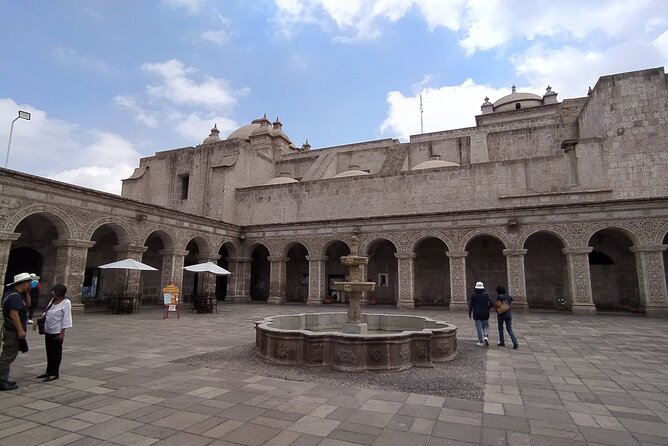
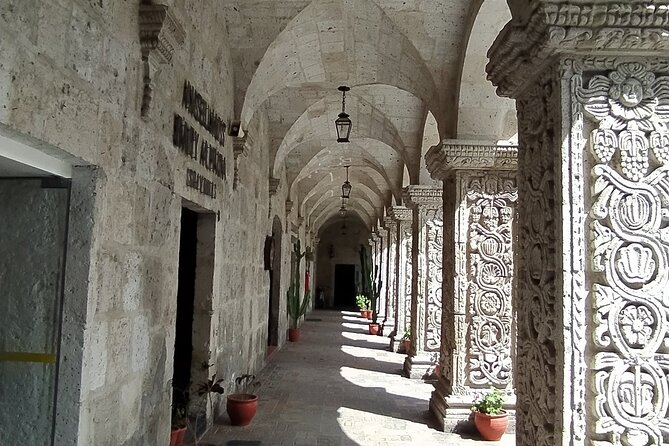
The longest scheduled stop is the Cloisters of the Company, with about forty minutes set aside. These former cloisters belonged to a Jesuit school and convent and are described as one of the finest examples of religious viceregal architecture in Arequipa.
This is where the tour shifts firmly back toward architecture. After the market, the cloisters offer a quieter setting for understanding how religious communities lived, taught, and organized their buildings.
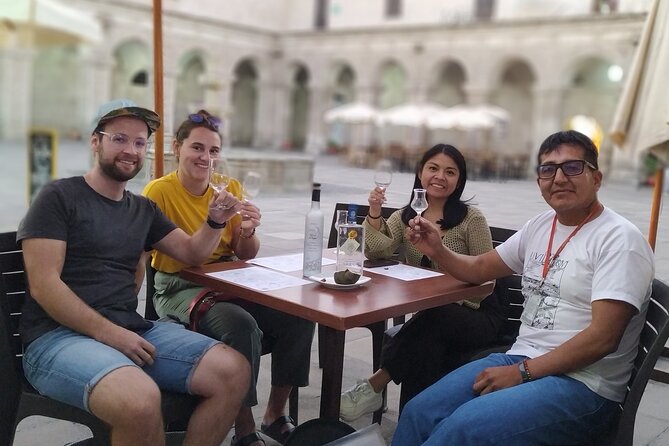
The final tasting takes place at Centro Artesanal Fundo el Fierro. Included items are pisco, a traditional dessert, and local fruits. The dessert is identified in the experience through the local specialty queso helado, which is a highlight for many people taking the walk.
The pisco portion is more than simply taking a shot. Guides explain pisco and how it is made, giving you a basic introduction to Peru’s best-known spirit. One account of the experience also praised the pisco sour available at the tasting location, but the included item is the pisco tasting itself, not a guaranteed cocktail.
Because the tasting comes at the end, remember to pace yourself. You will have already spent hours walking and listening, and the food portion is not designed to replace lunch.
What the guides add to the experience
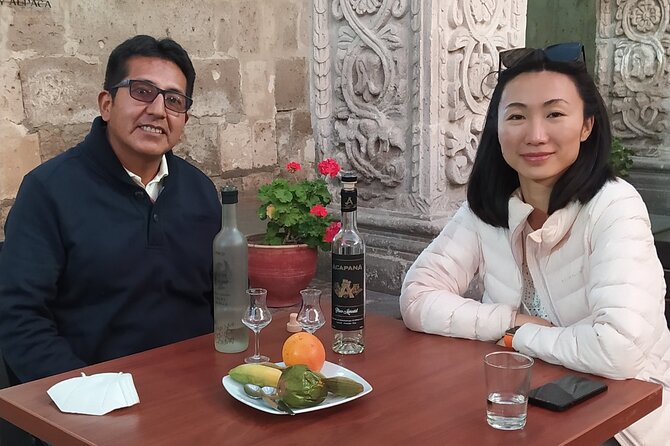
The small group limit is one of the tour’s best practical features. With no more than eight people, a guide can answer individual questions instead of delivering a speech to a crowd.
Jose has been singled out for patience, good explanations, and a willingness to answer questions. Daniel has also been praised for bringing together Arequipa’s architecture, religion, industries, food, and city history. Jorge has been described as friendly and approachable.
That consistency matters because this route depends heavily on the guide. The food samples are appealing, but the walking portion is mostly about interpretation. A strong guide turns a church façade, market stall, or cloister into something meaningful. A rushed guide would make the same route feel like a checklist.
The experience can also work especially well if you are the only booking or part of a very small group. A small party allows more conversation and may make it easier to ask for explanations about food, buildings, or local customs.
How demanding is the walk?
The tour requires a moderate level of physical fitness. No steep hike or remote transport is described, but you should expect to walk through the central city for roughly three and a half hours.
Wear comfortable shoes. The route moves between plazas, churches, a market, cloisters, and the final tasting location. You will also spend time standing while the guide explains each place.
The afternoon option deserves a little planning. Since lunch is not included and the food tasting is near the end, eat beforehand if you choose that departure. Bring bottled water, since water is not included.
Service animals are allowed, and the tour is near public transportation. Those details make it easier to fit into a wider Arequipa schedule, though the core experience itself is on foot.
Who will get the most from this tour?
I would recommend this experience to first-time visitors who want a guided introduction to central Arequipa. It suits solo visitors, couples, and families who like to ask questions and see several key places in one outing.
It is also a good choice if you want to combine sightseeing with a small amount of local food. The market, fruit samples, queso helado, and pisco give the walk a clear culinary thread.
You may want another option if your main goal is a dedicated food tour with many substantial tastings. The title can create that expectation, but much of the schedule focuses on architecture, religion, colonial development, and earthquakes.
The tour is less suited to anyone looking for a private, leisurely visit inside every church or museum. Several locations are introduced in short segments, and the listed stop times keep the group moving.
Booking, timing, and cancellation details
The tour is often booked about thirteen days ahead, so reserving early is sensible if your dates are fixed. Confirmation is provided when you book.
Free cancellation is available until at least twenty-four hours before the start time. Changes or cancellations inside that window are not accepted for a refund. The experience requires good weather, and poor conditions may lead to a new date or a full refund.
At $13, the financial risk is low, but the time commitment is not. I would schedule it early in your Arequipa stay, when the city orientation can help you choose where to return later.
Should you book the Arequipa Tasting Tour?
Book it if you want a small-group walking tour that combines Arequipa’s main central sights with a market visit and a modest tasting session. The price is excellent for the amount of guiding, and the market plus queso helado and pisco are the most memorable parts.
Skip it if you want a food-first tour, a full lunch, or a short activity. The route is history-led, and the tasting comes at the end.
For most first-time visitors, I think it is a smart introduction. Eat lunch first, carry water, wear good shoes, and arrive expecting a city walk with local flavors rather than a three-hour meal.
FAQ
How much does the Arequipa Tasting Tour cost?
The tour costs $13 per person.
How long does the tour last?
The experience lasts approximately 3 hours and 30 minutes.
Where does the tour begin?
The meeting point is Plaza de Armas in Arequipa, at Arequipa 04001, Peru.
Where does the tour finish?
The tour finishes at Centro Artesanal Fundo el Fierro, at C. Zela 202 in Arequipa. The pisco tasting takes place there.
What food and drinks are included?
The experience includes a pisco tasting, a traditional dessert, and local fruits. Queso helado is identified as the traditional dessert associated with the tasting.
Is lunch included?
No. Lunch is not included, and afternoon participants are advised to eat beforehand.
Are bottled water and soft drinks included?
No. Bottled water and soda or pop are not included.
How many people can join the tour?
The tour has a maximum of eight participants.
Just added in Arequipa
- Sillar Route★ 5.0 · 4 reviews
- Salinas Lagoon + Mini Volcano DE Lojen★ 5.0 · 9 reviews
- 3-Day Colca Canyon trek with Professional Guide★ 5.0 · 40 reviews
- Full Day Tour To The Salt Lake Salinas in Arequipa★ 4.5 · 34 reviews
- Walking City tour including the Monastery of Santa Catalina★ 5.0 · 6 reviews
- Trekking, Waterfalls and Thermal Baths★ 4.5 · 47 reviews
- Downhill Tour – Mountain Bike in Arequipa★ 3.5 · 5 reviews
- 2 Days 1 Night trekking Through Colca Canyon, Private room★ 5.0 · 16 reviews
Colca Canyon and Arequipa Tours, compared.
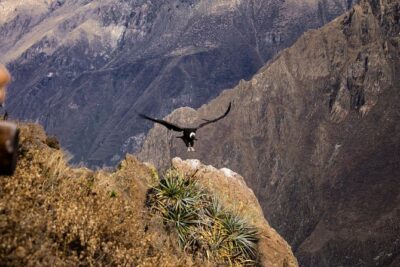
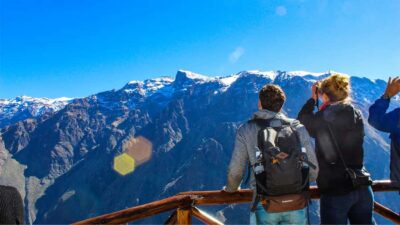
From Arequipa: Colca Canyon Full-Day Guided Tour with Meals
Read our review →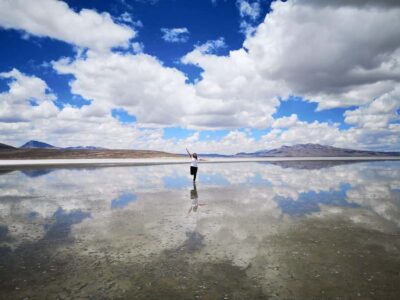
Tour to the Salinas Lagoon and National Reserve in Arequipa
Read our review →
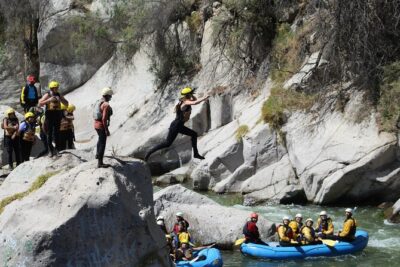
Rafting Arequipa – Chili River Canoeing – Cusipata Rafting Arequipa
Read our review →
Chili River White Water Rafting with Hotel Pickup
Read our review →
Browse the lists this tour appears in