
Reviewed · CITY TOURS
City Tour Cusco – Group
Ancient stones tell Cusco’s story. This $20 group tour gives you a practical first look at Qorikancha, Sacsayhuaman, Q’enqo, Puka Pukara, and Tambomachay, with hotel pickup and transport in a sprinter vehicle. I like the efficient route and the chance to see both central Cusco and the hilltop sites in one morning. I also like the bilingual English and Spanish guide, especially if you want context instead of simply taking photos.
The main catch is that the price does not cover the archaeological-site ticket or entry to Qorikancha. You should budget another 70 soles for the Partial Tourist Ticket and 25 soles, listed in the tour details as 25 suns, for Qorikancha. The group can reach 18 people, so this is organized sightseeing rather than a quiet, private visit.
In This Review
- Key points to know before booking
- Why this Cusco tour works well as a first morning
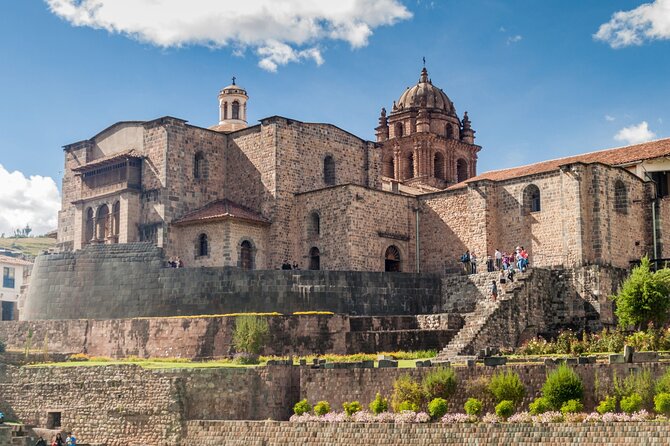
- Qorikancha: Cusco’s most layered first stop
- Sacsayhuaman: enormous stones above the city
- Q’enqo: ceremonies carved into stone
- Puka Pukara: a checkpoint along the Inca roads
- Tambomachay: water still flowing through an Inca site
- The route, vehicle, and morning schedule
- What the guide adds to the experience
- The real cost: $20 plus entrance fees
- Who should book this half-day outing
- Practical tips for getting more from the morning
- Should you book City Tour Cusco?
- FAQ
- How long does the City Tour Cusco take?
- What time does the tour start?
- Is hotel pickup available?
- Where does the tour end?
- Is transportation included?
- Are entrance tickets included?
- Is the tour offered in English?
- How many people can join the group?
Key points to know before booking
- Five major sights in one morning: The route covers Qorikancha, Sacsayhuaman, Q’enqo, Puka Pukara, and Tambomachay in about four to five hours.
- Hotel pickup is offered: You can arrange pickup from your hotel or meet at the Plaza de Armas around the 9:00 a.m. start.
- Admissions cost extra: The 70-sol Partial Tourist Ticket and Qorikancha admission are not included in the $20 price.
- A maximum of 18 people: This keeps the group smaller than a large coach tour, though you should still expect a shared pace.
- Strong service feedback: The available comments praise attentive staff, reliable timing, and care with transport arrangements.
- The tour ends centrally: You return to the historic center near Plaza Regocijo, close to Cusco’s main sights and restaurants.
Why this Cusco tour works well as a first morning
Cusco can feel confusing at first. The streets rise and twist, the major Inca sites sit in different directions, and the altitude makes a long day on foot a poor opening move for some people. This tour gathers the main sights into one compact outing.
I like the mix of sites. Qorikancha gives you an introduction in the city center, while Sacsayhuaman and the three smaller archaeological complexes show how the Incas used the hills above Cusco. You get temples, ceremonial spaces, water features, defensive architecture, and wide views without arranging several separate taxi rides.
The price also deserves a fair look. At $20 per person, the tour is inexpensive for four to five hours of transport, a bilingual guide, and hotel pickup. It is not an all-inclusive admission price, however. If you forget the extra tickets, the bargain becomes less simple at the entrance.
The group limit of 18 is useful. You are not being packed into a huge bus, but you should not expect the guide to tailor every stop to your interests. If you want to linger over stonework or ask many detailed questions, a private tour will give you more freedom.
More city tours in Cusco:
- Cusco: Half-Day City Tour with Sacsayhuaman and Q’enco
★ 4.6 · 1,129 reviews - City Tour Cusco Qoricancha Sacsayhuaman y Tambomachay
★ 4.7 · 617 reviews - Cusco City Tour Four Ruins in Half-Day
★ 5.0 · 530 reviews
Qorikancha: Cusco’s most layered first stop
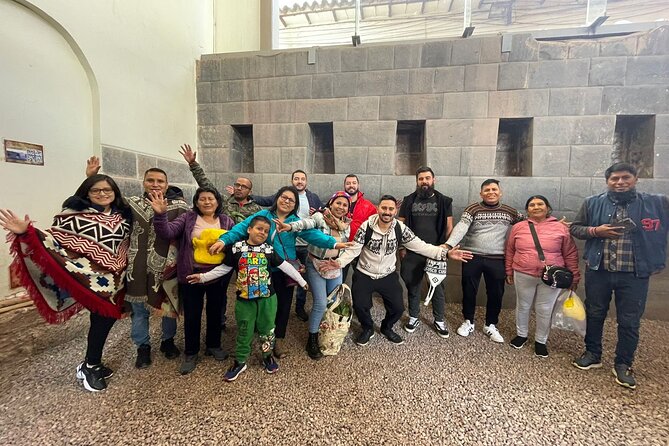
The tour begins with Qorikancha, the ancient Inca temple devoted to the sun. The site was later partly destroyed, and the Convent of Santo Domingo was built over it. That combination gives Qorikancha its special character: you are looking at Inca foundations and Spanish colonial construction in the same place.
Plan for about an hour here. The stop is especially valuable because it helps you understand the collision of two cultures in Cusco. The Inca temple was not simply another religious building. Its purpose centered on the worship of the sun, and its surviving stonework gives you a sense of the importance once placed on exact construction.
You will need to pay separately for admission. The tour details list the Qorikancha entrance as 25 soles, written there as 25 suns, so confirm the current amount when booking or before setting out. The main archaeological ticket does not replace this separate admission.
I would pay close attention to the guide at this stop. Without explanation, Qorikancha can look like a church and courtyard with old walls. With context, the site becomes a clear introduction to how Cusco was rebuilt and repurposed after the Spanish conquest.
Sacsayhuaman: enormous stones above the city
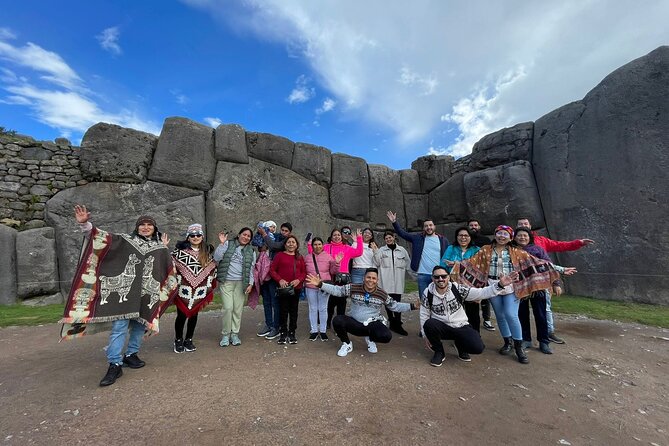
Sacsayhuaman is the dramatic stop. Located outside central Cusco, the Inca fortress is known for huge fitted stones and broad views over the city. The tour allows about an hour, which gives you time to see the main structures and take in the setting.
This is the place where the scale of Inca construction becomes easiest to grasp. The stones are the story. Their size and careful placement are difficult to appreciate in photographs, so use your time here to look closely at the joins rather than rushing from one viewpoint to another.
The views are another reason this stop matters. From the site, Cusco spreads below you, making it easier to understand the city’s position among the surrounding hills. Bring a layer and sensible shoes, since the tour includes outdoor archaeological areas and walking between points.
Sacsayhuaman also shows the tradeoff of a group visit. The guide must keep the schedule moving so the group can reach the three later sites. You will see the essential areas, but you may not have the freedom to wander at your own pace.
Admission is not included. Sacsayhuaman is covered by the Partial Tourist Ticket, listed at 70 soles for this tour. That ticket also applies to the other archaeological complexes on the route.
Q’enqo: ceremonies carved into stone
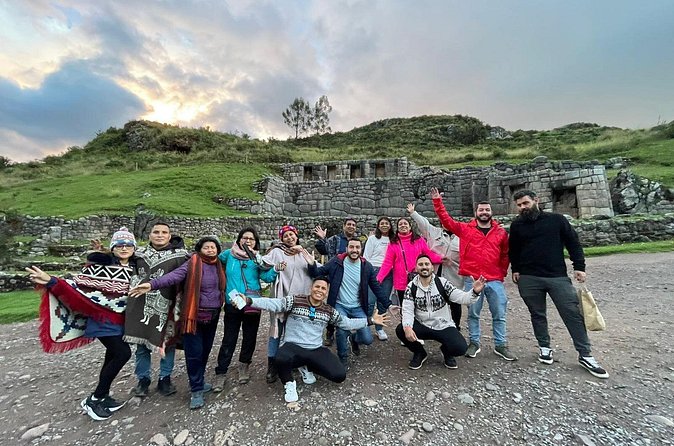
Q’enqo receives about 30 minutes. It is smaller than Sacsayhuaman, but it adds a different kind of interest. The complex includes ceremonial plazas and canals carved directly into the rock.
This stop rewards careful looking. At a large fortress, the eye goes to walls and views. At Q’enqo, the details are closer and more contained. The carved channels and ceremonial spaces show how the Incas shaped natural rock for ritual use.
Thirty minutes is a reasonable introduction, though not a long visit. You will likely get an explanation, see the main features, and rejoin the group. If you are fascinated by ceremonial architecture, this may feel short. If you are ready for a change after Sacsayhuaman, the compact visit keeps the morning from dragging.
Q’enqo is also included in the 70-sol Partial Tourist Ticket. The guide can help you connect this site with Qorikancha and the other stops, rather than treating each ruin as an isolated photo opportunity.
More things to do in Cusco:
- Classic Inca Trail Trek 4D/3N to Machu Picchu (Group Service)
★ 5.0 · 8,653 reviews - Cusco: Rainbow Mountain and Red Valley Day Trip with Meals
★ 4.9 · 4,893 reviews - Machu Picchu: 4-Day Inca Trail Trek with Panoramic Train Ride
★ 5.0 · 4,568 reviews - Salkantay Classic Trek 5 Days from Cusco
★ 5.0 · 4,062 reviews
Puka Pukara: a checkpoint along the Inca roads
Puka Pukara is another 30-minute stop. This archaeological complex served as a checkpoint and surveillance post along the Inca roads. Its purpose makes it different from Qorikancha’s religious role and Sacsayhuaman’s fortress character.
The site helps you picture the wider Inca road system. It was not just a collection of impressive buildings around Cusco. Roads, checkpoints, and observation posts supported movement and control across the region.
The visit is brief, so listen for the practical explanation of what the complex did. You may find the remains less immediately striking than the giant stones at Sacsayhuaman, but the function is important. Puka Pukara gives the route a sense of organization and reach.
Again, admission is not included in the tour price. It falls under the Partial Tourist Ticket, so keep that ticket accessible throughout the morning.
Tambomachay: water still flowing through an Inca site
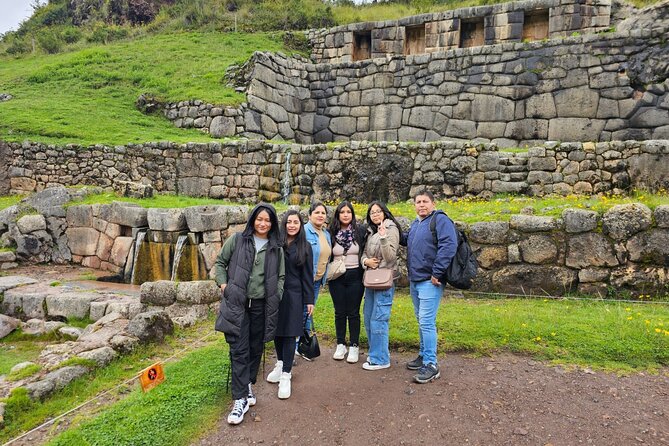
Tambomachay is the final archaeological stop, with about 30 minutes set aside. The complex is known for ceremonial baths and fountains where water still flows.
Water gives Tambomachay a calmer feel than the fortress sites. The fountains make the purpose of the place easier to imagine, even during a short visit. This is a good final stop because it offers a change of mood before the return to Cusco.
The flowing water is the feature to watch for, but the guide’s explanation matters here too. The site was ceremonial, and the fountains show the Incas’ ability to direct water through carefully built channels.
Tambomachay is also covered by the Partial Tourist Ticket. Since all three hilltop complexes are visited in quick succession, I recommend keeping your ticket and small personal items organized. The group will be moving between sites, and there is little reason to slow down the entire vehicle while you search through a bag.
The route, vehicle, and morning schedule
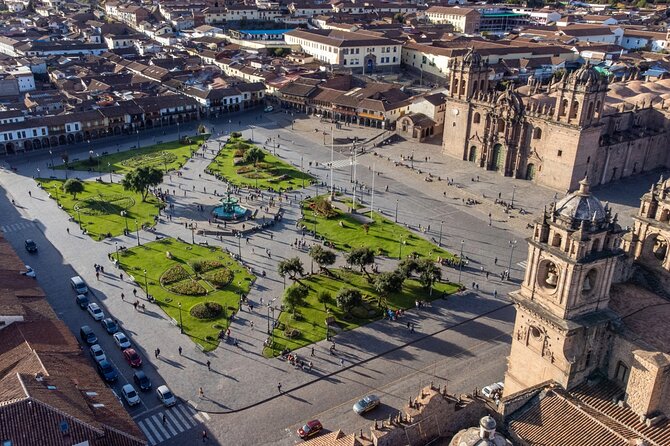
The published start time is 9:00 a.m. Pickup is offered from your hotel, or you can meet at the Plaza de Armas of Cusco. The exact pickup arrangement depends on your preference, so give clear hotel details when you book.
Transport is by shared sprinter vehicle. With up to 18 people, the vehicle is smaller than a standard sightseeing coach, which should make the route more manageable on Cusco’s streets. Shared transport also means you will follow the group’s timing, including any pickup stops.
The tour lasts roughly four to five hours. Each stop has a planned visit time:
- Qorikancha: about one hour
- Sacsayhuaman: about one hour
- Q’enqo: about 30 minutes
- Puka Pukara: about 30 minutes
- Tambomachay: about 30 minutes
- Return to Cusco: about 20 minutes
The listed stop times add up to about four and a half hours, before allowing for vehicle movement and pickup. That makes the stated duration realistic, but you should not plan an exact lunch reservation immediately after the tour.
The return is to central Cusco, ending near Plaza Regocijo. The details also identify Plaza de Armas as the meeting area and describe the finish as a return to the historic center. Ask the operator for the precise drop-off point if you need to meet someone or catch another activity.
What the guide adds to the experience
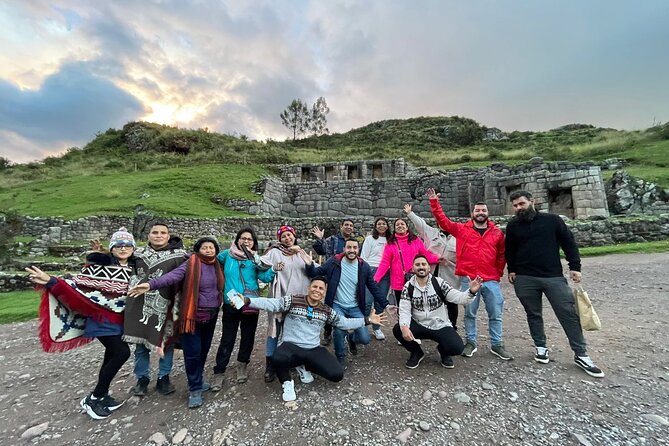
The tour includes an official bilingual tourism guide in English and Spanish. That is important at these sites because many of the remains are easier to appreciate with a short explanation of their purpose.
I would expect the guide to manage the morning as much as interpret every stone. The job includes keeping an 18-person group together, coordinating entry, and getting everyone back to the vehicle. The strongest value comes when the guide connects the sites: sun worship at Qorikancha, defense at Sacsayhuaman, ceremonies at Q’enqo and Tambomachay, and road control at Puka Pukara.
The service feedback is especially positive about attention and reliability. Several comments describe staff watching over the group and providing a sense of confidence. One account also praises help with airport rides at the start and end of a visit. Those airport arrangements are not included in the stated tour features, so treat that as evidence of attentive service rather than a promise that airport transfers come with this booking.
The comments also praise the operator for delivering what was promised and for handling visits efficiently. That matches the design of the route: you see many key sites without having to arrange separate transport.
The real cost: $20 plus entrance fees
The headline price is $20 per person. Included are the official bilingual guide, hotel pickup, and shared transport. Food is not included.
The main extra is the 70-sol Partial Tourist Ticket. It covers the archaeological sites on this route, including Sacsayhuaman, Q’enqo, Puka Pukara, and Tambomachay. Qorikancha requires its own admission, listed as 25 soles, or 25 suns, in the tour information.
That means you should compare the total cost, not just the advertised tour price. Even with the added admissions, the package can be good value if you want a guide and transport to five sites. The value is strongest for a first visit, when saving time and avoiding separate taxi arrangements matters.
Bring money for food as well. The tour does not include meals, and the schedule is built around sightseeing rather than a restaurant stop. Since the return is to central Cusco, you can arrange lunch afterward in the historic center.
Who should book this half-day outing
I would recommend this tour to you if you are visiting Cusco for the first time, want a broad introduction, or prefer to let someone else handle the driving between sites. It also suits anyone with limited time who wants to see the main nearby Inca complexes in one morning.
The tour works well for people who appreciate structure. You have a clear 9:00 a.m. start, arranged pickup, a shared vehicle, an English and Spanish guide, and a central finish. The maximum group size of 18 keeps the format fairly contained.
You may want another option if you dislike fixed schedules or want long periods for photography. Q’enqo, Puka Pukara, and Tambomachay each receive only about 30 minutes. A private guide would be better if you want to linger, ask specialist questions, or adjust the order.
The available information says most people can participate, and service animals are allowed. The tour is also near public transportation. Still, Cusco’s altitude and the outdoor nature of the sites mean you should consider your own comfort with walking and uneven archaeological ground.
Practical tips for getting more from the morning
Buy or arrange the required admission before the tour if possible. The Partial Tourist Ticket costs 70 soles, and Qorikancha has a separate fee. Having the correct tickets ready will help the group move on time.
Choose practical clothing and shoes. The route includes outdoor ruins, plazas, carved rock, fountains, and elevated viewpoints. The tour information does not promise special equipment or meal stops, so bring whatever personal items you need for a half-day outing.
Keep the morning open until the stated four to five hours have passed. Pickup coordination and traffic can affect the exact finish, even though the final stop is in the historic center near Plaza Regocijo.
If you want a quieter visit, ask about the group size at booking. The maximum is 18, but the actual number can be smaller. If hotel pickup is inconvenient, meeting at the Plaza de Armas gives you a clear central starting point.
Should you book City Tour Cusco?
Book it if you want an affordable, efficient introduction to Cusco’s major Inca sites, with transport and an English-speaking guide included. The strongest reasons are the five-stop route, the central return, and the repeated praise for careful, dependable service.
Skip it if you want a slow archaeological study or dislike paying admission fees separately. The $20 price is appealing, but you must add the 70-sol Partial Tourist Ticket and Qorikancha entry.
For a first morning in Cusco, I think the tour makes sense. It gives you the essential orientation, shows you the city from above, and leaves you back in the historic center with the rest of the day still available.
FAQ
How long does the City Tour Cusco take?
The tour lasts approximately four to five hours. The listed route includes about one hour at Qorikancha, one hour at Sacsayhuaman, 30 minutes each at Q’enqo, Puka Pukara, and Tambomachay, plus about 20 minutes to return to Cusco.
What time does the tour start?
The stated start time is 9:00 a.m.
Is hotel pickup available?
Yes. Pickup is offered from your hotel. You can also choose to meet at the Plaza de Armas of Cusco.
Where does the tour end?
The tour returns to Cusco’s historic center and ends near Plaza Regocijo. The meeting information also identifies the Plaza de Armas area as a central point connected with the tour.
Is transportation included?
Yes. Group transport in a sprinter vehicle is included, along with hotel pickup and an official bilingual tourism guide.
Are entrance tickets included?
No. The Partial Tourist Ticket, listed at 70 soles, is not included. Admission to Qorikancha is also separate and is listed as 25 soles, written in the tour details as 25 suns.
Is the tour offered in English?
Yes. The tour includes an official bilingual guide who provides service in English and Spanish.
How many people can join the group?
The maximum group size is 18 people.
Just added in Cusco
- Private Transfer from Airport to Hotel in the City of Cusco★ 4.0 · 5 reviews
- Best Cusco walking tour: dinner street food tasting★ 4.5 · 11 reviews
- Cusco Private Transportation for 2026★ 5.0 · 4 reviews
- Private Tour to Pisac Market and Pisac Ruins★ 5.0 · 4 reviews
- Machu Picchu Day Trip With Panoramic Train from Cusco★ 5.0 · 10 reviews
- Sacred Valley Private Tour from Cusco, Guide and Driver only★ 5.0 · 4 reviews
- Sacred Valley of the Incas Tour★ 5.0 · 12 reviews
- Private Tour of the Mountain of Colours by Quad★ 5.0 · 7 reviews
City Tours, compared.
Lima Half-Day City Walking Tour (Small Groups)
Read our review →
Half-Day City Tour with Sacsayhuaman and Q’enco
Read our review →
City Tour Panoramic Bus Departure From Larcomar
Read our review →
City Tour Cusco Qoricancha Sacsayhuaman y Tambomachay
Read our review →
Lima’s Vibrant Heritage: Exploring the City’s Landmarks Half-day
Read our review →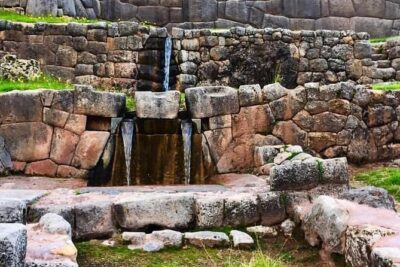
Sightseeing Tour of the City on an Open-Top Bus
Read our review →
Lima City, Central Market & Catacombs Tour (Pick-up & Drop Off)
Read our review →Browse the lists this tour appears in