
Reviewed · CITY TOURS
Cusco : City Tour of 4 Ruins and Sun Temple
Cusco’s stonework rewards a closer look. This five-hour outing links Coricancha and four hilltop ruins with a bilingual guide, making it an easy way to see major Inca sites without arranging separate transport.
I like the striking mix of Inca and Spanish architecture at the Temple of the Sun, and I like the sweeping Cusco views from Sacsayhuamán and Puca Pucara. At $16 per person, the bus and guide offer good value, but the day can lose time to shopping stops, and some visits may feel rushed.
This is a sensible first look at Cusco’s archaeological highlights, especially if you have limited time. Go in knowing that admission costs extra, the route involves walking on uneven ground, and the quality of the experience depends heavily on how well the guide handles the bilingual commentary and schedule.
In This Review
- Key points to know before you book
- Why this half-day route works in Cusco
- Coricancha: where the Sun Temple meets colonial Cusco
- Sacsayhuamán: the tour’s big stone lesson
- Qenqo: a smaller site with stranger details
- Tambomachay: water, ritual, and a longer stop
- Puca Pucara: a fortress with a strategic view
- The shopping-stop issue deserves attention
- What to bring for a high-altitude morning or afternoon
- Is the $16 price a good deal?
- Who should book this Cusco ruins tour?
- Should you book it?
- FAQ
- How long does the tour last?
- What sites are included?
- Is hotel pickup included?
- Is transportation included?
- Are entrance tickets included in the price?
- What languages are available?
- Can I cancel the booking?
- Can I reserve without paying immediately?
- Is the tour suitable for people with altitude sickness?
Key points to know before you book
- Coricancha combines two eras in one visit: You see the Inca Temple of the Sun alongside the Spanish colonial church built over it.
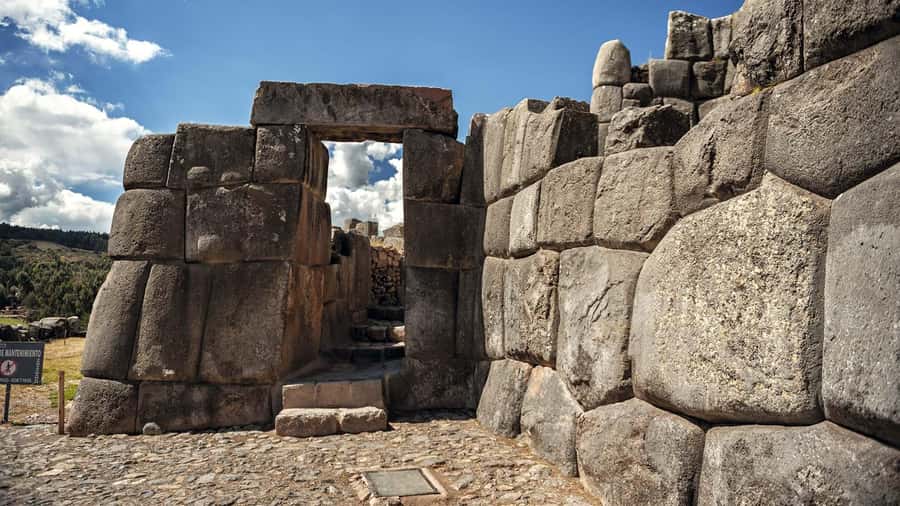
- Sacsayhuamán is the visual star: Its huge fitted stones and high position provide the tour’s strongest combination of engineering and city views.
- The four ruins sit above Cusco: Expect short vehicle rides, walking, steps, uneven paths, and open exposure to sun or rain.
- Tickets are not included: Coricancha costs 15 soles, while the partial Tourist Ticket costs 70 soles, payable in Peruvian soles.
- Shopping stops can affect the pace: Time at a textile shop or other sales stops has reduced time at the archaeological sites for some passengers.
- The best guide experience is bilingual and attentive: Guide Yako received particular praise for his caring manner and explanations of Inca civilization.
Why this half-day route works in Cusco
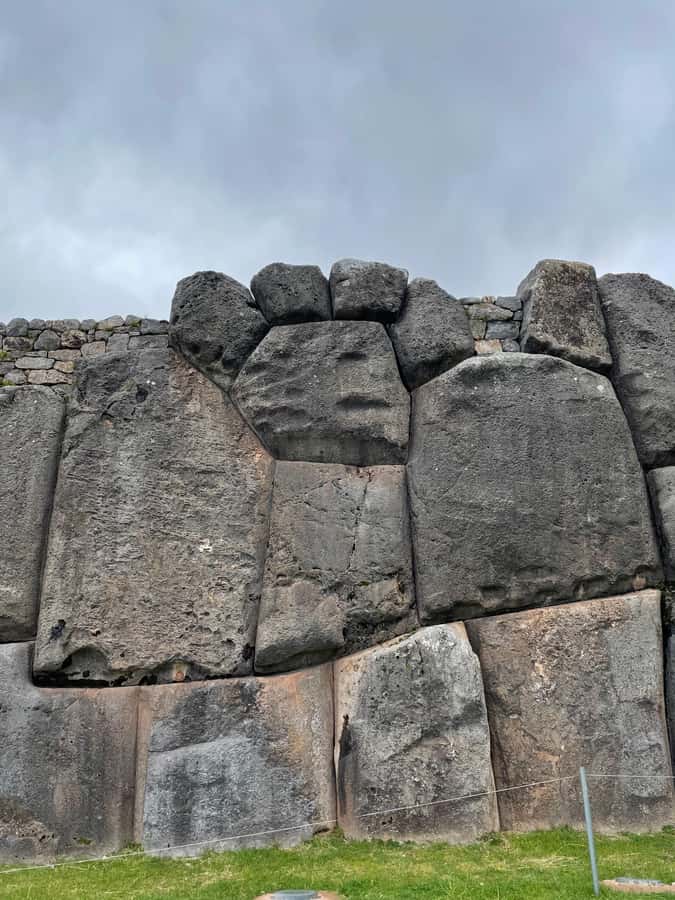
Cusco is not a city where the main sights sit neatly on one level. The historic center lies in a high Andean basin, while several major Inca sites sit on the slopes above it. This tour solves the practical problem with tourist transport, picking you up near the historic center and carrying you between the ruins.
The route lasts about five hours. There is a morning departure beginning around 9:00 a.m., returning near 2:00 p.m., and an afternoon option beginning around 1:00 p.m., returning near 6:30 p.m. Confirm the exact departure time when you book, since the published schedule contains repeated and slightly confusing time details.
You will meet at an agreed pickup point in or near Cusco’s historic center. The provider contacts you one day ahead to arrange the pickup, and if the meeting point has poor phone coverage, the guide may call your name.
The price is appealing because it covers tourist transportation, a professional bilingual guide, pickup near the historic center, and ongoing assistance. It does not cover the site tickets, so the real cost is higher than $16. Bring cash in soles, not just a bank card, because admission payments are made in the local currency.
More city tours in Cusco:
- Cusco: Half-Day City Tour with Sacsayhuaman and Q’enco
★ 4.6 · 1,129 reviews - City Tour Cusco Qoricancha Sacsayhuaman y Tambomachay
★ 4.7 · 617 reviews - Cusco City Tour Four Ruins in Half-Day
★ 5.0 · 530 reviews
Coricancha: where the Sun Temple meets colonial Cusco
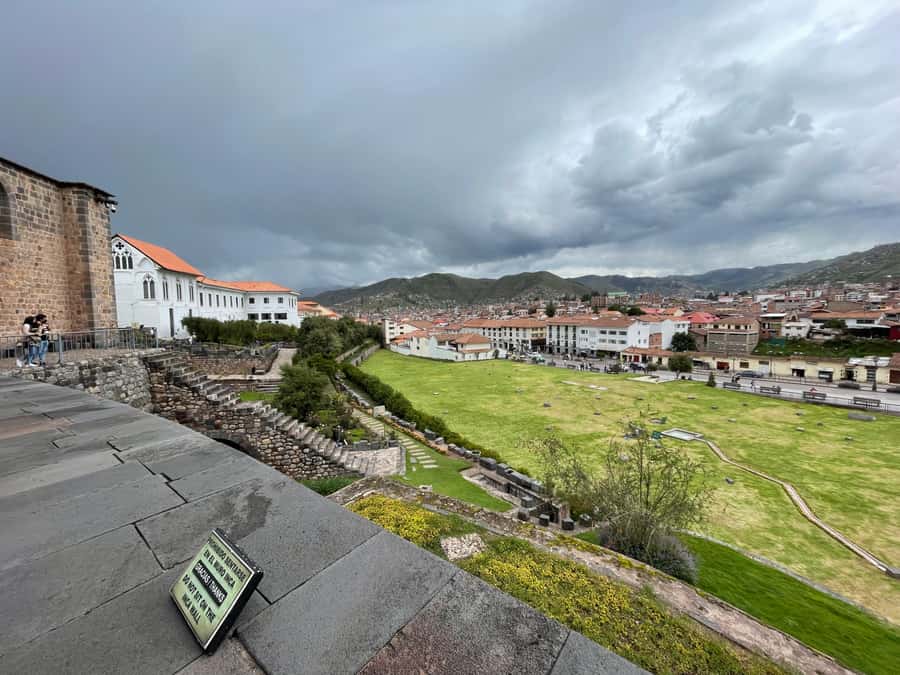
The tour begins with a short walk of about 10 minutes from the pickup area to Coricancha, also written Qoricancha. This is the most important architectural contrast on the route: an Inca religious center and a Spanish colonial church occupying the same space.
Coricancha was dedicated to the Inca Sun God. The surviving Inca walls show the precise stonework that made the empire famous, while the colonial structure reflects the Spanish reshaping of Cusco after conquest.
I would pay close attention here, even if you have already seen Inca walls elsewhere. The interest is not only in the stones themselves, but in how one building reveals two very different ideas of power, religion, and city planning.
The guided visit lasts roughly 40 minutes to an hour, depending on the schedule. That is enough for an introduction, but not enough for a slow museum visit or a long architectural study. The guide’s explanation matters, so listen closely during the first stop and ask questions early.
Admission to Coricancha is separate and costs 15 soles. This small extra charge is easy to overlook when comparing tour prices, but it is modest for one of Cusco’s essential sights.
Sacsayhuamán: the tour’s big stone lesson
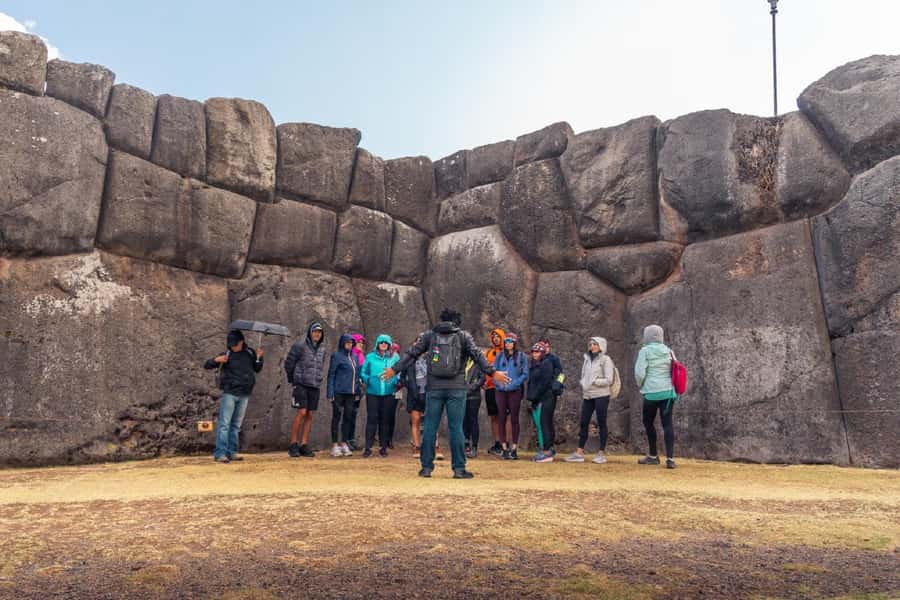
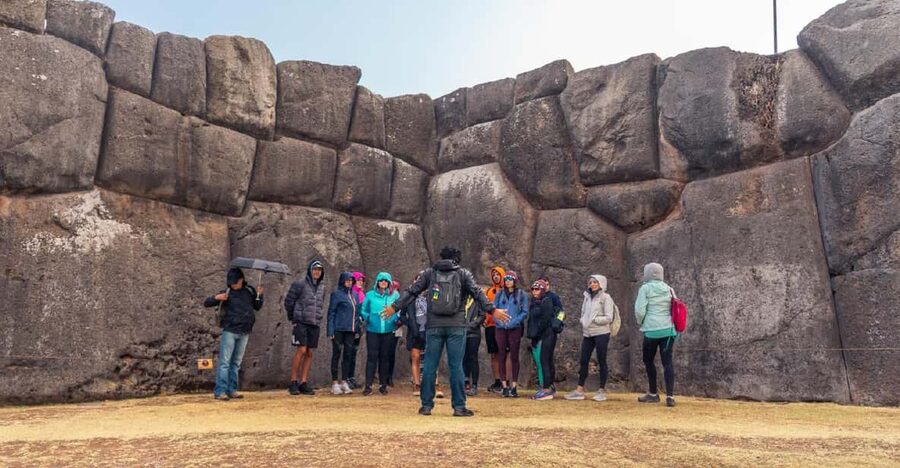
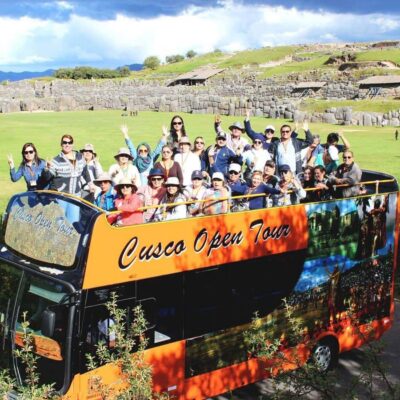
After Coricancha, the group boards the van for about 15 minutes to Sacsayhuamán. The archaeological complex sits above Cusco and is known for massive carved stones fitted together with remarkable precision.
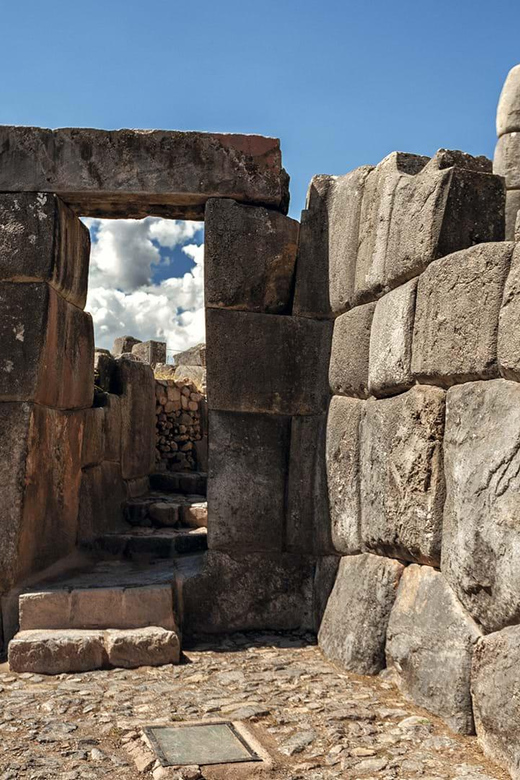
This is the place where the scale of Inca construction becomes easiest to grasp. The walls are not made from ordinary blocks stacked in tidy rows. Their irregular shapes, close joints, and sheer size show a level of planning and stone fitting that deserves time.
The site also gives you wide views across Cusco. Bring your camera, but do not spend the whole stop looking through it. The changing angle between the stonework, hills, and city is part of what makes this visit work.
The planned stop is about 40 to 45 minutes, including a guided visit, photographs, walking, and some free time. In practice, the timing can be tighter. One reported schedule gave only about 15 minutes at Sacsayhuamán, while time was spent at a textile shop not listed as part of the main route.
That warning matters. Sacsayhuamán is the site most likely to suffer if the day runs late, and it is the one I would least like to rush. If the guide offers free time, use it for the walls and views rather than treating it as a general shopping break.
Admission is covered by the 70-sol partial Tourist Ticket, which is not part of the $16 tour price. You can buy the ticket at the entrance to any archaeological site on the route, and payment is made in soles.
Qenqo: a smaller site with stranger details
A short five-minute ride brings you to Qenqo, also spelled Q’enco. Compared with Sacsayhuamán, this is a more compact and mysterious stop, centered on carved rock formations, channels, and ceremonial spaces.
The visit lasts about 20 minutes. That is a short window, but Qenqo does not depend on broad views or a long walk. Its appeal comes from examining the rock itself and hearing how the carved spaces may have served ritual purposes.
You will see unusual stone shapes and maze-like cuts that invite interpretation. The site is a good reminder that Inca sacred places were not always grand temples with tall walls. Sometimes the focus was a natural rock altered with careful carving and connected to ceremony.
This is one stop where a guide can add real value. A quick walk past the rock without explanation may leave you wondering what you are looking at. Listen for the distinction between what is clearly visible and what remains uncertain, since ancient ritual sites often encourage more theories than firm answers.
More things to do in Cusco:
- Classic Inca Trail Trek 4D/3N to Machu Picchu (Group Service)
★ 5.0 · 8,653 reviews - Cusco: Rainbow Mountain and Red Valley Day Trip with Meals
★ 4.9 · 4,893 reviews - Machu Picchu: 4-Day Inca Trail Trek with Panoramic Train Ride
★ 5.0 · 4,568 reviews - Salkantay Classic Trek 5 Days from Cusco
★ 5.0 · 4,062 reviews
Tambomachay: water, ritual, and a longer stop
The van then travels for about 20 minutes to Tambomachay, a site known for its water sources and stone channels. The route places this stop farther from central Cusco, so the ride gives you a short break after the first three sites.
Tambomachay is associated with ritual bathing and purification. Water still flows through the carved channels, giving the site a clear physical feature rather than asking you to imagine everything from foundations and broken walls.
The planned visit lasts about an hour, with guided time, photographs, walking, and some free time. That makes it one of the more relaxed stops. You can look at the channels, take pictures, and hear the explanation without the same pressure found at Qenqo.
The site is outdoors and may be wet or slippery in places. Wear shoes with a firm sole, and carry a waterproof layer during the rainy season. A poncho can be bought in the plaza if needed, but bringing your own waterproof clothing is more practical.
Tambomachay’s water channels also make it a useful stop for understanding how the Incas gave religious meaning to engineering. The flow is not simply a technical feature. It is part of the site’s ceremonial purpose.
Puca Pucara: a fortress with a strategic view
Puca Pucara is only about five minutes from Tambomachay by van. The name is commonly associated with a red fortress, and the site served as a military control point along the approach to Cusco.
The stop lasts about 20 minutes. You can expect a short visit, photographs, and views from the high ground. The ruins are less imposing than Sacsayhuamán, but their position helps explain why the Incas placed defensive and administrative sites around the approaches to the capital.
Look outward as well as down at the walls. Puca Pucara’s value lies partly in its position and the sense of control it gives over the surrounding area. The view makes the fortress feel connected to a wider system rather than isolated from the other sites.
The published route includes a final vehicle ride of about 30 minutes before finishing on Calle Plateros. That return point is useful if you want to continue exploring the historic center, though the exact arrangement should be confirmed with the guide.
The shopping-stop issue deserves attention
The main concern is not the attractions. It is the possibility that sales stops will take time from them.
A textile shop visit has reportedly lasted around half an hour, and there have also been offers of books and liquor on the bus. An alpaca clothing shop may appear during the day. These stops are common on inexpensive group excursions, but they are not the reason you are paying to see Sacsayhuamán and Tambomachay.
The effect depends on the guide and the day’s timing. Some passengers received a good, informative tour, while others felt the commentary in English was shorter than the Spanish explanation and that the route became focused on purchases.
If you do not want to shop, ask at the start how much time is planned for commercial stops. Keep your expectations clear and politely protect the archaeological time you value most. A good guide should explain the sites first and keep optional sales visits from taking over.
The language arrangement also deserves a practical note. The tour is offered in English and Spanish, but bilingual commentary can mean that one language receives a shorter version when the schedule is tight. If you are in the English group, stand close to the guide and ask for any missed explanation.
Guide Yako received especially warm praise for being caring and for giving useful information about ancient Inca civilization. That is the kind of guide who can make a fast route feel worthwhile. The experience is less satisfying if the guide spends free moments on the phone or gives only brief explanations.
What to bring for a high-altitude morning or afternoon
Cusco weather can change quickly, and every stop is outdoors except for the indoor portions of Coricancha. Pack light, but prepare for sun, wind, and rain.
- Passport or ID card
- Comfortable hiking shoes
- Long pants or hiking pants
- Breathable clothing and a long-sleeved shirt
- Biodegradable sunscreen
- Waterproof clothing during the rainy season
- Cash in soles for admission
- Camera and charged smartphone
- Clothes that can get dirty
You should be comfortable walking on uneven archaeological paths. The tour is not suitable for children under three, babies under one, people dealing with altitude sickness, or people over 95. The supplied restrictions also exclude baby strollers, baby carriages, and explosive substances.
Altitude is the main physical concern. Even when the walking distances are not extreme, Cusco’s elevation can make a simple climb feel harder than expected. If you have just arrived and feel unwell, do not treat the five-hour schedule as something you must force.
Is the $16 price a good deal?
Yes, with conditions. At $16, the tour gives you transport to four sites outside the center and a bilingual guide. Booking separate transport to Sacsayhuamán, Qenqo, Tambomachay, and Puca Pucara would take more planning and could cost more.
The partial Tourist Ticket adds 70 soles, and Coricancha adds 15 soles. Those charges are not hidden once you know about them, but they change the budget calculation. Bring enough cash and expect to buy the tickets at a site entrance.
The value is strongest for a first visit, a short stay, or anyone who wants an overview before returning to favorite sites independently. The value is weaker if you want long, quiet time at each ruin, detailed English interpretation, or a strict no-shopping route.
Free cancellation up to 24 hours before the start and the option to reserve now and pay later make the booking relatively flexible. Those terms are helpful in Cusco, where weather and altitude can affect plans, but they do not solve the main issue of variable time at each stop.
Who should book this Cusco ruins tour?
I would choose it if you want to cover the classic sites in half a day and prefer not to negotiate transport. It suits first-time visitors, budget-minded couples, solo visitors, and anyone with only a few days in Cusco.
It also works well as an orientation route. After seeing the sites with a guide, you will have a better sense of which places deserve a longer return visit.
I would hesitate if Sacsayhuamán is a top priority and you want a full, unhurried visit. I would also hesitate if shopping stops frustrate you, if you need consistently detailed English commentary, or if altitude sickness is already affecting you.
Should you book it?
Book this tour for efficient coverage and low transport cost, not for a slow archaeological study. Coricancha, Sacsayhuamán, Qenqo, Tambomachay, and Puca Pucara give you a strong introduction to Inca religion, engineering, water management, and defense.
Before paying, confirm the departure time, pickup point, language arrangement, admission costs, and policy on shopping stops. If the guide keeps the focus on the ruins, $16 is a fair starting price for a useful half-day. If you need depth and control, hire a private guide or split the sites across separate visits.
FAQ
How long does the tour last?
The tour lasts about five hours. The morning schedule runs roughly from 9:00 a.m. to 2:00 p.m., while the afternoon schedule runs approximately from 1:00 p.m. to 6:30 p.m.
What sites are included?
The route includes Coricancha, Sacsayhuamán, Qenqo, Tambomachay, and Puca Pucara.
Is hotel pickup included?
Pickup is included at hotels near Cusco’s historic center. The provider contacts you one day ahead to arrange the exact pickup details.
Is transportation included?
Yes. Tourist transportation between the stops is included, along with the guided visits.
Are entrance tickets included in the price?
No. Coricancha costs 15 soles, and the partial Tourist Ticket costs 70 soles. You pay for tickets at the entrance in Peruvian soles.
What languages are available?
The live tour guide service is available in English and Spanish.
Can I cancel the booking?
You can cancel up to 24 hours in advance for a full refund.
Can I reserve without paying immediately?
Yes. The reserve-now, pay-later option lets you hold a place without paying on the day you book.
Is the tour suitable for people with altitude sickness?
No. The activity is not suitable for people with altitude sickness. It is also not suitable for children under three or babies under one year.
Just added in Cusco
- Cusco Private Transportation for 2026★ 5.0 · 4 reviews
- Private Transfer from Airport to Hotel in the City of Cusco★ 4.0 · 5 reviews
- Best Cusco walking tour: dinner street food tasting★ 4.5 · 11 reviews
- Private Tour to Pisac Market and Pisac Ruins★ 5.0 · 4 reviews
- Machu Picchu Day Trip With Panoramic Train from Cusco★ 5.0 · 10 reviews
- Sacred Valley Private Tour from Cusco, Guide and Driver only★ 5.0 · 4 reviews
- Sacred Valley of the Incas Tour★ 5.0 · 12 reviews
- Private Tour of the Mountain of Colours by Quad★ 5.0 · 7 reviews
City Tours, compared.
Lima Half-Day City Walking Tour (Small Groups)
Read our review →
Half-Day City Tour with Sacsayhuaman and Q’enco
Read our review →
City Tour Panoramic Bus Departure From Larcomar
Read our review →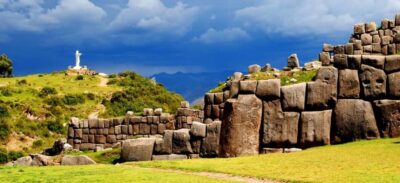
City Tour Cusco Qoricancha Sacsayhuaman y Tambomachay
Read our review →
Lima’s Vibrant Heritage: Exploring the City’s Landmarks Half-day
Read our review →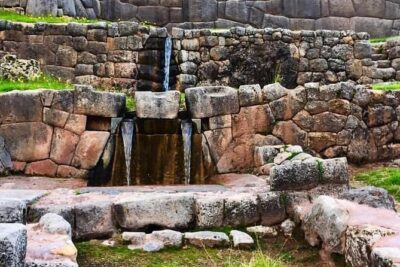
Sightseeing Tour of the City on an Open-Top Bus
Read our review →
Lima City, Central Market & Catacombs Tour (Pick-up & Drop Off)
Read our review →Browse the lists this tour appears in