Reviewed · TOURS
Cusco Half Day Tour: Cathedral, Qorikancha & 4 Inca Ruins
Cusco’s past is packed into one afternoon. This five-hour tour gives you a useful first look at the city, beginning on foot at the Plaza de Armas before using transport to reach four major Inca sites above Cusco. You’ll see Spanish churches built over sacred Inca places, enormous stonework, ceremonial carvings, fountains, and old military roads.
I like the strong mix of city and countryside sights, and I like that the group is limited to 15 people. Guide Beto received especially warm praise for his passion for Cusco’s history and culture. The main concern is language clarity: English is offered, but one booking ended up being conducted entirely in Spanish, so you should confirm the language before departure.
In This Review
- Key points to know before booking
- Why this is a useful first afternoon in Cusco
- Cusco Cathedral and the Plaza de Armas
- Qorikancha: Inca stone beneath Santo Domingo
- Sacsayhuaman and the scale of Inca construction
- Q’enqo and the unanswered ritual questions
- Tambomachay and the Inca focus on water
- Puka Pukara, the red fortress
- What the $27 price really covers
- Transport, pickup, and group size
- Who should book this Cusco tour?
- Should you book it?
- FAQ
- How long does the Cusco half-day tour last?
- What time does the tour start?
- Which attractions are included in the route?
- Is hotel pickup available?
- Are entrance fees included?
- Is a guide included?
- How many people can join the tour?
- Can I cancel for a full refund?
Key points to know before booking
- Six major sights in about five hours: You visit Cusco Cathedral, Qorikancha, Sacsayhuaman, Q’enqo, Tambomachay, and Puka Pukara in one afternoon.
- The tour shifts from walking to transport: The Cathedral and Qorikancha are reached on foot, while a vehicle takes you to the four sites outside the central city.
- The advertised price is only the starting cost: At $27, the tour is inexpensive, but required entrance fees can add about $25.60 per person.
- Guide quality matters here: Beto was praised for his clear interest in local history and culture, but you should verify that your tour will be in English.
- Hotel pickup has limits: Pickup is offered from hotels in Cusco’s historic centre, not from private residences, Airbnb properties, or hotels outside the centre.
- The altitude is serious: Sacsayhuaman is listed at about 12,140 feet, and Tambomachay at roughly 12,350 feet, so this is best approached at an easy pace.
Why this is a useful first afternoon in Cusco
Cusco can feel like several places at once. In the Plaza de Armas, you see colonial churches and stone streets. At Qorikancha, Inca masonry sits beneath a Spanish church and convent. Beyond the city, the route reaches ceremonial and military sites scattered across the high ground.
That variety gives you a quick framework for later sightseeing. You may not get enough time to study every stone or ask every question, but you will learn how the Inca and Spanish layers overlap. For a first day, that is valuable.
The timing also has practical appeal. The tour begins at 1:00 pm, so you have the morning free. That can help if you have just arrived in Cusco and want a lighter introduction before committing to a full-day Sacred Valley or Machu Picchu outing.
The schedule is not truly five hours of uninterrupted sightseeing. The six stops together add up to about four and a half hours, with the remaining time likely used for moving between places. One booking ran longer than planned, so keep your evening flexible.
More things to do in Cusco:
- Classic Inca Trail Trek 4D/3N to Machu Picchu (Group Service)
★ 5.0 · 8,653 reviews - Cusco: Rainbow Mountain and Red Valley Day Trip with Meals
★ 4.9 · 4,893 reviews - Machu Picchu: 4-Day Inca Trail Trek with Panoramic Train Ride
★ 5.0 · 4,568 reviews
Cusco Cathedral and the Plaza de Armas
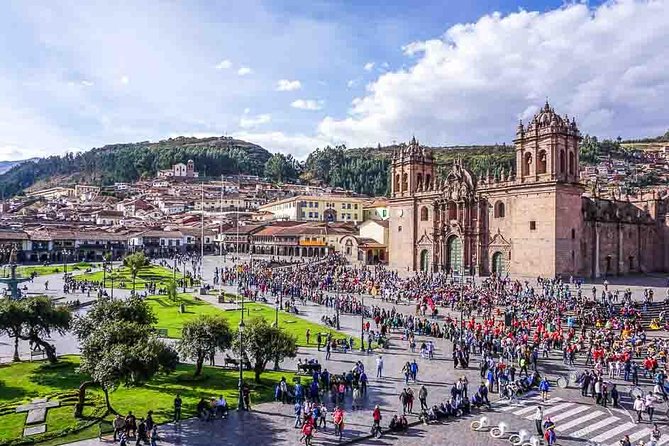
The tour starts at Cusco Cathedral, on the city’s main square. The Plaza de Armas was once the Inca square known as the square of the warrior, and it remains Cusco’s central meeting place. Three important churches face the square: the Cathedral, the Church of Triumph, and the Iglesia de la Compania de Jesus.
The Church of Triumph was the first Christian church built in Cusco. Construction began in 1536, only three years after the Spanish arrived. It was built over Suntur Wasi, an Inca ceremonial building, armoury, and heraldry centre linked to the palace of Viracocha.
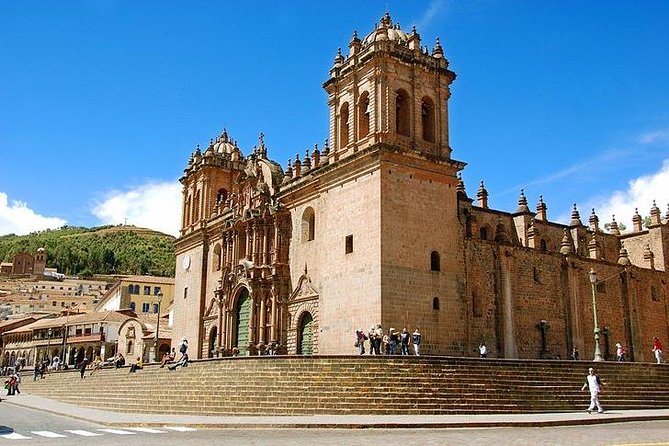
The Cathedral came later. Work began in 1559, and the building was completed in 1654. It was built over Kiswarkancha, the former palace of Viracocha. The design follows a Latin cross, and the use of Inca foundations reflects a major pattern in Cusco: Spanish churches were often placed directly over sacred Inca sites.
Inside, you can expect architectural relics and religious art tied to the city’s colonial period. The visit is scheduled for about an hour, but the admission ticket is not included. That detail matters because the Cathedral is not simply a quick exterior photo stop. If you want to enter, budget for the required entrance cost separately.
The square itself also rewards a few minutes of attention. Look at the way the three churches frame the plaza, then consider the older Inca setting beneath them. The tour’s local context is most useful here because the buildings are attractive on their own, but their placement tells the more important story.
Qorikancha: Inca stone beneath Santo Domingo
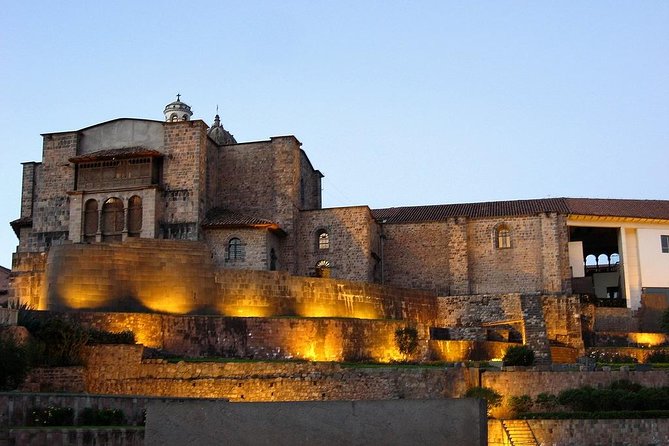
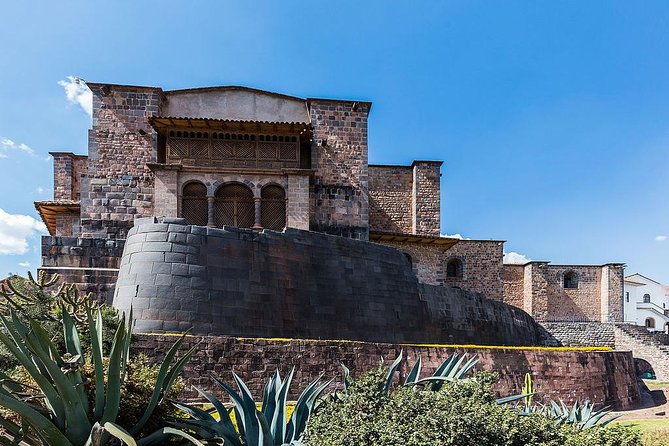
Qorikancha is one of the clearest places in Cusco to see two cultures occupying the same ground. The original site was the Inca Temple of the Sun. The Spanish later built the Santo Domingo church and convent over its foundations.
The Inca walls are the main attraction. Stones were cut with remarkable precision, and some have more than 30 angles. Another block is described as having 24 angles and six sides. The masonry is not decorative fussiness. It shows how carefully Inca builders shaped each stone so the pieces fitted together without mortar.
The site also includes fountains and gardens connected with the Inca use of water and offerings. A large Inca turret and ceremonial niches point to the temple’s role in religious life. The inner sanctuary was reserved for the highest authorities, and people came from across the empire to worship and present tribute.
You will spend about an hour here, and the tour reaches Qorikancha on foot from the Cathedral. That makes the first part of the afternoon fairly manageable, with the two central sites linked by a city walk rather than a long vehicle transfer.
Entrance to Qorikancha costs 20 soles, about $5.60, and is not included. Add this fee to your budget before deciding that the $27 tour price tells the whole story. The extra cost is still reasonable for a guided visit, but it is important to know in advance.
Sacsayhuaman and the scale of Inca construction
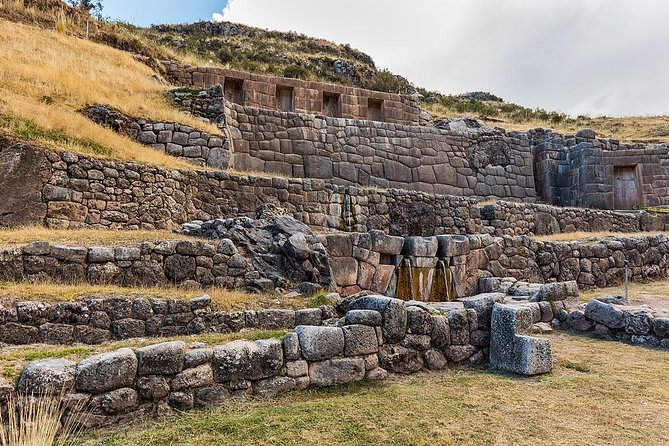
After the two central sites, transport takes you uphill to Sacsayhuaman. The complex is about 1.25 miles from the Plaza de Armas and sits at approximately 12,140 feet. At this height, walking slowly is not just good manners for the group. It is sensible.
Sacsayhuaman is known for massive walls made from stones weighing between 99 and 138 tons. The blocks fit together without mortar, and some have more than 100 angles. The scale can be hard to grasp from photographs. Here, the size of the stones and the tight joints do most of the explaining.
Around the main complex are other archaeological places, including Qenqo, Puka Pukara, and Tambomachay. The full area covers about 12 square miles, which helps explain why this afternoon route uses transport rather than treating the sites as one long walk.
It is believed that roughly 20,000 men cut and moved stone from Huaqoto and Rumiqolqa for the construction. The site is often described as a ceremonial fortress, and its position and walls also suggest military importance. Your guide can help separate firm evidence from interpretation, especially since the exact purpose of some structures remains uncertain.
The stop lasts about an hour. That is enough for a strong introduction, though not enough for every corner of the large complex. If you like ancient engineering, this will likely be the high point of the tour.
A completely different kind of day:
- Salkantay Classic Trek 5 Days from Cusco
★ 5.0 · 4,062 reviews - 4-Day Salkantay Trek with Sky Camp Stay
★ 5.0 · 3,346 reviews - Short Inca Trail to Machu Picchu 2D/1N
★ 5.0 · 3,007 reviews - Excursion to Rainbow Mountain Full Day Optional Red Valley
★ 5.0 · 2,996 reviews
Q’enqo and the unanswered ritual questions
Q’enqo is smaller than Sacsayhuaman but more mysterious. Its name comes from a Quechua word meaning labyrinth or zigzag, referring to a crooked channel carved into the rock.
The channel carried some kind of liquid, but its exact purpose is not known. Possible explanations include holy water, chicha, or blood. These ideas connect Q’enqo with death rituals, purification, sacrifice, or the preparation of the dead, but the evidence does not provide one final answer.
That uncertainty is part of the appeal. Q’enqo was carved from a huge natural monolith, combining tunnels, rock chambers, and man-made spaces. One chamber contains 19 small niches and resembles an amphitheatre. The original use of this space is also unclear, though it may have been linked to ceremonies honouring the sun, moon, and stars.
The stop is scheduled for about an hour. You will want shoes that let you move carefully through uneven carved areas, although the tour information does not provide a detailed accessibility assessment. If you prefer tidy explanations with no unanswered questions, Q’enqo may feel frustrating. If you enjoy piecing together old evidence, it adds welcome mystery to the afternoon.
Tambomachay and the Inca focus on water
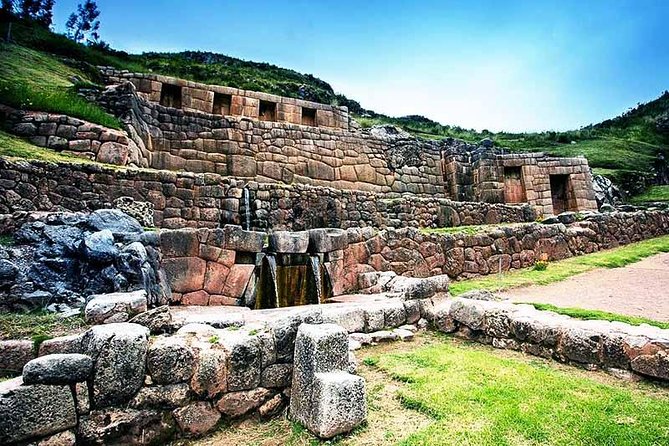
Tambomachay is about 4.5 miles northeast of Cusco and sits at approximately 12,350 feet. Its name is commonly linked with a place of rest, and the site is associated with water.
The architecture consists of precisely cut stones, aqueducts, and small cascades. Two aqueducts carry a steady flow of clean water throughout the year. Water held a major place in the Andean world view, so these channels were not simply practical plumbing.
The tour allows about 30 minutes here. That is enough to see the fountains and understand the site’s purpose, but it is a short visit compared with the scale of the surrounding area. The location is also associated with hiking routes and mountain scenery, though this tour is designed as a sightseeing circuit rather than a long hike.
At high altitude, a half-hour visit can be a benefit. You get the essential view without spending a long time climbing or walking. Still, the combination of altitude and a full afternoon of stops means you should not treat this as a completely effortless outing.
Puka Pukara, the red fortress
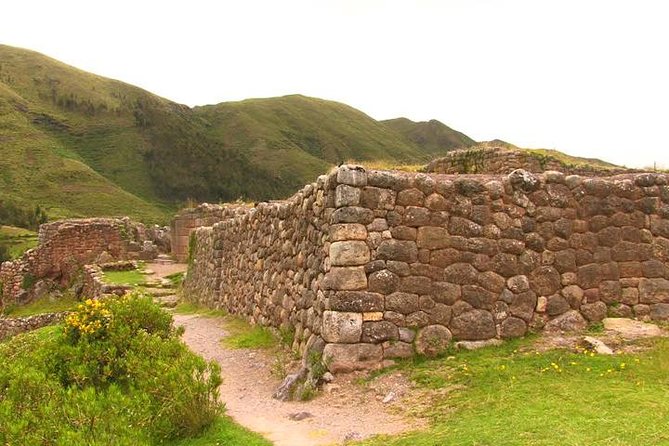
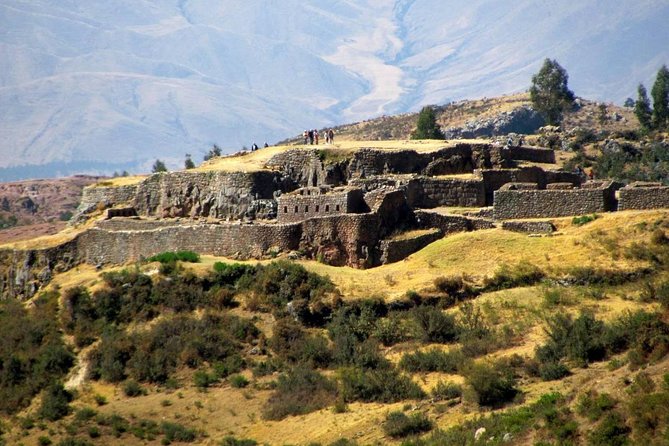
Puka Pukara is the final stop. Its name is connected with its reddish appearance, and its fortified design includes halls, inner plazas, aqueducts, watchtowers, and paths.
The complex is thought to have served as a tambo, or rest and lodging place. According to local legend, the Inca’s large retinue stayed here when he visited Tambomachay. That connection helps explain why the two sites are visited together.
Puka Pukara is given about 30 minutes, and entrance is free. It is a pleasant contrast to the carefully carved waterworks at Tambomachay. Here, the focus is on movement, shelter, watchfulness, and the practical network that supported travel through the Inca realm.
Because this is the last stop, you will have already seen the tour’s largest stones and most elaborate ceremonial areas. Puka Pukara works best as a final piece of the route rather than as the single reason to book.
What the $27 price really covers
The base price is $27 per person. For a small-group afternoon tour with transport and a bilingual English and Spanish guide, that is a fair starting price.
But the entrance costs are significant. Qorikancha costs 20 soles, or about $5.60. The four archaeological sites require a Tourist Ticket priced at 70 soles for two days, about $20, or 130 soles for 10 days. Puka Pukara is listed as free, but the broader site ticket still applies to the archaeological circuit.
If you buy the two-day ticket and Qorikancha admission, your stated costs rise to about $52.60 per person before food and drinks. The ticket may be useful beyond this tour, depending on the places you plan to visit during its validity. That is why you should compare the ticket options before arriving at the first site.
A useful warning comes from the booking experience described: buying individual entrance tickets at the venue can be less economical than purchasing the appropriate Tourist Ticket from the official tourist office. If you already know you want several Cusco archaeological sites, check the two-day and 10-day options first.
Transport, pickup, and group size
Pickup is available from hotels within Cusco’s historic centre. It does not include private residences, Airbnb properties, or hotels outside the historic centre. If your accommodation does not qualify, the meeting point may be near the central plaza rather than at your door.
The Cathedral and Qorikancha are visited by walking. A bus or similar vehicle takes you to the sites outside the centre. This arrangement saves time and avoids a tiring uphill walk to Sacsayhuaman, especially at altitude.
The maximum group size is 15 people. That is small enough for a guide to keep the group together, though the experience can still change depending on the language mix. English is listed as an available language, but because one tour was conducted in Spanish for a Spanish-speaking group, confirm your preferred language at booking and again at pickup.
Food and drinks are not included. The afternoon schedule also does not promise a meal break, so plan accordingly without assuming that refreshments will be provided.
Who should book this Cusco tour?
I would recommend this tour if you have limited time in Cusco and want one organized introduction to the city’s main Inca sites. It suits first-time visitors who prefer context from a guide instead of arriving at each ruin with only a ticket and a map.
It is also a good match if you want a relatively short outing before a longer trip elsewhere in Peru. The 1:00 pm start leaves your morning open, and the route covers both the city centre and the high sites outside town.
You may want another option if you need a guaranteed English-language experience and cannot confirm that in advance. You may also prefer a private tour if you want to linger at Sacsayhuaman or ask detailed questions at every stop.
The tour is not ideal for anyone expecting a relaxed five-hour stroll. Six stops, uphill locations, vehicle transfers, and high altitude create a busy afternoon. The schedule can also run longer than advertised, so do not place an important evening reservation too close to the planned finish.
Should you book it?
Book this tour if you value breadth, transport, and historical explanation more than long, quiet visits at each site. The route gives you an efficient introduction to Cusco’s churches, Inca walls, ceremonial spaces, water channels, and highland fortifications.
The best value comes when you use the Tourist Ticket for other eligible sites during its period of validity. Confirm your English guide, check your hotel’s pickup location, and budget for the additional entrance fees.
If those details work for you, this is a sensible first-day tour with a strong mix of major sights. If you want more time, a guaranteed language arrangement, or a slower look at the ruins, choose a smaller or private outing instead.
FAQ
How long does the Cusco half-day tour last?
The tour lasts approximately five hours. The individual visits add up to about four and a half hours, with the remaining time used for transport and movement between stops.
What time does the tour start?
The tour starts at 1:00 pm.
Which attractions are included in the route?
The route includes Cusco Cathedral, Qorikancha, Sacsayhuaman, Q’enqo, Tambomachay, and Puka Pukara.
Is hotel pickup available?
Pickup is available from hotels within Cusco’s historic centre. It is not provided from private residences, Airbnb properties, or hotels outside the historic centre.
Are entrance fees included?
No. Qorikancha costs 20 soles, about $5.60. The archaeological sites require a Tourist Ticket costing 70 soles for two days or 130 soles for 10 days. Puka Pukara is listed with free admission, though the site circuit ticket applies to the archaeological route.
Is a guide included?
Yes. Transport and a bilingual English and Spanish guide are included.
How many people can join the tour?
The tour has a maximum group size of 15 people.
Can I cancel for a full refund?
Yes. You can cancel at least 24 hours before the local start time for a full refund. Cancellations or changes made within 24 hours are not refunded or accepted.
Just added in Cusco
- Best Cusco walking tour: dinner street food tasting★ 4.5 · 11 reviews
- Cusco Private Transportation for 2026★ 5.0 · 4 reviews
- Private Transfer from Airport to Hotel in the City of Cusco★ 4.0 · 5 reviews
- Private Tour to Pisac Market and Pisac Ruins★ 5.0 · 4 reviews
- Machu Picchu Day Trip With Panoramic Train from Cusco★ 5.0 · 10 reviews
- Sacred Valley Private Tour from Cusco, Guide and Driver only★ 5.0 · 4 reviews
- Sacred Valley of the Incas Tour★ 5.0 · 12 reviews
- Private Tour of the Mountain of Colours by Quad★ 5.0 · 7 reviews
Tours, compared.
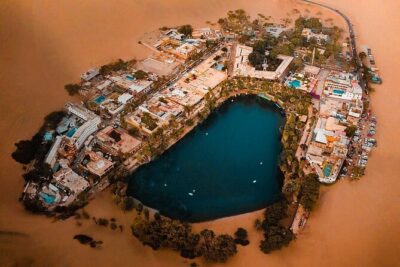
Full Day Tour From Lima: Paracas and Huacachina Oasis
Read our review →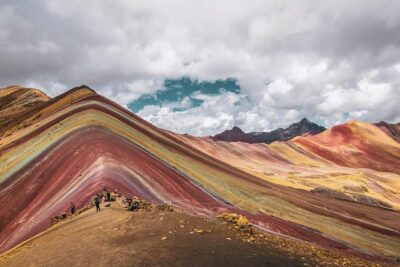
Excursion to Rainbow Mountain Full Day Optional Red Valley
Read our review →
Humantay Lake Tour with Breakfast and Buffet Lunch
Read our review →
From Cusco: Sacred Valley & Maras Salt Mines Tour with Lunch
Read our review →
From Cusco: Moray, Maras Salt Mines & Chinchero Weavers Tour
Read our review →
From Lima: Paracas and Huacachina Oasis Full Day Guided Tour
Read our review →