
Reviewed · CITY TOURS
Cusco: Open-Top Bus City Tour
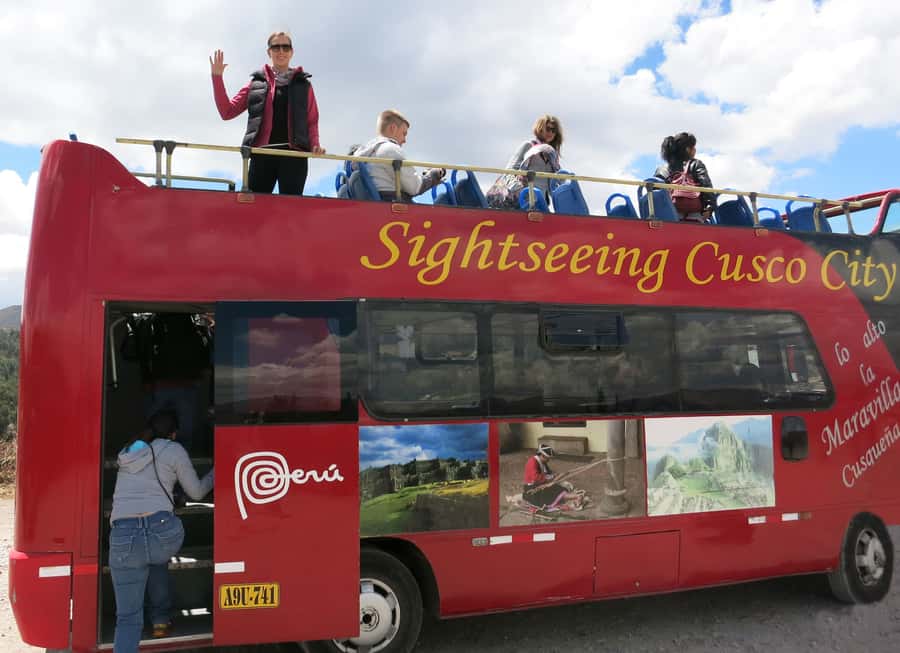
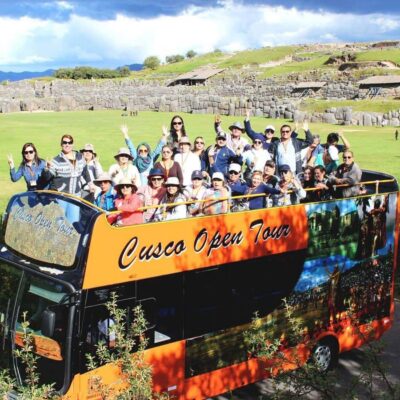
Cusco looks best from a high seat. This 150-minute open-top bus tour gives you broad views of Plaza de Armas, traditional streets, Inca walls, and the hills beyond the city without asking you to climb from site to site. I like the low price, just $12 per person, and I like the stop at the white Christ statue, where the city spreads out below you.
The ride also passes San Cristobal Temple and the Colcampata Inca wall, then gives you distant views of Sacsayhuaman, Q’enqo, and Puca Pucara. The main catch is that the bus does not enter or stop at those archaeological sites, and rain can push you downstairs for much of the ride.
In This Review
- Key points at a glance
- What the Cusco bus tour is really for
- Starting near San Cristobal Temple and Colcampata
- Seeing Sacsayhuaman, Q’enqo, and Puca Pucara from the road
- The white Christ statue and Cusco below
- Extra stops, photos, and the question of authenticity
- Rain, seating, and what to bring
- Meeting point and the small logistics risks
- Is $12 a fair price?
- Who should book this Cusco bus tour?
- FAQ
- How long does the Cusco Open-Top Bus City Tour last?
- How much does the tour cost?
- Which languages are available?
- Where do I meet the guide?
- Are transportation and guiding included?
- Does the bus stop at Sacsayhuaman, Q’enqo, and Puca Pucara?
- What happens if it rains?
Key points at a glance
- A $12 orientation tour: A budget-friendly way to see central Cusco and its hilltop viewpoints before choosing which places deserve a longer visit.
- The Christ statue stop: The strongest photo opportunity comes from the white statue above Cusco, with wide views across the city and surrounding area.
- No archaeological-site entry: You only see Sacsayhuaman, Q’enqo, and Puca Pucara from the bus. Admission and walking time are not part of this experience.
- Open-top seating has a weather risk: Bring rain gear. The tour runs in wet weather, and you may need to sit on the lower level.
- English and Spanish guiding: The tour is offered in both languages, though one reported departure had limited English explanation.
- Allow some flexibility: The advertised duration is 2.5 hours, but one booking was reported to last five hours, and drop-off arrangements may vary.
What the Cusco bus tour is really for
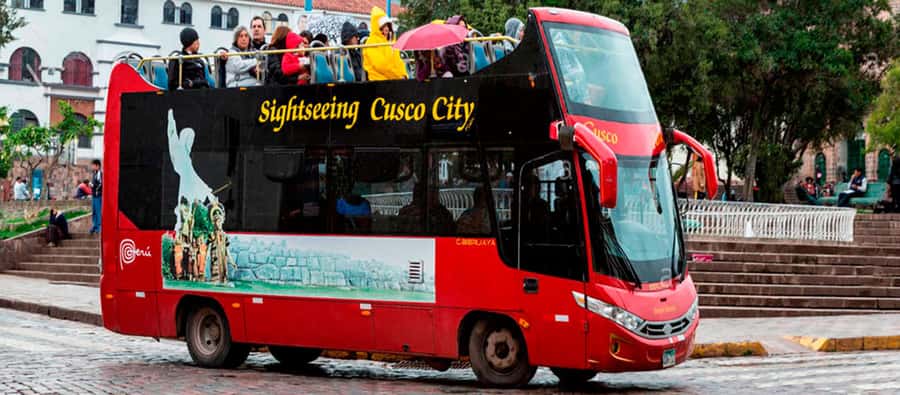
I would treat this as a city orientation ride, not a full archaeological tour. You get a useful first look at Cusco’s layout, its steep streets, and the major Inca and colonial sights around the center. That can be especially helpful on your first day, when walking uphill at high altitude may feel harder than expected.
The open-top design gives you a better view than a regular vehicle. You can look over rooftops, spot church towers, and see how the city climbs into the surrounding hills. The tradeoff is simple: the best seats are exposed to sun, wind, and rain.
The listed duration is 150 minutes. That is long enough for a broad circuit with several photo stops, but not long enough for a careful visit inside the archaeological sites. You should plan another visit if Sacsayhuaman, Q’enqo, or Puca Pucara are high on your list.
The tour is led in English or Spanish by a live guide. That is useful when the guide gives context along the route, but the quality of the experience depends on how clearly information is delivered in your chosen language. One departure had a guide who spoke mainly Spanish with only some English, making the explanations difficult to follow for English speakers.
More city tours in Cusco:
- Cusco: Half-Day City Tour with Sacsayhuaman and Q’enco
★ 4.6 · 1,129 reviews - City Tour Cusco Qoricancha Sacsayhuaman y Tambomachay
★ 4.7 · 617 reviews - Cusco City Tour Four Ruins in Half-Day
★ 5.0 · 530 reviews
Starting near San Cristobal Temple and Colcampata
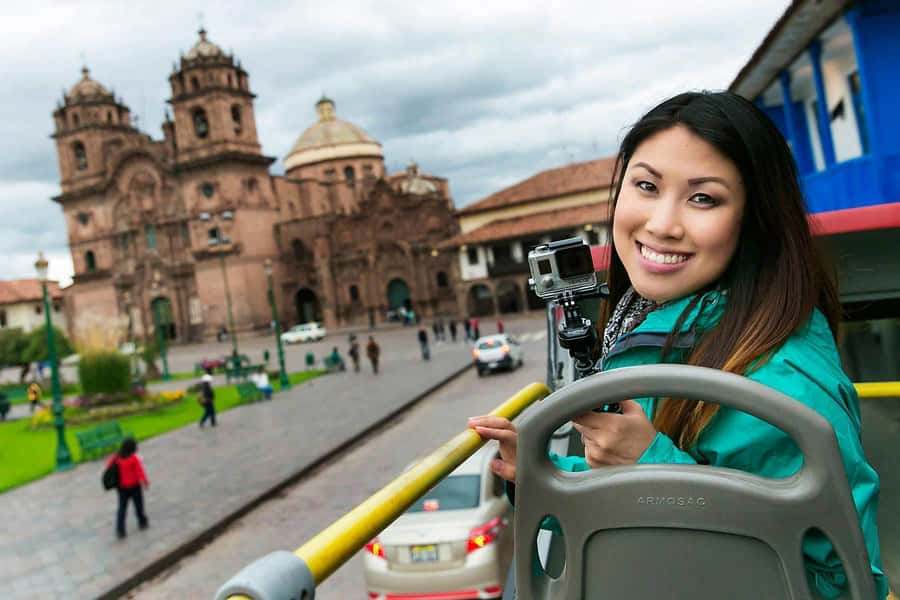
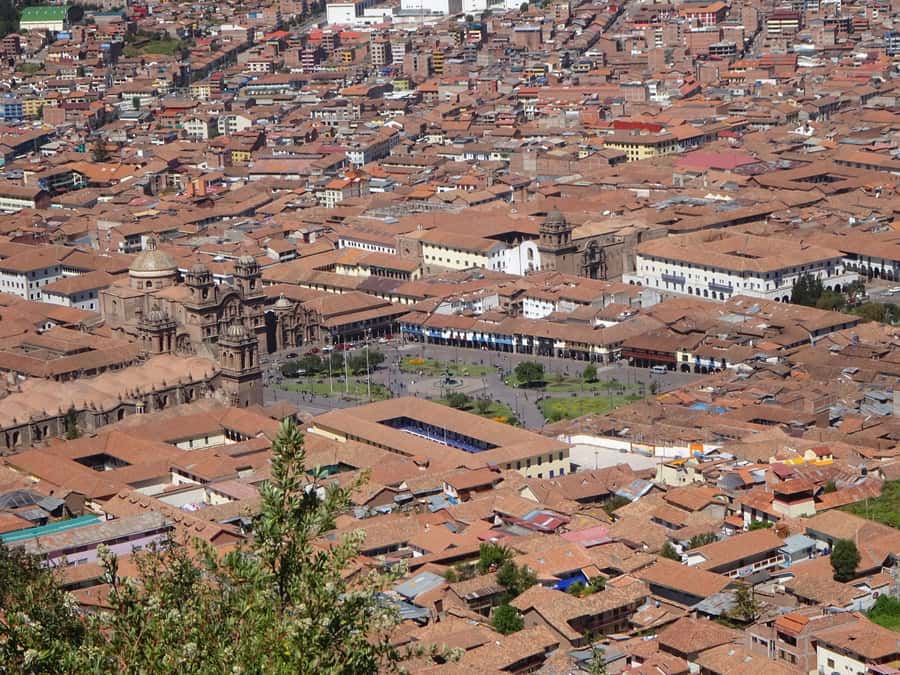
The route begins with Cusco’s upper streets and the area around San Cristobal Temple. This is a good opening because it quickly shows you how the city is arranged. From above the center, you can look toward Plaza de Armas and see the dense mix of colonial buildings, church roofs, and steep streets.
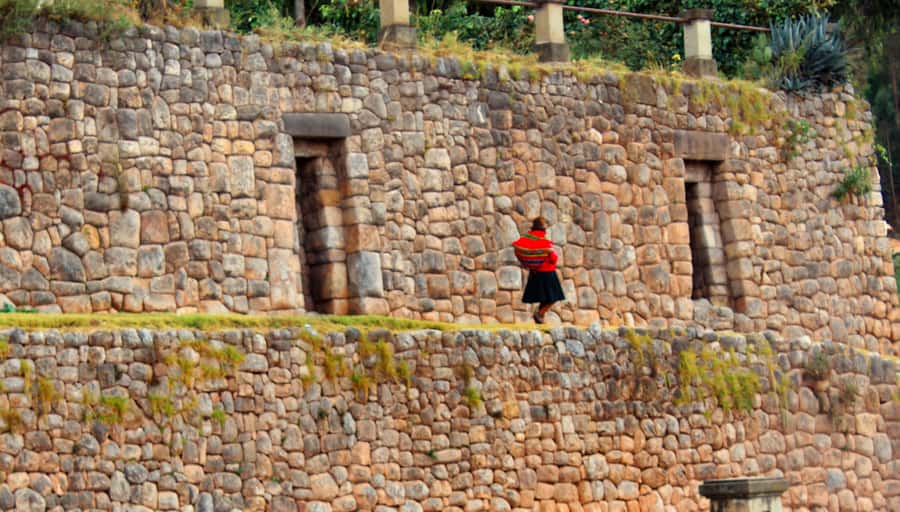
The bus also passes the Colcampata Inca wall. This is one of those moments when a short explanation can make a passing view more meaningful. You are not stopping for a formal archaeological visit, but the wall gives you a visible reminder that Cusco’s foundations predate its Spanish colonial appearance.
The Plaza de Armas view is one of the more useful parts of the ride. From the higher road, the square appears as part of a larger city rather than an isolated tourist center. I like this kind of viewpoint because it helps you get your bearings before you spend hours exploring the lanes on foot.
Do not expect a quiet sightseeing vehicle winding through empty streets. Cusco’s roads can be tight, and the open upper deck puts you close to walls, signs, wires, and passing traffic. That is part of the experience, but it also means you should keep bags and loose clothing secure.
Seeing Sacsayhuaman, Q’enqo, and Puca Pucara from the road
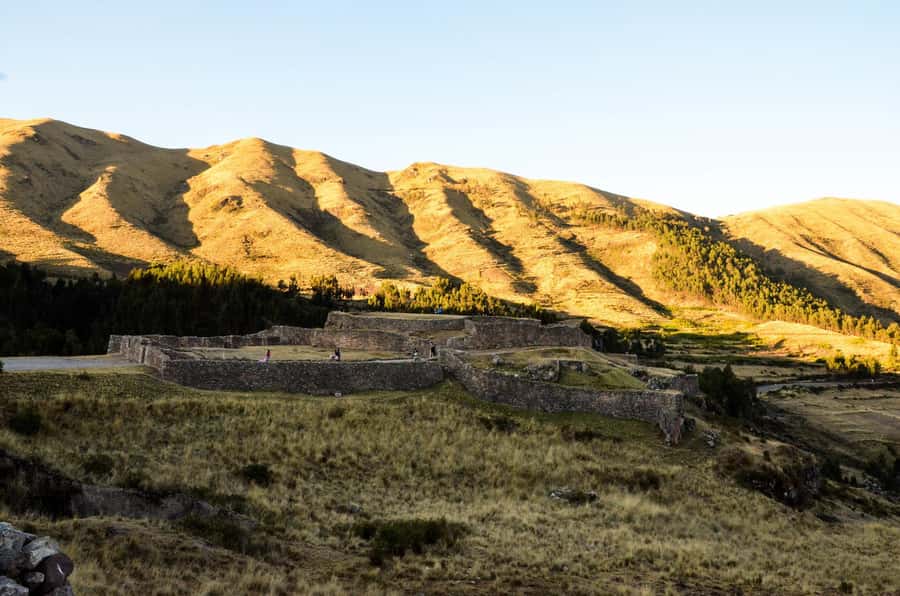
The tour offers a panoramic overview of three major archaeological areas: Sacsayhuaman, Q’enqo, and Puca Pucara. For a first look, this is useful. You can see where these sites sit in relation to Cusco and decide which ones deserve a separate half-day visit.
The important limitation is clear: the bus will not stop at or enter these sites. You will not walk among the massive stones at Sacsayhuaman, inspect the carved rock at Q’enqo, or explore Puca Pucara’s remains during this ride.
Sacsayhuaman is likely to be the most impressive sight from a distance because of its scale and hilltop position. The view gives you a sense of the defensive setting and the broad sweep of the stonework, but a passing panorama cannot show the precision of the masonry in detail.
Q’enqo and Puca Pucara work better as location markers on this route. You see them as part of the group of sites surrounding Cusco, rather than as complete visits. If you have only one day in the city, the bus can help you choose. If you already know you want to explore these places, use a dedicated archaeological tour or independent visit instead.
This distinction matters when judging the $12 price. You are paying for transport, guiding, and viewpoints, not site admission or archaeological exploration. At that price, the ride can be good value, as long as you do not expect a substitute for a proper site tour.
The white Christ statue and Cusco below
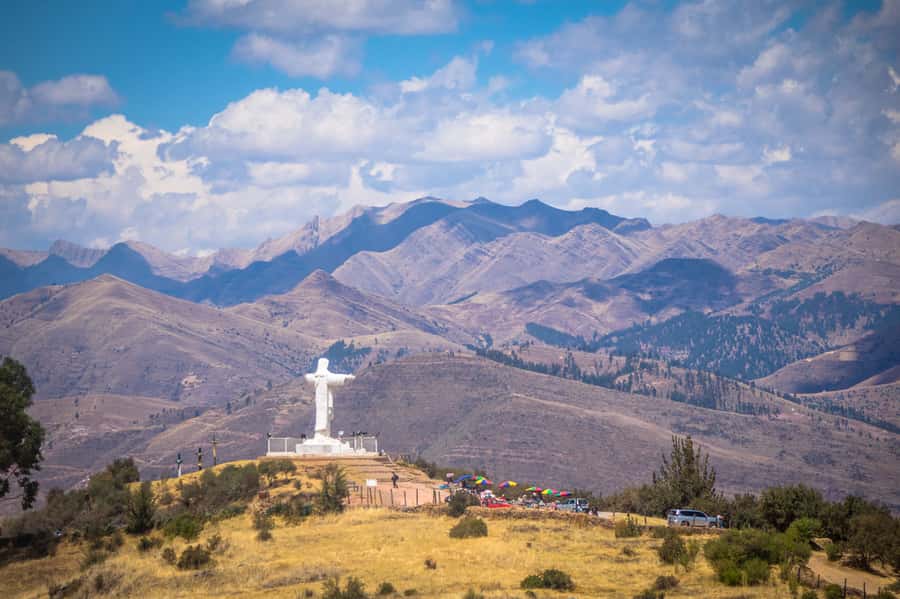
The stop at the white statue of Christ is the clearest highlight. The statue towers above the city, and the viewpoint provides a broad look across Cusco and the surrounding area. This is where the tour shifts from passing sights to a proper photo stop.
I like this stop because it gives you the view that is difficult to get from the center. Plaza de Armas can feel enclosed by buildings, while the Christ statue shows the full bowl of the city and the hills around it. You also get a better sense of how much Cusco rises and falls from one neighborhood to the next.
Give yourself time to look beyond the obvious postcard view. The value here is not only the statue itself. It is the relationship between the hilltop, the city center, the surrounding slopes, and the old roads connecting them.
Weather makes a big difference. On a clear afternoon, the viewpoint can be the most memorable part of the tour. In rain or low cloud, the city view may be muted. Bring a waterproof layer even if the morning looks promising, since the operator runs the tour in all weather.
More things to do in Cusco:
- Classic Inca Trail Trek 4D/3N to Machu Picchu (Group Service)
★ 5.0 · 8,653 reviews - Cusco: Rainbow Mountain and Red Valley Day Trip with Meals
★ 4.9 · 4,893 reviews - Machu Picchu: 4-Day Inca Trail Trek with Panoramic Train Ride
★ 5.0 · 4,568 reviews - Salkantay Classic Trek 5 Days from Cusco
★ 5.0 · 4,062 reviews
Extra stops, photos, and the question of authenticity
The stated route focuses on temples, walls, archaeological views, and the Christ statue. A reported departure also included a photo stop, a visit with a local shaman, and a souvenir outlet. These additions may appeal to you if you enjoy cultural demonstrations and shopping, but they can also make the ride feel less focused.
At the photo stop, another person took pictures and later encouraged passengers to buy them. You should expect this kind of commercial pause if it appears on your departure. It is not necessarily a problem, but it uses time that could otherwise go toward views or explanations.
A shaman visit can be meaningful when the presentation is clear and you have enough language support to understand what is happening. If the guide speaks mostly Spanish, you may feel left outside the experience. The language offered for the booking is English or Spanish, but I would still confirm your preferred language at the meeting point.
The souvenir stop is another factor to consider. A shop can be convenient if you want a quick look at local goods, but prices may be higher than in markets or shops you find on your own. You do not need to buy anything simply because the bus stops there.
These stops also help explain why one passenger reported a total time of five hours rather than the advertised 2.5 hours. The official duration is 150 minutes, but route changes, traffic, extra stops, or transfer arrangements can add time. If you have a train, meal, museum booking, or flight soon after, leave a generous buffer.
Rain, seating, and what to bring
The bus runs rain or shine. That is important in Cusco, where weather can change quickly and a bright start does not guarantee a dry ride.
The upper deck is the reason to book an open-top bus, but it is also the most exposed place to sit. During rain, you can move to the ground floor, though that means losing much of the open view. One rainy departure led to passengers spending much of the trip underneath the upper deck, and a roofed top level would have made the ride more comfortable.
Bring rain gear, as requested by the operator, rather than relying on a small umbrella. Comfortable clothes are also a sensible choice because the tour includes vehicle time, standing or sitting during stops, and possible changes between sun and rain.
I would also protect your phone and camera. The supplied information does not specify storage or shelter, so a waterproof pouch is a practical addition. Drones are not allowed.
The tour is not suitable for people with mobility impairments. The supplied information does not give detailed accessibility arrangements, so you should not assume that boarding, seating, or stops will be adapted to your needs.
Meeting point and the small logistics risks
The meeting point is at the Inka Altitude office door. Look for that name and wait there for your guide at the coordinates provided: -13.5178338, -71.9808803.
One reported departure involved a guide meeting passengers at the designated place and then walking them to another location to catch the double-decker bus. That kind of transfer can be confusing if you expect the bus to be directly outside the office. I would arrive early and keep your phone available in case the guide needs to move the group.
Drop-off may not be exactly the same as pickup. One reported route ended at a different location in the city center. This may be convenient, but you should avoid treating the final stop as fixed unless the guide confirms it.
These are small details, yet they matter in Cusco. Streets can look similar, and a last-minute move is harder to manage when you are unfamiliar with the city. The office name and coordinates give you a solid starting point, but allow time for instructions before departure.
Is $12 a fair price?
At $12 per person, this is one of the cheaper ways to combine transportation, a guide, city views, and a hilltop stop. You do not pay separately for the bus or guiding, and the low cost makes it easy to use as a first orientation.
The value drops if you expect entry to Sacsayhuaman, Q’enqo, or Puca Pucara. Those sites are only viewed from the route, so you will need another ticket or tour for a close visit. The value can also drop if rain keeps you on the lower deck or if extra commercial stops take up much of the scheduled time.
I see the price as fair for a sightseeing circuit with the Christ statue viewpoint. It is especially useful if you want to reduce walking at the start of your Cusco stay or if you have limited time and want a quick overview. It is less suitable if you prefer slow visits, independent exploration, or detailed historical guiding.
The free cancellation policy allows cancellation up to 24 hours before departure for a full refund. You can also reserve and pay later, which helps if your plans may change. Check available departure times before booking because the duration is fixed at 150 minutes in the tour details, while individual routes may take longer.
Who should book this Cusco bus tour?
I would recommend it to first-time visitors who want to see the city from above, families or couples who prefer riding to extended uphill walks, and budget-conscious visitors who want a short guided introduction.
It also suits you if you enjoy photo stops more than long archaeological visits. The view from the Christ statue, the Plaza de Armas panorama, and the pass by Colcampata give you a useful visual introduction to Cusco.
I would be cautious if you need a tightly controlled schedule, require strong English explanations, or want to spend time inside the archaeological sites. I would also think twice if rain is likely and the open-top format is the main reason you are booking.
Book it for the city views and orientation, not for site entry. Arrive early at the Inka Altitude office, bring rain gear, confirm the guide’s language, and keep extra time after the advertised 150 minutes.
FAQ
How long does the Cusco Open-Top Bus City Tour last?
The listed duration is 150 minutes, or 2.5 hours. One reported departure lasted five hours, so it is wise to allow extra time in case of traffic, additional stops, or route changes.
How much does the tour cost?
The price is $12 per person.
Which languages are available?
The tour offers live guiding in English and Spanish.
Where do I meet the guide?
Meet at the Inka Altitude office door and wait there for the guide. The listed coordinates are -13.5178338, -71.9808803.
Are transportation and guiding included?
Yes. Transportation and a tour guide are included. Food and drinks are not included.
Does the bus stop at Sacsayhuaman, Q’enqo, and Puca Pucara?
No. The bus provides a panoramic overview of these sites but does not stop at or enter them.
What happens if it rains?
The tour operates in rain or shine. You can sit on the ground floor of the bus during rain, and you should bring rain gear. The experience is not suitable for people with mobility impairments.
Just added in Cusco
- Cusco Private Transportation for 2026★ 5.0 · 4 reviews
- Private Transfer from Airport to Hotel in the City of Cusco★ 4.0 · 5 reviews
- Best Cusco walking tour: dinner street food tasting★ 4.5 · 11 reviews
- Private Tour to Pisac Market and Pisac Ruins★ 5.0 · 4 reviews
- Machu Picchu Day Trip With Panoramic Train from Cusco★ 5.0 · 10 reviews
- Sacred Valley Private Tour from Cusco, Guide and Driver only★ 5.0 · 4 reviews
- Sacred Valley of the Incas Tour★ 5.0 · 12 reviews
- Private Tour of the Mountain of Colours by Quad★ 5.0 · 7 reviews
City Tours, compared.
Lima Half-Day City Walking Tour (Small Groups)
Read our review →
Half-Day City Tour with Sacsayhuaman and Q’enco
Read our review →
City Tour Panoramic Bus Departure From Larcomar
Read our review →
City Tour Cusco Qoricancha Sacsayhuaman y Tambomachay
Read our review →
Lima’s Vibrant Heritage: Exploring the City’s Landmarks Half-day
Read our review →
Sightseeing Tour of the City on an Open-Top Bus
Read our review →
Lima City, Central Market & Catacombs Tour (Pick-up & Drop Off)
Read our review →Browse the lists this tour appears in