Reviewed · SACRED VALLEY TOURS
From Cusco: Moray, Maras, and Salt Mines Half-Day Tour
Salt, stone, and circles fill this half-day. This six-hour tour from Cusco packs several very different Andean sights into one outing: Chinchero’s weaving traditions, Moray’s giant terraces, Maras’s colonial buildings, and the striking Salineras salt pools. I especially like the living craft at Chinchero and the clever farming design at Moray.
I also like the low $15 price, which makes this a useful introduction to the Sacred Valley. The main catch is the extra entrance fees: 70 soles for Moray and 20 soles for the salt mines. The route is busy, and visitors with mobility limits may find the uneven sites difficult.
In This Review
- Key points to know before you go
- Why this half-day route works from Cusco
- Chinchero at 3,762 meters: weaving, farmland, and a high start
- Moray’s circular terraces and irrigation system
- Maras and its preserved stone buildings
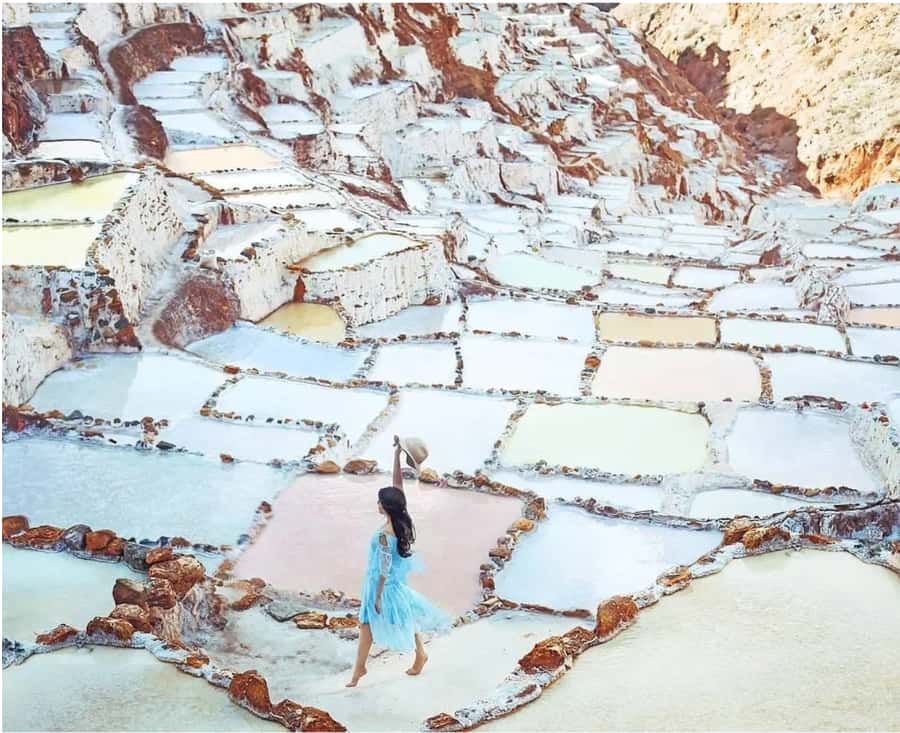
- Salineras: 3,000 small pools on the mountainside
- Transport, timing, and the real cost
- Who will get the most from this tour
- What to bring and what to expect
- Should you book the Moray and Salt Mines tour?
- FAQ
- Where does the tour start?
- How long does the tour last?
- What languages are available for the guide?
- Is the Moray entrance ticket included?
- Is the salt mine entrance ticket included?
- Are food and drinks included?
- What is the highest point visited?
- What should I bring?
- Is the tour suitable for wheelchair users?
Key points to know before you go
- Chinchero sits high at 3,762 meters: The village visit combines Andean farmland, a weaving workshop, and a chance to see natural dyes made from plants.
- Moray is more than a photo stop: Its circular terraces and irrigation system show how carefully farming was adapted to the highlands.
- The Salineras contain about 3,000 pools: Salt still forms here and is processed and distributed in the region.
- Maras adds colonial character: Its preserved stone buildings give the route a different feel from the agricultural sites.
- The $15 fare is only part of the cost: Add 90 soles for the Moray and salt mine admission tickets, plus your own food and drinks.
- The tour is compact but full: Allow six hours, with van rides, short visits, and several stops packed into one morning or afternoon.
Why this half-day route works from Cusco
I see this tour as a sampler of the Sacred Valley rather than a slow, single-site visit. In six hours, you move from a Quechua craft workshop to high-altitude farmland, from carefully shaped terraces to colonial stonework, then to salt pools that still serve a working purpose.
That variety gives the outing its value. You do not spend the whole day looking at one ruin. Instead, you get a quick look at how people in this part of Peru have farmed, built, dyed cloth, and gathered salt across many generations.
The pace also makes sense if your Cusco schedule is tight. A full day can be hard to fit between other plans, while this half-day trip leaves room for time in the city. I would not choose it if you want long walks or quiet time at each site. I would choose it if you want several strong sights without arranging separate transport.
Pickup is listed from your hotel in Cusco, with the route beginning at Plaza Regocijo. Confirm the exact pickup point and departure time when you book, since the available starting times can vary.
More Sacred Valley trips:
- From Cusco: Sacred Valley & Maras Salt Mines Tour with Lunch
★ 4.8 · 2,227 reviews - From Cusco: Moray, Maras Salt Mines & Chinchero Weavers Tour
★ 4.8 · 1,925 reviews - 2-Day Tour: Sacred Valley and Machu Picchu by Train
★ 5.0 · 1,127 reviews
Chinchero at 3,762 meters: weaving, farmland, and a high start
Chinchero is the first major stop, reached after about 50 minutes in the van. At 3,762 meters above sea level, it is the highest point named in this route, so I would take the opening visit slowly and keep water close.
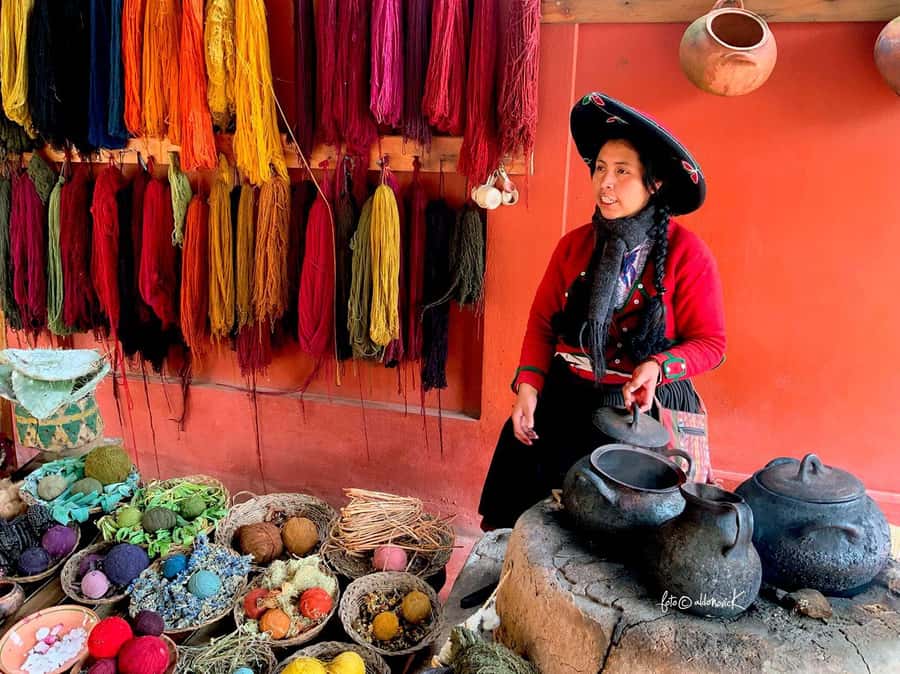
The village gives you a first look at Andean rural life. The surrounding farmland is part of the appeal, and the setting helps explain why weaving remains closely tied to local identity. This is not simply a quick shop stop if the workshop presentation is done well. You can see how local artisans continue Quechua textile traditions and use plants to create colors for their work.
That natural dye process is one of the most useful details here. It turns a finished textile into something easier to understand. You are not only looking at patterns and colors. You are seeing part of the work behind them, including the use of local plant material to produce the shades used in Andean art.
The stop lasts about 40 minutes and includes time for photographs and shopping. That timing is enough for a short presentation and a look around, but it is not long enough for an extended craft lesson. If you want to buy something, use the visit to inspect the work carefully rather than feeling rushed at the end.
I like Chinchero because it gives the tour a human focus before the larger archaeological and natural sights. The possible drawback is clear: a workshop visit can feel more commercial than cultural if you are not interested in shopping. You can still pay attention to the dyeing tradition, even if you do not buy anything.
Moray’s circular terraces and irrigation system
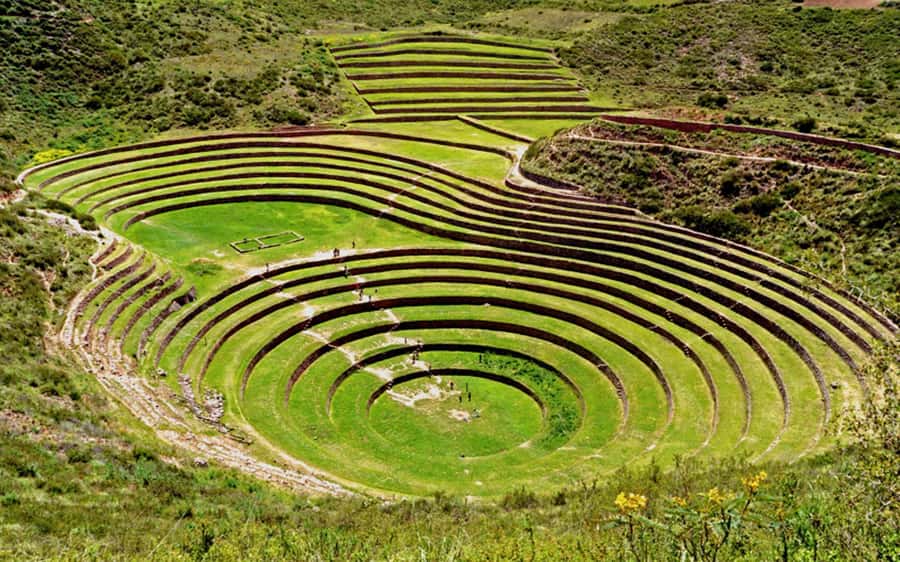
After Chinchero, the van continues for about 50 minutes to Moray. The site is located at 3,450 meters above sea level, lower than Chinchero but still high enough for strong sun and cool air.
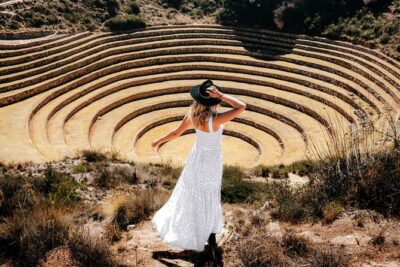
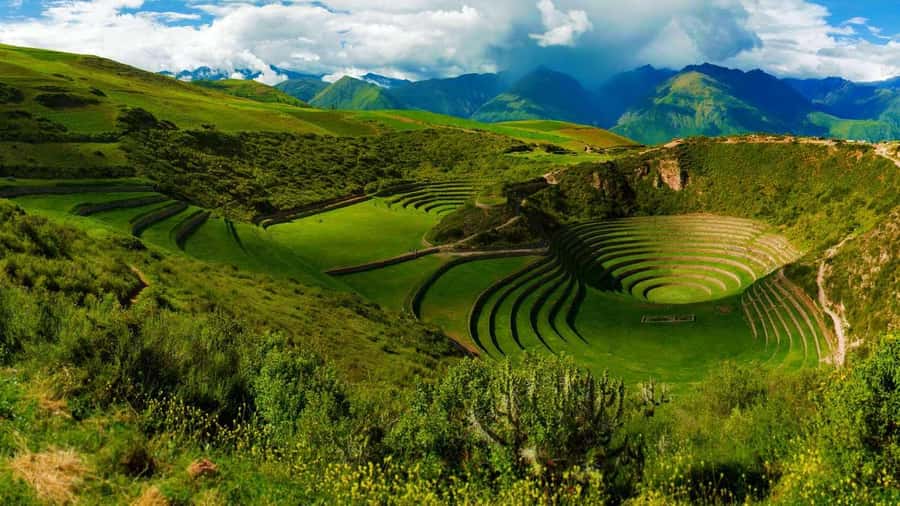
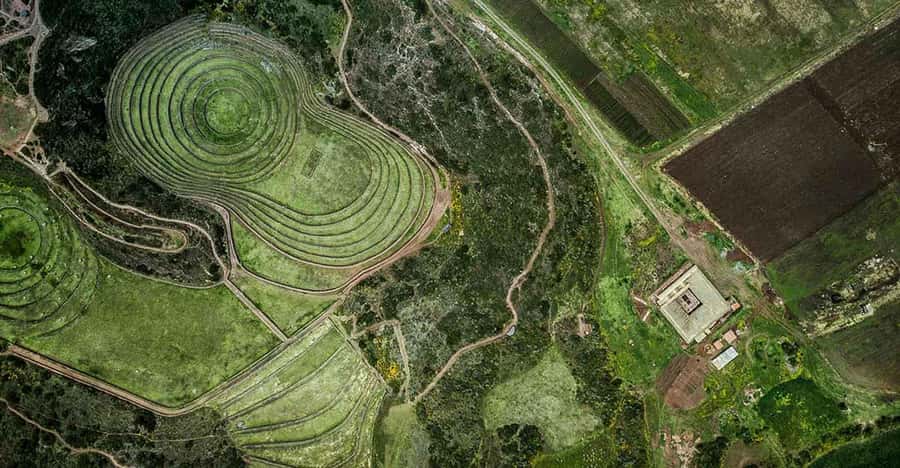
Moray is the most visually unusual stop on the route. Its great circular terraces drop into the earth in a series of broad rings. From above, the shapes look almost too neat to be natural. The important point is not only the appearance. The terraces form part of a carefully planned agricultural setting with an irrigation system.
I like Moray because the site rewards both the eye and the imagination. You can first enjoy the pattern of the terraces, then consider the practical question of how water and cultivation were managed in such a difficult environment. The design gives you a clear sense that farming here required planning, labor, and close attention to the land.
The scheduled visit lasts about 40 minutes and includes a guided tour and time for photographs. That is enough to understand the basic layout and take in the view. It is a short visit, though, so do not expect a long walk around every part of the site.
The Moray entrance ticket costs 70 soles and is not included in the $15 tour price. You can buy it on site. This is the largest extra charge on the outing, so include it in your budget before deciding that the tour is exceptionally cheap.
For me, Moray is likely the strongest stop for photographs, but the experience depends on the guide’s explanation. The terraces are impressive on their own, yet the irrigation system and farming purpose make the visit much more meaningful than a quick scenic stop.
Maras and its preserved stone buildings
The route also includes Maras, a village known for preserved colonial architecture and fine stone buildings. This stop provides a useful change of mood after the open farmland and the circular terraces at Moray.
I would pay attention to the construction details here. The stonework and colonial buildings show how the village developed under a different period of influence from the older agricultural sites. The value of Maras is less about one grand monument and more about seeing a historic settlement with its character still visible in the streets and buildings.
The supplied timing gives about 30 minutes of van travel between the Moray area and the next part of the route, but it does not assign a separate visit length to Maras. Because of that, I would expect the stop to be brief and guided by the day’s traffic and schedule.
There is also a practical reason to visit Maras: the salt mines are nearby, and the village is the place where the 20-sol salt mine admission can be purchased. Keep some local currency ready if possible, since the salt mine ticket is separate from the tour price.
A completely different kind of day:
- Cusco: Sacred Valley, Pisac, Ollantaytambo, Salt Mines Moray
★ 4.6 · 1,058 reviews - Cusco:Chinchero,Moray & Salt Mines drop-off in Ollantaytambo
★ 4.8 · 793 reviews - Sacred Valley and Maras Moray Tour with Full Day Buffet Lunch
★ 5.0 · 670 reviews - The Ultimate Full Day Sacred Valley Tour
★ 5.0 · 644 reviews
Salineras: 3,000 small pools on the mountainside
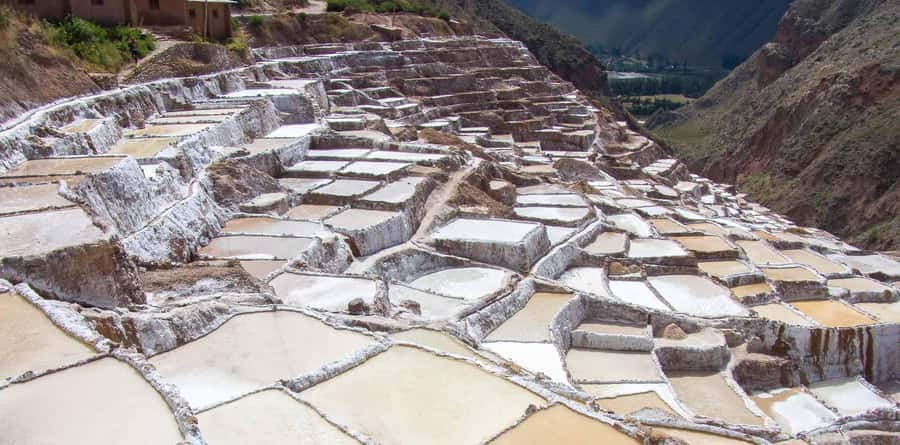
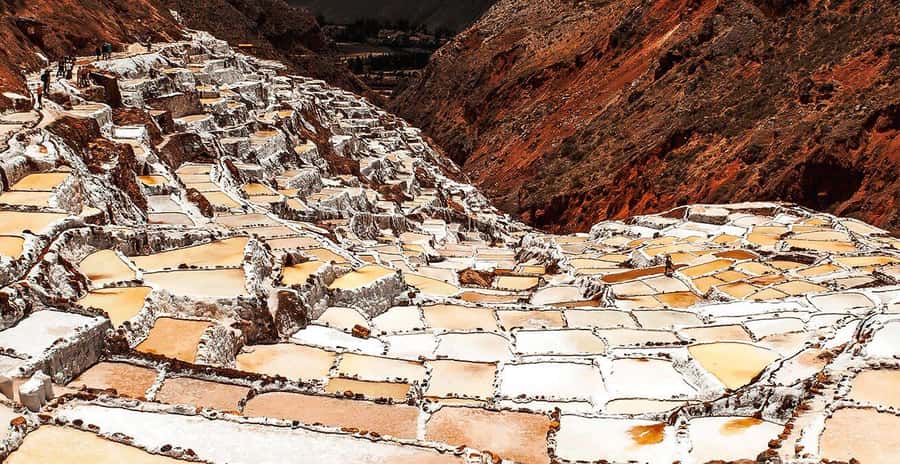
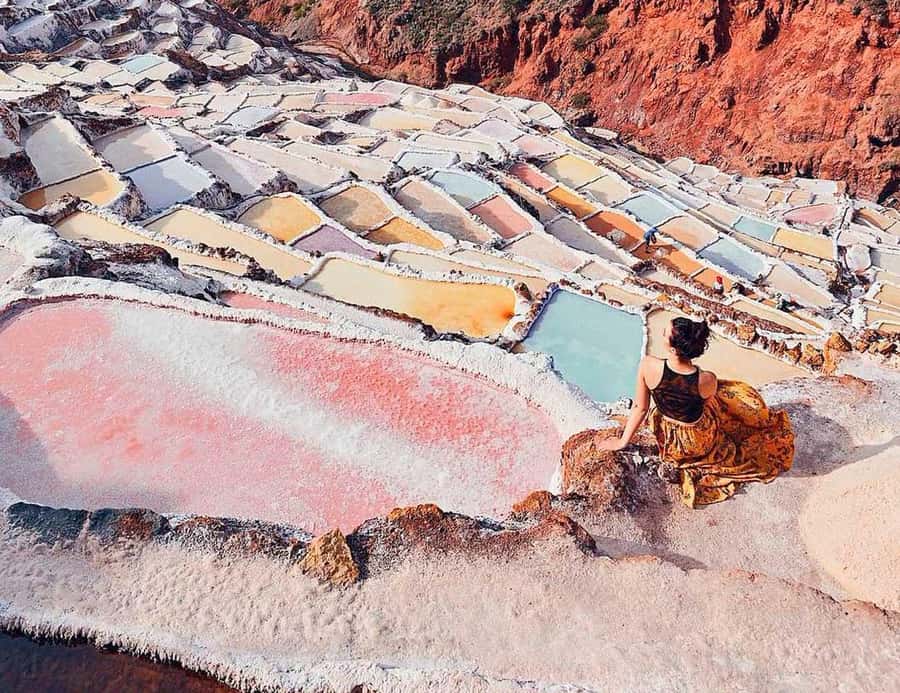
The Salineras salt mines are the route’s most unusual working site. About 3,000 small pools cover the slope, creating a pale, patterned view that changes with the light and the amount of salt in each pool.
This is not only an old attraction preserved for sightseeing. Salt production still takes place here. The site dates back to pre-Incan times, and the salt is processed and distributed in the surrounding region. That continuing use gives the visit a practical connection to local life.
I like the Salineras because the pools make a complex process easy to see. Water moves through the system, salt collects, and the small basins are managed as part of production. You can appreciate the pattern from a distance, but the working purpose is what gives the place its meaning.
The salt mine entrance costs 20 soles and is paid separately in Maras. Food and drinks are also excluded, so bring water and a small snack if you need one. The tour information does not provide a separate duration for the salt mines, which means your time there may be limited by the overall six-hour schedule.
Be careful with your footing. The experience is not suitable for people with mobility impairments or wheelchair users, and the site may include uneven walking surfaces. Comfortable shoes are specifically recommended.
Transport, timing, and the real cost
The tour uses a van for the route from Cusco and between the stops. The listed drives are about 50 minutes to Chinchero, another 50 minutes toward Moray, and about 30 minutes for the later connection. That is a substantial amount of road time for a six-hour experience, but it is also what makes the multi-stop format possible.
I would treat the van rides as part of the day rather than a nuisance. You get views of Andean farmland along the way, and the transfers give you a break between short walks. Still, anyone prone to motion sickness should prepare carefully, since the tour involves several highland road sections.
The $15 base price is attractive. It covers hotel pickup in Cusco, the Chinchero weaving workshop, the Moray visit, and the Salineras exploration. Once you add 70 soles for Moray and 20 soles for the salt mines, the total becomes much higher than the headline fare, though it can still offer good value for transport and a guide across several sites.
You must also pay for your own food and drinks. The route is only six hours, but carrying water is important at these elevations. Sunscreen, a camera, and comfortable shoes belong in your day bag.
Guiding is available in Spanish and English. That matters most at Chinchero, Moray, and the salt mines, where a short explanation adds context that you would miss from photographs alone.
Who will get the most from this tour
I would recommend this experience to you if you are staying in Cusco and want a compact introduction to several Sacred Valley sights. It suits people who value variety, do not want to arrange several taxis, and are happy with short visits rather than long independent explorations.
It is also a good fit if you are curious about more than famous ruins. Chinchero’s textile work and the Salineras’ continuing production bring everyday traditions into the day, while Moray shows how agriculture shaped the highlands.
I would be more cautious if you need a wheelchair-accessible route or have mobility impairments. The experience is specifically not suitable for wheelchair users or people with mobility limitations.
You should also consider the altitude. Chinchero reaches 3,762 meters, and Moray sits at 3,450 meters. If you are still adjusting to Cusco, a gentle schedule and plenty of water will help. The tour is not designed as a strenuous trek, but high elevation can make even short walks feel harder.
What to bring and what to expect
Pack light, but bring the essentials:
- Comfortable shoes for the archaeological and salt mine sites
- Water
- Sunscreen
- A camera
- Money for the 70-sol Moray ticket and 20-sol salt mine ticket
- Extra money if you plan to shop at the Chinchero workshop
Smoking is not allowed during the activity. Food and drinks are not included, so plan around that before leaving Cusco.
The tour offers free cancellation up to 24 hours before departure for a full refund. You can also reserve now and pay later, which is useful if your Cusco plans may change.
Should you book the Moray and Salt Mines tour?
I would book it if you want maximum variety for a half-day and understand that the $15 price does not include the 90 soles in entrance fees. The strongest reasons to go are Moray’s unusual terraces, the Salineras’ 3,000 working pools, and the Chinchero workshop with its natural dye tradition.
I would skip it if you want a slow, detailed visit at each place, dislike van transfers, or need accessible walking conditions. For most visitors with limited time in Cusco, though, this is a practical way to see several distinctive sites in one organized outing. Just budget for the tickets, bring water, and expect a brisk schedule.
FAQ
Where does the tour start?
The listed starting location is Plaza Regocijo in Cusco. Hotel pickup in Cusco is included, so confirm the exact pickup arrangement when booking.
How long does the tour last?
The tour lasts six hours.
What languages are available for the guide?
The live guide is available in Spanish and English.
Is the Moray entrance ticket included?
No. The Moray ticket costs 70 soles and can be purchased on site.
Is the salt mine entrance ticket included?
No. The Salineras ticket costs 20 soles and can be purchased in Maras.
Are food and drinks included?
No. You need to pay for your own food and drinks.
What is the highest point visited?
Chinchero is located at 3,762 meters above sea level. Moray is at 3,450 meters.
What should I bring?
Bring comfortable shoes, a camera, sunscreen, and water.
Is the tour suitable for wheelchair users?
No. The activity is not suitable for wheelchair users or people with mobility impairments.
Just added in Sacred Valley
- Private Tour to Pisac Market and Pisac Ruins★ 5.0 · 4 reviews
- Sacred Valley Private Tour from Cusco, Guide and Driver only★ 5.0 · 4 reviews
- Sacred Valley of the Incas Tour★ 5.0 · 12 reviews
- Sacred Valley VIP Private Tour★ 5.0 · 32 reviews
- Private Tour Sacred Valley Vip Chinchero Ollantaytambo+lunch★ 5.0 · 10 reviews
- Private transfer Cusco to Ollantaytambo★ 5.0 · 7 reviews
- 6-Day Machu Picchu, Sacred Valley and Humantay Lake Tour★ 5.0 · 10 reviews
- Private Tour: 2-Day Exploration of the Sacred Valley and Machu Picchu★ 5.0 · 69 reviews
Sacred Valley Tours, compared.
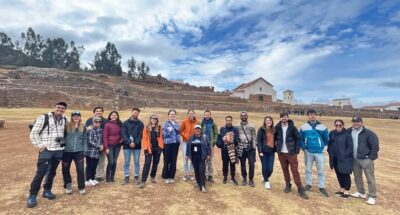
From Cusco: Sacred Valley & Maras Salt Mines Tour with Lunch
Read our review →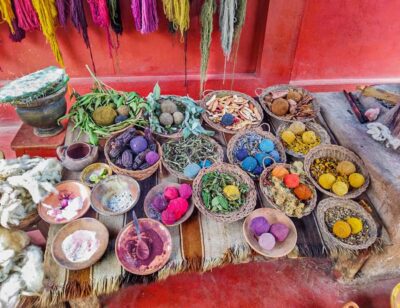
From Cusco: Moray, Maras Salt Mines & Chinchero Weavers Tour
Read our review →
2-Day Tour: Sacred Valley and Machu Picchu by Train
Read our review →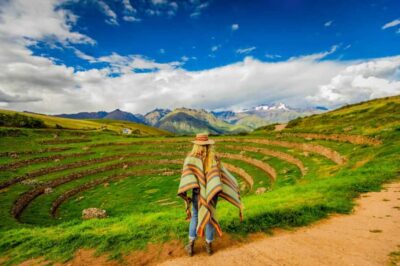
Sacred Valley, Pisac, Ollantaytambo, Salt Mines Moray
Read our review →
Chinchero,Moray & Salt Mines drop-off in Ollantaytambo
Read our review →
Sacred Valley and Maras Moray Tour with Full Day Buffet Lunch
Read our review →