
Reviewed · COLCA CANYON AND AREQUIPA TOURS
Full Day Tour to Colca including Transfer to Puno
Condors make the long day worthwhile. This 17-hour trip from Arequipa to Puno turns a necessary transfer into a full sightseeing day, with canyon viewpoints, high-altitude volcanoes, hot springs, and Andean wildlife along the way. I like the efficient one-way route and the chance to see places that would otherwise require a separate Colca excursion.
I also like the variety: you get the Cruz del Condor viewpoint, traditional villages, terraces, thermal pools, camelids, and Lagunillas Lake in one sweeping journey. The main drawback is the schedule. A 3:00 am start, winding roads, high altitude, and two long bus rides make this a demanding day, not a relaxed outing.
At $60 per person, the tour offers good value if you need to reach Puno and want to see the Colca region without backtracking to Arequipa. Just allow extra money for entrance fees, lunch, and the hot springs, and confirm your pickup details the day before.
In This Review
- Key points to know before booking
- Why this Arequipa to Puno route makes sense
- The 3:00 am pickup and first ride to Chivay
- Chivay, the Colca Valley’s useful base
- Cruz del Condor and the best hour of the day
- Maca and Antahuilque’s old terraces
- Chacapi hot springs and the lunch break
- The bus change from Chivay to Puno
- Patapampa and the high Andes
- Patahuasi’s camelids and Coca leaves
- Lagunillas Lake before Puno
- What the $60 price really covers
- Who should book this tour
- Final verdict: practical, scenic, and seriously long
- FAQ
- What time does the tour begin?
- How long does the full experience last?
- Is transport from Arequipa to Puno included?
- Is breakfast included?
- Is lunch included?
- How much does entry to Cruz del Condor cost?
- Do I have to pay to use the hot springs?
Key points to know before booking
- The Cruz del Condor stop is the star attraction: You get about 90 minutes to look into the canyon and watch for Andean condors.
- The journey doubles as a transfer: You travel from Arequipa to Chivay, then change vehicles and continue to Puno.
- The day begins at 3:00 am: Early pickup helps fit the long route into one day, but sleep will be in short supply.
- Expect a guide change in Chivay: The first guide accompanies the Colca portion, then another guide takes over for Puno.
- Extra costs add up: The Colca viewpoint costs 20, 40, or 70 soles depending on nationality, while the hot springs cost 15 soles.
- Seating may be tight: One couple had to squeeze four people into the last row after the bus change, so boarding promptly matters.
Why this Arequipa to Puno route makes sense
The usual problem with seeing Colca Canyon is the route. Arequipa sits on one side, Puno on another, and returning to Arequipa after the canyon can waste a full day. This tour solves that problem by using Colca as the middle section of your journey.
You leave Arequipa before dawn, spend the morning and early afternoon around Chivay and the canyon, then continue across the high Andes to Puno. You arrive at about 7:30 pm, usually as close to the center of Puno as the vehicle can get. From there, you make your own way to your hotel.
That practical design is the tour’s biggest strength. I would choose it over a simple direct transfer if I had the energy for a long day and wanted to see condors, volcanoes, hot springs, and mountain scenery along the route.
The cost is also reasonable for a full-day organized transfer at $60. The price includes an air-conditioned vehicle, a professional guide, continental breakfast, and tourist transport to Puno. It does not include the main Colca entrance, lunch, the thermal pools, or drinks, so the final cost will be higher.
More Colca Canyon trips:
- 2 day 1 night trek / Colca Canyon
★ 5.0 · 1,069 reviews - From Arequipa: Colca Canyon Full-Day Guided Tour with Meals
★ 4.5 · 982 reviews - Tour to the Salinas Lagoon and National Reserve in Arequipa
★ 4.5 · 548 reviews
The 3:00 am pickup and first ride to Chivay
Pickup begins at 3:00 am, and you need to coordinate the exact meeting point with the operator the day before. The guide is identified by the company uniform and looks for you by name at your selected hotel.
That last-minute confirmation matters. Arequipa has several hotels and pickup streets, and an early departure leaves little room for confusion. Keep your phone available the day before and have a warm layer within reach when you go to sleep.
The first drive to Chivay takes roughly three hours. The road is winding, and the altitude becomes a real part of the day. One useful piece of advice from the experience is simple: choose this only if you are comfortable with long bus rides and high elevation.
Breakfast is served in Chivay and is described as a continental meal. It gives you a practical chance to eat before the canyon stops, though one poor-organized morning left the dining area short of butter and other basics. I would bring a small snack in case the meal is delayed or limited.
Chivay, the Colca Valley’s useful base
Chivay is the main town of the Colca Valley and your first proper stop. The visit is brief, around 30 minutes, so think of it as a quick introduction rather than free time to explore the town in depth.
You get a glimpse of local daily life, the surrounding valley, and the town’s role as the region’s transport hub. After breakfast, the group continues toward the canyon, so this is not the place to plan shopping or a long coffee break.
The schedule gives you enough time to stretch your legs and get oriented. It does not give you much flexibility. If you need medication, water, or a warm layer, have those ready before leaving Arequipa.
Cruz del Condor and the best hour of the day
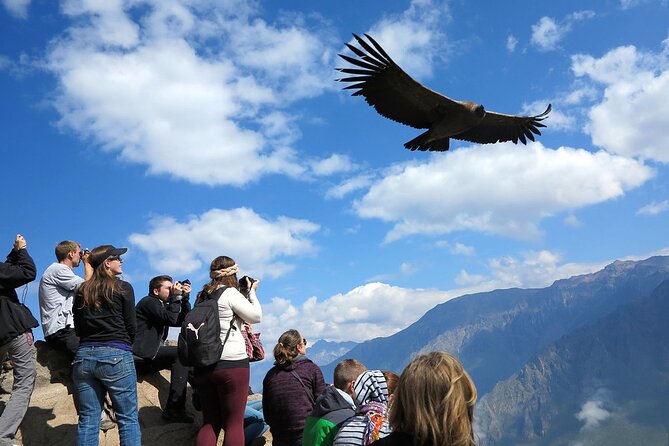
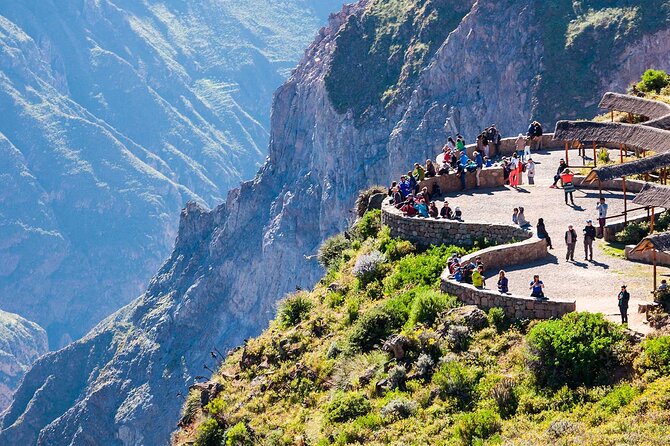
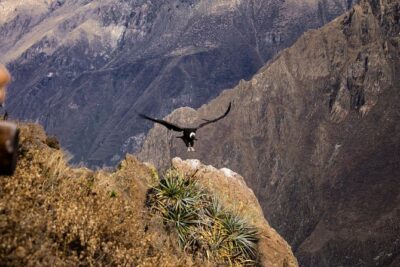
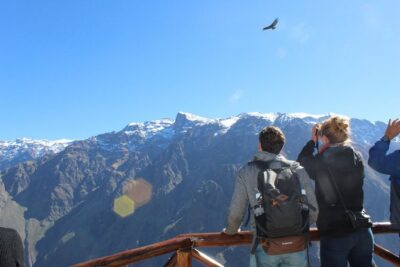
From Chivay, the drive to the Cruz del Condor viewpoint takes about 45 minutes. Once there, you have approximately 90 minutes to look across the canyon, take photographs, and watch for condors riding the rising air.
This is the emotional high point of the tour. The canyon is immense, and the condors can appear surprisingly close as they glide across the open space. Sightings are not guaranteed, so it is better to value the viewpoint itself rather than treat the birds as a promised performance.
The entrance fee is extra. Peruvian citizens pay 20 soles, South Americans pay 40 soles, and visitors from other countries pay 70 soles. That is a significant charge for a single viewpoint, especially when the tour price is only $60, so include it in your budget before booking.
You should also bring something warm. The morning viewing period takes place at high altitude, and the stop includes time outside. The reward is one of the most memorable natural sights in the region, but the experience depends on weather, timing, and luck with the birds.
More Lake Titicaca trips:
- 2-Day Tour Colca Canyon in Arequipa with end in Puno
★ 4.6 · 248 reviews - From Arequipa: Colca Canyon Day Trip with Transfer to Puno
★ 4.6 · 90 reviews - Turist Bus Colca Canyon (Chivay) To Puno
★ 5.0 · 83 reviews - From Puno to Arequipa: 2 Days/1 Night Colca Canyon Tour
★ 3.6 · 83 reviews
Maca and Antahuilque’s old terraces
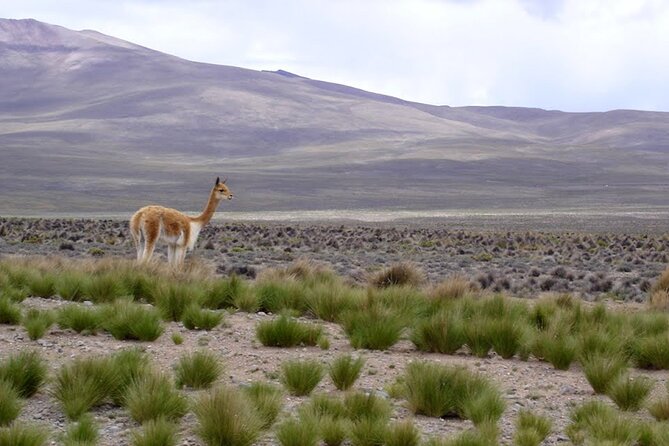
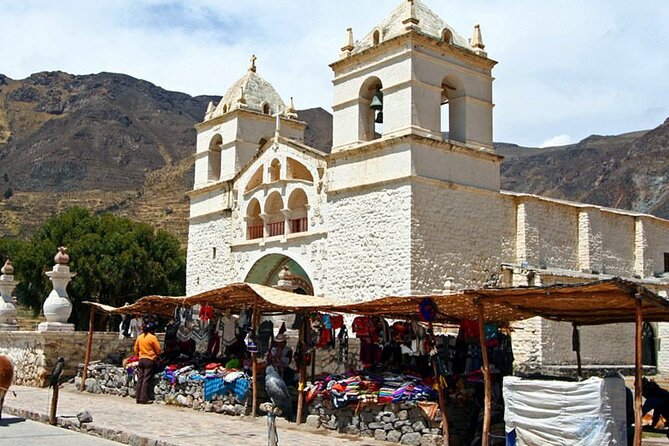
After Cruz del Condor, the route visits Maca, a traditional town in the canyon. You have about 30 minutes to browse the craft market, take photographs, and see camelids and a trained falcon.
Maca also offers local drinks, including Colca sour and mate de coca, generally around 5 soles. These are optional purchases, not part of the tour price. The stop is short, so decide quickly if you want a drink, a souvenir, or a photograph.
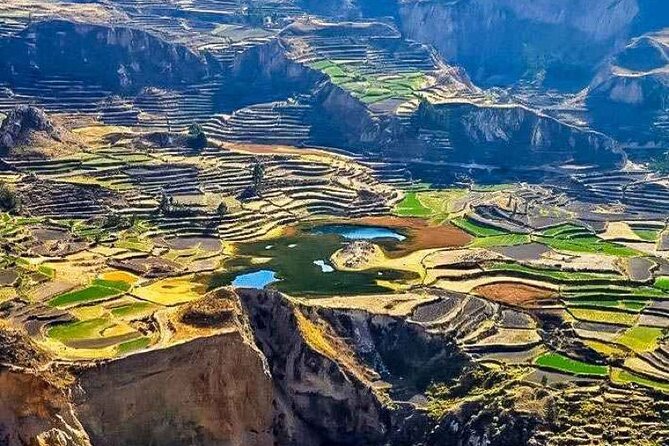
The next viewpoint is Antahuilque. Here, the attraction is the old agricultural terraces running along the Colca Valley. These terraces show how farming has adapted to steep mountain slopes over many generations.
Antahuilque works well as a second viewpoint because it feels different from Cruz del Condor. Cruz del Condor is about scale, cliffs, and birds. Antahuilque is about the human mark on the valley and the careful use of limited farmland.
Both stops are brief. I would keep your camera and water handy rather than packing and unpacking at every viewpoint.
Chacapi hot springs and the lunch break
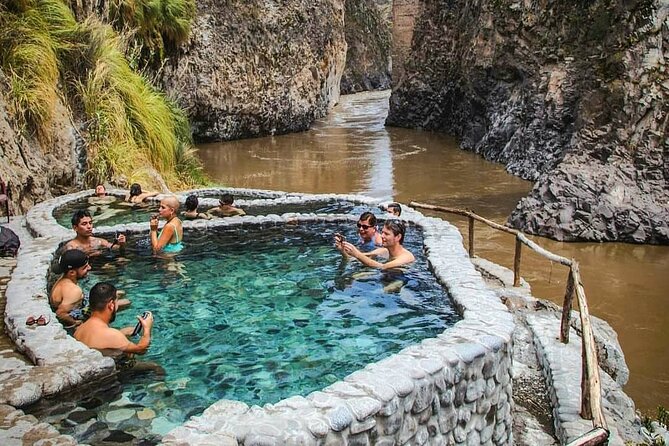
The Chacapi hot springs are located in Yanque and use water from the Chucura volcano. The pools reach temperatures of up to 36 degrees, giving you about an hour to relax in the thermal water.
Admission costs 15 soles and is optional. This is one of the few points in the day where you can slow down, so I think it is worth considering if you enjoy hot springs and have brought a swimsuit, towel, and dry clothing.
The wording of the schedule leaves little room for a long soak beyond the planned hour. You will need to change and rejoin the group on time. If you would rather save the money or prefer to keep your clothes dry, you can skip the pools and use the stop as a break.
The group returns to Chivay for lunch. Lunch is not included, although the stop may offer a buffet. One positive account described the buffet stop as good, while another morning showed that organization can vary. Bring extra cash and do not assume your preferred meal will be available.
After lunch, the most important change of the day takes place. You board another vehicle for the six-hour journey to Puno, and a different guide takes over.
The bus change from Chivay to Puno
The vehicle change is practical but can be uncomfortable. The first section is a Colca excursion, while the second is a tourist transfer to Puno, so separate vehicles and guides are used.
An English-speaking guide named David received especially warm praise for being informative, cheerful, and clear during the Colca portion. The second guide is not the same person, and the change can feel abrupt after the morning sightseeing.
Pay attention when boarding the Puno bus. One couple found there were not enough comfortable seats and ended up squeezing four people into the last row. Their situation improved only after two people in front got off several hours later.
This does not mean every departure will have a seating problem, but it is a useful warning. Board promptly, keep your small bag close, and do not assume that the seat arrangement will be as spacious as the first vehicle. The maximum group size is 24 people, which keeps the tour from becoming enormous, but it does not guarantee generous legroom.
Patapampa and the high Andes
The road from Chivay to Puno takes around six hours. It is a long stretch, but the scenery gives the ride a purpose.
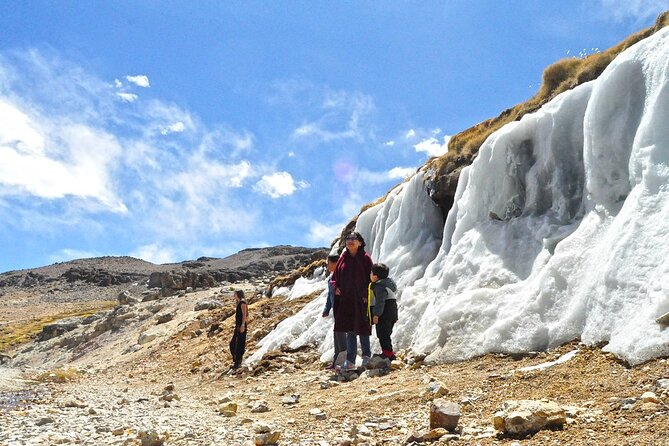
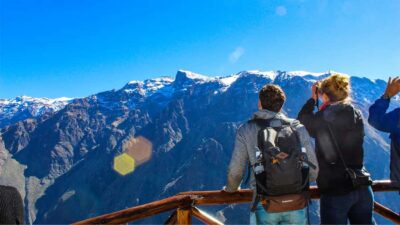
At Abra Patapampa, you stop for about 25 minutes at a volcano viewpoint. From here, you may see the snow-capped Coropuna, Ampato, and Hualca Hualca, along with evidence of melting snow and high mountain terrain.
This is also where altitude can feel most demanding. The route reaches the high Andes, and you should take the stop slowly. Use the time for photographs, but do not treat the short break as a race up the viewpoint.
Clouds can reduce visibility. One account still found the scenery worthwhile even on a cloudy day, which is a fair way to approach this part of the trip. The mountains are the attraction, but conditions control how much you see.
Patahuasi’s camelids and Coca leaves
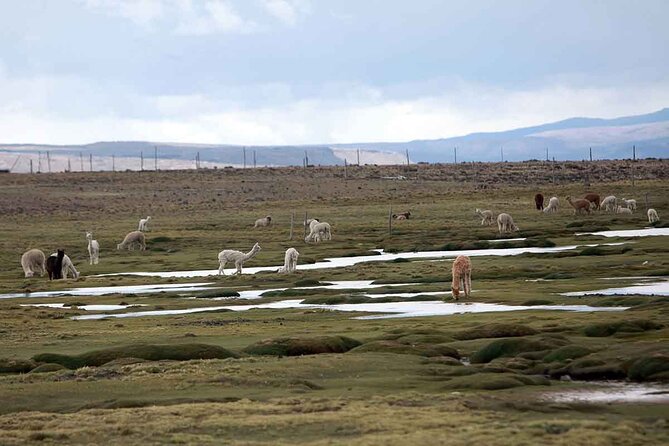
Patahuasi is a brief 20-minute stop. You can see camelids, look toward the volcanoes, and buy traditional coca leaves if you wish.
The stop is not a full cultural visit. It is mainly a chance to stretch, use the pause for photographs, and see familiar Andean animals in their high-altitude setting. Keep your expectations proportionate to the short schedule.
Coca leaves are sold separately, with prices not specified. Ask about the purchase if you are interested, and remember that this is an optional stop for shopping, not part of the included meals or admissions.
Lagunillas Lake before Puno
The final sightseeing stop is Lagunillas Lake, a protected natural area about 20 minutes from the city. The stop gives you a look at high Andean plants and local birdlife.
The amount of fauna varies with the season, so you might see more birds at a better time of year. It is best to treat the lake as a quiet final pause rather than expect a major wildlife event.
After Lagunillas, the bus continues to Puno. Arrival is expected around 7:30 pm, with drop-off as close to the center as possible. The service ends there, and you are responsible for getting from the drop-off point to your hotel.
What the $60 price really covers
At $60, this is not a cheap sightseeing excursion once you add the required and optional extras. The main extra is the Colca entrance fee, which can reach 70 soles for many international visitors. Add lunch, a 15-sol hot springs ticket if you choose to bathe, and any drinks or souvenirs.
Even so, the value is strong if you already need to travel from Arequipa to Puno. You are paying for transport, a guide, breakfast, canyon stops, and a series of mountain viewpoints instead of paying for a separate Colca trip and a separate transfer.
The price makes less sense if you plan to return to Arequipa, dislike long rides, or want slow visits in each village. This is an efficient route, not a leisurely one.
Who should book this tour
I would recommend it to a fit person who wants to combine transport and sightseeing. It suits visitors with limited time, especially those traveling from Arequipa to Puno and wanting to avoid backtracking.
It also suits anyone who considers condors the main goal but wants more than a single viewpoint. You get canyon scenery, terraces, hot springs, volcanoes, camelids, and a lake in the same day.
I would hesitate if you struggle with altitude, winding roads, early departures, or long periods seated on a bus. The day lasts about 17 hours, and the ride to Puno alone takes six hours after lunch.
The mixed feedback on organization and seating is worth taking seriously. Delays can happen, breakfast supplies may be limited, and the second bus may be less comfortable. Those issues do not erase the value of the route, but they do make patience part of the package.
Final verdict: practical, scenic, and seriously long
Book this tour if you need to get from Arequipa to Puno and want the Colca Canyon to be part of the journey. The condor viewpoint, volcano views, and smart one-way routing make it a useful way to see more of Peru without losing another day to transport.
Skip it if you want comfort, flexibility, or a relaxed canyon visit. At $60 plus entrance fees and meals, it is best understood as a sightseeing transfer with a very early start, not a gentle day tour. Bring water, warm clothing, snacks, and realistic expectations, and the long bus rides will feel like the price of admission to an excellent stretch of Andean scenery.
FAQ
What time does the tour begin?
Pickup begins at 3:00 am. You must communicate with the operator the day before to confirm the pickup point and instructions.
How long does the full experience last?
The tour lasts approximately 17 hours. Arrival in Puno is expected at about 7:30 pm.
Is transport from Arequipa to Puno included?
Yes. Tourist transportation to Puno is included, along with an air-conditioned vehicle for the tour.
Is breakfast included?
Yes. The tour includes one continental breakfast.
Is lunch included?
No. Lunch is not included. You have free time for lunch in Chivay before changing vehicles for Puno.
How much does entry to Cruz del Condor cost?
The entrance fee is 20 soles for Peruvians, 40 soles for South Americans, and 70 soles for visitors from other countries.
Do I have to pay to use the hot springs?
Yes, if you choose to enter. The optional Chacapi hot springs admission costs 15 soles.
Just added in Arequipa
- Sillar Route★ 5.0 · 4 reviews
- Salinas Lagoon + Mini Volcano DE Lojen★ 5.0 · 9 reviews
- 3-Day Colca Canyon trek with Professional Guide★ 5.0 · 40 reviews
- Full Day Tour To The Salt Lake Salinas in Arequipa★ 4.5 · 34 reviews
- Walking City tour including the Monastery of Santa Catalina★ 5.0 · 6 reviews
- Trekking, Waterfalls and Thermal Baths★ 4.5 · 47 reviews
- Downhill Tour – Mountain Bike in Arequipa★ 3.5 · 5 reviews
- 2 Days 1 Night trekking Through Colca Canyon, Private room★ 5.0 · 16 reviews
Colca Canyon and Arequipa Tours, compared.
From Arequipa: Colca Canyon Full-Day Guided Tour with Meals
Read our review →
Tour to the Salinas Lagoon and National Reserve in Arequipa
Read our review →
Rafting Arequipa – Chili River Canoeing – Cusipata Rafting Arequipa
Read our review →
Chili River White Water Rafting with Hotel Pickup
Read our review →
Browse the lists this tour appears in