
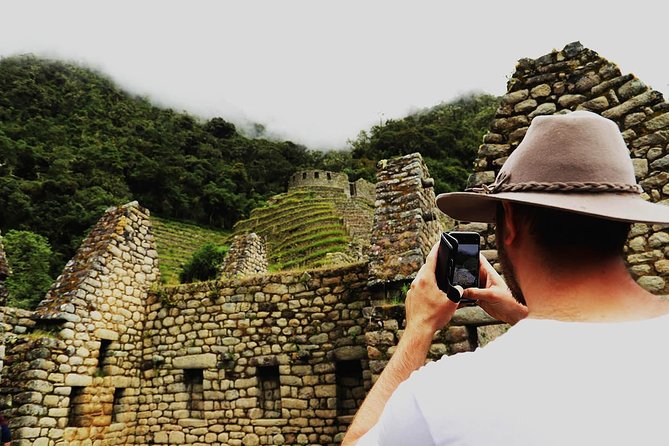
Reviewed · MACHU PICCHU TOURS
Inka Trail to Machu Picchu Classic 4-Day Adventure
Four days, one famous stone path. This classic Inca Trail trek gives you the full approach to Machu Picchu, not just a quick bus ride to the ruins. I like the small maximum group of 15, which should make questions and guide time easier, and I like that camping equipment, three meals a day, trail permits, and hotel pickup are built into the package. The tradeoff is serious: long hiking days, high passes, a 3:30 AM wake-up on the final morning, and a late return to Cusco.
At $990 per person, the trip costs more than a simple Machu Picchu day tour, but you are paying for four days on a restricted historic trail, cooks, porters, campsites, transport, entrance fees, and a private guided visit. The biggest thing to confirm before paying is exactly what is included for your date, since the entrance fee is stated as included for bookings made two months ahead, with the operator asking you to check.
In This Review
- Key details before you reserve
- What the $990 price really covers
- The 4:30 AM start and the road to Km 82
- Dead Woman’s Pass on the 10-hour second day
- Cloud forest ruins on the most scenic trail day
- Reaching the Sun Gate before Machu Picchu
- Guides, coordination, and personal service
- Fitness, altitude, and what to pack
- Who should book this Inca Trail trip
- Should you book it?
- FAQ
- How long is the Inka Trail to Machu Picchu tour?
- What time is pickup from Cusco?
- Where can pickup be arranged?
- Is camping equipment included?
- Are meals included?
- Is the Inca Trail entrance included?
- Do I need my original passport?
- Is an extra porter included?
- How do I return to Cusco after Machu Picchu?
Key details before you reserve
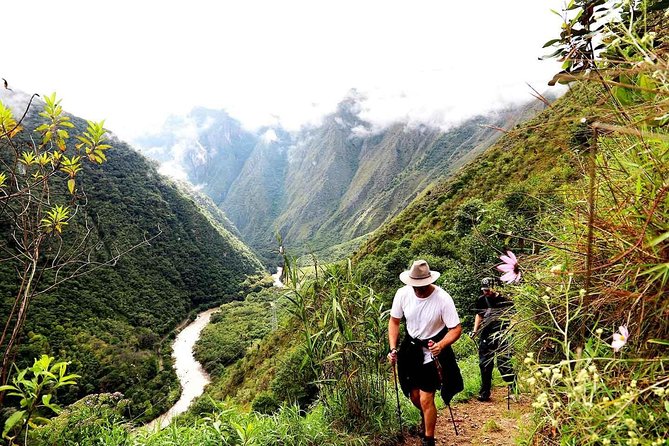
- The highest point is Dead Woman’s Pass: You reach 4,215 meters, or 13,829 feet, on the trek’s longest day.
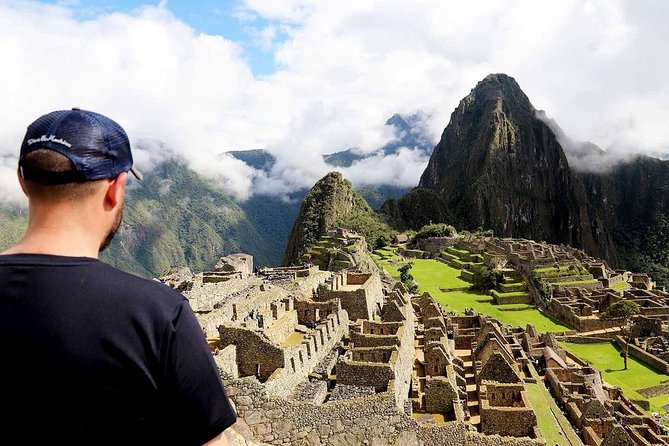
- Your first Machu Picchu view comes from the Sun Gate: You enter through Inti Punku around 6:30 AM before walking down to the ruins.
- Camping is included for three nights: Couples receive a private tent, while a sleeping bag and an extra porter for personal belongings cost extra.
- The group is capped at 15 people: That is small enough for more personal attention without the cost of a fully private expedition.
- Pickup depends on your Cusco-area lodging: The stated times range from 4:30 AM in Cusco to 6:30 AM in Ollantaytambo.
- The return is a long travel day: After Machu Picchu, you walk to Aguas Calientes, take the 9:30 PM train, and continue by vehicle toward Cusco.
What the $990 price really covers
The price makes the most sense if you want the full Inca Trail experience and prefer not to assemble the pieces yourself. A four-day permit-based trek requires more than a guide and a train ticket. This package includes three nights of camping, full camping equipment except for a sleeping bag, three breakfasts, three lunches, and three dinners.
It also includes pickup from your hotel, the Inca Trail entrance, Machu Picchu entrance, the train back from Aguas Calientes, and a two-hour private guided visit inside Machu Picchu. That combination removes many of the practical chores that can make a high-altitude trek stressful.
I would still ask for written confirmation of the exact inclusions before booking. The description says the Machu Picchu and Inca Trail entrance fees are included for bookings made two months in advance, then adds contact to check. Since permits are central to this trip, do not treat that detail as a minor footnote.
The price does not include a sleeping bag or an additional porter to carry your personal items. You will need to manage your own daypack unless you arrange that extra porter. The provided camping gear helps, but you should still ask what personal weight limit applies and what equipment is supplied.
The tour is usually booked about 59 days ahead. That is a useful planning clue. If your dates are fixed, do not wait until the last minute, especially since the operator ties permit inclusion to booking timing.
More Machu Picchu trips:
- Classic Inca Trail Trek 4D/3N to Machu Picchu (Group Service)
★ 5.0 · 8,653 reviews - Machu Picchu: 4-Day Inca Trail Trek with Panoramic Train Ride
★ 5.0 · 4,568 reviews - Short Inca Trail to Machu Picchu 2D/1N
★ 5.0 · 3,007 reviews
The 4:30 AM start and the road to Km 82
Pickup is offered from Cusco, Urubamba, or Ollantaytambo. The stated schedule is 4:30 AM from Cusco, 5:30 AM from Urubamba, and 6:30 AM from Ollantaytambo. Another meeting note gives a Cusco pickup window of 5:30 to 6:00 AM, so you should confirm the precise time during the briefing.
You are asked to leave your hotel details at least 24 hours before departure and wait at reception. The drive goes through the Sacred Valley toward Km 82, the traditional starting point of the Inca Trail. The group expects to arrive around 7:00 AM, eat breakfast prepared by the cook, and pass the first checkpoint.
Bring your original passport. It is required to enter the Inca Trail, and a photocopy is not described as sufficient.
The first two hours are relatively gentle. That makes the opening a good chance to settle your pace, meet the guide team, and get used to walking with a pack. The first major site is Patallacta, an Inca checkpoint that once guarded the approach toward Machu Picchu.
From there, you continue for about two hours to lunch. After eating, you have another two and a half hours to Ayapata, at about 3,300 meters. The day ends around 5:00 PM, after roughly seven hours of hiking plus stops.
Two small communities sit along this final stretch. You might find snacks, energy drinks, batteries, or other basic supplies there, but do not count on these stops as your main supply plan. Carry the essentials from Cusco.
At camp, you can settle in, have a hot drink and snack, and eat dinner around 7:30 PM. This first day is not the hardest, but the early start and altitude still make a proper night’s rest important.
Dead Woman’s Pass on the 10-hour second day
Day two is the physical test. Porters wake you with hot tea, and the group starts early for the climb to Dead Woman’s Pass. The ascent takes about four hours, ending at 4,215 meters.
The name sounds dramatic because it is dramatic, at least for your legs. The trail rises steadily, and altitude can make an ordinary staircase feel like a personal argument. You should focus on a slow, steady pace rather than trying to match the strongest person in the group.
At the pass, the guide allows a short rest and time for mountain views. Then the trail drops for about an hour and a half into the Pacaymayu Valley, also called the Hidden River Valley. Lunch comes after the descent, with a chance to refill your water bottles.
The day is not finished after Dead Woman’s Pass. You climb again for about two hours toward a second pass. Along the route, Runcu Raccay provides a short Inca site visit, and large waterfalls can be seen across the valley.
After the second pass, you descend for about an hour to Sayacmarca. The site is described as an otherwise inaccessible village, and its position gives the stop real drama. The group pauses for a quick tour, then may watch the sun lower over the Vilcabamba mountain range.
It is another 20 minutes to Chaquicocha, the second campsite, at about 3,600 meters. The full day lasts around 10 hours. That number matters more than the distance. The climb, descent, second climb, site visits, and altitude add up.
If you still have energy after dinner, the guide can point out Inca constellations beneath the Southern Hemisphere sky. This is one of the quieter pleasures of the trip. There is no need to force it, though. Sleep is the better choice if your legs feel heavy.
Cloud forest ruins on the most scenic trail day
Day three begins around 6:30 AM. Compared with day two, the hiking is easier, but the route remains full of steps and downhill walking. The first two hours follow gradual inclines known as Inca flat, a welcome phrase for any tired hiker.
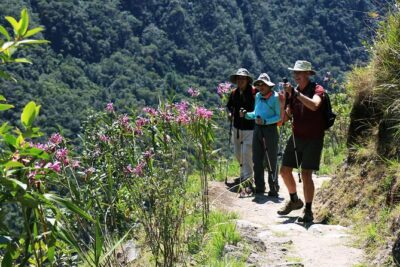
The trail enters the Cloud Forest, where the setting changes from high mountain terrain to thicker vegetation. You also get views toward Salkantay, the second-highest snow-capped mountain in the Sacred Valley, and across the Vilcabamba mountain range.
The trail climbs toward Phuyupatamarka at about 3,600 meters, on the eastern edge of the Andes. This is the point where the route begins to feel close to the Amazon side of the mountains. You may see Machu Picchu Mountain from here, although the ruins remain out of sight.
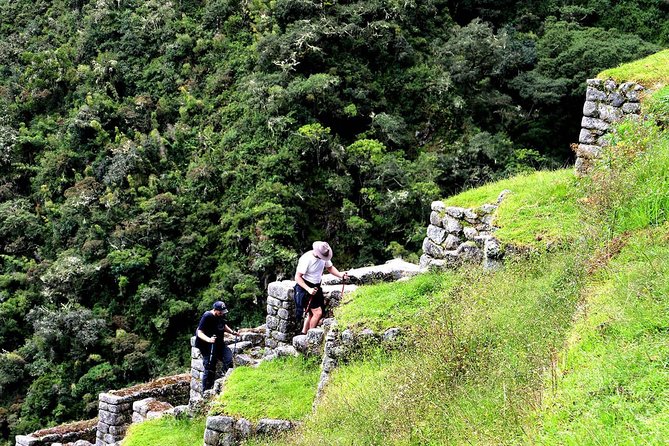
The next three hours are mostly downhill to the final campsite near Wiñay Wayna. Along the way, you visit Phuyupatamarka, known as the Town in the Clouds, and Intipata, the Terraces of the Sun. These sites are not filler stops. They help show how the Inca Trail worked as a network of settlements, terraces, stairs, and ceremonial places.
You arrive at camp around 1:00 PM, eat lunch, and have the afternoon to rest. That pause is well timed. The final morning starts before dawn, so a quiet afternoon gives you a chance to dry clothes, organize your pack, and save your legs.
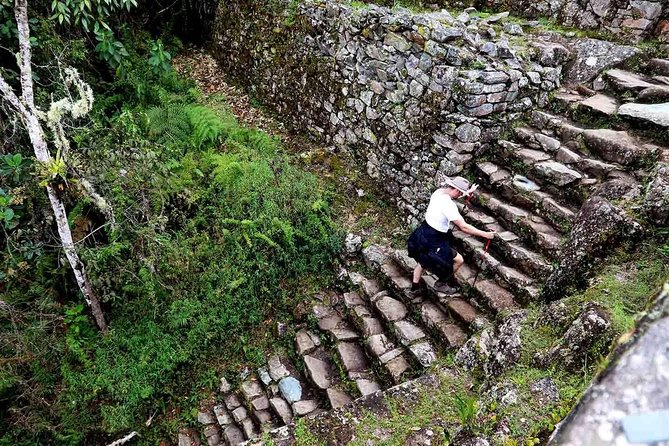
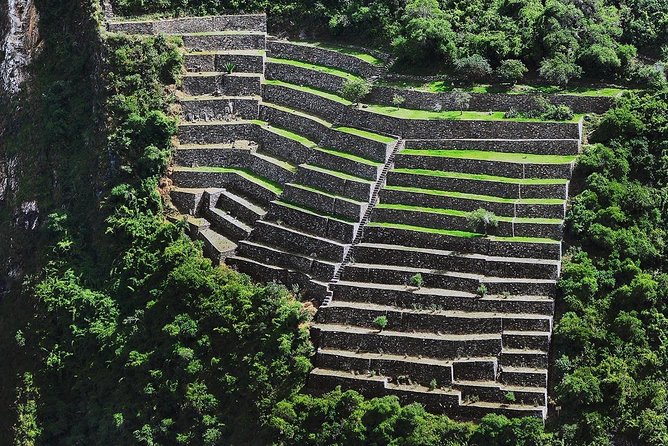
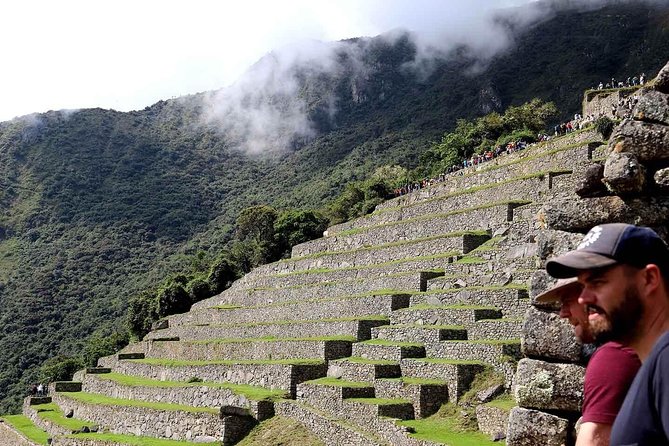
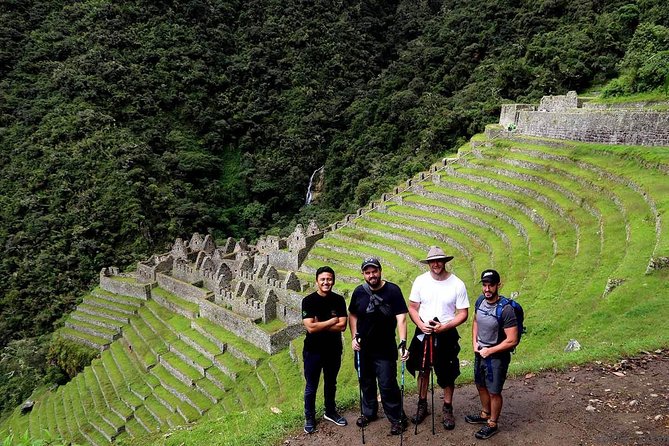
Around 4:30 PM, the guide leads a visit to Wiñay Wayna. You spend about an hour and a half there while the guide explains the site and connects it with the places seen during the trek. Wiñay Wayna is described as the finest Inca site on the route after Machu Picchu, and its terraces and setting make it a fitting preview of the final destination.
The evening includes a final meal and a ceremony introducing the porters and cooks again. That moment gives you a direct look at the team behind the trek. The porters and kitchen staff do much of the work that makes a camping trip feel organized, so this farewell is more than a pleasant custom.
Go to bed early. The next wake-up is at 3:30 AM.
More things to do in Cusco:
- Cusco: Rainbow Mountain and Red Valley Day Trip with Meals
★ 4.9 · 4,893 reviews - Salkantay Classic Trek 5 Days from Cusco
★ 5.0 · 4,062 reviews - 4-Day Salkantay Trek with Sky Camp Stay
★ 5.0 · 3,346 reviews - Excursion to Rainbow Mountain Full Day Optional Red Valley
★ 5.0 · 2,996 reviews
Reaching the Sun Gate before Machu Picchu
Breakfast is scheduled for 4:00 AM. You wait at the checkpoint until the gates open around 5:30 AM, then say goodbye to the porters and cook team before walking toward Inti Punku, the Sun Gate.
The route reaches the Sun Gate at about 6:30 AM. This is one of the strongest reasons to choose the classic trail. You do not simply arrive at Machu Picchu by bus and join the crowd at the entrance. You approach from above, with the mountains and ruins opening into view from Inti Punku.
From the Sun Gate, it takes about an hour to walk down to Machu Picchu. The views improve as you descend. The final checkpoint is reached around 7:40 AM, followed by a private guided visit lasting about two hours.
That guided time is valuable because the ruins can feel confusing without context. The guide can tie together the agricultural terraces, ceremonial areas, mountain setting, and earlier Inca sites visited on the trail. The tour data does not specify the exact route inside the citadel, so ask what your guide’s two-hour circuit includes.
After the guided visit, you have free time to explore on your own. You can also add Machu Picchu Mountain or Huayna Picchu Mountain if you plan ahead and obtain the needed admission. These are optional additions, not part of the stated base package.
The day is not over when you leave the ruins. You walk down to Aguas Calientes, reach the train station, and take the 9:30 PM train back. A driver waits outside the station to take you toward central Cusco. This makes for a very long final day, so do not schedule an important early activity the next morning.
Guides, coordination, and personal service
The strongest praise centers on the human side of the trip. Paulo is described as a very good guide, while Carlos is praised for coordination and for taking care of practical needs. Liz M is also singled out for making the climb feel easier while explaining Inca culture in a way that went beyond basic facts.
Those names matter because a four-day trek depends heavily on communication. You want clear instructions about wake-up times, checkpoints, meals, water, camp, and the next day’s route. The experience has also been praised for punctual schedules, detailed explanations, and keeping in touch from the first planning stage.
Junior is identified as a confident driver with a pleasant manner. That is useful on a trip with several transfers, especially the early ride to Km 82 and the late journey from Aguas Calientes.
Other praised team members include Nixon, Juan Pablo, and Ari. The overall pattern is clear: organization, guide support, and a sense of security are major strengths. Still, guide quality can vary by departure, so ask for the names of your assigned guide and coordinator during the pre-trek briefing.
The group limit of 15 is a practical middle ground. You get a social trek rather than a solitary one, but the group is not so large that every site explanation becomes a struggle to hear.
Fitness, altitude, and what to pack
The tour requires a moderate physical fitness level, but the schedule is demanding enough that I would treat that description with respect. Day two lasts about 10 hours and reaches 4,215 meters. Day four begins before dawn and includes the walk to the Sun Gate, the descent to Machu Picchu, the ruins visit, the walk to Aguas Calientes, and the late train.
You should be comfortable walking for several hours at a time and handling repeated climbs and descents. The trail includes high passes, stone steps, and altitude. The package supplies camping gear, but not a sleeping bag, and it does not include an extra porter for your personal things.
At minimum, plan around the details the operator gives you:
- Original passport for the trail checkpoint
- Sleeping bag
- Personal daypack
- Water bottle
- Personal clothing and rain protection
- Any batteries or small essentials you may need
The available information does not specify the full gear list, personal baggage allowance, or sleeping bag rental price. Ask before departure. A small question in Cusco is easier than a surprise at the trailhead.
Who should book this Inca Trail trip
I would choose this tour if you want the classic four-day route, enjoy historic sites along the way, and value having food, camps, permits, guides, and transfers arranged together. It is especially suitable if arriving at Machu Picchu through the Sun Gate feels more meaningful to you than taking the fastest route.
I would hesitate if you dislike early mornings, camping, long uphill walks, or uncertain comfort at altitude. The phrase moderate fitness should not be read as easy. You also need to accept a very late return to Cusco and the extra cost of a sleeping bag or personal porter.
The tour is offered in English. Pickup is available from accommodations in Cusco, Urubamba, and Ollantaytambo, but confirm your exact collection time because the stated times differ slightly between the trip schedule and the meeting instructions.
Free cancellation is available until 24 hours before the local start time for a full refund. Changes or cancellations inside that period are not accepted, and poor weather may lead to a different date or a full refund.
Should you book it?
Book this trip if your priority is the full Inca Trail story: Patallacta on day one, Dead Woman’s Pass on day two, Wiñay Wayna on day three, and Machu Picchu through the Sun Gate on day four.
At $990, the value comes from the complete package and the work of the trail team, not from luxury. Confirm the permit, sleeping bag, porter arrangements, pickup time, and return transport before committing. If those details suit you and you can handle the early starts, this is a well-organized way to reach Machu Picchu by the route that gives the destination its greatest sense of arrival.
FAQ
How long is the Inka Trail to Machu Picchu tour?
The tour lasts approximately four days and includes three nights of camping.
What time is pickup from Cusco?
The itinerary gives a Cusco pickup time of 4:30 AM, while the meeting instructions give a window of 5:30 to 6:00 AM. Confirm the exact time during the briefing and provide your hotel details at least 24 hours before departure.
Where can pickup be arranged?
Pickup is offered from accommodations in Cusco, Urubamba, and Ollantaytambo.
Is camping equipment included?
Yes. Full camping gear is included except for a sleeping bag. The camping arrangement is private for couples.
Are meals included?
Yes. The package includes three breakfasts, three lunches, and three dinners.
Is the Inca Trail entrance included?
The provided information says the Machu Picchu and Inca Trail entrance fees are included for bookings made two months in advance. You should contact Mega Expeditions to confirm the fees for your booking.
Do I need my original passport?
Yes. You must bring your original passport to enter the Inca Trail checkpoint.
Is an extra porter included?
No. An additional porter to carry your personal belongings is not included.
How do I return to Cusco after Machu Picchu?
After visiting Machu Picchu, you walk to Aguas Calientes and take the 9:30 PM train. A person waits outside the train station to take you onward to central Cusco.
Just added in Cusco
- Cusco Private Transportation for 2026★ 5.0 · 4 reviews
- Private Transfer from Airport to Hotel in the City of Cusco★ 4.0 · 5 reviews
- Best Cusco walking tour: dinner street food tasting★ 4.5 · 11 reviews
- Machu Picchu Day Trip With Panoramic Train from Cusco★ 5.0 · 10 reviews
- Private Tour to Pisac Market and Pisac Ruins★ 5.0 · 4 reviews
- Sacred Valley Private Tour from Cusco, Guide and Driver only★ 5.0 · 4 reviews
- Sacred Valley of the Incas Tour★ 5.0 · 12 reviews
- Private Tour of the Mountain of Colours by Quad★ 5.0 · 7 reviews
Machu Picchu Tours, compared.
Classic Inca Trail Trek 4D/3N to Machu Picchu (Group Service)
Read our review →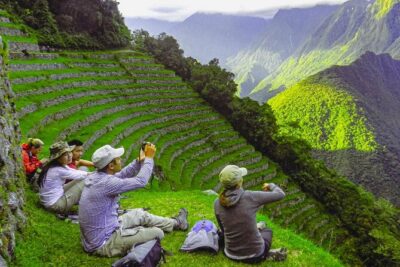
2-Day Inca Trail to Machu Picchu with Panoramic Train
Read our review →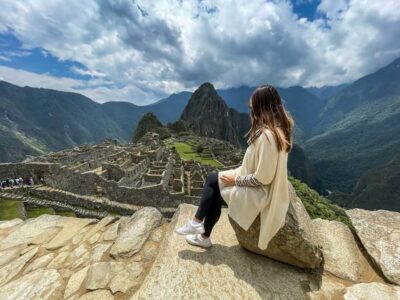
From Cusco: Full-Day Group Tour of Machu Picchu
Read our review →
2-Day Tour: Sacred Valley and Machu Picchu by Train
Read our review →
Machu Picchu: Full-Day Tour from Cusco with Optional Lunch
Read our review →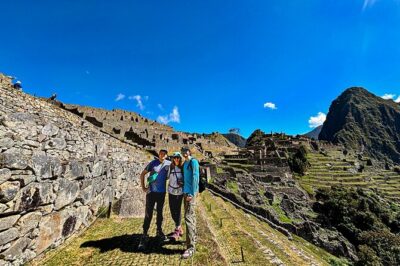
Machu Picchu Full Day from Cusco by Panoramic Train
Read our review →Browse the lists this tour appears in