
Reviewed · MACHU PICCHU TOURS
Lares Trek to Machu Picchu 4D/3N Including Hot Springs
Mountain passes lead to ancient ruins. This four-day route links Cusco, remote Andean villages, high glacial lakes, Lares hot springs, and Machu Picchu without the crowds and fixed camps of the Inca Trail. I especially like the quiet village stops and the way horses and mules carry up to 7 kilograms of your gear. The cook, guide, and transport also take much of the stress out of a demanding trip.
The main catch is the altitude. You reach the Pachacutec Pass at about 4,758 meters, or 15,610 feet, and walk up to seven hours on the toughest day. This is not a casual hike, and you need good fitness, sensible pacing, and time in Cusco to adjust.
In This Review
- What makes this Lares trek special
- The first morning, from Cusco to Cancha Cancha
- Day two and the 4,758-meter pass
- Lares hot springs and the journey to Aguas Calientes
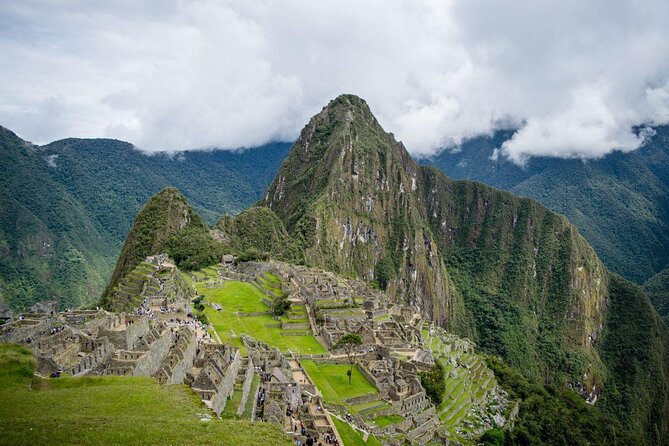
- Machu Picchu with time to explore
- Camping, meals, and the 7-kilogram limit
- What the $702.57 price really covers
- Who should choose this route
- Practical booking advice before you commit
- Should you book the Lares Trek?
- FAQ
- How long is the Lares Trek to Machu Picchu?
- What time does the tour start?
- How difficult is the trek?
- What is the highest point on the route?
- Do horses and mules carry my luggage?
- Can I access my duffel during the hiking day?
- Are the hot springs included?
- Is Huayna Picchu included?
- What meals are included?
- What is the cancellation policy?
What makes this Lares trek special
- High-altitude Pachacutec Pass: Reach one of the route’s biggest viewpoints, with views toward Pachacutec Lake and the snowy peaks of Pitusiray.
- Remote Andean villages: Walk through Cancha Cancha and Quisuarani, where the route feels far removed from the usual Machu Picchu approach.
- Hot springs before Lares: Soak in open-air thermal pools on the third day. Bring a swimsuit.
- Small-group support: The maximum group size is eight, with a guide, cook, horseman, and mules.
- A practical Machu Picchu finish: Your final day includes transport to the ruins, a guided visit, free time, and trains back toward Cusco.
- Less weight on your back: Mules carry camping equipment, food, and up to 7 kilograms of your personal items.
The first morning, from Cusco to Cancha Cancha
Your day begins early, with pickup at 6 a.m. A private bus takes you from Cusco toward the Sacred Valley and the trail area near Huaran and Pumahuanca. The route description identifies Pumahuanca as the transport point and Huaran as the start of the walk, so confirm the exact morning meeting details during your briefing.
Once you meet the horseman, the walking begins beside the small Cancha Cancha River. The trail climbs gradually through the valley, with roughly four hours of walking before you reach Cancha Cancha at about 3,800 meters. The full walking time is listed as six hours.
Cancha Cancha is a small settlement, and that is the point. You are not passing through a polished resort town. The appeal lies in the quiet, the high valley, and the chance to see a more remote side of the Andes before Machu Picchu takes over the trip.
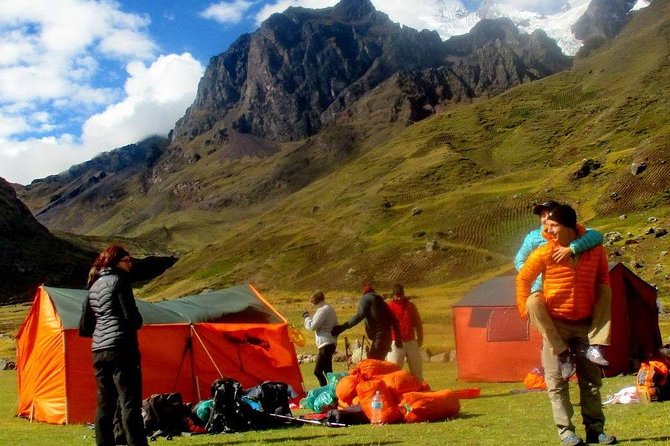
You sleep in a four-person igloo tent shared by two people. Foam mattresses and camping pillows are supplied. The cooking team prepares dinner, and afternoon tea with biscuits and popcorn is served when you reach camp. That little ritual matters after a long climb.
More Machu Picchu trips:
- Classic Inca Trail Trek 4D/3N to Machu Picchu (Group Service)
★ 5.0 · 8,653 reviews - Machu Picchu: 4-Day Inca Trail Trek with Panoramic Train Ride
★ 5.0 · 4,568 reviews - Short Inca Trail to Machu Picchu 2D/1N
★ 5.0 · 3,007 reviews
Day two and the 4,758-meter pass
The second day is the hardest and most rewarding section of the trek. You leave Cancha Cancha and continue east up the valley for about three hours. When the path levels out, the real climb begins, taking about two more hours to reach Pachacutec Pass.
The pass is listed at 4,758 meters, while the day’s total altitude is also described elsewhere as about 4,550 meters. Those figures do not match perfectly, so use them as approximate planning numbers. The useful point is clear: this is an extremely high day, and the thin air will matter more than a few hundred meters on paper.
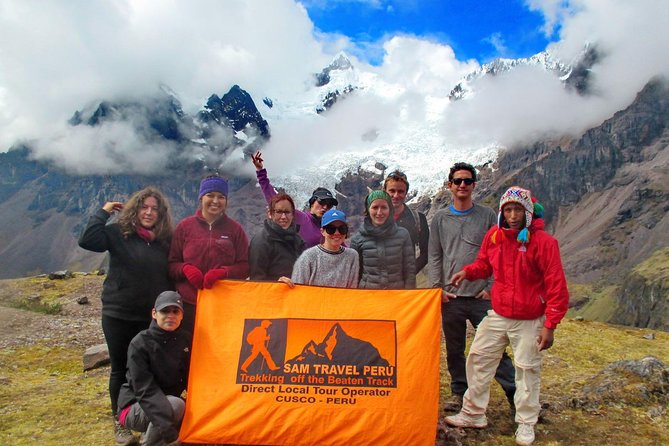
At the top, you can look toward Pachacutec Lake and the snow-covered peaks of Pitusiray. You then continue along a narrow ridge before dropping into a secluded hollow filled with glacial lakes. Lunch is served here, which gives you time to eat, drink, and recover before the downhill section.
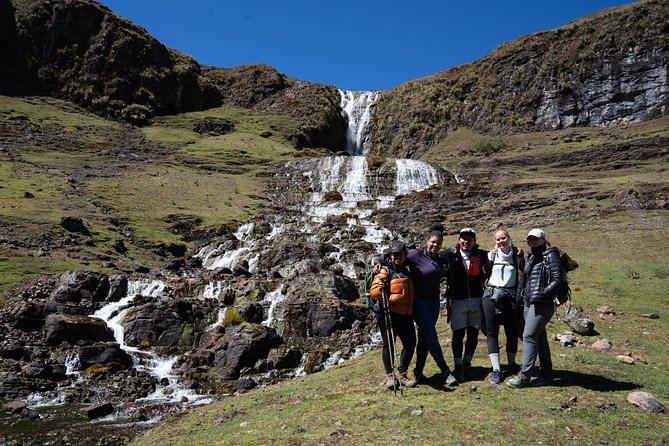
The route then passes waterfalls on the way to Quisuarani, at around 3,700 meters. The day includes about seven hours of walking. You camp beside a lake, so this is a day for warm layers, careful footwork, and a day pack that keeps water, sunscreen, snacks, and extra clothing close at hand.
I like the rhythm of this day: a hard climb, a major viewpoint, a quiet lunch stop, then a long descent through water and mountain scenery. The drawback is simple. If you have not adjusted to altitude, this day may feel punishing. The included emergency oxygen and a horse for emergency use offer useful support, but they are not a substitute for fitness or acclimatization.
Lares hot springs and the journey to Aguas Calientes
Day three changes the mood. You climb for about an hour, then follow the river valley downhill for roughly three and a half hours toward Lares. After two high nights, losing altitude feels welcome.
Before reaching town, you stop at open-air thermal springs. Pack your swimsuit where you can reach it, rather than burying it in the duffel carried by the mules. The soak is a practical pleasure, not just a photo stop. It gives tired legs a break before the transport-heavy part of the day.
In Lares, at about 3,100 meters, you have lunch at around 1 p.m. Then a bus takes you to Ollantaytambo, where you have time to rest and look around town. Dinner follows, and you board the Expedition train to Aguas Calientes.
This is a long transition day. You are no longer camping, but you are not yet relaxing at Machu Picchu. The benefit is that you reach Aguas Calientes the night before your ruin visit, avoiding a frantic morning journey from Cusco. You sleep in a private hotel room with a private bathroom, hot shower, Wi-Fi, and buffet breakfast.
That hotel night is one of the strongest practical features of the package. After two nights outdoors and a demanding pass, you get a bed and shower before the main attraction.
Machu Picchu with time to explore
On the fourth morning, breakfast comes early. You take the bus from Aguas Calientes up to Machu Picchu for a private guided tour of the ruins. A guide fluent in English, Spanish, and Quechua leads the visit.
The guided portion helps you make sense of the site instead of simply walking from viewpoint to viewpoint. One guide praised in the feedback, Adner, was noted for explaining Inca history and local cultures while handling different walking speeds well. Wilber was also singled out for clear, informed guiding. Guide quality matters here because Machu Picchu can otherwise become a blur of walls, terraces, and photo stops.
After the guided visit, you have free time inside the site. You can take more photos, walk toward the Sun Gate, or climb Huayna Picchu if you arrange a permit in advance. Huayna Picchu is limited to 400 people per day, and the climb is done independently after the guided tour, around 10 a.m.
Do not treat Huayna Picchu as an optional decision for the last minute. You must request it when booking the trek or Machu Picchu visit, and you should contact SAM Travel Peru at that point. If you do not secure a permit, you can use your free time to explore the site or head toward the Sun Gate instead.
In the afternoon, you return to Aguas Calientes and take the train to Ollantaytambo. A private bus then carries you back to Cusco. This final sequence involves several connections, so allow extra time after the tour if you have an onward flight or a fixed appointment.
A local strike once disrupted a train schedule, but the operator helped arrange a later departure. That kind of event is beyond the company’s control, but it shows why adding a spare evening in Cusco is wise.
More hikes and treks in Cusco:
- Salkantay Classic Trek 5 Days from Cusco
★ 5.0 · 4,062 reviews - 4-Day Salkantay Trek with Sky Camp Stay
★ 5.0 · 3,346 reviews - Salkantay Trek 5D/4N with Glass Cabins, Domes and Hobbit House
★ 5.0 · 2,488 reviews - 2-Day Inca Trail to Machu Picchu with Panoramic Train
★ 5.0 · 1,876 reviews
Camping, meals, and the 7-kilogram limit
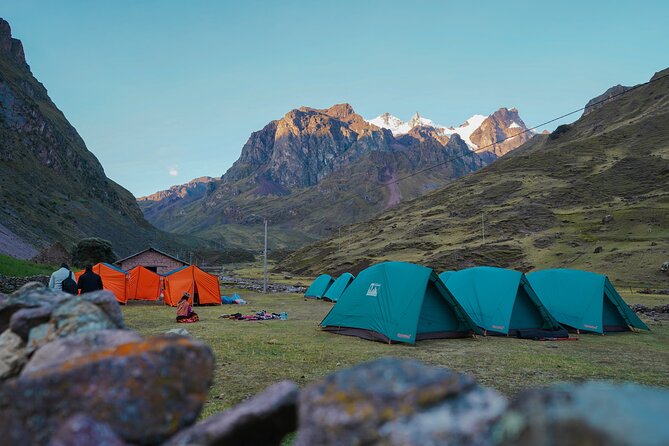
The support system makes this route easier than carrying a full expedition pack. Horses and mules transport food, tents, cooking equipment, and up to 7 kilograms of your personal gear. Your main luggage stays in Cusco, either at your hotel or with the operator.
At the pre-trek briefing, you receive a small duffel for three or four days of clothing and sleeping gear. The duffel cannot exceed 7 kilograms by Peruvian law. You will not have access to it during the day because the porters and animals move ahead of the group, so your day pack must hold everything you need while walking.
Pack the day bag carefully:
- Water bottle
- Sunscreen
- Camera
- Rain layer
- Warm layer
- Personal medication
- Energy snacks
- Swimsuit for the hot springs
A rain poncho is included, and boiled water is provided for bottle refills. Energy snacks are not included, so bring chocolate bars, dried fruit, or similar items.
The food is more substantial than many people expect from a tent kitchen. Breakfast may include omelettes or pancakes. Midmorning snacks include fruit or chocolate. Lunch is a two-course meal, often soup followed by meat with pasta or rice. At camp, afternoon tea comes with biscuits and popcorn, followed by a three-course dinner.
The food received especially strong praise, with the cook managing full meals in a tent. You should still tell the operator about dietary needs when booking. The final lunch and dinner on day four are not included, so budget for those separately.
What the $702.57 price really covers
At $702.57 per person, this is not the cheapest way to reach Machu Picchu. It is also not simply a three-night hike. The price includes private transfers from your hotel to the trailhead, the licensed guide, cook, camping equipment, mules, emergency horse access, trains in both directions, a hotel in Aguas Calientes, Machu Picchu transport, the guided ruin visit, meals, and the return transfer to Cusco.
Those pieces add up. Independent walkers still need to arrange permits or site access, trains, buses, accommodation, food, luggage storage, and transport between scattered points. Here, one operator handles the full chain.
The value is strongest if you want a small group and do not want to carry camping gear. The maximum group size is eight, which is small enough for the guide to monitor different walking speeds. One especially positive account praised the guide for managing a group with mixed abilities.
The price feels less attractive if you already have your own gear, prefer to arrange every train and hotel yourself, or want a shorter high-altitude hike. Tips for the guide, chef, and horseman are not included, and you need to pay for energy snacks and your final meals.
Who should choose this route
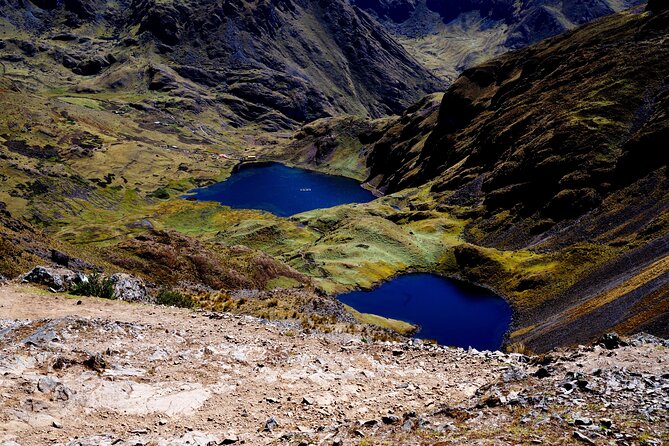
I would recommend this trek to you if you want Machu Picchu paired with a quieter mountain route. It suits people who care about villages, lakes, snow-covered peaks, and hot springs as much as the ruins themselves.
You should also be comfortable with:
- Six to seven hours of walking
- A highest pass near 4,758 meters
- Camping for two nights
- Early starts
- Long transport days
- Carrying a day pack
- Sleeping without access to your duffel during the day
This is not the right pick if you want a relaxed sightseeing holiday or dislike steep climbs. The company requires a strong physical fitness level, and that requirement should be taken seriously.
The route also works well for first-time high-altitude trekkers who have prepared properly. One first visit to Peru included no previous high-altitude trekking experience, yet the support, transport, food, and pacing made the trip manageable. That does not remove the need to acclimatize, but it shows how much a good crew can help.
Practical booking advice before you commit
Book Huayna Picchu at the same time as the trek if that climb matters to you. Confirm dietary requirements during booking, and ask where your Cusco luggage will be stored.
The tour requires a minimum number of participants and good weather. If the operator cancels for either reason, you receive another date or experience, or a full refund. For your own cancellation, a full refund requires cancellation at least six full days before the start time. A cancellation two to six days ahead receives 50 percent, while cancellation less than two full days before the start receives no refund.
The booking confirmation can take up to 48 hours and depends on availability. Since the morning starts at 6 a.m., keep the first day simple and make sure you know the pickup arrangement before bedtime.
Should you book the Lares Trek?
Book it if you want a well-supported route that feels more remote than the classic approach to Machu Picchu. The combination of high mountain scenery, village life, hot springs, strong camp meals, a private room in Aguas Calientes, and a guided visit to the ruins gives you a lot for the price.
Skip it if your fitness is uncertain, you are not ready for a pass above 4,700 meters, or you need a calm, flexible schedule. For the right walker, the Lares route offers a fine balance: demanding days in the mountains, then enough practical support to arrive at Machu Picchu with energy left for the main event.
FAQ
How long is the Lares Trek to Machu Picchu?
The experience lasts four days and three nights, including two nights camping, one hotel night in Aguas Calientes, and the Machu Picchu visit on day four.
What time does the tour start?
Pickup begins at 6 a.m. on the first day.
How difficult is the trek?
You should have a strong physical fitness level. Walking takes about six hours on day one and seven hours on day two, with a high pass listed at approximately 4,758 meters.
What is the highest point on the route?
The highest pass is Pachacutec Pass, listed at about 4,758 meters. The itinerary also gives a total day altitude of around 4,550 meters, so treat the figures as approximate.
Do horses and mules carry my luggage?
Yes. They carry food, camping equipment, and up to 7 kilograms of your personal items, such as clothing and a sleeping bag.
Can I access my duffel during the hiking day?
No. The porters and animals travel ahead, so you should carry daytime necessities in your own day pack.
Are the hot springs included?
Yes. The route stops at open-air thermal springs before reaching Lares on day three. You need to bring a swimsuit.
Is Huayna Picchu included?
The guided Machu Picchu visit is included, but a Huayna Picchu climb must be booked in advance. Only 400 people can hike it each day, and you climb independently after the tour around 10 a.m.
What meals are included?
Breakfast is included four times, lunch three times, and dinner three times. The final lunch and dinner on day four are not included.
What is the cancellation policy?
Cancel at least six full days before the start for a full refund. Cancellation two to six full days ahead receives a 50 percent refund, while cancellation less than two full days ahead is nonrefundable. The operator may offer a new date or a full refund if poor weather or insufficient numbers cause cancellation.
Just added in Cusco
- Cusco Private Transportation for 2026★ 5.0 · 4 reviews
- Private Transfer from Airport to Hotel in the City of Cusco★ 4.0 · 5 reviews
- Best Cusco walking tour: dinner street food tasting★ 4.5 · 11 reviews
- Private Tour to Pisac Market and Pisac Ruins★ 5.0 · 4 reviews
- Machu Picchu Day Trip With Panoramic Train from Cusco★ 5.0 · 10 reviews
- Private Tour of the Mountain of Colours by Quad★ 5.0 · 7 reviews
- Sacred Valley Private Tour from Cusco, Guide and Driver only★ 5.0 · 4 reviews
- Sacred Valley of the Incas Tour★ 5.0 · 12 reviews
Machu Picchu Tours, compared.
Classic Inca Trail Trek 4D/3N to Machu Picchu (Group Service)
Read our review →
2-Day Inca Trail to Machu Picchu with Panoramic Train
Read our review →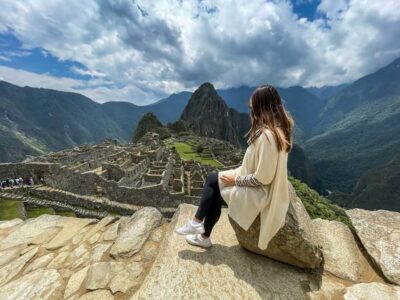
From Cusco: Full-Day Group Tour of Machu Picchu
Read our review →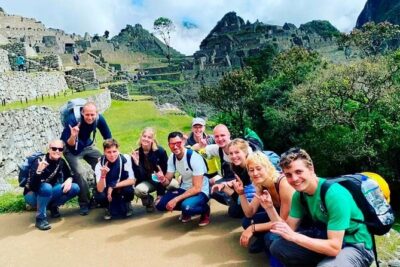
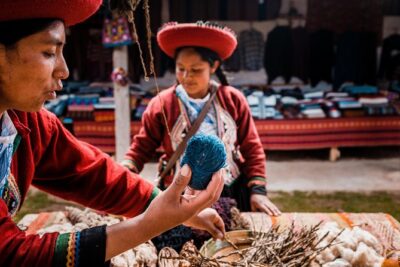
2-Day Tour: Sacred Valley and Machu Picchu by Train
Read our review →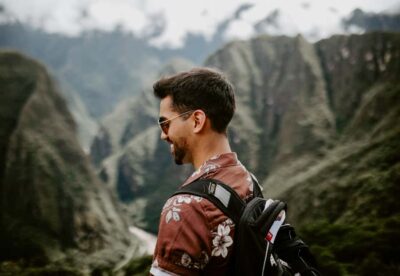
Machu Picchu: Full-Day Tour from Cusco with Optional Lunch
Read our review →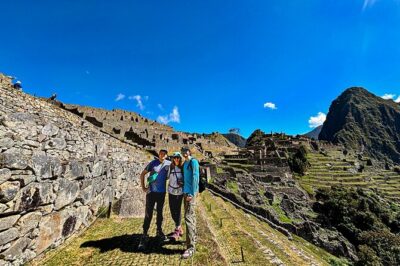
Machu Picchu Full Day from Cusco by Panoramic Train
Read our review →Browse the lists this tour appears in