
Reviewed · MACHU PICCHU TOURS
Luxury Inca Trail to Machu Picchu in 4 Days
The Inca Trail can be hard on the body. This private four-day trek softens the rough edges with walk-in tents, hot showers, daily massages, gourmet meals, personal porter support, and a private guide. You still climb Dead Woman’s Pass, sleep high in the Andes, and walk ancient stone paths to Machu Picchu. This is not a gentle sightseeing trip with a little hiking added.
I especially like the freedom to choose your pace and the close attention from a private guide. I also like the thoughtful comforts after a long day, including a massage tent, hot drinks, warm showers, and proper beds rather than a thin mat on the ground. The main drawback is simple: at $3,980 per person, this costs far more than a standard Inca Trail trip, and the trek remains physically demanding despite the luxury.
In This Review
- Five details that define this trek
- What $3,980 buys you on the Inca Trail
- Before dawn from Cusco to Km 82
- Day 1: Llactapata ruins and Wayllabamba camp
- Day 2: The climb to Dead Woman’s Pass
- Day 3: Runkuraqay, Sayacmarca, and the City in the Clouds
- Day 4: Intipata, Wiñay Wayna, and the Sun Gate
- Lunch at Sanctuary Lodge and the Vistadome return
- The guides, porters, and food team
- Who should book this private trek?
- Should you book the Luxury Inca Trail?
- FAQ
- How long is the Luxury Inca Trail to Machu Picchu?
- What time does the tour begin?
- Is this a private tour?
- How difficult is the trek?
- What sleeping arrangements are included?
- Are showers available during the trek?
- Is a porter included?
- Are meals included?
- Does the tour enter Machu Picchu more than once?
- Are Huayna Picchu or Machu Picchu Mountain tickets included?
- What train returns to Ollantaytambo?
- Can vegetarian or vegan meals be arranged?
Five details that define this trek
- A private four-day route: Your group sets the pace, with no strangers determining when you stop or start.
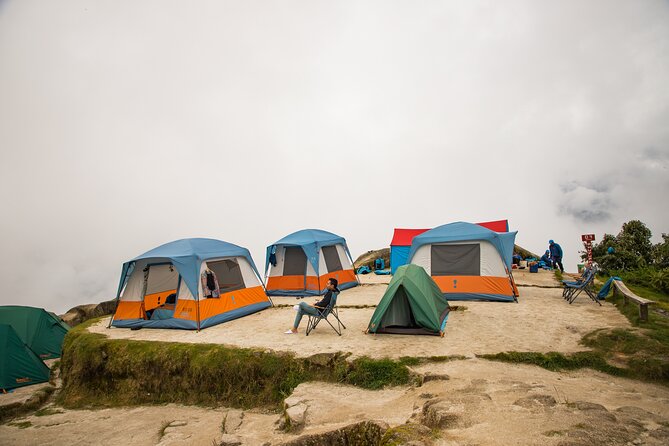
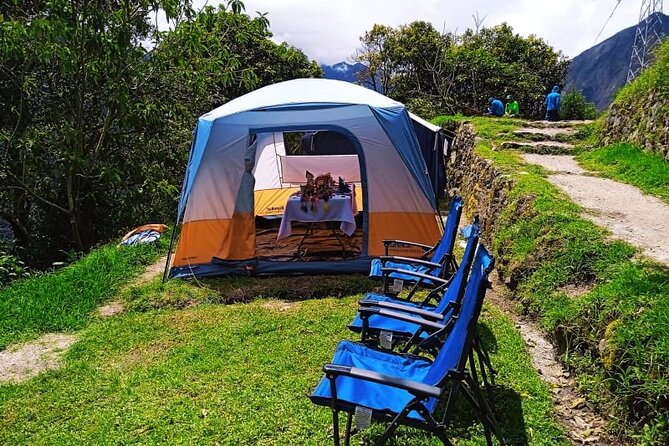
- Luxury at remote camps: Walk-in tents include queen or twin cots, bedding, towels, toiletries, hot showers, and private toilet tents.
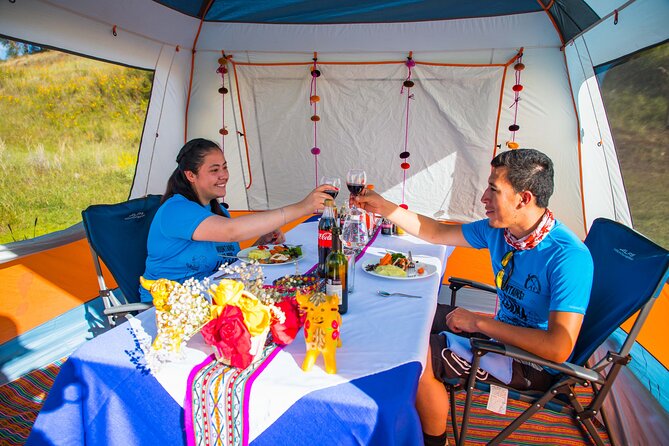
- Food worthy of the setting: Four breakfasts and lunches, three dinners, snacks, hot drinks, and premium refreshments are included.
- A serious mountain day: Dead Woman’s Pass is the highest point, and reaching it requires a strong level of fitness.
- Two Machu Picchu entries: You approach through the Sun Gate, then enter the citadel again for a guided visit on Circuit 2.
- A polished finish: Lunch at Sanctuary Lodge is followed by the Vistadome Observatory Train to Ollantaytambo.
What $3,980 buys you on the Inca Trail
The price makes sense only if you understand how much support goes into this trip. You are not simply paying for a guide and a tent. A full camp must move along the trail, including dining and kitchen tents, bedding, showers, toilets, food, drinks, and massage equipment.
Your personal porter carries up to 10 kilograms, or 22 pounds, in a duffel bag. That lets you hike with a much lighter daypack. The support crew also handles the heavy work of moving the camp from one mountain site to the next. One couple described seeing a large porter team transport what felt like their entire temporary home. That is the less visible side of luxury camping in difficult terrain.
The included comforts are unusually specific. You receive queen or twin cots, inflatable pads, bedding, sleeping bags, towels, a bathrobe, toiletries, and hot showers. A massage tent operates each day, with therapists available after the walking is done. Premium drinks include soda, beer, champagne, pisco, and wine, although you should remember that alcohol can feel stronger at altitude.
The food is another major reason to consider the upgrade. Meals are prepared by a chef and served in a dining tent with tables and chairs. The team has produced cakes at high altitude, as well as traditional Peruvian meals and dishes adapted for dietary needs. Vegetarian and vegan meals are available if you request them when booking.
I would not choose this trip simply because I dislike camping. You are still sleeping in tents and using campsites along a remote trail. The luxury improves your recovery, but it does not turn the Andes into a hotel corridor.
More Machu Picchu trips:
- Classic Inca Trail Trek 4D/3N to Machu Picchu (Group Service)
★ 5.0 · 8,653 reviews - Machu Picchu: 4-Day Inca Trail Trek with Panoramic Train Ride
★ 5.0 · 4,568 reviews - Short Inca Trail to Machu Picchu 2D/1N
★ 5.0 · 3,007 reviews
Before dawn from Cusco to Km 82
The first morning begins with pickup at about 5:00 a.m. from your Cusco hotel. If you stay in the Sacred Valley, pickup is about two hours later. That difference matters, since a Sacred Valley base gives you a shorter start to an already early morning.
The drive crosses the Andean highlands toward Ollantaytambo. Breakfast is served at a local restaurant overlooking old stone houses and terraced slopes. This is a useful first stop. You can eat properly, look over the valley, and make sure your pack and clothing are ready before the real walking begins.
From Ollantaytambo, you continue to Km 82, the official starting checkpoint for the Inca Trail. The entry ticket is included, along with the required Inca Trail and Machu Picchu tickets. You must provide each person’s passport name, number, expiration date, and issuing country when booking, and you need to carry the same valid passport on departure day.
A private vehicle and private guide make this opening practical. You are not waiting for a large group to assemble, and your guide can explain what lies ahead. Still, the first day is not merely a warm-up. The combination of an early start, transport, and several hours of hiking can make it feel longer than the schedule suggests.
Day 1: Llactapata ruins and Wayllabamba camp
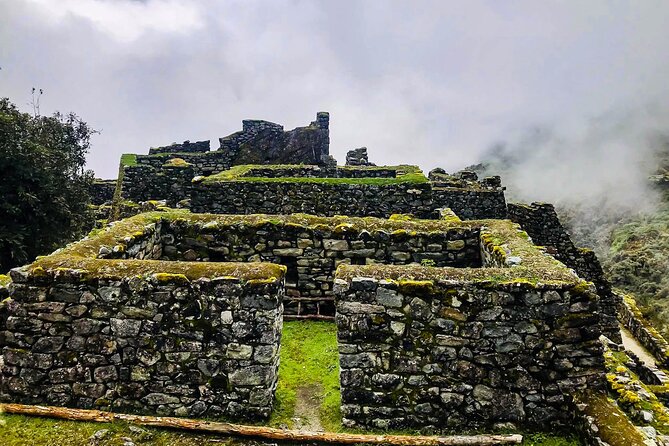
The first walk follows forested paths toward Llactapata and Huillca Raccay. These atmospheric ruins arrive at a good moment, since gourmet lunch is served nearby. You can begin seeing the Inca Trail as more than a route to one famous site. Ruins, river valleys, orchids, terraces, and changing vegetation are part of the day’s story.
The path continues alongside the Cusichaca River. Green hills and orchids add color to the walk, while the river gives the route a natural rhythm. The listed hiking time is about four hours, followed by the move into camp.
At Wayllabamba, the welcome is distinctly different from ordinary trekking. You may be offered a pisco sour or wine, then a hot shower and optional massage. Dinner is served in the dining tent, and the evening can end under the stars.
That sounds pampered, and it is. But the practical value is greater than the novelty. A hot shower and massage can help you start the next morning in better shape. Day 2 brings the trek’s hardest sustained climb, so this is where the service begins earning its keep.
Day 2: The climb to Dead Woman’s Pass
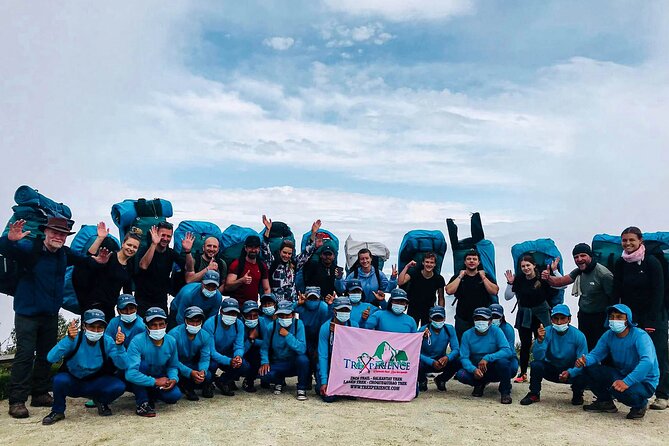
Day 2 is the test. You begin with Andean tea and a substantial breakfast, then climb through pockets of cloud forest. Polylepis trees, with their twisted trunks, grow along the route and can appear especially striking in mist.
Lunch is served at Llulluchapampa, an open plateau with views toward the surrounding peaks. This is a good place to eat slowly and take stock. The hardest section is still ahead, and rushing lunch will not help you reach the pass.
Dead Woman’s Pass is the highest point on the Inca Trail. The ascent is demanding, and the tour specifically requires a strong physical fitness level. You should expect steep, tiring walking and changing mountain conditions. Luxury food, a private guide, and a lighter pack help, but they cannot remove the climb.
The reward is a broad view of snow-capped mountains and high Andean ridges. Your private guide can set the pace to match your group, offer encouragement, and decide when a rest is sensible. That is one of the strongest reasons to pay for a private departure. You are not forced to match a fast group, and you do not have to apologize for taking photographs or catching your breath.
After the pass, you descend to the Pacaymayo Valley campsite. The day ends with hot showers, massages, and a hearty dinner. The descent may feel easier than the climb, but tired knees can make it a serious finish. Use trekking poles, which are provided, and keep your attention on the uneven stone path.
More hikes and treks in Cusco:
- Salkantay Classic Trek 5 Days from Cusco
★ 5.0 · 4,062 reviews - 4-Day Salkantay Trek with Sky Camp Stay
★ 5.0 · 3,346 reviews - Salkantay Trek 5D/4N with Glass Cabins, Domes and Hobbit House
★ 5.0 · 2,488 reviews - 2-Day Inca Trail to Machu Picchu with Panoramic Train
★ 5.0 · 1,876 reviews
Day 3: Runkuraqay, Sayacmarca, and the City in the Clouds
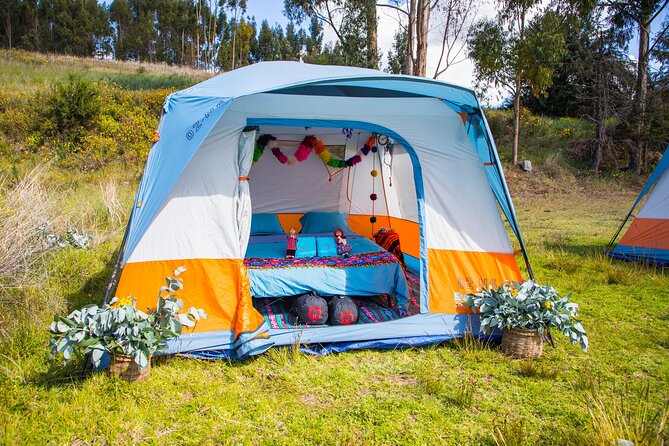
Day 3 begins at the Pacaymayo camp, with views of the Andes and nearby waterfalls at dawn. The morning hike takes about two hours toward Runkuraqay Pass, the trail’s second-highest ridge.
Before crossing the ridge, you visit the Runkuraqay archaeological site. The ruins are smaller and quieter than Machu Picchu, but that is part of their appeal. Their position beside the route helps you understand how the Inca Trail functioned as a network of ceremonial and administrative places, not just a scenic path.
The trail then drops for about two hours through fern-filled cloud forest to Sayacmarca. The circular ruins sit high above the surrounding valleys, beside a high-Andean lake. Mist, stone walls, and steep slopes give this part of the trek a more mysterious mood than the open views around Dead Woman’s Pass.
Lunch is served among the ancient stones before you continue through hanging valleys. The route combines archaeology with mountain scenery in a way that rewards a guide who can point out small details. Edi de Puma, Frank, Roger Calsin, Cesar, and other guides have been praised for explaining Inca culture, plants, birds, mountain names, and local traditions in a lively way. Guide quality matters here because the ruins are more meaningful when you understand what you are seeing.
The day ends at Phuyupatamarca, known as the City in the Clouds. The camp sits high above the valleys, and the sunset view reaches toward Machu Picchu Mountain, glaciers, and distant ridges. A welcome drink marks the arrival.
This is also the point where you may feel the cost of the trip most clearly. You are not just given a tent and dinner. You have a full camp, comfortable bedding, drinks, and a massage team waiting in a place that is difficult to supply. If that level of service is important to you, Day 3 makes the difference visible.
Day 4: Intipata, Wiñay Wayna, and the Sun Gate
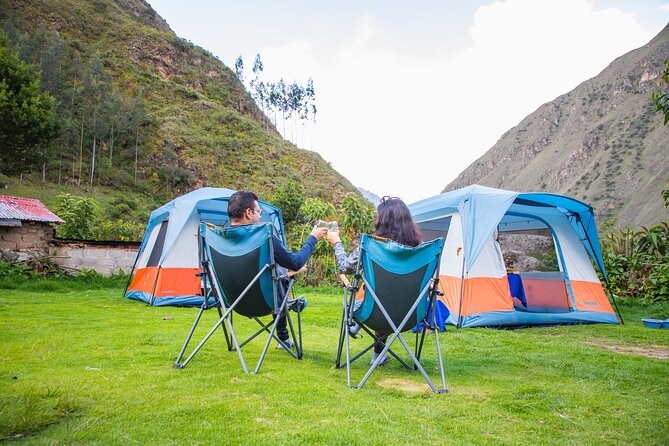
The final day starts at 5:00 a.m. with coffee and a mountain sunrise. After breakfast, you say goodbye to the chef, porters, and massage team. Those farewells may feel surprisingly personal. Several guides and porters are praised for their kindness and encouragement, and a private trek gives you more time to build that connection with the staff.
The route passes Intipata, a series of agricultural terraces with broad views across the Urubamba Valley. Your guide explains how the Incas shaped steep slopes for farming. It is a practical lesson in engineering, not just another photo stop.
Next comes Wiñay Wayna, one of the most graceful sites on the trail. The path enters cloud forest filled with orchids and moss-covered walls. Terraces and vaulted niches climb a steep hillside, creating a powerful preview of the stonework still waiting at Machu Picchu.
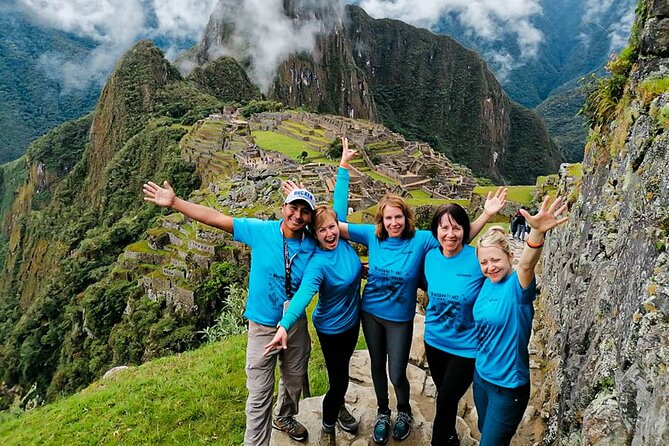
Then you reach the Sun Gate. This is your first panorama of Machu Picchu, framed by rugged Andean mountains. The timing is planned so that you can approach the citadel from the trail rather than simply arrive by bus. That approach gives the destination a stronger sense of arrival.
From the Sun Gate, the route descends gently to the main viewpoint using Circuit 1. You then enter Machu Picchu again through Circuit 2 for a guided visit through the plazas, temples, and sacred lookouts. The double entry is a real advantage. One visit gives you the classic first sight, while the second allows more time inside the citadel.
The arrangement also reduces a common problem: trying to understand Machu Picchu while worrying that every photograph must be taken immediately. Your guide can explain the site during the second entry, and you get two different perspectives on the approach and the ruins.
Lunch at Sanctuary Lodge and the Vistadome return
After the citadel visit, you have an unrushed lunch at Sanctuary Lodge, a Belmond hotel just outside the entrance. This is a polished ending to four demanding days. You do not need to search for food in Aguas Calientes while dusty, tired, and carrying a pack.
The tradeoff is that lunch at an exclusive hotel is part of the premium price. If you care more about keeping costs down than about a graceful finish, this is one of the easier extras to question. If you want the day to feel calm and well organized, it fits the trip.
After lunch, you take the bus down to Aguas Calientes and board the Vistadome Observatory Train to Ollantaytambo. The train has panoramic windows and an observatory car with live music. In Ollantaytambo, a private driver takes you back to your hotel.
The return plan is comfortable, but it is a long final day. You should not schedule an important evening commitment in Cusco unless you have a generous buffer. The package includes the last day’s breakfast and lunch, but not dinner. Dinner in Aguas Calientes is easy to arrange if you need it.
The guides, porters, and food team
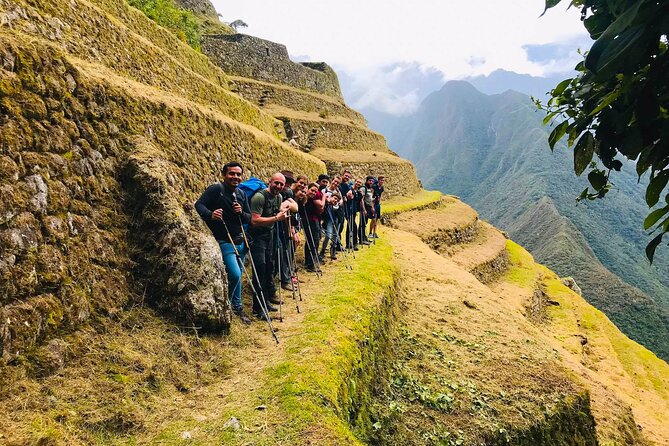
The strongest part of this experience is the people who make the difficult parts manageable. Guides such as Frank, David, Edi de Puma, Roger Calsin, Cesar, Wilbert, and others have been praised for patience, humor, clear explanations, and close attention to the group.
David reportedly kept bird calls and photographs on his phone so he could answer questions on the trail. Edi added flute music beneath the stars. Cesar pointed out orchids after learning that one member of his group cared about them. These small gestures show what a private guide can do: notice what interests you and shape the walk around it.
The porter team is equally important. Porters carry the equipment, build camp, and move the kitchen, dining area, bedding, and shower supplies. You should not mistake a light personal pack for an easy operation. The comfort exists because a large support crew works hard behind the scenes.
Meals receive especially strong praise. Chef Daniel, Alejandro, Lucio, Jaime, and Julio are each singled out for generous food, traditional Peruvian dishes, diet-friendly choices, and even cake baked at altitude. Food matters on a four-day trek. A good breakfast helps with the climbing, and a proper dinner can change your mood after a cold or wet afternoon.
The included Pachamama ceremony with an Andean shaman adds a cultural element to the trip. It is not a replacement for learning about local communities, but it gives the itinerary a moment of reflection and respect for the mountains.
Who should book this private trek?
I would recommend this trip to you if you want the Inca Trail itself, but you do not want to give up comfort, privacy, or personal service. It suits couples celebrating a major occasion, families who want their own pace, and experienced hikers who value good food and recovery more than a low price.
It also suits people who care about interpretation. The private guide can spend time on orchids, birds, Inca engineering, local traditions, or mountain names instead of delivering a fixed speech to a large group.
I would think twice if you are not fit for steep mountain walking. The trek includes Dead Woman’s Pass, high camps, long descents, early mornings, and unpredictable conditions. The tents are luxurious, but the trail remains demanding.
I would also compare the price with a standard Inca Trail departure before booking. You are paying for the staff, equipment, meals, porter capacity, hot showers, massages, premium drinks, private guiding, double Machu Picchu entry, Sanctuary Lodge lunch, and the Vistadome train. If you will use those comforts, the package offers clear value. If you mainly want to reach Machu Picchu, a simpler trek will cost less.
Booking requires manual confirmation, even though confirmation is normally sent within 24 hours depending on availability. The trip is non-refundable and cannot be changed for personal reasons, so you should be certain before paying. If poor weather cancels the trip, you are offered another date or a full refund. The same applies if the minimum number of participants is not met.
Should you book the Luxury Inca Trail?
Book it if you want the full Inca Trail experience with serious support. The private guide, lighter pack, gourmet cooking, hot showers, daily massages, and double entry to Machu Picchu are more than decorative extras. They make a difficult route easier to enjoy.
Skip it if the $3,980 price would bother you throughout the trip, or if you are not ready for demanding mountain walking. For the right person, this is a rare blend of ancient ruins, Andean scenery, personal guiding, and high-end camping. Just remember the key truth: luxury changes your nights and meals, not the mountains under your boots.
FAQ
How long is the Luxury Inca Trail to Machu Picchu?
The experience lasts approximately four days and includes three nights in luxury walk-in tents.
What time does the tour begin?
Pickup begins at 5:00 a.m. If you stay in the Sacred Valley, pickup is approximately two hours later.
Is this a private tour?
Yes. Only your group participates, and you have a private guide.
How difficult is the trek?
You need a strong physical fitness level. The route includes steep climbs, high-altitude camps, long walking days, and Dead Woman’s Pass, the highest point on the Inca Trail.
What sleeping arrangements are included?
The package includes luxury walk-in tents with queen or twin cots, inflatable pads, bedding, and sleeping bags.
Are showers available during the trek?
Yes. Hot showers, towels, bathrobes, toiletries, and private toilet tents are included.
Is a porter included?
Yes. A personal porter carries up to 10 kilograms, or 22 pounds, in a duffel bag. Trekking poles are also provided.
Are meals included?
Four breakfasts, four lunches, three dinners, daily snacks, hot drinks, and premium refreshments are included. Dinner on the final day is not included.
Does the tour enter Machu Picchu more than once?
Yes. You first approach through the Sun Gate and follow Circuit 1 to the viewpoint. You then enter again through Circuit 2 for a guided visit inside the citadel.
Are Huayna Picchu or Machu Picchu Mountain tickets included?
No. Tickets for Machu Picchu Mountain or Huayna Picchu are optional and must be booked ahead of time.
What train returns to Ollantaytambo?
The return journey uses the Vistadome Observatory Train from Aguas Calientes to Ollantaytambo. The train includes panoramic windows and an observatory car with live music.
Can vegetarian or vegan meals be arranged?
Yes. Vegetarian and vegan meals are available, but you should provide dietary information when booking.
Just added in Cusco
- Private Transfer from Airport to Hotel in the City of Cusco★ 4.0 · 5 reviews
- Best Cusco walking tour: dinner street food tasting★ 4.5 · 11 reviews
- Cusco Private Transportation for 2026★ 5.0 · 4 reviews
- Private Tour to Pisac Market and Pisac Ruins★ 5.0 · 4 reviews
- Machu Picchu Day Trip With Panoramic Train from Cusco★ 5.0 · 10 reviews
- Sacred Valley Private Tour from Cusco, Guide and Driver only★ 5.0 · 4 reviews
- Sacred Valley of the Incas Tour★ 5.0 · 12 reviews
- Private Tour of the Mountain of Colours by Quad★ 5.0 · 7 reviews
Machu Picchu Tours, compared.
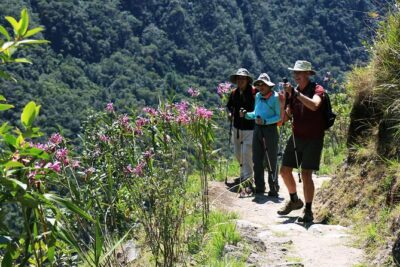
Classic Inca Trail Trek 4D/3N to Machu Picchu (Group Service)
Read our review →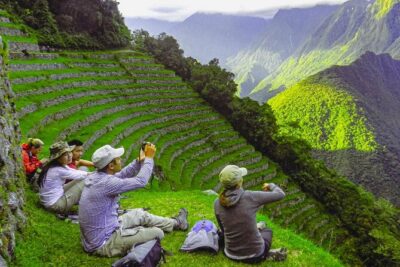
2-Day Inca Trail to Machu Picchu with Panoramic Train
Read our review →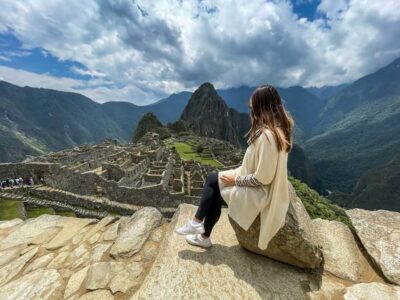
From Cusco: Full-Day Group Tour of Machu Picchu
Read our review →
2-Day Tour: Sacred Valley and Machu Picchu by Train
Read our review →
Machu Picchu: Full-Day Tour from Cusco with Optional Lunch
Read our review →
Machu Picchu Full Day from Cusco by Panoramic Train
Read our review →Browse the lists this tour appears in