
Reviewed · SACRED VALLEY TOURS
Maras, Moray and Chinchero Private Day Trip from Cusco
Ancient farming, salt, and weaving meet here. This private Cusco day trip packs three very different Andean sights into one manageable outing, with hotel pickup, private transport, and an English-speaking guide included. I especially like the flexible private format and the chance to see both major archaeological sites and living local traditions.
The most memorable parts are Moray’s giant circular terraces and the bright salt pools at Maras. Chinchero adds the human side of the day, with its Inca walls, colonial church, and textile demonstration. The main drawback is cost: at $104 per person, with a minimum of two people, this is pricier than a shared bus tour, and entrance fees and meals are extra.
In This Review
- Key points to know before booking
- Why this makes a good second day in Cusco
- Moray: Inca farming in a giant stone bowl
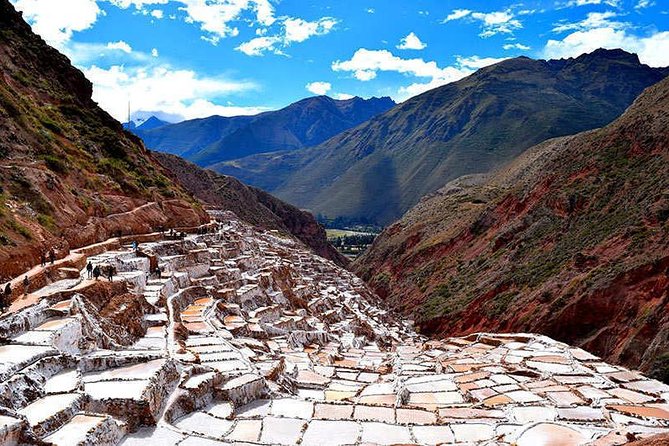
- Maras: Salt pools on the mountainside
- Chinchero: Inca walls, a colonial church, and living craft
- The private format is the real selling point
- Altitude, weather, and walking advice
- Who should book this day trip?
- Should you book the Maras, Moray, and Chinchero tour?
- FAQ
- What is included in the Maras, Moray, and Chinchero tour?
- How long does the day trip last?
- What time does the tour begin?
- Are entrance fees included?
- Are food and drinks included?
- How many people are required to book?
- What should I bring?
Key points to know before booking
- Three very different stops: Moray explains Inca farming, Maras shows traditional salt production, and Chinchero connects Inca, Spanish, and modern Andean culture.
- Private transport from Cusco: Hotel pickup and drop-off save you the trouble of arranging taxis and negotiating rural roads.
- Flexible timing: Past departures have adjusted the start time and length of stops to suit the group, a useful advantage after a demanding Machu Picchu day.
- High-altitude sightseeing: Moray sits at about 11,482 feet, Maras at 11,090 feet, and Chinchero at 12,343 feet, so take the pace seriously.
- Textiles add real local context: The weaving visit shows how wool is dyed, spun, and worked into patterns with cultural meaning.
- Budget for extras: Archaeological entrance fees, food, and drinks are not included in the $104 price.
Why this makes a good second day in Cusco
Cusco sightseeing can become a parade of churches, stone walls, and early alarms. This outing gives you something different: broad mountain views, open farmland, a working salt site, and a small Andean town.
The day normally begins with pickup around 8 a.m. That is early enough to make good use of the day but gentler than the pre-dawn start required for some major Peru excursions. One past group moved its start to 9:30 a.m. and still returned to Cusco around 4:30 p.m., showing how the private setup can help you shape the day.
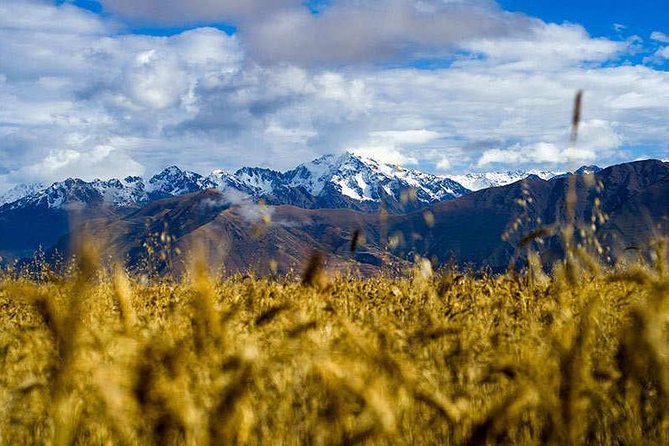
The drive takes about 1 hour and 20 minutes to reach the first area. Along the way, you might see snow-capped peaks, wheat fields, traditional villages, and farmland. The drive is not just dead time. It gives your guide room to explain how people live and work in the highlands today.
You should expect curving roads and some rougher sections. One account describes dirt roads on the way to Moray and narrow, winding access roads near Maras. Private transport helps because your driver can handle the route while you watch the scenery, but this is not a smooth city transfer.
The full outing is advertised at about seven to eight hours. Actual timing can be shorter or longer depending on road conditions, interest at each site, lunch plans, and the pace of your group. That flexibility is one of the strongest reasons to choose a private departure.
More Day Trips in Cusco
- Cusco: Rainbow Mountain and Red Valley Day Trip with Meals
★ 4.9 · 4,893 reviews - Cusco: #1 Rainbow Mountain & Red Valley Day Trip with Meals
★ 4.8 · 2,342 reviews - Cusco: Rainbow Mountain & Red Valley Premium Day Trip with Meals
★ 5.0 · 2,249 reviews
Moray: Inca farming in a giant stone bowl
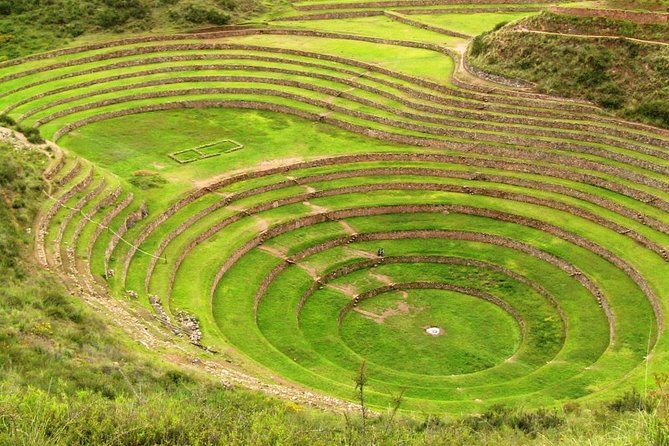
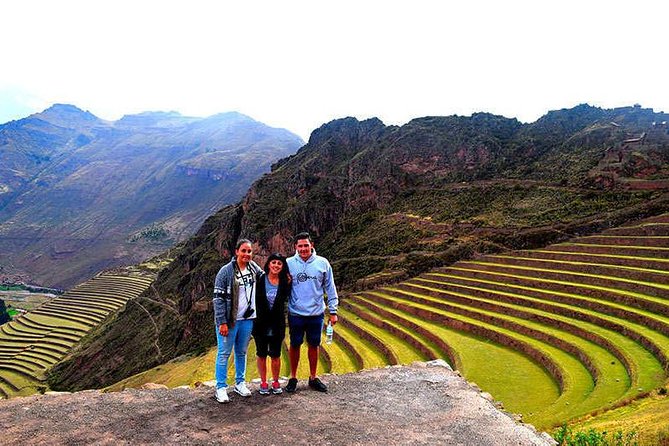
Moray is the day’s most visually unusual stop. Three large, circular terrace systems sink into the earth, creating the appearance of an ancient amphitheater. The lower terraces are surrounded by curved stone walls that become smaller as they descend.
The site sits at about 3,500 meters, or 11,482 feet. At this altitude, even a gentle walk can feel harder than expected, especially if you have just arrived in Cusco. I would take the first few minutes slowly and keep water close.
The usual visit lasts about two hours. That gives you time to view the terraces from above, walk down for a closer look, and climb back up without turning the stop into a race. A guide can help you understand why the terraces were built and how the different levels created varied growing conditions.
Moray is often described as an Inca agricultural testing site, where crops could be assessed at different heights and in different conditions. The exact purpose is still discussed, so a good explanation should distinguish between established facts and interpretation. The important point is clear: the engineering reflects close attention to soil, water, sun, temperature, and crop growth.
I like Moray because it makes Inca achievement feel practical rather than distant. Instead of looking at a royal residence or military wall, you are looking at a place tied to food and survival. It offers a useful reminder that the Inca state depended on farming systems as much as impressive stonework.
The site can be more rewarding with a guide than on your own. Without context, you may see attractive circles cut into a hillside. With an explanation, you can read the terraces as a planned agricultural system and connect them to the crops still grown in the region.
You may walk down steps or uneven paths for better views. The climb back up, combined with the altitude, is the main physical challenge at this stop. Bring a sun hat, sunscreen, water, and a waterproof jacket, since Andean weather can change quickly.
Maras: Salt pools on the mountainside
From Moray, the salt mines are only about two miles away, or 3.2 kilometers, but the route drops downhill and may take longer than the distance suggests. Maras sits at roughly 3,380 meters, or 11,090 feet.
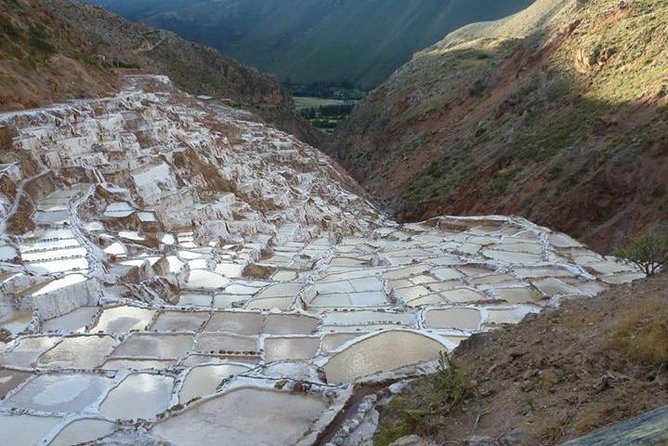
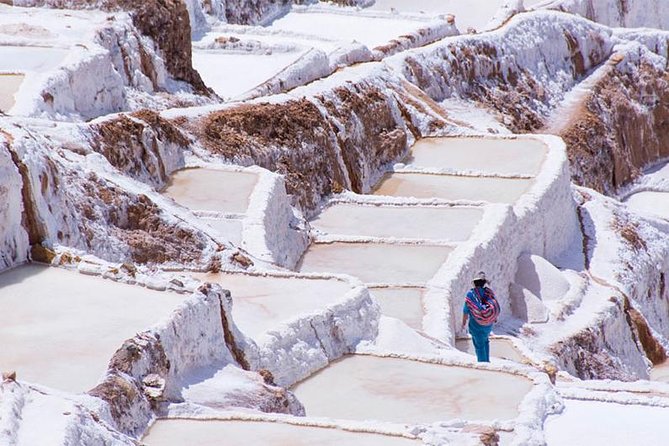
The salt works spread across the mountainside in more than 3,000 small pools. From the viewing areas, the pools form a bright patchwork of white and tan against the darker Andean slopes. The appearance changes with sunlight, season, and the amount of salt in each pool.
The system is simple but clever. Mineral-rich spring water flows into individual pools. Sunlight evaporates the water, leaving salt crystals behind. Local families continue to harvest and prepare the salt using methods passed down over many generations.
That continued use gives Maras its special value. You are not looking at an abandoned archaeological site that only tells you about the past. You are seeing an old production system that remains part of the local economy.
The visit is planned for about two hours, though the exact amount of time you spend walking can vary. A small chapel is located along the path toward the salt flats, and an overlook provides a wider view of the terraces. The paths and access roads can be narrow and uneven, so comfortable shoes are sensible.
Maras is highly photogenic, but do not reduce it to a photo stop. Ask your guide how the pools are filled, how the salt is collected, and who benefits from production. The value of the visit comes from understanding the work behind the view.
A practical note: salt can be sold at the site, but no shopping purchase is included in the tour price. You should also confirm the current entrance arrangement and fee when booking, since archaeological admissions are separate from the tour.
Chinchero: Inca walls, a colonial church, and living craft
Chinchero is the highest stop, at about 3,762 meters, or 12,343 feet. It is a village with a strong local identity, and for many people it becomes the most personal part of the day.
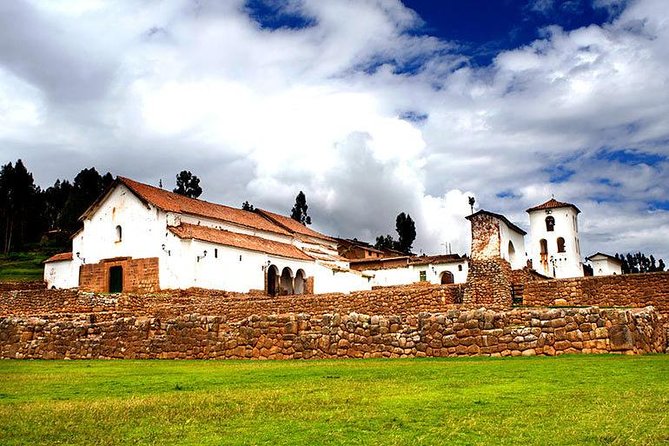
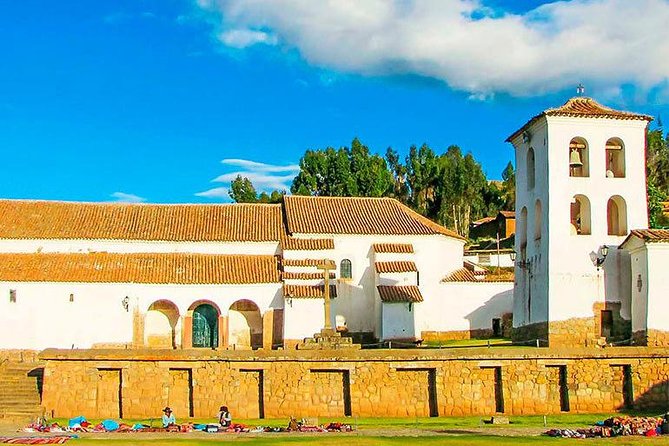
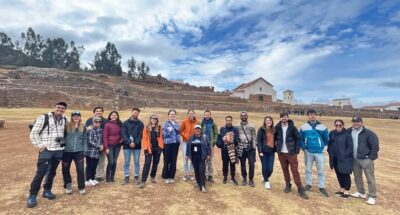
The main square is framed by well-preserved Inca walls. Your guide can point out differences between Inca stonework and later Spanish construction, helping you recognize the tight-fitting stones and careful design used by the earlier builders.
The colonial church adds another layer. It contains colorful murals and detailed artwork, showing how Spanish Catholic traditions were placed into a setting that already held deep Andean meaning. The larger story here is not simply Spanish architecture replacing Inca architecture. It is the complicated mixing of belief systems, buildings, art, and community life.
Chinchero is also associated with local markets and farming. One past guide, Wilfredo, came from the village and knew many people there, giving his group a more personal connection to the town. You cannot count on a particular guide or encounter, but it shows what a local guide can add beyond a standard script.
The final cultural stop is an Andean textile demonstration. You can see how wool is hand-spun and colored with natural dyes before it is woven into detailed designs. The patterns carry meaning and local identity rather than serving only as decoration.
I consider this part important because it keeps the day from becoming a tour of dead stones. You get to see a craft that is still practiced and sold, and you may find a textile worth bringing home. Take your time, ask how the dyes are made, and decide carefully before buying. The tour does not include purchases.
Chinchero receives about one hour in the stated plan, but a private group may spend more or less time depending on interest. If you care most about local culture, tell your guide early. The private format makes it easier to give Chinchero the attention it deserves.
More Sacred Valley trips:
- From Cusco: Moray, Maras Salt Mines & Chinchero Weavers Tour
★ 4.8 · 1,925 reviews - 2-Day Tour: Sacred Valley and Machu Picchu by Train
★ 5.0 · 1,127 reviews - Cusco: Sacred Valley, Pisac, Ollantaytambo, Salt Mines Moray
★ 4.6 · 1,058 reviews - Cusco:Chinchero,Moray & Salt Mines drop-off in Ollantaytambo
★ 4.8 · 793 reviews
The private format is the real selling point
The price of $104 per person looks reasonable for a full private day, but only if you value control and personal guiding. A minimum of two people is required, so a solo visitor cannot book this at the stated per-person rate. For a couple, the price buys private transportation, hotel pickup and return, and an English-speaking guide.
There is no shared bus filling every seat or fixed group schedule to follow. You can ask for more time at Moray, shorten a stop, adjust the start, or pause for a local meal if the guide and route allow it. That kind of control proved useful for people wanting a slower day after strenuous hiking and major sightseeing.
Food and drinks are not included. One past outing added lunch at a small restaurant in Maras, but you should treat that as a possible guide-led recommendation, not a guaranteed feature. Ask about meal plans before departure and carry water and snacks.
Entrance fees are also extra. This matters because the headline price is not the final cost of the day. Before you commit, ask exactly which site fees apply, how they should be paid, and if you need cash.
The tour receives a 4.9 out of 5 rating from 131 reviews, with 99 percent of customers recommending it. The strongest praise centers on guide quality, flexibility, clear explanations, and the feeling that the day is more personal than a standard group outing.
Several guides have received specific praise, including Herlin, Freddy, Percy, Wilfredo, Edgar, and Franco. Past groups describe guides who explained Inca beliefs, Peruvian culture, agriculture, Spanish colonization, and Quechua traditions in clear English. Guide assignments can vary, so book this for the private format and local interpretation rather than for a guaranteed individual guide.
Altitude, weather, and walking advice
You will spend the day at high elevations. Chinchero is above 12,000 feet, and Moray and Maras are also high enough for thin air to affect your pace. Most people can take part, but you should not treat the outing as effortless sightseeing.
Keep the first hour calm, especially if you have recently arrived in Cusco. Walk slowly, drink water, and tell the guide if you need a pause. The stated information recommends a sun hat, sunscreen, waterproof jacket, water, and camera, and I would add sturdy shoes for uneven paths.
Sun can feel strong even when the air is cool. Rain can arrive quickly, and the roads may become less pleasant in wet weather. Layers are more useful than one heavy coat.
The driving is part of the experience, but it may not suit anyone who becomes uncomfortable on curves or rough roads. The route includes rural sections, narrow roads, and bends where drivers may need to sound the horn for oncoming vehicles. A careful driver matters, and private transport gives you a better chance to stop or adjust the pace than a large coach.
Who should book this day trip?
I would recommend it most strongly to couples, families, and small groups who want a private guide and do not mind paying more for control. It also suits first-time visitors who want a clear introduction to the Sacred Valley area without committing to a long multi-day tour.
It is a particularly good choice after Machu Picchu or several days of hiking. The sights are substantial, but the day is less demanding than a mountain trek, and a later or adjusted start may be possible.
Culture-focused visitors will get the most from Chinchero and the textile demonstration. Photographers will prefer Moray and Maras, especially when sunlight brings out the curves and salt pools. People mainly interested in major imperial ruins may find the day quieter and more rural than expected.
I would hesitate if you are on a very tight budget, traveling alone, or uncomfortable with high altitude and winding roads. You should also compare the cost with a shared excursion if you do not care about flexible timing.
Cancellation is free if you cancel at least 24 hours before the local start time. Changes or cancellations inside that window are not accepted for a refund.
Should you book the Maras, Moray, and Chinchero tour?
Book it if you want three contrasting windows into Andean life: Inca agriculture at Moray, an active salt tradition at Maras, and village culture and weaving in Chinchero. The private vehicle and guide are worth the extra cost for a couple or small group that values a relaxed pace.
Do not book it expecting entrance fees, lunch, or a completely smooth road day. Bring water, sun protection, rain gear, and patience for the high altitude.
For most first visits to Cusco, this is a smart companion to Machu Picchu and the Sacred Valley. It does not try to compete with Peru’s biggest headline attraction. Instead, it gives you a closer look at the people, farms, crafts, and old systems that make the region more than a collection of ruins.
FAQ
What is included in the Maras, Moray, and Chinchero tour?
The tour includes private hotel pickup and drop-off, private transportation, and an English-speaking tour guide.
How long does the day trip last?
The planned duration is approximately seven to eight hours. Past departures have lasted about six hours, while another group returned to Cusco around 4:30 p.m. after a later start.
What time does the tour begin?
The stated start time is 8:00 a.m. Because this is a private tour, the departure time may be adjustable with the provider.
Are entrance fees included?
No. Entrance fees for the archaeological and cultural sites are not included in the tour price.
Are food and drinks included?
No. You must pay separately for food and drinks.
How many people are required to book?
A minimum of two people per booking is required. The activity is private, so only your own group participates.
What should I bring?
Bring a sun hat, sunscreen, water, a waterproof jacket, and a camera. Comfortable shoes are also practical for the uneven paths and high-altitude walking.
Just added in Cusco
- Cusco Private Transportation for 2026★ 5.0 · 4 reviews
- Private Transfer from Airport to Hotel in the City of Cusco★ 4.0 · 5 reviews
- Best Cusco walking tour: dinner street food tasting★ 4.5 · 11 reviews
- Private Tour to Pisac Market and Pisac Ruins★ 5.0 · 4 reviews
- Machu Picchu Day Trip With Panoramic Train from Cusco★ 5.0 · 10 reviews
- Sacred Valley Private Tour from Cusco, Guide and Driver only★ 5.0 · 4 reviews
- Sacred Valley of the Incas Tour★ 5.0 · 12 reviews
- Private Tour of the Mountain of Colours by Quad★ 5.0 · 7 reviews
Sacred Valley Tours, compared.
From Cusco: Sacred Valley & Maras Salt Mines Tour with Lunch
Read our review →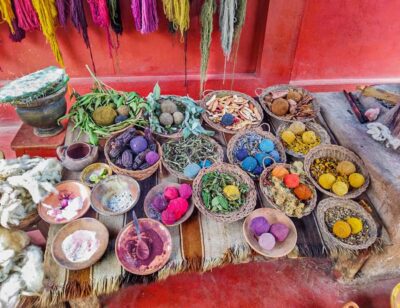
From Cusco: Moray, Maras Salt Mines & Chinchero Weavers Tour
Read our review →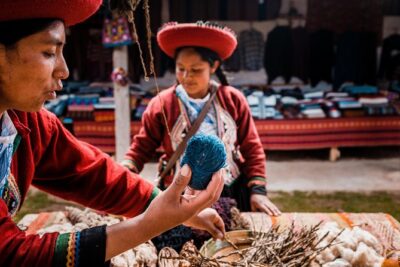
2-Day Tour: Sacred Valley and Machu Picchu by Train
Read our review →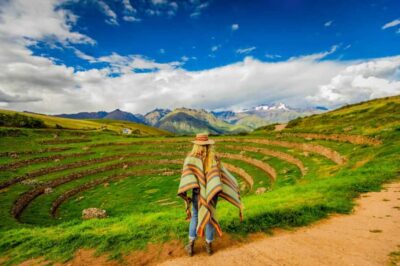
Sacred Valley, Pisac, Ollantaytambo, Salt Mines Moray
Read our review →
Chinchero,Moray & Salt Mines drop-off in Ollantaytambo
Read our review →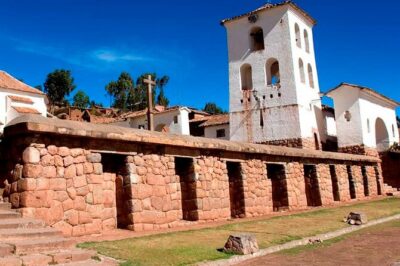
Sacred Valley and Maras Moray Tour with Full Day Buffet Lunch
Read our review →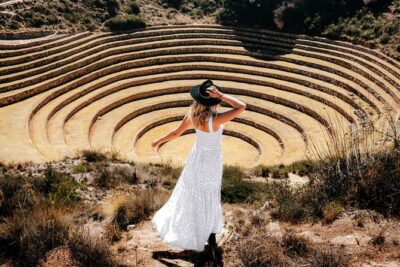

Browse the lists this tour appears in