
Reviewed · INCA TRAIL AND SALKANTAY TREKS
2 Day 1 Night Trek / Colca Canyon
Wake before dawn for Peru’s great canyon walk. This two-day Colca Canyon trek combines a condor viewpoint, steep village paths, an overnight stay at Cielo Azul Lodge, and transport from Arequipa. I like the included hotel pickup and the chance to rest beside Sangalle’s warm pool after the first day’s long descent. I also like that the group is limited to 12 people, with English and Spanish guiding available.
The catch is the physical effort. Day one takes you downhill for roughly three hours and about 18 kilometers overall, while day two begins around 5:00 am with a steep three-hour climb. The lodge is basic, the first breakfast may feel small, and several entrance fees are extra, so this is not a soft adventure.
In This Review
- Key points to know before you book
- What the $124 price really covers
- A 3:00 am departure from Arequipa
- Chivay breakfast and Condor’s Cross
- The long descent into the canyon
- Sangalle and the basic Cielo Azul Lodge
- The 5:00 am climb back to Cabanaconde
- Breakfast in Cabanaconde and the road to Chivay
- Pampa Cañahuas and the return to Arequipa
- Fitness, weather, and what to pack
- Who should book this Colca Canyon trek?
- FAQ
- How long is the Colca Canyon tour?
- Is hotel pickup included?
- Is the tour available in English?
- How difficult is the hike?
- Where do you stay overnight?
- What meals are included?
- Are the canyon entrance and hot springs included?
Key points to know before you book
- The trek starts around 3:00 to 3:30 am: You face a six-hour transfer from Arequipa before reaching the canyon trailhead.
- Day one is a long descent: You drop from about 3,300 meters to roughly 1,900 meters, passing villages, fruit trees, terraces, and canyon viewpoints.
- Sangalle is the reward: The Cielo Azul Lodge has bungalows and a swimming pool, a welcome place to rest after the hike.
- Day two is harder than it looks: The uphill return to Cabanaconde takes about three hours and starts in darkness, often with sunrise views along the way.
- Condors are possible, not guaranteed: Condor’s Cross is Peru’s best-known viewing point for Andean condors, but clouds and season can affect what you see.
- Budget for extras: The Colca Canyon entrance, hot springs, and final lunch in Chivay are not included in the $124 price.
What the $124 price really covers
At $124 per person, this tour is priced for convenience rather than for the lowest possible cost. You get hotel or hostel pickup in Arequipa, private tourist transport, two breakfasts, lunch, dinner, guiding, and the overnight stay. That removes the hardest pieces of planning, especially the early transfer to Cabanaconde and the return trip from the canyon.
The package also saves you from arranging a separate bus, finding a local guide, and sorting out dinner and breakfast after a very tiring day. For a short trip from Arequipa, that is useful. You can focus on walking instead of piecing together transport connections in the dark.
Still, the price is worth comparing locally. One piece of direct feedback put the cost at roughly twice what you might find by asking tour companies in Arequipa. I would check a few local agencies before booking, especially if you are comfortable arranging transport yourself.
The extra costs matter. The Colca Canyon entrance is listed at PEN70 per person. The hot springs are also listed as PEN70 in the cost information, although the day-by-day details give a PEN15 entrance price, so you should confirm the current amount before departure. The final lunch in Chivay costs PEN30 if you choose the buffet.
Bring cash in soles. You may also spend PEN6 to PEN10 for a one-liter bottle of water along the trail. Carrying enough water from the start can save money, but you still need to manage the weight carefully.
More hikes and treks in Arequipa:
- 2 day 1 night trek / Colca Canyon
★ 5.0 · 1,069 reviews - From Arequipa: Sillar Route Trek
★ 4.2 · 461 reviews - Colca Canyon Trek 3 Day 2 Night
★ 5.0 · 328 reviews
A 3:00 am departure from Arequipa
The day begins very early, usually between 3:00 and 3:30 am. The drive to Cabanaconde takes about six hours, with a breakfast stop in Chivay along the way.
This transfer is not just a quick ride to the trail. You spend much of the morning in the vehicle, so I would treat the first day as a full endurance day. Try to sleep before pickup, keep water and snacks within reach, and bring a small bag for the hiking portion.
The transport is private tourist transport, and the group size can reach 12 people. That is small enough to keep the group manageable, but it is still large enough that departure times may depend on everyone being ready. One practical warning from past experience is that loud music was played on the bus at 3:00 am. If you sleep lightly, bring earplugs.
Chivay breakfast and Condor’s Cross
The first stop is Plaza de Armas de Chivay, where you arrive around 7:30 am for breakfast. Chivay is known for traditional houses and colorful mountain scenery, but the stop is short, about 30 minutes.
Do not expect a long café visit. The breakfast has been described as quite small, so bring a snack if you need a substantial meal before the hike. You still have a long descent ahead, and a light breakfast can leave you short on energy.
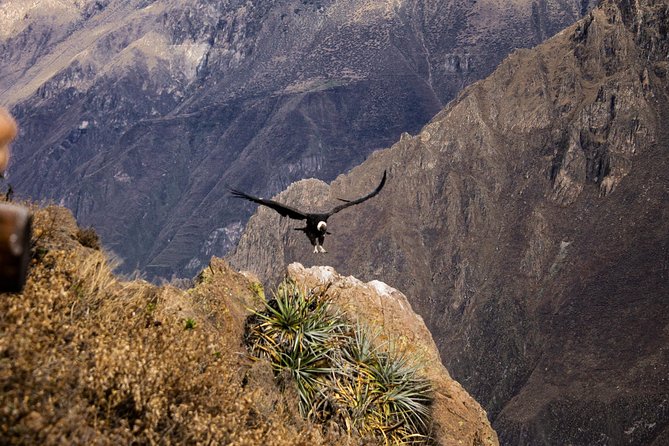
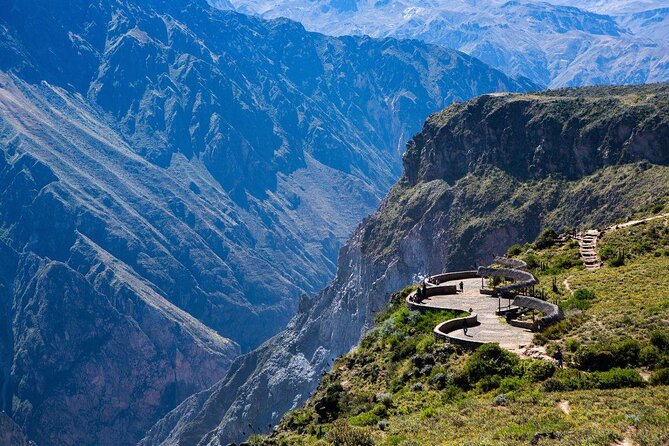
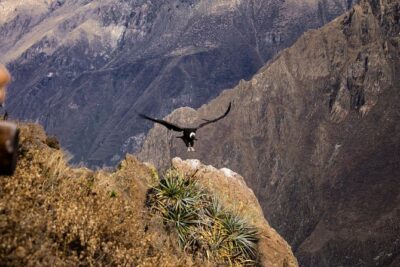
From Chivay, the bus continues to Condor’s Cross. This is the famous viewpoint for watching Andean condors ride the canyon air. These birds can weigh up to 12 kilograms and have wingspans exceeding three meters, so seeing one overhead is a memorable part of the trip.
The viewpoint is usually treated as a 30-minute stop. Clouds can block the canyon and condors may not appear, particularly outside the best season. You might still see condors during the walk down, as one departure did when the viewpoint itself was cloudy. Keep your expectations flexible, and have your camera ready during the trail as well.
The long descent into the canyon
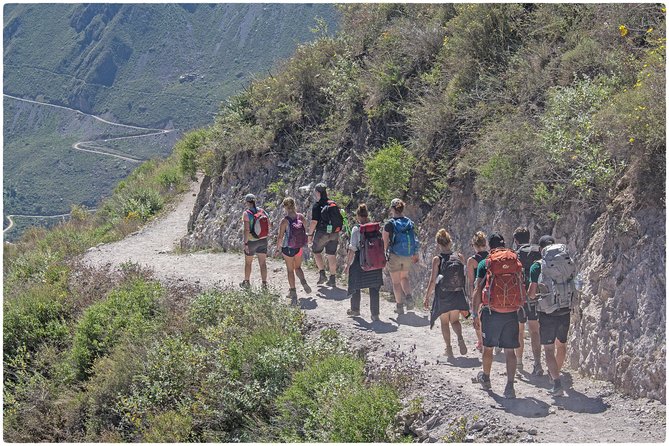
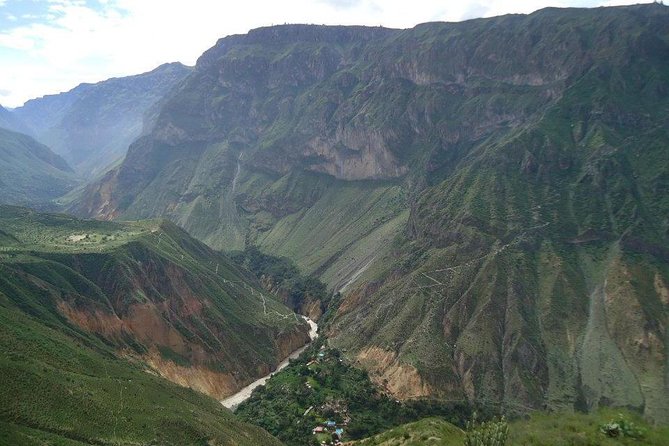
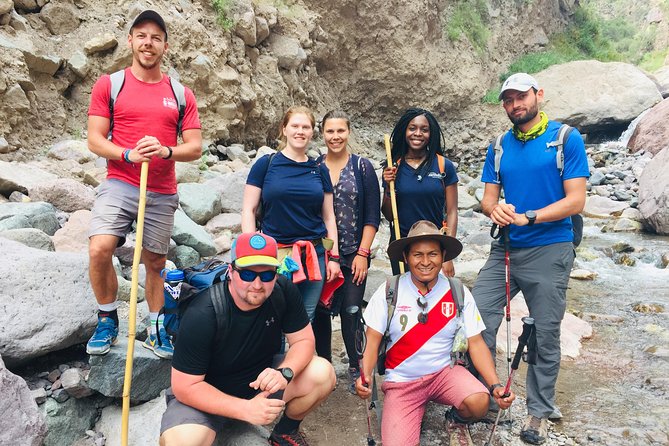
After Condor’s Cross, the vehicle drives about 20 minutes to the trailhead. Then the walking begins, with a descent from around 3,300 meters to about 2,100 meters over roughly three hours.
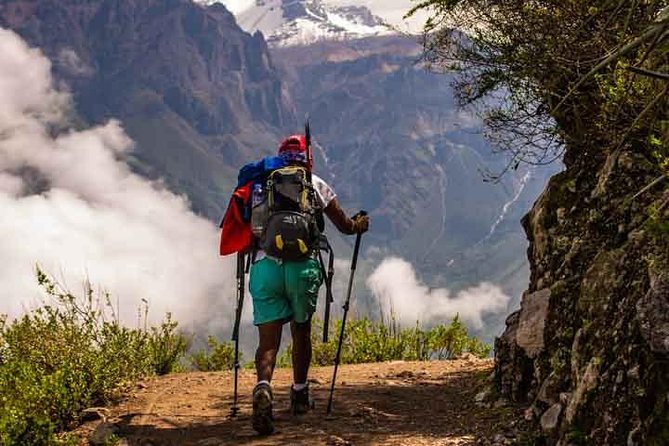
Downhill walking sounds easy until your knees and toes begin to complain. The trail drops steadily, and the altitude, sun, and dry conditions add to the work. Use trekking poles if you have them, wear sturdy shoes, and protect your face and arms from the sun.
The route passes through the canyon toward San Juan de Chuccho, a village with vegetation and fruit trees. This greener section gives you a useful change from the stark canyon walls. Lunch and a rest stop take place here, giving your legs a break before the next section.
From San Juan de Chuccho, you continue through Cosñirhua and Malata. These small settlements help make the walk feel like a route through living communities rather than a simple scenic hike. You see pre-Inca terraces, village paths, and traces of local agriculture along the wider route.
The total first-day walk is about 18 kilometers according to one detailed account. You reach Sangalle at about 5:00 pm, so this is not a short morning stroll. If you are used to regular hiking, it is demanding but manageable. If you rarely walk steep trails, the distance and downhill grade may surprise you.
More Colca Canyon trips:
- From Arequipa: Colca Canyon Full-Day Guided Tour with Meals
★ 4.5 · 982 reviews - Tour to the Salinas Lagoon and National Reserve in Arequipa
★ 4.5 · 548 reviews - Colca Full Day Tour
★ 4.5 · 429 reviews - Rafting Arequipa – Chili River Canoeing – Cusipata Rafting Arequipa
★ 5.0 · 332 reviews
Sangalle and the basic Cielo Azul Lodge
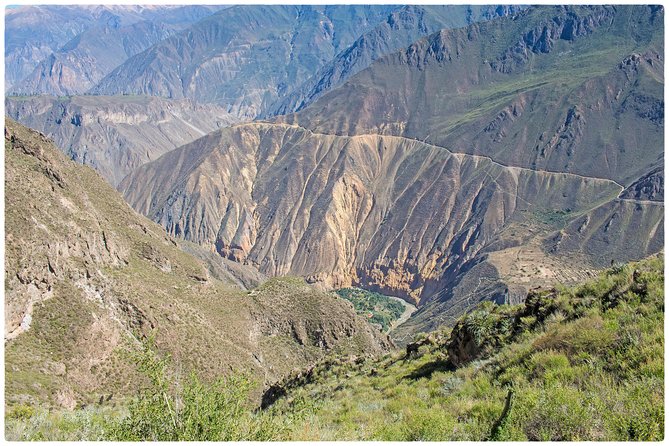
Sangalle sits at about 1,900 meters, lower and warmer than the canyon rim. The warmer air makes the swimming pool at Cielo Azul Lodge especially welcome after the descent.
This is the high point of the first day in comfort, but do not picture a polished resort. The bungalows and facilities are basic. Dinner is included, yet the meal has been described as very simple, and insects may be present around the dining area. That is part of the rural canyon setting, but it is useful to know before you arrive.
Bring a sleep sheet or lightweight sleeping bag liner. One practical tip from a past departure was to carry a sleep sack, along with sunscreen and plenty of water. Even if the evening feels cool, the next morning will expose you to sun and effort again.
The pool is not a minor detail. After hours of downhill walking, being able to sit in warm water can make the overnight stay feel worthwhile. You also get a real chance to rest before the hardest climb of the trip.
The 5:00 am climb back to Cabanaconde
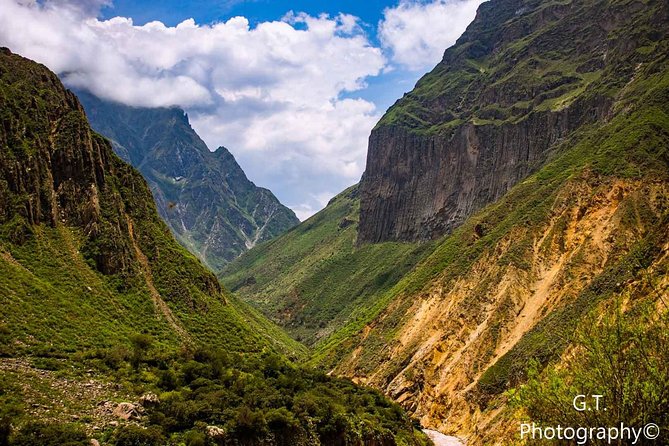
Day two starts at about 5:00 am, often with torch lights. The climb to Cabanaconde takes around three hours and gains about 1,500 meters, depending on the route and elevation points used.
This is the section you need to take seriously. The sunrise can be beautiful as the canyon brightens, but the views do not make the climb easy. One account described the ascent as about five kilometers of continuous uphill walking. It is a test of stamina, not a casual morning walk.
Your guide can help manage the pace and support anyone struggling with the altitude or heat. Guide Eveline received especially warm praise for helping people through the harder parts while still giving them room to enjoy the scenery. That balance matters, since some walkers need encouragement while others prefer to move quietly at their own speed.
Mule rides may be offered by local operators for about PEN60, but this service is not provided or regulated by the tour company. Safety standards are unclear. Serious concerns have been raised about foot placement and loose stirrup straps, particularly for first-time riders or people with short legs. I would not treat a mule as an automatic backup plan. If you think you may need one, ask about the arrangement and safety checks before you begin the descent on day one.
Breakfast in Cabanaconde and the road to Chivay
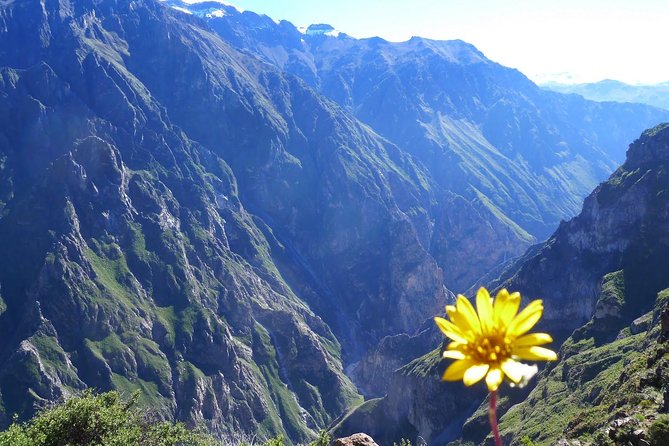
After reaching Cabanaconde, you have breakfast and rejoin the vehicle. The next part is less physically demanding but still long, with stops for views of terraces, archaeological remains, and colonial towns.
Around noon, you reach Chivay. The hot springs near Chivay are optional, and the pools range from about 30°C to 60°C. After the early climb, soaking your legs can be a fine choice. If you are tired, short on time, or trying to limit extra costs, you can skip it.
The final lunch in Chivay is also optional and not included. A typical buffet costs PEN30. Since breakfast comes after the climb, you may want the lunch, but keep cash ready and do not assume it is part of the tour price.
Pampa Cañahuas and the return to Arequipa
The ride back crosses Salinas y Aguada Blanca National Reserve. At Pampa Cañahuas, you stop briefly, usually around 10 to 15 minutes, to look for volcanoes and South American camelids.
The official stop is short, but you may see alpacas, llamas, vicuñas, and guanacos during the broader drive through the reserve. Vicuñas are especially appealing here because they are wild camelids, unlike the more familiar domesticated alpacas and llamas.
The road descends from about 4,830 meters to Arequipa’s 2,325-meter elevation. That change can feel dramatic after the canyon walk. Arrival in Arequipa is expected around 5:30 pm, with drop-off on Calle Santa Catalina near Santa Catalina Monastery.
This ending is convenient if you are staying in the historic center, but it is not necessarily a door-to-door return to the exact place where you began. Your pickup is from your Arequipa hotel or hostel, while the final drop-off is specified near the monastery.
Fitness, weather, and what to pack
The tour asks for moderate physical fitness, but I would interpret that cautiously. The two hiking days include steep grades, altitude changes, long hours, and little room for a slow recovery once the group is moving.
You should be comfortable with:
- About 18 kilometers of downhill walking on day one
- A roughly five-kilometer uphill climb on day two
- A three-hour ascent beginning around 5:00 am
- Sun, dust, heat, and limited facilities
- A very early departure and late return
Pack light for the trail, but bring the essentials: sturdy walking shoes, sunscreen, a hat, layers for changing temperatures, a headlamp or torch, water, cash in soles, and a sleep sheet. A small daypack is more useful than a large suitcase. Leave the main luggage in Arequipa if your accommodation can store it.
The tour requires good weather. If poor weather causes cancellation, you are offered another date or a full refund. Otherwise, the booking is non-refundable and cannot be changed, so choose your dates carefully.
Who should book this Colca Canyon trek?
I would choose this trip if you want the canyon experience in a tight two-day schedule and value having transport, meals, guiding, and a bed arranged for you. It suits hikers who can handle a long descent followed by a steep sunrise climb.
I would think twice if you want comfortable lodging, generous meals, flexible timing, or a relaxed visit to Colca Canyon. The overnight stay is basic, the breakfast may be modest, and the early starts are real. You also need to budget for the canyon fee, hot springs, final lunch, water, and possibly other small purchases.
The best reason to book is the route itself. You see condor country from above, walk into the canyon, pass small villages and terraces, rest at a warm pool, then climb out as the sun rises. That combination is demanding, but it gives you a much fuller sense of Colca than a quick viewpoint visit.
FAQ
How long is the Colca Canyon tour?
The experience lasts two days and one night, beginning around 3:00 am in Arequipa and returning around 5:30 pm the next day.
Is hotel pickup included?
Yes. Pickup from hotels or hostels in Arequipa is included, along with transportation back to Arequipa.
Is the tour available in English?
Yes. Guiding is available in English and Spanish.
How difficult is the hike?
The tour requires moderate physical fitness. Day one includes about three hours of downhill walking and roughly 18 kilometers overall. Day two begins around 5:00 am with about three hours of uphill walking to Cabanaconde.
Where do you stay overnight?
You stay in bungalows at Cielo Azul Lodge in Sangalle. A swimming pool is available, but the accommodation and dinner are basic.
What meals are included?
Two breakfasts, one lunch, and one dinner are included. The final lunch in Chivay is not included and costs about PEN30 if you choose the buffet.
Are the canyon entrance and hot springs included?
No. The Colca Canyon entrance is listed at PEN70 per person. The hot springs are also excluded, with the supplied pricing showing PEN70 in one section and PEN15 in the day-by-day details, so confirm the current fee before going.
Just added in Arequipa
- Sillar Route★ 5.0 · 4 reviews
- Salinas Lagoon + Mini Volcano DE Lojen★ 5.0 · 9 reviews
- 3-Day Colca Canyon trek with Professional Guide★ 5.0 · 40 reviews
- Full Day Tour To The Salt Lake Salinas in Arequipa★ 4.5 · 34 reviews
- Walking City tour including the Monastery of Santa Catalina★ 5.0 · 6 reviews
- Trekking, Waterfalls and Thermal Baths★ 4.5 · 47 reviews
- Downhill Tour – Mountain Bike in Arequipa★ 3.5 · 5 reviews
- 2 Days 1 Night trekking Through Colca Canyon, Private room★ 5.0 · 16 reviews
Inca Trail and Salkantay Treks, compared.
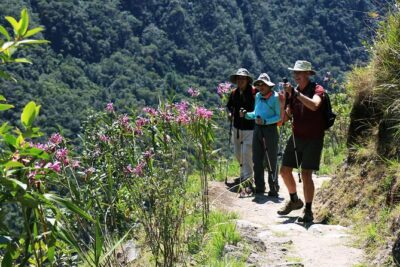
Classic Inca Trail Trek 4D/3N to Machu Picchu (Group Service)
Read our review →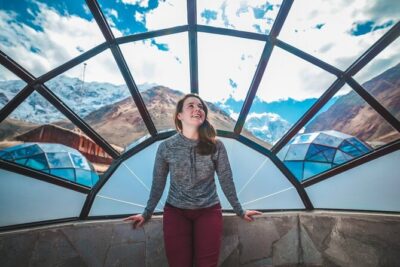
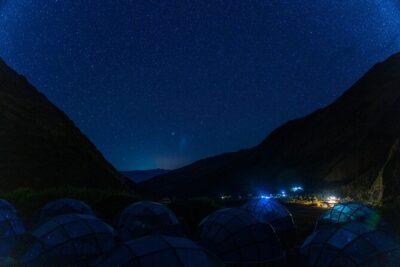
Salkantay Trek 5D/4N with Glass Cabins, Domes and Hobbit House
Read our review →2-Day Inca Trail to Machu Picchu with Panoramic Train
Read our review →
Browse the lists this tour appears in