
Reviewed · INCA TRAIL AND SALKANTAY TREKS
4 hours Tour: Route of Sillar with Trek in Culebrillas
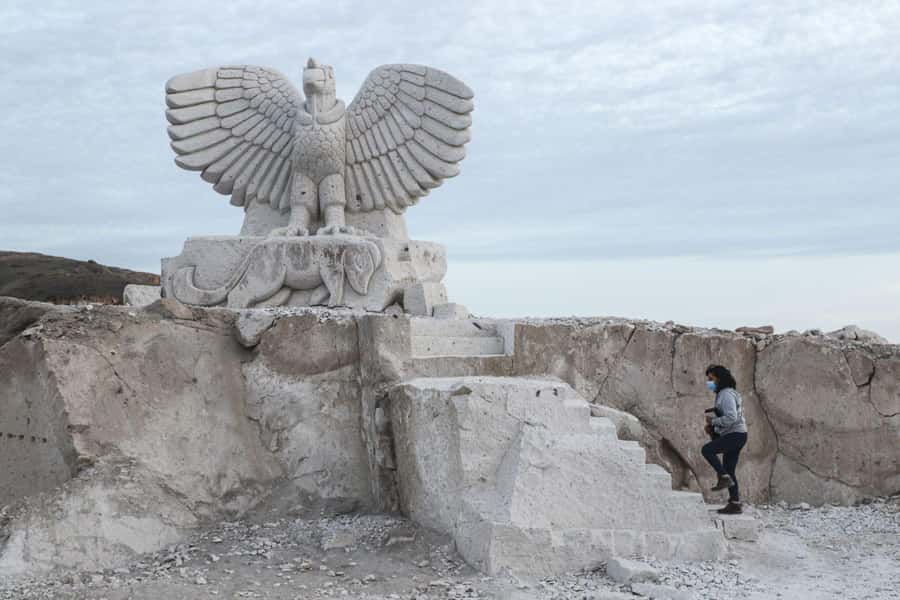
Stone tells Arequipa’s story. This four-and-a-half-hour outing takes you from volcano viewpoints to the working Añashuayco quarries, where pale volcanic stone is cut into the blocks used across the city. I like the mix of scenery and hands-on culture, especially the chance to see a giant carving of the Church of the Company of Jesus and watch stonemasons work.
I also like that the tour adds a short walk through Culebrillas canyon, ending near ancient Wari petroglyphs and Apachetas. The main consideration is pace: one booking reported a 30-minute delay and too little time at the stops, while another found the excursion short and only moderately interesting. At $11 per person, though, it offers a lot for a half-day.
In This Review
- Key points to know before booking
- Why Arequipa’s Sillar Route matters
- The Volcanoes and Andenerias viewpoint
- Inside the Añashuayco quarry
- Walking through Quebrada de Culebrillas
- The return to Arequipa
- Is $11 a good price?
- Language, transport, and what to bring
- Who will enjoy this half-day outing?
- Should you book the Sillar Route with Culebrillas?
- FAQ
- How long does the tour last?
- Where does the tour begin?
- Where does the tour finish?
- Is there an afternoon departure?
- What is included in the price?
- Are entrance tickets included?
- Which languages are available?
- Is there much walking?
Key points to know before booking
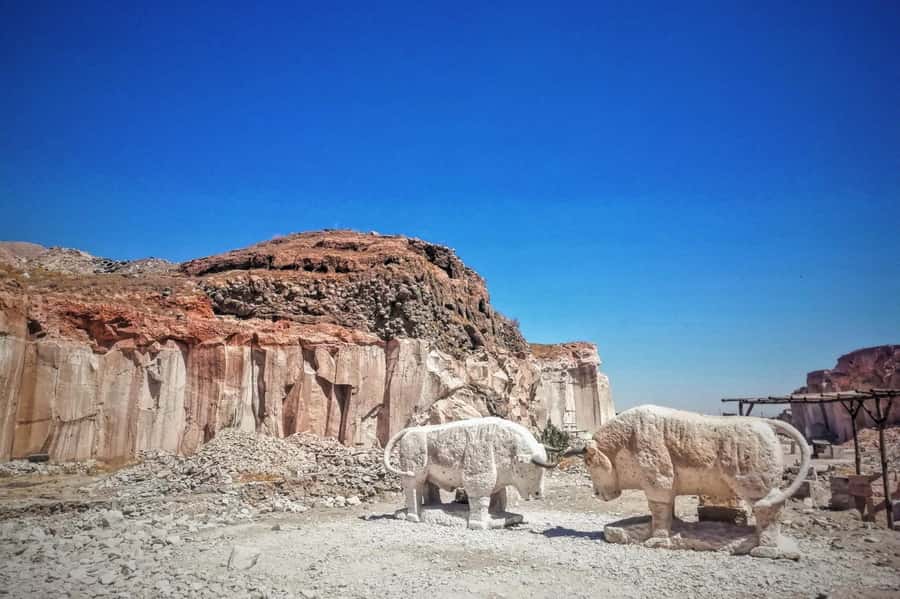
- Añashuayco is a working quarry: You see the pale ignimbrite walls and learn how ashlar stone is extracted and shaped.
- The Church of the Company of Jesus appears in stone: A large quarry carving provides one of the tour’s best photo stops.
- Culebrillas includes a short canyon walk: The path takes about 20 minutes and reaches Wari petroglyphs more than 1,000 years old.
- The Volcanoes and Andenerias viewpoint sets the scene: You can look toward volcanoes and the Chilina Valley before reaching the quarries.
- The extra entrance fee is 18 soles: Transport and a professional guide are included, but entry tickets are separate.
- English and Spanish are offered: Confirm the language when you book, since one English-language departure ran in Spanish after the English guide became ill.
Why Arequipa’s Sillar Route matters
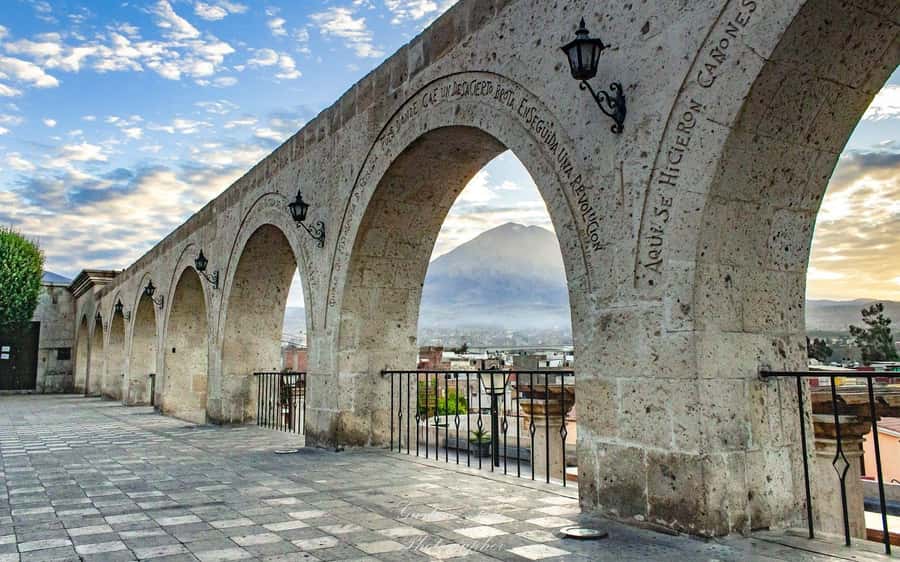
Arequipa is famous for its pale buildings, churches, courtyards, and streets made from sillar, often translated as ashlar. This is not simply a pretty building material. It comes from volcanic ignimbrite, formed from deposits produced by eruptions in the region.
The quarries give you a direct connection to the city’s architecture. Instead of only admiring white walls around the Plaza de Armas, you see the source of the stone and the labor needed to shape it. That makes the city’s historic center easier to understand.
I find this more worthwhile than a quick photo stop at a scenic overlook. You get a small lesson in geology, local craft, and construction, all in the same morning. The setting also helps explain why Arequipa is often called the White City.
The tour begins at C. Álvarez Thomas 115, at the provider’s main office on the corner. Your name is checked against the list, and the staff gives basic instructions before you board the tourist van. The stated morning departure is 9:15 a.m., with an afternoon option at 2 p.m.
The schedule is designed for a short stay in Arequipa. You leave the city, visit two quarry areas, stop at a viewpoint, and return near the center. The total duration is listed as 270 minutes, although the detailed timing adds up to a little over four hours. Plan on roughly four to four-and-a-half hours rather than expecting a strict minute-by-minute schedule.
More hikes and treks in Arequipa:
- 2 day 1 night trek / Colca Canyon
★ 5.0 · 1,069 reviews - From Arequipa: Sillar Route Trek
★ 4.2 · 461 reviews - Colca Canyon Trek 3 Day 2 Night
★ 5.0 · 328 reviews
The Volcanoes and Andenerias viewpoint
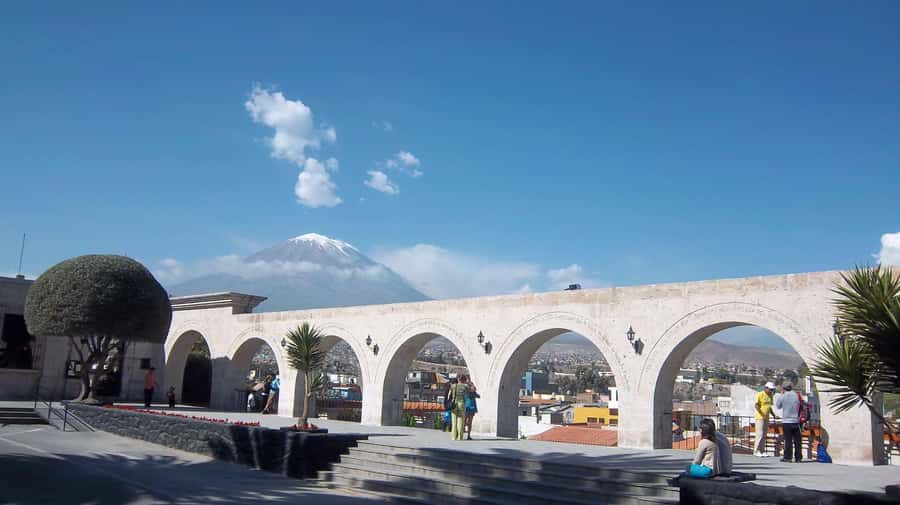
The first stop is a strategic viewpoint reached after about 25 minutes in the van. You get a 20-minute break for photographs and a guided explanation.
From here, you can see volcanoes and the Chilina Valley. The name also points to the area’s agricultural terraces, or andenerias. Depending on the season, the exact opening viewpoint may change, with another traditional lookout used when appropriate.
This is a useful first stop because it gives you the regional setting before the quarry visit. The volcanoes are not just background scenery. Their activity helped create the stone that shaped Arequipa’s buildings, so the view connects naturally to what comes later.
The stop is short, which is both good and bad. You do not lose half a morning waiting around, but you may need to be ready with your camera and listen closely to the guide. If your main goal is a long scenic session, this tour will feel rushed. If you want a quick orientation before the main sites, the timing works well.
Inside the Añashuayco quarry
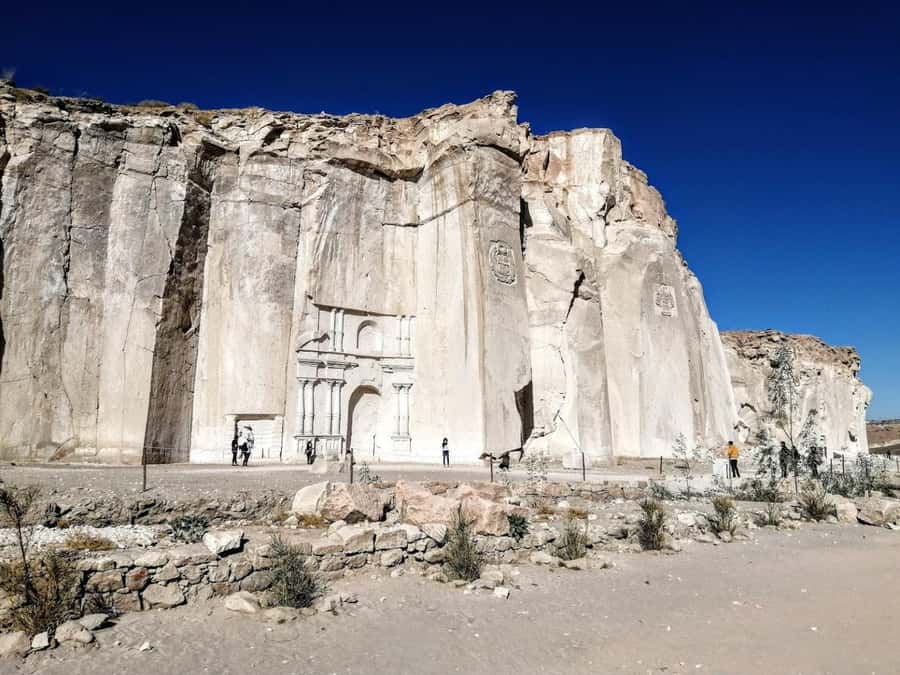
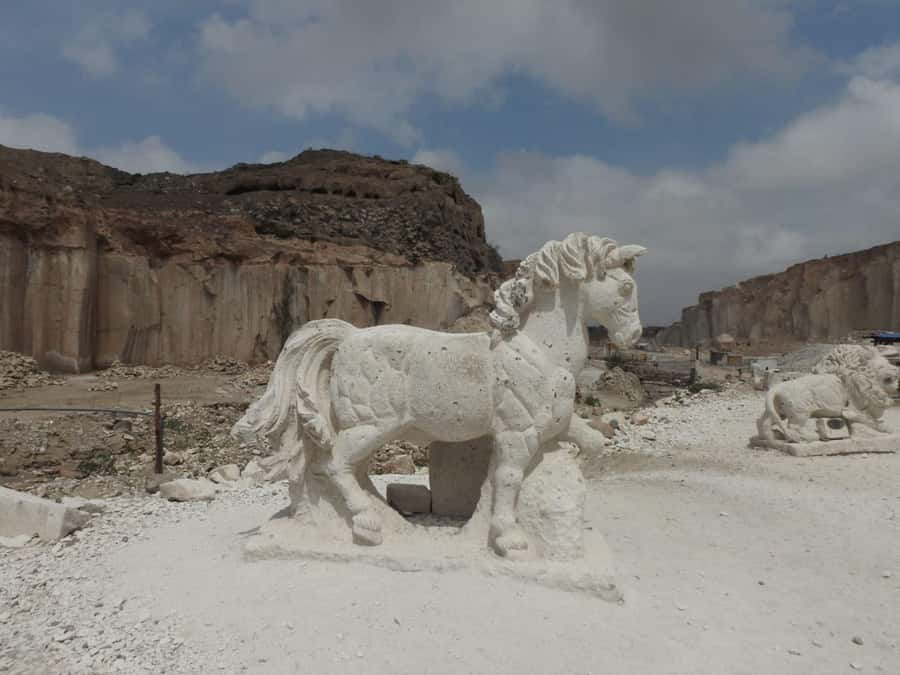
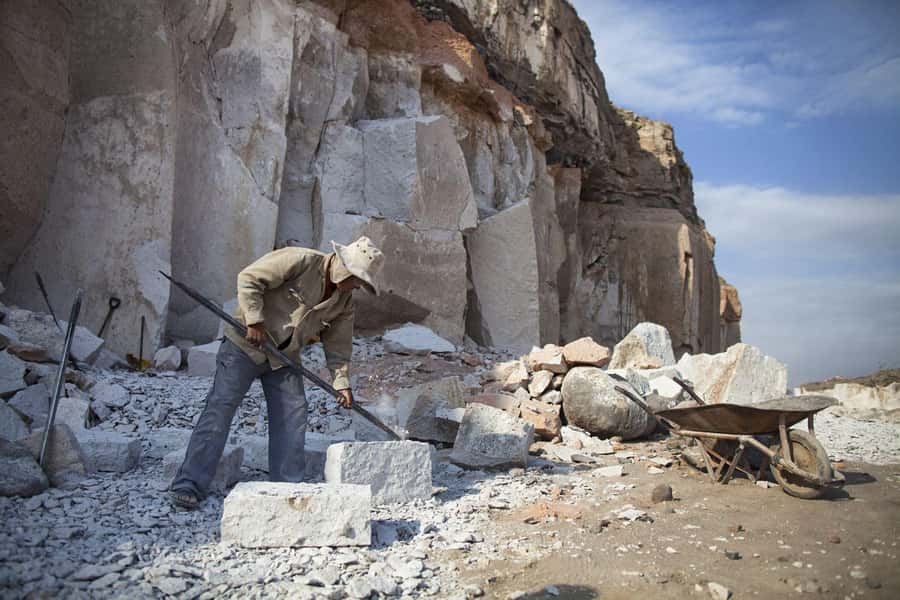
After about 45 minutes on the road, you reach the Añashuayco Quarry. The visit lasts around 50 minutes and includes a guided explanation, photographs, free time, and walking.
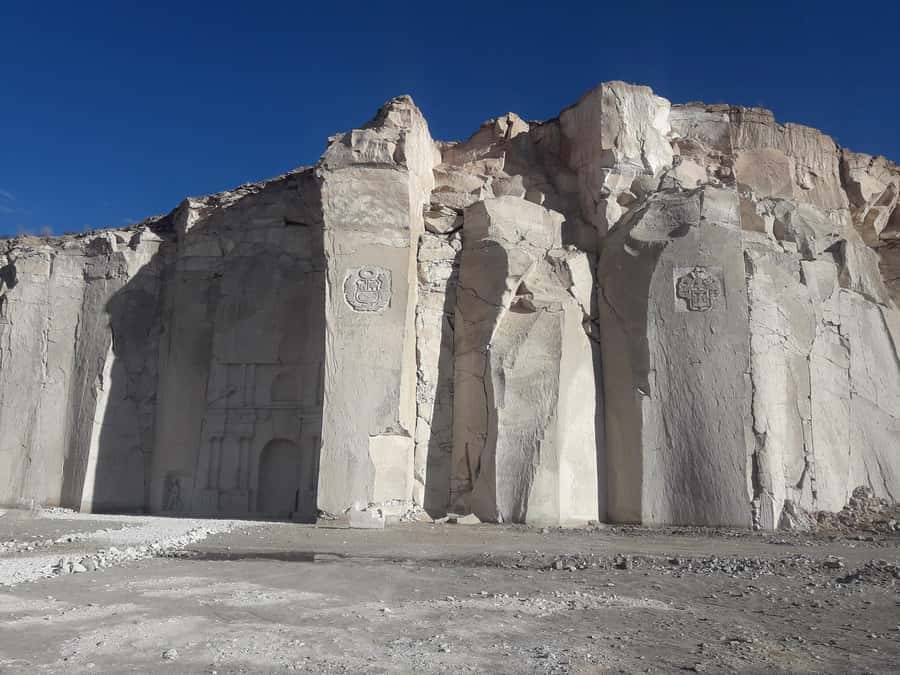
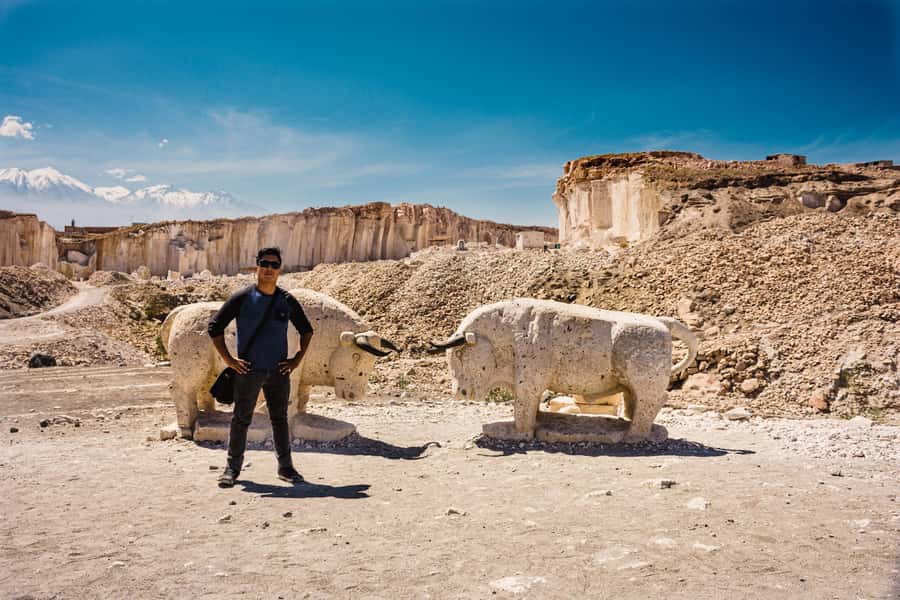
The quarry is still operating. Stonemasons work early in the day, so a morning departure gives you the best chance of seeing the site during active working hours. The main view is an enormous canyon formed by the extraction of ignimbrite. Its high walls show the scale of the material removed from the earth.
This is where the tour becomes more than a scenic drive. The guide explains the origin of sillar, how it is produced, and how it has been used over time. You can look at the walls and then connect them with the carved stonework in Arequipa’s churches and colonial buildings.
One of the quarry’s most memorable features is a mega carving of the Church of the Company of Jesus. It was made by local stonemasons, and it gives you a close look at the decorative style associated with Arequipa’s architecture. It is also a strong photo opportunity because the carving relates directly to the city you have just left.
The visit may also include time with a stonemason. You can hear about the daily work and try cutting one of the stone blocks yourself. That small hands-on moment is important. It turns a craft demonstration into something you feel in your arms, even if only briefly.
I would keep your expectations sensible. This is an operating quarry, not a polished museum. The visit is about seeing extraction and stonework in a real setting. Conditions may feel basic, and the available time is limited. Still, the working character is part of the appeal.
The quarry is also the stop most likely to satisfy anyone interested in local craft. You are not just told that sillar shaped Arequipa. You see the walls, the tools, the carved example, and the person doing the work.
Walking through Quebrada de Culebrillas
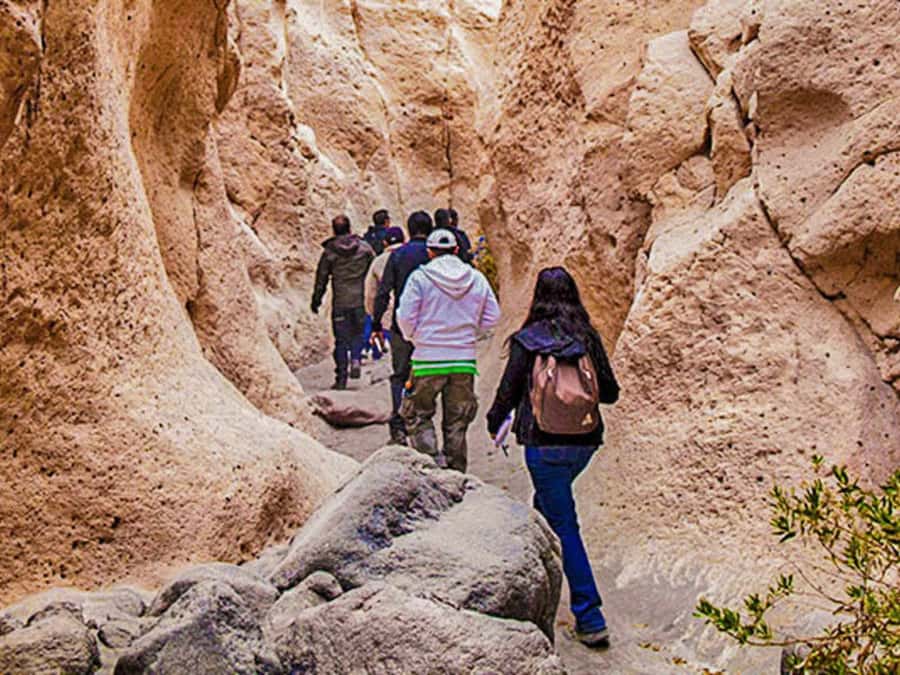
The van ride from Añashuayco to Quebrada de Culebrillas takes about 30 minutes. Once there, you walk into a narrow canyon for roughly 20 minutes, with the full stop listed at around 30 minutes including photographs and the guide’s talk.
Water formed the canyon, leaving walls that rise about 15 to 20 meters. As you move farther inside, the walls become higher. The scale changes gradually, so the walk feels different from the broad quarry views. You move from an open industrial site into a tighter natural passage.
This is an easy addition to the route for anyone who wants a little walking without committing to a full-day trek. The word trek in the tour title may sound ambitious, but the supplied timing describes a short canyon walk. It is not presented as a long mountain hike.
At the end, you can see petroglyphs linked to the Wari culture and dated more than 1,000 years ago. Their presence gives the canyon an archaeological side that balances the modern quarry visit. You are looking at marks made long before Arequipa’s colonial churches and city streets.
The short time here is the main limitation. A 20-minute walk does not leave much room for slow photography, extended interpretation, or lingering near the petroglyphs. If you have limited mobility, ask the operator for current details before booking, since the information provided does not describe the path’s surface or accessibility.
After the canyon walk, the group observes Apachetas. These are small stone formations made by placing stones one on top of another. Here they are described as symbols of gratitude toward nature and as good-luck attractions. They add a simple ritual element to the stop, though you should treat them respectfully rather than as props.
A completely different kind of day:
- From Arequipa: Colca Canyon Full-Day Guided Tour with Meals
★ 4.5 · 982 reviews - Tour to the Salinas Lagoon and National Reserve in Arequipa
★ 4.5 · 548 reviews - Colca Full Day Tour
★ 4.5 · 429 reviews - Rafting Arequipa – Chili River Canoeing – Cusipata Rafting Arequipa
★ 5.0 · 332 reviews
The return to Arequipa
The return journey begins around 12:30 p.m., with arrival near Arequipa’s center at about 1:30 p.m. The listed finish is on Av. La Marina, near the main square area.
That return point is practical for continuing your day. You can have lunch, visit the historic center, or make another appointment in the afternoon. If you book the 2 p.m. departure instead, the same route will fit better for people who prefer a slower morning, but you should check the exact availability and return time when reserving.
The drive itself takes up a fair share of the experience. The itinerary lists 25 minutes to the first viewpoint, 45 minutes to Añashuayco, 30 minutes to Culebrillas, and about 50 minutes back to the city. You are spending several hours in a van, so the tour works best when you see the transport as the link between two worthwhile sites rather than as a nonstop walking excursion.
Timing deserves attention. One booking reported that the vehicle arrived 30 minutes late and the group then had too little time to enjoy the stops. That appears to have been a specific problem, not the stated schedule, but it is a useful reason to avoid placing an important connection immediately after the tour.
Is $11 a good price?
At $11 per person, this is inexpensive for a guided excursion that includes tourist transport and a professional guide. You also receive explanations in English or Spanish, depending on the departure and guide.
The separate entrance charge is 18 soles in total. Add that amount to the advertised price when you work out your budget. Even with the extra fee, the outing remains a low-cost way to see places that are outside central Arequipa and not especially convenient to combine independently in a short morning.
The value comes from the combination. A simple drive to one quarry might feel thin, but this route adds a viewpoint, a working stone site, a canyon, petroglyphs, and Apachetas. You get a broader picture of the area for less than the cost of many longer guided activities.
The tradeoff is depth. The quarry visit is about 50 minutes, and the Culebrillas stop is about 30 minutes. You will get an introduction rather than a long study of geology, archaeology, or local craft. If you want an in-depth specialist tour, this is probably too brief. If you want several distinct sights at a modest price, it makes good sense.
The overall score supplied for the experience is 4.2 out of 5 from 69 ratings. That fits the pattern here: strong value and appealing sights, with occasional concerns about limited time and guide-language problems.
Language, transport, and what to bring
The tour is offered with live guiding in English and Spanish. Confirm your chosen language before departure. One booking found that the tour ran only in Spanish because the English guide was sick. The operator offered a chance to reschedule, but that was not useful for someone with other plans.
The vehicle has received positive practical feedback, including a report of a new vehicle. Still, the journey includes several road sections, and the schedule can shift. Arrive at the office early, keep your day flexible, and do not count on perfect timing.
For the route itself, sensible preparation is simple:
- Wear shoes suitable for a short walk over uneven quarry or canyon ground.
- Bring water for the van rides and canyon walk.
- Keep sun protection handy for the open viewpoint and quarry.
- Carry small cash for the 18 soles entrance charge.
- Bring a camera, especially for the quarry walls, church carving, volcano view, and canyon.
These suggestions stay within what the tour requires without turning a half-day outing into an expedition. The main physical demand is walking inside Culebrillas, not a long trek.
Who will enjoy this half-day outing?
I would recommend the route to first-time visitors who want context for Arequipa’s pale architecture. It is also a good fit if you have only a few days in the city and want to see something beyond the central plaza without giving up an entire day.
Families and casual sightseers may appreciate the variety. The quarry offers a large visual setting and a possible stone-cutting activity, while Culebrillas adds a short walk and old petroglyphs. The tour does not ask you to spend hours at one museum or on one demanding trail.
It also suits budget-minded visitors. The low base cost, guided transport, and several stops make it an efficient use of a morning. The 18 soles entrance fee is easy to overlook, so include it in the final calculation.
I would be more cautious if you dislike organized transport or want a slow, detailed visit. The route has fixed stops and short time windows. One French-language assessment found it somewhat limited in interest and suitable mainly for a half-day, which is a fair description. Its strength is variety and price, not lengthy exploration.
Should you book the Sillar Route with Culebrillas?
Book it if you want an affordable introduction to Arequipa’s volcanic stone, working quarries, and nearby cultural sights. The best parts are the active Añashuayco Quarry, the large church carving, and the contrast between the quarry walls and the narrow Culebrillas canyon.
Skip it if your priority is a long hike, extensive archaeological study, or a relaxed day with no schedule pressure. Before paying, confirm the guiding language, allow for possible delays, and remember the separate 18-sol entrance cost.
For most visitors with a free half-day, I think the price makes the decision easy. You get real local craft, a short canyon walk, old petroglyphs, and volcano views in one compact outing. Just expect an efficient introduction, not an all-day study of the region.
FAQ
How long does the tour last?
The advertised duration is 270 minutes, or about four and a half hours. The morning schedule begins at 9:15 a.m. and returns to central Arequipa around 1:30 p.m.
Where does the tour begin?
The meeting point is the main office at C. Álvarez Thomas 115 in Arequipa. It is located on the same corner, and your name is checked on the list before departure.
Where does the tour finish?
The tour finishes near Av. La Marina in Arequipa, close to the city center and main square area.
Is there an afternoon departure?
Yes. An afternoon shift is available at 2 p.m. Check availability for the date you want.
What is included in the price?
The price includes tourist transport and a professional guide.
Are entrance tickets included?
No. Entrance fees are separate and cost 18 soles in total.
Which languages are available?
Live guiding is offered in English and Spanish. A guide-language change can occur if the English guide is unavailable, so confirm the language before departure.
Is there much walking?
The itinerary includes a walk of about 20 minutes inside Quebrada de Culebrillas. The quarry visit also includes some walking, photographs, and free time, but the tour is not described as a long hike.
Just added in Arequipa
- Sillar Route★ 5.0 · 4 reviews
- Salinas Lagoon + Mini Volcano DE Lojen★ 5.0 · 9 reviews
- 3-Day Colca Canyon trek with Professional Guide★ 5.0 · 40 reviews
- Full Day Tour To The Salt Lake Salinas in Arequipa★ 4.5 · 34 reviews
- Walking City tour including the Monastery of Santa Catalina★ 5.0 · 6 reviews
- Trekking, Waterfalls and Thermal Baths★ 4.5 · 47 reviews
- Downhill Tour – Mountain Bike in Arequipa★ 3.5 · 5 reviews
- 2 Days 1 Night trekking Through Colca Canyon, Private room★ 5.0 · 16 reviews
Inca Trail and Salkantay Treks, compared.
Classic Inca Trail Trek 4D/3N to Machu Picchu (Group Service)
Read our review →
Salkantay Trek 5D/4N with Glass Cabins, Domes and Hobbit House
Read our review →2-Day Inca Trail to Machu Picchu with Panoramic Train
Read our review →
Browse the lists this tour appears in