
Reviewed · MACHU PICCHU TOURS
Best 2-Day Private Machu Picchu & Sacred Valley Experience
Machu Picchu is only half the story. This two-day trip links the Inca sites of the Sacred Valley with Machu Picchu, using private coordination, train travel, a hotel in Aguas Calientes, and a three-hour guided visit at the citadel. I especially like the mix of Chinchero’s living textile traditions and the striking salt pools at Maras. I also like that airport or hotel pickup can be arranged, which removes one more transport puzzle in Cusco. The main drawback is the fast pace: you cover a lot in two days, and the non-refundable booking terms leave little room for changes.
The price is $589.05 per person. That is a serious sum, but it includes Machu Picchu admission, round-trip Expedition-class train tickets, the bus between Aguas Calientes and Machu Picchu, a private guide for the citadel, lunch, a hotel, and support throughout the trip. You should still confirm exactly what is included for your date, especially the Sacred Valley entrance arrangements, meals beyond the stated lunch, and any upgrade to the Vistadome or Observatory train.
In This Review
- Key points to know before booking
- Why the two-day format works
- Chinchero, where weaving keeps an old tradition alive
- Moray’s circular terraces and Inca experimentation
- Maras, where salt still comes from the hillside
- Lunch in Urubamba and the Sacred Valley connection
- Ollantaytambo, a town built around Inca stone
- The train from Ollantaytambo to Aguas Calientes
- The bus ride up to Machu Picchu
- Three hours inside the Machu Picchu citadel
- Returning to Aguas Calientes and Ollantaytambo
- What the $589.05 price really covers
- The service question: strong care, but confirm the details
- Who should choose this two-day trip
- Should you book it?
- FAQ
- How long does the experience last?
- Is hotel pickup available?
- Where does the activity start and end?
- Is the Machu Picchu entrance ticket included?
- Are the train tickets included?
- Is transportation from Aguas Calientes to Machu Picchu included?
- Can I cancel or change the booking?
Key points to know before booking
- Chinchero opens the trip with living Andean culture: You visit a textile center, see alpaca wool techniques, and then explore an Inca square beside a colonial church.
- Moray and Maras offer two very different Inca-era sights: Moray shows agricultural experimentation, while Maras presents more than 3,000 working salt pools on a mountainside.
- Ollantaytambo is more than a ruin stop: It is an old Inca town, an archaeological site, and the rail gateway to Machu Picchu.
- The trip sleeps in Aguas Calientes: Hotel Pucara Machupicchu gives you a night near the citadel instead of forcing a same-day return to Cusco.
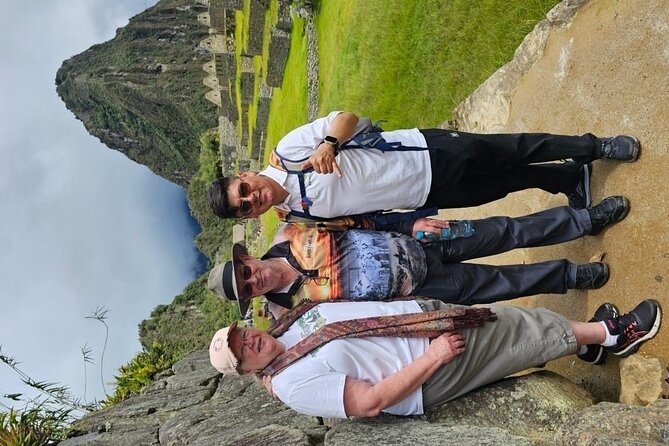
- The Machu Picchu visit lasts three hours: A private guide covers the Temple of the Sun, Main Plaza, Intihuatana, and Temple of the Three Windows.
- Personal service is the strongest selling point: Edgar and his team receive high praise for arranging taxis, buses, trains, tickets, and last-minute help, though one account raises concerns about inconsistent follow-through.
Why the two-day format works
This is a compact Peru sampler. In roughly two days, you see textile work in Chinchero, Inca farming at Moray, traditional salt production at Maras, monumental stonework at Ollantaytambo, and the great citadel of Machu Picchu.
I like the route because it gives Machu Picchu some context. If you visit only the famous mountaintop site, the Inca world can feel like a single spectacular postcard. Here, you see how communities worked with crops, wool, salt, stone, and mountain routes.
The tradeoff is time. Day one is full, with six scheduled stops before you reach Aguas Calientes. Day two requires an early start, a three-hour guided visit, lunch or free time in town, and a return train to Ollantaytambo before the ride back to Cusco. You will not have much spare time for wandering, resting, or changing plans.
This format suits you best if you have a short stay in Peru and want one organized package. It is less suitable if you prefer slow mornings, long museum visits, or several nights in the Sacred Valley.
More Machu Picchu trips:
- Classic Inca Trail Trek 4D/3N to Machu Picchu (Group Service)
★ 5.0 · 8,653 reviews - Machu Picchu: 4-Day Inca Trail Trek with Panoramic Train Ride
★ 5.0 · 4,568 reviews - Short Inca Trail to Machu Picchu 2D/1N
★ 5.0 · 3,007 reviews
Chinchero, where weaving keeps an old tradition alive
The first stop is Chinchero, described as one of the most typical and picturesque towns in the Sacred Valley. The visit lasts about 90 minutes and includes admission.
The textile center is a useful part of the stop because it connects the scenery to daily life. You can see how local women use alpaca wool, ancient dyeing methods, and hand-spinning techniques. This is not simply a shopping pause. It gives you a clearer idea of how Andean craft traditions remain part of local culture.
Afterward, you visit Chinchero’s Inca square and colonial church. That pairing is important. In one compact place, you see the older Inca foundations and the later Spanish religious presence. Your guide can help explain how those layers fit together.
The stop may feel brief if you want a long look at the church or a detailed weaving demonstration. Still, it is a strong beginning because it introduces people and customs before the day turns toward major archaeological sites.
Moray’s circular terraces and Inca experimentation
Moray receives about 45 minutes. The site is famous for its huge circular terraces, cut into natural depressions in the ground.
The terraces are often described as an agricultural laboratory. The different levels create changes in temperature and growing conditions, allowing the Incas to test crops in varied microclimates. The exact purpose of Moray is still discussed, but its design clearly shows careful observation and engineering.
You should expect a short, focused visit rather than a long hike. The site is mainly about looking into the circular formations, understanding their design, and hearing how farming shaped Inca society. I like Moray because it moves the story away from temples and royal power. It shows practical intelligence, too.
Forty-five minutes should be enough for the main viewpoint and explanation, though you may wish you had more time for photographs. The schedule keeps the trip moving toward Maras.
Maras, where salt still comes from the hillside
The Maras Salt Mines are one of the most unusual sights on the route. You spend about an hour looking across more than 3,000 small pools arranged along a hillside.
A stream of salty underground water feeds the ponds. Local families continue to collect natural pink salt, using a system with roots in the Inca period. The sight is both beautiful and practical: thousands of shallow pools catch the light, while the salt supports present-day households.
This stop gives you a direct link between archaeology and ongoing work. You are not looking only at abandoned stones. You are seeing an old method still used by local families.
The route can be visually striking, but the visit is not a full salt-production workshop. If you want to buy salt or learn more about family ownership and harvesting, ask your guide for details. The supplied plan allows one hour, so keep your questions focused.
More Sacred Valley trips:
- From Cusco: Moray, Maras Salt Mines & Chinchero Weavers Tour
★ 4.8 · 1,925 reviews - 2-Day Tour: Sacred Valley and Machu Picchu by Train
★ 5.0 · 1,127 reviews - Cusco: Sacred Valley, Pisac, Ollantaytambo, Salt Mines Moray
★ 4.6 · 1,058 reviews - Cusco:Chinchero,Moray & Salt Mines drop-off in Ollantaytambo
★ 4.8 · 793 reviews
Lunch in Urubamba and the Sacred Valley connection
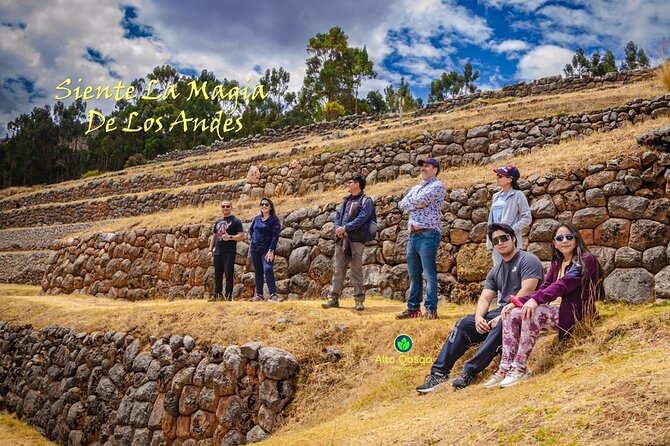
The schedule allows 90 minutes for lunch in Urubamba. The meal is included, with traditional Peruvian dishes described as featuring regional ingredients, Andean stews, grilled meats, and salads.
This break matters because the morning involves several stops and road travel. You get time to eat and rest before reaching Ollantaytambo. You should confirm the exact restaurant and menu in advance if you have dietary needs, since those details are not provided.
Urubamba also helps you understand the valley as a place where people live and work, not just a corridor between ruins. The surrounding mountains and cultivated land give the archaeological sites a practical setting. I appreciate this pause because it keeps the day from becoming a nonstop sequence of ticketed attractions.
Ollantaytambo, a town built around Inca stone
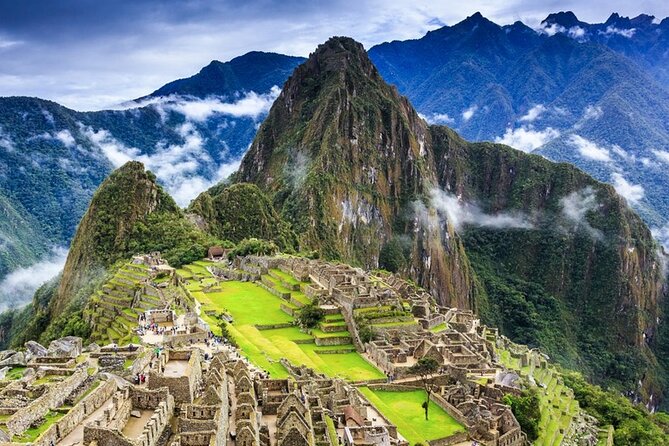
The visit to Ollantaytambo lasts about 90 minutes. This is one of the most rewarding stops on day one because it combines a living town with a major Inca site.
The ruins include massive terraces, the Temple of the Sun, and carefully planned stone streets. Ollantaytambo served military, agricultural, religious, and royal purposes. Its terraces rise dramatically above the town, giving you a sense of the effort required to shape the valley.
The town itself still follows much of the old Inca urban plan. That makes this stop different from Moray or Machu Picchu. You can look at a ceremonial complex, then notice how the surrounding streets and foundations continue to support modern life.
Ninety minutes is enough for a useful introduction, but not for every corner. If Ollantaytambo interests you most, you may prefer a longer Sacred Valley tour on another day. Here, its additional role as the train departure point makes the stop efficient.
The train from Ollantaytambo to Aguas Calientes
After Ollantaytambo, you take a train to Aguas Calientes, with about two hours scheduled for the ride. Expedition-class tickets are included for the round trip. A Vistadome and Observatory-class upgrade is available for an additional charge, so ask for the current price before you commit.
The train follows the Urubamba River through Andean scenery, greener valley sections, and cloud-forest areas. It is not merely a transfer. It gives you a comfortable change of pace after the road stops and places you close to Machu Picchu by the end of the first day.
Aguas Calientes is the practical base for the night. The included hotel is Hotel Pucara Machupicchu. The plan does not give a detailed room description, so you should confirm the room category, breakfast arrangements, and luggage policy before departure.
Sleeping in town is a major advantage. You do not have to make the long return to Cusco after visiting the citadel. You wake near the mountain and can focus on the main event.
The bus ride up to Machu Picchu
On day two, you take the bus from Aguas Calientes to Machu Picchu. The ride takes about 40 minutes and climbs through mountain scenery beside the Sacred River and its steep canyon.
The bus is included round trip. This saves you from arranging the most important short connection yourself, though you should follow the meeting instructions closely because the schedule is tight.
The road is part of the anticipation. It winds upward through thick vegetation and terraced slopes before reaching the entrance area. I like that the trip does not treat the bus as an afterthought. It is the final approach to the citadel, and the changing views help explain why this site feels so separate from the valley below.
Three hours inside the Machu Picchu citadel
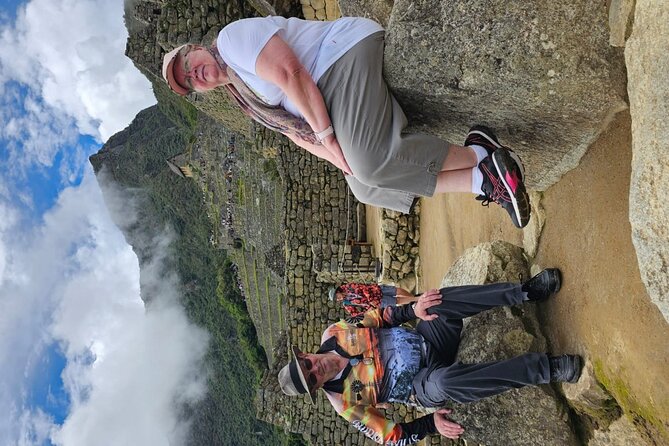
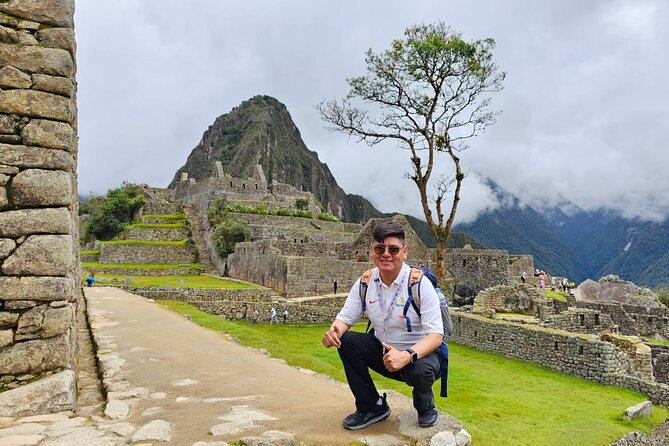
The central experience is a three-hour guided tour with a private guide. The planned highlights include the Temple of the Sun, Main Plaza, Intihuatana, and Temple of the Three Windows.
Three hours is a useful amount of time for a first visit. You can see the major areas without rushing through the entire citadel in a blur. A guide also gives the stones a human and political context, explaining how architecture, religion, farming, and mountain geography fit together.
The quality of this part depends heavily on the individual guide. César is praised for giving an excellent Machu Picchu visit, while one dissatisfied account describes a guide who paid too much attention to a phone. That contrast is worth taking seriously. Ask in advance who will guide your group and confirm that the tour is private, as promised.
The tour is built around the most important areas rather than a long independent wander. If you want a particular section, tell the guide early. Site routes and timing can limit flexibility, so clear communication matters.
Machu Picchu is the reason most people choose this package, but the visit works best when you arrive rested and prepared for a concentrated three hours. The schedule gives you the main sites, not unlimited time for quiet observation.
Returning to Aguas Calientes and Ollantaytambo
After the guided visit, the bus carries you back to Aguas Calientes in about 40 minutes. You have time for lunch at one of the town’s restaurants and a walk through its artisan shops before the return train.
The plan does not clearly state that this second lunch is included. Treat it as a personal expense unless the operator confirms otherwise. The same applies to purchases in town.
The return train to Ollantaytambo takes about two hours. You can relax and watch the valley pass by, then meet transport for the final ride to your Cusco hotel or the original meeting point.
This ending is practical but long. After three hours at Machu Picchu, a bus, lunch, shopping, another train, and a road transfer can leave you tired. The benefit is that the entire return chain is organized for you.
What the $589.05 price really covers
At $589.05 per person, this is not a budget day trip. The value comes from combining several costly and difficult pieces: Machu Picchu admission, round-trip rail tickets, buses, a hotel night, lunch, Sacred Valley transport, and a private three-hour guide.
The price is easier to justify if you are short on time or uncomfortable coordinating Peru’s separate transport links. The rail connection, Machu Picchu entry, bus tickets, and hotel all need to line up. The strongest service accounts describe Edgar and his team arranging taxis, buses, trains, vouchers, and tickets, including a last-minute case with no Machu Picchu tickets in hand.
That kind of help can be worth paying for. It can save you from spending valuable holiday hours solving transport problems.
Still, ask for a written breakdown. Confirm the train class, hotel, meals, entrance tickets, and any extra charges for the Vistadome or Observatory service. Personal expenses are not included. The Sacred Valley portion is described as a short group for that day, while the overall activity is private, so ask how that distinction applies to your departure.
The service question: strong care, but confirm the details
The most praised part of this experience is personal attention. Edgar is described as friendly, English-speaking, dependable in several transport handoffs, and committed to helping people through a difficult last-minute booking. Another account gives high marks to Edgar, César, and the team for making taxis and trains easy to manage.
That level of care is a real advantage in Cusco, where altitude, changing schedules, and several separate transport legs can make a short trip complicated.
You should also consider the negative account before paying. One family reported poor guiding and missed airport transportation promises, followed by difficulty reaching Edgar. The response expressed regret about the guide but did not fully resolve the transport complaint.
My practical advice is simple: get every transfer in writing, including pickup time, driver contact, hotel details, guide name, and what happens after the return train. Do not rely only on a verbal promise of a complimentary ride, especially if you have a flight to catch.
The activity confirms at booking, offers flexible pickup from a hotel or airport, and provides 24/7 assistance. It ends back at the meeting point, with customized pickup possible from other locations in Peru if arranged in advance.
Who should choose this two-day trip
I would consider this tour if you want:
- A short route from Cusco to Machu Picchu and back
- A private activity with assistance at transport changes
- A hotel night in Aguas Calientes
- A guided Machu Picchu visit rather than independent sightseeing
- A quick introduction to several Sacred Valley sites
- Help arranging a complicated last-minute trip
I would hesitate if you want a slow Sacred Valley visit, several free hours at each ruin, or flexible cancellation. The experience is non-refundable and cannot be changed after booking. That is especially important when your plans depend on flights, health, or uncertain arrival times.
It is also worth thinking about altitude and pace. The tour starts in Cusco and packs several sites into one day. The provided information says most people can participate, but it does not give specific medical guidance. If you have concerns, ask the operator before booking.
Should you book it?
Book this experience if your priority is efficient coordination and seeing the Sacred Valley plus Machu Picchu in two days. The strongest reasons are the included rail and bus connections, the hotel in Aguas Calientes, the three-hour private guide, and the hands-on support associated with Edgar and his team.
Before paying, confirm the guide’s name, every transfer, the exact hotel arrangement, and which meals are included. Also ask about the Vistadome upgrade and clarify whether the Sacred Valley portion is fully private or partly shared.
I would not choose it for a relaxed, open-ended holiday. I would choose it for a short Peru visit when missing a train or ticket connection is a bigger worry than having extra time. At this price, clear communication is part of the value.
FAQ
How long does the experience last?
The experience lasts approximately two days. Day one covers the Sacred Valley and the train to Aguas Calientes. Day two includes Machu Picchu, the return train to Ollantaytambo, and transport back toward Cusco.
Is hotel pickup available?
Yes. Pickup can be arranged from your hotel or the airport if you provide the location in advance. Pickup from other cities, ports, train stations, or airports in Peru may also be customized.
Where does the activity start and end?
The listed meeting point is Plaza Regocijo in Cusco. The activity ends back at the meeting point, with transport to your Cusco hotel described after the return train.
Is the Machu Picchu entrance ticket included?
Yes. Machu Picchu admission is included, along with a three-hour guided tour by a private guide.
Are the train tickets included?
Yes. Round-trip Expedition-class train tickets are included. Vistadome and Observatory-class service can be requested for an additional charge.
Is transportation from Aguas Calientes to Machu Picchu included?
Yes. Round-trip bus transportation between Aguas Calientes and Machu Picchu is included.
Can I cancel or change the booking?
No. The experience is non-refundable and cannot be changed for any reason. Any cancellation or amendment results in no refund.
Just added in Cusco
- Cusco Private Transportation for 2026★ 5.0 · 4 reviews
- Private Transfer from Airport to Hotel in the City of Cusco★ 4.0 · 5 reviews
- Best Cusco walking tour: dinner street food tasting★ 4.5 · 11 reviews
- Private Tour to Pisac Market and Pisac Ruins★ 5.0 · 4 reviews
- Machu Picchu Day Trip With Panoramic Train from Cusco★ 5.0 · 10 reviews
- Sacred Valley Private Tour from Cusco, Guide and Driver only★ 5.0 · 4 reviews
- Sacred Valley of the Incas Tour★ 5.0 · 12 reviews
- Private Tour of the Mountain of Colours by Quad★ 5.0 · 7 reviews
Machu Picchu Tours, compared.
Classic Inca Trail Trek 4D/3N to Machu Picchu (Group Service)
Read our review →
2-Day Inca Trail to Machu Picchu with Panoramic Train
Read our review →
From Cusco: Full-Day Group Tour of Machu Picchu
Read our review →

2-Day Tour: Sacred Valley and Machu Picchu by Train
Read our review →
Machu Picchu: Full-Day Tour from Cusco with Optional Lunch
Read our review →
Machu Picchu Full Day from Cusco by Panoramic Train
Read our review →Browse the lists this tour appears in