
Reviewed · SACRED VALLEY TOURS
Chinchero, Maras, Moray and Salt Mines from Cusco, Guide & driver
The Incas left a day of surprises. This private Cusco tour links Chinchero’s weaving traditions with the remarkable circular terraces at Moray and the bright salt pools of Maras. I like the personal pace and the chance to ask questions in a small private group. I also like that hotel pickup, private transport, and an English-speaking guide are included.
The main drawback is that site entrance fees and meals are extra, and the listed admission charge must be paid in Peruvian soles at the sites. The schedule is also full, so you will spend much of the day in the vehicle as well as on foot.
In This Review
- Key things to know before booking
- Why this Cusco day trip earns its place
- Leaving Cusco for Chinchero
- Chinchero church, market, and textile work
- Moray’s circular terraces and Inca farming
- Maras Salt Mines and the working pools
- A guide makes the difference here
- Timing, transport, and what the $130 covers
- Who will enjoy this experience most
- Practical advice before you go
- Should you book this private Maras, Moray, and Chinchero tour?
- FAQ
- How long does the tour last?
- Is hotel pickup included?
- Is this a private tour?
- Is the tour offered in English?
- How many people are required to book?
- Are entrance fees included?
- Are meals included?
- Can the tour be customized?
Key things to know before booking
- Moray is more than a photo stop: Your guide explains how the Incas used its circular terraces to test crops at different heights.
- Chinchero adds living culture: You can see alpaca and vicuña yarn cleaned, dyed, and woven into clothing and textiles.
- Maras is still a working salt site: Salt water fills hand-built pools, then the sun does the drying.
- Private transport keeps the day flexible: Pickup and drop-off at your Cusco hotel are included.
- Guide quality matters here: Danny has been praised for clear English, patience, and enthusiasm for Inca culture, while Freddy was singled out as a smooth driver.
- Bring soles for admission: Fees are paid on site in Peruvian currency, not US dollars.
Why this Cusco day trip earns its place
At $130 per person, this is not the cheapest way to see Maras, Moray, and Chinchero. But it is a private, roughly eight-hour outing with hotel pickup, private transport, a professional guide, and hotel drop-off. If you value comfort and explanation over the lowest possible price, the cost can make sense.
The real value is the combination of places. Moray shows a strange and carefully planned Inca agricultural site. Maras connects old engineering with a salt trade that remains visible today. Chinchero brings you closer to present-day Andean craft, markets, weaving, and colonial architecture.
That mix gives the day more weight than a quick circuit of ruins. You are not only looking at stonework. You are also seeing how farming, salt production, religion, and textile work shaped life in the Cusco region.
A private outing helps when you want to stop for photographs, ask about local customs, or spend less time at a market. It also means the tour is limited to your own group. That is useful if your interests lean toward history, textiles, photography, or simply keeping the day easy.
The trip is offered in English, and the guide is described as having excellent English. Danny has been praised for explaining Inca history clearly and for being patient when a visitor practiced Spanish. That kind of exchange can make a private tour feel more human than a standard scripted presentation.
More Sacred Valley trips:
- From Cusco: Moray, Maras Salt Mines & Chinchero Weavers Tour
★ 4.8 · 1,925 reviews - 2-Day Tour: Sacred Valley and Machu Picchu by Train
★ 5.0 · 1,127 reviews - Cusco: Sacred Valley, Pisac, Ollantaytambo, Salt Mines Moray
★ 4.6 · 1,058 reviews
Leaving Cusco for Chinchero
Pickup is offered from your Cusco hotel or another agreed location. The morning drive to Chinchero takes about an hour, with views across the Sacred Valley area along the way.
That first ride matters. You get a quiet transition from the city to the highland countryside instead of beginning the day at a crowded entrance gate. Your private driver also removes the need to arrange separate taxis between three widely spaced sites.
Chinchero is usually the gentlest introduction to the day. The town combines Andean traditions with a colonial church and a local market. You should expect about an hour at the church and market, followed by another hour focused on Chinchero’s textile work.
The schedule gives you enough time to look around, but not an unlimited amount of time to shop. If a particular textile interests you, ask your guide how much time remains before moving on.
Chinchero church, market, and textile work
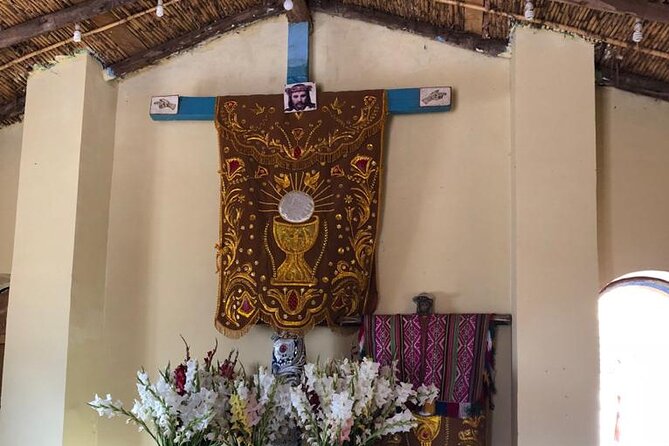
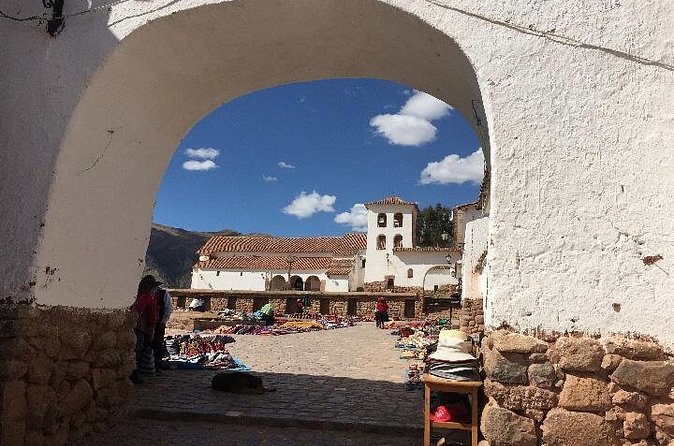
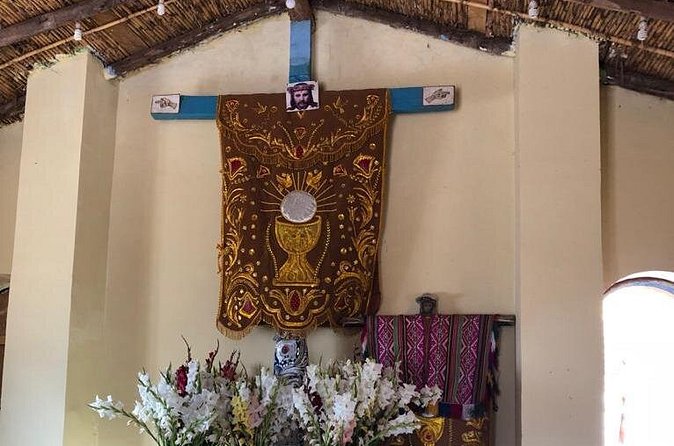
The Iglesia Colonial de Chinchero is an adobe church, described as one of the few churches made from that material. Its presence gives the visit a useful contrast: Andean building traditions sit beside a colonial religious structure.
The church visit has an admission charge listed separately from the tour. One account places the fee at about three soles, while the formal tour information gives the archaeological admission as PEN0.70 per person. Since the supplied details conflict, carry small amounts of Peruvian currency and confirm the current fee locally.
The market is the more active part of the stop. Chinchero is known for colorful textiles and traditional handicrafts, making it a good place to look for a woven souvenir early in your trip.
The strongest part is the textile demonstration. You can learn how alpaca and vicuña yarn is cleaned, dyed, and woven into garments. This is more useful than simply seeing finished scarves on a table because you get a sense of the work behind them.
I would treat the market as a cultural stop first and a shopping stop second. Prices, materials, and quality can vary, so ask what fiber was used and how the item was made before buying. The guide can help explain the process, and the private format gives you room to ask questions without holding up a large group.
Several accounts praised this section, especially the chance to watch wool preparation and weaving. That praise makes sense. The demonstration gives the craft a human scale and helps you understand why Chinchero is more than a souvenir market.
Moray’s circular terraces and Inca farming
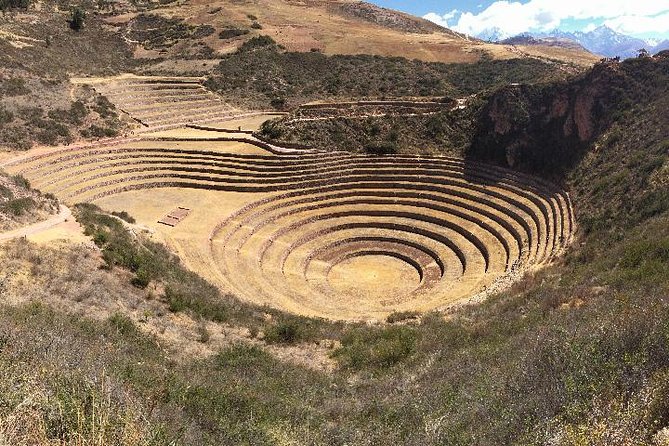
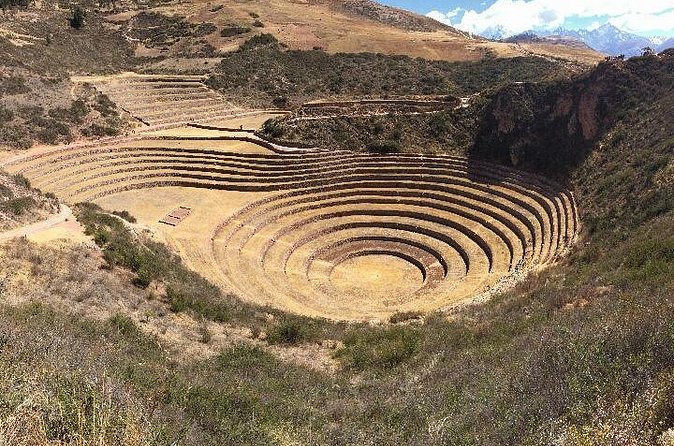
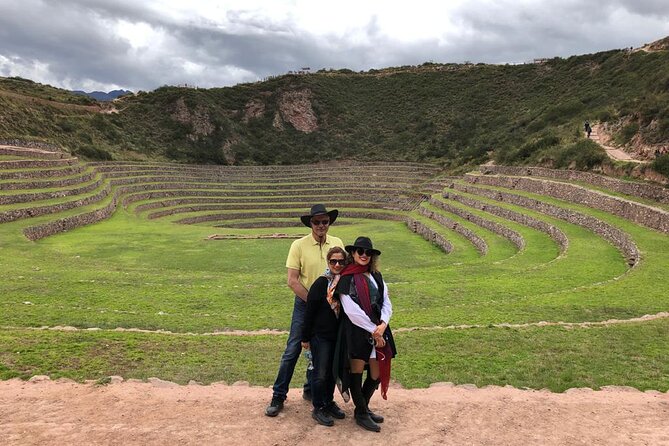
Moray is the day’s most unusual archaeological site. Its broad circular terraces sink into the ground like a giant amphitheater, with each level creating a different growing environment.
Your guide explains the accepted idea that the Incas used Moray as an agricultural research station. By growing crops at different heights, they could study how plants responded to changes in temperature and altitude.
The design is the point. You do not need a long lecture to see that the terraces were carefully shaped, but the explanation helps you grasp the practical thinking behind them. This was not decoration. It was an attempt to make high-altitude farming more productive.
Allow time for photographs, since the shape of the site is difficult to understand from a single angle. Your guide can point out how the terraces descend and how the structure resembles a grass-covered theater.
The site is also a reminder that Inca achievement was not limited to temples and walls. Farming required planning, testing, water control, and close attention to local conditions. Moray makes that idea easy to see.
The supplied schedule gives around two hours to the Maras and Moray portion together, though the exact split can vary. That may feel short if you want a long walk or many photographs. On the other hand, it keeps the full day moving and leaves room for the other stops.
More things to do in Cusco:
- Classic Inca Trail Trek 4D/3N to Machu Picchu (Group Service)
★ 5.0 · 8,653 reviews - Cusco: Rainbow Mountain and Red Valley Day Trip with Meals
★ 4.9 · 4,893 reviews - Machu Picchu: 4-Day Inca Trail Trek with Panoramic Train Ride
★ 5.0 · 4,568 reviews - Salkantay Classic Trek 5 Days from Cusco
★ 5.0 · 4,062 reviews
Maras Salt Mines and the working pools
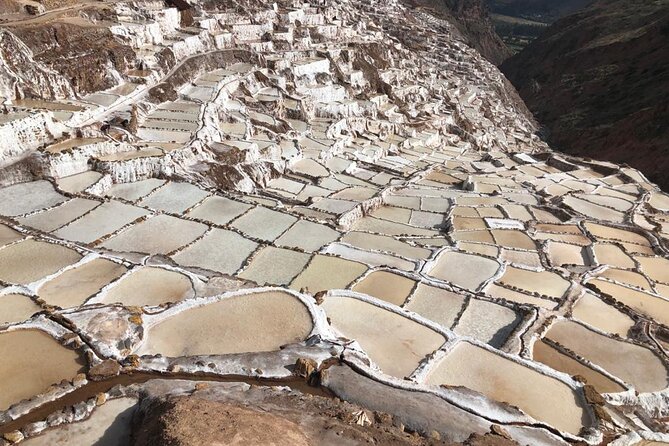
The Maras Salt Mines, also called Salinas, are made up of many small terraced pools. Salt water flows into the pools, then evaporates under the sun, leaving salt behind for collection.
This is one of those places where the process is as interesting as the view. You can learn how the salt is harvested and, when conditions allow, see someone working the pools. The pale terraces spread across the mountainside and create a striking pattern.
The site looks different depending on weather and season. One account noted that the pools would be whiter in the dry season, while rain softened the effect during a late December visit. Even in wetter conditions, the salt pools can still be appreciated, but you should keep your expectations realistic if you want the classic bright-white photographs.
You may also find salt available to buy. That makes a practical souvenir, though the larger value of the stop is seeing a traditional production method rather than simply purchasing a packet.
Maras works especially well after Moray. Moray shows the Incas adapting crops to altitude. Maras shows people adapting water and sunlight to produce salt. The two sites are different, but together they reveal the practical side of Andean ingenuity.
The salt mines can also be more exposed than the town stops. The tour information does not specify equipment or walking conditions, so sensible footwear and protection from strong highland sun are worth considering. Keep your hands free for uneven paths and photographs.
A guide makes the difference here
This tour depends heavily on the quality of the guide because each stop benefits from explanation. Without context, Moray can look like a large hole with terraces, and Maras can seem like a scenic patch of white pools. A good guide connects the places to farming, trade, craft, and colonial history.
Danny has been praised for clear English, patience, and a genuine affection for local culture. He also made sure a visitor had the chance to try chicha, a traditional drink, which added a small but memorable cultural moment to the day.
José Luis has also been described as responsible, friendly, and attentive. Freddy, the driver, received specific praise for making the ride comfortable and easygoing. Since guide assignments can vary, you should not assume one particular person will lead every departure, but these names give you a sense of the service style associated with the operator.
The best use of a private guide is to speak up. Ask how the terraces worked, why local textiles use particular fibers, or how the salt pools are maintained. You will get more from the day if you treat the guide as a local interpreter rather than simply someone who points out monuments.
Timing, transport, and what the $130 covers
The tour lasts about eight hours and includes pickup and return to your Cusco hotel. The private vehicle is a major convenience because these stops are not arranged around one simple public transport route.
You are paying for more than admission. The price includes private transportation, a private professional guide, and door-to-door service. For a couple or small group that wants a calm day without coordinating several rides, that can be a fair trade.
The price does not include food. Plan to handle meals independently, though the supplied details do not specify a restaurant or lunch arrangement. It also does not include entrance fees, which must be paid on site in soles rather than US dollars.
At least two people are required per booking. That makes the per-person rate easier to justify for couples or friends, but it is less convenient for a solo visitor who cannot join the tour alone under the stated terms.
Most people can participate, according to the tour information. Still, this is an eight-hour sightseeing day with several outdoor stops, so you should be comfortable getting in and out of a vehicle and walking around archaeological areas and salt terraces.
Who will enjoy this experience most
I would recommend this outing to anyone who wants a broad look at the Cusco region beyond the city itself. It suits people who enjoy archaeological sites but also want contact with current Andean craft traditions.
It is particularly good for:
- Couples or families who prefer a private vehicle
- First-time visitors seeking a guided introduction to Moray and Maras
- Anyone interested in Inca farming and engineering
- Shoppers looking for handwoven textiles
- Photographers drawn to unusual shapes and highland scenery
- Visitors who want English explanations throughout the day
It may be less suitable if you want a slow, single-site visit. The tour covers three areas in one day, and the driving takes a meaningful part of the schedule. It also may not suit someone focused only on major Inca ruins, since Chinchero’s church, weaving, and Maras salt production are just as important as the archaeology.
The tour can be customized to your interests, which is one of its better features. Ask in advance if you care more about textiles, photographs, local history, or agricultural design. Customization does not mean adding unlimited stops, but it should help shape the time you spend at each included place.
Practical advice before you go
Bring Peruvian soles for entrance fees. The charge is not to be paid in US dollars, and the formal information says fees are paid on site. Because the supplied amount appears unusually low and another account refers to three soles for the church, confirming the current figure with the operator is sensible.
Keep some space in your day for the market. Chinchero is not merely a quick restroom stop. If you want a textile, take time to ask about alpaca, vicuña, dyeing, and weaving rather than making a rushed purchase.
Expect changing weather. A late-year visit included a short rain shower in Chinchero, while the salt mines looked less white in wet conditions. The exact weather cannot be promised, so bring protection that lets you continue comfortably.
The tour has a non-refundable cancellation policy. Once booked, it cannot be changed or refunded if you cancel or request an amendment, so check your dates carefully before paying.
Should you book this private Maras, Moray, and Chinchero tour?
Book it if you want three distinctive stops, a private vehicle, and a guide who can explain the connection between Inca agriculture, salt production, and Andean textiles. The strongest reason to choose it is the personal attention, especially if you value questions and a flexible pace.
Think twice if your budget is tight or if you prefer to arrange transport yourself. Admission fees and meals are extra, the day is fairly full, and the non-refundable policy leaves little room for a change of plans.
For a couple or small group based in Cusco, I find the $130 price reasonable for the service included. Chinchero gives you culture you can still see and touch, Moray explains Inca farming in a memorable way, and Maras offers one of the region’s most unusual working sites. Together, they make a strong day away from Cusco.
FAQ
How long does the tour last?
The tour lasts approximately eight hours, including the journey from Cusco and return to your hotel.
Is hotel pickup included?
Yes. Pickup and drop-off are offered from your Cusco hotel or another agreed location.
Is this a private tour?
Yes. Only your group participates, and the tour uses private transportation with a private guide.
Is the tour offered in English?
Yes. It is offered in English, and the guide is described as having perfect English.
How many people are required to book?
A minimum of two people is required per booking.
Are entrance fees included?
No. Entrance fees to the archaeological sites are not included and must be paid on site in Peruvian soles, not US dollars. The listed information gives the fee as PEN0.70 per person.
Are meals included?
No. Meals are not included in the tour price.
Can the tour be customized?
Yes. The private tour can be customized to your interests, subject to the time available during the day.
Just added in Cusco
- Private Transfer from Airport to Hotel in the City of Cusco★ 4.0 · 5 reviews
- Best Cusco walking tour: dinner street food tasting★ 4.5 · 11 reviews
- Cusco Private Transportation for 2026★ 5.0 · 4 reviews
- Private Tour to Pisac Market and Pisac Ruins★ 5.0 · 4 reviews
- Machu Picchu Day Trip With Panoramic Train from Cusco★ 5.0 · 10 reviews
- Sacred Valley Private Tour from Cusco, Guide and Driver only★ 5.0 · 4 reviews
- Sacred Valley of the Incas Tour★ 5.0 · 12 reviews
- Private Tour of the Mountain of Colours by Quad★ 5.0 · 7 reviews
Sacred Valley Tours, compared.
From Cusco: Sacred Valley & Maras Salt Mines Tour with Lunch
Read our review →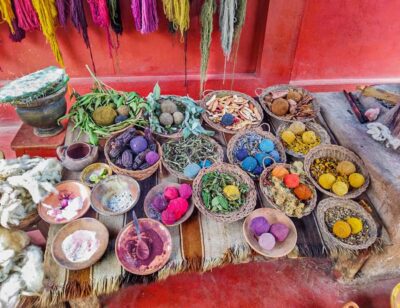
From Cusco: Moray, Maras Salt Mines & Chinchero Weavers Tour
Read our review →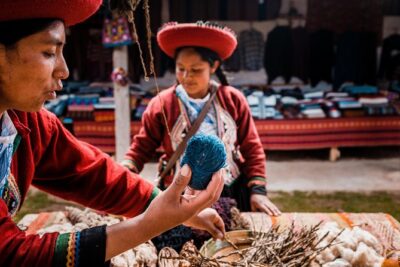
2-Day Tour: Sacred Valley and Machu Picchu by Train
Read our review →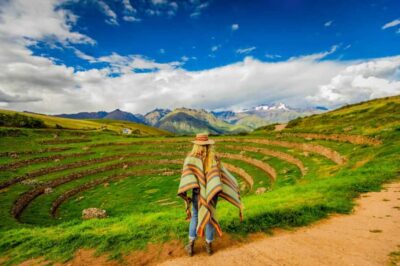
Sacred Valley, Pisac, Ollantaytambo, Salt Mines Moray
Read our review →
Chinchero,Moray & Salt Mines drop-off in Ollantaytambo
Read our review →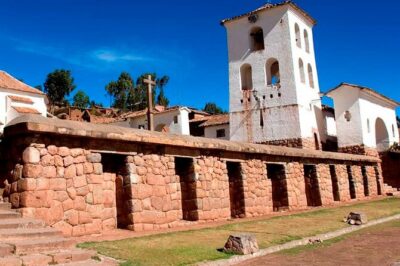
Sacred Valley and Maras Moray Tour with Full Day Buffet Lunch
Read our review →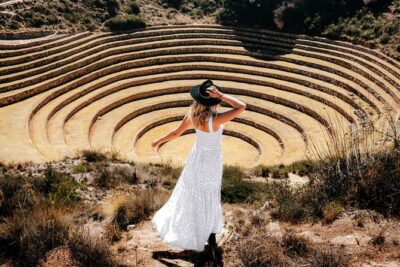

Browse the lists this tour appears in