
Reviewed · INCA TRAIL AND SALKANTAY TREKS
Colca Canyon Trekking – 3 Days
This canyon demands respect. The three-day trek from Arequipa gives you time to see Colca Canyon on foot, with meals, transport, two nights in simple cabins, and an English-speaking guide arranged for you. I especially like the small maximum group of six, which keeps the walk more personal, and the way the price covers the Colca entrance fee and hot springs rather than leaving you to sort out extras along the way.
The main drawback is the trail itself. This is not a gentle sightseeing walk. Loose gravel, fist-sized rocks, long descents, high elevation, and a three-hour climb out make a moderate level of fitness essential. You should also expect a very early start and basic accommodation rather than hotel comfort.
In This Review
- Key points to know before you book
- Why this three-day trek is worth considering
- Day 1: From Arequipa to the canyon floor
- Day 2: Villages, canyon views, and Sangalle
- Day 3: The climb out and the long ride home
- What the $265 price really covers
- How difficult is the trail?
- The small-group and guide advantage
- Who should book this Colca Canyon experience?
- Booking advice and cancellation terms
- Should you book it?
- FAQ
- How long is the Colca Canyon trekking tour?
- Where does the tour begin?
- How large is the group?
- Is an English-speaking guide included?
- How difficult is the trek?
- Where do you stay during the trek?
- Are meals included?
- Are drinks and bottled water included?
- Is the Colca entrance fee included?
Key points to know before you book
- Three hours down, three hours up: The hardest parts are the descent from Cabanaconde and the climb back out on Day 3.
- A small group of six or fewer: You get a better chance to ask questions and keep a steady pace.
- Cruz del Condor comes early: The famous lookout is visited on Day 1, after breakfast in Chivay.
- Sangalle brings a welcome break: Day 2 ends near a swimming pool, with canyon views around you.
- Most major costs are covered: Transport, meals, entrance fees, hot springs, cabins, and an English-speaking guide are included.
- Plan ahead: The tour is booked an average of 108 days in advance, so last-minute space may be limited.
Why this three-day trek is worth considering
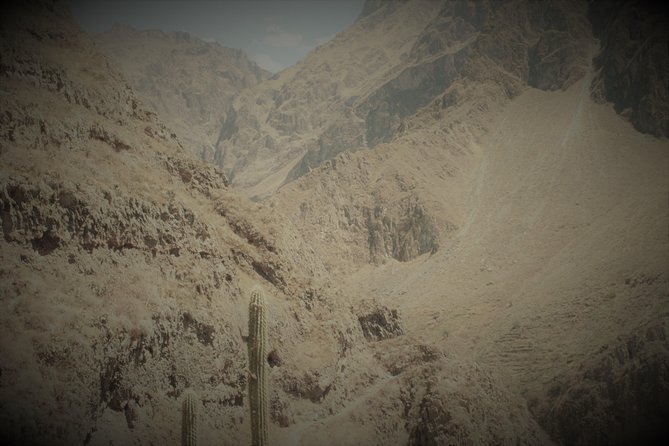
Colca Canyon is a place where scale matters. From a lookout, you see a vast cut in the earth. On foot, you feel the change in elevation with every step. The three-day schedule gives you more than a quick viewpoint visit, and that is the central appeal.
I like this tour for its simple structure. You are picked up in Arequipa, taken through the Colca Valley, guided into the canyon, fed along the way, and returned to the city. You do not need to arrange separate transport, find a local guide, buy canyon tickets, or negotiate the hot springs visit.
The second advantage is the group size. With no more than six people, the outing should feel less like a procession and more like a shared hike. A small group also matters on a demanding trail. You can ask for a short pause, hear instructions clearly, and avoid being buried in a large crowd.
Still, this is not the right choice if you want a relaxed coach tour. The canyon trail is rough, and the return climb is serious. One active hiker described struggling despite being in good shape, mainly because of the loose gravel, large rocks, and elevation. Take that warning seriously.
More hikes and treks in Arequipa:
- 2 day 1 night trek / Colca Canyon
★ 5.0 · 1,069 reviews - From Arequipa: Sillar Route Trek
★ 4.2 · 461 reviews - Colca Canyon Trek 3 Day 2 Night
★ 5.0 · 328 reviews
Day 1: From Arequipa to the canyon floor
Your day starts between 3:00 and 3:30 in the morning. That early pickup allows the group to cover the long drive toward Chivay and continue through the Colca Valley without losing the best part of the day.
The vehicle is air-conditioned, which is useful after such an early start and on the longer road sections. After roughly three hours, you reach Chivay for breakfast. This is your first proper meal of the day, so do not treat it as a minor stop. You will need the energy before the hike begins.
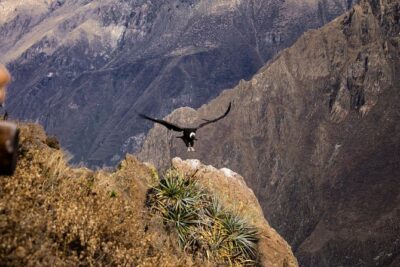
From Chivay, the route continues through the Colca Valley to Cruz del Condor. The stop lasts about 30 minutes, giving you time to wait for the Andean condors to appear. These huge birds are the reason this lookout is famous, but wildlife never follows a timetable. You may get a clear sighting, or you may spend much of the stop watching the canyon and waiting.
That uncertainty is part of the stop’s character. The canyon is impressive even when a bird stays out of view. Keep your expectations sensible, enjoy the lookout, and do not let the condor wait overshadow the rest of the day.
After another 15-minute drive, you reach Cabanaconde. This is where the serious walking begins. The first trek takes about three hours, mostly downhill, toward the San Juan de Chuccho area.
Downhill sounds easy until you are on a rough canyon path. Loose gravel and fist-sized stones can make each step less secure, especially when your legs are still adjusting to the elevation. Good footwear is important, and trekking poles would be useful if you already own them, though they are not listed as part of the tour equipment.
The reward is a close view of the canyon from inside it. You are no longer looking across a giant gorge from a road or platform. You are moving through it, with the walls rising around you and the terrain changing under your feet.
Your first night is in a cabin in the San Juan de Chuccho area. The accommodation is described as comfortable, but you should still think of it as basic canyon lodging, not a city hotel. Dinner is included, as are the other meals scheduled during the three-day program.
Day 2: Villages, canyon views, and Sangalle
After breakfast, you walk for about three hours toward Sangalle. The route passes through Cisñirgua and Malata, giving the day a different feel from the first descent.
These village sections help break up the physical challenge. Instead of seeing only rock and canyon walls, you pass through inhabited areas along the route. The villages also give the walk a human scale. Colca Canyon is not simply a dramatic natural feature; people live and work in this region.
The walking is still demanding. A three-hour trek on a rough surface can feel very different from three hours on a smooth path. Pace yourself, drink water regularly, and keep some energy in reserve for the next morning. Bottled water is not included, so you need to budget for drinks and carry enough for the hike.
Sangalle is the day’s big comfort stop. The area offers canyon views and a swimming pool, a welcome chance to rest after the trail. The pool can be especially appealing after the dusty route, but it should be treated as a bonus rather than the main reason to book. The canyon walk remains the heart of the experience.
You spend the second night in another cabin in the canyon. The two included cabin nights make the $265 price easier to assess. If you arranged everything separately, you would still need to cover transport from Arequipa, food, canyon entry, lodging, and the hot springs. Here, those main pieces are bundled together.
Dinner is included on the second night. Since the tour includes breakfast, lunch, and dinner across the program, you have fewer decisions to make during a tiring trip. Drinks are not covered, so bring money for them and remember that bottled water is specifically excluded.
Day 3: The climb out and the long ride home
The final morning starts early with the climb from the canyon back to Cabanaconde. The uphill walk takes about three hours, and for many people it will be the toughest part of the tour.
The distance alone does not tell the full story. You are climbing after two days of walking, and the surface remains loose and rocky. Your pace may be slower than expected. That is normal. The goal is to keep moving steadily rather than race toward the rim.
Once you reach Cabanaconde, breakfast is served. This is well timed. You have earned a proper meal, and eating before the return journey gives you a chance to recover before several more hours in the vehicle.
The transport then heads back toward Arequipa. The return route includes stops for photographs, hot springs, and lunch. The hot springs ticket is included, which adds real value to the final day. After the steep climb, warm water offers a practical way to loosen tired muscles, not just another sightseeing stop.
The journey ends in Arequipa at about 5:00 in the afternoon. That makes this a full final day, even after you finish hiking. If you have an evening flight, train, or fixed appointment, leave plenty of room for delays. The tour’s stated arrival time is around 5:00 p.m., not a guarantee to the minute.
More Colca Canyon trips:
- From Arequipa: Colca Canyon Full-Day Guided Tour with Meals
★ 4.5 · 982 reviews - Tour to the Salinas Lagoon and National Reserve in Arequipa
★ 4.5 · 548 reviews - Colca Full Day Tour
★ 4.5 · 429 reviews - Rafting Arequipa – Chili River Canoeing – Cusipata Rafting Arequipa
★ 5.0 · 332 reviews
What the $265 price really covers
At $265 per person, this is not a bare-bones guided walk. The price includes an air-conditioned vehicle, an English-speaking guide, meals for the three days, two nights in canyon cabins, the Colca entrance ticket, and the hot springs ticket.
That package has practical value. The transport alone is important because the tour starts and finishes in Arequipa while the hiking begins in Cabanaconde. You are not paying only for the trail guiding. You are also paying for the logistics that connect the city, valley, canyon, and return route.
The included food is another advantage. Breakfast is provided each day, lunch is included throughout the trip, and dinner is included for both nights. You still need money for bottled water and drinks, but the largest meal costs are already handled.
The price is strongest for someone who wants an organized trip without paying for luxury. The cabins are comfortable according to the available information, but you should not expect upscale rooms or resort service. If you prefer private transfers, high-end lodging, or a slower pace, this package may feel too basic.
How difficult is the trail?
The tour asks for moderate physical fitness, but the word moderate should not make you careless. Day 1 includes about three hours descending from Cabanaconde. Day 2 adds another three hours of canyon walking. Day 3 brings the three-hour uphill climb back to Cabanaconde.
The trail surface is the major issue. Expect loose gravel and rocks, including stones around the size of a fist. That footing can tire your ankles and make the downhill section surprisingly hard. The elevation adds another challenge, even if you are accustomed to regular exercise.
I would choose sturdy hiking shoes over casual trainers. Bring a small daypack, sun protection, and enough water for the walking sections. Since bottled water is not included, plan for that expense before you set out.
You should also be comfortable with basic accommodation and a very early schedule. This trip rewards preparation. It does not reward pretending that a canyon trek is just a long walk with a nice view.
The small-group and guide advantage
The maximum group size is six people. That is one of the most useful details in the entire package. A small group makes it easier to hear the English-speaking guide, stay together, and ask questions about the route or villages.
It also helps with the pace. People still need to share the walking schedule, but six hikers are easier to manage than a large group. If you are worried about feeling anonymous on an organized tour, this setup should feel more personal.
The guide also removes a language barrier during a route that includes transport, meals, lodging, village crossings, and several scheduled stops. That support is especially useful when you are tired and trying to understand where to go next.
No individual guide names are provided, so I cannot recommend a particular person. The important point is the English-language assistance and the small group rather than a promised personality.
Who should book this Colca Canyon experience?
I would recommend this trek to an active visitor who wants to experience the canyon from inside it, not just from a roadside lookout. It is a good fit if you value included meals, organized transport, a small group, and an English-speaking guide.
It also suits you if you want a physical challenge with a clear beginning and end. The route has a strong rhythm: drive in, descend, cross the canyon area, rest at Sangalle, climb out, and return to Arequipa.
I would hesitate to recommend it to anyone with limited walking fitness, a strong dislike of early mornings, or difficulty on steep and uneven ground. The photos may look inviting, but they do not show how tiring the surface can be.
The tour is also less suitable if you need complete schedule flexibility. Pickup is fixed between 3:00 and 3:30 a.m., the condor stop is about 30 minutes, the walks take about three hours each, and arrival back in Arequipa is around 5:00 p.m. That structure is helpful for most people, but it leaves little room for changing plans.
Booking advice and cancellation terms
This experience is commonly reserved well ahead, with bookings averaging 108 days in advance. If your dates are fixed, booking early is sensible, especially because the group is capped at six people.
Free cancellation is available up to 24 hours before the start time. Changes or cancellations made within 24 hours are not accepted for a refund. The tour may also be changed or refunded if poor weather prevents departure or if the minimum number of participants is not reached.
The experience operates Monday through Saturday during the stated operating period, from June 15, 2019 through December 8, 2026. Confirmation is normally issued at booking, though reservations made within one day of departure are subject to availability.
Should you book it?
Book this three-day Colca Canyon trek if you want strong scenery, a real hike, and a well-organized package at a fair price. The 96 percent recommendation rate and 4.9 rating from 23 ratings fit the tour’s best qualities: good organization, fresh and filling food, comfortable canyon cabins, and guides who help the trip run smoothly.
Book with care, not bravado. The route is physically demanding, the rocks are loose, and the uphill exit can test even active hikers. If you prepare for the trail and accept basic lodging, this is a memorable way to experience Colca Canyon at close range. If you want a soft adventure, choose a lookout tour instead.
FAQ
How long is the Colca Canyon trekking tour?
The experience lasts approximately three days. The itinerary begins with an early pickup in Arequipa on Day 1 and returns to the city at about 5:00 p.m. on Day 3.
Where does the tour begin?
Pickup is provided in Arequipa between 3:00 and 3:30 a.m. on the first day.
How large is the group?
The tour has a maximum of six travelers.
Is an English-speaking guide included?
Yes. An English-speaking guide is included to help with the trek and reduce language barriers during the experience.
How difficult is the trek?
You should have a moderate level of physical fitness. The route includes about three hours of downhill walking on Day 1, about three hours of walking on Day 2, and about three hours of uphill walking on Day 3.
Where do you stay during the trek?
You stay in a cabin in the canyon for two nights, including one night in the San Juan de Chuccho area and one night in Sangalle.
Are meals included?
Yes. Breakfast and lunch are included for all three days, and dinner is included for both nights.
Are drinks and bottled water included?
No. Bottled water and drinks are not included in the price.
Is the Colca entrance fee included?
Yes. The Colca entrance ticket and the hot springs ticket are included.
Just added in Arequipa
- Sillar Route★ 5.0 · 4 reviews
- Salinas Lagoon + Mini Volcano DE Lojen★ 5.0 · 9 reviews
- 3-Day Colca Canyon trek with Professional Guide★ 5.0 · 40 reviews
- Full Day Tour To The Salt Lake Salinas in Arequipa★ 4.5 · 34 reviews
- Walking City tour including the Monastery of Santa Catalina★ 5.0 · 6 reviews
- Trekking, Waterfalls and Thermal Baths★ 4.5 · 47 reviews
- Downhill Tour – Mountain Bike in Arequipa★ 3.5 · 5 reviews
- 2 Days 1 Night trekking Through Colca Canyon, Private room★ 5.0 · 16 reviews
Inca Trail and Salkantay Treks, compared.
Classic Inca Trail Trek 4D/3N to Machu Picchu (Group Service)
Read our review →
Salkantay Trek 5D/4N with Glass Cabins, Domes and Hobbit House
Read our review →2-Day Inca Trail to Machu Picchu with Panoramic Train
Read our review →
Browse the lists this tour appears in