Reviewed · SACRED VALLEY TOURS
Cusco: Maras and Moray Tour ending in Ollantaytambo
Salt, stone, and Inca engineering fill this half-day. This tour links Moray’s circular terraces with the more than 3,000 salt pools at Maras, then finishes at Ollantaytambo, making it a useful way to see several major Sacred Valley sights without returning to Cusco. I especially like the one-way route and the small group limit of 15 people.
The $49 price is attractive because it includes Cusco pickup, transport, a bilingual guide, buffet lunch in Urubamba, and drop-off in Ollantaytambo. The main catch is a busy schedule, plus extra entrance costs, and the tour may feel rushed if you want long photo stops or detailed explanations.
In This Review
- Key points to know before booking
- Why this route works well from Cusco
- Moray’s sunken circles and Inca farming experiments
- Maras and the 3,000-plus salt pools
- Lunch in Urubamba and the Sacred Valley drive
- Ollantaytambo’s stonework and final stop
- What the $49 price really includes
- How to prepare for this early morning outing
- Who should book this Maras and Ollantaytambo tour?
- FAQ
- What time does pickup begin in Cusco?
- Where does the tour end?
- Can I take a train after the tour?
- Is transportation included?
- Is lunch included?
- Are entrance fees included?
- What languages does the guide speak?
- How large is the group?
- Can I bring luggage?
- Is the tour accessible to wheelchair users?
- Should you book it?
Key points to know before booking
- Moray comes first: You visit the unusual circular Inca terraces early in the day, before continuing toward Maras.
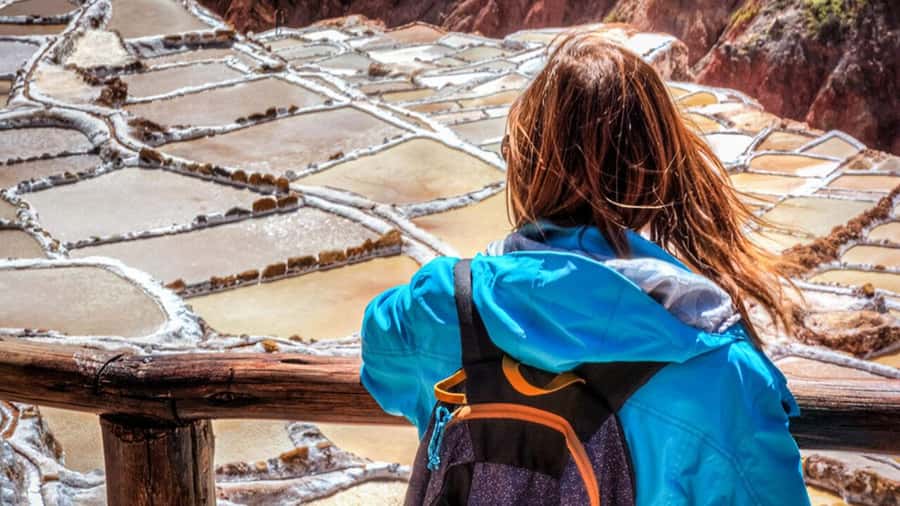
- Maras has more than 3,000 salt pools: The ponds are still used today and have served local salt production since Inca times.
- The route ends in Ollantaytambo: This is handy if you are continuing by train, but your train must depart after 3pm.
- Lunch is planned in Urubamba: The stated package includes buffet lunch, though the cost information also says meals are not included, so confirm this point before paying.
- Extra admission fees apply: A tourist ticket costing S/70 per person and a separate salt mine entrance fee are not included.
- Expect an early start and a quick pace: Pickup is around 6:30am, and the tour ends at about 3pm.
Why this route works well from Cusco
This is not a simple round trip from Cusco. You begin in the city, travel through the Sacred Valley, and finish at Ollantaytambo’s main square. That route is the tour’s greatest practical advantage.
If you are planning to spend the night in Ollantaytambo or catch a later train toward Machu Picchu, you avoid returning to Cusco and then retracing part of the route. The day also gathers three very different sights into one outing: agricultural engineering at Moray, salt production at Maras, and monumental stonework at Ollantaytambo.
The tradeoff is time. The total duration is about six hours, with several stops and road travel packed into one morning and afternoon. I would see this as an efficient introduction rather than a slow, deeply explained study of each site.
Pickup from Cusco accommodations is scheduled for around 6:30am. Confirm your hotel details when booking, and expect some uncertainty around the exact pickup. One past booking reported a late and confusing pickup, although the rest of the day went well once the group got moving.
The group is limited to 15 people, which is a sensible size for a minibus outing. It is small enough to avoid a huge crowd, though not so small that you should expect a private guide or a fully flexible schedule.
More Sacred Valley trips:
- From Cusco: Moray, Maras Salt Mines & Chinchero Weavers Tour
★ 4.8 · 1,925 reviews - 2-Day Tour: Sacred Valley and Machu Picchu by Train
★ 5.0 · 1,127 reviews - Cusco: Sacred Valley, Pisac, Ollantaytambo, Salt Mines Moray
★ 4.6 · 1,058 reviews
Moray’s sunken circles and Inca farming experiments
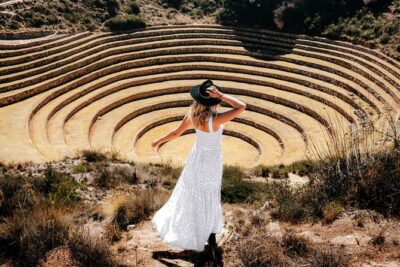
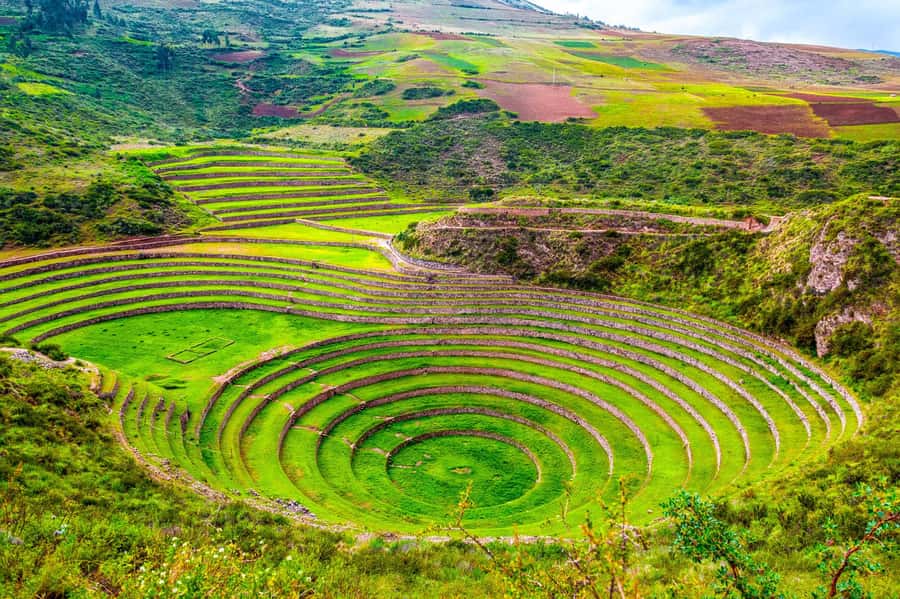
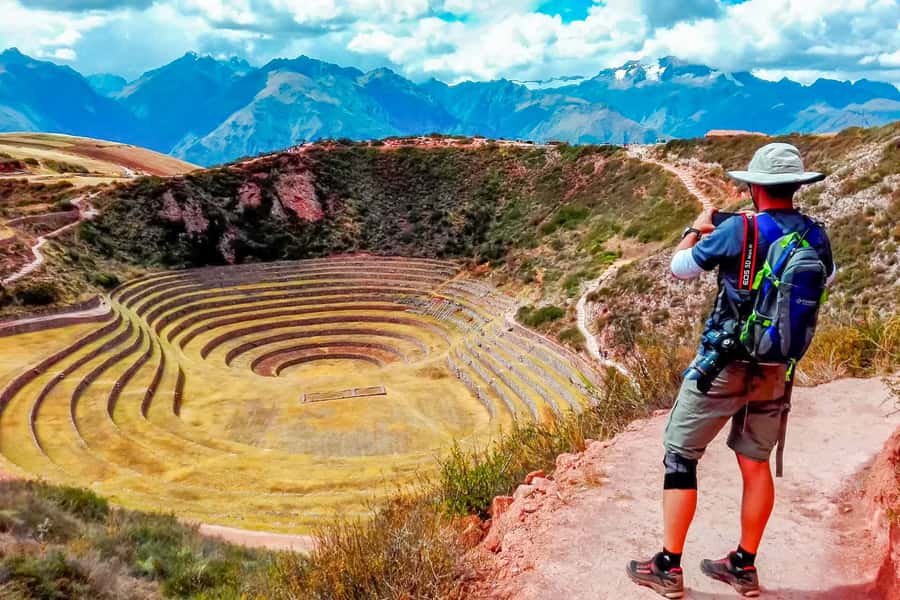
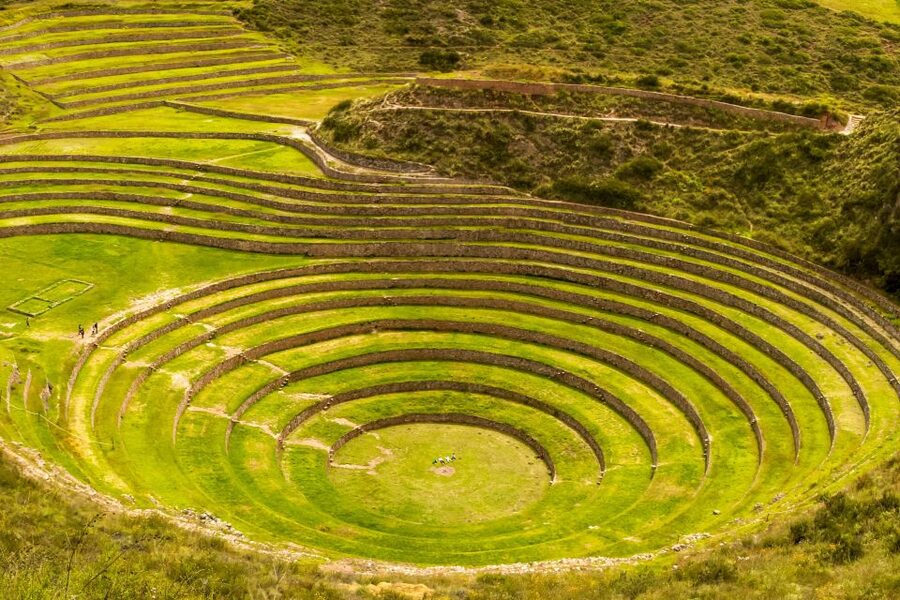
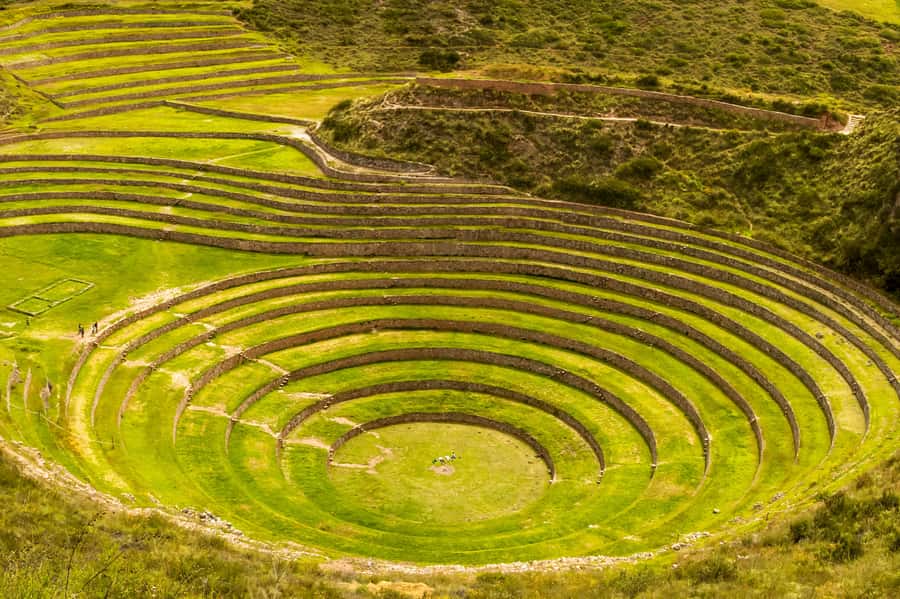
Moray is about 50 kilometers northwest of Cusco, on a limestone plateau overlooking the Urubamba Valley. The site is made up of broad circular terraces cut into natural sinkholes. From above, the rings look almost too neat to be agricultural.
The terraces are the reason Moray feels different from many other Inca sites. Instead of walls climbing a mountain slope, the stonework descends in giant bowls. The Inca used the area for agricultural purposes, but the exact function beyond farming remains unclear. Some interpretations connect the circles with cosmology, while others focus on their practical role in growing crops under different conditions.
Your guide should help you understand why the site matters, but this is one stop where the physical setting does much of the work. You can see the terraces from the viewing area and appreciate their scale before walking around the site. Bring comfortable shoes, since the ground can be uneven and you will want stable footing while looking across the terraces.
Moray is also a good early stop because the circles are easy to recognize and photograph. Still, you need to watch the clock. One previous booking described the day as well organized but a little too fast, while another reported not having enough time for pictures. If you enjoy taking your time, tell the guide early that you need a moment at each viewpoint.
Maras and the 3,000-plus salt pools
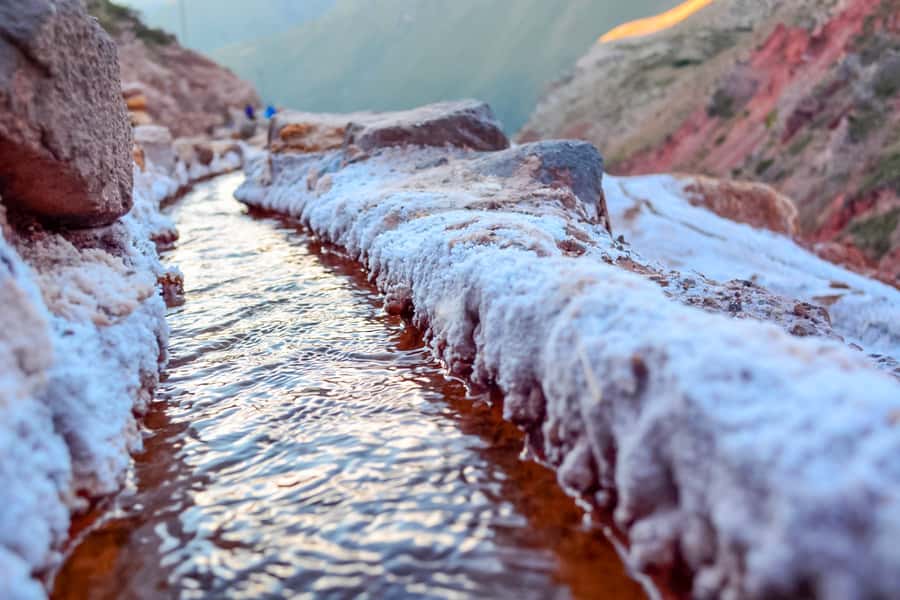
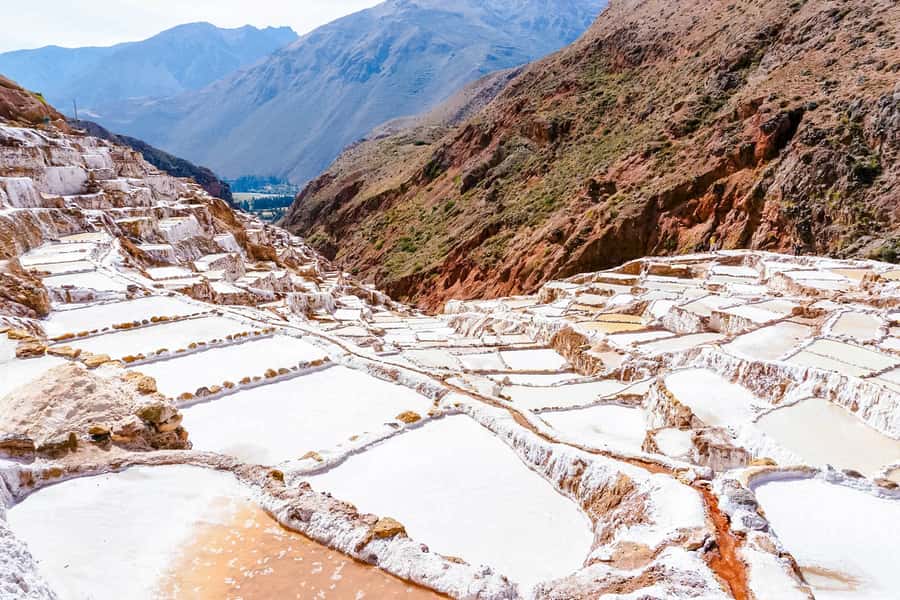
After Moray, the tour continues to the colonial village of Maras and its nearby salt evaporation ponds. The salt pools sit uphill, less than a kilometer west of the town. They are not one enormous mine carved underground. Instead, the site is a dense patchwork of small evaporation pools built into the slope.
Salt water flows into the ponds, where sunlight and evaporation leave salt behind. The method has been used since Inca times and continued through the colonial period. Local production still continues today, which gives the stop a useful connection between past and present.
The number of pools is striking. More than 3,000 small basins cover the slope, creating a pale, textured view that changes with the light and the amount of salt in each pool. You can see why this site photographs well, but it is also more than a pretty stop. The ponds show a practical local industry that has survived across several periods of Peruvian history.
There is a separate entrance fee for the salt mines. The listed cost does not include it, and one booking email reportedly mentioned the S/70 tourist ticket but failed to mention the additional salt fee. My advice is simple: ask for the current total admission cost before departure and carry enough Peruvian soles.
The paths around the pools may be uneven, and the site is not suitable for wheelchair users. Comfortable shoes are essential. Sunscreen is also important, since the open setting offers little relief from strong highland sun.
Your time here may be limited. The stop has a lot to see in a compact area, but a hurried guide can make it feel like a photo stop rather than a proper visit. Stay close enough to hear the explanation, then use any free minutes for your own look at the pools.
Lunch in Urubamba and the Sacred Valley drive
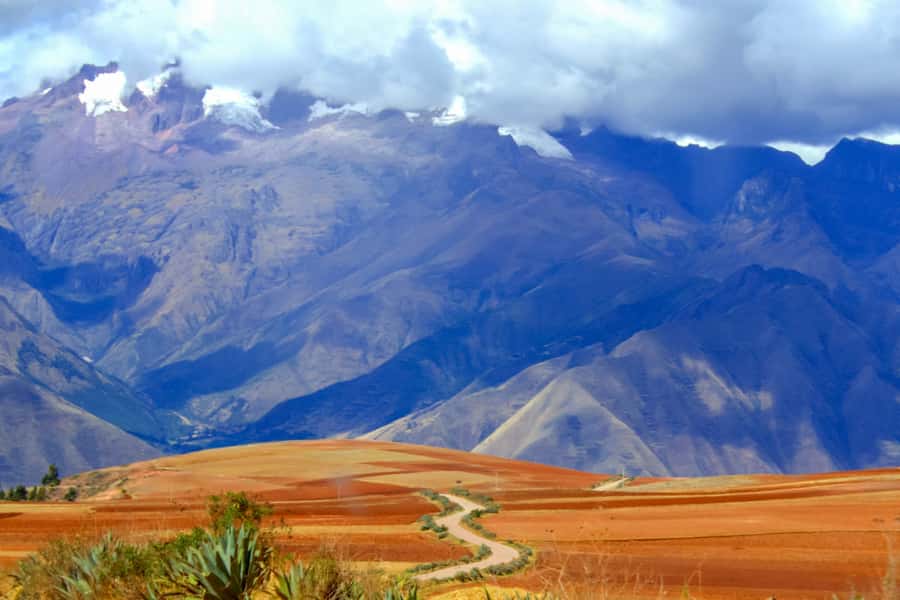
The route continues to Urubamba, a small town in the Sacred Valley, for lunch. The package information lists a buffet lunch as included, while another section says meals are not included. Because those details conflict, confirm exactly what the $49 covers before you book or set out.
That clarification matters because the tour does not leave much room for an independent meal plan. If lunch is included, the buffet keeps the group moving and removes the need to search for a restaurant. If it is not included, you should budget separately rather than assume the advertised price covers everything.
After lunch, the vehicle follows the Urubamba River toward Ollantaytambo. This drive is part of the appeal. You are not simply checking off isolated attractions, since the road links the sites through the Sacred Valley. The valley setting gives context to the towns, terraces, and old Inca construction you have seen during the day.
The transport is included, as is the bilingual guide in English and Spanish. The amount of explanation you receive may depend on the guide and the schedule. Two low-scoring comments pointed to limited information and a guide walking ahead without giving enough direction. I would stay alert at each stop, listen closely at the beginning of the visit, and ask direct questions while the group is together.
More things to do in Cusco:
- Classic Inca Trail Trek 4D/3N to Machu Picchu (Group Service)
★ 5.0 · 8,653 reviews - Cusco: Rainbow Mountain and Red Valley Day Trip with Meals
★ 4.9 · 4,893 reviews - Machu Picchu: 4-Day Inca Trail Trek with Panoramic Train Ride
★ 5.0 · 4,568 reviews - Salkantay Classic Trek 5 Days from Cusco
★ 5.0 · 4,062 reviews
Ollantaytambo’s stonework and final stop
Ollantaytambo is the final major visit, and the tour ends at the main square, Plaza de Armas, around 3pm. This arrangement is especially useful if you are moving through the Sacred Valley rather than returning to Cusco.
The ruins are an important area of Inca construction, dating from the height of the Inca period. The site is known for its large stonework and for formations associated with Wiracocha, the Inca god. The scale and placement of the stones give Ollantaytambo a different feel from Moray and Maras. Moray makes you think about farming. Maras shows working production. Ollantaytambo focuses your attention on building, power, and sacred meaning.
The timing is crucial. Your train must leave after 3pm so the planned visits can take place normally. Do not book a train that departs close to the advertised ending time. You still need time to collect belongings, reach the station, and deal with any delay on the road.
Drop-off is at the main square, not necessarily at the train station. The package includes transfer from your Cusco hotel and drop-off at Ollantaytambo’s Plaza de Armas. Plan your onward movement carefully, particularly if you are carrying anything more than a day bag.
The tour does not allow luggage or large bags. This is an important limitation for anyone using the outing as a transfer between Cusco and Machu Picchu. Pack only what fits within the operator’s small-bag rules, or arrange separate luggage storage and transport.
What the $49 price really includes
At $49 per person, this is a fair price for a one-way Sacred Valley outing if you value convenience. You get Cusco pickup, shared transport, a bilingual guide, lunch as stated in the package, and drop-off in Ollantaytambo. Booking these pieces separately could take more time and create awkward connections.
The advertised price is not the final cost of the day. Add the S/70 tourist ticket per person and the separate entrance to the salt mines. Since the meal details are inconsistent, confirm whether lunch is included before comparing this tour with other options.
The value is strongest for you if:
- You want to continue to Ollantaytambo after sightseeing.
- You prefer a planned route to arranging several taxis or buses.
- You are happy with a six-hour schedule.
- You want the main sights rather than a long private visit at each one.
- You are comfortable walking on uneven ground.
The value is weaker if you want a relaxed pace, extensive photography time, or a guide who can spend long periods explaining each site. The mixed rating of 3.4 from 16 ratings reflects that difference. Several bookings found the experience worthwhile and well organized once underway, while the lowest score focused on poor direction, limited time, and a guide who appeared eager to finish.
How to prepare for this early morning outing
Wear shoes you can walk in comfortably. The tour specifically advises comfortable footwear, and both Moray and Maras involve outdoor paths rather than smooth indoor floors.
Bring sunscreen. Moray sits on an exposed plateau, and Maras is also open to the sun. A small amount of water and a light day bag are sensible, provided the bag meets the operator’s restrictions.
Your passport details are required at booking for every participant, including name, number, expiry date, and country. This is easy to overlook, so have the information ready when reserving.
The activity is not suitable for wheelchair users. The site conditions and walking routes make this a poor choice if you need step-free access.
The tour offers free cancellation up to 24 hours in advance for a full refund, and you can reserve now while paying later. Those terms help if your Cusco plans are still shifting, but they do not remove the need to check the train schedule and extra entrance fees.
Who should book this Maras and Ollantaytambo tour?
I would recommend it to you if you want to see several Sacred Valley highlights in one compact day and finish in Ollantaytambo. The one-way route is the key benefit. It can save a return trip to Cusco and fit neatly before an evening or later-afternoon train.
It also suits first-time visitors who want a broad introduction to Inca sites without arranging private transport. Moray, Maras, Urubamba, and Ollantaytambo offer enough variety to keep the day interesting.
I would hesitate if you dislike early starts, strict timing, or shared transport. I would also think twice if your main goal is careful photography or detailed historical discussion. The available feedback includes praise for organization and enjoyment, but also clear warnings that some guides may give short explanations and move the group along quickly.
FAQ
What time does pickup begin in Cusco?
Pickup is scheduled for around 6:30am from your accommodation in Cusco. You must confirm your accommodation details when booking.
Where does the tour end?
The tour ends at Ollantaytambo’s main square, Plaza de Armas, at around 3pm.
Can I take a train after the tour?
Yes, but your train must depart after 3pm so the visits can take place normally.
Is transportation included?
Yes. Transport and pickup from your hotel in Cusco are included.
Is lunch included?
The package information lists a buffet lunch in Urubamba as included, but another section says meals are not included. Confirm this detail with the provider before booking.
Are entrance fees included?
No. The S/70 tourist ticket is not included, and the salt mine entrance fee is also separate.
What languages does the guide speak?
The live guide service is available in English and Spanish.
How large is the group?
The tour is described as a small-group experience limited to 15 participants.
Can I bring luggage?
No. Luggage and large bags are not allowed. Bring only a suitable small day bag.
Is the tour accessible to wheelchair users?
No. The tour is not suitable for wheelchair users.
Should you book it?
Book this tour if you want an efficient route from Cusco to Ollantaytambo, with Moray, Maras, and lunch in Urubamba packed into one day. The price is reasonable for the included transport and planned route, provided you confirm the lunch policy and budget for both entrance fees.
Skip it if you want a slow, detailed visit or need a completely reliable, finely paced schedule. Arrive prepared for an early start, limited time at each stop, and a guide whose level of direction may vary. For the right kind of day, this is a useful Sacred Valley transfer with excellent variety, not a leisurely private tour.
Just added in Cusco
- Private Transfer from Airport to Hotel in the City of Cusco★ 4.0 · 5 reviews
- Best Cusco walking tour: dinner street food tasting★ 4.5 · 11 reviews
- Cusco Private Transportation for 2026★ 5.0 · 4 reviews
- Private Tour to Pisac Market and Pisac Ruins★ 5.0 · 4 reviews
- Machu Picchu Day Trip With Panoramic Train from Cusco★ 5.0 · 10 reviews
- Sacred Valley Private Tour from Cusco, Guide and Driver only★ 5.0 · 4 reviews
- Sacred Valley of the Incas Tour★ 5.0 · 12 reviews
- Private Tour of the Mountain of Colours by Quad★ 5.0 · 7 reviews
Sacred Valley Tours, compared.
From Cusco: Sacred Valley & Maras Salt Mines Tour with Lunch
Read our review →
From Cusco: Moray, Maras Salt Mines & Chinchero Weavers Tour
Read our review →
2-Day Tour: Sacred Valley and Machu Picchu by Train
Read our review →
Sacred Valley, Pisac, Ollantaytambo, Salt Mines Moray
Read our review →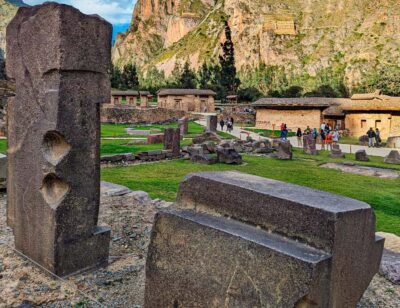
Chinchero,Moray & Salt Mines drop-off in Ollantaytambo
Read our review →
Sacred Valley and Maras Moray Tour with Full Day Buffet Lunch
Read our review →