
Reviewed · LAKE TITICACA AND THE UROS ISLANDS
Cusco: Scenic Route of the Sun to Puno with Buffet Lunch
The long road south earns its own soundtrack. This 11-hour Cusco to Puno journey turns a transfer into a guided day out, with stops at Andahuaylillas, Raqchi, Abra La Raya, and Pucara. I like the comfortable bus, the steady schedule, and the fact that you see places a direct bus would simply pass. I also like the buffet lunch, onboard drinks, bathroom, heating, and air conditioning.
The catch is the early start and the extra entrance fees, about 53 soles, or $13, paid locally. You spend most of the day on the road, and the guided stops are fairly short. Still, at $44, this is a strong choice if you need to get from Cusco to Puno and want the journey to count for something.
In This Review
- Key points at a glance
- Why take the Route of the Sun?
- Andahuaylillas Church at 7:40 AM
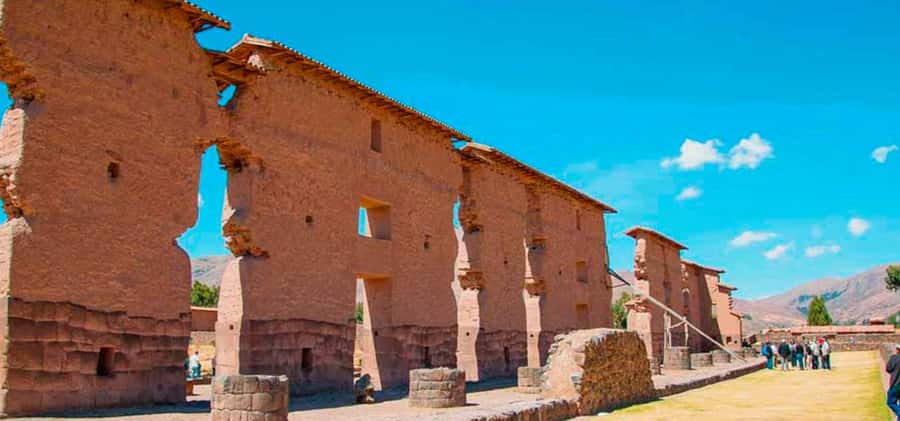
- Raqchi and the 15-meter walls of Wiracocha
- Lunch in the Andes at 11:35 AM
- Abra La Raya at 2:15 PM
- Pucara Museum at 3:20 PM
- The bus ride and onboard comfort
- Guide quality and the bilingual format
- What the $44 price really buys
- Who should book this journey?
- Should you book the Route of the Sun?
- FAQ
- What time does the bus leave Cusco?
- Where does the journey finish?
- How long is the experience?
- Is lunch included?
- Are entrance tickets included?
- What drinks are available?
- Is the tour offered in English?
Key points at a glance
- Four worthwhile stops: See Andahuaylillas Church, Raqchi, Abra La Raya, and the Lithic Museum of Pucara.
- A better transfer than a direct bus: The route gives you history, scenery, meals, and regular chances to stretch your legs.
- Comfort matters here: The bus includes reclining-style comfortable seating, air conditioning, heating, a bathroom, drinks, and an oxygen tank.
- The strongest stop is Raqchi: The huge Temple of Wiracocha walls give the ancient site real scale and drama.
- Lunch is part of the value: The Marangani and Sicuani area stop includes a broad buffet of meat, fish, salads, sides, desserts, and drinks.
- Plan for a full day: Departure is scheduled for 6:40 AM, with arrival in Puno around 5:30 PM.
Why take the Route of the Sun?
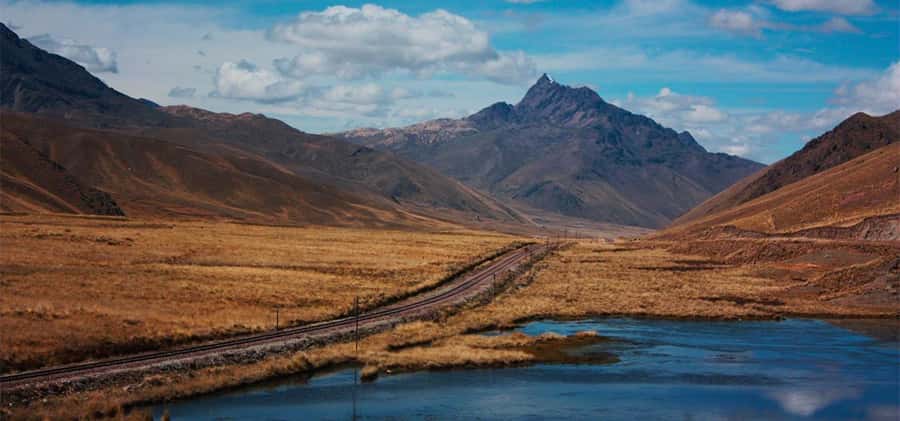
Cusco and Puno are linked by a long road across the high Andes. You can take a direct bus, but then the hours between the two cities are mostly just transport time. This service changes the rhythm. You ride, get out for a church or ruin, ride again, stop for lunch, and continue toward Lake Titicaca.
I like this format for a first visit to southern Peru. The stops provide a useful introduction to Andean history without requiring several separate day trips. You get a colonial church, an Inca religious complex, a high mountain pass, and an early Andean archaeological site in one day.
The bus leaves from Alameda Pachacuteq 499-B in Cusco at 6:40 AM. You are asked to arrive 30 minutes early, so plan to be at the terminal by about 6:10 AM. The information provided includes one confusing reference to a 6:10 PM meeting time, but the detailed schedule clearly points to a morning departure. Confirm the exact time when you book.
The journey is operated by Inka Express, with a bilingual guide in English and Spanish. Several guides have received especially strong praise, including Manuel, Mateo, Matias, Shelma, Elizabeth, and Juan Carlos. The names may vary by departure, but the important point is that the guide is central to the experience. This is not simply a bus with a few photo stops.
More Lake Titicaca trips:
- Cusco: Scenic Sun Route to Puno with Buffet Lunch
★ 5.0 · 214 reviews - 6-Day Best of Peru: Cusco, Machu Picchu, and Lake Titicaca Tour
★ 5.0 · 123 reviews - Full Day Lake Titicaca Tour from Cusco
★ 4.5 · 91 reviews
Andahuaylillas Church at 7:40 AM
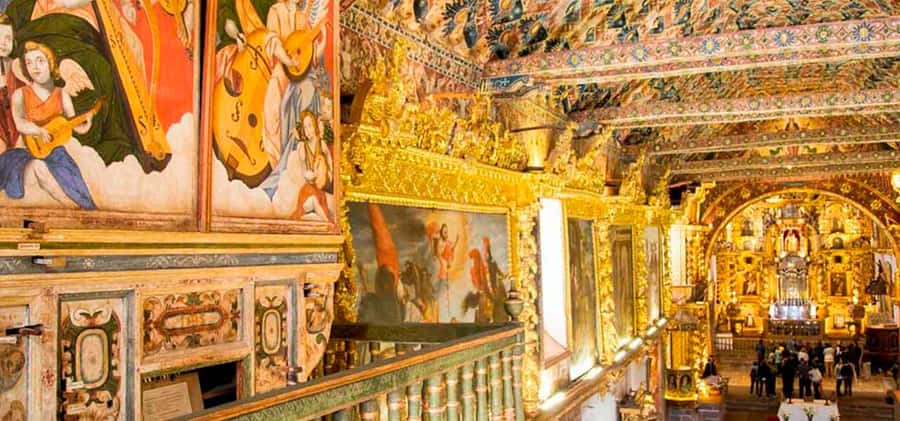
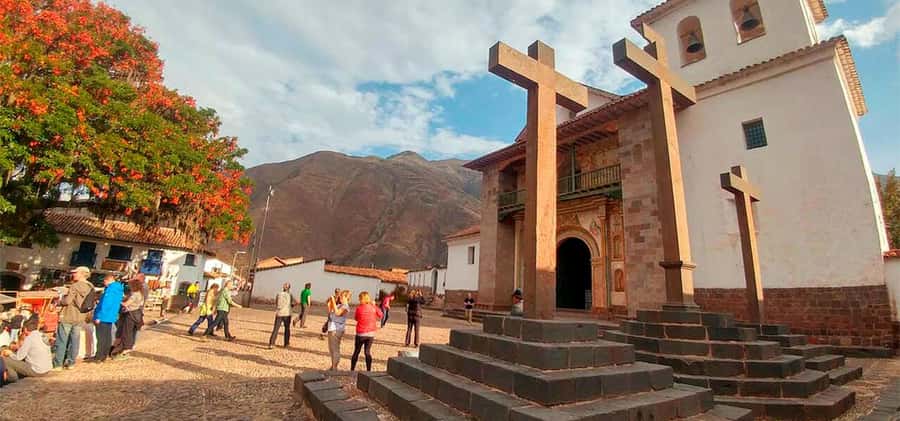
Your first visit is to the Church of Saint Peter the Apostle in Andahuaylillas, roughly an hour after leaving Cusco. The church dates from the 16th century and was built by Jesuits on an older Inca sacred site.
Its nickname, the Sistine Chapel of the Americas, is not subtle, but it gives you a fair idea of what to expect inside. The walls carry elaborate painted scenes, strong colors, gold leaf decoration, and religious art designed to teach Christian stories to a largely Indigenous population.
This is a useful place to think about Peru’s layered past. The church is not only a pretty colonial building. It also reflects the meeting, and often collision, of European Catholic practice with older Andean beliefs and sacred places.
The scheduled visit lasts about 45 minutes. That is enough for a guided look, but not enough for a slow study of every painting. Keep your attention on the guide, then use any spare minutes for the details around the entrance and interior.
There is one practical caution. A previous departure had to visit another colonial church because Saint Peter’s was closed after earthquake concerns. That means the exact church visit can occasionally change for preservation or safety reasons. The replacement may still contain fine murals and frescoes, but you should not treat the named church as absolutely guaranteed.
Raqchi and the 15-meter walls of Wiracocha
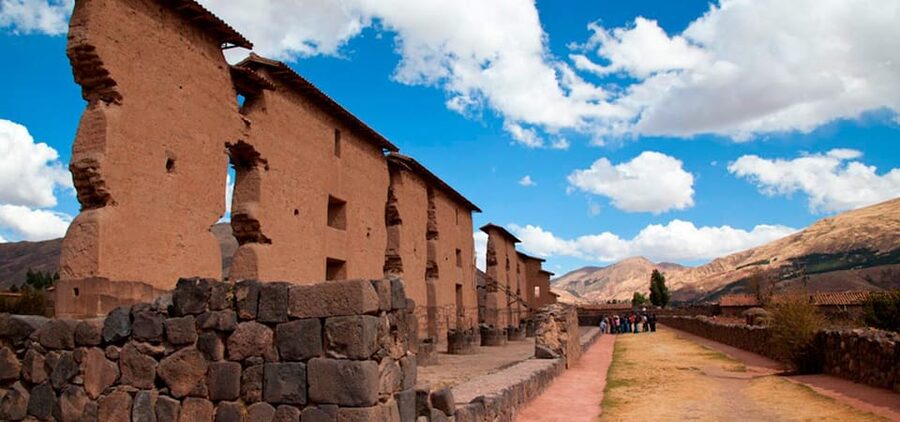
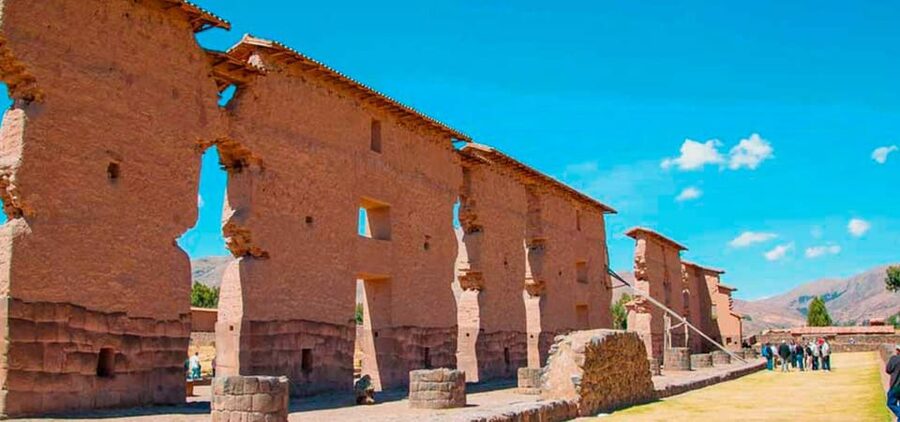
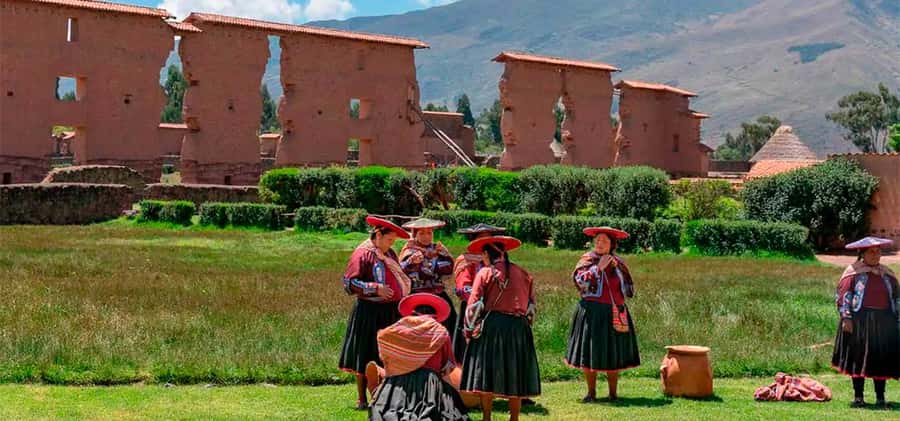
Raqchi is the historical high point of the day for many people. The site was an important Inca center, and its main attraction is the Temple of Wiracocha, built to honor the Andean Superior God associated with the invisible or universal divine power.
The surviving walls reach about 15 meters high. That number becomes meaningful when you are standing near them. Even in ruins, the scale is striking. The structure once had a much larger roof, and the remaining masonry gives you a clear sense of the engineering involved.
The site also includes surrounding ruins that help explain how the temple fitted into a wider settlement. Your guide connects the stonework to Inca religious life, construction methods, and the role of the area under an Inca ruler.
The visit is scheduled for about an hour, giving you more time here than at Andahuaylillas. Wear shoes you can walk in and keep your camera ready. Raqchi is also where the changing scenery begins to make sense: cultivated valleys give way to broader highland views as the bus continues south.
Several passengers have singled out Raqchi as their favorite stop. I can understand why. The church is visually ornate, but Raqchi gives you open space, giant masonry, and a stronger feeling of ancient scale.
Lunch in the Andes at 11:35 AM
Around late morning, the bus stops for a buffet lunch in the Marangani and Sicuani area. The meal is designed to serve a mixed international group, while still offering Andean flavors and local staples.
The buffet includes beef, chicken, fish, hot side dishes, raw and warm salads, desserts, and herbal infusions. Drinks served during the journey include tea, coffee, coca tea, other herbal drinks, mineral water, Coca-Cola, and Inca Kola.
The lunch has been one of the most consistently praised parts of the experience. That matters because a weak meal can make a long bus day feel longer. Here, the food stop gives you a proper break, a chance to use facilities, and time to eat without rushing through a packed snack box.
Do not expect a small, highly personal restaurant meal. It is a group buffet, so the appeal is choice and convenience. Some departures describe the meal as simple but good, while others found it surprisingly delicious. Either way, it is included in the $44 price and removes the need to arrange lunch separately.
Some guides also provide small extras. One departure included cake, coffee, tea, and a bagged breakfast. Another guide, Juan Carlos, shared a local sweet bread called chuta. These extras are not listed as guaranteed inclusions, so treat them as pleasant possibilities rather than part of the deal.
Breakfast itself is not included. Since the bus leaves early, bring something small or buy breakfast before departure. The onboard drinks and occasional snack service help, but they should not be confused with a full morning meal.
More things to do in Cusco:
- Classic Inca Trail Trek 4D/3N to Machu Picchu (Group Service)
★ 5.0 · 8,653 reviews - Cusco: Rainbow Mountain and Red Valley Day Trip with Meals
★ 4.9 · 4,893 reviews - Machu Picchu: 4-Day Inca Trail Trek with Panoramic Train Ride
★ 5.0 · 4,568 reviews - Salkantay Classic Trek 5 Days from Cusco
★ 5.0 · 4,062 reviews
Abra La Raya at 2:15 PM
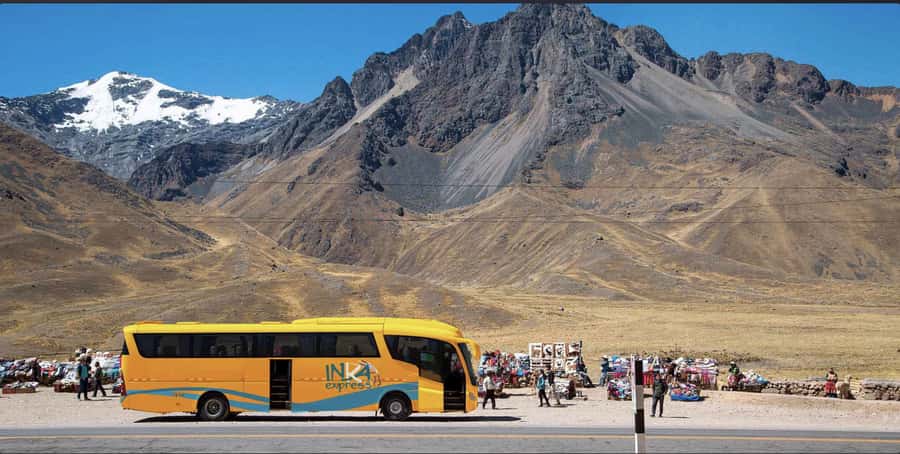
Abra La Raya marks the natural border between the Cusco and Puno regions. It is also the highest point on this journey, with views toward snow-covered peaks, rounded hills, and broad Andean valleys.
The stop lasts only about 10 minutes. That is enough for photographs and a quick breath of cold mountain air, but it is not a long walk or scenic picnic. Keep your jacket close. The high point can feel much colder than Cusco, and the stop is meant to keep the bus moving on schedule.
This is one of those places where the view does most of the work. After several hours of churches, ruins, and guided explanations, you get a short pause to look outward. The changing terrain is especially rewarding if you sit by a window and stay alert between stops.
The guide may also point out the regional boundary and explain why this pass matters on the road between Cusco and Puno. The stop is brief, so listen while getting off the bus rather than expecting a long formal presentation.
Pucara Museum at 3:20 PM
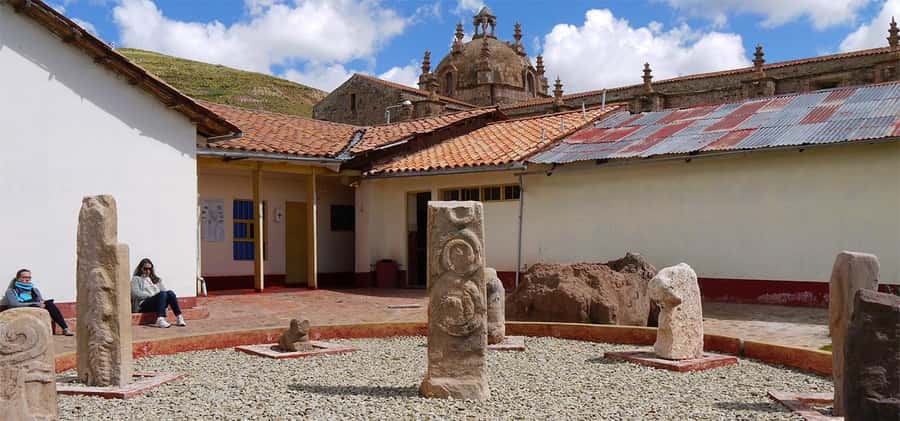
The final major stop is the Lithic Museum of Pucara. Pucara was an important center from about 500 BC to AD 200, long before the Inca Empire took shape.
The museum focuses on the early Andean culture connected with the site. You see artifacts and learn about priests, artisans, warriors, and the social life of this early settlement. The visit adds needed time depth to the day. Without it, the route might feel like a parade of colonial and Inca sites. Pucara reminds you that Andean civilization developed over many centuries.
The museum stop lasts about 45 minutes. It is a good final visit because the displays are more contained and focused than an open archaeological site. After a full day, you can take in the material at a manageable pace before the last stretch to Puno.
The group organization can make a real difference here. One guide split the English and Spanish groups so one half could use the bathroom and get coffee while the other toured the museum. That is a small operational detail, but it helps prevent the usual end-of-day scramble.
The bus ride and onboard comfort
The bus is a major part of the value. A long day on Peru’s highland roads is much easier when the vehicle is clean, quiet, and climate controlled. The service includes heating and air conditioning, a clean bathroom, onboard drinks, and an oxygen tank.
Several departures kept closely to the planned schedule. The drivers were praised for smooth handling, and one passenger specifically noted the lack of rattles and the steady driving. That is useful reassurance on a winding mountain route.
Power outlets and spacious seats were available on at least some departures. Because equipment can vary, I would not book this solely for a guaranteed charging setup, but it is worth carrying a power bank anyway.
You should also expect luggage assistance from the staff. A guide named Manuel was praised for helping with large bags as well as explaining the sites. Still, keep your valuables and essential medication with you rather than storing everything out of reach.
The group can vary. One departure had only three passengers, while other buses were clearly larger. Smaller groups may feel more personal, but you should book for the route and service rather than assume a private tour.
Guide quality and the bilingual format
The guide shapes the day more than any single ruin. The best departures have included clear English, steady Spanish interpretation, useful historical context, and practical help at each stop.
Manuel was praised for speaking fluent English and keeping both language groups informed. Mateo was described as enthusiastic and accommodating. Shelma was appreciated for answering questions, while Elizabeth was praised for explaining details carefully. These comments point to a consistent strength, but the actual guide depends on your departure.
The bilingual format does mean that explanations take longer. A point may be given first in Spanish and then in English, or the order may change. If you understand both languages, you may find this interesting. If you speak only one, you will need a little patience.
The guide also keeps the schedule moving. That matters on a route with four formal stops and a fixed arrival in Puno. You get enough information to understand what you are seeing, but this is not a private archaeological lecture where you can linger at every wall.
What the $44 price really buys
At $44 per person, the value is strong for a full-day transfer. You are paying for the bus, bilingual guide, four guided visits, buffet lunch, onboard drinks, restroom access, and the convenience of reaching Puno by late afternoon.
You still need to budget about 53 soles, or roughly $13, for entrance tickets to Andahuaylillas, the Raqchi complex, and Pucara Museum. These fees are paid in person because the money goes directly to the local communities. Add that cost before comparing this service with a plain direct bus.
The value is not only financial. You would need separate transport and planning to visit these sites on your own. The bus also handles the long distance while giving you a structured day, which is useful if your Peru schedule is tight.
The tradeoff is time. If you only want to get from Cusco to Puno as quickly as possible, a direct service may suit you better. If you want a scenic transfer with built-in history, lunch, and stops, the extra hours are the point.
Who should book this journey?
I would recommend it to you if you are moving between Cusco and Puno and want more than a seat on a highway bus. It suits first-time visitors who want a broad introduction to Andean religion, early cultures, Inca architecture, and highland geography.
It also works well for people who prefer organized travel. The guide handles timing and explanations, the bus carries your luggage, and lunch is already arranged.
You may want another option if you dislike early mornings, guided groups, or fixed stop times. The 10-minute pause at Abra La Raya is short, and the main sites do not allow unlimited wandering. Anyone needing a faster point-to-point journey should choose direct transport instead.
Bring layers, water, sun protection, comfortable shoes, and a small breakfast. Keep some soles handy for entrance tickets. Sit by a window if scenery matters to you, and save a little phone battery for the mountain views.
Should you book the Route of the Sun?
Yes, if the trip from Cusco to Puno is already part of your plans. The route gives you far more than transportation, and the combination of Raqchi, Andahuaylillas, Pucara, and Abra La Raya makes the day varied rather than repetitive.
The strongest reasons to book are the comfortable bus, reliable timing, good guides, and included buffet lunch. The main reasons to hesitate are the early departure, long duration, extra admission fees, and limited time at each stop.
For $44, this is one of the more useful ways to cover the distance. You arrive at the Puno bus terminal around 5:30 PM, with the major sights between Cusco and Lake Titicaca already under your belt.
FAQ
What time does the bus leave Cusco?
The scheduled departure is 6:40 AM from Alameda Pachacuteq 499-B. You should arrive 30 minutes early, around 6:10 AM.
Where does the journey finish?
The bus arrives at the Terminal Terrestre in Puno, near Lake Titicaca, at about 5:30 PM.
How long is the experience?
The stated duration is 11 hours.
Is lunch included?
Yes. A buffet lunch is provided in the Marangani and Sicuani area, with beef, chicken, fish, side dishes, salads, desserts, and herbal drinks.
Are entrance tickets included?
No. Tickets for Andahuaylillas, the Raqchi complex, and Pucara Museum cost 53 soles in total, or about $13, and are paid in person.
What drinks are available?
Onboard service includes tea, coffee, coca tea, other herbal infusions, mineral water, Coca-Cola, and Inca Kola.
Is the tour offered in English?
Yes. The service includes a live bilingual guide in English and Spanish.
Just added in Cusco
- Cusco Private Transportation for 2026★ 5.0 · 4 reviews
- Private Transfer from Airport to Hotel in the City of Cusco★ 4.0 · 5 reviews
- Best Cusco walking tour: dinner street food tasting★ 4.5 · 11 reviews
- Private Tour to Pisac Market and Pisac Ruins★ 5.0 · 4 reviews
- Machu Picchu Day Trip With Panoramic Train from Cusco★ 5.0 · 10 reviews
- Private Tour of the Mountain of Colours by Quad★ 5.0 · 7 reviews
- Sacred Valley Private Tour from Cusco, Guide and Driver only★ 5.0 · 4 reviews
- Sacred Valley of the Incas Tour★ 5.0 · 12 reviews
Lake Titicaca and the Uros Islands, compared.
From Puno: Uros, Amantaní & Taquile Islands 2-Day Tour
Read our review →
Tour to Uros and Taquile Islands in a Fast Boat
Read our review →
From Puno: Floating Islands of the Uros Half-Day Tour
Read our review →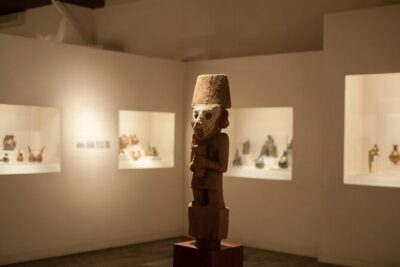
10-Day Discover Peru: Lima, Arequipa, Puno, Cusco & Machu Picchu
Read our review →
Uros and Taquile Islands on New and Comfortable SpeedBoat
Read our review →
Lake Titicaca (Day Trip) Uros & Taquile Islands
Read our review →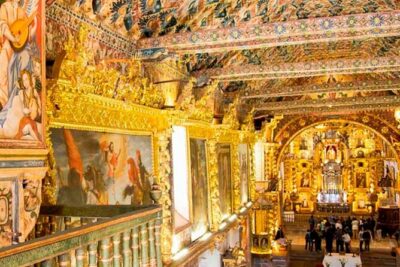
Lake Titicaca 2-Day Tour to Uros, Amantani and Taquile
Read our review →Browse the lists this tour appears in