
Reviewed · LAKE TITICACA AND THE UROS ISLANDS
Floating Islands of Los Uros: Guided Tour, Culture and Tradition.
The islands are built, not born. This three-hour trip from Puno gives you a close look at Uros family life, from the layered totora reeds beneath your feet to the Aymara welcome at the dock. I like the direct support for local families and the chance to hear their language, see how the islands are made, and enter their homes. I also like that the guide explains the experience in Spanish and English instead of leaving you to guess what you are seeing.
The main thing to consider is that this is both a cultural visit and a tourist stop. You will have time for crafts, photographs, and optional rides, but some parts feel arranged for visitors. At only $10 per person, though, the tour offers strong value, especially if your schedule in Puno is short. Freddy receives repeated praise for his clear, warm guiding, while Roly is described as funny and full of energy.
In This Review
- Key points before you book
- From Puno to the reeds of Lake Titicaca
- Meeting the Uros community on the first island
- Entering homes and trying Uros clothing
- The optional totora boat ride
- The second island, where tradition meets tourism
- The Totora Museum option
- What makes the $10 price worthwhile
- The guides make a real difference
- Timing, comfort, and who should skip it
- Is the experience respectful and authentic?
- Should you book the Uros floating islands tour?
- FAQ
- How long does the Uros floating islands tour last?
- What is included in the price?
- Does the tour include hotel pickup?
- Is the totora catamaran ride included?
- Is the Totora Museum included?
- Is food included?
- What languages are available?
- What should I bring?
- Is the tour suitable for people with mobility impairments?
Key points before you book
- Totora reeds hold the islands together: You see a real model and learn how the floating surfaces are built and maintained.
- Local Uros families lead the welcome: A community representative greets you in Aymara and explains customs with translation from the guide.
- You can enter a family home: The visit gives you a closer look at daily life than a simple boat ride past the islands.
- Traditional clothing is available for photographs: You may try typical Uros attire and take pictures during the visit.
- The second island has a different feel: Cafes, shops, and restaurants make it more visitor-focused than the first island.
- Optional extras cost more: The totora catamaran, Totora Museum, food, crafts, and kayaking are not included.
From Puno to the reeds of Lake Titicaca
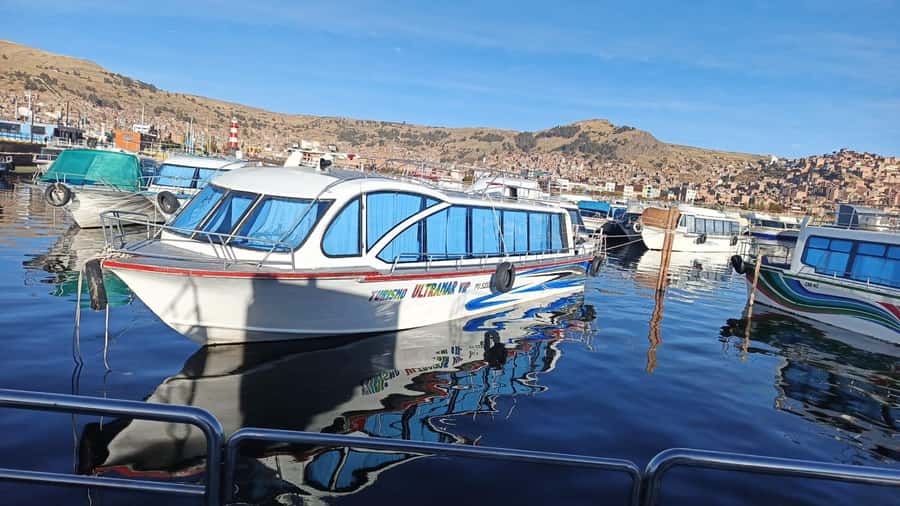
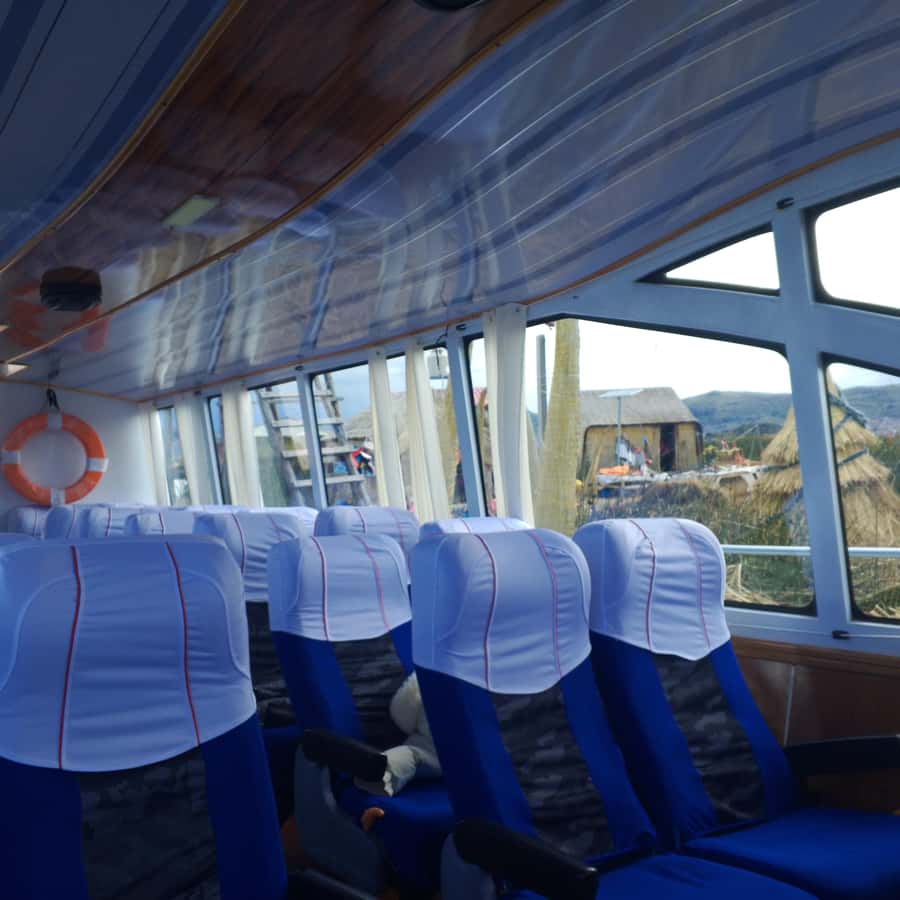
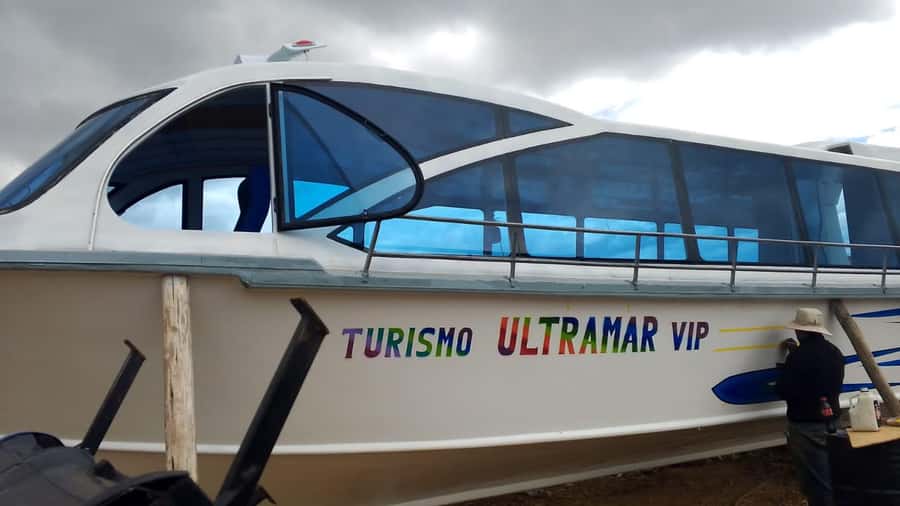
Your morning or afternoon begins with pickup from a central hotel or Puno’s main square. The guide or local representative comes to reception and checks your name, so keep your ticket or a phone image ready. The boat transfer takes about 30 minutes each way.
The ride is useful preparation, not wasted transport. Your guide explains Lake Titicaca, its species, local legends, and the meaning of the lake’s name. That introduction helps you understand that the Uros islands are not just an unusual photo stop. They are part of a living community with ongoing work, customs, and practical challenges.
Bring your passport or identification, including identification for children. Sunscreen is important at this high-altitude lake, and comfortable clothing makes the boat ride and island walk easier. Smoking is not permitted in the vehicle or indoors, and alcohol is not allowed in the vehicle.
More Lake Titicaca trips:
- From Puno: Uros, Amantaní & Taquile Islands 2-Day Tour
★ 4.5 · 452 reviews - Tour to Uros and Taquile Islands in a Fast Boat
★ 5.0 · 419 reviews - From Puno: Floating Islands of the Uros Half-Day Tour
★ 4.4 · 394 reviews
Meeting the Uros community on the first island
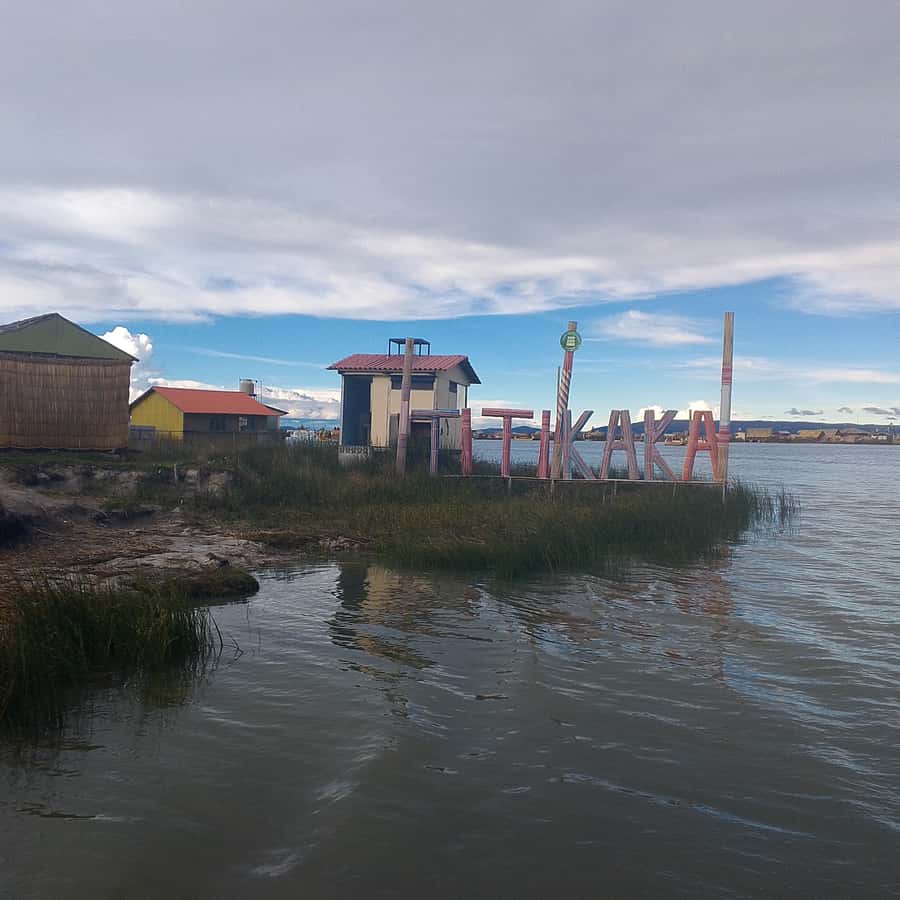
The first island is where the cultural explanation begins. A local president or community representative welcomes you in Aymara. Even if you do not understand the words, hearing the language gives the greeting a sense of place that a standard scripted introduction cannot provide.
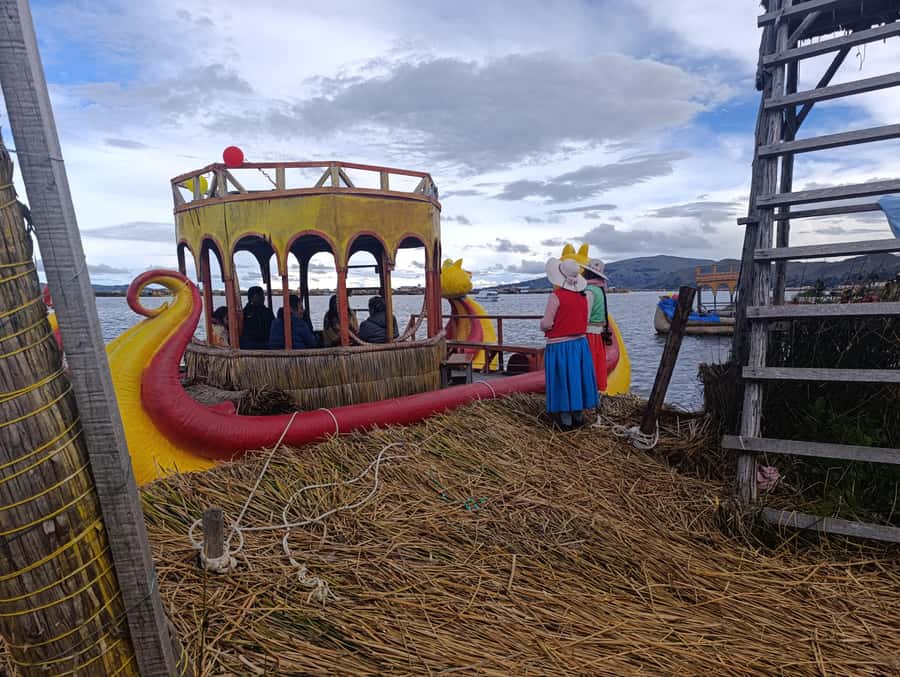
The main demonstration uses a model of a floating island made from totora. Local residents explain how the reeds are gathered and arranged, how the island surface is formed, and why regular maintenance matters. Your bilingual guide translates into Spanish and English, helping you follow both the practical details and the cultural meaning.
The reeds are not a decorative extra. They are the foundation of the community’s homes, walkways, boats, and island surfaces. That is what makes the demonstration worthwhile. You begin to see the island as a structure that requires constant care rather than a fixed piece of ground.
The amount of time at each stop is fairly short, so pay attention during the demonstration. The schedule gives roughly 10 minutes for the guided explanation and another 25 minutes for visiting, shopping, and seeing the island. That is enough for an introduction, but not a long anthropological lesson.
Entering homes and trying Uros clothing
One of the more personal parts of the visit comes when families invite you into their homes. This is a chance to see the island at close range and connect the construction techniques to daily life. The visit is guided, so you are not left wandering around private spaces without context.
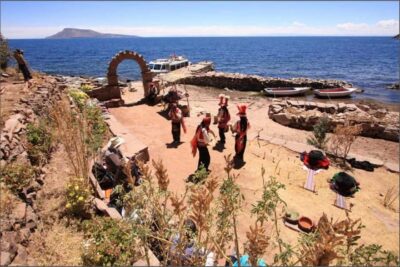
You can also wear typical Uros clothing for photographs. The photo opportunity is clearly part of the visitor experience, but it can still be enjoyable if you treat it with respect. Ask before taking close portraits, listen to the explanations, and remember that the clothing represents a living tradition rather than a costume display made only for tourists.
I like this part because it gives you a way to participate without pretending that a short visit makes you an expert on Uros life. You see, listen, and ask questions, then leave room for the families to present their own community in their own way.
There is also time to browse handmade crafts. Purchases are not included, and you should not feel pressured to buy. If you do find something useful, buying directly from the families gives your money a clear local route. The agency is made up of native Uros families and says the tour helps support cultural continuity for younger generations.
The optional totora boat ride
After the first island, you can choose an optional ride on a traditional totora catamaran, sometimes described as a totora horse. The boat is made from the same plant that supports the islands, which makes the ride a natural extension of the demonstration.
The catamaran takes you to the second island. If you prefer not to pay for the extra ride, you can remain on the main tourist boat. This choice matters if you are watching your spending, traveling with children, or simply want to keep the outing focused on the included activities.
The ride is not part of the $10 price. Ask about the cost locally before boarding, since the supplied details do not give an amount. Kayaking is also excluded, so do not assume it is included in the boat transfer.
More things to do in Puno:
- From Cusco: Vinicunca Rainbow Mountain ATV Tour with Meals
★ 4.6 · 1,060 reviews - Uros and Taquile Islands on New and Comfortable SpeedBoat
★ 4.5 · 254 reviews - Lake Titicaca (Day Trip) Uros & Taquile Islands
★ 4.5 · 245 reviews - Lake Titicaca 2-Day Tour to Uros, Amantani and Taquile
★ 4.4 · 199 reviews
The second island, where tradition meets tourism
The second island has a different mood. You find cafes, shops, and local restaurants, including places serving trout ceviche and fried trout. Food is not included, but this can be a pleasant way to add a local meal to the trip if you have time and want to spend more within the community.
This stop also shows the practical side of tourism. The first island centers on homes, family life, and the construction of the floating surface. The second has more commercial facilities for people arriving by boat. Neither side is necessarily more real than the other. Together, they show how the community shares its culture while also earning income from visitors.
You have about 25 minutes for free time, drinks, and regional food. That is enough for a quick look or a snack, but you may need to choose between eating, shopping, and sitting down to enjoy the view. If you want a full meal, confirm the available time with your guide.
The Totora Museum option
You may continue to a third island, home to the Totora Museum. This is not included in the package price, so treat it as an optional add-on rather than a required part of the tour.
The museum was created by two community elders. It includes bird sculptures and a replica of an early Uros raft, offering another look at the community’s past and its relationship with totora. The museum is a useful choice if you want more context after the first two islands, though a three-hour visit can feel compact once optional stops are added.
I would decide based on your interests. If you care most about the island-building demonstration and meeting families, the included visit may be enough. If you want more objects, models, and background about the raft tradition, the museum adds another layer.
What makes the $10 price worthwhile
At $10, this is an inexpensive introduction to one of Puno’s best-known cultural sites. The price includes tourist boat transport from and back to Puno, a bilingual guide, entry to two floating islands, the island-building explanation, access to family homes, traditional clothing for photographs, craft browsing, and the relevant ticket fees.
The strongest value comes from the combination of transport and local interpretation. Getting to the Uros islands on your own would not automatically give you the community explanation, translations, or arranged family visit. Here, those pieces are bundled into a short half-day outing.
You should budget extra for the catamaran, museum, food, and souvenirs. The low starting price can rise if you accept every option, so decide in advance which additions matter to you. A small amount of spending on food or crafts can also directly support local families, but the core tour remains affordable even without extras.
The guides make a real difference
The guide can shape this visit more than the scenery. Freddy receives especially strong praise for dependable pickup, clear explanations of Uros history and current problems, and a sensitive approach to the community. That combination matters because the islands deserve more than a cheerful photo stop. You need someone who can explain what you are seeing without turning local life into a performance.
Freddy also guided a French-speaking participant successfully, so ask about language support if French is important to you. The activity is officially offered in Spanish and English, and Roly is also praised for his friendly manner, humor, and engaging stories.
The tone appears warm and personal rather than formal. That suits the short format. You get practical information, cultural explanation, and time to look around without being rushed from one photograph to the next.
Timing, comfort, and who should skip it
The full experience lasts about three hours, including the two boat rides. That makes it easy to fit into a Puno visit, especially if you are adjusting to the area and do not want a full-day excursion.
The island surfaces are uneven and the activity is not suitable for people with mobility impairments. Comfortable clothing is recommended, and sunscreen is essential. Keep your passport or an accepted copy with you, since identification is listed among the required items.
This tour suits you if you want:
- A short introduction to living Uros culture
- Local families rather than only a scenic boat ride
- A bilingual Spanish and English guide
- Time for photographs and handmade crafts
- An affordable activity from Puno
- The option to add a traditional boat ride or museum visit
It may not suit you if you want a long, quiet visit with no shopping, no posed photographs, and no visitor-oriented facilities. The experience includes those elements, particularly on the second island.
Is the experience respectful and authentic?
The tour’s strongest point is its connection to Uros families. The local greeting, Aymara explanation, family-home visit, direct craft sales, and community-run agency all give the outing a clearer local link than a simple sightseeing transfer.
At the same time, you should arrive with realistic expectations. This is a hosted cultural visit designed for tourists. Traditional clothing photos, craft stalls, cafes, and optional rides are part of the package around the cultural explanation. That does not cancel the value of the visit, but it means you should approach it with curiosity rather than expecting an untouched village.
I find the best attitude is simple: listen first, take photographs thoughtfully, buy only what you want, and remember that maintaining floating islands takes work. The tour becomes more meaningful when you notice the labor behind the scenery.
Should you book the Uros floating islands tour?
I would book this tour if you have three hours in Puno and want a low-cost introduction to Lake Titicaca’s living culture. The price is hard to fault, and the included transport, guide, family visit, building demonstration, and two-island access give you plenty for the money.
Book it especially if Freddy or Roly is assigned to your group, since both are praised for warmth and clear storytelling. Keep a little extra cash available only if the catamaran, museum, food, or crafts appeal to you.
Skip it if mobility is a concern or if you strongly dislike structured cultural visits with shopping and staged photo opportunities. For most visitors, though, this is a practical first look at the Uros community, and it offers more substance than a quick boat ride past the islands.
FAQ
How long does the Uros floating islands tour last?
The activity lasts three hours, including the boat ride from Puno to the islands and the return trip.
What is included in the price?
The price includes tourist boat transport to and from Puno, a bilingual Spanish and English guide, visits to two Uros floating islands, the island-building demonstration, entry to local homes, traditional clothing for photographs, time to visit craft shops, ticket fees, central hotel or square pickup, and a direct contribution to host families.
Does the tour include hotel pickup?
Yes. Pickup is included from a central hotel or Puno’s main square. You should wait at the hotel reception if you are staying at an eligible central hotel.
Is the totora catamaran ride included?
No. The traditional totora catamaran ride is optional and costs extra. You can continue on the main boat instead.
Is the Totora Museum included?
No. The Totora Museum is an optional visit and is not included in the package cost.
Is food included?
No. Food is not included. At the second island, you may be able to buy trout ceviche, fried trout, coffee, tea, beer, and other regional food.
What languages are available?
The tour is offered with a live guide in Spanish and English. One guide, Freddy, was also reported to speak French.
What should I bring?
Bring your passport or an accepted copy, sunscreen, and comfortable clothing. Identification may also be required for children.
Is the tour suitable for people with mobility impairments?
No. The activity is listed as unsuitable for people with mobility impairments.
Just added in Puno
- Sun island and Copacabana | From Puno or La Paz / Day Trip★ 4.1 · 5 reviews
- Puno: History and Culture Walking Tour★ 4.1 · 13 reviews
- Puno: Uros and Taquile Islands Full-Day Tour with Lunch★ 4.5 · 17 reviews
- Puno: Lake Titicaca, Uros, and Taquile Full-Day Tour★ 4.5 · 4 reviews
- Puno: 3-hour trip to the floating Uros Islands★ 4.5 · 9 reviews
- Puno: Lake Titicaca Day Tour★ 4.5 · 17 reviews
- Puno: 2 Day Visit to Uros, Amantani and Taquile★ 4.5 · 13 reviews
- Lake Titicaca, Uros and Taquile Full-Day Tour★ 4.3 · 69 reviews
Lake Titicaca and the Uros Islands, compared.
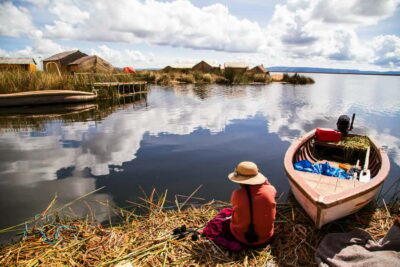
From Puno: Uros, Amantaní & Taquile Islands 2-Day Tour
Read our review →
Tour to Uros and Taquile Islands in a Fast Boat
Read our review →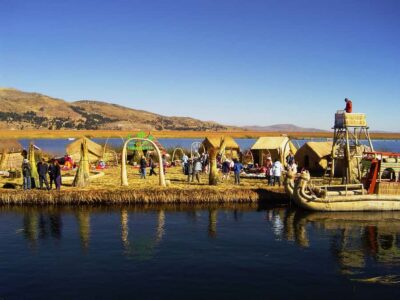
From Puno: Floating Islands of the Uros Half-Day Tour
Read our review →
10-Day Discover Peru: Lima, Arequipa, Puno, Cusco & Machu Picchu
Read our review →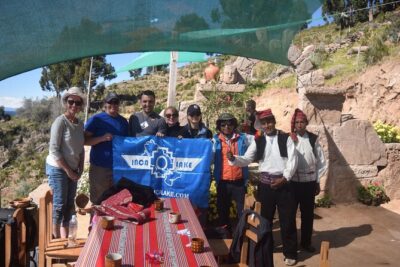
Uros and Taquile Islands on New and Comfortable SpeedBoat
Read our review →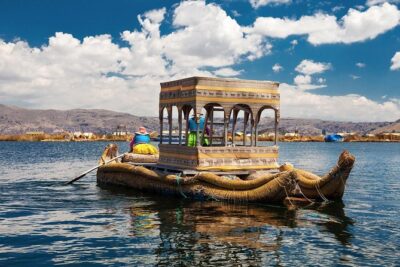
Lake Titicaca (Day Trip) Uros & Taquile Islands
Read our review →
Lake Titicaca 2-Day Tour to Uros, Amantani and Taquile
Read our review →Browse the lists this tour appears in